Walking Tours in Bangkok
15 Landmarks in Bangkok
Baan Silapin (The Artist's House)
Klong Bang Luang, Bangkok
To find this place, you have to leave the highways behind and dive into the narrow canals of Klong Bang Luang. Baan Silapin is a weathered wooden house that feels like it drifted out of a different century. It’s a sanctuary for artists and dreamers, where the only sound louder than the chatter of tourists is the gentle slap of canal water against the stilts. Here, the main attraction isn't a painting on a wall, but a traditional Thai puppet show. Watching the puppets dance to rhythmic music in the open-air pavilion is like watching a piece of living history. It's slow, it's deliberate, and it's a world away from the frantic energy of the shopping malls in Siam Square. Spend some time wandering the surrounding boardwalks. You'll find tiny cafes and local artisans selling handmade crafts. It's one of the few places left in Bangkok where you can actually hear yourself think, provided you don't mind the occasional long-tail boat zooming past and spraying a bit of canal water your way.
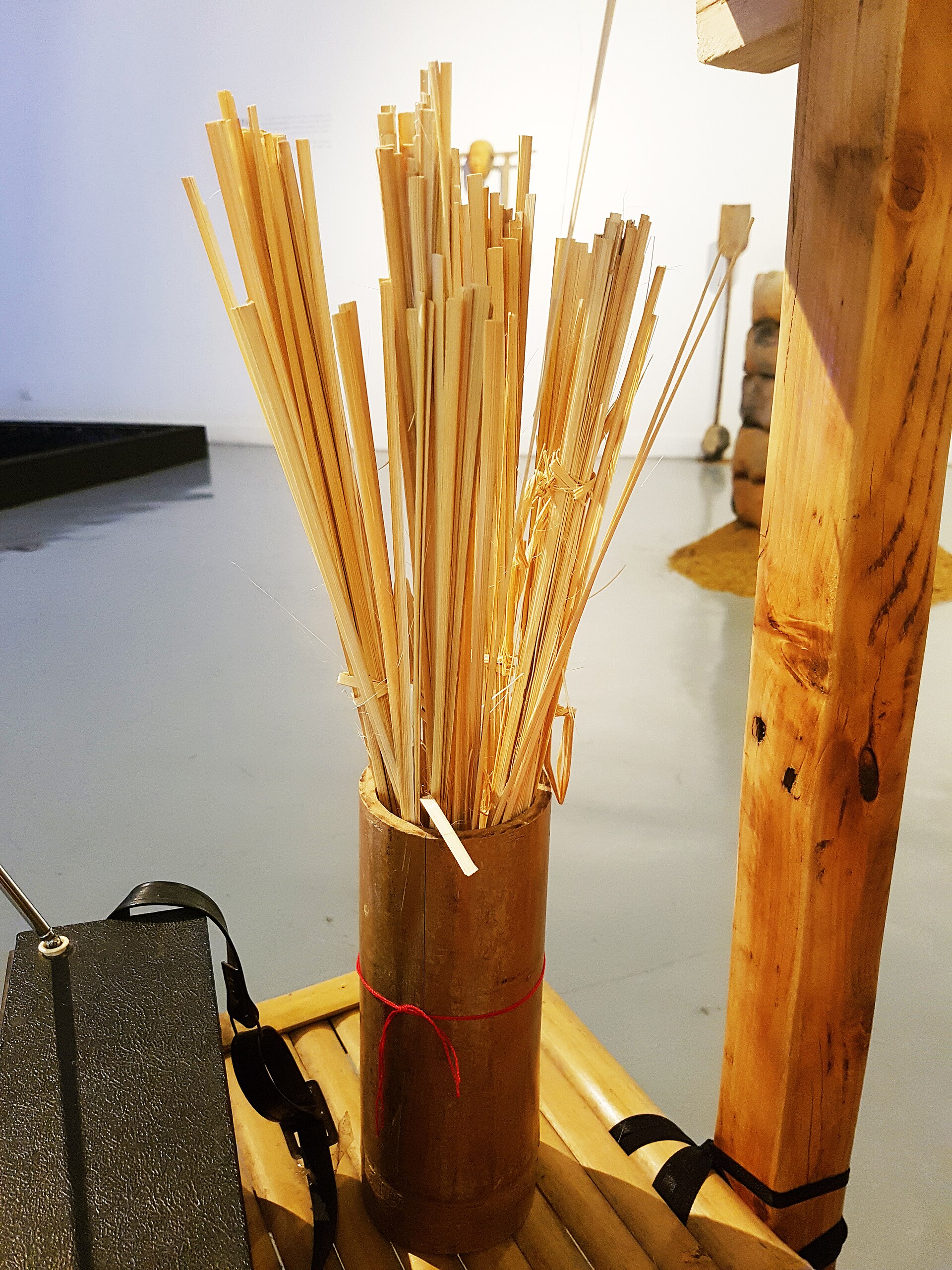
Bangkok Art and Culture Centre (BACC)
98 Pathum Wan, Bangkok 10330
If the Grand Palace is the soul of old Bangkok, the BACC is the brain of the new city. The building itself is a giant white spiral, designed to mimic the flow of a gallery. As you walk up the ramps, you're literally ascending through layers of contemporary Thai thought, from provocative political installations to delicate traditional crafts reimagined for the 21st century. This isn't a 'quiet' museum where you just stare at paintings. It's a hub for the city's creative class. On any given day, you'll find student artists sketching in the corners, indie designers selling handmade jewelry, and heated debates happening in the cafes. It's the center of gravity for Bangkok's intellectual and artistic counterculture. The best part? Most of the exhibitions are free. It's a democratic space where art is accessible to everyone, from the wealthy socialites of nearby Siam Square to the street vendors from the markets outside. It's a spiral of inspiration in the middle of a concrete jungle.
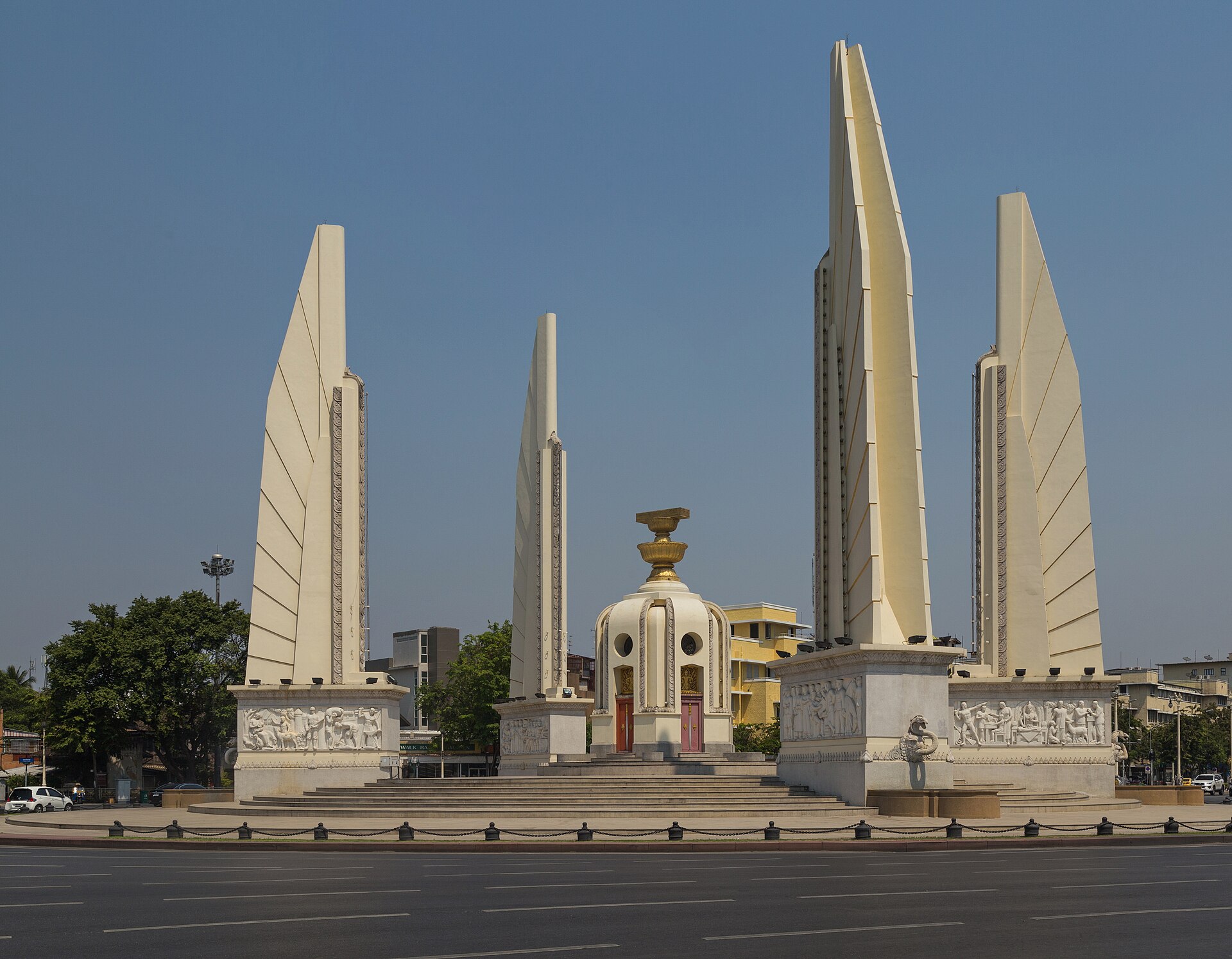
Democracy Monument
Ratchadamnoen Avenue, Bangkok
At first glance, it looks like a giant concrete bowl with a turret in the middle. But in the world of Thai politics, this monument is a lightning rod. Built to commemorate the 1932 revolution that ended absolute monarchy in Thailand, it's a piece of architecture that literally embodies the transition of power. If you look closely at the design, everything is symbolic. The central turret is exactly 24 meters tall—representing the date of the revolution, June 24th. The surrounding wings represent the military and civil servants who helped forge the new constitutional government. It’s a lesson in political science cast in concrete. Because of its symbolism, the monument is rarely just a tourist site; it's the default gathering point for protests and political rallies. Depending on when you visit, you might find it quiet and solemn, or you might find it surrounded by thousands of people demanding change. It's the beating heart of Thailand's ongoing conversation about power and freedom.
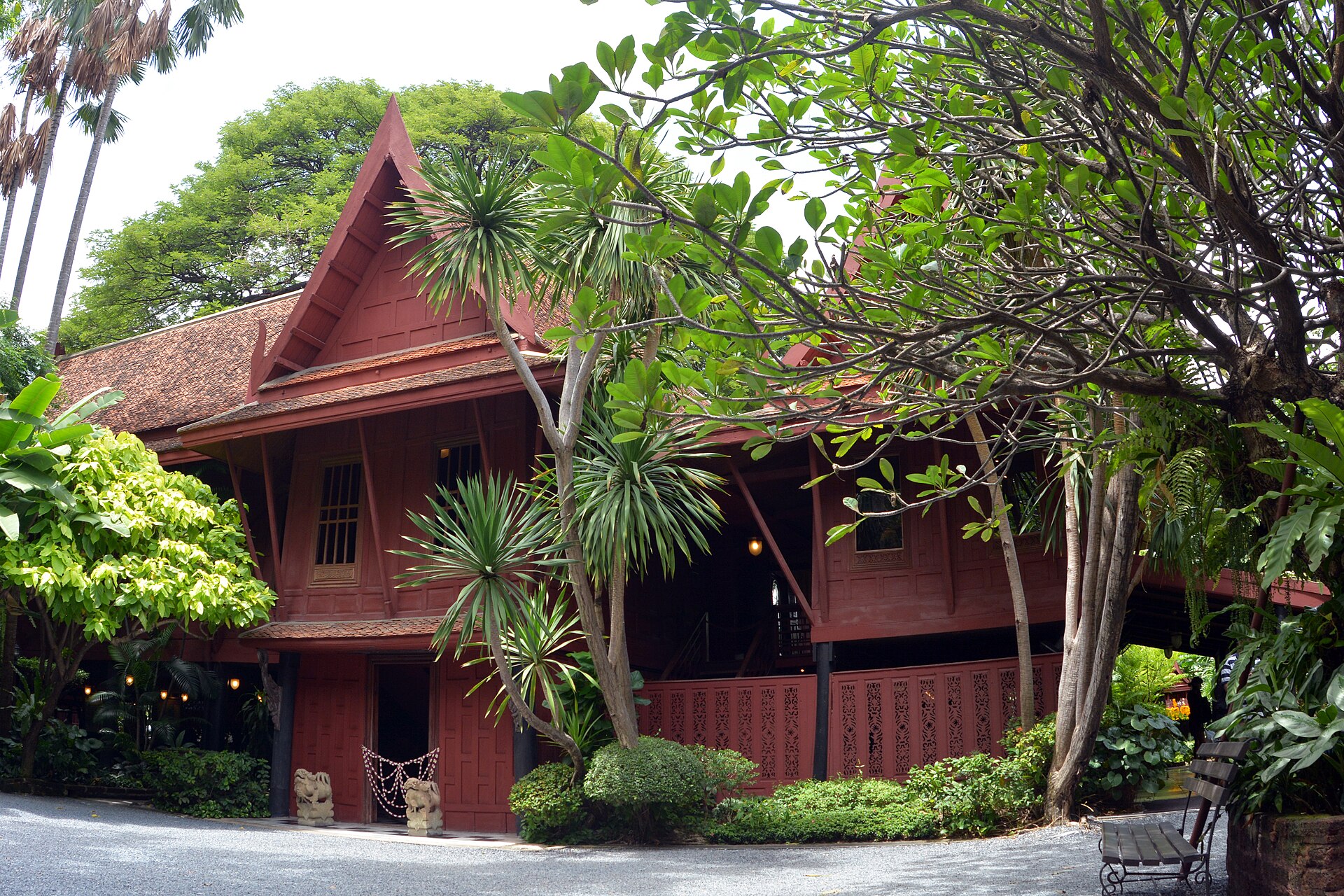
Jim Thompson House
6 Soi Jim Thompson, Pathum Wan, Bangkok 10350
Step inside this compound and the roar of Bangkok's traffic vanishes, replaced by the sound of rustling teak and trickling water. This was the home of Jim Thompson, an American architect and intelligence officer who single-handedly revived the Thai silk industry in the 1950s. His house is a masterpiece of traditional Thai architecture, composed of six separate teak buildings moved from different parts of the country and assembled like a giant puzzle. But the real draw isn't just the silk or the art; it's the mystery. In 1967, while vacationing in the Cameron Highlands of Malaysia, Jim Thompson walked into the jungle for a stroll and simply... disappeared. No body was ever found, and no one knows why he vanished. He became a ghost in his own success story. Walking through the lush gardens and the airy corridors, you can feel the tension between the beauty of the art collection and the lingering question of his disappearance. It's a serene sanctuary that feels like a movie set, where every piece of furniture tells a story of a man who loved Thailand more than his own homeland.
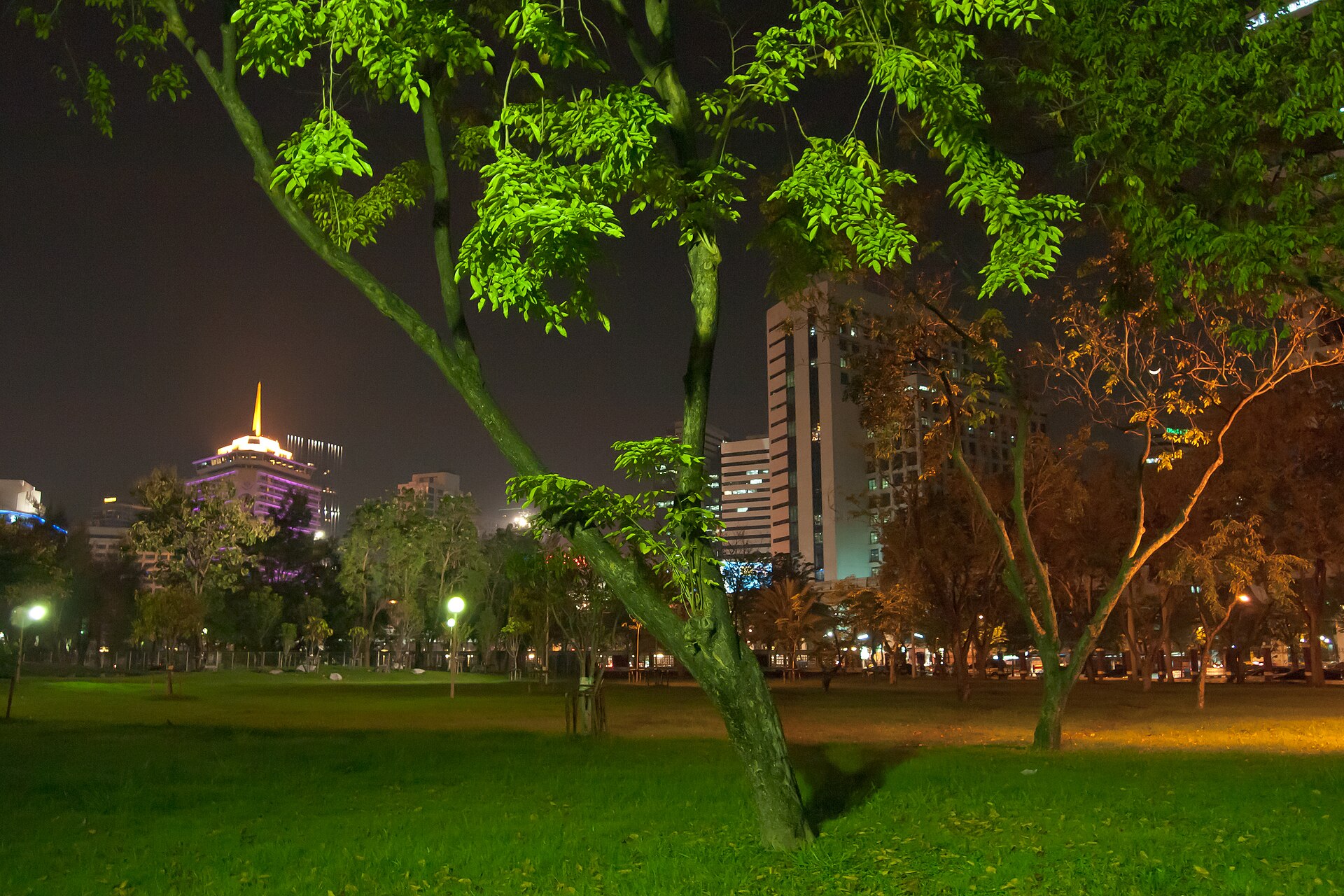
Lumphini Park
Rama IV Rd, Pathum Wan, Bangkok 10330
Lumphini Park is Bangkok's green lung, a massive escape from the smog and noise of the surrounding skyscrapers. It's where the city comes to breathe. You'll see elderly groups practicing Tai Chi in the morning mist and office workers jogging in their suits during their lunch breaks. But the real stars of the park are the Water Monitor Lizards. These prehistoric-looking creatures, some reaching six feet in length, roam the lakes and pathways with a terrifyingly casual confidence. They look like miniature crocodiles, and while they're generally harmless if left alone, watching a giant lizard glide through the water while a businessman walks by is a quintessential Bangkok experience. As you walk the paved paths, the skyline of the city looms over the canopy of tropical trees. It's a strange juxtaposition—the silence of the lake versus the roar of the city just beyond the fence. It's the only place in the center of the metropolis where you can forget you're in one of the most populous cities on earth.
Sathon Unique Tower
Sathon Rd, Yan Nawa, Bangkok
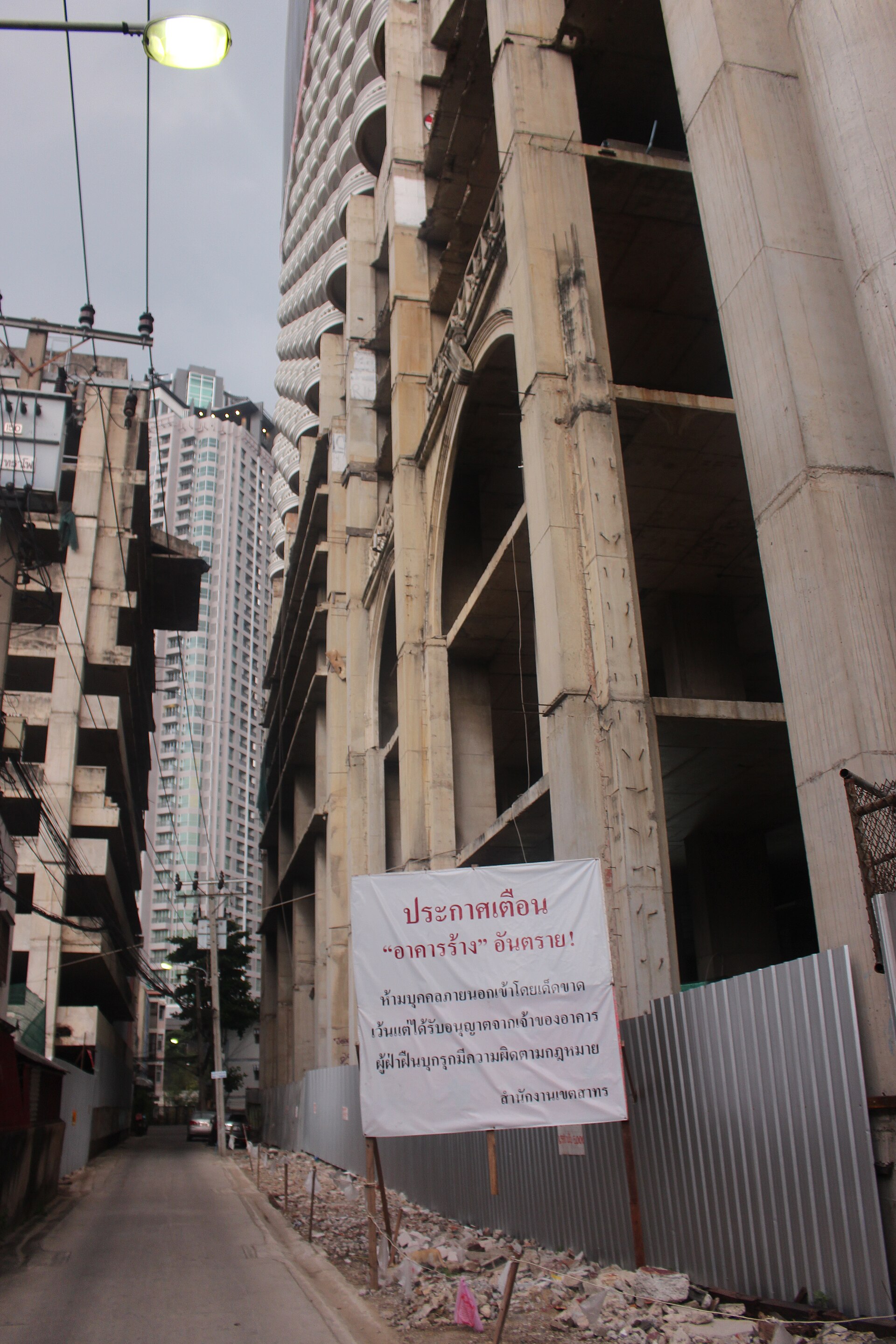
This is a skyscraper that never woke up. To the casual observer, it looks like a giant concrete skeleton haunting the Sathon skyline. To the locals, it's known as the 'Ghost Tower.' It was meant to be a luxury condominium, but the 1997 Asian Financial Crisis hit like a sledgehammer, leaving the project frozen in time and the developers bankrupt. For years, the building has stood as a hollow monument to corporate greed and economic collapse. It’s become a magnet for urban explorers and photographers who risk fines and security guards to climb its empty floors for a panoramic view of the city. There are endless rumors about hauntings and spirits wandering the stairwells, fueled by the eerie silence of a building that was designed for thousands of people but has hosted none. Standing at the base, you can feel the tension between the glittering glass towers surrounding it and this gray, brutalist carcass. It's a stark reminder that in the rush to reach the sky, sometimes the ground falls out from under you.
Siriraj Medical Museum
2 Wang Lang Rd, Siriraj, Bangkok 10200
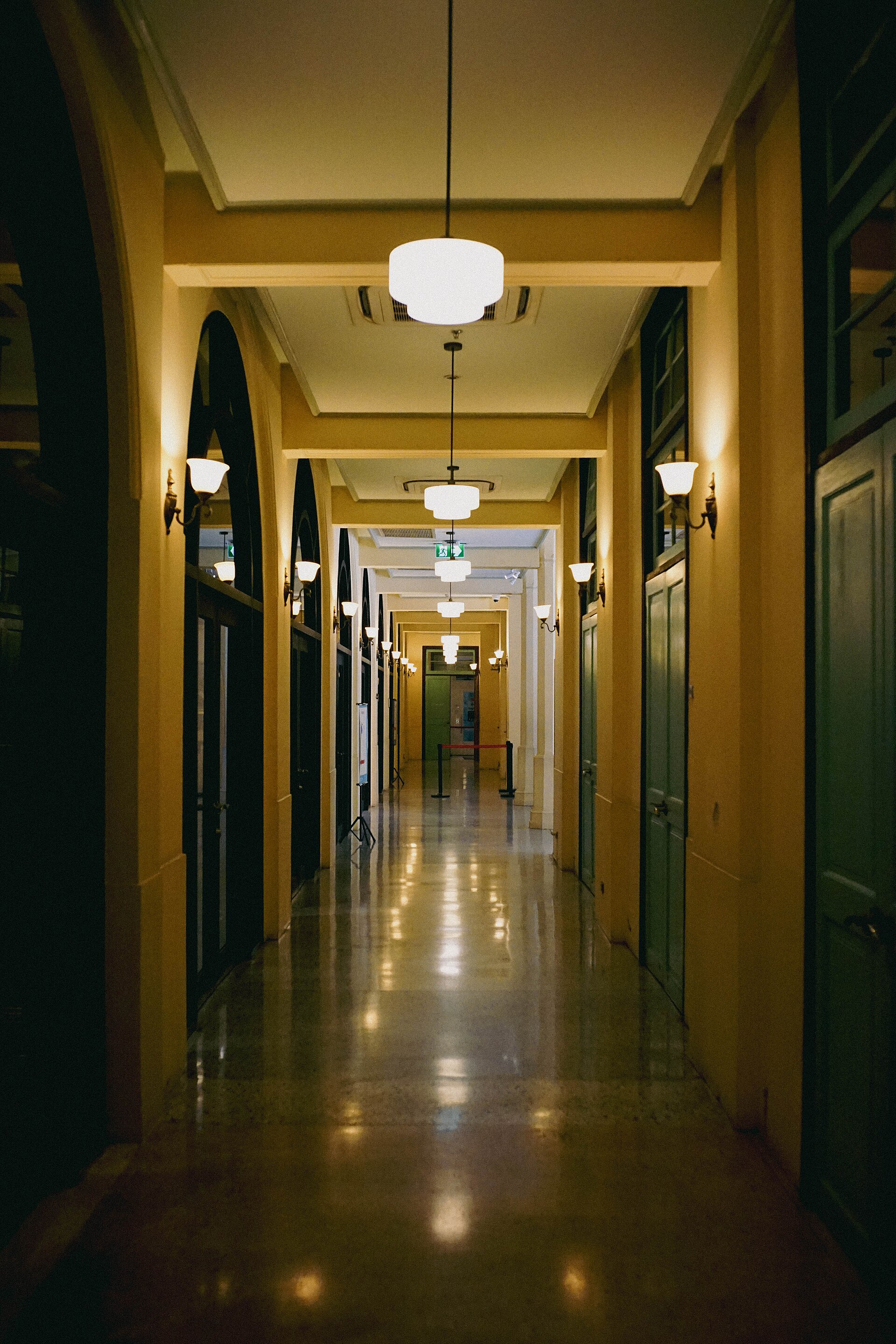
Warning: this is not for the faint of heart. Often called the 'Museum of Death,' the Siriraj Medical Museum is a plunge into the visceral reality of human anatomy. It started as a way for medical students to learn, but it has evolved into a collection of some of the most disturbing and fascinating specimens in the world. You'll find jars of preserved organs, wax models of diseases, and—most famously—the preserved body of a notorious Thai serial killer. It's a stark, clinical look at mortality that feels almost taboo. The atmosphere is heavy, and the silence of the museum is only broken by the hushed whispers of visitors reacting to the displays. Despite the macabre nature, there's a profound scientific purpose here. It documents the history of medicine in Thailand and the evolution of forensic science. It's a place that forces you to confront the fragility of the human body in a way that no other museum in the city does. Just maybe don't visit right before lunch.
Talat Noi
Talat Noi, Samphanthawong, Bangkok 10100
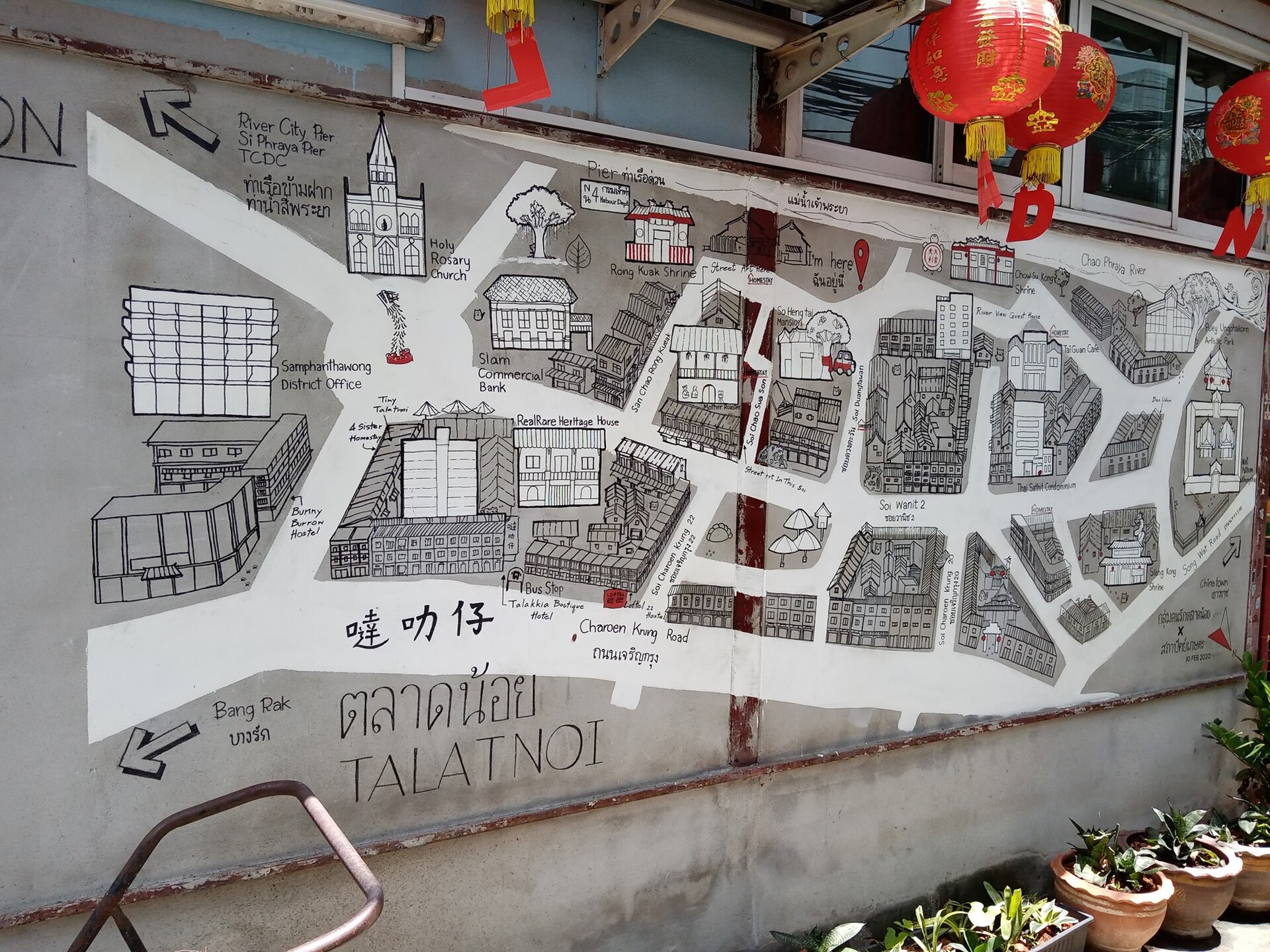
Talat Noi is where the 'real' Bangkok hides in plain sight. It's a labyrinth of narrow alleys where the smell of engine oil mixes with the aroma of homemade Thai desserts. This is the old automotive parts district, and you'll see piles of rusted scrap metal and old car engines stacked like sculptures in front of ancient Chinese shophouses. But look up, and you'll see a different world. Vibrant street art covers the crumbling walls, depicting the neighborhood's history and the people who live here. It's a playground for urban explorers, where every turn leads to a hidden cafe tucked inside a 100-year-old warehouse or a tiny shrine guarded by a sleeping cat. What makes Talat Noi special is the coexistence of the old and the new. You might find a trendy specialty coffee shop right next to a grandfather who has been repairing radiators since the 1960s. It's a living museum of the city's industrial past, refusing to be gentrified into a shopping mall.
The Grand Palace
Na Phra Lan Rd, Phra Borom Maha Ratchawang, Pom Prap Sattru Phai, Bangkok 10200
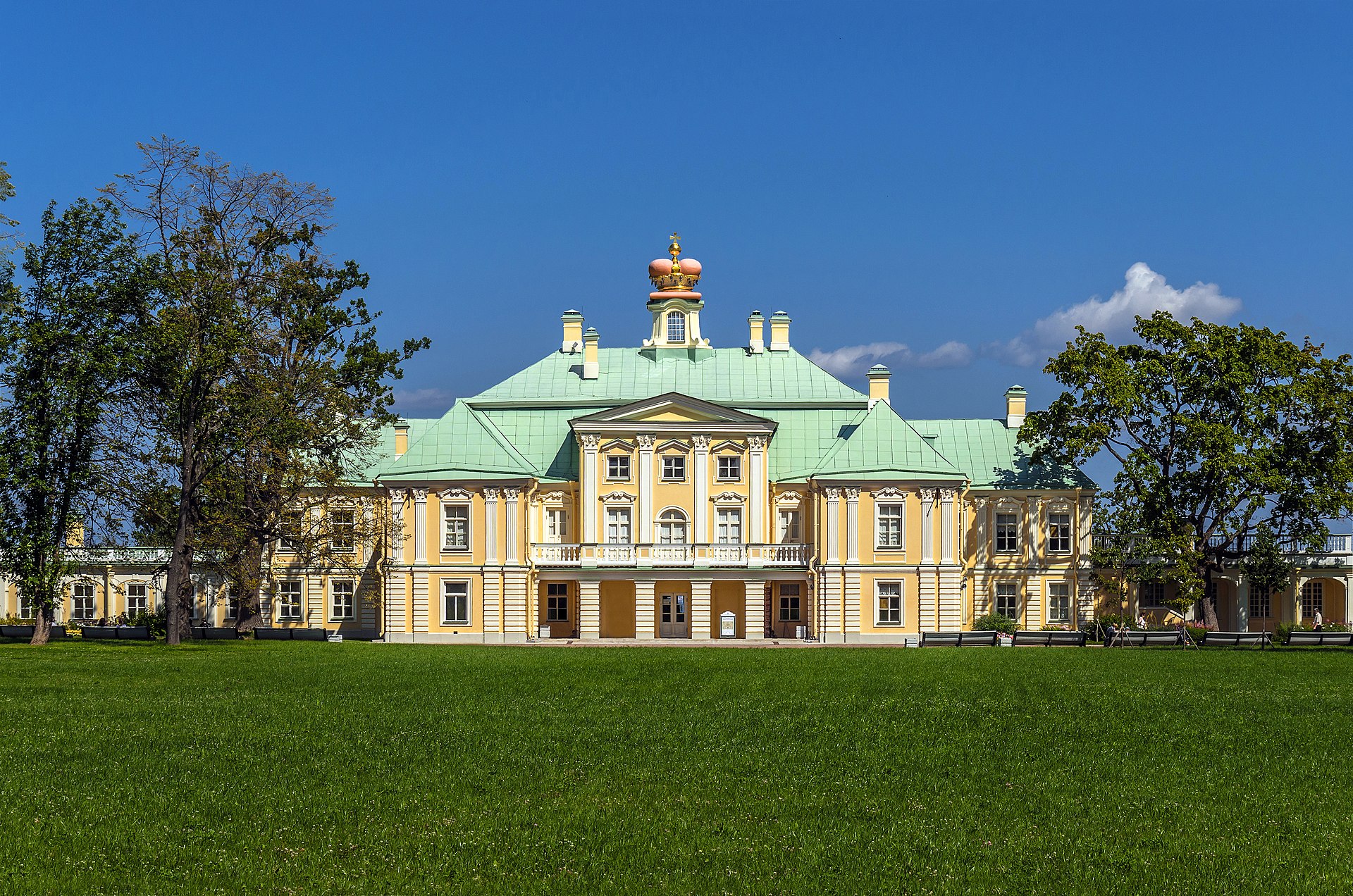
Imagine a place so dazzling that the gold leaf literally blinds you under the midday sun. This isn't just a palace; it's a shimmering statement of power and spirituality that has served as the heart of the Thai monarchy since 1782. But if you look closer, you'll see a strange architectural marriage—traditional Thai spires sitting right next to European-style neoclassical wings, a nod to the era when Thai kings traveled the world to keep the colonial powers at bay. Inside the Wat Phra Kaew temple, you'll find the Emerald Buddha. Despite the name, he's actually carved from a single block of jade. The most curious part? The King himself personally changes the Buddha's gold robes three times a year to mark the seasons. It's a ritual of cosmic proportions, believed to ensure the prosperity of the entire nation. As you wander the courtyards, keep an eye out for the murals surrounding the gallery. They tell the Ramakien—Thailand's version of the Ramayana. It's an epic tale of monkeys, demons, and divine love, painted with such detail that you can practically hear the battle cries of the monkey army echoing through the halls.
Wat Arun
Wang Tha Phai, Wat Arun, Bangkok 10600
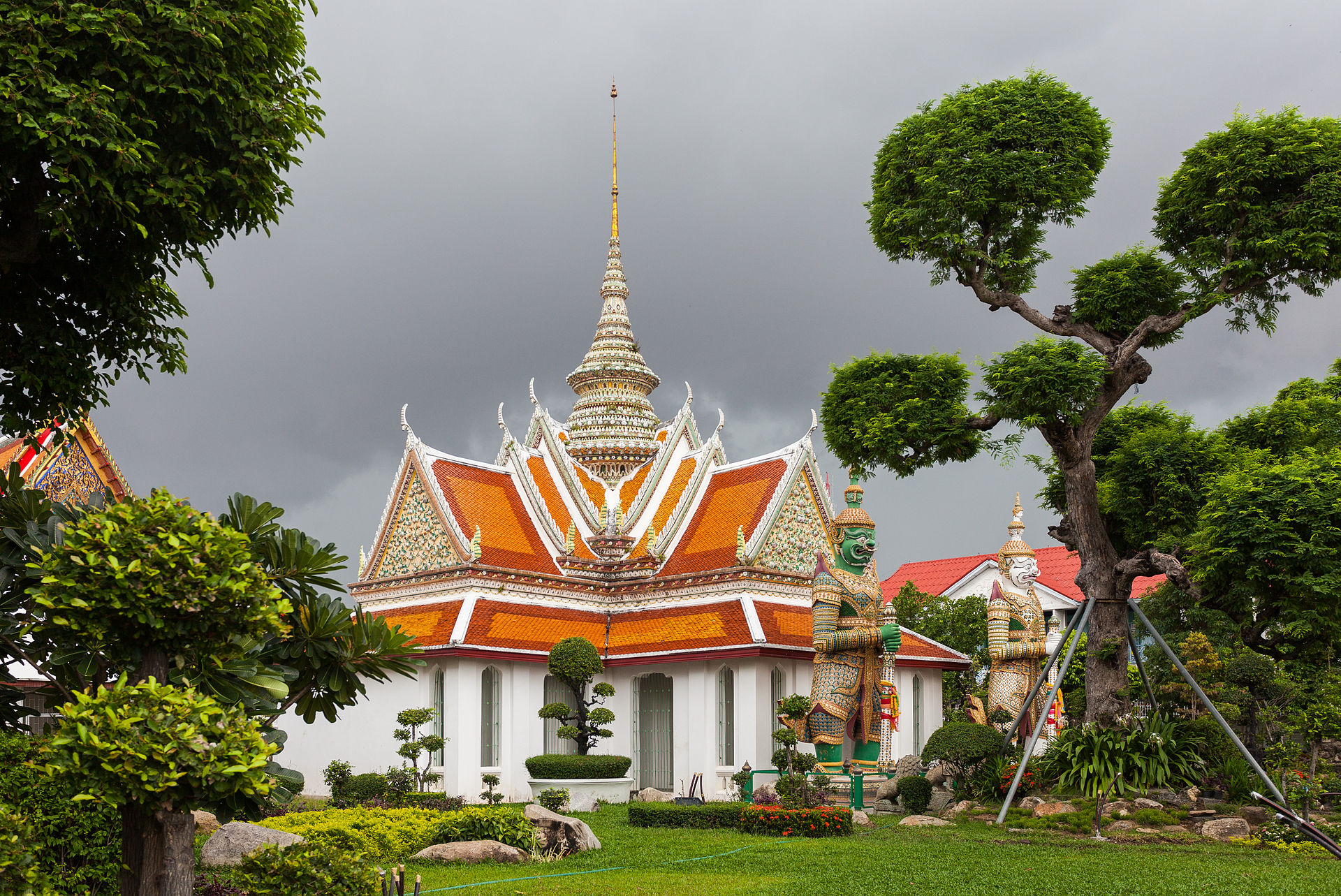
Standing on the banks of the Chao Phraya River, Wat Arun—the Temple of Dawn—looks like a porcelain rocket ship ready to launch into the clouds. While most temples are gold, this one is a mosaic of colors. The secret? It's decorated with millions of pieces of broken Chinese porcelain. Back in the day, Chinese trading ships used these porcelain shards as ballast to stabilize their boats; the Thais simply recycled the waste into a masterpiece. The climb up the steep stairs of the central prang is a bit of a thrill, designed to represent the ascent to Mount Meru, the center of the universe in Buddhist cosmology. As you climb, you'll notice the figures of monkeys and demons holding up the structure, a silent battle between chaos and order frozen in ceramic. For the best experience, don't just visit; watch it from across the river at sunset. As the lights kick in and the silhouette of the spire cuts through a purple sky, you realize why this is the most photographed spot in the city. It's a beacon that has guided sailors and pilgrims for centuries.
Wat Benchamabophit
Dusit District, Bangkok
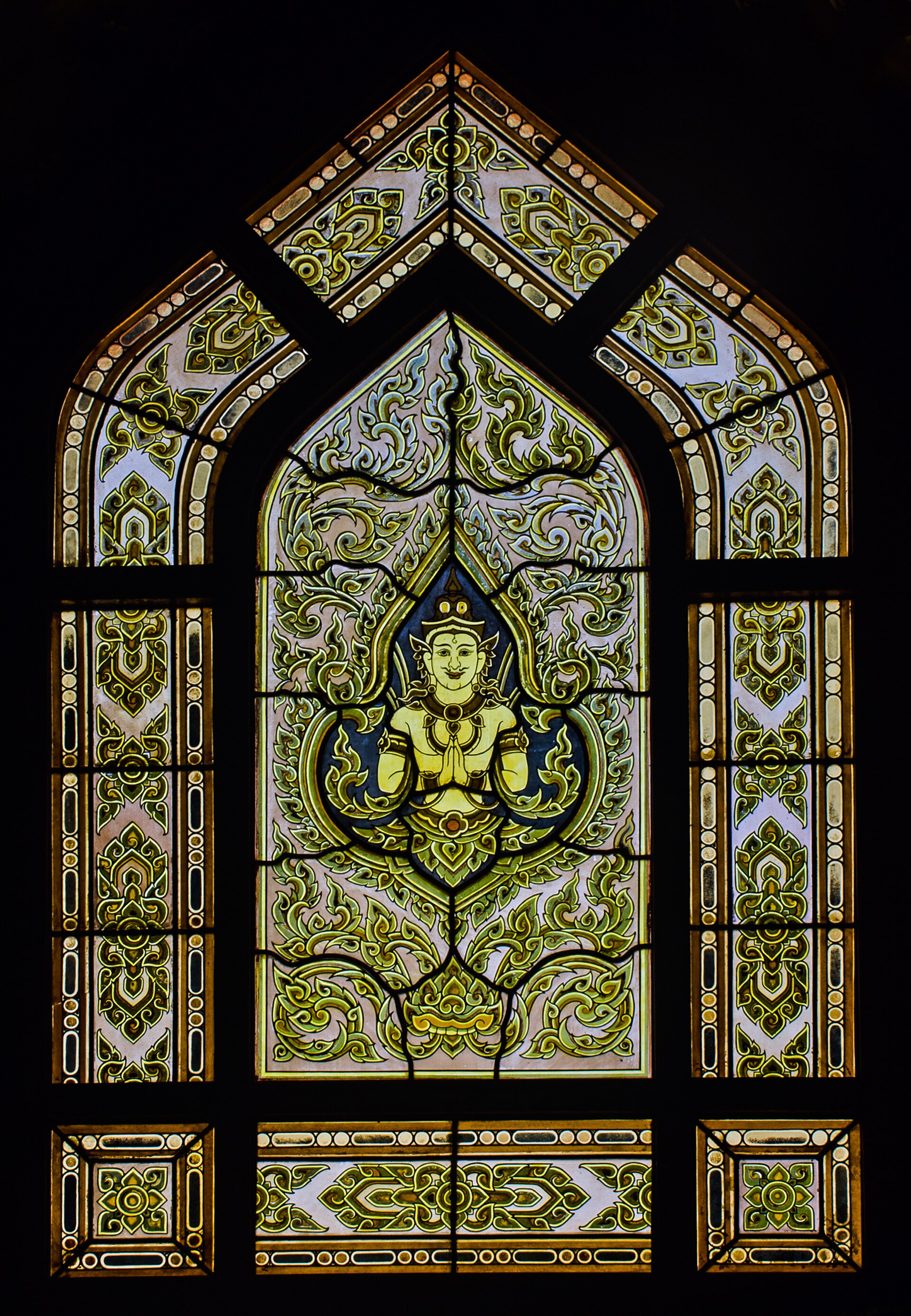
Most temples in Bangkok are a riot of gold and glitter, but the Marble Temple takes a different approach: pure, understated elegance. Imagine a sanctuary crafted entirely from white Carrara marble, shipped piece by piece from Italy. It's a architectural love letter from King Chulalongkorn, who wanted a temple that blended traditional Thai design with European materials. As you walk through the grounds, you'll notice a mathematical precision to the layout. Everything is symmetrical, from the manicured gardens to the placement of the bells. It doesn't feel chaotic like the rest of the city; it feels like a deep breath. The white marble reflects the tropical sun in a way that makes the entire complex seem to glow from within. Keep an eye out for the small details—the intricate carvings and the way the light hits the interior gold leaf. It’s not just a place of worship; it’s a royal statement of sophistication, proving that Thai spirituality could look just as home in Italian stone as it does in traditional teak.
Wat Paknam Phasi Charoen
Phasi Charoen, Bangkok
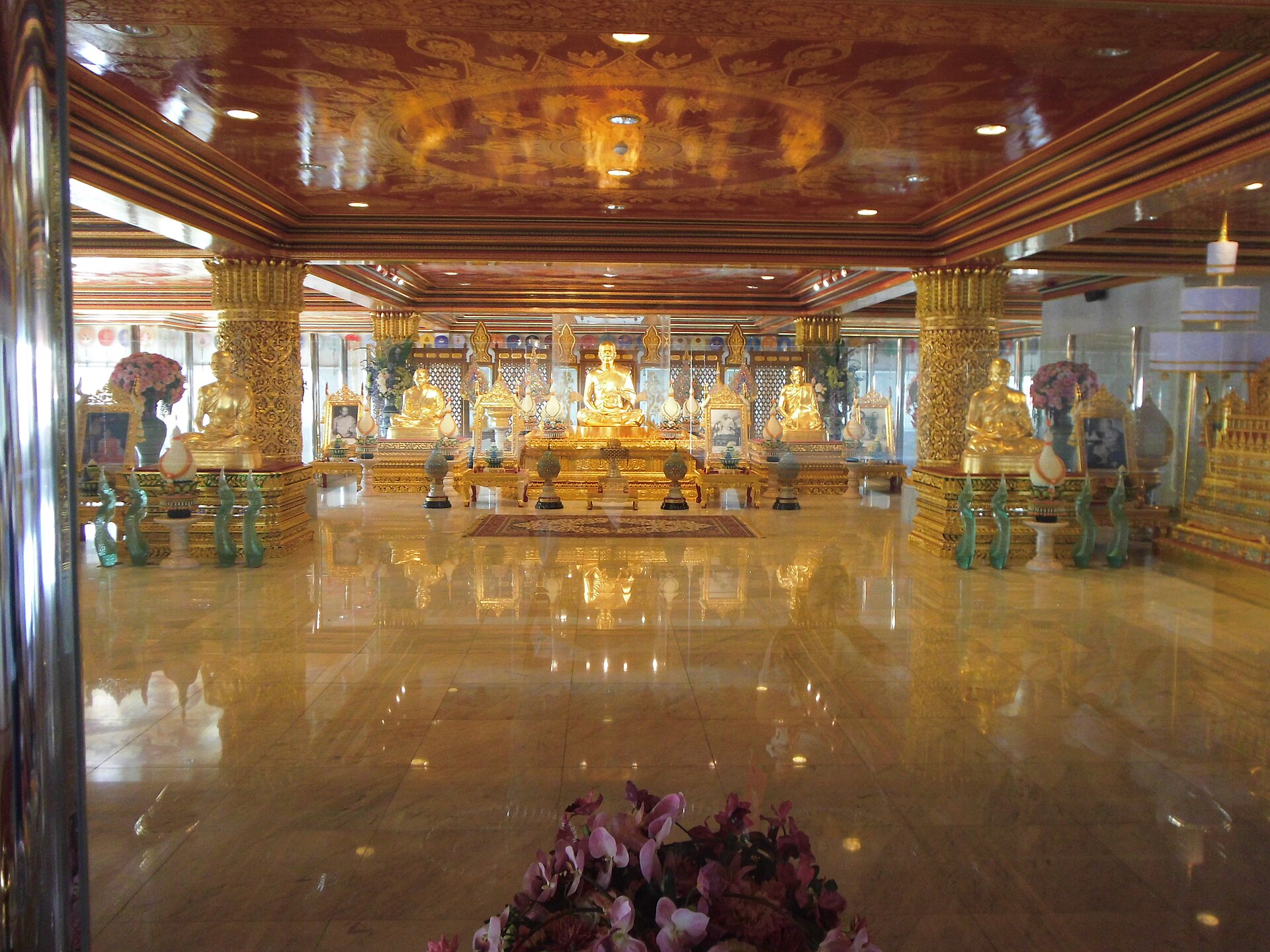
Imagine walking through a quiet neighborhood and suddenly looking up to see a gold-plated Buddha that seems to be touching the clouds. This isn't a mirage; it's the Great Buddha of Wat Paknam. Standing at a staggering 69 meters tall, it's one of the most imposing sights in the city, acting as a golden beacon that can be seen from miles away. But the real magic happens when you step inside the stupa. While the exterior is all about scale and power, the interior is a psychedelic trip of Buddhist art. The walls are covered in intricate, colorful murals and mirrored mosaics that make you feel like you've stepped inside a giant kaleidoscope. It's a dizzying blend of traditional faith and a visual style that feels almost contemporary. What makes this place special is the contrast. One minute you're admiring a colossal monument to enlightenment, and the next, you're watching local residents go about their day in the surrounding alleys. It's a reminder that in Bangkok, the divine and the mundane don't just coexist—they share the same street corner.
Wat Pho
2 Sanam Chai Rd, Phra Borom Maha Ratchawang, Pom Prap Sattru Phai, Bangkok 10200
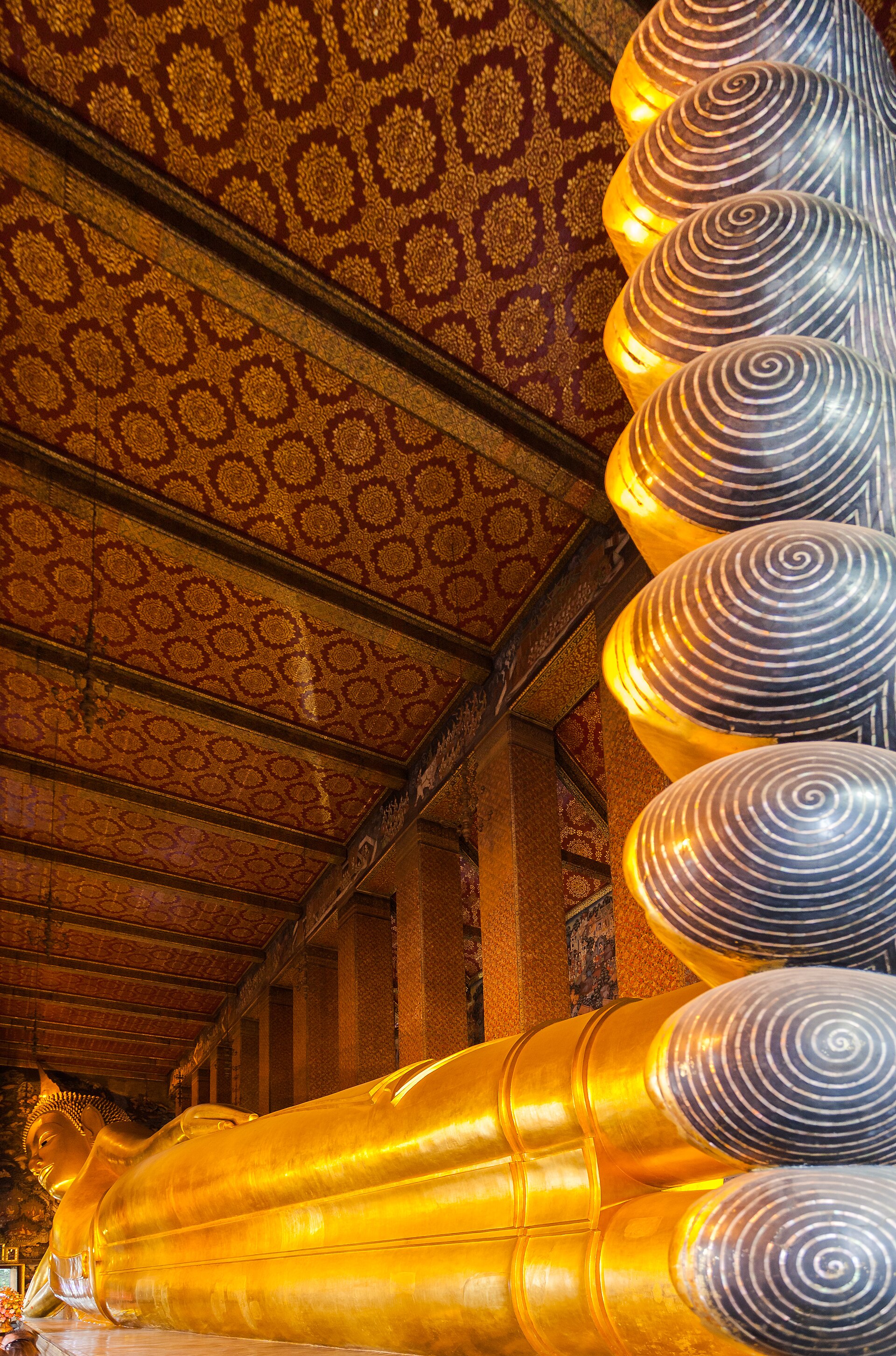
You've probably seen the photos of the giant gold reclining Buddha, but nothing prepares you for the scale of him in person. Stretching 46 meters long, he looks less like a statue and more like a golden mountain resting in a peaceful slumber. If you walk to the end of the gallery, you'll see his feet—intricately inlaid with mother-of-pearl, depicting the 108 auspicious signs of the Buddha. But Wat Pho isn't just about the big gold guy. It's actually Thailand's first public university. Long before textbooks, the temple walls were inscribed with medicinal knowledge, poetry, and history, serving as a living library for the people. It was a place where you didn't just pray; you studied. Speaking of study, this is the birthplace of traditional Thai massage. To this day, the temple maintains a school that preserves these ancient healing arts. If you're feeling the ache of a long walking tour, you can actually get a massage here, receiving a treatment that has been practiced in these very courtyards for centuries.
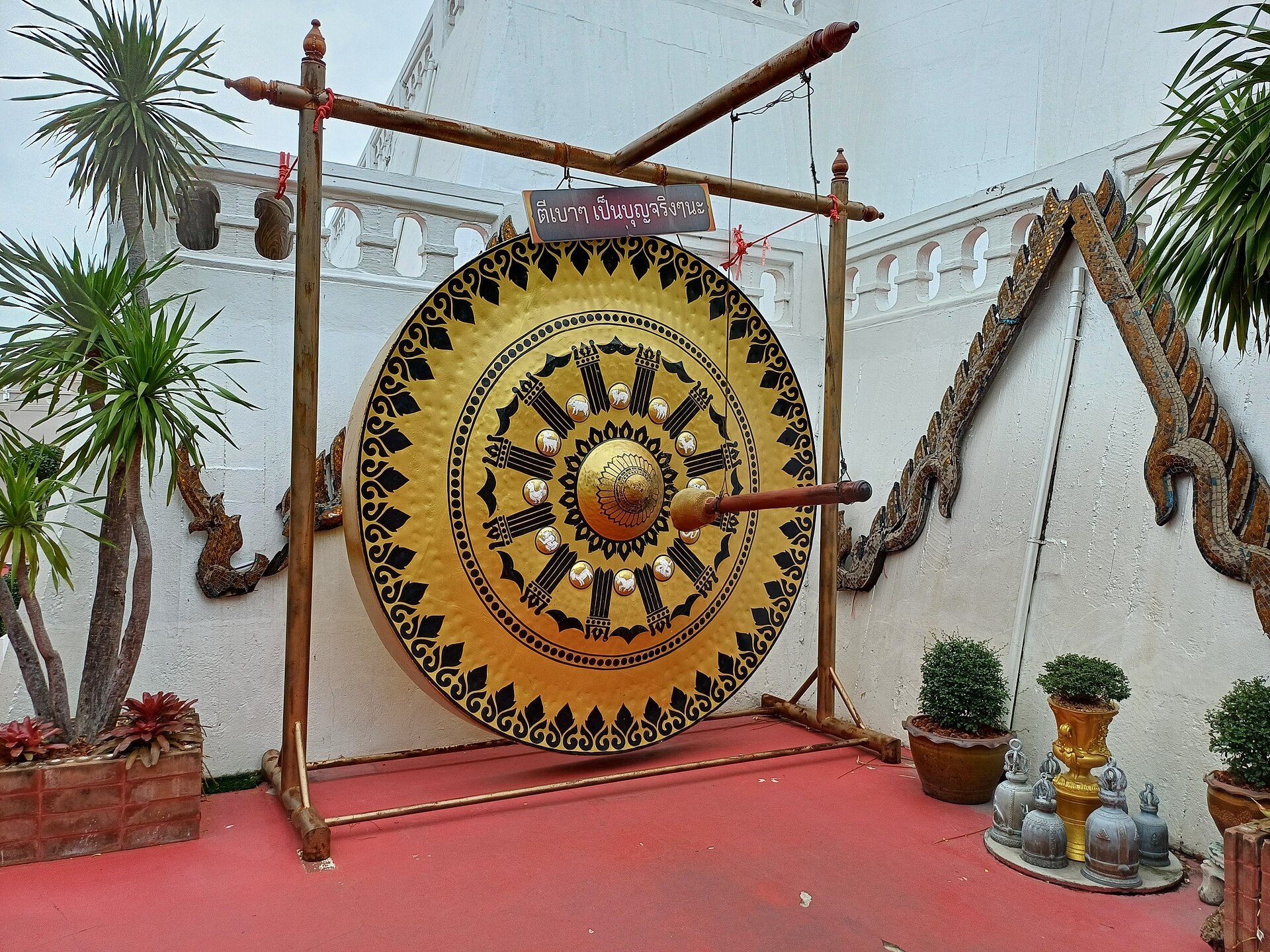
Wat Saket (The Golden Mount)
Phra Sumen Rd, Pom Prap Sattru Phai, Bangkok 10100
Most temples in Bangkok are flat on the ground, but Wat Saket is different. It's an artificial mountain. To reach the golden chedi at the top, you have to climb a winding path of 344 steps, passing by bells that pilgrims ring to bring good luck. It's a slow ascent that lets you leave the city noise behind, one step at a time. Once you reach the summit, you're rewarded with a 360-degree view of the skyline. From here, the contrast of Bangkok is most obvious: you can see the ancient spires of the old city on one side and the glass-and-steel skyscrapers of the modern metropolis on the other. It's the perfect place to realize just how massive this city actually is. There's a peculiar peace at the top. As the wind blows through the golden spire, you'll see locals circling the mount in meditation. It's not just a tourist lookout; it's a spiritual climb. Just be careful not to look down too quickly if you're prone to vertigo—the view is breathtaking, but the height is very real.
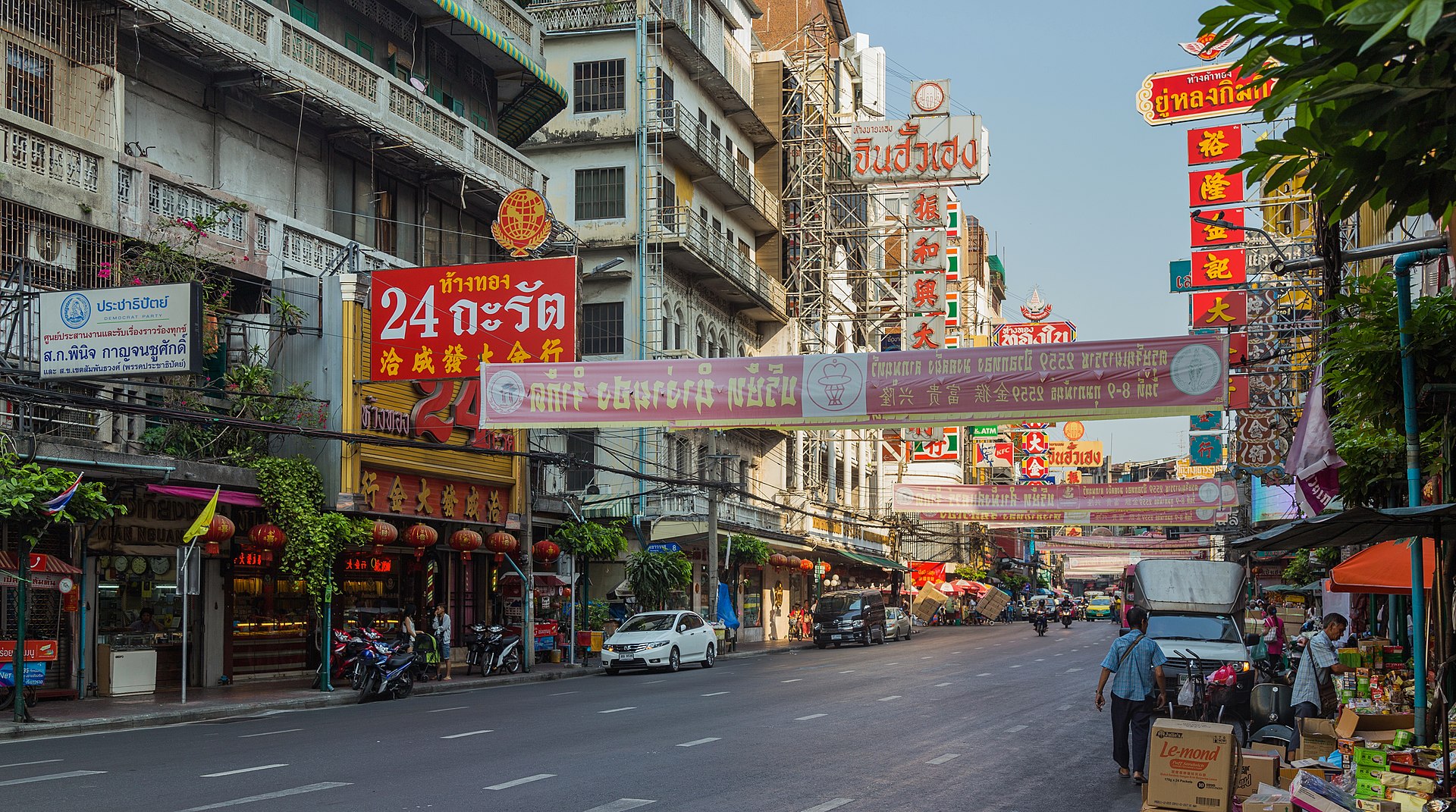
Yaowarat (Chinatown)
Yaowarat Rd, Samphanthawong, Bangkok 10100
Welcome to the sensory overload that is Yaowarat. By day, it's a gold-trading hub where the shops are so packed with jewelry that the windows look like solid gold walls. But once the sun dips, the street transforms into the world's largest open-air food court. The air thickens with the smell of charcoal-grilled seafood, sweet mango sticky rice, and the pungent, unmistakable scent of durian. Navigating Yaowarat is an exercise in organized chaos. You'll be dodging tuk-tuks, weaving through crowds of hungry locals, and stepping over steaming pots of noodle soup. The neon signs in Chinese and Thai create a futuristic glow that clashes beautifully with the old-school shophouses lining the street. If you can stomach it, dive into the narrow side alleys. This is where the 'hidden' Chinatown lives—small shrines tucked between warehouses and tiny coffee shops where old men have been drinking the same brew for forty years. It's a place where the pace of life is dictated by the speed of a wok over a high-pressure flame.