Four identical Rococo palaces arranged around an octagonal courtyard, with an equestrian statue of Frederick V at the centre — Amalienborg is one of the finest examples of 18th-century urban planning in Europe, and it only became a royal residence by accident. The four palaces were originally built between 1750 and 1760 for four noble families, designed by architect Nicolai Eigtved as the centrepiece of the new Frederiksstaden district. The royal family had no intention of living here. Then Christiansborg burned down in 1794, and the royals needed somewhere to go. They bought the palaces, moved in, and never left.
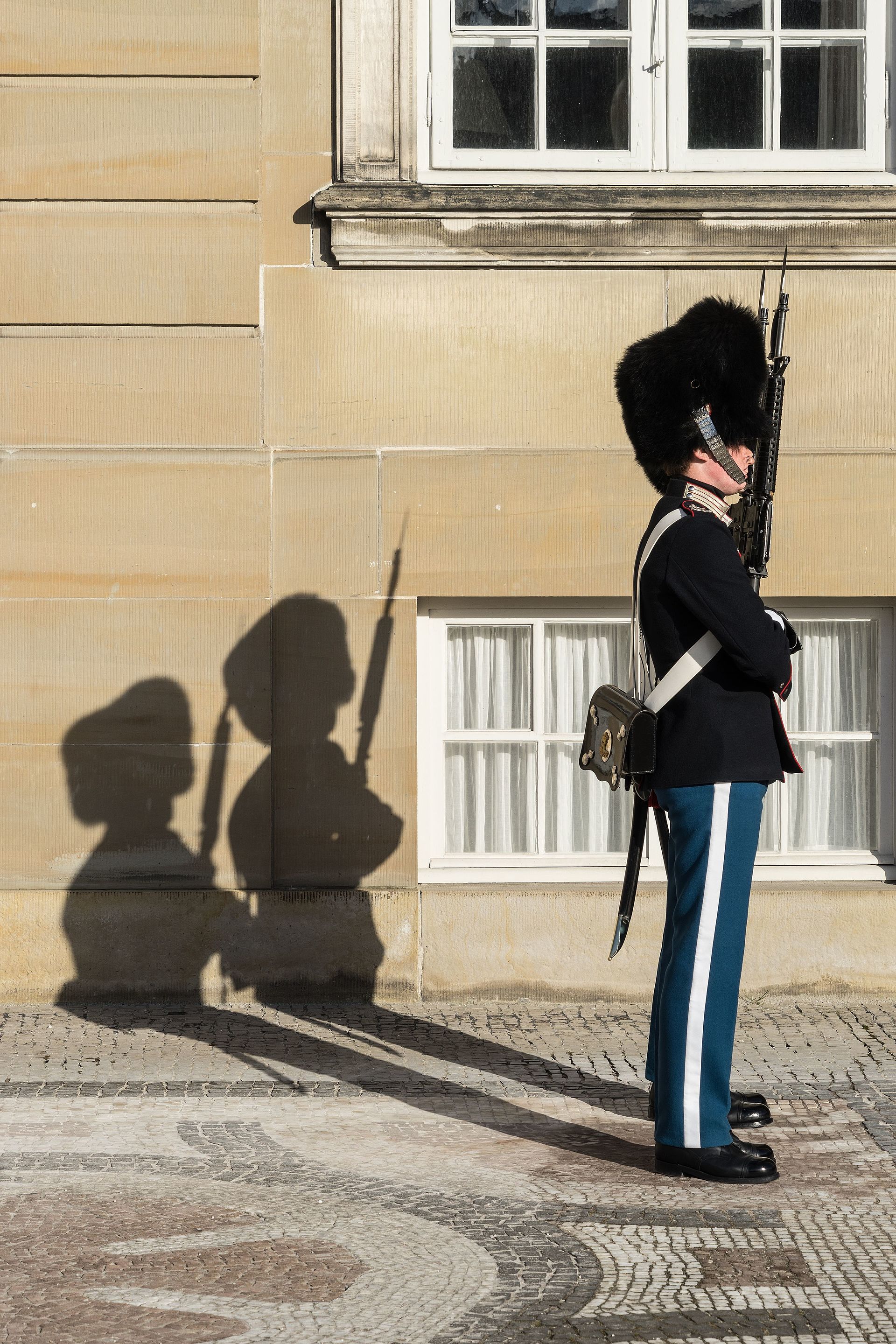
The daily changing of the guard is one of Copenhagen's great free spectacles. At 11:30 every morning, the Royal Guard marches from Rosenborg Castle through the streets of the city, arriving at Amalienborg at noon for the ceremony. The parade includes up to 36 musicians, a fife and drum corps of 12 drummers, and 35 guards wearing the iconic bearskin hats — the same hats that have topped Danish royal guards since 1805. When the monarch is in residence, the flag flies from the palace and the ceremony is extended with a full band performance.
Eigtved died in 1754 before Frederiksstaden was complete, but his vision for the district — a planned neighbourhood radiating outward from the palace square — became one of the most influential urban designs in Scandinavian history. The Marble Church, originally intended as the neighbourhood's crowning glory, ran out of money and sat as an unfinished ruin for over a century before being completed in 1894, nearly 150 years after construction began.
The Amalienborg Museum occupies one of the four palaces and contains private chambers preserved exactly as the royal family used them, including the study of King Christian IX, known as "the father-in-law of Europe" because his children married into virtually every royal house on the continent.
Verified Facts
The four palaces were built 1750-1760 for noble families, not royalty; the royals moved in after Christiansborg burned in 1794
Designed by architect Nicolai Eigtved in the Rococo style as the centrepiece of Frederiksstaden
The Royal Guard has worn bearskin hats since 1805 and marches daily from Rosenborg Castle at 11:30
King Christian IX was known as the father-in-law of Europe as his children married into nearly every European royal house
Get walking directions
5 Amaliegade, Copenhagen, København K, 1256, Denmark