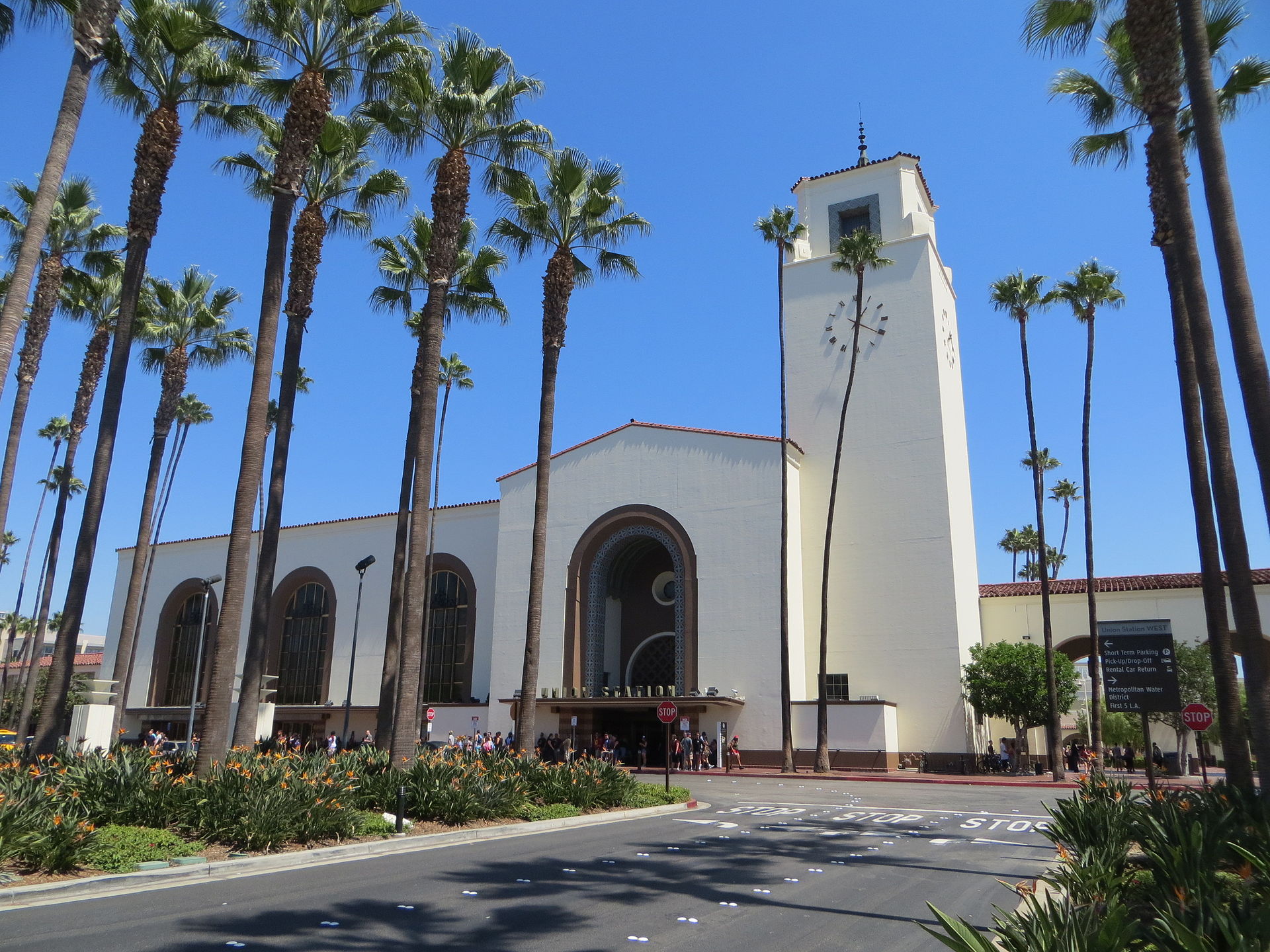
Union Station is the last great railway station built in America — a 1939 masterpiece that blends Art Deco, Spanish Colonial Revival, and Streamline Moderne architecture into a style so distinctive that it has no proper name beyond 'Union Station style.' The building was designed by John and Donald Parkinson (who also designed City Hall and several other LA landmarks) and was completed at a time when rail travel was already declining, which gives the building a bittersweet grandeur — it was built to serve an age of travel that was already ending.
The waiting room is the building's centrepiece — an enormous hall with a 52-foot beamed ceiling, leather seats, inlaid marble floors, and the kind of civic generosity that makes modern transit buildings look mean-spirited by comparison. The outdoor patios, with their terra-cotta tile, garden courtyards, and the massive Moreton Bay fig trees that shade the walkways, are the most pleasant waiting-for-a-train experience in America (or the most pleasant killing-time-in-a-beautiful-building experience, since most visitors are not actually catching a train).
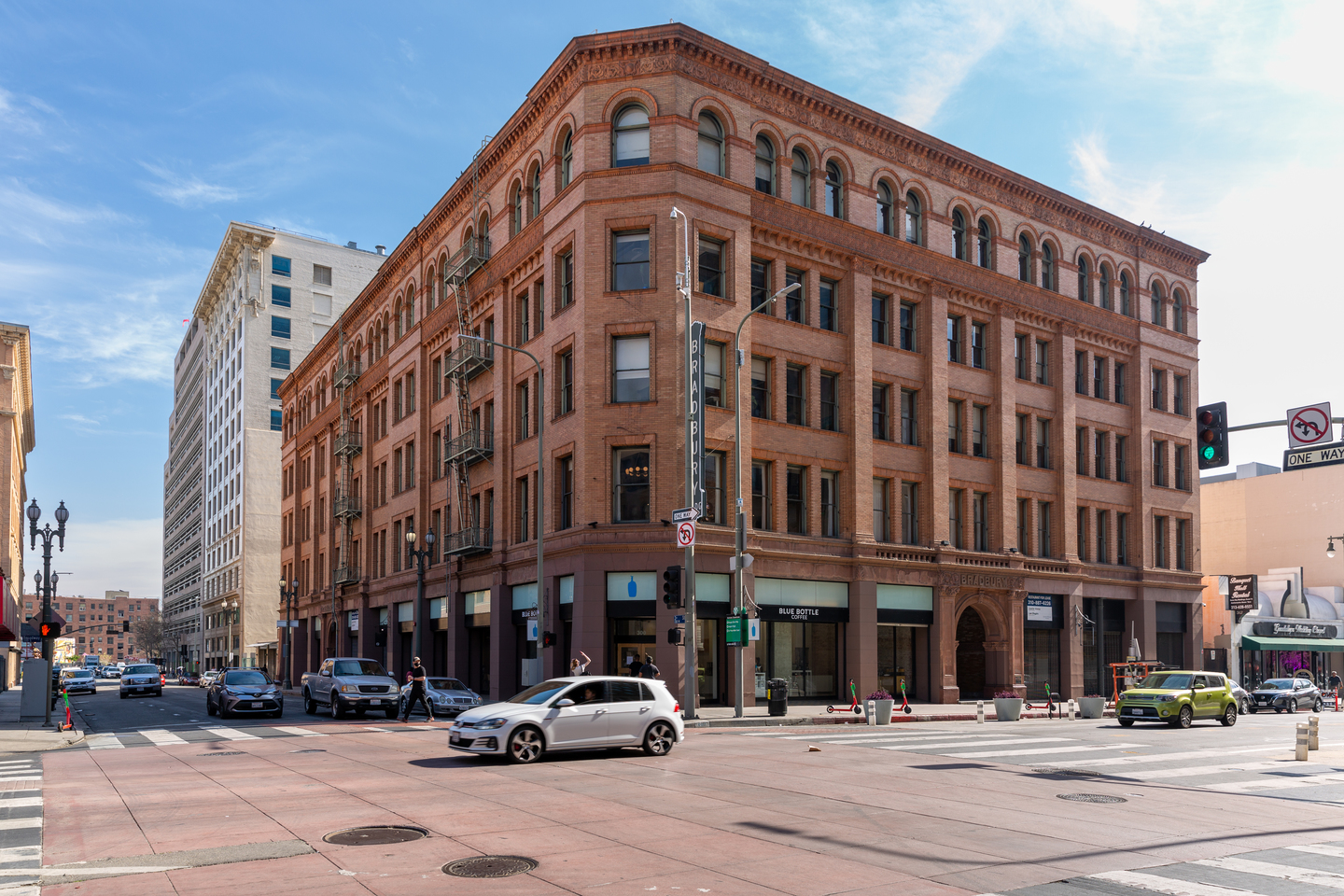
Union Station has appeared in more films than any other LA building except the Bradbury Building — 'Blade Runner,' 'Bugsy,' 'The Way We Were,' 'Pearl Harbor,' and dozens of others have used its Art Deco interiors and the long perspective of the ticket concourse. The station is the hub for LA's Metro rail system, Amtrak, and Metrolink commuter trains, making it one of the few LA landmarks that is easily accessible by public transport — appropriate for a building that was designed to make public transport feel like an occasion.
Verified Facts
Union Station was completed in 1939
It is considered the last great railway station built in America
Designed by John and Donald Parkinson
The waiting room has a 52-foot beamed ceiling
Get walking directions
800 N Alameda Street, Los Angeles, CA 90012