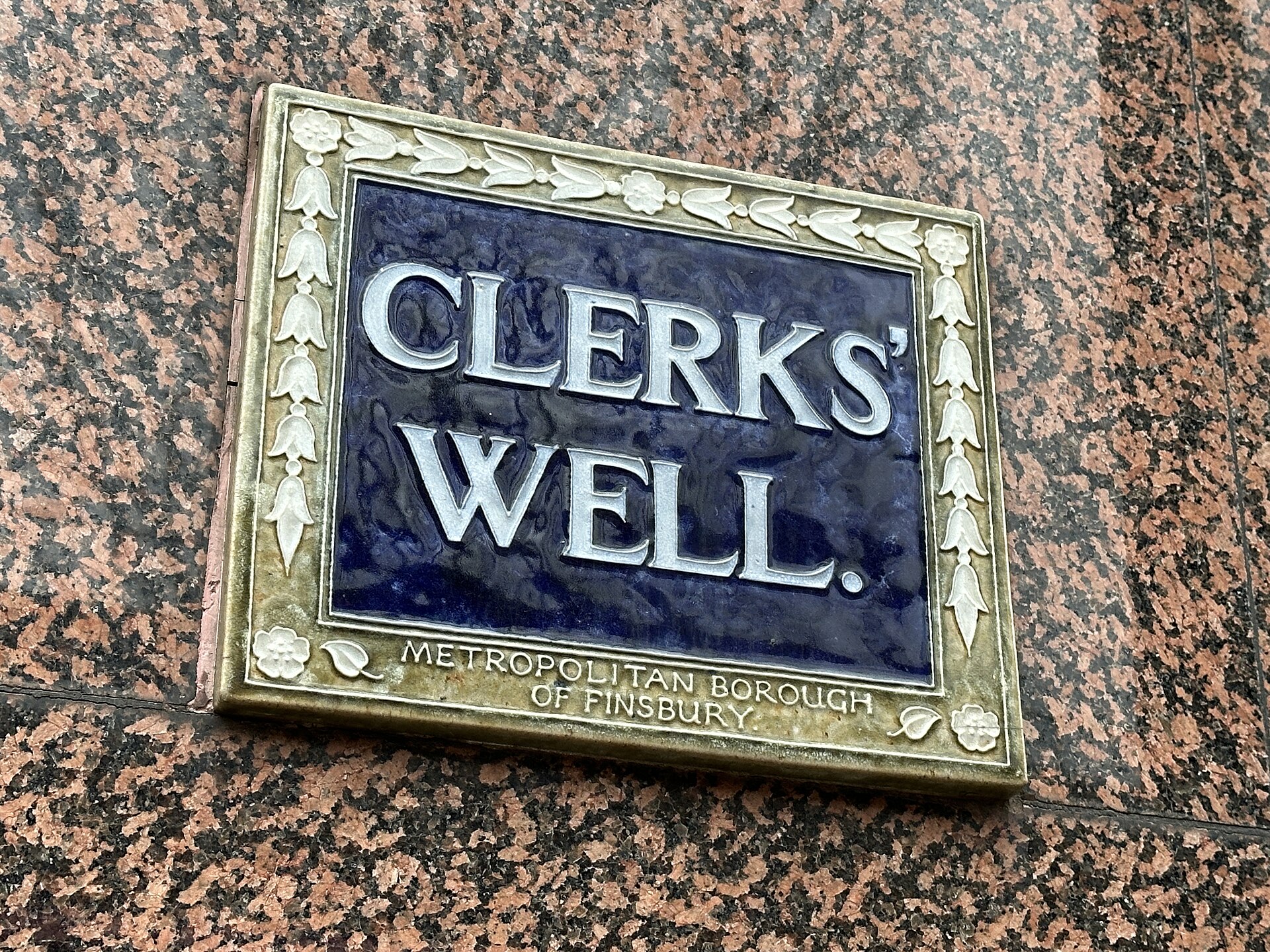
An entire London neighbourhood is named after the thing you're about to see through a window. Clerkenwell. Clerks' well. The well of the parish clerks. It's right there, the whole etymology, hiding in plain sight in the place name.
In medieval London, the parish clerks used to gather at a natural spring on this spot to perform miracle plays and mystery plays — outdoor theatrical performances of Bible stories. The well became their meeting point, and the area took their name. That's documented as far back as the twelve hundreds. The Clerk's Well was a landmark. Everyone knew where it was.
And then London forgot about it. Over the centuries, the well was covered over, built on top of, filled with rubbish, and lost. Completely lost. The neighbourhood kept the name, but nobody could actually find the thing. It sat buried underground, forgotten, for centuries.
Then in nineteen twenty-four, workmen demolishing a building on Farringdon Lane dug down and there it was. The medieval well that named an entire district, sitting in the dark, exactly where it had always been. They'd been walking over it for hundreds of years.
Today you can see it through the ground-floor window of a building called Well Court at fourteen to sixteen Farringdon Lane. It's behind glass, lit from below, visible from the street. If you want to go inside for a closer look, you can arrange a visit through the Islington Local History Centre. But honestly, just pressing your face against the glass and peering down at this ancient water source that an entire neighbourhood forgot about is a pretty good London experience.
Verified Facts
This is the well that gave Clerkenwell its name — medieval parish clerks performed miracle plays here
The well was lost for centuries, filled with rubbish, and rediscovered by workmen in 1924
Visible through the ground-floor window of Well Court on Farringdon Lane; visits inside arranged via Islington Local History Centre
Get walking directions
14-16 Farringdon Lane, London EC1R 3AU