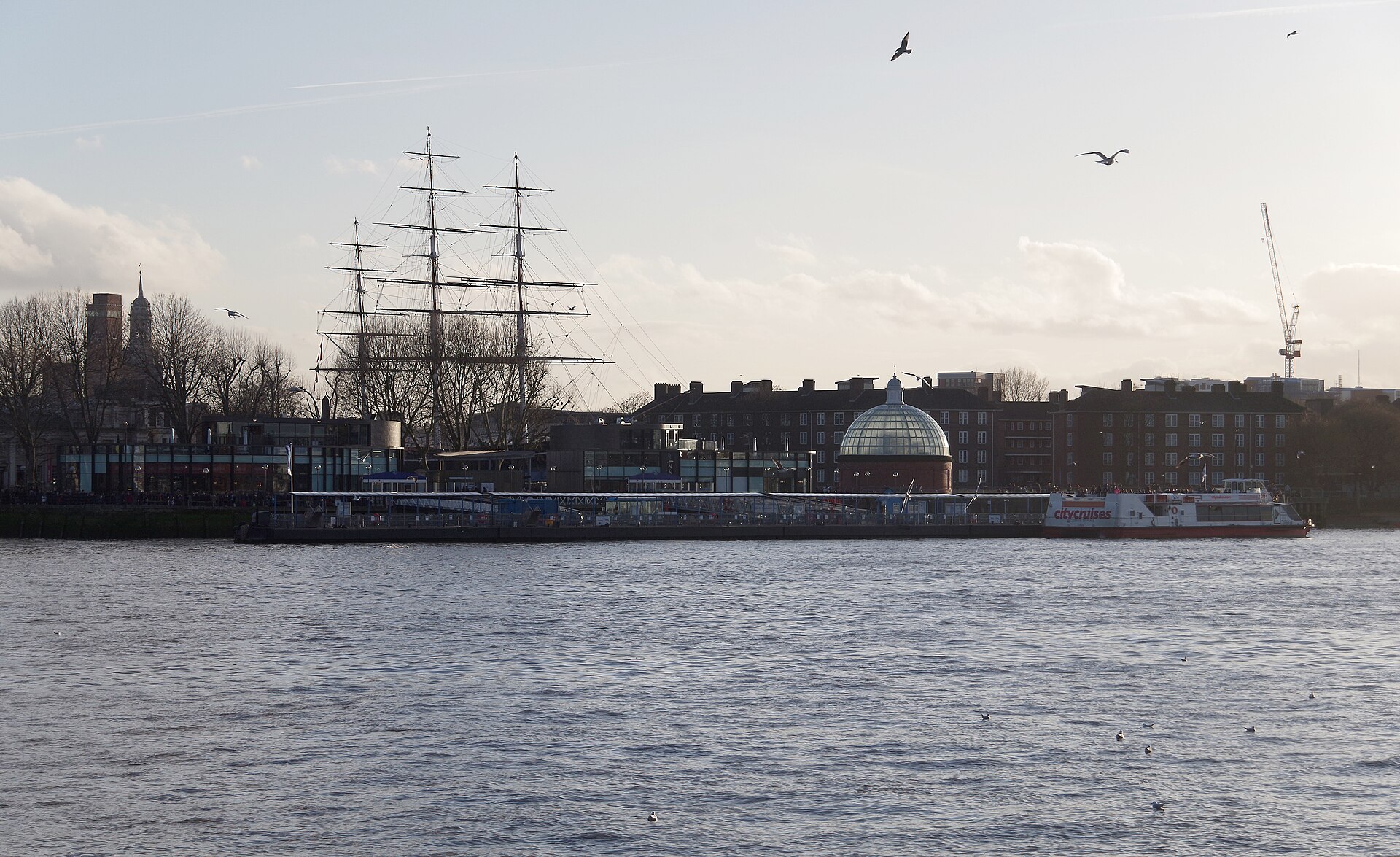
The Cutty Sark is the last surviving tea clipper — the Formula One cars of the Victorian shipping world — and she's been lifted out of the water and suspended in a glass case so you can walk underneath her copper-clad hull and appreciate the engineering that made her the fastest ship in the world.
Launched in 1869, the Cutty Sark was built to race Chinese tea from Shanghai to London in the annual competition that gripped the Victorian public the way the World Cup grips us now. She was fast but unlucky — she lost her rudder in a storm on her most famous race and still nearly won. By the time she hit her stride, steamships had made clipper ships obsolete, so she pivoted to the Australian wool trade where she finally dominated, regularly beating every other ship on the route.
The museum inside is surprisingly engaging — you can grip the wheel, explore the crew quarters (tiny), see the captain's cabin (marginally less tiny), and read the logs that record life at sea with the matter-of-fact tone of men who considered rounding Cape Horn in a gale to be just another Tuesday. The ship nearly burned down in 2007 during restoration — an arson attack that destroyed much of the interior — and the £50 million rebuild is itself a story of obsessive craftsmanship. The gleaming hull, raised on its glass plinth in the Greenwich sunshine, is one of the most photogenic things on the Thames.
Verified Facts
The Cutty Sark was launched in 1869 in Dumbarton, Scotland
She is the world's sole surviving tea clipper
A fire in May 2007 caused significant damage during restoration
The restoration cost approximately £50 million
Get walking directions
King William Walk, Greenwich, London SE10 9HT