Everyone credits Robert Browning with naming this place, and everyone is wrong. The poet did live at 19 Warwick Crescent from 1861 to 1868, overlooking the canal basin, but the nickname "Venice" was actually used by Lord Byron decades earlier. Somewhere along the line, history swapped one Romantic poet for another and the myth stuck. The name "Little Venice" didn't come into formal use until after World War II, and the area was officially recognised under that name only in the 1950s.
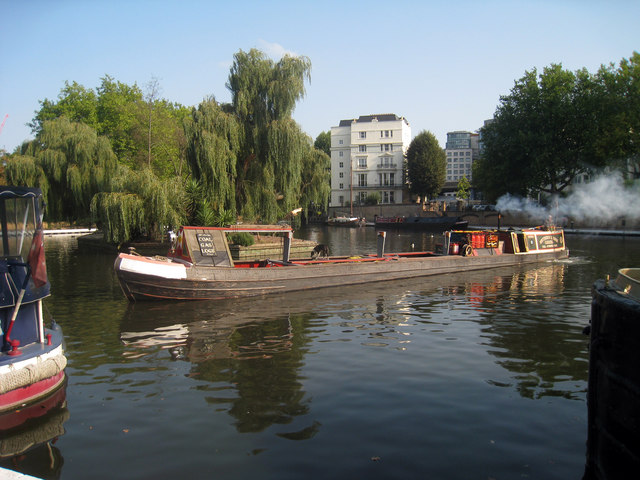
Little Venice sits at the junction of three waterways: the Paddington Arm of the Grand Union Canal, Regent's Canal, and the entrance to Paddington Basin. The triangular pool at the junction was designed to allow long narrowboats to turn around, and it creates an unexpectedly tranquil stretch of water surrounded by white stucco mansions and weeping willows. The canal arrived at Paddington in 1801, when this was still a village on the outskirts of London.
Regent's Canal, completed in 1820, connects Little Venice to Camden Lock, the London Zoo, and eventually the Thames at Limehouse. John Nash produced the masterplan in 1811 for the Prince Regent, and the canal was as much a piece of urban design as it was infrastructure. Today you can walk or take a narrowboat along the towpath all the way to Camden — a journey of about an hour that feels like it belongs in another century.
The Puppet Theatre Barge has been moored here since 1982, performing puppet shows for children and adults in a converted narrowboat. Every May, the canal comes alive during the Canalway Cavalcade, when hundreds of decorated narrowboats gather for a festival that has been running since 1983.
Verified Facts
Byron, not Browning, originally used the term "Venice" for this area — the common attribution to Browning is a myth
Robert Browning lived at 19 Warwick Crescent overlooking the canal from 1861 to 1868
Sits at the junction of the Paddington Arm, Regent's Canal, and Paddington Basin
The name Little Venice was not formally used until after WWII, officially recognised in the 1950s
Get walking directions
City of Westminster, London, United Kingdom