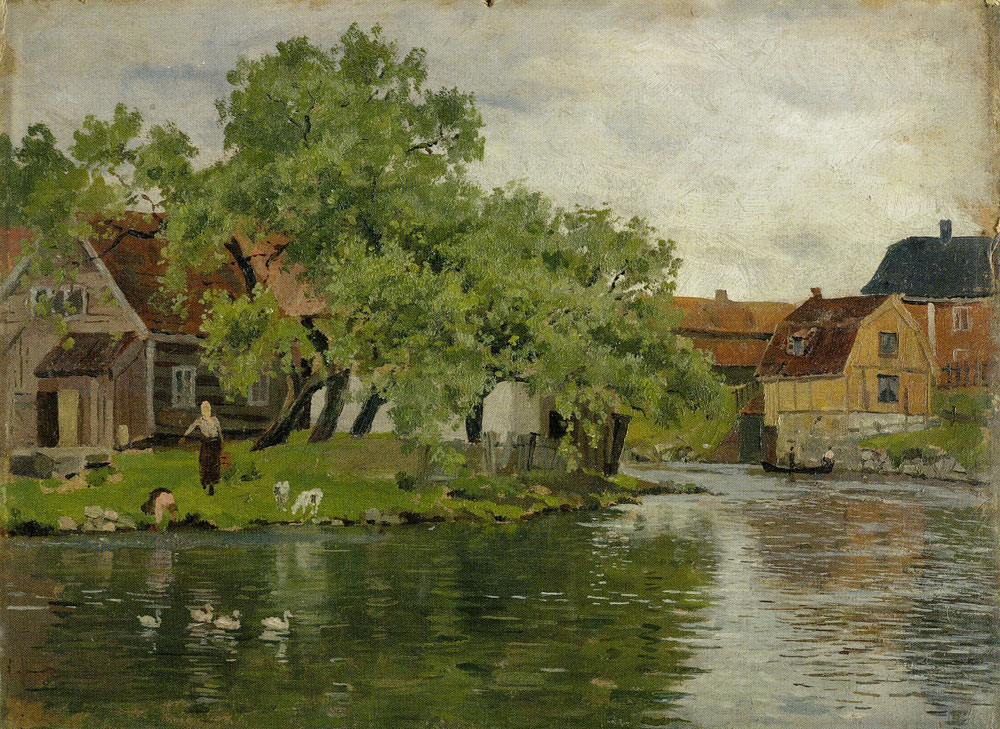
The neighborhood is named after Vulcan, the Roman god of fire and metalworking, because this stretch of the Akerselva river has been a foundry district since the Middle Ages. For centuries, the forges here produced steel bridges, boats, stoves, and even the dome of the old Colosseum cinema. Industrial activity died out in the 1960s, leaving decades of derelict land that nobody quite knew what to do with.
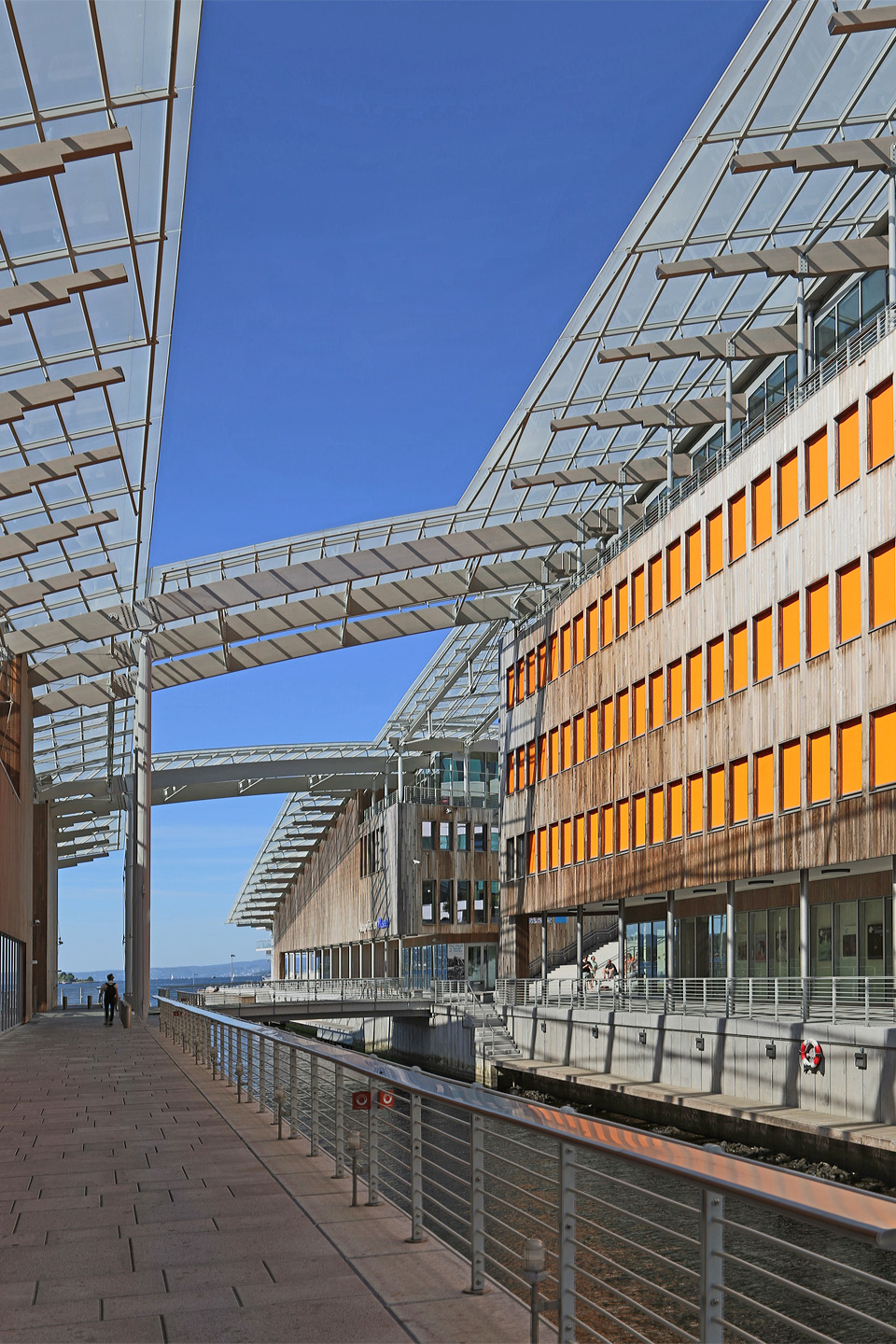
Developers Aspelin Ramm and Anthon B. Nilsen bought the area and executed a massive revitalization between 2004 and 2014, turning Vulkan into Oslo's pioneer project for sustainable urban development. The ambition went beyond just building nice apartments: Vulkan is nearly energy self-sufficient, running on a common power plant that distributes heating and cooling across all buildings according to real-time demand. Geothermal wells drilled 300 meters into bedrock provide the base energy. Buildings share surplus heat and cold through a local grid — when one building's cooling system generates waste heat, it gets piped to another building that needs warming.
The showpiece is Mathallen food hall, but Vulkan is more than food. It includes Dansens Hus (Norway's contemporary dance center), art galleries, studios, a hotel, and housing. On the roof between Mathallen and Dansens Hus sit Snøhetta-designed beehives — two hexagonal birch-plywood towers housing up to 400,000 bees. An urban beekeeper monitors them daily with rainfall, temperature, and honey-production sensors. The honey sells in the shops below.
Vulkan is what happens when you take the sustainability buzzwords that every developer throws around and actually engineer them into reality. The old foundry workers who forged steel beside this river would recognize the ambition, if not the beehives.
Verified Facts
Named after Vulcan, the Roman god of fire, because the area was a foundry district since the Middle Ages
Nearly energy self-sufficient with geothermal wells drilled 300m into bedrock and a shared energy distribution grid
Snøhetta-designed beehives on the roof house up to 400,000 bees monitored by an urban beekeeper with environmental sensors
Get walking directions
Vulkan 5, 0178 Oslo