Every August fifth, this basilica stages one of Rome's most theatrical annual events: artificial white petals drift down from the ceiling during Mass to commemorate the miraculous snowfall of 358 AD. According to tradition, the Virgin Mary appeared to Pope Liberius in a dream and told him to build a church on the Esquiline Hill, on the exact spot where snow would fall the next morning — in August. Snow fell, the outline of a church appeared in white on the ground, and the basilica was built. The snow ceremony has been re-enacted every year since the fourteenth century.
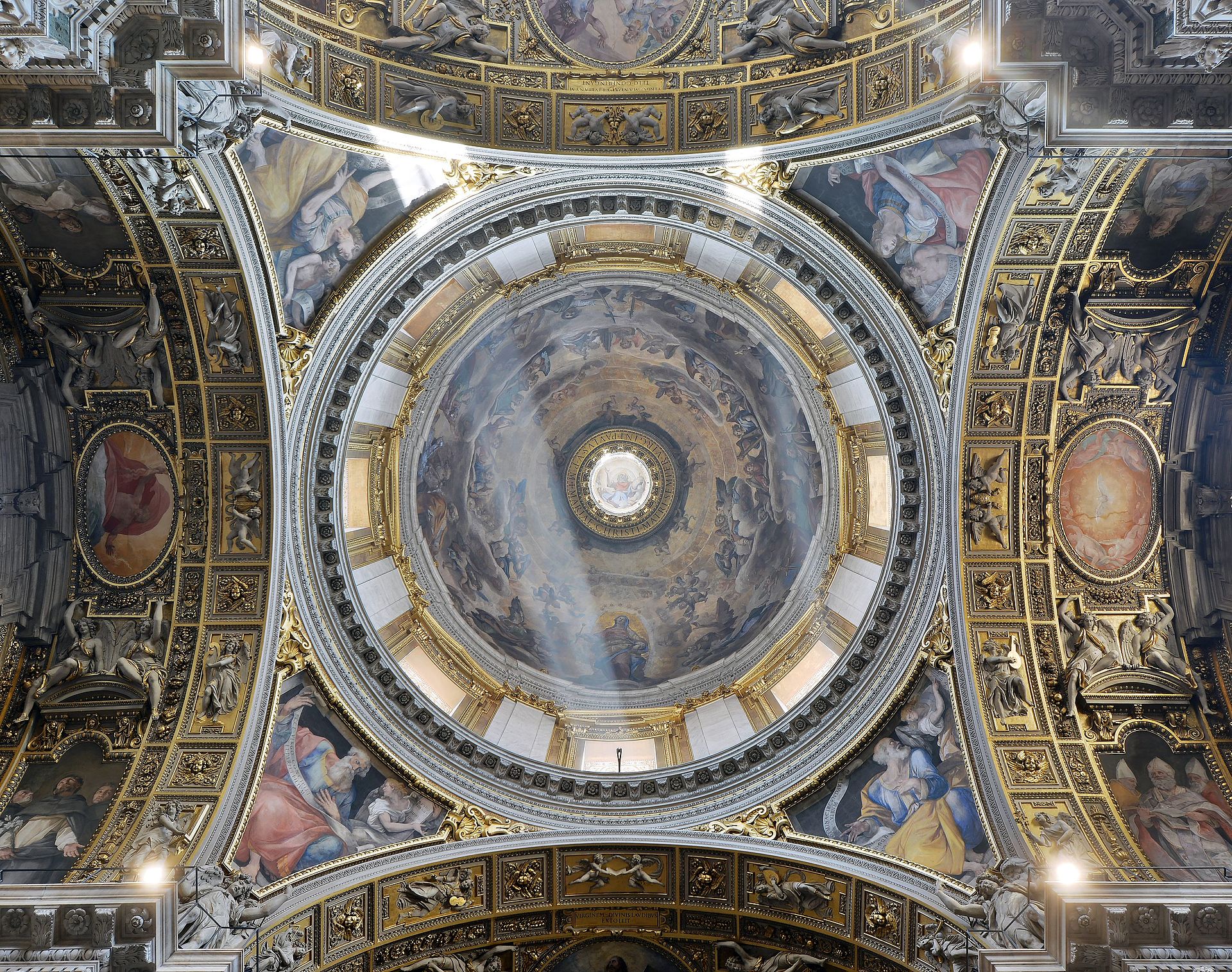
The ceiling is gilded with what is traditionally identified as the first gold brought back from the Americas — a gift from Ferdinand and Isabella of Spain to Pope Alexander VI (the Borgia pope) around 1494. Whether this is literally the very first gold from the New World is debated, but the timing is right and the Borgia connection to Spain is well documented. Either way, the coffered ceiling is dazzling and was designed by Giuliano da Sangallo.
The mosaics here span over a thousand years. The fifth-century nave mosaics are among the oldest in any Roman church, depicting Old Testament scenes in a late Roman style that still shows classical influence — figures have weight and movement, landscapes have depth. The thirteenth-century apse mosaic by Jacopo Torriti shows the Coronation of the Virgin and is a masterpiece of medieval art, rivalling anything in Ravenna.
Beneath the altar is a crystal reliquary containing what the Church claims are five pieces of wood from the manger in Bethlehem — the actual manger where Jesus was born. The relic, called the Sacra Culla, arrived in Rome from the Holy Land in the seventh century. Bernini designed the crypt chapel where it is displayed. Whether you believe the provenance or not, the fact that a strip of ancient wood has been venerated in this specific building for over thirteen hundred years is remarkable.
Verified Facts
Every August 5, artificial white petals fall from the ceiling to commemorate the legendary miraculous snowfall of 358 AD
The ceiling is traditionally said to be gilded with the first gold brought from the Americas, gifted by Ferdinand and Isabella to Pope Alexander VI
The 5th-century nave mosaics are among the oldest in any Roman church
The Sacra Culla reliquary beneath the altar purportedly contains five pieces of the Bethlehem manger, in Rome since the 7th century
Get walking directions
Piazza di Santa Maria Maggiore, 00100 Roma