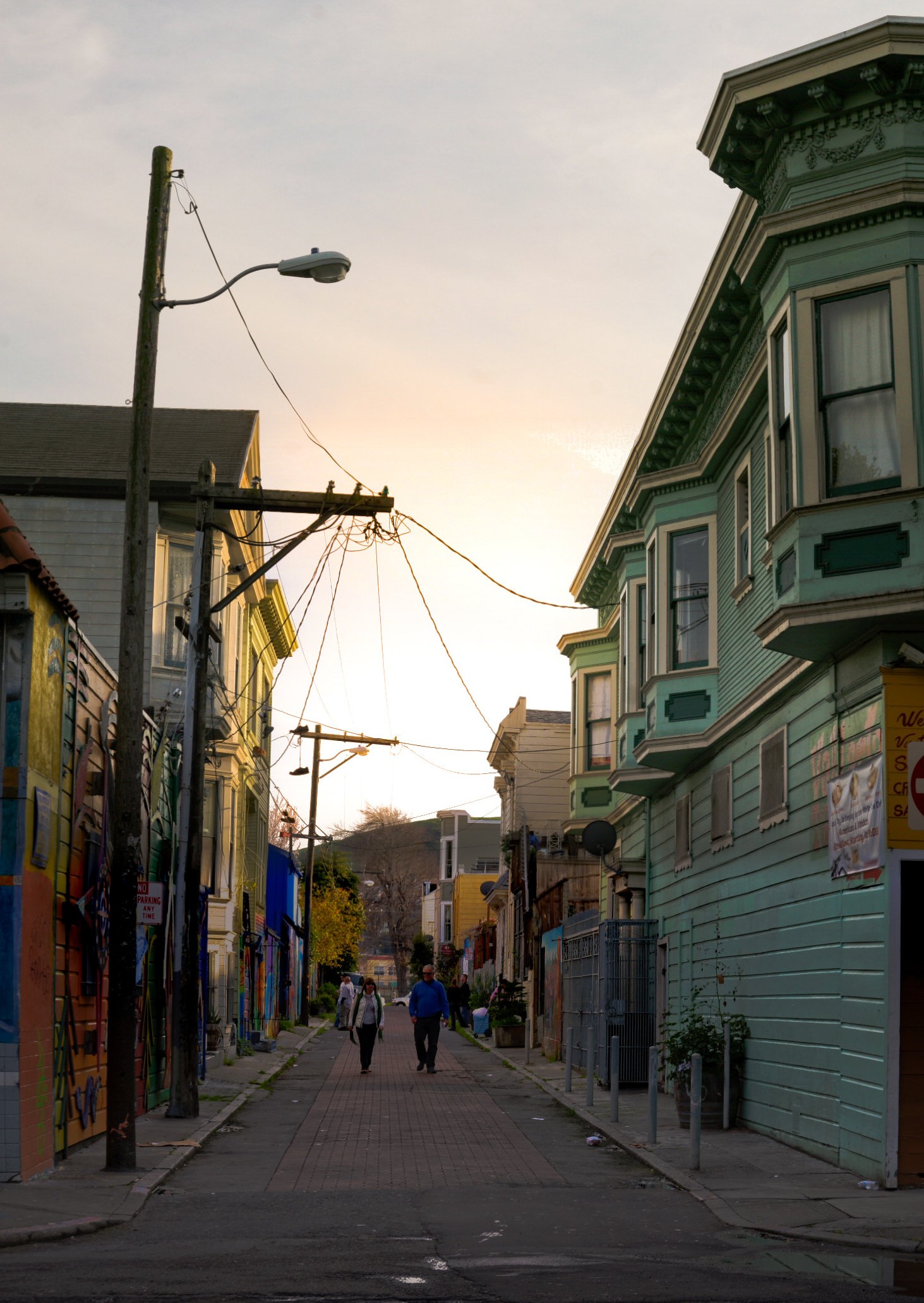
Walk into this alley and every surface screams at you. Garage doors, fences, walls, even the pavement — covered edge to edge in murals. Balmy Alley is the densest concentration of public art in San Francisco, and it was born out of fury.
The earliest murals here date to nineteen seventy-two, but the real explosion happened in the summer of nineteen eighty-five. The United States was funding military operations in Central America — backing governments in El Salvador and Guatemala that were committing atrocities against their own people. Many residents of the Mission District had come from those countries. They were watching their homelands burn, funded by their adopted country's tax dollars.
A group of artists and activists got a grant — two thousand five hundred dollars, total — and organized a massive mural project. In one summer, twenty-seven murals went up on the walls of Balmy Alley, each one protesting US intervention in Central America. The images were visceral — soldiers, refugees, burning villages, grieving mothers. It was political art at its most direct and its most local, painted by people who had personal stakes in every brushstroke.
That summer kicked open the door. Since then, murals have been continuously added, replaced, and layered over. The alley is a living canvas — nothing is permanent. Older murals fade or are painted over by newer ones. The subjects have expanded from Central American solidarity to immigration, gentrification, police violence, Indigenous rights, and queer liberation. Some murals last decades. Some last months.
Walk slowly. Look at the details. These aren't decorations — they're arguments, memorials, and love letters, all fighting for space on the same walls. The alley is always changing, which means every visit shows you something different.
Verified Facts
Earliest murals date to 1972
Summer 1985: 27 murals painted with $2,500 grant protesting US Central American policy
Now covers every surface, continuously updated
Get walking directions
Balmy Alley (between 24th and 25th Streets), San Francisco