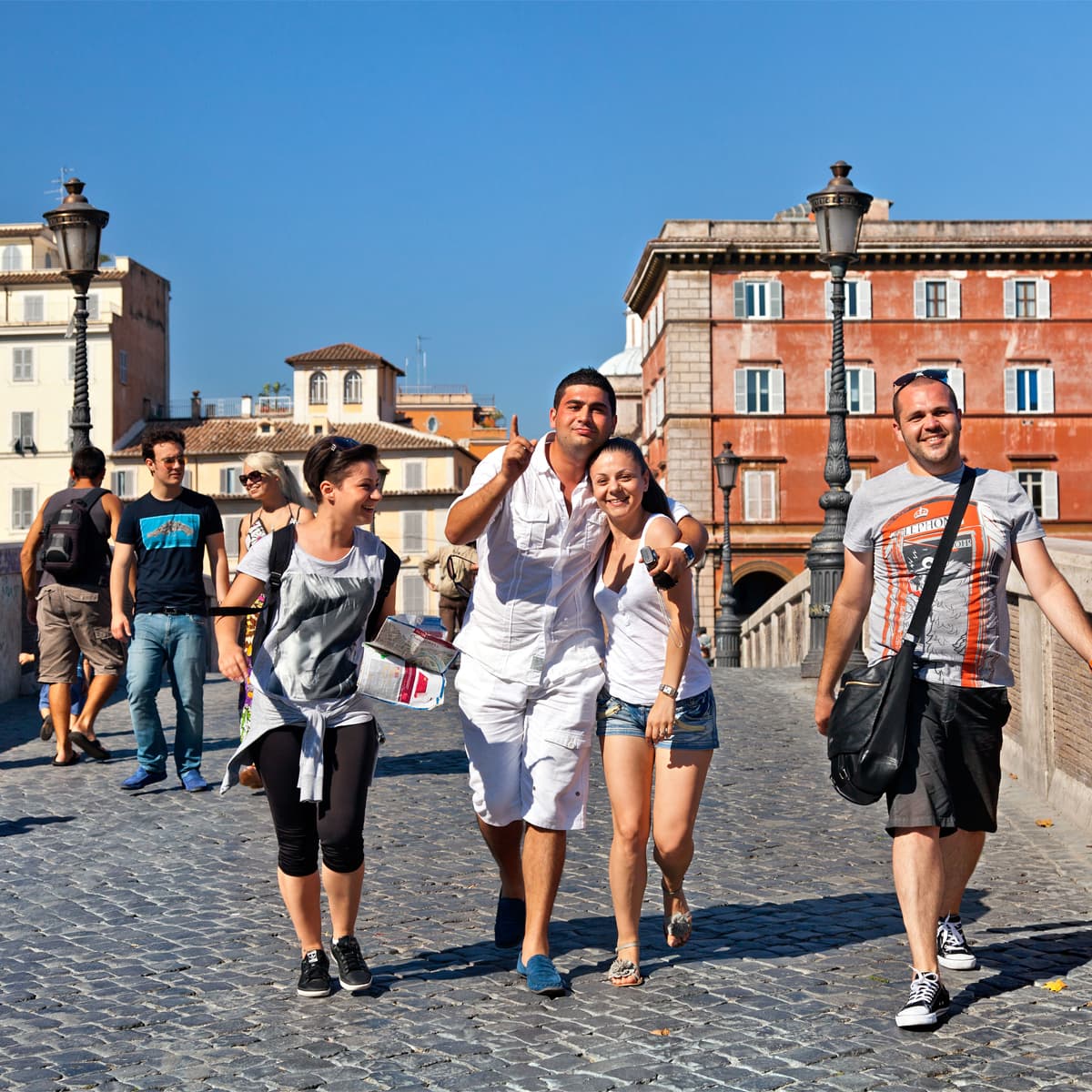
Trastevere means "across the Tiber," and for most of Rome's history, that meant this was the wrong side of the river. In ancient times, it was where the immigrants lived — Syrian merchants, Jewish communities, sailors from every port in the Mediterranean. It was the Ellis Island of ancient Rome, dense and multilingual and slightly disreputable, and that identity has clung to it for two thousand years. Even now, Trasteverini consider themselves the "real Romans" and regard everyone on the other side of the river with benign suspicion.
The Basilica of Santa Maria in Trastevere is arguably the most important church you have never heard of. It was the first church in Rome where Mass was openly celebrated — tradition says it was founded in the third century, before Christianity was even legal. The mosaics on the facade and in the apse are twelfth and thirteenth century and absolutely extraordinary, gleaming with gold leaf that catches the afternoon sun and turns the whole piazza warm. The piazza itself is one of the best people-watching spots in Rome: buskers, students, old men arguing, children kicking footballs.
The neighbourhood still has a village feel, with narrow cobblestone streets barely wide enough for one car, laundry hanging between buildings, and small trattorias that have been run by the same families for generations. This is where you eat cacio e pepe made with three ingredients and no shortcuts, and supplì — fried rice balls with a molten mozzarella centre that pulls into strings when you bite them, which is why Romans call them supplì al telefono, because the cheese stretches like a telephone cord.
But the gentrification clock is ticking. What was a working-class neighbourhood twenty years ago is now full of Airbnbs, cocktail bars, and tourists on food tours. Romans will tell you the real Trastevere is disappearing. They said the same thing thirty years ago, and probably thirty years before that. The neighbourhood has been absorbing outsiders for two millennia. That is kind of its whole thing.
Verified Facts
Trastevere means "across the Tiber" and was historically home to immigrant communities including Syrian merchants and Jewish residents
Santa Maria in Trastevere is traditionally considered the first church in Rome where Mass was openly celebrated, possibly founded in the 3rd century
Supplì al telefono are fried rice balls named because the mozzarella inside stretches like a telephone cord when bitten
The basilica's apse mosaics date to the 12th and 13th centuries and feature extensive gold leaf
Get walking directions
I Municipio, Rome, Italy