Copenhagen — Christianshavn & the Alternative Side
10 stops
GPS-guided
4.3 km
Walking
30 minutes audio, ~80 minutes with walking
Duration
Free
No tickets
About this tour
Explore the counterculture and waterfront side of Copenhagen. Climb past the golden spiral of Our Saviour's Church, stroll along Amsterdam-inspired canals, enter the anarchist commune of Christiania, discover the warehouse where Noma was born, cross a bridge designed by Olafur Eliasson, and end at the only palace on earth housing all three branches of government.
10 stops on this tour
Church of Our Saviour
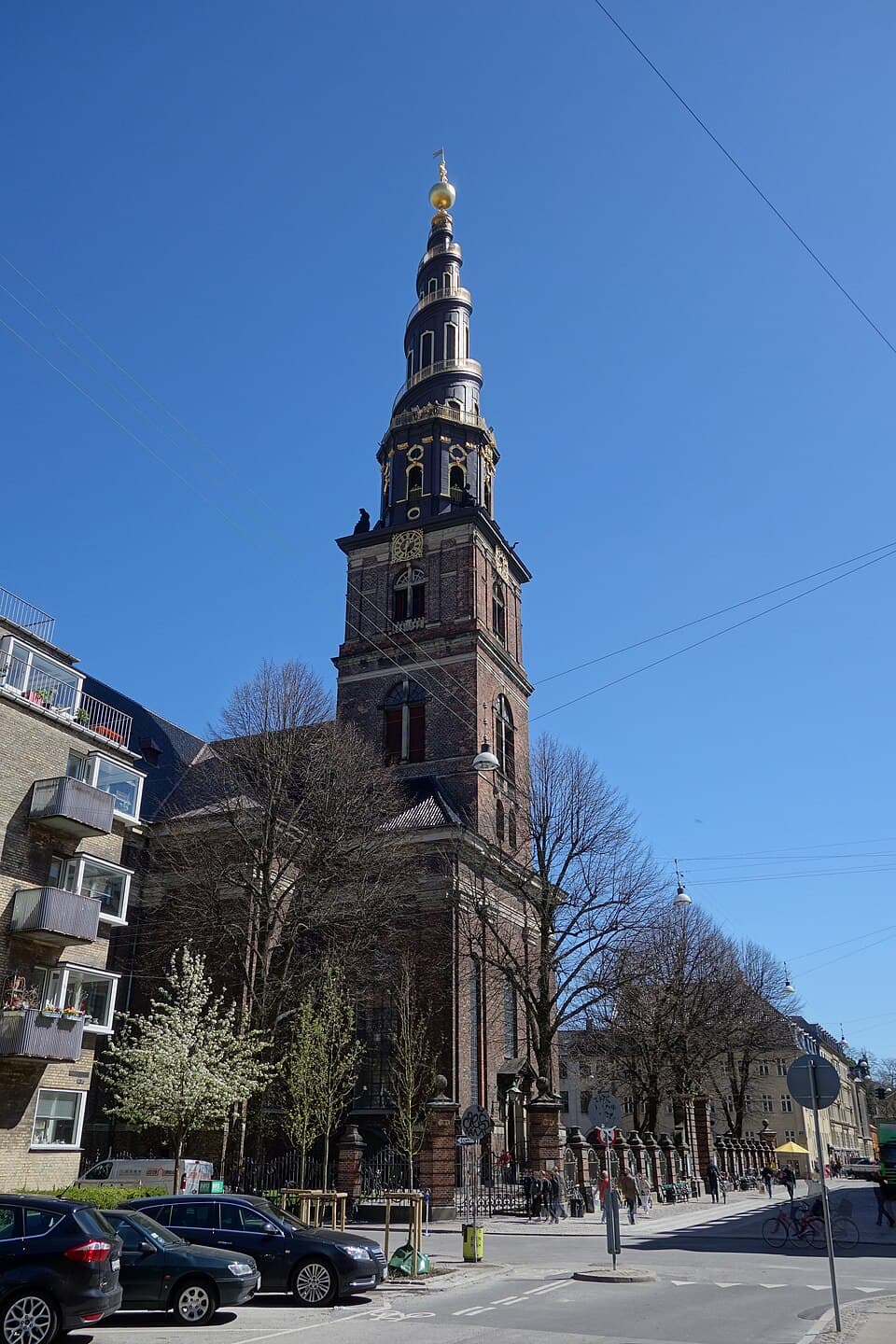
Welcome to Christianshavn, and welcome to the alternative side of Copenhagen. I'm so glad you're here. We're starting at one of the most recognizable silhouettes in the city — the Church of Our Saviour, Vor Frelsers Kirke — and that golden spiral staircase twisting into the sky above us.
Look up. That spire is unlike anything else in Scandinavia. Four hundred steps lead to the top, and the last hundred and fifty are outside, winding around the exterior in a golden helix that gets narrower and narrower as you climb. On a clear day, you can see all the way to Sweden from up there. Over two hundred thousand people make that climb every year, white-knuckling it past the point where the handrail is all that separates them from a very long drop.
Read more...Show less
The church itself was built between 1682 and 1695 — designed by Lambert van Haven for King Christian the Fifth. But the spire came later, much later. It wasn't finished until 1752, designed by Laurids de Thurah, who drew his inspiration from the spiral lantern of Borromini's Sant'Ivo alla Sapienza in Rome. There's a wonderful old urban legend that Thurah killed himself by jumping from the top when he realised the spiral goes the wrong way. It makes for a great story, except he died peacefully in his bed seven years after the spire was finished.
At the very top, above the staircase, sits a four-metre gilded figure of Christ carrying a banner, standing on a globe. Locals have been cheerfully calling it the ugliest sculpture in Copenhagen for centuries — but it was deliberately made with exaggerated proportions because you're only meant to see it from the ground, where perspective sorts everything out.
By the way, listen for the bells. The tower holds Northern Europe's largest carillon — forty-eight bronze bells spanning four octaves. It was installed in 1928, and on quarter hours the melody drifts across the rooftops of Christianshavn.
Step inside if you have a moment. The baroque interior is all white walls, dark oak, and an elaborate marble-and-alabaster altarpiece. It feels serene — a complete contrast to the dizzying climb outside.
When you're ready, walk out the main door and head east along Prinsessegade. In about five minutes, you'll reach the entrance to a place that has been making governments uncomfortable for over fifty years.
Freetown Christiania
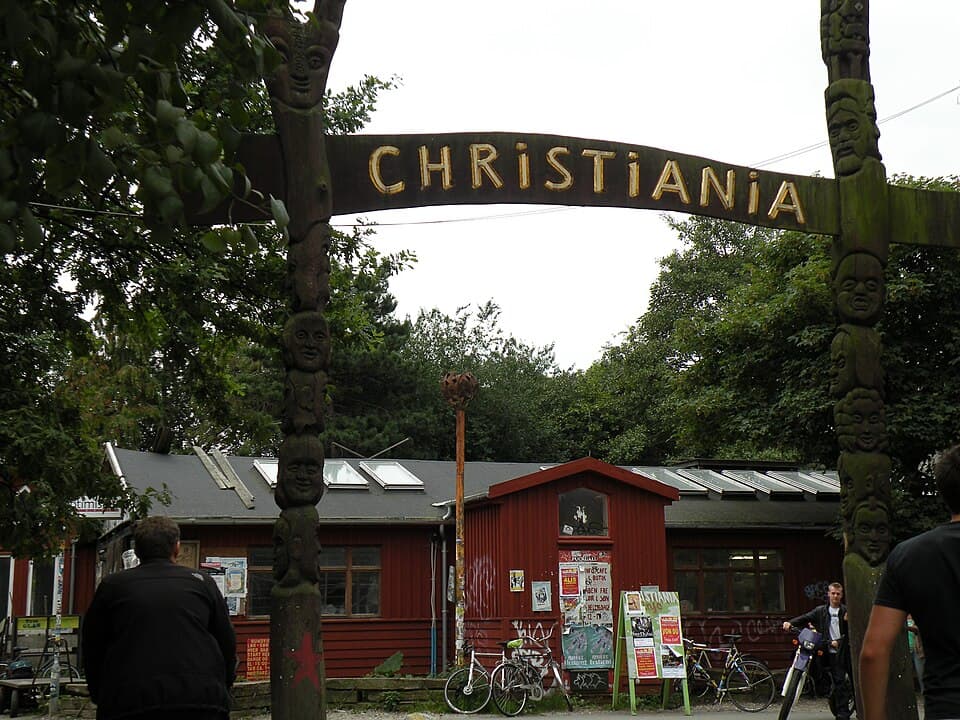
You're standing at the entrance to Freetown Christiania — one of the most extraordinary social experiments in European history, and easily the most controversial neighbourhood in Denmark.
Here's how it started. In September 1971, a group of squatters and hippies cut through the fence of an abandoned military barracks right here on the Christianshavn waterfront. A journalist named Jacob Ludvigsen declared it 'Freetown Christiania,' and within weeks, hundreds of people had moved in. They built their own homes, established their own rules, and announced — with the kind of brazen confidence that only works if you actually follow through — that they were an autonomous community, independent from the Danish state.
Read more...Show less
And the Danish government... let them. In 1972, they officially declared Christiania a 'social experiment.' That experiment has now been running for over fifty years.
Today, around nine hundred people live here on eighty-five acres. They have their own flag, their own governance, and their own rules — which can be summed up as: have fun, don't run, no hard drugs, no guns, no violence. Notice 'no hard drugs' — that's important, and we'll get to why in a moment.
Walk through the entrance and take in the surroundings. The architecture is unlike anything else in Copenhagen. Handbuilt houses with grass roofs, studios made from salvaged materials, community gardens, a lake, and art everywhere — murals, sculptures, painted signs. Some buildings are genuinely beautiful, designed with real craftsmanship. Others look like they might blow over in a strong wind. That's Christiania.
Now, the controversy. For decades, Christiania was synonymous with Pusher Street — an open-air cannabis market that drew tourists and trouble in equal measure. The drug trade attracted organised gangs, and with them came violence. In April 2024, the residents themselves made a dramatic decision. They dug up the cobblestones of Pusher Street with shovels, sledgehammers, and wheelbarrows. At least sixty locals worked together, levering up cobbles the size of bowling balls. Some carried stones home as souvenirs. The message was clear: we're reclaiming our neighbourhood.
Today, the area where Pusher Street once was is being reimagined — shipping containers for creative workshops, small shops, community spaces. It's a new chapter.
Take your time walking through. When you're done, exit to the north and head toward Strandgade. Our next stop is a former warehouse that launched the most influential restaurant of the twenty-first century.
North Atlantic House
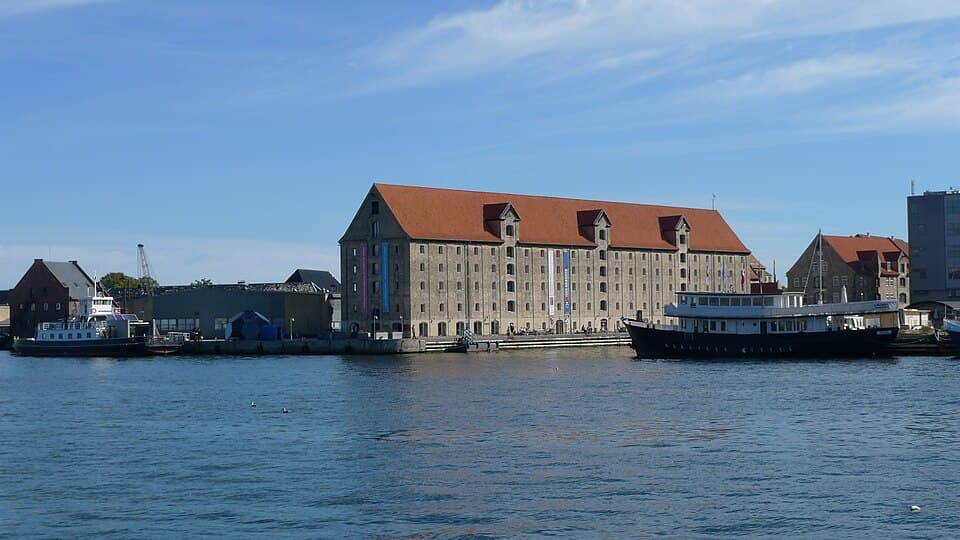
Look at the building in front of you — this handsome old warehouse sitting right on the harbour. This is Nordatlantens Brygge, the North Atlantic House, and it has one of the best stories in Copenhagen.
The warehouse itself dates from 1767 — it was built as a maritime storage facility, one of the countless buildings along this waterfront that served Copenhagen's shipping industry. For over two centuries, it stored cargo. Then it sat empty. Then, in 2003, it was transformed into something completely unexpected: a cultural centre dedicated to the art and culture of Greenland, Iceland, and the Faroe Islands.
Read more...Show less
That's interesting enough. But here's where it gets really good.
In December 2002, a food entrepreneur named Claus Meyer was offered the opportunity to open a restaurant in this building. He called a twenty-four-year-old chef named Rene Redzepi. The two of them opened Noma in 2003, right here, in the ground floor of this warehouse. Noma — the name is a mashup of the Danish words for 'Nordic' and 'food' — went on to be named the best restaurant in the world five times. It reinvented an entire cuisine. The idea that you could build world-class food from foraged Nordic ingredients — sea buckthorn, wild herbs, fermented things your grandmother would have thrown away — that started here, in this old warehouse, with a chef who was barely old enough to rent a car.
Noma moved to a new location in 2018 and eventually transitioned to a food lab, but the revolution it launched transformed dining across Scandinavia and far beyond. Every restaurant in Copenhagen that serves you something with pickled elderflower and hand-foraged seaweed owes a debt to what happened in this building.
The North Atlantic House itself is worth a visit — three galleries showcasing art from some of the most remote communities in the world. The Faroese and Greenlandic art is particularly striking.
By the way, if you're hungry, the cafe here serves excellent smoked fish and rye bread — simple, honest food that would have made Redzepi proud.
Now, head south along Strandgade. This beautiful street is one of the oldest in Christianshavn, and our next stop is a church that looks more like a theatre than a house of worship.
Christianshavn Canal
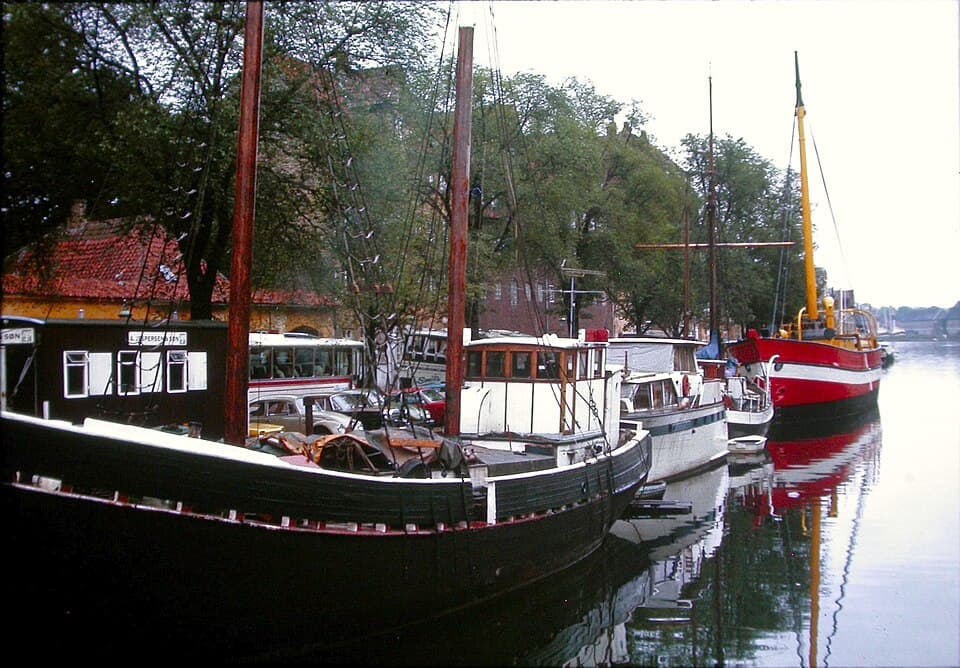
You're now walking along the Christianshavn Canal, and if this feels like a little piece of Amsterdam dropped into Copenhagen, that's because it was designed to be exactly that.
King Christian the Fourth founded Christianshavn in 1617 as a merchant's district — a separate town, really, built on reclaimed land with a principal canal cutting right through the centre. The idea was to attract Dutch merchants, and the best way to do that was to make them feel at home. So Christian hired Dutch engineers, laid out canals, and created a neighbourhood that still has that low-rise, waterfront, slightly scruffy charm that Amsterdam is famous for.
Read more...Show less
The two streets flanking this canal have wonderfully literal names. The one on your side is Overgaden Oven Vandet — 'the street above the water.' The one across is Overgaden Neden Vandet — 'the street below the water.' The Danes don't mess around with their street names.
Look at the houseboats moored along the canal. In summer, this becomes a floating neighbourhood — kayaks, dinghies, families grilling on boat decks. Christianshavn residents are fiercely proud of their little village within the city. Some of these houseboats have been here for decades, passed down through families.
The buildings along here date from the seventeenth and eighteenth centuries. Look for the old merchant houses with their hoisting beams still jutting from the gables — they were used to lift goods directly from boats into upper-floor warehouses. Some of the oldest houses, at Strandgade 28 to 32 around the corner, go all the way back to the 1620s.
By the way, this canal is where many locals learn to kayak. If you want to see Copenhagen the way Copenhageners do, rent a kayak from one of the places along here and paddle through the harbour. It costs practically nothing, and you'll see the city from water level — which is, honestly, the best angle.
Continue along the canal heading west. In a minute or two, you'll reach a church on your left that looks more like a theatre than a house of worship.
Christians Kirke
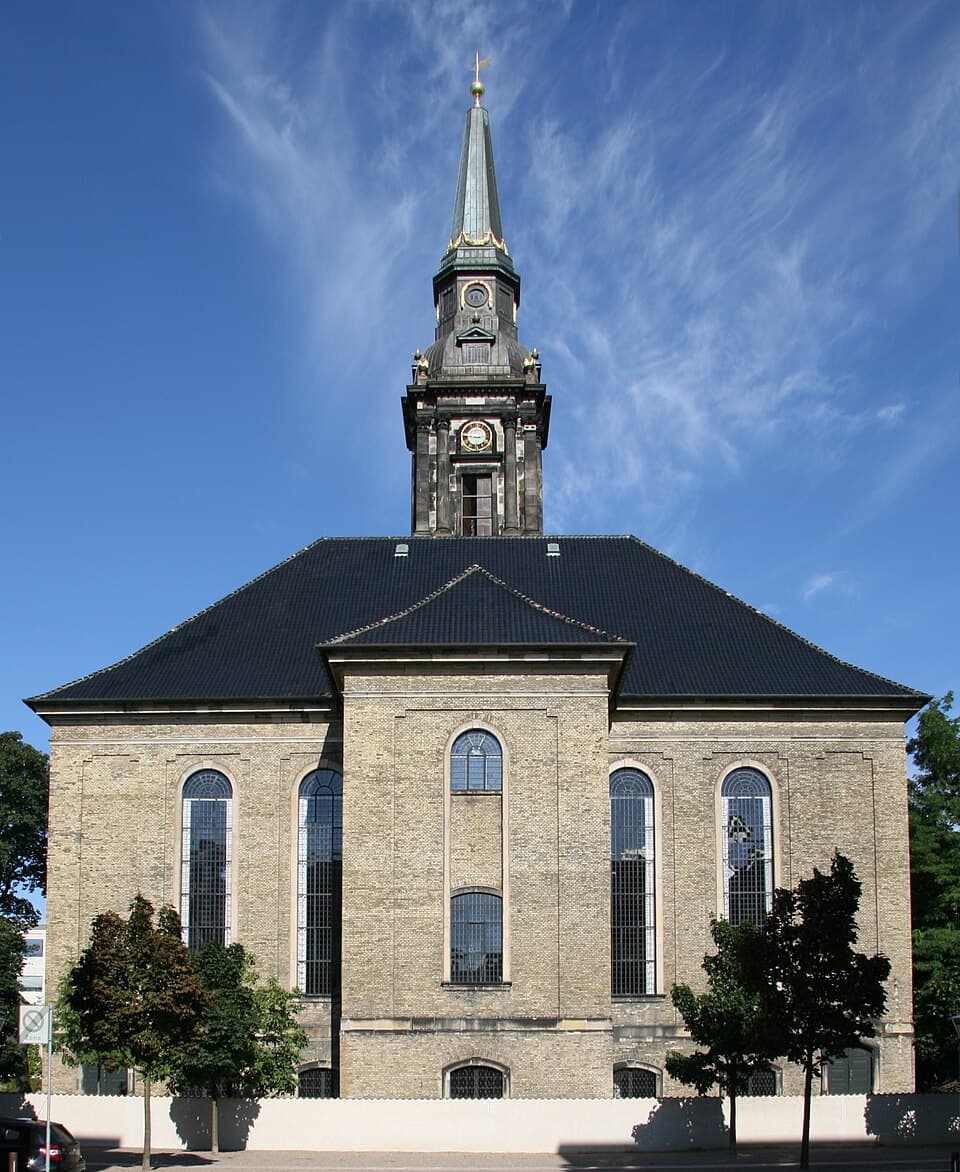
Stop here and look at the yellow brick building with the slender tower. This is Christians Kirke — Christian's Church — and from the outside, it looks like a perfectly respectable eighteenth-century church. Step inside, and you'll think you've walked into an opera house.
The interior is arranged like a theatre. Three tiers of galleries rise above the nave, with curved balconies and box seats — actual box seats — where wealthy families once sat. The architect, Nicolai Eigtved, designed it between 1754 and 1759, and he clearly had a flair for drama. The whole space is rococo — gilded details, graceful curves, pastel colours. It's the least church-like church you'll see in Scandinavia.
Read more...Show less
But here's the story behind the theatre layout. When Christian the Fourth founded Christianshavn in 1617 as a merchants' district, a large community of German traders and craftsmen settled here. They needed a church, and they wanted one that reflected their status. The tiered galleries weren't just decorative — they were hierarchical. The wealthiest families got the best seats, closest to the front, on the highest level. It was a church, yes, but it was also a place to see and be seen. The Germans understood branding.
The church was originally called Frederik's German Church, and it served the German community until the end of the nineteenth century. In 1901, the name was changed to Christians Kirke — partly to honour Christian the Fourth, the founder of Christianshavn, and partly to avoid confusion with Frederiks Kirke, the Marble Church, across the harbour.
Beneath the church lies something most visitors miss entirely: forty-six burial chapels in the crypt. For centuries, prominent Christianshavn families were interred down here. The crypt is open to visitors, and it's beautifully atmospheric — stone walls, dim light, centuries of silence.
By the way, the tower is seventy metres tall and offers a view that rivals the Church of Our Saviour — without the terrifying external staircase.
When you're ready, continue west along Strandgade. In about two hundred metres, you'll arrive at one of the most beautiful pedestrian bridges in Europe — a gift to the city from an Icelandic artist.
Cirkelbroen
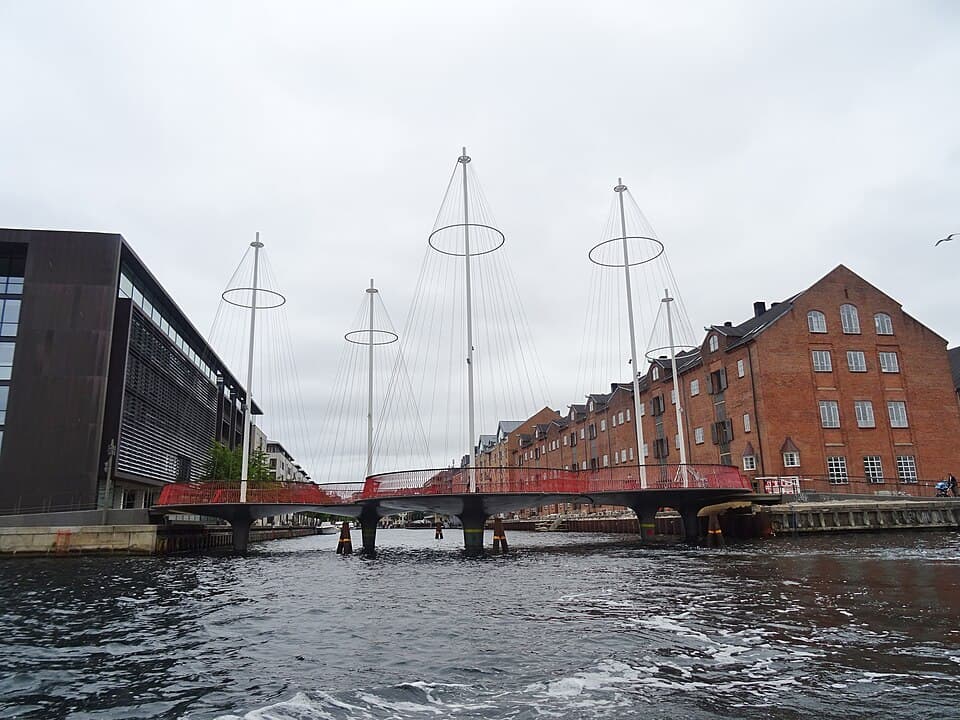
You're standing at Cirkelbroen — the Circle Bridge — and if this doesn't make you smile, I'm not sure what will.
Look at it. Five circular platforms, each a different size, connected in a staggered zigzag across the Christianshavn Canal. Tall steel masts rise from each circle, with cables fanning out like the rigging on a sailing ship. It's part bridge, part sculpture, part playground. The path deliberately weaves and wobbles, forcing you to slow down and look around. That's the whole point.
Read more...Show less
The bridge was designed by Olafur Eliasson — the Icelandic-Danish artist famous for putting a giant artificial sun in the Tate Modern and installing waterfalls under the Brooklyn Bridge. Cirkelbroen opened in August 2015, and it was a gift to the city from the Nordea Foundation. A free bridge, designed by one of the world's most celebrated artists. Copenhagen doesn't do things by halves.
Eliasson drew inspiration from the fishing boats of his Icelandic childhood — each mast is a reference to the boats that have sailed Copenhagen's waterways for centuries. The tallest mast rises twenty-five metres. At night, the bridge is lit from below, and the masts glow against the sky. It's genuinely magical.
Here's a nice detail: one section of the bridge actually swings open to let boats pass through the canal. It's a working bridge, not just a sculpture.
Stand in the middle and look around. To the east, you can see back into Christianshavn — the spire of Our Saviour's Church twisting above the rooftops. To the west, across the harbour, you can see the Black Diamond — the modern extension of the Royal Danish Library, its angular black granite facade tilting toward the water.
By the way, Eliasson has a studio right here in Christianshavn. He chose this neighbourhood for the same reasons the hippies chose Christiania — it's the part of Copenhagen that thinks differently.
Cross the bridge. On the other side, turn left and follow the waterfront south. Our next stop is a building that bridges more than just water — it bridges a six-lane highway and a century of urban planning mistakes.
BLOX / Danish Architecture Center
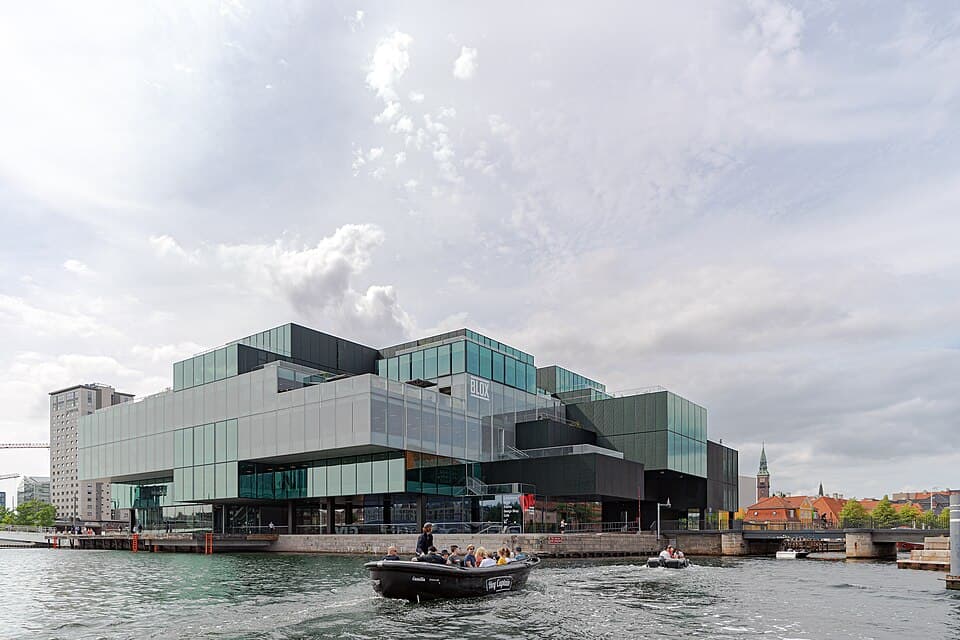
Look at this building. Love it or hate it — and plenty of Copenhageners do both — BLOX is one of the most ambitious pieces of architecture in the city.
Designed by the Dutch firm OMA, led by architect Ellen van Loon, BLOX was completed in 2018. It houses the Danish Architecture Center, apartments, a co-working space, a fitness centre, two restaurants, a bookshop, and an underground automated car park. It's a vertical neighbourhood, stacked and shifted like a pile of glass-and-steel building blocks — which is exactly where the name comes from.
Read more...Show less
But here's the clever part. See the road running underneath? That's Christians Brygge, a six-lane ring road that carries over twenty-five thousand cars a day. For decades, that road was a wall between the city and its own waterfront — you could see the harbour, but you couldn't easily walk to it. BLOX literally bridges the gap. By spanning the road, it creates a pedestrian route from the city centre straight to the water's edge. What looks like a building is actually an infrastructure solution wearing an architectural disguise.
Inside, the Danish Architecture Center — DAC — runs exhibitions that explore how design shapes Danish life. Their permanent exhibition, called 'So Danish!', traces how architecture has been used to build Denmark's democratic society. There's a reason Danish design is famous worldwide, and it has everything to do with a national obsession with making public spaces work for everyone.
Stand on the waterfront terrace and look across the harbour. To your left, you can see Islands Brygge — that's where Copenhagen's famous harbour baths are, the ones designed by Bjarke Ingels before he became the most famous architect in the world. Straight ahead, the harbour stretches north toward the Opera House.
By the way, the cafe on the ground floor serves excellent coffee, and the terrace has one of the best harbour views in Copenhagen. If you need a break, this is the spot.
When you're ready, head north along the waterfront. In about four hundred metres, you'll reach a palace that holds a record no other building in the world can claim.
Christiansborg Palace
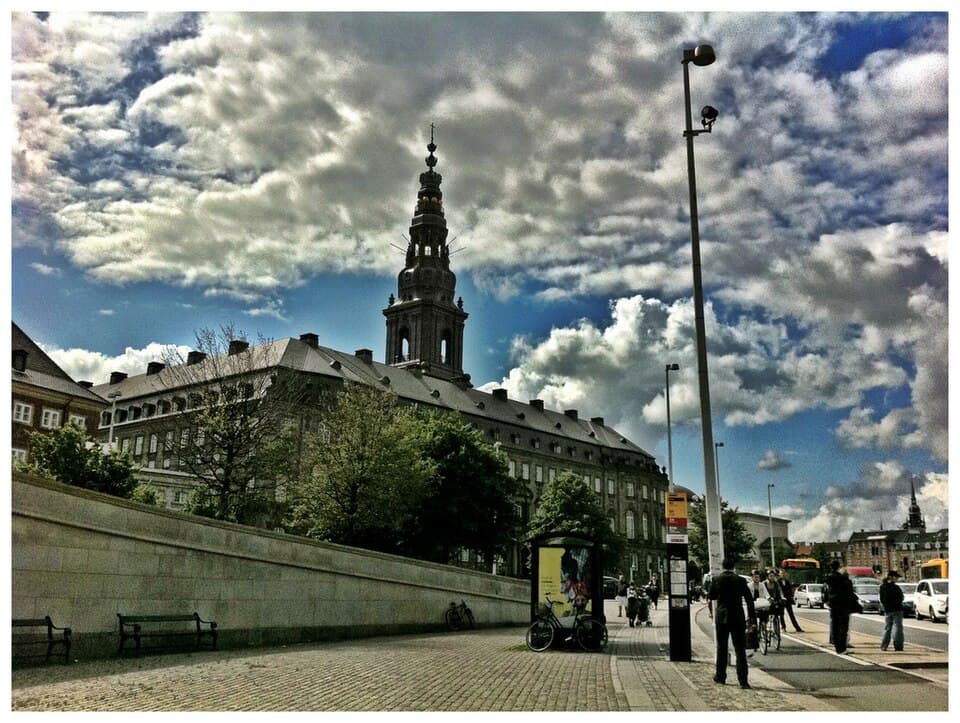
You're standing in front of Christiansborg Palace, and let me tell you what makes this building unique — not just in Copenhagen, not just in Scandinavia, but in the entire world. This is the only building on earth that houses all three branches of a nation's government under one roof. The Danish Parliament sits here. The Supreme Court sits here. And the Prime Minister's office is here. Executive, legislative, judicial — all in one palace. Nowhere else does that.
The site has been the centre of Danish power for more than eight hundred years. The first castle here was built in 1167 by Bishop Absalon — the man who effectively founded Copenhagen. Those original ruins are still down there, under the present building, and you can visit them. Walking through Absalon's medieval foundations while politicians debate directly above your head is a genuinely surreal experience.
Read more...Show less
This is actually the third Christiansborg. The first one burned down in 1794. The second burned down in 1884. The Danes rebuilt a third time, finishing in 1928, and this version is fireproof — or at least, that's the plan. It's built in a neo-baroque style with a tower that rises a hundred and six metres, making it the tallest structure in central Copenhagen. Look up at the weather vane with two crowns at the top.
Here's a remarkable number: when the second Christiansborg was built, it was Northern Europe's largest palace — three hundred and forty-eight rooms designed to accommodate a thousand people of the Royal Court. The construction cost was equivalent to roughly half the entire national budget. Denmark essentially went broke building a palace, and then watched it burn down.
Inside, if you visit the Royal Reception Rooms, you'll find a series of tapestries by the artist Bjorn Norgaard that depict a thousand years of Danish history. They're vivid, modern, and occasionally unsettling — history told without sugar-coating.
By the way, the palace courtyard is open to everyone, and the ruins beneath are well worth the visit.
When you're ready, exit through the western courtyard and cross Frederiksholms Kanal. The National Museum is just ahead — and it contains one of the most mysterious objects of the ancient world.
National Museum of Denmark
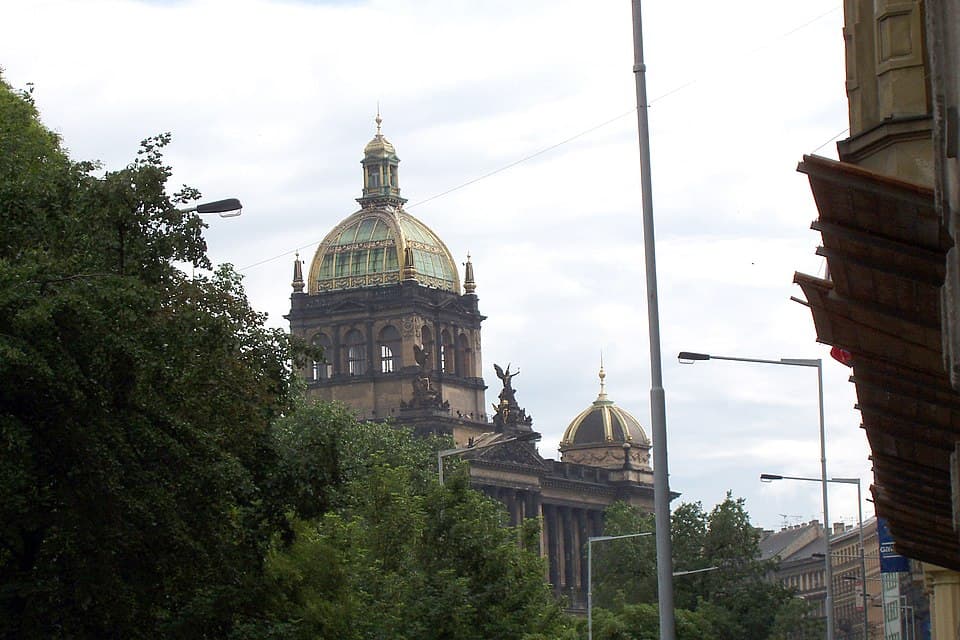
Welcome to the National Museum of Denmark — Nationalmuseet — and welcome to fourteen thousand years of Danish history, all under one roof.
The building itself is a former royal residence — the Prince's Palace, built in the eighteenth century for the Danish crown prince. It's an elegant setting for a collection that spans from the Ice Age to the present day. The museum holds two million objects, with about forty-two thousand on display. But don't panic — we're going to focus on the greatest hits.
Read more...Show less
The star of the show is the Sun Chariot — Solvognen — in the prehistoric Denmark gallery. Found in a peat bog in 1902 by a farmer near Trundholm in northwest Zealand, it's a small bronze sculpture of a horse pulling a gold-plated disc on a wheeled chariot. It dates from around 1400 BC — the Nordic Bronze Age — and it's thought to represent the sun being pulled across the sky. One side of the disc is covered in gold leaf, the other is dark bronze. The theory is that the gold side represents daytime and the dark side represents night. Imagine the people who made this — no writing, no cities, no iron — creating something this sophisticated and beautiful.
Nearby, look for the Gundestrup Cauldron — a massive silver vessel covered in intricate Celtic-style images of gods, warriors, and mythical animals. It was found in yet another Danish bog in 1891. The Danes have a remarkable talent for finding extraordinary things in bogs.
Then there's the Egtved Girl — the remains of a young woman from the Bronze Age, buried in an oak coffin around 1370 BC. Her wool clothing survived, and analysis of her teeth showed she grew up hundreds of kilometres away, possibly in southern Germany. She was a traveller, three and a half thousand years ago.
The museum also holds the world's largest collection of artefacts from Greenland — sealskin clothing, kayaks, amulets telling stories of Arctic life. Given Denmark's complex colonial relationship with Greenland, these galleries carry a weight that goes beyond anthropology.
By the way, admission is free. Always has been. That's the Danish way.
When you've had your fill, head south out the front door and walk along Ny Vestergade toward the canal. Our final stop is just a few minutes away.
Frederiksholms Kanal
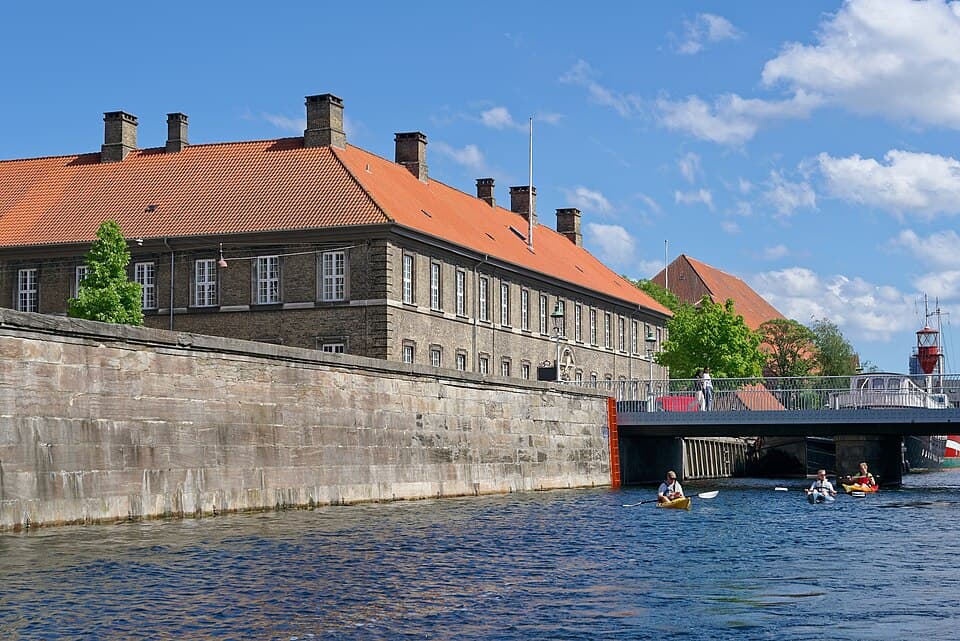
And here we are at our final stop — Frederiksholms Kanal, one of the quietest, prettiest canals in central Copenhagen. This is where we end the walk, and I couldn't think of a better place.
The canal traces the old fortification line of the city. After the Swedish army nearly captured Copenhagen in 1659 — an event known as the Storm of Copenhagen — King Frederik the Third extended the city's ramparts, and this canal was part of that defensive perimeter. The bridge just ahead, Stormbroen, is named after that battle. Walk across it and you'll be crossing the line where Swedish soldiers fought and died trying to take the city.
Read more...Show less
Today, the canal is impossibly peaceful. Grand government buildings line one side, trees hang over the water, and the pace of the city slows to a crawl. Look for the houseboats moored along the canal — especially Lightship Number Eleven, originally built in 1878 as a working lightvessel. It was decommissioned in 1977, and an artist and designer named Bo Bonfils converted it into a houseboat. It's been floating here ever since, one of the most distinctive addresses in Copenhagen.
If you're ready for lunch — and you should be — walk to Kanalcafeen, just along the canal at number eighteen. It's been serving traditional Danish open-faced sandwiches since 1852. Smoked fish on dark rye bread, pickled herring, roast beef with remoulade — this is old-school Copenhagen cooking, and it's absolutely wonderful. Grab a table by the water if you can.
So let's take stock of where we've been. We started at a golden spiral staircase and walked through the canals of a neighbourhood built to feel like Amsterdam. We explored a commune that has defied governments for fifty years and a warehouse that launched a culinary revolution. We crossed a bridge designed by one of the world's great artists, stood in a building that holds three branches of government, and saw artefacts pulled from bogs that are three thousand years old.
That's the alternative side of Copenhagen — a city that builds bridges instead of walls, turns warehouses into culture, and lets a self-governing commune exist in the middle of its capital. Thanks for walking with me. Enjoy the rest of your day.
From here, buses run from Stormbroen in all directions. The nearest metro is Gammel Strand, about a five-minute walk northeast.
Free
GPS-guided walking tour
No account needed. Walk at your own pace.
Free
10 stops · 4.3 km