11 stops
GPS-guided
5.4 km
Walking
1 hour 35 minutes
Duration
Free
No tickets
About this tour
From the candy-coloured canal of Nyhavn to the twinkling lights of Tivoli Gardens, this walk winds through Copenhagen's old city, past hidden medieval alleys, a tower you climb on horseback, a castle with invisible music, and a food market built on centuries of trade. You'll discover how a beer magnate built a world-class museum, why a locksmith spent decades building the most complex clock on earth, and how a fairy-tale writer found inspiration in a sailor's dive.
11 stops on this tour
Nyhavn
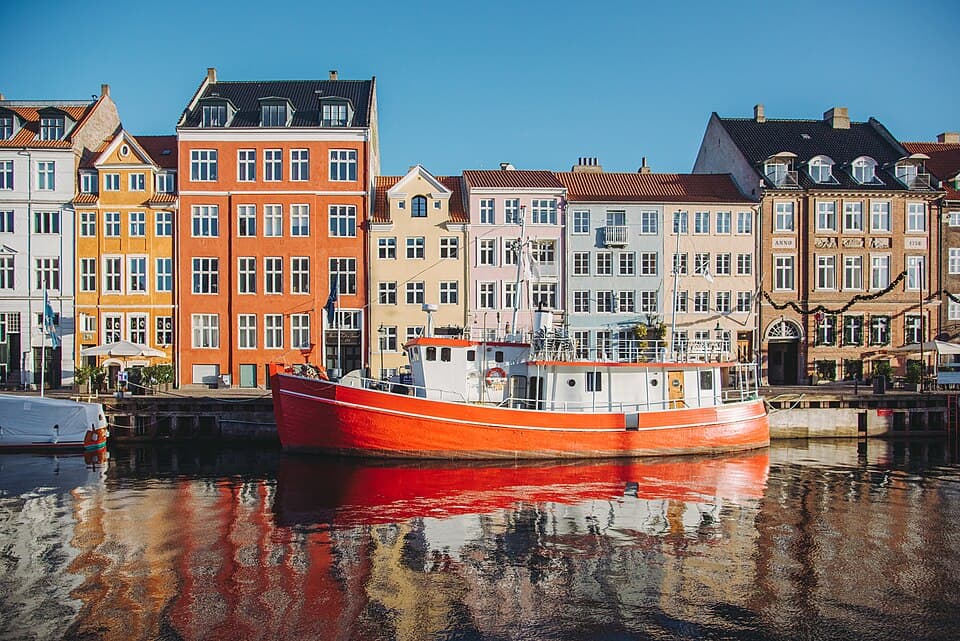
Welcome to Copenhagen. You are standing at the edge of Nyhavn, and I promise you, this is one of the most photogenic canals in Europe. Look at those townhouses lining the water. Bright ochre, deep blue, cherry red, moss green. Every building is painted a different colour, and together they look like a box of crayons leaning against the sky.
But this place was not always so charming. Nyhavn means New Harbour, and it was dug between 1670 and 1673 on the orders of King Christian the Fifth. And here is the dark part. The workers who carved this canal out of the earth were Swedish prisoners of war, captured during the brutal Dano-Swedish War of 1658 to 1660. Hundreds of men, forced to dig by hand. The canal was built to connect the harbour to the Kings New Square, Kongens Nytorv, which we will visit next.
Read more...Show less
For the next two centuries, Nyhavn was not a place you brought your family. This was Copenhagen's red light district. Sailors, dockworkers, and merchants crowded into cheap taverns and brothels. The air smelled of tar, fish, and trouble. It was rough, rowdy, and occasionally dangerous.
But one famous resident loved it here anyway. Hans Christian Andersen, the man who wrote The Little Mermaid, The Ugly Duckling, and The Snow Queen, lived in Nyhavn at three different addresses. Look across to the sunny side of the canal. Number 20 was his first home here, from 1834 to 1838. Number 67, a few doors down, was where he spent seventeen years. And number 18, the mustard-coloured house, was his final Nyhavn address before he died in 1875. The man who invented modern fairy tales wrote some of his most famous stories looking out at this canal.
Now, look down toward the far end of Nyhavn, on the left side. At number 17, in a small basement, you will find Tattoo Ole, the oldest continuously operating tattoo shop in the world. It has been here since 1884. And its most famous client? King Frederik the Ninth of Denmark. The King got tattooed right here in this basement. There are photos to prove it. A tattooed king, in a sailor's dive. That is Denmark for you.
By the way, the oldest building on the canal is number 9, built in 1681. It is still standing, still beautiful, and still a few years younger than the canal it sits on.
When you are ready, walk to the far end of Nyhavn, away from the harbour. You will emerge onto a large, open square. That is Kongens Nytorv, the Kings New Square, and our next stop.
Kongens Nytorv
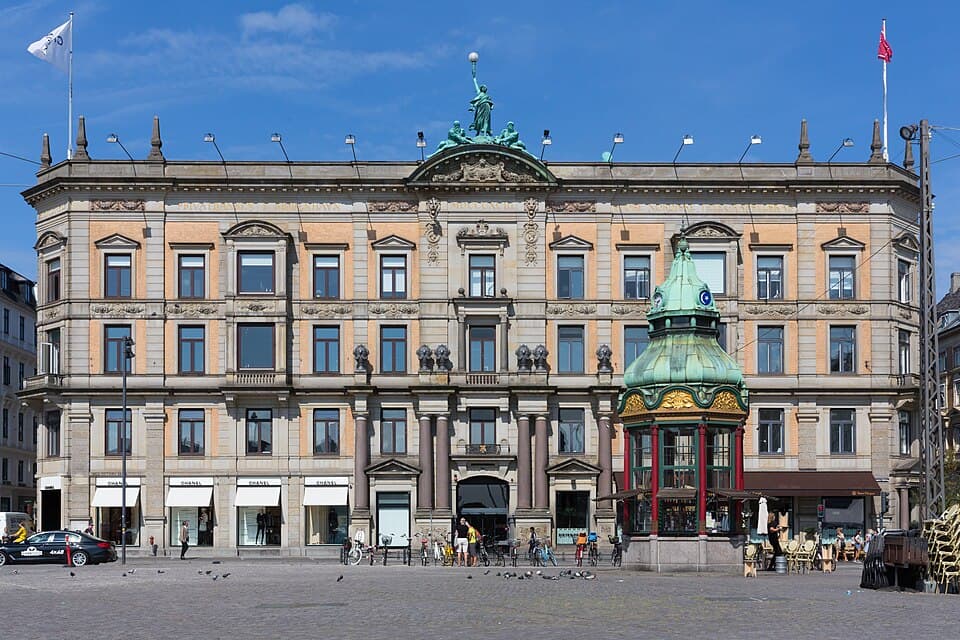
You have just stepped onto Kongens Nytorv, the Kings New Square, and this is where Copenhagen's medieval past meets its royal ambitions. The square was laid out in 1670 by King Christian the Fifth, the same king who ordered Nyhavn to be dug. He wanted a grand plaza to rival the great squares of Paris, and he placed it right at the edge of the old city, as if to say: Copenhagen is growing, and this is the front door.
Look at the equestrian statue in the centre of the square. That is Christian the Fifth himself, cast in lead and covered in gilding. He is dressed as a Roman emperor, because of course he is. Every European monarch wanted to be Caesar. The statue has stood here since 1688, making it one of the oldest equestrian statues in Scandinavia.
Read more...Show less
Now turn to face the grand building on the west side of the square, the one with the Dutch Baroque facade. That is Charlottenborg Palace, built between 1672 and 1683. It was originally the private mansion of Ulrik Frederik Gyldenloeve, who happened to be the illegitimate son of King Frederik the Third. After Christian the Fifth died in 1699, his widow, Queen Charlotte Amalie, bought the palace for fifty thousand Danish crowns and renamed it after herself. Since 1754, it has been the home of the Royal Danish Academy of Fine Arts, making it one of the oldest art academies in Europe.
Charlottenborg is a working art school to this day. Students paint, sculpt, and argue about conceptual art inside those rooms. And the exhibition space, Kunsthal Charlottenborg, hosts some of Copenhagen's best contemporary art shows. If you have time later, it is worth ducking in.
By the way, the French Embassy is also on this square, inside the elegant Thotts Palace. The king decreed that only grand houses could be built around Kongens Nytorv. No riffraff. This was to be the most prestigious address in Copenhagen, and for centuries, it was.
Look to your left. You will see the beginning of Stroget, Copenhagen's famous pedestrian street. But we are not going that way just yet. Instead, I want to show you something most tourists walk right past. Head west along Ny Ostergade, about a hundred metres. On your left, you will spot a narrow passageway between the buildings. That is Pistolstraede, and it is our next stop.
Pistolstræde
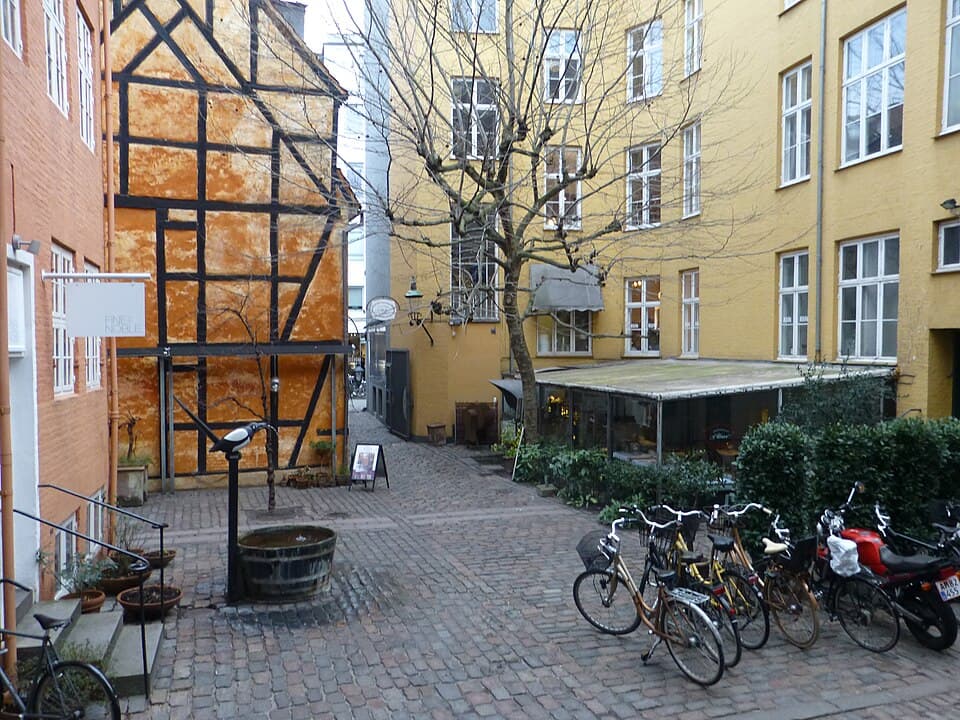
Step into Pistolstraede and feel the city change around you. The traffic noise fades. The light dims. The cobblestones are uneven under your feet. Welcome to Pistol Alley, one of the last surviving medieval passageways in central Copenhagen.
This narrow lane dates back to the 1600s, when a builder named Peder Madsen threw up a row of cramped rental houses for the city's poorest residents. This was the worst slum in Copenhagen. Families packed into tiny rooms, with no sanitation, no light, and no hope of anything better. The name Pistolstraede probably comes from the pistol-shaped bend in the alley, though some locals will tell you it was because you needed a pistol to walk through here after dark.
Read more...Show less
Look at the buildings around you. The ones with the colourful facades and the timber frames are eighteenth-century, rebuilt after Copenhagen's Great Fire of 1728. That fire destroyed nearly a third of the city in just three days. Pistolstraede burned too, and when it was rebuilt, the new buildings were slightly wider, slightly taller, slightly less desperate.
Today this alley is lovely. Boutiques, ceramics shops, and cosy cafes have replaced the slum dwellings. At the small plaza, look for the Magpie Fountain, a bronze sculpture installed in 1980 by artist Gunnar Westman. It is a sweet little thing, a magpie perched on a branch, water trickling beneath it.
Pistolstraede is the last of a cluster of alleys that once criss-crossed this part of the old city. All the others were demolished as Copenhagen modernised. Peder Madsens Gang, the alley that Pistolstraede once connected to, was torn down in 1873 and replaced by the wider street Ny Ostergade, the one you just walked along. So what you are standing in is a survivor, a fragment of the cramped, chaotic, medieval city that Copenhagen used to be.
By the way, if you are craving coffee, this is a wonderful spot to stop. Several of the cafes along Pistolstraede have outdoor seating in the courtyard, and on a sunny day, it is one of the most peaceful places in the city centre.
When you are ready, continue west through the alley and turn left. In about three hundred metres, you will reach a charming square called Grabroedretorv. Follow the narrow streets, and you will know it when you see it. Colourful buildings, outdoor restaurants, and a big plane tree in the middle.
Gråbrødretorv
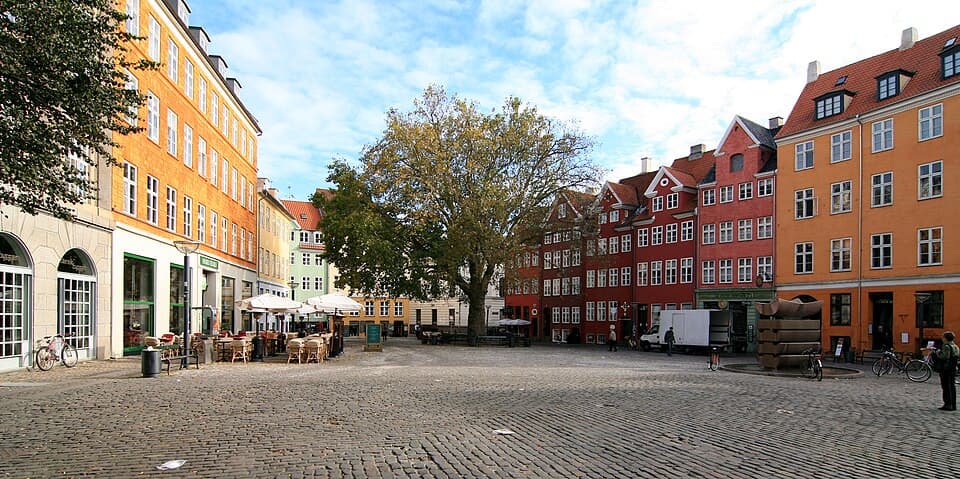
Here we are at Grabroedretorv, Greyfriars Square, and this might be the cosiest square in Copenhagen. Look around. Pastel-coloured townhouses, outdoor restaurant tables, fairy lights strung between the buildings, and that magnificent plane tree spreading its branches over everything.
But this charming spot has a violent history. A Franciscan friary was founded right here in 1238. The Grey Friars, as the Franciscan monks were known, built a church, a great hall, and a refectory on this ground. For three centuries, this was a place of prayer, scholarship, and political deal-making. The friary's great hall was used for important state meetings, even assemblies that decided the fate of Danish kings.
Read more...Show less
Then came the Reformation in 1530. The friary was dissolved. The monks were expelled. But the buildings were not torn down. Instead, the huge cellars beneath the friary became the city's jail. The church itself was converted into a prison, and it earned a grim new name: the Prison Church. Imagine attending Sunday service in a building where prisoners rotted in the basement below your feet.
In the seventeenth century, a nobleman named Corfitz Ulfeldt built a grand mansion here, and the square was renamed Ulfeldts Plads. But Ulfeldt turned traitor, conspiring with Sweden against Denmark, and his name became a curse. After his downfall, the Danes erected a shame column on this spot, a stone pillar inscribed with his crimes.
Then the Great Fire of 1728 swept through and destroyed practically every building on the square. The area was rebuilt. Then in 1807, the British Royal Navy bombarded Copenhagen during the Napoleonic Wars, and the square was devastated again. What you see today is the result of that second rebuilding. Twice burned, twice bombed, twice rebuilt. This square does not give up.
By the way, the restaurants around the square are excellent, especially on a warm evening. If you come back tonight, grab an outdoor table and a glass of Danish beer. This is one of those places where you sit down for one drink and stay for three.
Now, head north out of the square. In about two hundred metres, you will see a round brick tower rising above the rooftops. That is the Rundetaarn, the Round Tower, and it is one of Copenhagen's most remarkable buildings.
Round Tower
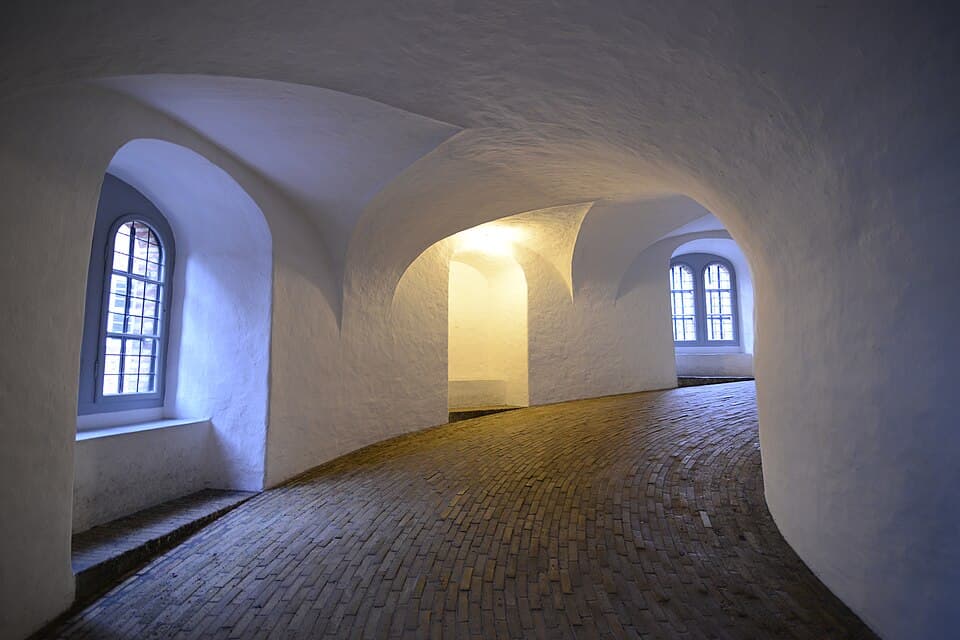
Look up. That unmistakable round brick tower is the Rundetaarn, the Round Tower, and it is one of the most unusual buildings in any European capital. It was built between 1637 and 1642 by King Christian the Fourth, the great builder king of Denmark, the same man who built Rosenborg Castle, which we will visit next.
But here is the thing that makes the Round Tower special. There are no stairs inside. Instead, a wide spiral ramp winds seven and a half times around the hollow core of the tower, climbing nearly thirty-five metres to the observation platform at the top. The ramp is wide enough to drive a horse and cart up, and that was the whole point. The tower was built as an astronomical observatory, and the astronomers needed to haul heavy telescopes and equipment to the top. A staircase would not do. So Christian the Fourth built Europe's first purpose-built observatory with a spiral ramp instead.
Read more...Show less
And this brings us to one of Copenhagen's great historical stories. In 1716, Tsar Peter the Great of Russia was visiting Copenhagen. He decided he wanted to see the view from the top of the Round Tower. But Peter did not walk up. He rode his horse all the way to the top, clattering up the spiral ramp on horseback. His wife, Tsarina Catherine, followed behind him in a horse-drawn carriage. A contemporary newspaper, the Copenhagen Post-Rider, reported the whole event. Imagine the sound of hooves echoing up through that brick cylinder.
The Round Tower is part of a larger complex called the Trinitatis Complex, which also includes a church and what was once the university library. The astronomer Ole Roemer, the first person to measure the speed of light, worked at the observatory here after returning from Paris in the late seventeenth century. Think about that. The speed of light was being calculated at the top of this tower.
The observatory is still functioning. It is the oldest working observatory building in Europe. On clear winter evenings, amateur astronomers set up telescopes on the platform and anyone can look through them.
If you have time, walk up the ramp. The view from the top gives you a three-hundred-and-sixty degree panorama of Copenhagen's rooftops, church spires, and the harbour glinting in the distance. The ramp itself is an experience, a slow, meditative ascent that takes about five minutes.
When you are done, exit the tower and head north along Kobmagergade. In about four hundred metres, you will reach the gates of the Kings Garden and Rosenborg Castle.
Rosenborg Castle
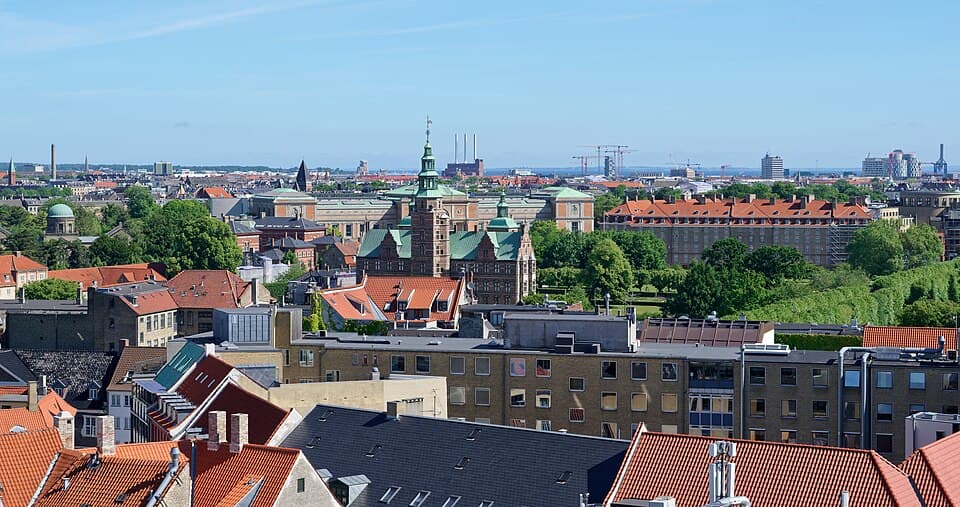
Welcome to Rosenborg Castle and the Kings Garden. The red brick Renaissance building in front of you, with its green copper spires and ornate sandstone decorations, was built by our friend King Christian the Fourth, the same man who gave us the Round Tower. Christian started building Rosenborg in 1606 as a modest summer house, but he kept adding to it, a tower here, a wing there, until by 1634 it had become the magnificent palace you see today. The man could not stop building.
Christian the Fourth loved this place so much that when he was dying in 1648, he insisted on being brought here to spend his final days. He had ruled Denmark for sixty years, longer than almost any other European monarch. He had fought wars, built cities, lost battles, and bankrupted the treasury. And at the end, he wanted to die at Rosenborg, looking out at his gardens.
Read more...Show less
The castle became a museum in 1833, and today it houses the Danish Crown Jewels. If you go inside, head straight for the basement vault. There, behind reinforced glass, you will find the coronation crown, encrusted with sapphires, rubies, and diamonds, and the coronation chair, made from Norwegian narwhal tusks. Yes, narwhal tusks. In the seventeenth century, narwhal tusks were worth more than gold because people believed they came from unicorns. Three life-size silver lions guard the throne, based on the throne of King Solomon described in the Bible.
But here is the detail that stays with me. Rosenborg Castle hides a seventeenth-century invisible music system. Court musicians would play inside a small cellar chamber, and their sound would travel through purpose-built acoustic ducts hidden in the walls, allowing music to drift into the rooms above as if it came from nowhere. Invisible music, in a castle built four hundred years ago.
Now step outside and look at the gardens. The Kings Garden, Kongens Have, is the oldest royal garden in Denmark, laid out in the early sixteen hundreds. It has been open to the public since 1770, and on a sunny day, it is packed with Copenhageners picnicking on the lawns, reading under the ancient trees, and pretending the rest of the city does not exist.
When you are ready, walk through the park toward the northwest exit. Cross Oester Voldgade and continue along Frederiksborggade. In about five hundred metres, you will reach the glass halls of Torvehallerne, Copenhagen's famous food market. And yes, it is time for lunch.
Torvehallerne
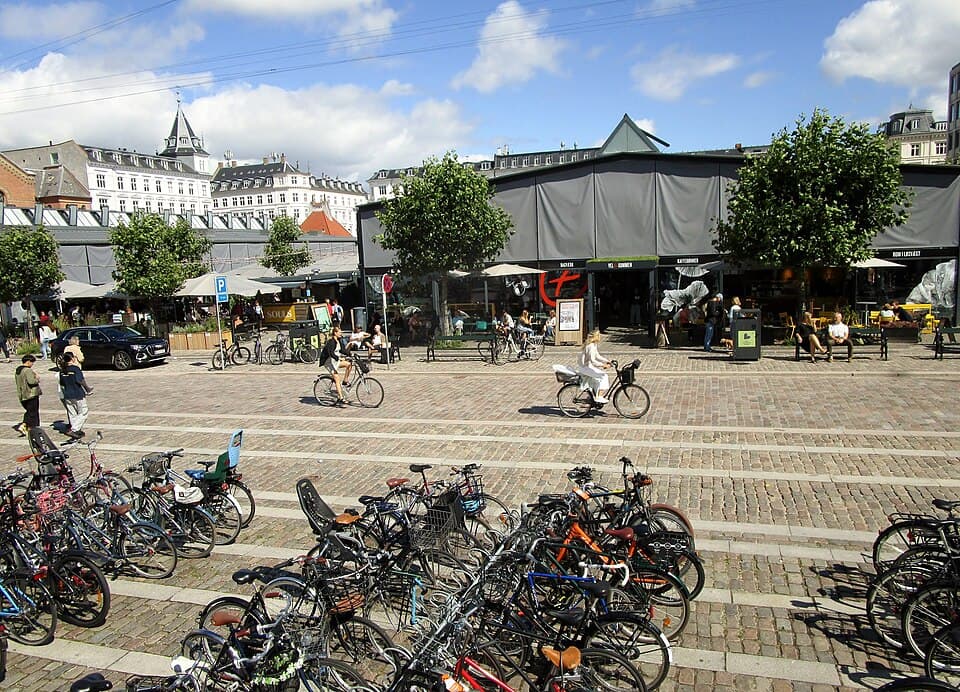
You have arrived at Torvehallerne, Copenhagen's magnificent food market, and this is where we pause the history lesson and eat. Look at the two elegant glass-and-steel halls in front of you. They opened in 2011, but the story of food trading on this spot goes back centuries.
This site sits just outside where the old north gate of the city, Norreport, once stood. There is evidence of merchants selling produce here as early as the seventeenth century, peasants setting up stalls near the city gate, trying to catch people as they entered the city. By the late eighteen hundreds, after Copenhagen's fortifications had been torn down, this became the city's central wholesale produce market, called Gronttorvet. For decades, this was where all of Copenhagen's food arrived, was sorted, and was distributed.
Read more...Show less
Then, in 1958, the market was relocated to the suburbs because the traffic was too terrible. And for the next fifty years, this prime piece of real estate became a car park. A soulless, grey car park. In 1997, an architect named Hans Peter Hagens proposed building covered food halls on the site. It took fourteen years of planning, financing, and bureaucratic wrangling, but in September 2011, Torvehallerne finally opened.
Inside, you will find over sixty stalls selling everything from hand-rolled sushi to artisanal Danish cheese, fresh-baked rugbrod, smoked fish, gourmet chocolate, and some of the best coffee in Copenhagen. Here is my recommendation. Find the stall selling smoerrebroed, those open-faced Danish sandwiches. Get the one with pickled herring, red onion, and capers on dark rye bread. It sounds simple. It will change your understanding of what a sandwich can be.
Also, try a freshly made Danish pastry, a wienerbroed. In Denmark, they call them Vienna bread, because the technique was brought to Copenhagen by Austrian bakers in the eighteen-fifties. The Danes took the recipe and made it better. That is very Danish.
By the way, Norreport Station is right behind you. It is the busiest transit hub in Denmark, with over a quarter of a million passengers every day. So this market sits at the crossroads of the entire country.
Take your time here. Browse, snack, sip a coffee. When you are ready, we are heading south into the old university quarter. Walk down Frederiksborggade, past Norreport Station, and continue along Norregade for about five hundred metres. You will arrive at a grand neoclassical church with tall columns. That is Vor Frue Kirke, Copenhagen's Cathedral.
Vor Frue Kirke
You are standing in front of Vor Frue Kirke, the Church of Our Lady, Copenhagen's cathedral. Look at the tall neoclassical facade with its row of Ionic columns. It is sober, restrained, almost austere. But what is inside this building is extraordinary.
A church has stood on this spot since the twelfth century. This is the fourth version. The first medieval church was destroyed by fire. The second burned down in Copenhagen's Great Fire of 1728, the same fire that levelled Grabroedretorv. The third church was destroyed in 1807 when the British Royal Navy bombarded the city during the Napoleonic Wars. The British hit the church tower with incendiary rockets, and the whole building went up in flames. Three churches, three catastrophes.
Read more...Show less
The current building was designed by architect Christian Frederik Hansen and completed in 1829. But the real treasure is inside, and it is the work of one man: Bertel Thorvaldsen, Denmark's greatest sculptor and one of the most celebrated artists of the nineteenth century.
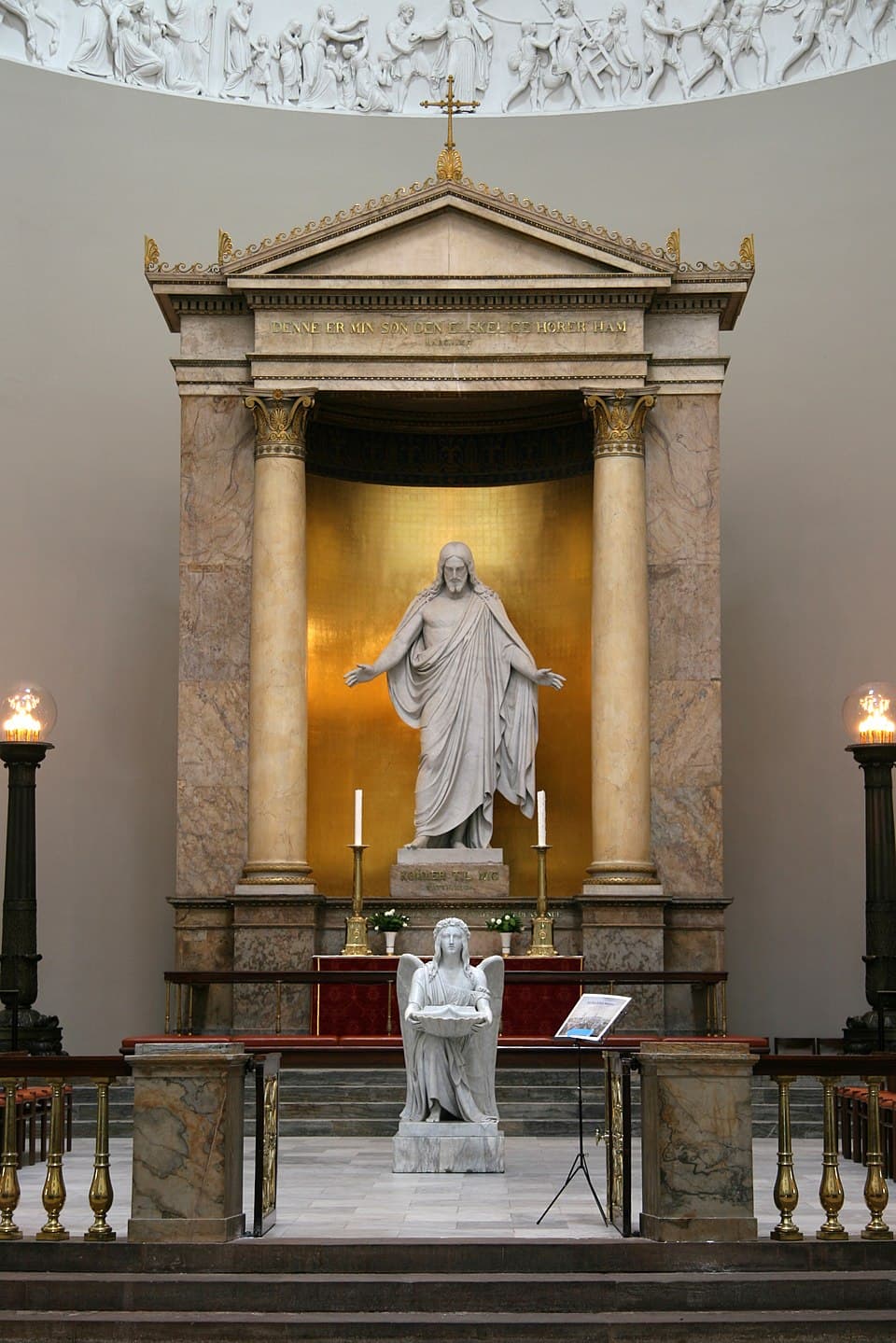
Walk inside and look straight ahead. Behind the altar stands Thorvaldsen's statue of Christ, arms outstretched, palms open, head gently bowed. It is three and a half metres tall, carved from white Carrara marble. Thorvaldsen wanted to create something no one had attempted before: a living Christ, not a suffering one. No cross, no wounds, no agony. Just a calm, welcoming figure, inviting you forward. This statue has become the most widely reproduced image of Christ in the world. You will find copies of it in churches from Salt Lake City to Sao Paulo.
Along the side walls of the nave, twelve marble apostles stand on pedestals at floor level, six on each side, right next to the pews. They are not up on high looking down at you. They are standing beside you, as if they have joined the congregation. Thorvaldsen worked on these figures for nearly twenty years, starting in Rome in 1819 and not finishing until shortly before his death in 1844.
By the way, Vor Frue Kirke only officially became Copenhagen's Cathedral in 1924. Before that, it was just a parish church that happened to contain some of the finest neoclassical sculpture in Europe.
As you walk along Norregade heading south, you are passing through the heart of the old Latin Quarter, Copenhagen's university district. The side streets here, Fiolstraede and Sankt Peders Straede, are lined with bookshops, vintage clothing stores, and quirky cafes. It is a lovely area to wander.
Continue south along Norregade and Vestergade for about five hundred metres. The street will open up into a large square dominated by a massive red-brick building with a tall tower. That is Copenhagen City Hall.
Copenhagen City Hall
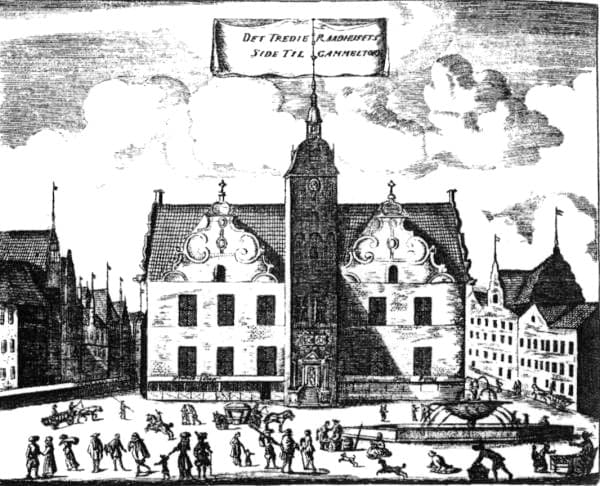
Welcome to Radhuspladsen, City Hall Square, and this enormous red-brick building with the asymmetrical tower is Copenhagen City Hall. It is one of the grandest municipal buildings in Scandinavia, and it was designed to make a statement.
The architect was Martin Nyrop, and the building was constructed between 1892 and 1905. Nyrop looked south for inspiration, all the way to Siena, Italy. If you have ever been to Siena's Palazzo Pubblico, you will see the resemblance immediately: the tall tower, the red brick, the arched windows. But Nyrop added a distinctly Nordic flavour, blending Italian medieval architecture with the National Romantic style that was sweeping Scandinavia at the time. The result is a building that feels both ancient and modern, both Mediterranean and Nordic.
Read more...Show less
Look up at the main entrance. Above the door, you will see a gilded statue of Bishop Absalon, the legendary founder of Copenhagen. According to tradition, Absalon built a castle on a nearby island in 1167, and a fishing village grew up around it. That village became Copenhagen. The city's name comes from the Danish word Kobenhavn, meaning merchants harbour. From a fishing village to a European capital in eight hundred years.
The tower is one hundred and five metres tall, one of the tallest structures in the city. You can climb it for a panoramic view, but only on guided tours.
Now, here is the real hidden gem of City Hall. Inside, in a glass case, is Jens Olsen's World Clock, one of the most complex mechanical clocks ever built. It has over fifteen thousand moving parts. Olsen, a Danish locksmith and clockmaker, spent decades designing it, making calculations with the help of an astronomer. The actual construction ran from 1943 to 1955. Olsen himself died in 1945, ten years before his masterpiece was finished. The clock tracks not just the time, but the positions of the sun, moon, and planets, the dates of Easter for centuries to come, and a calendar that will remain accurate for hundreds of thousands of years. It is a monument to obsession, precision, and the Danish refusal to do anything halfway.
By the way, Radhuspladsen is the starting point of Stroget, the famous pedestrian street. On November 17, 1962, Copenhagen closed this stretch of road to cars as a temporary experiment. People predicted economic disaster. Instead, pedestrian traffic tripled, shops thrived, and the experiment became permanent. The architect Jan Gehl used Stroget as a living laboratory for studying how people use public space, and his findings transformed urban planning around the world. Every pedestrian zone in every city owes something to this street.
When you are ready, walk south from City Hall, past the bus stops and across the small park. In about three hundred metres, you will see a grand museum building with a classical facade. That is the Ny Carlsberg Glyptotek.
Ny Carlsberg Glyptotek
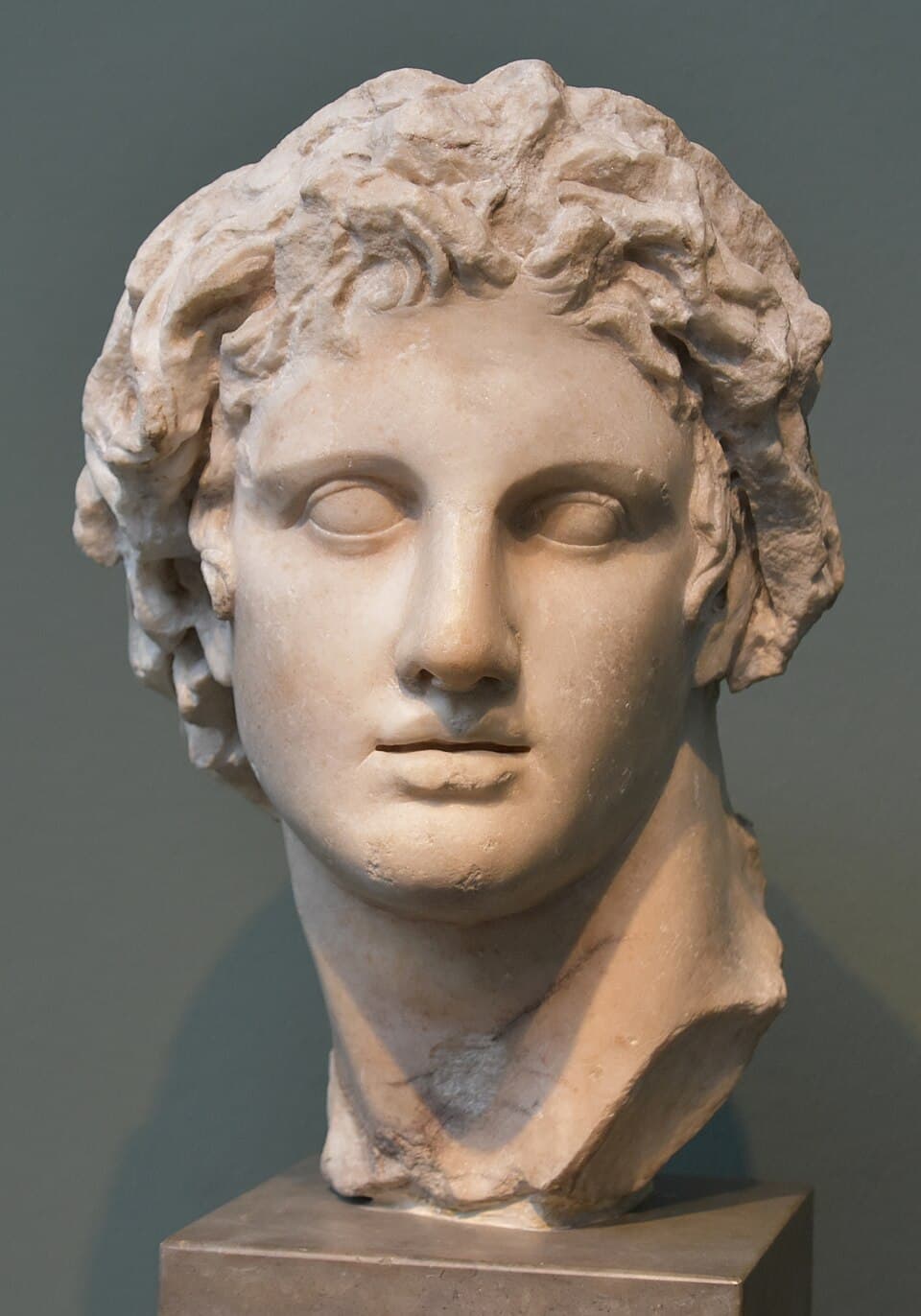
The building in front of you is the Ny Carlsberg Glyptotek, and it exists for one reason: beer. Specifically, Carlsberg beer.
In 1888, a man named Carl Jacobsen donated his private art collection to the Danish state and the city of Copenhagen, on one condition: they had to build a proper museum to house it. Carl Jacobsen was the son of J.C. Jacobsen, who founded the Carlsberg brewery. Carl ran the newer branch, called Ny Carlsberg, New Carlsberg, and he poured the profits from millions of bottles of lager into buying art. Not just any art. Some of the finest art in Europe.
Read more...Show less
The museum opened to the public in 1897, and what Carl assembled is staggering. This building holds one of the largest collections of ancient Roman and Greek sculpture in Northern Europe. It has Etruscan art, Egyptian mummies, and one of the most important collections of Palmyrene funerary sculptures outside of Syria. But that is just the ground floor.
Upstairs, Carl's taste shifts to nineteenth-century France. The Glyptotek has one of only four complete sets of Edgar Degas' bronze sculptures in the world, those exquisite little dancers and horses. It has over forty works by Paul Gauguin, making it one of the most important Gauguin collections anywhere. And it holds the largest collection of Auguste Rodin's sculptures outside of France.
Let me say that again. A beer magnate in Copenhagen assembled a collection that rivals the major museums of Paris and Rome. This is what happens when a brewer has taste, money, and no interest in moderation.
The building itself is beautiful. The older wing, designed by Vilhelm Dahlerup, has a red-brick facade with polished granite columns in a Venetian Renaissance style. But the real showstopper is the Winter Garden that connects the two wings: a soaring glass dome over a room filled with palm trees, a fountain, and mosaic floors. On a rainy Copenhagen afternoon, there is no better place to sit than in this indoor garden, surrounded by tropical plants and Roman statuary, listening to the rain on the glass dome above.
By the way, admission to the Glyptotek is free on Tuesdays. If today is Tuesday, you have no excuse.
Our final stop is just around the corner. Walk northwest from the Glyptotek for about two hundred metres. You will see the ornate entrance gate and the twinkling lights of Tivoli Gardens.
Tivoli Gardens
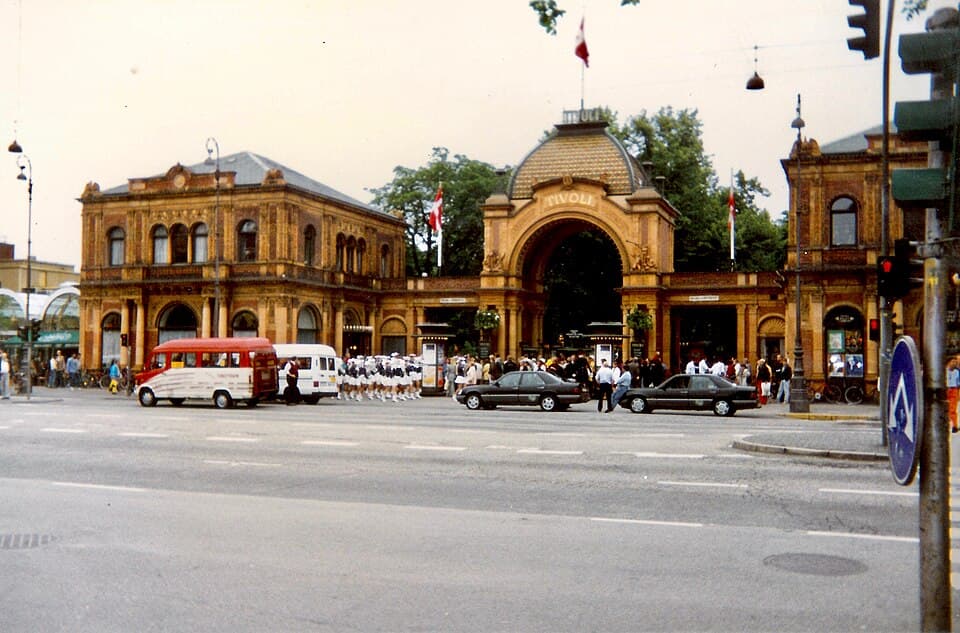
And here we are at Tivoli Gardens, the second-oldest amusement park in the world, and the perfect place to end a walking tour of Copenhagen.
Tivoli opened on August 15, 1843. Its founder, Georg Carstensen, was a Danish entrepreneur with a genius for persuasion. He convinced King Christian the Eighth to grant him a charter for an amusement park by making a brilliantly cynical argument. Carstensen told the king: when the people are amusing themselves, they do not think about politics. The king, who had been worrying about revolutionary movements sweeping across Europe, agreed immediately.
Read more...Show less
On opening day, more than three thousand Copenhageners streamed through the gates and found a world unlike anything they had seen before. Carstensen had created an exotic fantasy on the old city ramparts, with Chinese-inspired pavilions, Moorish archways, flower gardens, a theatre, and some of the first mechanical amusement rides in Scandinavia. It was part pleasure garden, part theatre, part carnival, and entirely magical.
The park has been operating continuously for over a hundred and eighty years, with one exception. During the Nazi occupation, Danish resistance fighters sabotaged Tivoli in 1944, setting fire to several buildings to spite the German forces who had been using the park. After the war, Tivoli was rebuilt and reopened.
Look for the wooden roller coaster inside, called Rutschebanen. It was built in 1914, making it one of the oldest wooden roller coasters still operating in the world. A human operator controls the brakes manually on every ride. No computers. Just a person with a brake lever and a steady hand.
And here is the connection that ties it all together. In 1951, a man named Walt Disney visited Tivoli Gardens with his wife Lillian. Disney took meticulous notes, studying how the park was laid out, how the gardens were maintained, how the lighting created atmosphere after dark. Four years later, he opened Disneyland in Anaheim, California. The manicured landscaping, the themed areas, the use of water and light. All of it traces back to a visit to this park.
Hans Christian Andersen, the fairy tale writer who lived in Nyhavn where we started this walk, was also a regular visitor to Tivoli. His story The Nightingale is said to have been inspired by the park's Chinese-themed buildings.
So our walk has come full circle, from Andersen's canal to Andersen's park. If you have the energy, buy a ticket and go inside. Ride the Rutschebanen. Sit in the gardens as the fairy lights come on at dusk. Have a glass of wine and a Danish pastry, and let Copenhagen work its magic.
Thank you for walking with me. This has been the Classic Copenhagen Walk.
Free
GPS-guided walking tour
No account needed. Walk at your own pace.
Free
11 stops · 5.4 km