Paris: Le Marais — Mansions, Rebels & Falafel
10 stops
GPS-guided
3.6 km
Walking
1 hour 10 minutes
Duration
Free
No tickets
About this tour
Through medieval courtyards, past the melted hearts of kings, to Europe's best falafel. Proust's cork-lined bedroom, Victor Hugo's square, and Louis XVI's diary entry for the day the Bastille fell: nothing.
10 stops on this tour
Église Saint-Paul-Saint-Louis
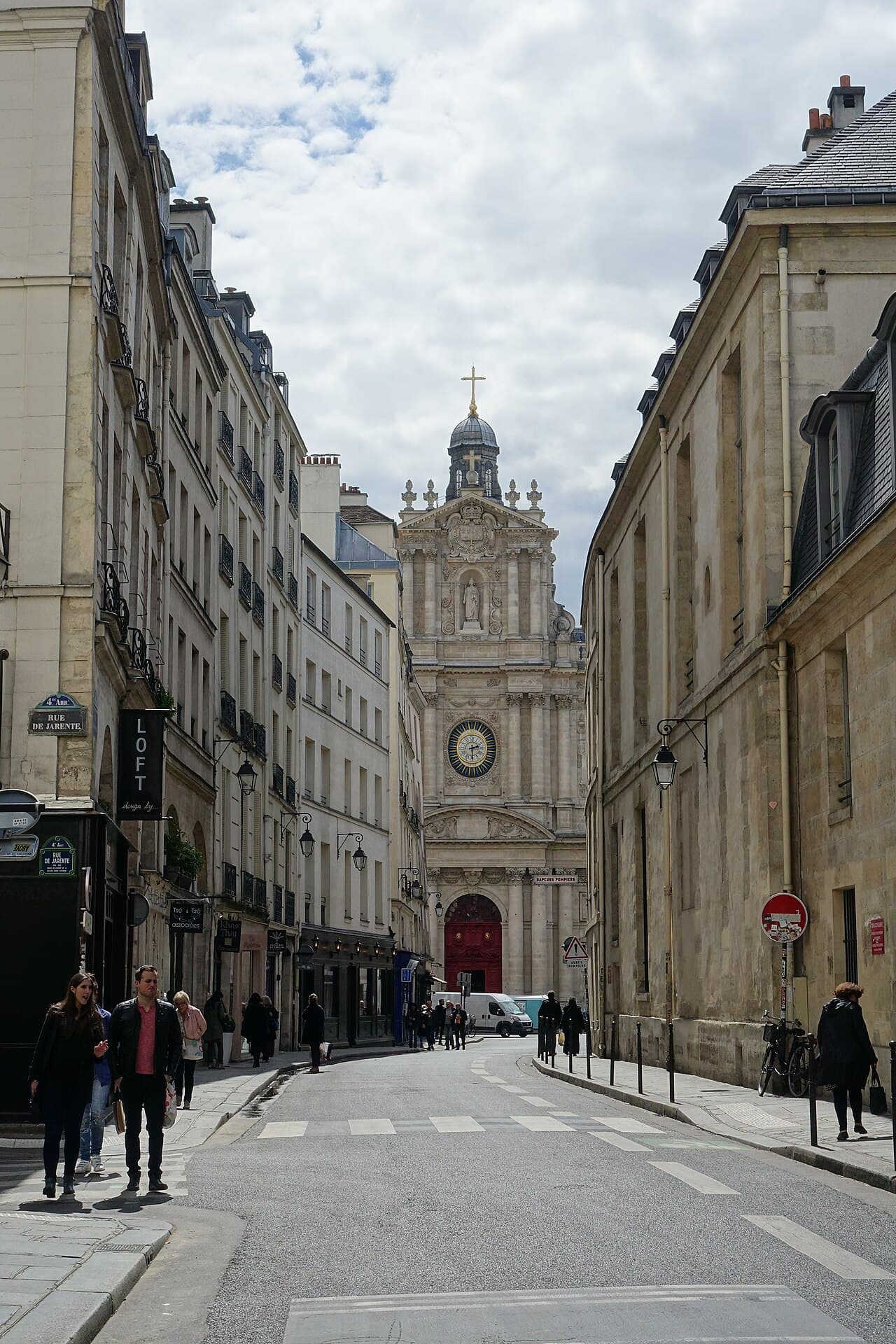
You're standing on Rue Saint-Antoine, one of the oldest streets in Paris, and that magnificent facade rising above you is the Eglise Saint-Paul-Saint-Louis. Before you even step inside, look up at the dome and those soaring Corinthian columns. This was the first church in Paris to completely abandon the Gothic style and go full Baroque. And the Jesuits — who built it — knew exactly what they were doing.
Here's the story. In fifteen eighty, the Jesuits set up their first house in Paris and built a small chapel dedicated to Saint Louis — that's King Louis the Ninth, the crusader king. But by the early sixteen hundreds, the congregation had outgrown it, so Louis the Thirteenth laid the first stone of this new church in sixteen twenty-seven. It took fourteen years to build, completed in sixteen forty-one, and the architects Etienne Martellange and Francois Derand modelled it on the Church of the Gesu in Rome — the mother church of the entire Jesuit order. So what you're looking at is a little piece of Roman ambition, planted right here in the Marais.
Read more...Show less
Now step inside, if it's open, and look for two giant seashells near the entrance. Those are the holy water fonts, and they were donated by Victor Hugo himself to mark the baptism of his first child. Hugo lived just around the corner on Place des Vosges, and we'll visit his house later.
But here's the detail that really gets me. This church once held the embalmed hearts of both Louis the Thirteenth and Louis the Fourteenth — the Sun King — in silver-gilt reliquaries. Imagine that. Two royal hearts, beating metaphorically in silver urns. During the Revolution, the hearts were seized. Louis the Fourteenth's heart ended up — and this is real — in the possession of a painter who ground part of it into pigment and used it in a painting. The remaining fragments were eventually sent to the basilica at Saint-Denis, where they rest today.
In the left transept, look for a large painting of Christ in the Garden of Olives. That's by Eugene Delacroix, painted in eighteen twenty-seven. The anguish on Christ's face is extraordinary — Delacroix was only twenty-nine when he painted it, but you can already see the dramatic intensity that would define his career.
Alright, time to slip into one of Paris's best-kept secrets. Walk out the main door, turn right on Rue Saint-Antoine, then take the first right onto Rue Saint-Paul. After about a hundred metres, look for archways on your left leading into a hidden network of courtyards. Welcome to the Village Saint-Paul.
Village Saint-Paul
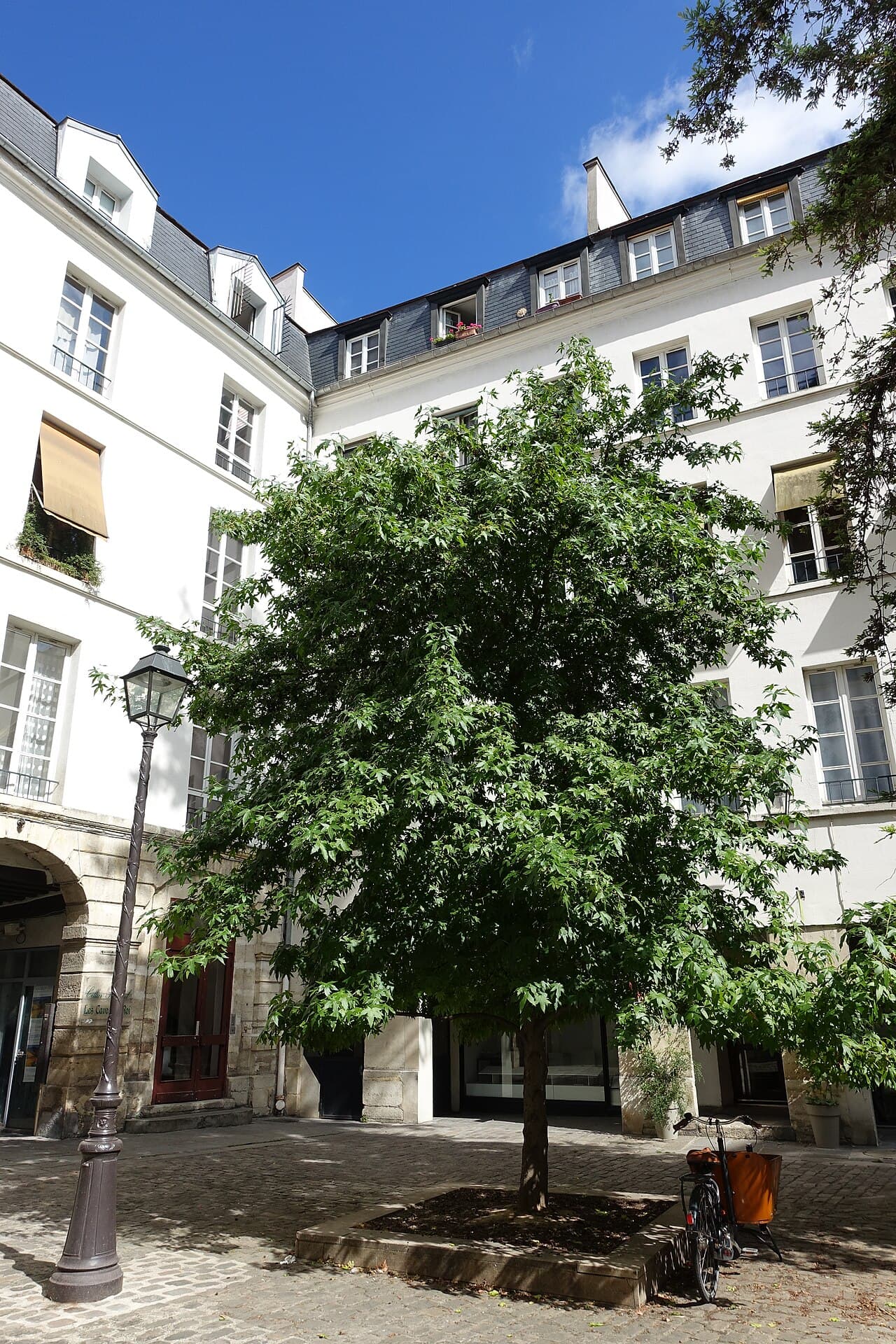
Step through that archway and let the noise of the street fade behind you. You've just entered the Village Saint-Paul, a labyrinth of cobblestoned courtyards and vaulted stone passages that most tourists walk straight past. This is secret Paris, the kind of place that makes you feel like you've accidentally wandered into the fourteenth century.
And in a way, you have. Because this ground once held one of the most extraordinary palaces in medieval France. In thirteen sixty, King Charles the Fifth built the Hotel Saint-Pol right here — a sprawling royal residence with gardens, orchards, aviaries, and — wait for it — a menagerie with actual lions. The first lions seen in Europe, supposedly. If you walk out and find Rue des Lions-Saint-Paul nearby, now you know why it's called that. The king kept his big cats right here, six hundred and sixty years ago.
Read more...Show less
The palace was eventually dismantled stone by stone in the sixteenth century, and over the following centuries, this area became a tangle of workshops, tenements, and narrow passages. By the early twentieth century, it was officially declared unsanitary and slated for demolition. But in nineteen sixty-two, Andre Malraux — writer, war hero, and France's first Minister of Culture — pushed through a law to protect the entire Marais district. That law saved this village.
Today the interconnected courtyards house around forty boutiques: antique dealers, ceramicists, picture framers, small galleries, and the occasional tea room that looks like it hasn't changed since the fifties. Wander through. Get lost. That's the point. Poke your head into a shop selling Art Deco lamps or vintage maps of Paris. Chat with the dealers — many of them have been here for decades and know every cobblestone by name.
If you're here on a Thursday through Sunday, you'll find more shops open — some of the smaller dealers keep quirky hours. And if you need a coffee break, look for one of the small cafes tucked into the courtyards. Order un creme — that's a latte — and a croissant, and sit in the courtyard watching Parisians go about their weekend treasure hunts.
Ready for something truly medieval? Exit the village onto Rue de l'Ave Maria, turn left, and walk about two hundred metres until you see a building that looks like it was plucked straight out of a fairy tale — all turrets and pointed arches. That's the Hotel de Sens, and it has a cannonball stuck in its wall.
Hôtel de Sens
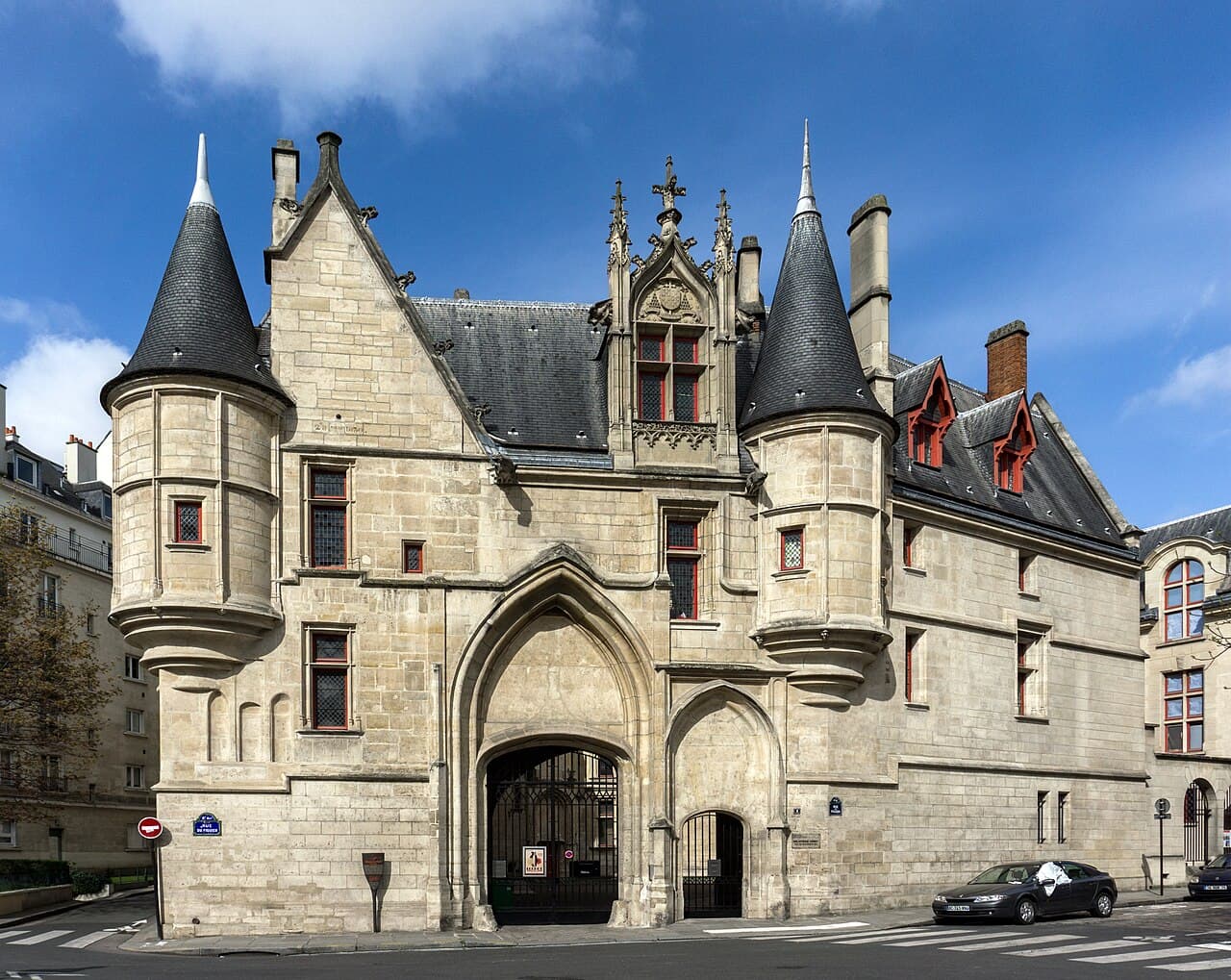
Look at this building. Just look at it. The Hotel de Sens is one of only three medieval private residences left in all of Paris, and standing in front of it feels like someone accidentally left a Loire Valley chateau in the middle of the city. See those pointed turrets, the Gothic arched windows, the fortified entrance? This place means business.
Construction began in fourteen seventy-five under Tristan de Salazar, the Archbishop of Sens. At the time, Paris actually fell under the religious jurisdiction of Sens, a town about a hundred and twenty kilometres southeast in Burgundy. This mansion was the archbishop's Parisian crash pad, and they clearly didn't believe in modesty. It took over forty years to finish, completed around fifteen nineteen.
Read more...Show less
But the juiciest chapter of this building's history belongs to Queen Margot — Marguerite de Valois, the ex-wife of King Henri the Fourth. After their marriage was annulled in fifteen ninety-nine, Margot bounced around Paris until she moved into the Hotel de Sens in sixteen oh five. She was in her early fifties by then, still glamorous, still scandalous, and she had a string of young lovers. One of them, the Comte de Vermont, became insanely jealous when Margot took a new favourite — a young man named Julien Datte. On the fifth of April, sixteen oh six, Vermont shot Datte dead right on the doorstep of this building. Margot was so furious she ordered Vermont executed the very next day, on the exact same spot where he'd killed her lover. She moved out shortly after. Can't imagine why.
Now, here's a fun detail you need to find. Look at the facade, just to the right of the turret on the left side of the building, above a small window. See that dark sphere embedded in the stone? That's a cannonball, and it's been stuck there since the twenty-eighth of July, eighteen thirty — the July Revolution, the same uprising that inspired Les Miserables. There's an inscription underneath it marking the date. The revolutionaries fired at the building because it was being used as a religious warehouse, and the cannonball has been deliberately left in place ever since. Almost two hundred years of just... sitting there.
Today the Hotel de Sens houses the Bibliotheque Forney, a free library dedicated to the decorative arts. The reading room alone is worth a peek. And the garden behind the building, with its geometric hedges, is a lovely quiet spot to rest your legs.
From here, walk north along Rue du Figuier, then turn left onto Rue Geoffroy-l'Asnier. In about two minutes, you'll reach the Memorial de la Shoah. The tone is about to shift. Take a moment to prepare yourself.
Mémorial de la Shoah
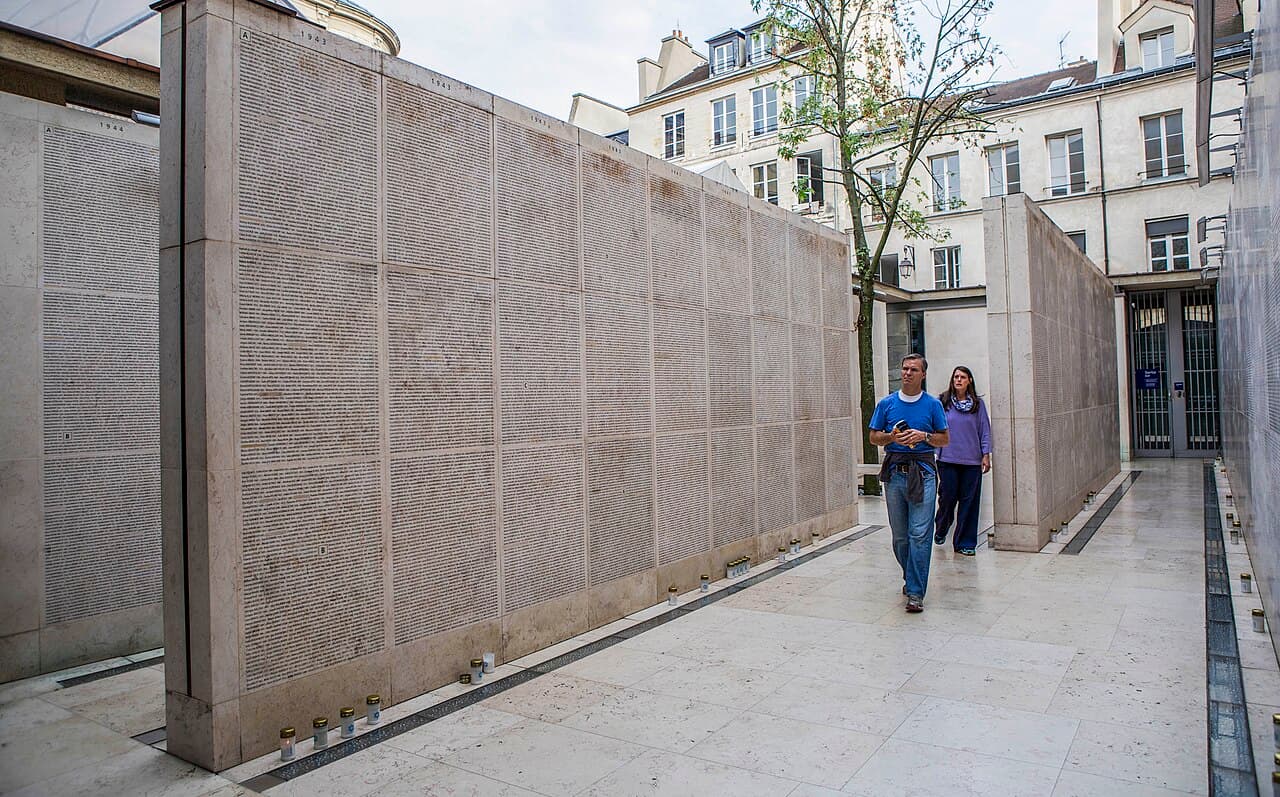
You're standing on Rue Geoffroy-l'Asnier, in front of the Memorial de la Shoah. Before you go in, pause at the exterior wall. Those names carved into the stone — seventy-six thousand of them — are the names of every Jewish man, woman, and child deported from France to Nazi death camps. Seventy-six thousand people. Including eleven thousand four hundred children.
This memorial was inaugurated on the twenty-seventh of January, two thousand and five — the sixtieth anniversary of the liberation of Auschwitz. But the site's history goes back further. In nineteen fifty-six, the Tomb of the Unknown Jewish Martyr was established here, and a crypt was created containing ashes from the death camps and the Warsaw Ghetto, brought in soil from the land of Israel.
Read more...Show less
The Marais's connection to the Holocaust is deeply personal. This neighbourhood was the Pletzl — Yiddish for "little place" — the heart of Jewish Paris. Beginning in the eighteen eighties, Ashkenazi Jews fleeing persecution in Russia, Romania, and Austria-Hungary poured into these streets. By the early twentieth century, an estimated twenty-five thousand Jews lived in the Marais. On the sixteenth and seventeenth of July, nineteen forty-two, French police — not German soldiers, French police — rounded up over thirteen thousand Jews across Paris in what became known as the Vel d'Hiv roundup. They were imprisoned in the Velodrome d'Hiver, a cycling stadium, in horrific conditions — no food, almost no water, stifling heat — before being transported to the Drancy internment camp north of Paris and from there to Auschwitz. Most never returned.
For decades, France struggled to acknowledge its role. It wasn't until nineteen ninety-five that President Jacques Chirac officially recognised French complicity in the deportations.
The memorial is free to enter, open every day except Saturday. Inside, you'll find a permanent exhibition tracing the history of Jews in France during the Second World War, the documentation centre, and the crypt. It's quiet in there. Deliberately, respectfully quiet. Take your time.
When you're ready, we'll walk to one of the most vibrant streets in Paris. Head north on Rue Geoffroy-l'Asnier, turn right onto Rue de Rivoli briefly, then left onto Rue Pavee. Follow it north and you'll hit Rue des Rosiers — you'll smell it before you see it.
Rue des Rosiers / L'As du Fallafel
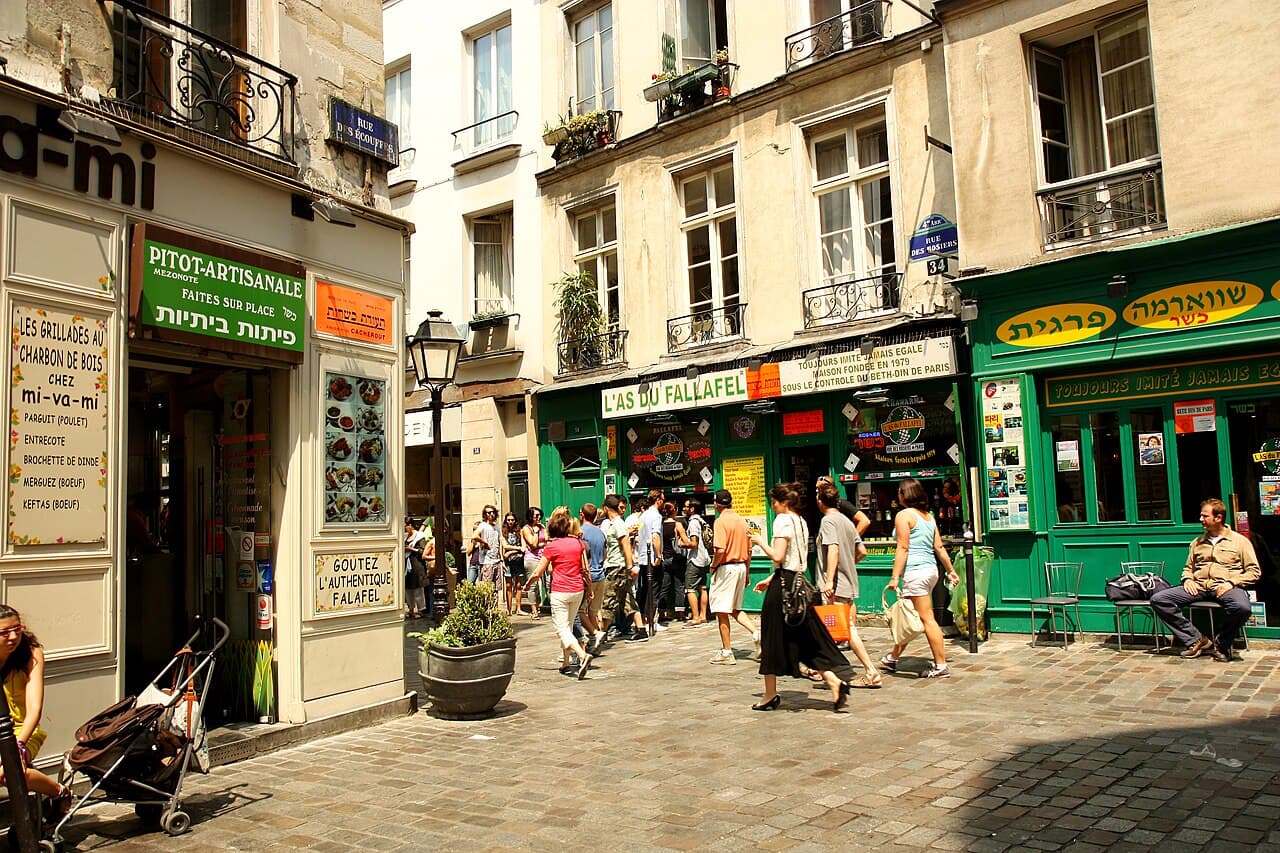
And just like that, you've gone from one of the most sombre places in Paris to one of the most alive. Welcome to Rue des Rosiers — the Street of the Rose Bushes — and the beating heart of Jewish Paris. The smell of frying falafel, the sound of Hebrew and Arabic and French tangling together, the queue snaking out of that shop with the green awning on your left — this is the Marais at its most delicious.
That queue belongs to L'As du Fallafel, at number thirty-four, and yes, it is absolutely worth the wait. The place was founded in nineteen seventy-nine by Isaac Peretz, a Russian Jew from Jaffa — which is now part of Tel Aviv — and his French wife Daisy. It started as a tiny Israeli grocery store and evolved into the falafel institution you see today. The signature move is their special falafel sandwich: crispy chickpea fritters stuffed into warm pita with fried aubergine, hummus, tahini, cabbage, pickled turnips, and a spicy harissa drizzle. It's messy. It's magnificent. It costs about eight euros and it might be the best street food value in all of Paris. Lenny Kravitz is a regular — apparently he drops in whenever he's in town.
Read more...Show less
But Rue des Rosiers carries heavier memories too. On the ninth of August, nineteen eighty-two, gunmen from the Abu Nidal Organisation attacked the Chez Jo Goldenberg restaurant at number seven with grenades and machine guns, killing six people and wounding twenty-two. It was the deadliest antisemitic attack in France since the Second World War. The restaurant eventually closed, but a plaque marks the site.
The street has changed enormously in recent decades. Where there were once kosher butchers and Yiddish bookshops, you'll now find fashion boutiques and concept stores. Some of the old community lament the change. But the bakeries are still here — look for Florence Kahn at number twenty-four for rugelach, strudel, and cheesecake that will make your knees buckle. And the falafel shops remain, stubbornly, gloriously, defiantly.
If L'As du Fallafel's line is too long, Mi-Va-Mi across the street does an excellent version too. Grab your sandwich, eat it walking — everyone does — and head east along Rue des Rosiers, which becomes Rue des Francs-Bourgeois. After about three hundred metres, turn right onto Rue de Birague, and you'll walk straight into one of the most beautiful squares in the world.
Hôtel de Sully
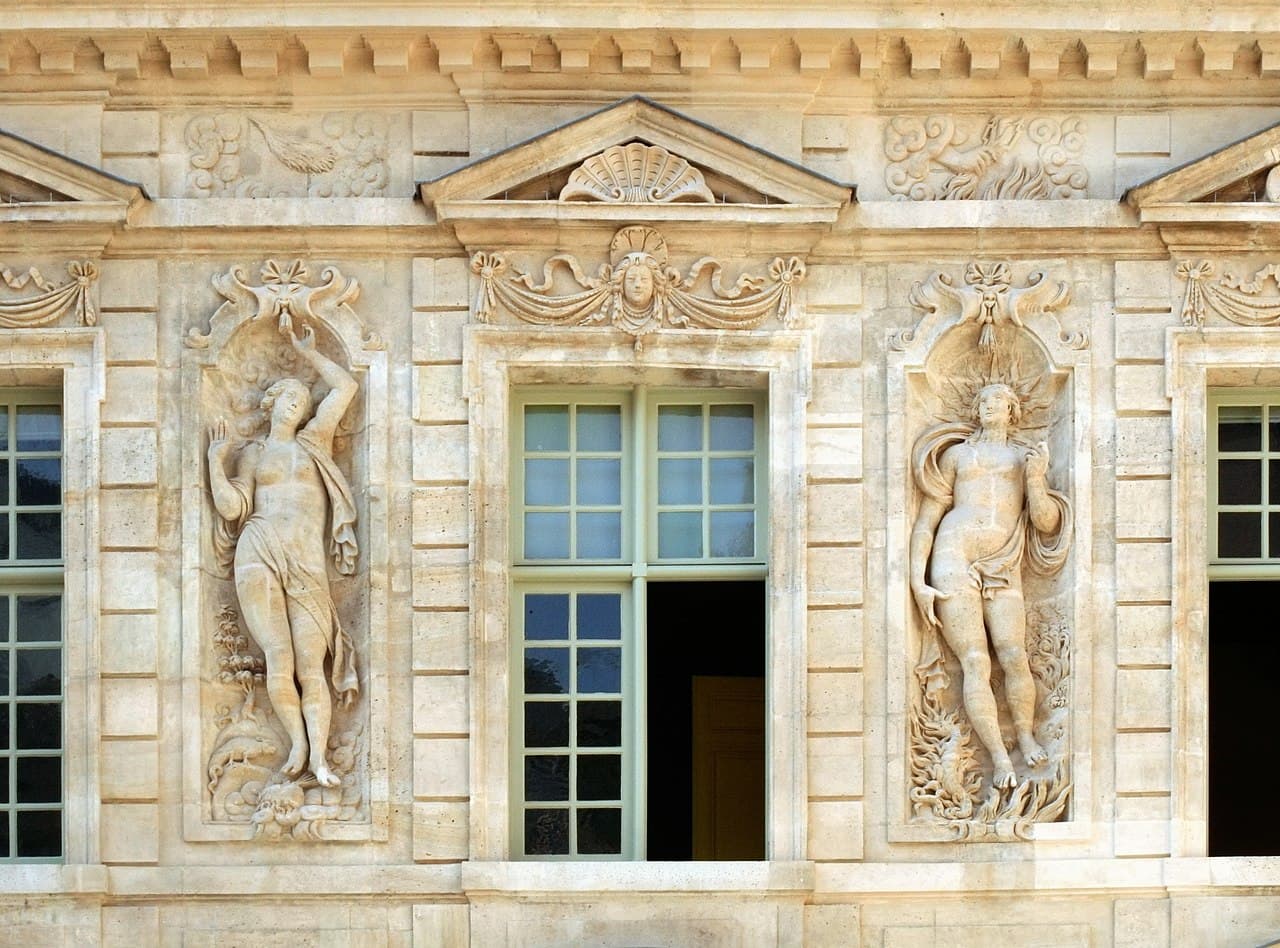
Actually, before we hit the square, let's make a quick detour. You're at sixty-two Rue Saint-Antoine, standing in front of a grand stone gateway. Step through the gate into the courtyard of the Hotel de Sully, and prepare to feel like minor aristocracy.
This mansion was built between sixteen twenty-four and sixteen thirty for a wealthy financier named Mesme Gallet. Now, Gallet had won his fortune gambling — and lost it the same way. He was forced to sell the unfinished house, and after passing through several hands, it was purchased in sixteen thirty-four by Maximilien de Bethune, the Duc de Sully. Sully was seventy-four years old at the time, a retired minister who had helped King Henri the Fourth rebuild France's economy after decades of religious war. He was sharp, rich, and — according to the gossip — still very much interested in the company of women.
Read more...Show less
Here's the best bit. The Duc de Sully's second wife, Rachel de Cochefilet, was decades younger than him and had her own active social life, shall we say. The duke apparently didn't mind one bit. In fact, he supposedly had a private staircase built specifically so his wife's lovers could come and go without disturbing him. A truly French solution to a universal problem.
Look up at the facade around the courtyard. See those carved stone figures between the windows? They represent the four elements and the four seasons — allegories of abundance and harmony, which is ironic given the household drama. The architecture is classic Louis the Thirteenth style: blonde stone, steep slate roofs, and elegant symmetry. The garden behind you is beautifully kept, with orange trees in planters and neatly clipped box hedges.
Now here's the real magic. Walk through the courtyard, through the garden, and look for a passage at the far end. That passage leads directly into the Place des Vosges. It's a secret shortcut that most visitors never find, and it's open daily from nine in the morning until seven in the evening. Today the Hotel de Sully is the headquarters of the Centre des Monuments Nationaux, and the bookshop in the courtyard is excellent for architecture and history books.
Step through that passage now. You're about to enter the oldest planned square in Paris.
Place des Vosges
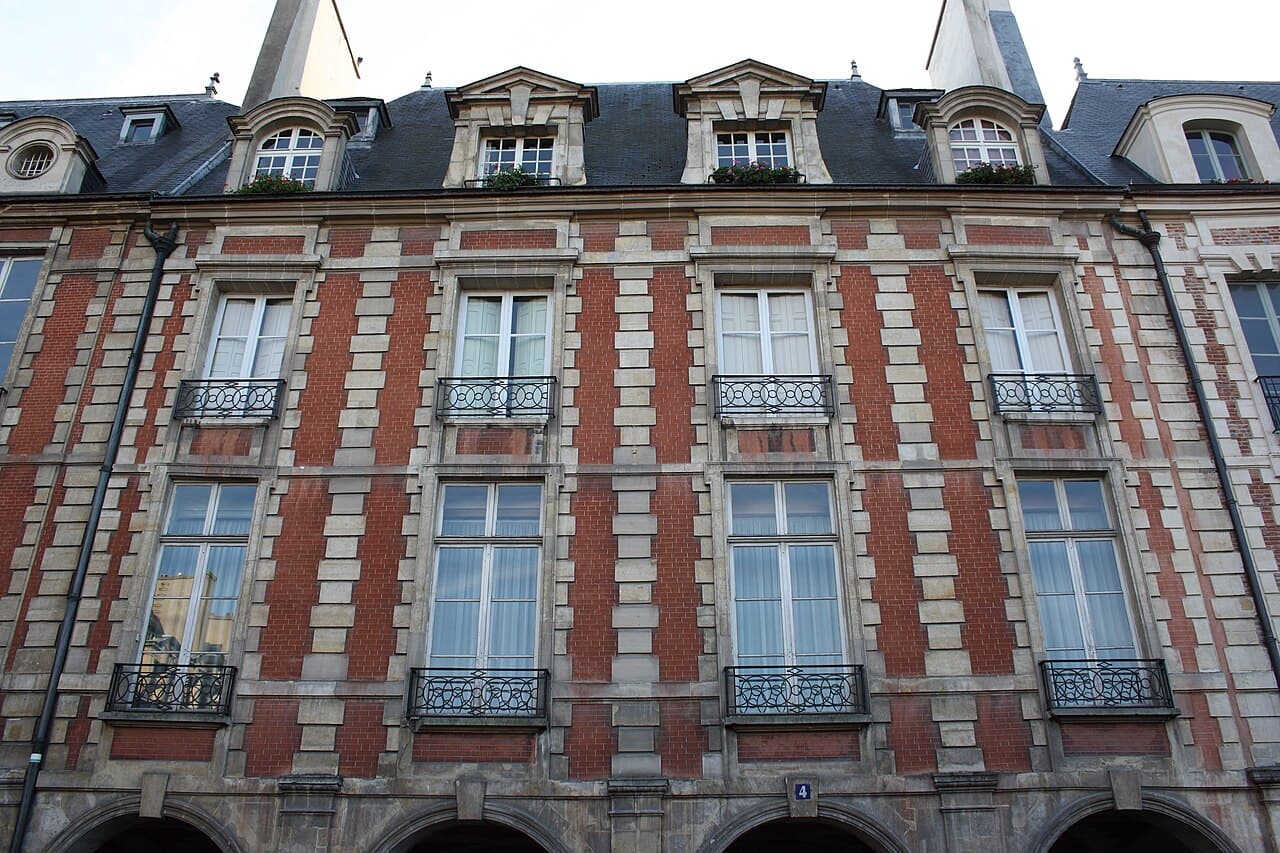
Stop. Stand still. Let this place wash over you. The Place des Vosges is, without exaggeration, one of the most perfect public spaces ever created. A square of absolute symmetry — one hundred and forty metres on each side — enclosed by thirty-six townhouses of identical design, all in warm red brick and pale stone, all with steep slate roofs and vaulted arcades at street level. Four centuries of Parisian life have played out in this square, and it still feels like the centre of the universe.
King Henri the Fourth commissioned this square in sixteen oh five, and it was inaugurated in sixteen twelve to celebrate the marriage of Louis the Thirteenth to Anne of Austria. But the story behind it goes darker. This was originally the site of the Hotel des Tournelles, a royal palace where something truly terrible happened. On the thirtieth of June, fifteen fifty-nine, King Henri the Second held a jousting tournament here to celebrate the Peace of Cateau-Cambresis with the Habsburgs. In the third bout, Gabriel de Montgomery, captain of the King's Scottish Guard, struck Henri with a lance that splintered and sent wooden shards through the visor into his right eye. The king died ten days later of sepsis, attended by the best surgeons in Europe — including the legendary Ambroise Pare and the Flemish anatomist Andreas Vesalius. Neither could save him. His widow, Catherine de Medici, was so traumatised she had the entire palace demolished. Decades later, Henri the Fourth built this square on the same ground.
Read more...Show less
Look at the two taller pavilions on the north and south sides. Those are the Pavilion of the Queen and the Pavilion of the King. No king or queen ever actually lived here — well, Anne of Austria stayed briefly in the Pavilion de la Reine — but the names stuck. The original name of the square was Place Royale. It was renamed Place des Vosges in eighteen hundred, honouring the Vosges department in eastern France — the first to fully pay its taxes to the Revolutionary government. Only in France would a square be renamed as a reward for paying your taxes on time.
Number six, under the arcades on the southeast corner, is the Maison de Victor Hugo. The great novelist and poet lived here from eighteen thirty-two to eighteen forty-eight, and it was in these rooms that he wrote large sections of Les Miserables. The museum is free and contains his furniture, personal objects, and some wonderfully bizarre pen-and-ink drawings he made.
For a coffee or a glass of wine, grab a table under the arcades at Carette, the elegant salon de the at number twenty-five. Their hot chocolate is legendary — thick, dark, and served in a porcelain jug. Or if you want something more casual, Ma Bourgogne at number nineteen has a sun-drenched terrace that's perfect for people-watching.
When you're ready, leave the square on the north side via Rue des Francs-Bourgeois. After about two hundred metres, turn right onto Rue de Sevigne. The Musee Carnavalet is right there on your left.
Musée Carnavalet
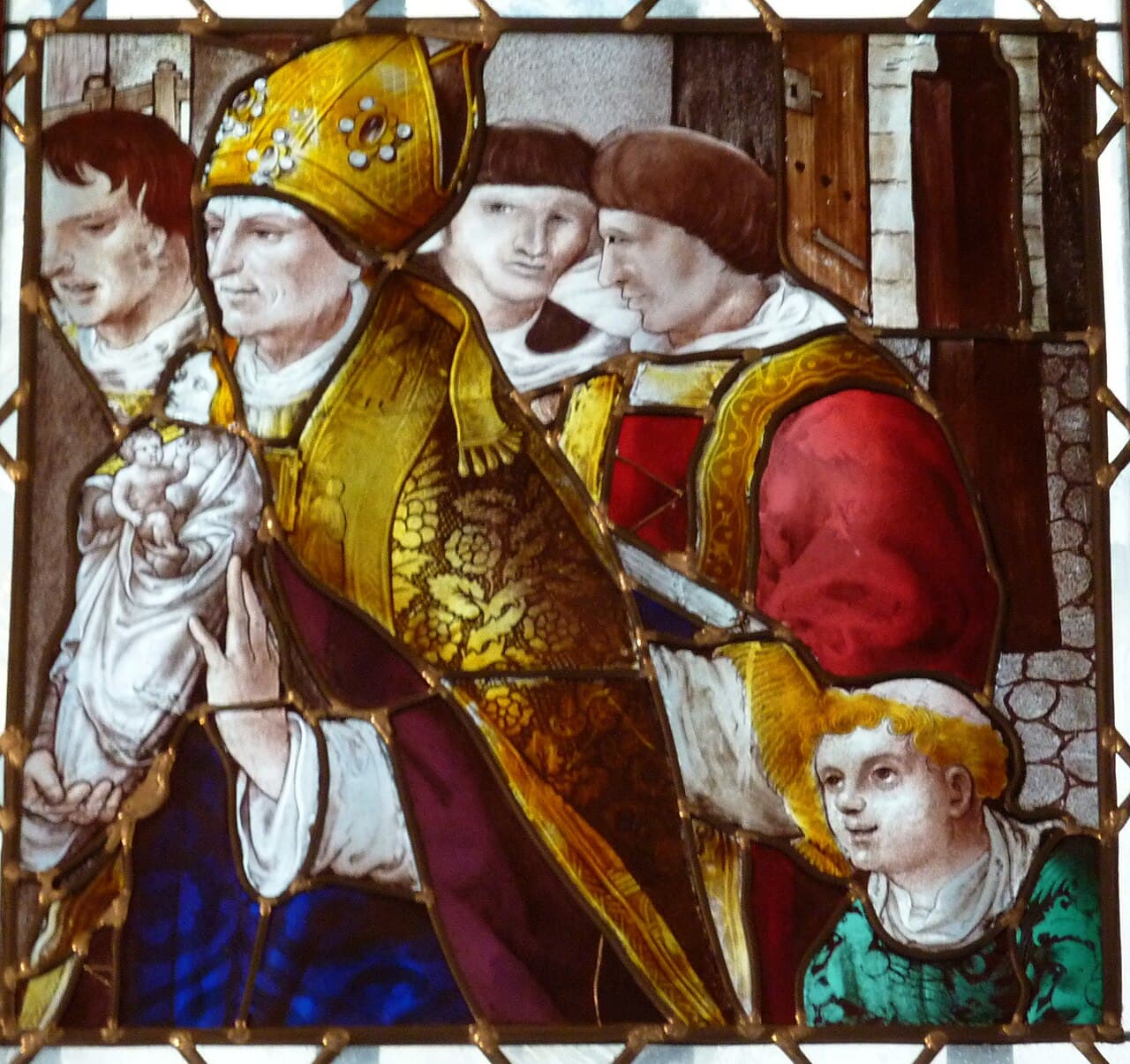
Welcome to the Musee Carnavalet, Paris's museum of itself. This is where the city keeps its autobiography — over six hundred and twenty-five thousand objects spanning from prehistoric canoes pulled from the Seine to the key to the Bastille prison. And the best part? It's completely free. Always has been.
The museum occupies two adjoining Renaissance mansions. The older one, the Hotel Carnavalet, was built in fifteen forty-eight and later remodelled by Francois Mansart — the architect so influential that we named the mansard roof after him. The other is the Hotel Le Peletier de Saint-Fargeau, connected by a gallery. Together they form a sprawling maze of period rooms, painted ceilings, and the kind of objects that make history feel very, very real.
Read more...Show less
The most famous former resident of the Hotel Carnavalet was Madame de Sevigne, who lived here from sixteen seventy-seven until her death in sixteen ninety-six. She's one of the great letter-writers in the French language — over a thousand letters to her daughter, chronicling court gossip, politics, fashion, and the daily texture of seventeenth-century life. Her writing desk is still here, in a room dedicated to her memory.
But the room you absolutely cannot miss is on the upper floor: the bedroom of Marcel Proust. The museum has faithfully reconstructed the cork-lined room from his apartment on Boulevard Haussmann where he wrote most of In Search of Lost Time. Proust suffered from severe asthma and allergies, so in nineteen ten, on the advice of his friend Anna de Noailles, he had the walls of his bedroom lined with cork to block out dust, pollen, and noise. He wrote lying in his narrow brass bed, using his knees as a desk, surrounded by nothing but his notebooks and a few small tables with his pens and papers. No distractions. Just him and memory. A lock of his hair, cut from his head on his deathbed, is displayed in a frame nearby, alongside a portrait made by Man Ray.
The Revolution rooms are extraordinary too — you'll find an original copy of the Declaration of the Rights of Man, a model of the Bastille carved from one of its actual stones, and Napoleon's personal campaign kit. After a four-year renovation, the museum reopened in twenty twenty-one with a completely redesigned layout.
From the Carnavalet, continue north along Rue de Sevigne, then turn left onto Rue des Francs-Bourgeois. Walk about four hundred metres — past some of the best boutique shopping in Paris — until you reach the grand horseshoe courtyard of the Hotel de Soubise on your right. You've arrived at the Archives Nationales.
Archives Nationales
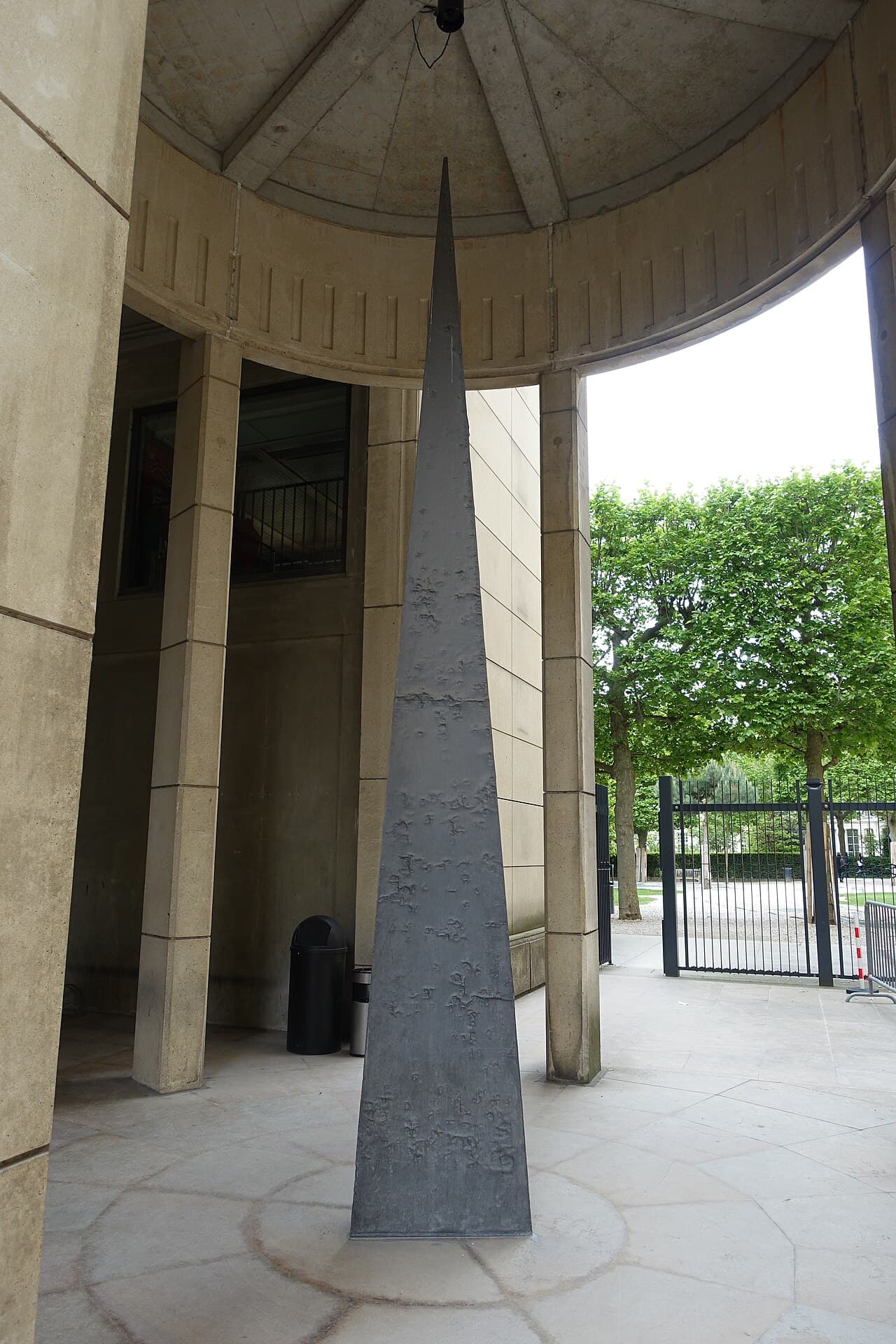
You've just walked into one of the most beautiful courtyards in Paris, and chances are you're almost alone. The Hotel de Soubise, home of the French National Archives, is criminally overlooked by tourists, which means more Rococo splendour for you.
The bones of this building go back to thirteen seventy-one, when it was the Hotel de Clisson. Look for the medieval gateway with its two pepper-pot turrets on Rue des Archives — that's the original fourteenth-century entrance, one of the oldest surviving structures in the Marais. The Ducs de Guise owned it for a while — these were the powerful Catholic nobles who orchestrated the Saint Bartholomew's Day Massacre in fifteen seventy-two. Heavy history in these walls.
Read more...Show less
In seventeen oh five, the estate was purchased by Francois de Rohan, Prince de Soubise, and his wife Anne de Rohan-Chabot. They hired architect Pierre-Alexis Delamair to rebuild it into the palatial residence you see today, with that sweeping colonnade of fifty-six columns embracing the courtyard. But the real showstopper is inside: the apartments decorated by Germain Boffrand between seventeen thirty-five and seventeen forty. These rooms represent the absolute peak of French Rococo. The Salon de la Princesse — the princess's oval drawing room — is one of the most beautiful rooms in Paris, full stop. Pastel paintings by Charles-Joseph Natoire float in gilded frames on walls that curve and swirl with plaster shells, flowers, and cherubs. Everything is pale blue, cream, and gold. It's like standing inside a jewellery box.
Napoleon designated this building for the Imperial Archives in eighteen oh eight, and it's been the home of the French National Archives ever since. The iron chest — the Armoire de Fer — contains some of the most important documents in French history: the diary of Louis the Sixteenth (the one where he wrote "rien" — nothing — on the fourteenth of July, seventeen eighty-nine, the day the Bastille fell, because it was actually his hunting log and he hadn't caught anything that day), Napoleon's will, the Tennis Court Oath, and successive French constitutions. The museum is free.
For your final stop, head north. Exit onto Rue des Francs-Bourgeois, turn right, then take a left onto Rue de Bretagne. Walk about three hundred metres and look for a covered entrance on your right, just past number thirty-nine. You're about to eat your way through the oldest covered market in Paris.
Marché des Enfants Rouges
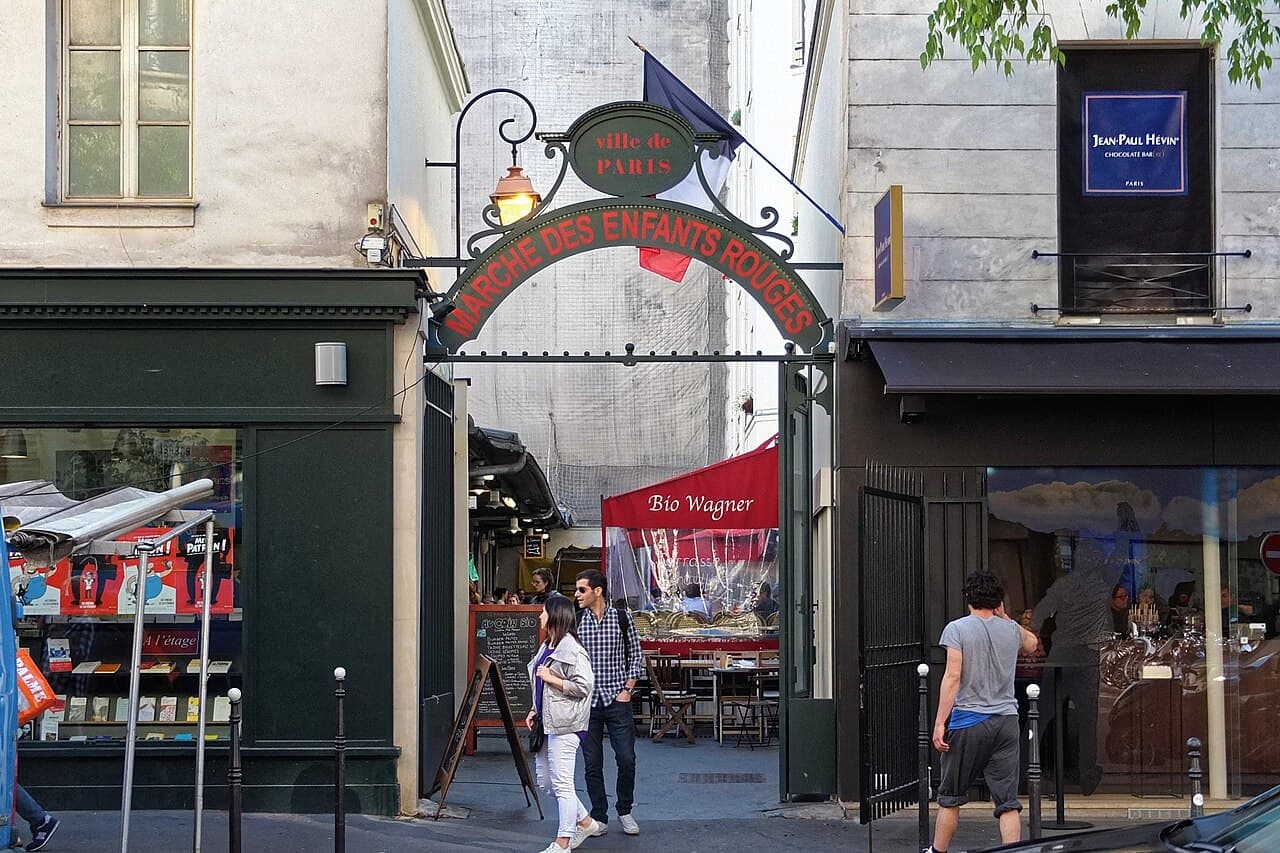
You made it. And you're about to be rewarded with one of the best eating experiences in Paris. Welcome to the Marche des Enfants Rouges — the Market of the Red Children. Yes, that name is as strange as it sounds, and I'll explain it in a moment.
This is the oldest covered market in Paris, established in sixteen fifteen under Louis the Thirteenth. It was originally called the Petit Marche du Marais, but the locals quickly renamed it after a nearby orphanage where the children wore red uniforms — red being the colour of Christian charity. The orphanage is long gone, but the name stuck, and so did the market. Barely. In the nineteen nineties, the whole place was nearly demolished to make way for a parking garage. A local politician named Pierre Aidenbaum campaigned to save it, won his election partly on that promise, and the market was restored and reopened in two thousand. Thank God for municipal politics.
Read more...Show less
Now, let's eat. You've been walking for over an hour and you've earned this. Here are your best options.
The Moroccan stand — Le Traiteur Marocain — is always packed, and for good reason. Their couscous is fragrant with cinnamon and cumin, the tagines are slow-cooked and spectacular, and the baklava is dripping with honey. Pair it with a glass of sweet mint tea. Budget about twelve to fifteen euros for a full plate.
Chez Taeko is the Japanese stall, and their bento boxes are extraordinary — choose chicken, steak, or tofu, served with rice and three sides that change daily. The miso soup is the real deal.
And then there's Chez Alain Miam Miam — yes, that's really the name, and "miam miam" means "yum yum" in French. Alain grills his towering sandwiches on a crepe pan, piled high with vegetables, cheese, and whatever he feels like adding that morning. It's chaos and it's perfect.
The market is open Tuesday through Sunday, and most food stalls serve lunch from about noon to three. Get here early if you can — by twelve thirty the communal tables are packed and the queues start to build. Grab a seat at one of the wooden benches, order a glass of natural wine from one of the stands, and soak it all in.
You've just walked three and a half kilometres through nearly seven hundred years of Parisian history — from Jesuit Baroque to medieval turrets, from the Holocaust to the best falafel in Europe, through Rococo salons and into a four-hundred-year-old market. The Marais is Paris at its most layered, its most contradictory, its most alive. Every street here has a story folded into another story.
If you're not ready to leave, the northern Marais has some of the best gallery-hopping in the city. Wander up Rue de Turenne or Rue Charlot and poke into the contemporary art spaces. And tonight, come back to Rue des Rosiers for dinner, or find a wine bar on Rue de Bretagne and watch the neighbourhood come alive after dark. You've earned it. A bientot.
Free
GPS-guided walking tour
No account needed. Walk at your own pace.
Free
10 stops · 3.6 km