13 stops
GPS-guided
2.9 km
Walking
1 hour
Duration
Free
No tickets
About this tour
The essential Florence walk — lampredotto at the market, how Brunelleschi built the dome without scaffolding, the square where Savonarola burned, and why butchers were kicked off the bridge.
13 stops on this tour
Mercato Centrale
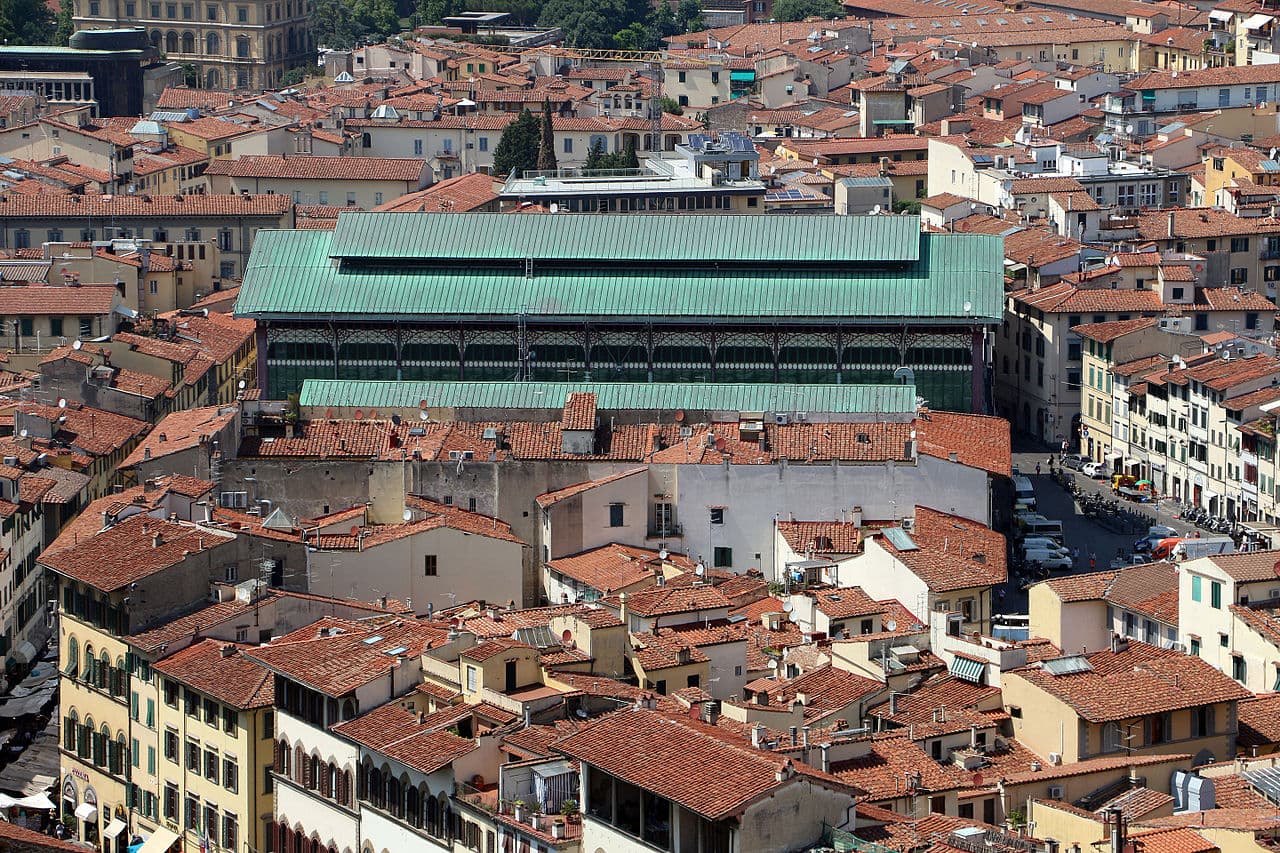
Welcome to Florence, and welcome to one of the best places to start any walk in this city — with your mouth full. You're standing at the Mercato Centrale, the Central Market of San Lorenzo, and if your senses aren't already overwhelmed, give it thirty seconds. The smell of simmering broth, roasting porchetta, and fresh basil is going to hit you like a delicious wall.
This iron-and-glass beauty was built between eighteen seventy and eighteen seventy-four by the architect Giuseppe Mengoni — the same man who designed the famous Galleria Vittorio Emanuele the Second in Milan. When it opened in eighteen seventy-four, it housed over five hundred shops under a soaring nave that reaches nearly thirty metres high. Florence had just served as the capital of the newly unified Italy, and the city was in full reinvention mode. They demolished an entire neighbourhood of cramped medieval alleys called the Camaldoli di San Lorenzo — basically a slum — and dropped this cathedral of food right on top of it.
Read more...Show less
Now, here's your mission before we move on. You need to try lampredotto. This is Florence's signature street food, and it's not for the faint of heart — or stomach. Literally. Lampredotto is the fourth stomach of a cow, slow-simmered with tomato, onion, parsley, and celery until it melts into something that tastes remarkably like the most tender roast beef you've ever had. The name comes from lampreda — lamprey eel — because the stomach lining apparently resembles one. Appetising, I know. But trust me. Find the stall called Nerbone on the ground floor — they've been here since nineteen seventy-two — and order a lampredotto panino. They'll ladle the meat onto a crusty roll, dip the top half of the bread into the cooking broth — that's called the bagnato — and finish it with salsa verde and a kick of spicy oil. It costs a few euros and it will change your understanding of what a sandwich can be.
If tripe isn't your thing, no judgement. The ground floor is a wonderland of fresh produce, aged cheeses, and cured meats. And if you head upstairs to the first floor, there's a food hall that opened in twenty fourteen with about thirty artisan stalls — everything from Neapolitan pizza to fresh pasta to truffle everything. It's open until midnight, which makes it perfect for a late-night bite after this walk.
Alright, wipe the salsa verde off your chin. Walk out the south exit of the market, cross Piazza del Mercato Centrale, and head down Via del Canto de' Nelli toward Via dell'Ariento. In about two minutes, you'll see the rough, unfinished facade of one of the most important churches in Florence.
Basilica di San Lorenzo
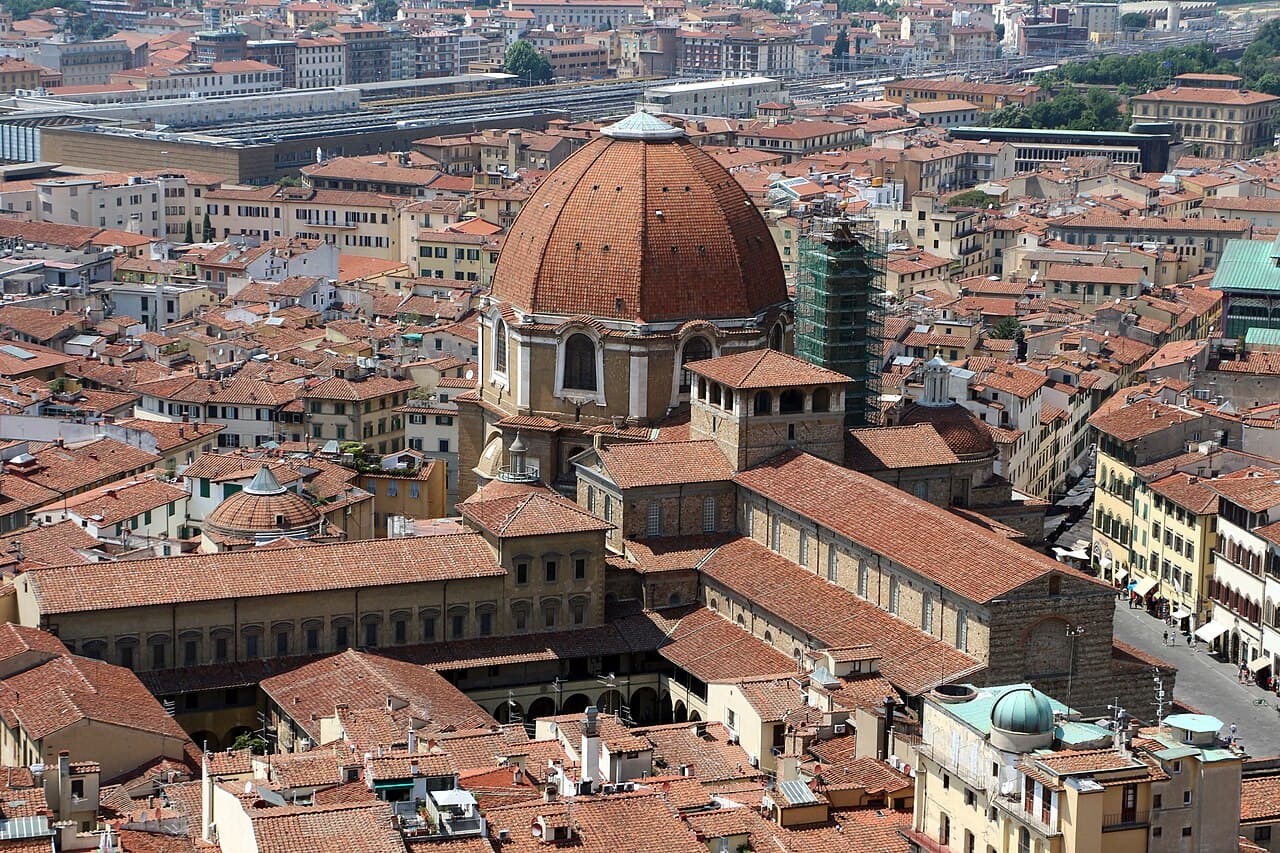
And there it is. The Basilica di San Lorenzo. Now, the first thing you'll notice is that the front of this church looks like someone forgot to finish it. That bare, rough stone facade — no marble, no decoration, nothing. It looks like a building site that everyone just walked away from. And that's essentially what happened.
San Lorenzo is one of the oldest churches in Florence, originally consecrated way back in three ninety-three AD — that makes it over sixteen hundred years old. But the building you're looking at now was redesigned starting in fourteen nineteen, when Giovanni di Bicci de' Medici — the patriarch who started the Medici banking dynasty — commissioned Filippo Brunelleschi to rebuild it from scratch. Brunelleschi, the greatest architect of the early Renaissance, created something revolutionary here. His Old Sacristy, built between fourteen twenty-two and fourteen twenty-eight, is considered one of the first pure Renaissance spaces ever designed. Clean geometry. Classical proportions. A complete break from the Gothic.
Read more...Show less
But Brunelleschi died in fourteen forty-six before the church was finished. Others completed it, but the facade remained bare stone. Then in fifteen eighteen, the Medici Pope Leo the Tenth gave Michelangelo the commission to design a grand marble facade. Michelangelo spent three years quarrying the perfect white marble from Carrara, made a beautiful wooden model of his design — you can still see it in a museum — and then the Pope cancelled the project. Just pulled the funding. Michelangelo was furious. And the facade has stayed naked for over five hundred years. Every few decades someone proposes finishing it, and every time, Florence collectively shrugs and says no. At this point, the unfinished look is the look.
What you can't see from out here is that inside, this church is the final resting place of almost every major Medici. Cosimo the Elder, the man who bankrolled the Renaissance, is buried in the crypt directly beneath the high altar. The New Sacristy, designed by Michelangelo, contains his famous reclining figures of Dawn, Dusk, Night, and Day — some of the most powerful sculptures ever carved. If you have time after this walk, come back and pay the entry fee. It's worth every cent.
Now, head south down Via de' Martelli. You'll walk for about two minutes, and the street will open up to reveal something that will stop you in your tracks.
Baptistery of San Giovanni
There it is. That gorgeous octagonal building clad in white and green marble — the Battistero di San Giovanni, the Baptistery of Saint John. This is where every single Florentine was baptised for centuries, including Dante Alighieri himself. And it might be the building that kicked off the entire Renaissance.
The Baptistery was consecrated in ten fifty-nine by Pope Nicholas the Second, though parts of it may date back to the fourth or fifth century. For a while, Florentines believed it was an ancient Roman temple to Mars — they were wrong about that, but you can't blame them. It feels that old. That powerful.
Read more...Show less
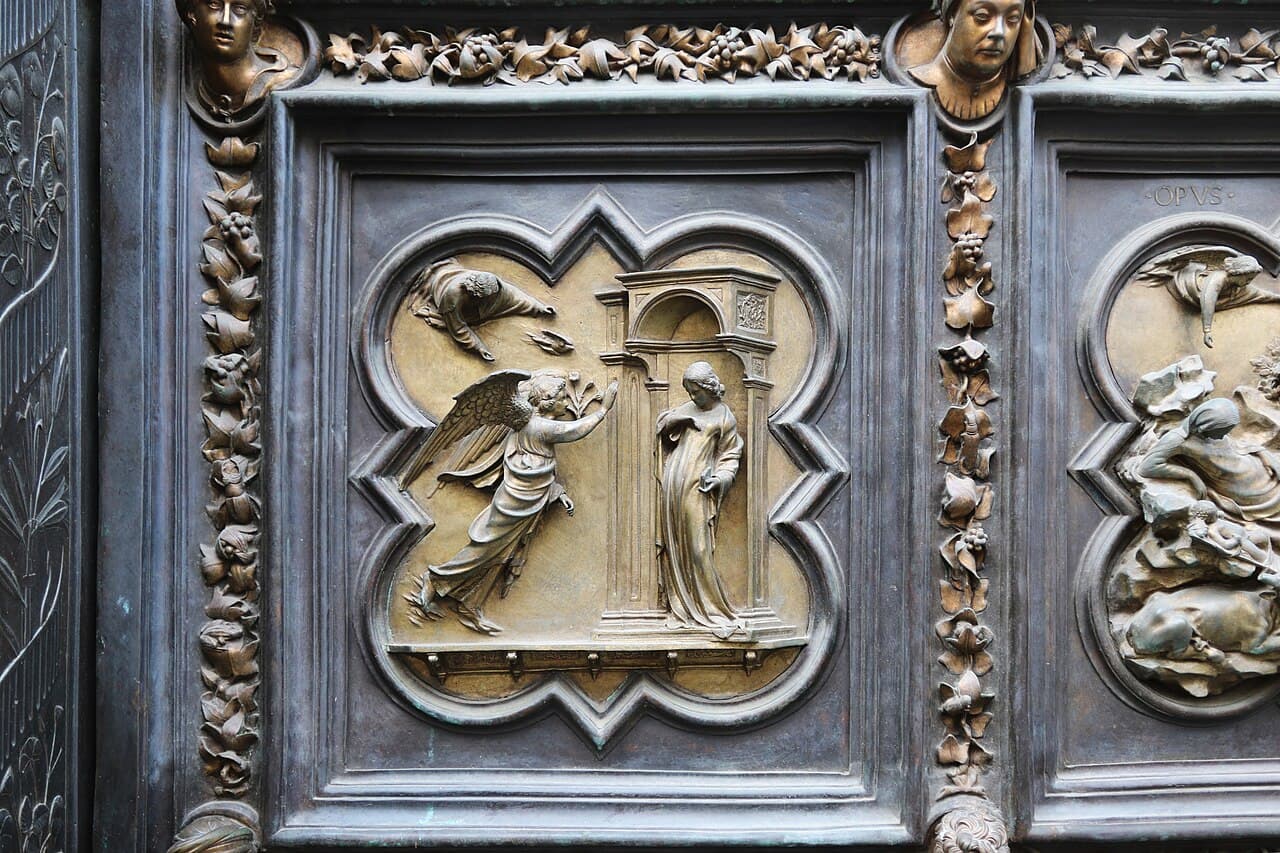
Now, look at the doors. The Baptistery has three sets of bronze doors, and the eastern set — the ones facing the cathedral — are the ones that changed everything. They're called the Gates of Paradise, and here's why. In fourteen oh one, the wool merchants' guild announced a competition to design new bronze doors for the Baptistery. Seven sculptors entered, and the two finalists were Lorenzo Ghiberti, a twenty-three-year-old goldsmith, and Filippo Brunelleschi, just twenty-four. Each had to create a bronze panel depicting the Sacrifice of Isaac. Ghiberti won — barely — and Brunelleschi was so gutted that he reportedly abandoned sculpture entirely and threw himself into architecture instead. Which is how he ended up designing, oh, just the largest dome in the world. So Florence basically got two geniuses for the price of one competition.
Ghiberti spent the next twenty-one years completing the north doors, and then another twenty-seven years — from fourteen twenty-five to fourteen fifty-two — on the east doors, his masterpiece. Ten gilded panels depicting scenes from the Old Testament, each one a revolution in perspective and spatial depth. When Michelangelo saw them, he supposedly declared they were worthy of being the Gates of Paradise. And the name stuck.
The doors you see here today are copies — the originals are in the Museo dell'Opera del Duomo behind the cathedral, protected from the elements. But even the copies are breathtaking. Look at the panel of Joseph — the way the architecture recedes into the background. Ghiberti essentially invented pictorial perspective in bronze.
Now turn around. Because the building behind you is the reason Florence exists on the world stage.
Duomo / Cathedral
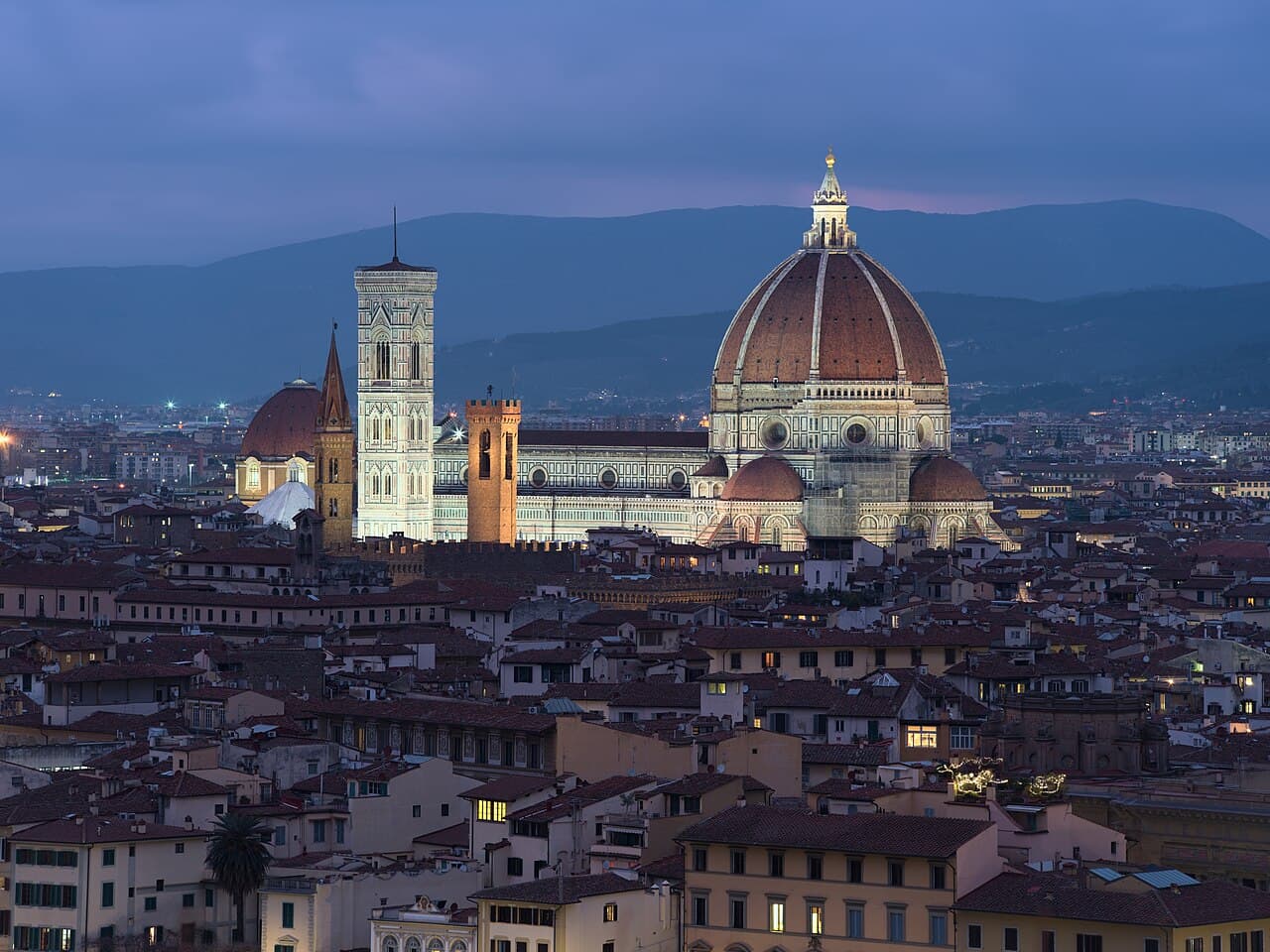
Imagine standing here in fourteen eighteen. There's a cathedral that's been under construction for over a hundred years, and it has a gaping hole where the dome should be. The hole is forty-five metres across — wider than any dome built since the Pantheon in ancient Rome, over a thousand years earlier. Nobody alive knows how to close it. The city holds competition after competition, and the proposals are — genuinely — insane. One guy suggests building a giant mound of dirt mixed with coins inside the cathedral, constructing the dome on top of it, then telling the local kids they can keep whatever coins they find. The dirt would be gone in days. That was a real proposal.
Then Filippo Brunelleschi steps up. He's the guy who lost the Baptistery door competition to Ghiberti, remember? He says he can build the dome without any scaffolding, without any supporting framework, without anything holding it up during construction. The committee thinks he's a lunatic. According to legend, they literally had him thrown out of the meeting. But Brunelleschi kept coming back, and eventually they gave him the job.
Read more...Show less
Between fourteen twenty and fourteen thirty-six, Brunelleschi pulled off one of the greatest engineering feats in human history. He designed a double-shell dome — two domes, one inside the other, connected by twenty-four stone ribs — that supports its own weight as it rises. He invented a herringbone brick pattern that locks each layer of bricks into the one below, so nothing could slip or fall. He designed new hoisting machines to lift the more than four million bricks to the top. The finished dome weighs over twenty-five thousand tonnes and stands a hundred and sixteen metres high from the ground to the top of the lantern.
It is, to this day, the largest masonry dome ever built. Not was. Is. In six hundred years, nobody has topped it.
If you're feeling energetic, you can climb the four hundred and sixty-three steps between the two shells to the lantern for one of the greatest views in all of Italy. But pace yourself — it gets narrow up there.
And while you're standing here, glance to your right at Giotto's Bell Tower, the Campanile. It's almost eighty-five metres tall, started by Giotto in thirteen thirty-four and finished by Francesco Talenti in thirteen fifty-nine. Giotto only completed the bottom section before he died in thirteen thirty-seven, but his design — all that pink, white, and green marble — set the tone for the whole complex.
Now, if you want the best gelato near here, pop into Edoardo on Piazza del Duomo, or walk a few minutes south to Perche No on Via dei Tavolini — they've been scooping since nineteen thirty-nine and their Sicilian pistachio is extraordinary.
Ready to walk? Head south down Via dei Calzaiuoli — Florence's main pedestrian shopping street — and in about three minutes, you'll emerge into a piazza that feels completely different from everything we've seen so far.
Piazza della Repubblica
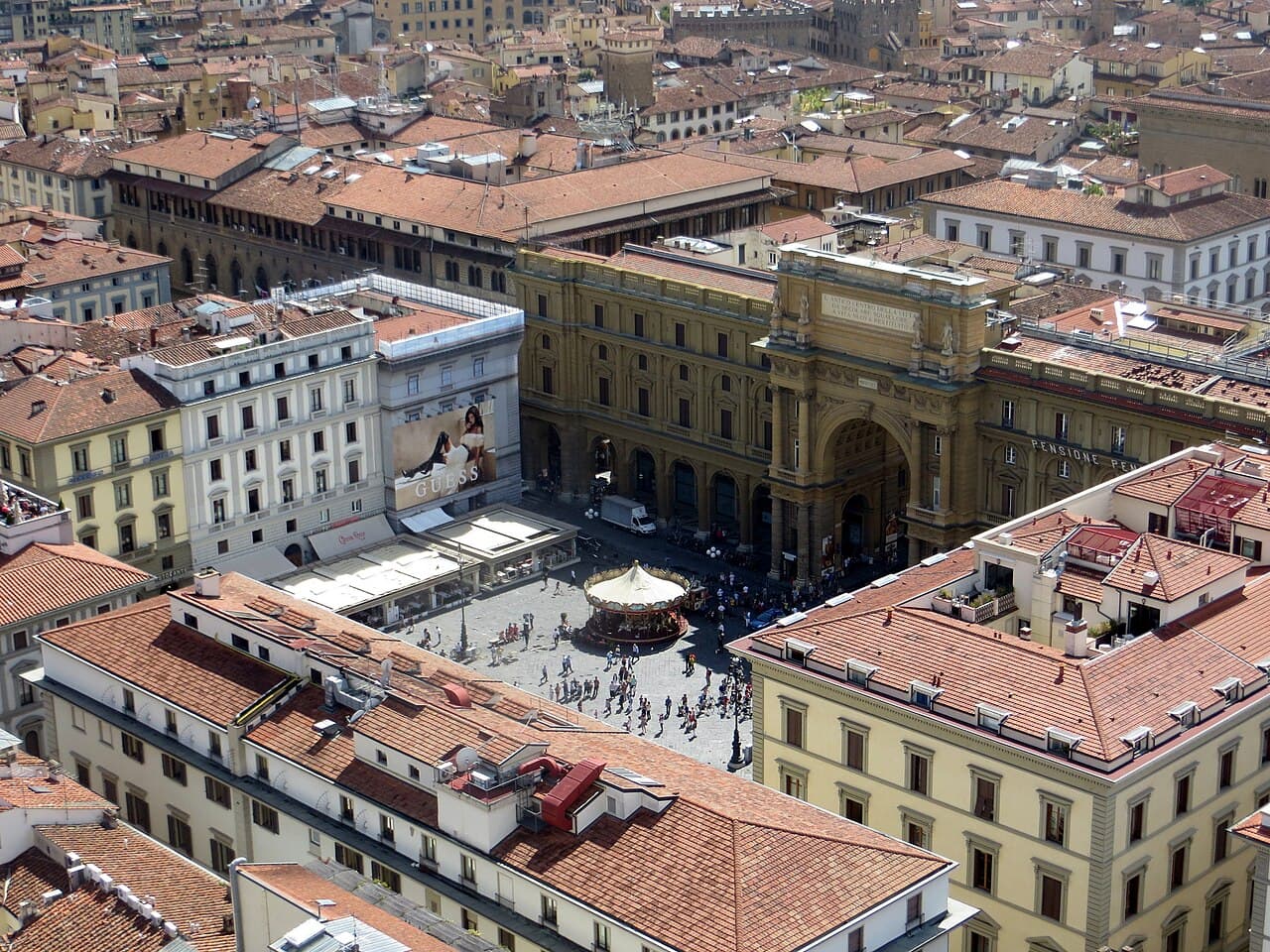
Welcome to Piazza della Repubblica. It's big, it's loud, there's a carousel spinning in the middle, and compared to the medieval streets you've been walking through, it feels almost aggressively modern. That's because it basically is. But underneath your feet is the oldest thing in Florence.
Two thousand years ago, this exact spot was the Roman Forum — the centre of the city when Florence was called Florentia, founded by Julius Caesar's soldiers around fifty-nine BC. The two main Roman roads crossed right here: the cardo ran north-south, roughly along what's now Via Roma and Via Calimala, and the decumanus ran east-west along Via degli Strozzi and Via del Corso. Look for the Column of Abundance — the Colonna dell'Abbondanza — standing in the square. It marks the exact intersection of those ancient roads. The present column dates to fourteen thirty-one, topped with a statue of Abundance by Giovan Battista Foggini, which replaced a Donatello original that had crumbled by seventeen twenty-one.
Read more...Show less
For centuries after Rome, this area became the heart of the old market — and later, the Jewish Ghetto, established in fifteen seventy-one. But in the eighteen eighties, when Florence was getting a makeover after serving as Italy's capital, the city demolished the entire medieval neighbourhood. Everything. Gone. They bulldozed the old market, the ghetto, the towers, the alleys — and replaced it all with this grand, Haussmann-style piazza. The triumphal arch you can see says, in Latin, "The ancient city centre, restored to new life from centuries of squalor." Which is a polite way of saying they erased an entire neighbourhood and felt good about it.
Now, the cafes lining this square are legendary. On the south side, find the Caffe Giubbe Rosse — the name means Red Jackets, after the Viennese-style red smoking jackets the waiters wore when it opened in eighteen ninety-six. In nineteen thirteen, this cafe became the unofficial headquarters of the Italian Futurist movement. Poets, painters, and provocateurs gathered in the back room to argue about art, literature, and the future. Montale, Vittorini, and Saba all drank here. If you need an espresso, this is the place to have it — though I'll warn you, sitting down in any of these piazza cafes comes with a serious tourist surcharge.
Continue south down Via Calimala. In about two minutes, on your left, you'll see a building that looks like it can't decide whether it's a church or a fortress.
Orsanmichele
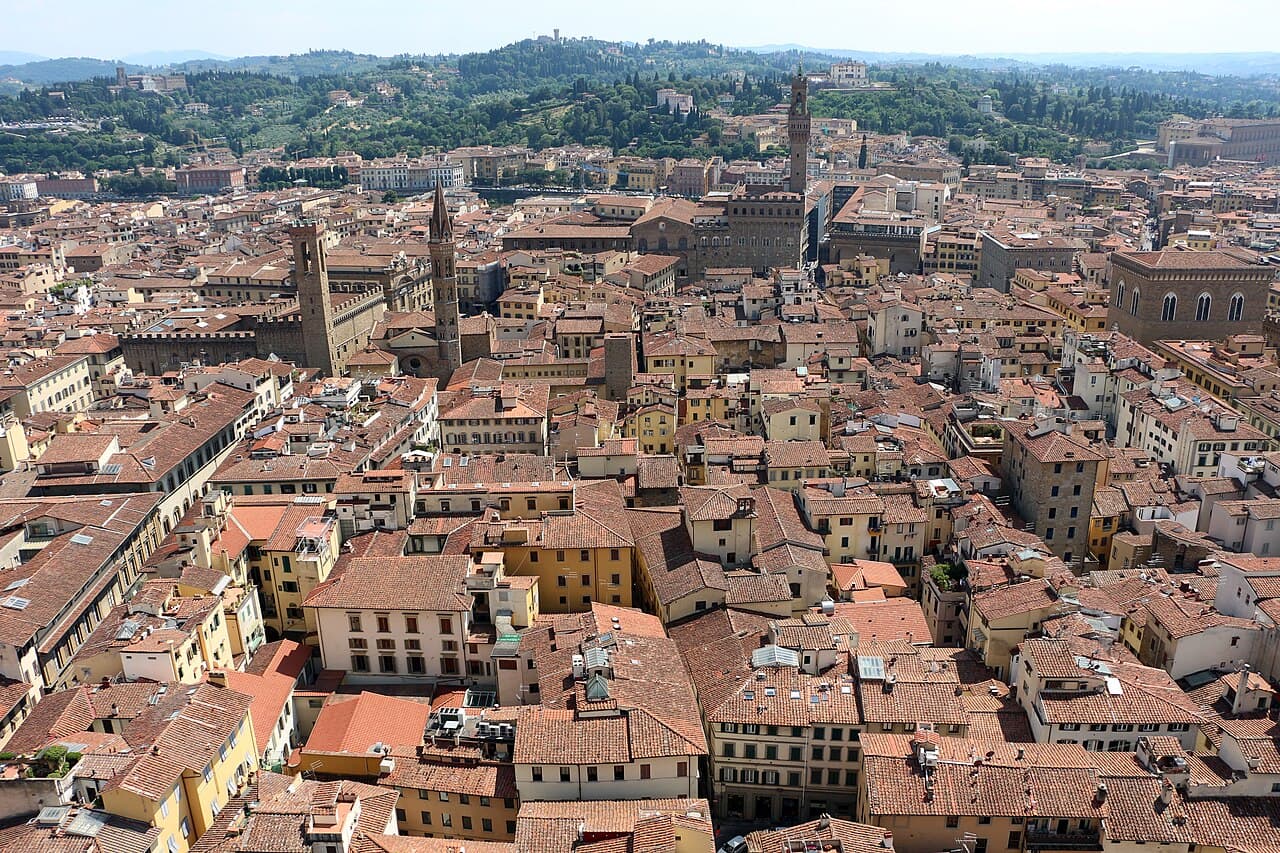
This is Orsanmichele, and it's one of the most wonderfully confused buildings in Florence. Is it a church? A grain warehouse? An open-air sculpture gallery? Yes. All three. And that confusion is exactly what makes it brilliant.
The name comes from Or San Michele — the garden of Saint Michael — because a Benedictine monastery with a vegetable garden once stood here. In twelve ninety, the architect Arnolfo di Cambio built an open-air grain market on the site. That burned down in thirteen oh four and was rebuilt. But here's the thing — a painting of the Virgin Mary on one of the market pillars started attracting worshippers who claimed it performed miracles. So you had this awkward situation where people were praying to the Madonna while sacks of wheat were being hauled past their heads. By the thirteen eighties, the city decided to sort it out: the ground floor became a church, and the upper two floors became the municipal granary. Grain up top, God down below.
Read more...Show less
But the exterior is the real showstopper. Look at the niches running around all four sides of the building. In the early fourteen hundreds, the city ordered each of Florence's major guilds to commission a statue of their patron saint and install it in one of these niches. And because this was Florence, and everything was a competition, the guilds hired the greatest sculptors alive. Ghiberti, the guy who made the Gates of Paradise, sculpted John the Baptist for the cloth merchants. Donatello carved Saint Mark for the linen drapers in fourteen eleven — a figure so lifelike that Michelangelo reportedly said all of Saint Mark's Gospel had to be true, because nobody could doubt a man who looked like that. And the Guild of Armourers and Swordsmiths, being a less wealthy minor guild, could only afford marble instead of bronze, so they hired Donatello to carve Saint George — and he produced one of the most psychologically intense sculptures of the entire Renaissance. A young warrior, tense, alert, about to spring into action.
The statues you see in the niches now are copies — the originals are in the museum upstairs or in the Bargello. But standing here, surrounded by fourteen masterpieces from the early fourteen hundreds, you're looking at the single greatest display of Renaissance sculpture ever assembled on one building. It's a competition frozen in stone and bronze.
Head south along Via dei Calzaiuoli, then turn left on Via del Proconsolo. A minute or two and you'll see a stern medieval fortress on your left.
Bargello
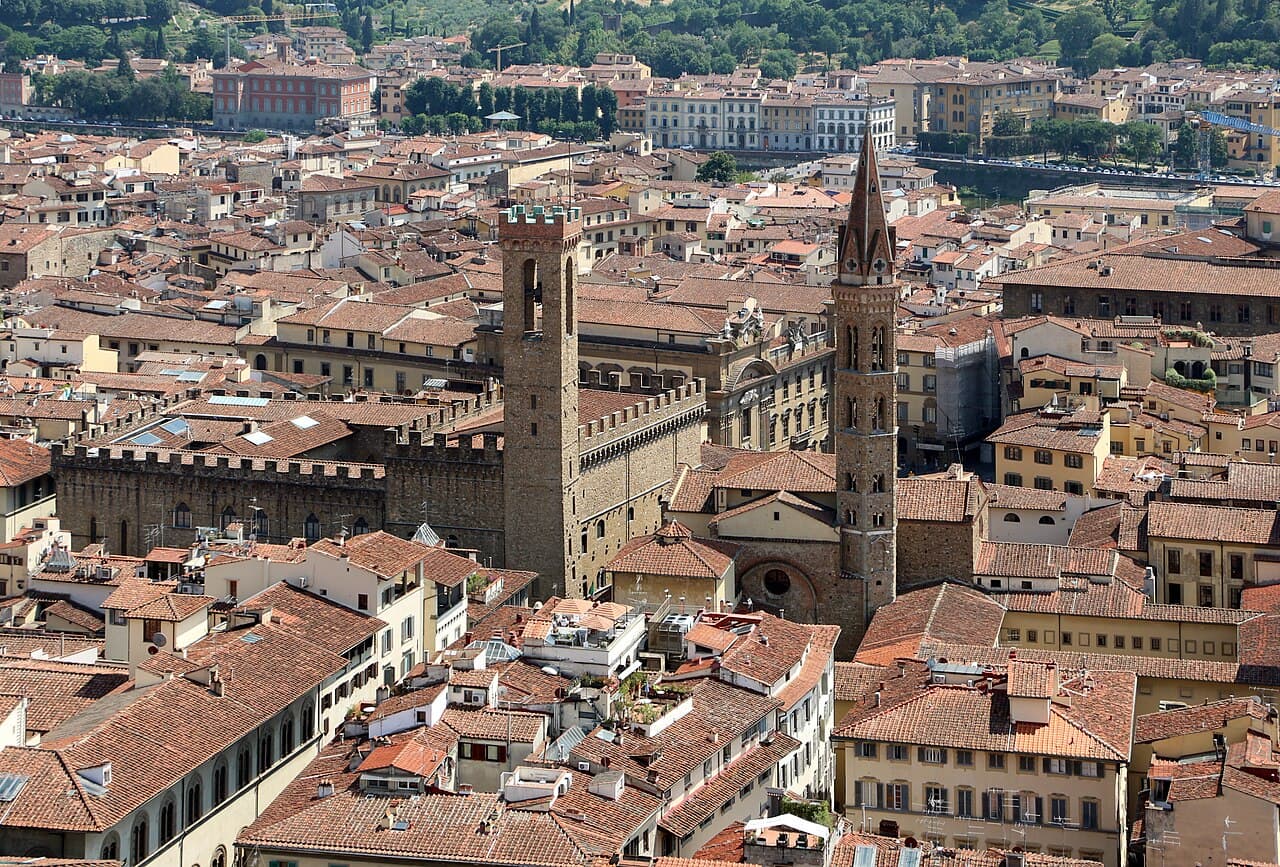
You're standing in front of the oldest public building in Florence, and it looks every bit its age. This grim, crenellated fortress is the Bargello — officially the Palazzo del Podesta — and it was begun in twelve fifty-five, almost forty years before the Palazzo Vecchio. That tower looming over you, the Volognana, was the first piece built, and for centuries it was the most feared structure in Florence.
Originally this was the seat of the Podesta, the chief magistrate — essentially the city's top cop and judge rolled into one. From twelve sixty-one, sentences were handed down inside these walls. And not gentle ones. In the courtyard behind that door, people were tortured and executed. Public hangings took place here. Bodies were sometimes left dangling from the windows as a warning. By fifteen seventy-four, the Medici had turned the whole building into a proper prison, run by the Bargello — the head of police, which is how the building got its current name. Executions continued in that courtyard until seventeen eighty-six, when Grand Duke Peter Leopold abolished the death penalty in Tuscany. That made Tuscany the first sovereign state in Europe to permanently outlaw capital punishment. Something to think about while you're looking at this very intimidating building.
Read more...Show less
In eighteen sixty-five, the prison was cleaned out and the building reopened as the first National Museum of the new Kingdom of Italy. And what a museum it became. Inside — if you visit — is the greatest collection of Renaissance sculpture on earth. Donatello's bronze David, created around fourteen thirty to fourteen forty, the first freestanding nude sculpture made since antiquity. Think about that. Over a thousand years had passed since anyone had carved a life-sized human figure standing on its own, not attached to a building. Donatello just did it. There's also Michelangelo's early Bacchus, Cellini's preliminary bronzes, and Verrocchio's David — the one where the young warrior looks suspiciously like a teenage Leonardo da Vinci, who was Verrocchio's apprentice at the time.
From here, double back west along Via della Condotta, then turn left down Via Porta Rossa. In about three minutes, look for a tall medieval tower-house on your right with an interesting loggia at the top.
Palazzo Davanzati
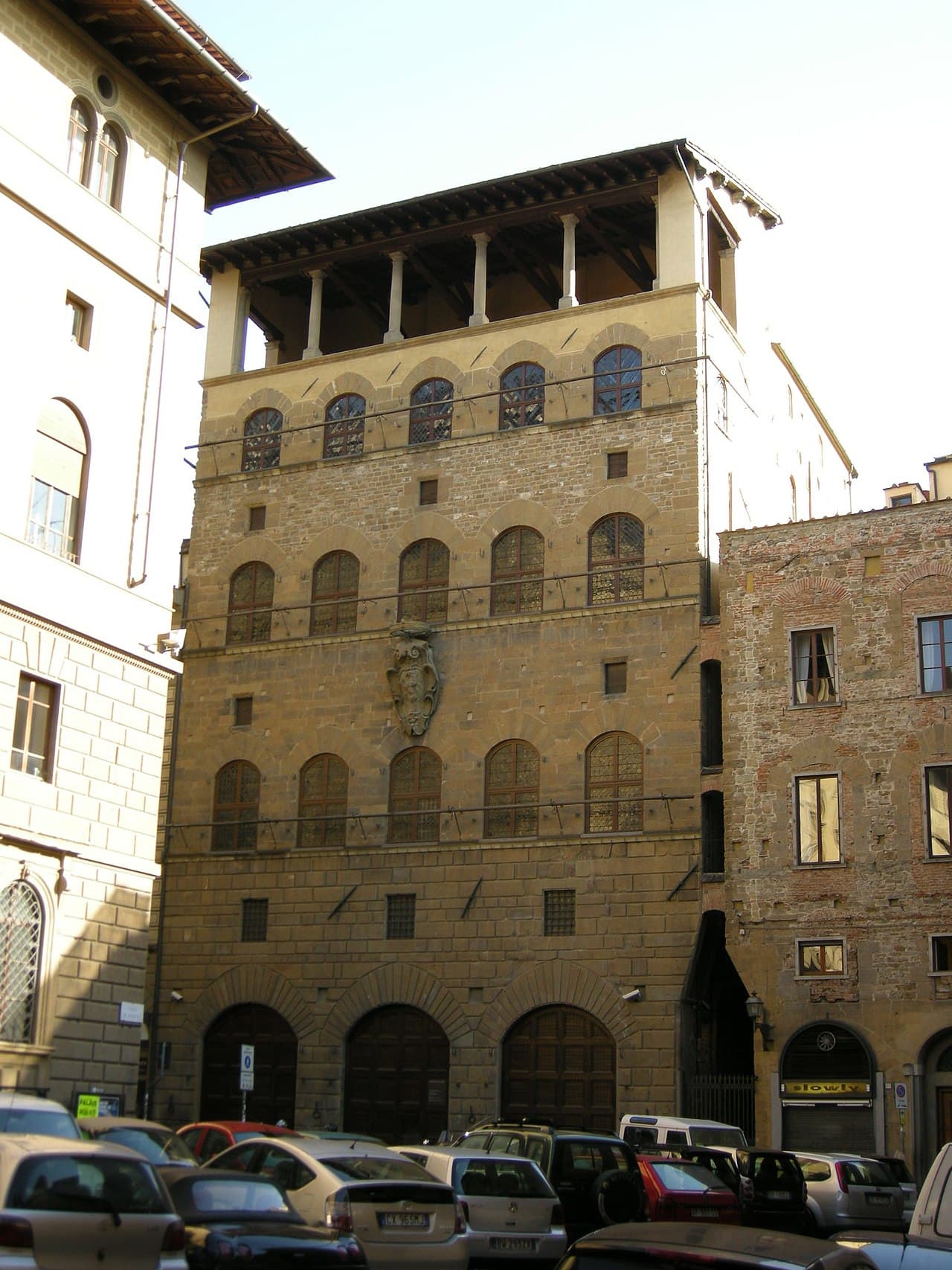
Look up. This narrow, imposing tower-house at Via Porta Rossa thirteen is Palazzo Davanzati, and it's the closest thing Florence has to a time machine. While the Medici palaces show you how the rich and powerful lived during the Renaissance, this place shows you something even rarer — how a wealthy merchant family actually lived in the thirteen hundreds.
The palace was built in the mid-fourteen hundreds by the Davizzi family, who made their fortune in the wool trade. In fifteen seventy-eight, it was bought by Bernardo Davanzati, a merchant and historian whose family name it still carries. What makes this building special is the transition it represents — you can literally see medieval Florence evolving into Renaissance Florence in its architecture. The lower floors are fortress-like, with massive stone walls and iron rings where torches were mounted. But the upper floors get progressively lighter and more elegant, with beautiful mullioned windows. And that open loggia at the very top — added in the sixteenth century — is pure Renaissance grace.
Read more...Show less
If you step inside — the museum is often free or nearly so — you'll see things that genuinely surprise you. The palace has an internal well that delivered water to every floor. It has toilets on every floor — the agiamenti — which in the thirteen hundreds was an almost unheard-of luxury. The kitchen is deliberately placed on the top floor, both to keep the heat and cooking smells away from the living spaces below, and because if a fire broke out while cooking, it would burn up and out rather than down through the whole building. Medieval Florentines were pragmatic geniuses.
But the rooms that really get me are the ones with painted walls. The Sala dei Pappagalli — the Room of the Parrots — has walls covered in a repeating pattern of colourful parrots and geometric designs, like medieval wallpaper. And the Camera della Castellana di Vergy tells the dramatic story of a thirteenth-century French love story — a kind of Romeo and Juliet painted directly onto the bedroom walls. Imagine falling asleep surrounded by that.
Continue along Via Porta Rossa toward Piazza del Mercato Nuovo. You'll hear the buzz of the market in about sixty seconds, and you'll want to look for a very famous pig.
Mercato del Porcellino
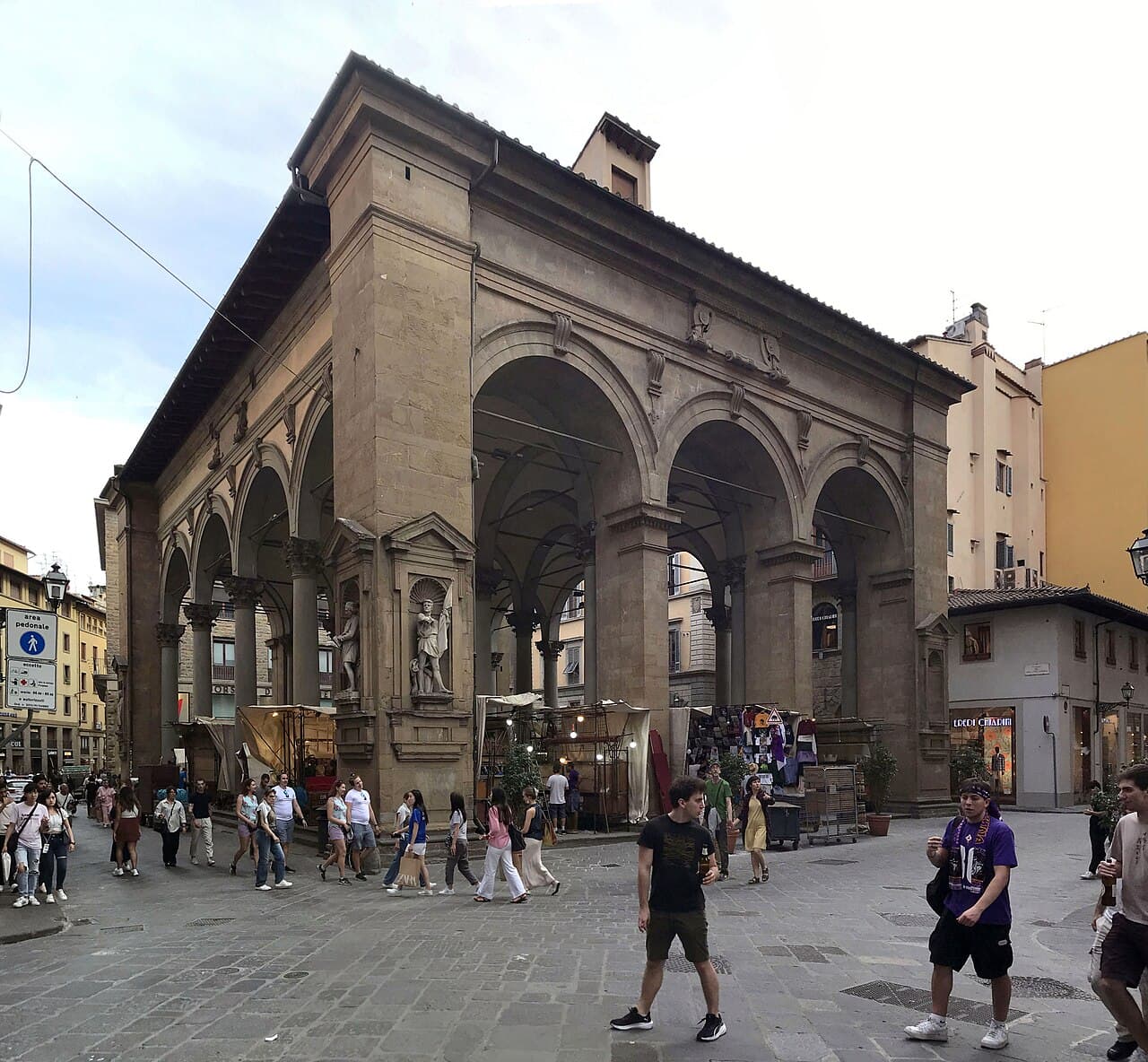
Listen for the clicking of coins and the laughter — you've found the Porcellino. That bronze boar sitting under the loggia with the impossibly shiny nose is one of the most rubbed, photographed, and kissed statues in all of Italy. And despite the name — porcellino means little pig — it's actually a wild boar. Florentines just don't care about zoological accuracy.
Here's the backstory. In fifteen sixty, Pope Pius the Fourth gave Cosimo the First de' Medici a marble copy of an ancient Greek bronze boar. Cosimo liked it so much that he commissioned the Baroque sculptor Pietro Tacca to make a bronze version around sixteen thirty-three. Tacca originally intended it for the Boboli Gardens behind the Pitti Palace, but it ended up here at the Mercato Nuovo instead. The statue you're rubbing right now is actually a copy — Tacca's bronze original is safely stored in the Bardini Museum. But the tradition is very much alive: rub the boar's nose, place a coin in its mouth, and if the coin drops through the grate below, you'll return to Florence. If it doesn't, well, maybe try again. The nose is polished to a blinding golden sheen from millions of hopeful hands.
Read more...Show less
Now, this market loggia is worth a moment on its own. It was built between fifteen forty-seven and fifteen fifty-one by Giovanni Battista del Tasso for Grand Duke Cosimo the First, originally as a market for silk and luxury goods. Later it became famous for selling Florentine straw hats — which is why you'll sometimes hear it called the Straw Market. Today it's mostly leather goods and souvenirs, but the architecture is genuinely lovely.
And here's a dark little detail. In the centre of the loggia's floor, look for a round marble disc set into the stone. That's the Pietra dello Scandalo — the Stone of Shame. During the Renaissance, merchants who couldn't pay their debts were brought here, stripped to their undergarments, and their bare backsides were slammed repeatedly against this stone in front of the jeering public. After that, they were either sent to prison or exiled. So next time you're late on a credit card payment, count your blessings.
Head east across the loggia and continue to Piazza della Signoria. It's about a two-minute walk along Via Calimala and Via Vacchereccia. The square you're about to enter has been the political heart of Florence for seven hundred years.
Piazza della Signoria
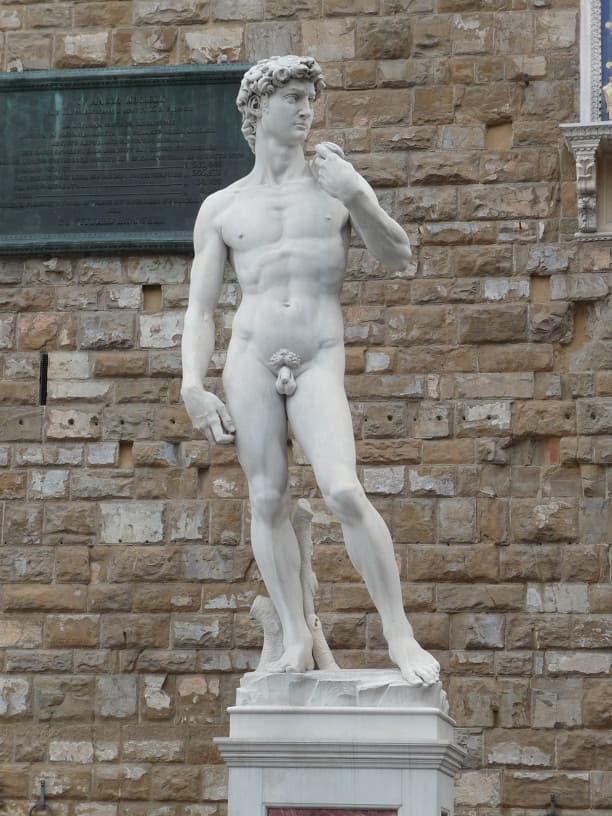
And here it is. Piazza della Signoria. If the Duomo is Florence's spiritual heart, this is its political one — and the history here is absolutely savage.
That enormous fortress-palace dominating the square is the Palazzo Vecchio, designed by Arnolfo di Cambio and built between twelve ninety-eight and thirteen fourteen. Its tower rises ninety-four metres — look up and imagine being a medieval Florentine, seeing that crenellated silhouette against the sky, knowing that the men inside were deciding the fate of your city. This has been the seat of government in Florence for over seven hundred years, and it's still a working town hall today.
Read more...Show less
Now look at the ground in front of the Fountain of Neptune — the big one by Bartolomeo Ammannati, which Florentines affectionately call "Il Biancone," the big white thing. Near the fountain, search for a round bronze plaque set into the paving stones. Found it? That marks the exact spot where Girolamo Savonarola was hanged and burned on the twenty-third of May, fourteen ninety-eight.
Savonarola's story is extraordinary. He was a Dominican friar who arrived in Florence in fourteen eighty-two and became the most powerful voice in the city — more powerful than the Medici. His sermons were so electrifying that thousands would pack into the cathedral to hear him denounce corruption, vanity, and sin. In fourteen ninety-four, when the Medici were expelled from Florence, Savonarola essentially took over. He established a theocratic republic and organised the Bonfire of the Vanities in fourteen ninety-seven — right here in this square. Citizens were pressured into bringing their mirrors, fine dresses, cosmetics, playing cards, paintings, books of poetry, and musical instruments to be burned in an enormous pyre. Some of Botticelli's paintings may have been destroyed in those flames.
But Savonarola pushed too far. He attacked the Pope. He was excommunicated. And in fourteen ninety-eight, the city turned on him. He was arrested, tortured, hanged from a cross-shaped gallows right on that spot, and then his body was burned so that no relics could be collected. The ashes were thrown into the Arno. Someone still leaves flowers on the plaque.
If you need a restorative after all that, Caffe Rivoire is on the south side of the square. It was founded in eighteen seventy-two by Enrico Rivoire, a chocolatier to the Royal House of Savoy, and their hot chocolate is essentially liquid fudge. Thick, rich, and not for the faint-hearted. Grab a cup and we'll look at some sculptures.
Loggia dei Lanzi
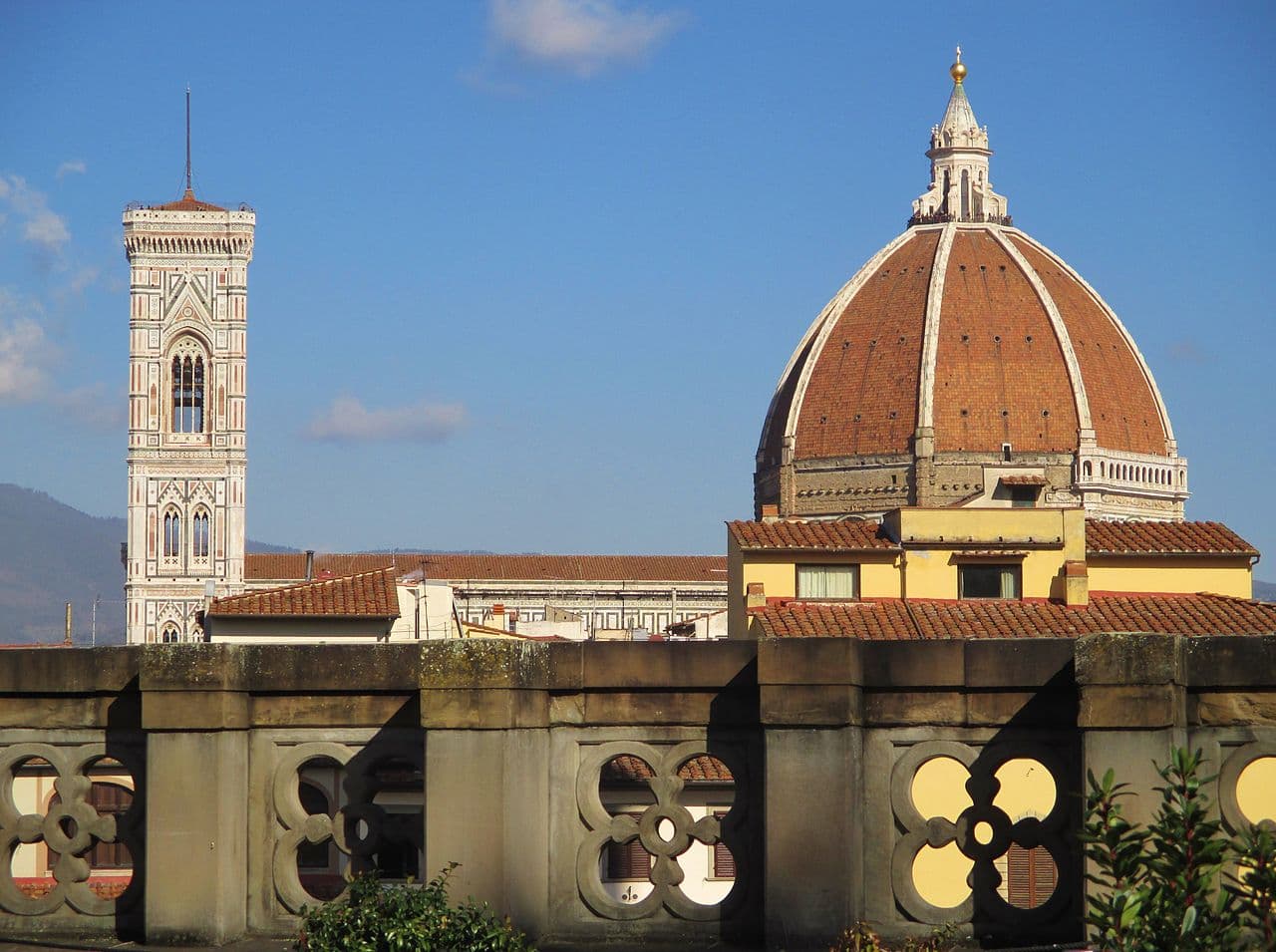
Walk to the southern edge of the piazza, and you'll find yourself standing in what is essentially the world's greatest open-air sculpture gallery — the Loggia dei Lanzi. This elegant triple-arched structure was built between thirteen seventy-six and thirteen eighty-two, originally designed as a covered platform for public ceremonies and the installation of government officials. The name comes from the Landsknechte — the German mercenary lancers who were stationed here in the sixteenth century under Cosimo the First.
Now, the star of this show — and one of the most dramatic sculptures ever created — is on your left as you face into the loggia. Benvenuto Cellini's Perseus with the Head of Medusa, cast in bronze between fifteen forty-five and fifteen fifty-four. Perseus stands triumphant, sword in his right hand, Medusa's severed head held high in his left, blood streaming from her neck in bronze rivulets. Medusa's headless body writhes beneath his feet. It's violent, beautiful, and technically astonishing.
Read more...Show less
And the story of its creation is almost as wild as the sculpture itself. Cellini was commissioned by Duke Cosimo the First, and the casting process was a nightmare. In his autobiography — one of the most entertaining books of the Renaissance, by the way — Cellini describes the moment the bronze began to seize in the furnace. The metal was too thick, the mould was failing, everything was going wrong. In desperation, Cellini ordered his assistants to throw every piece of pewter in his household into the furnace — about two hundred plates, bowls, and dishes — to thin the bronze and keep it flowing. It worked. Barely. When they cracked open the mould, Perseus emerged almost perfectly formed. Cellini nearly died from the stress — he collapsed with a fever immediately after.
On the right side of the loggia stands another masterwork — Giambologna's Abduction of the Sabine Women, carved between fifteen seventy-nine and fifteen eighty-three from a single block of marble. Three figures — a young man, the woman he's carrying, and the older man crouching below — spiral upward in a continuous helix. It was the first large-scale European sculpture designed to be viewed from every angle equally, with no single front or back. Giambologna didn't even give it a name at first; the title was suggested afterward to fit the Roman myth.
Walk south between the Loggia and the Palazzo Vecchio, and you'll step into the long, narrow corridor of the Uffizi courtyard.
Uffizi Courtyard
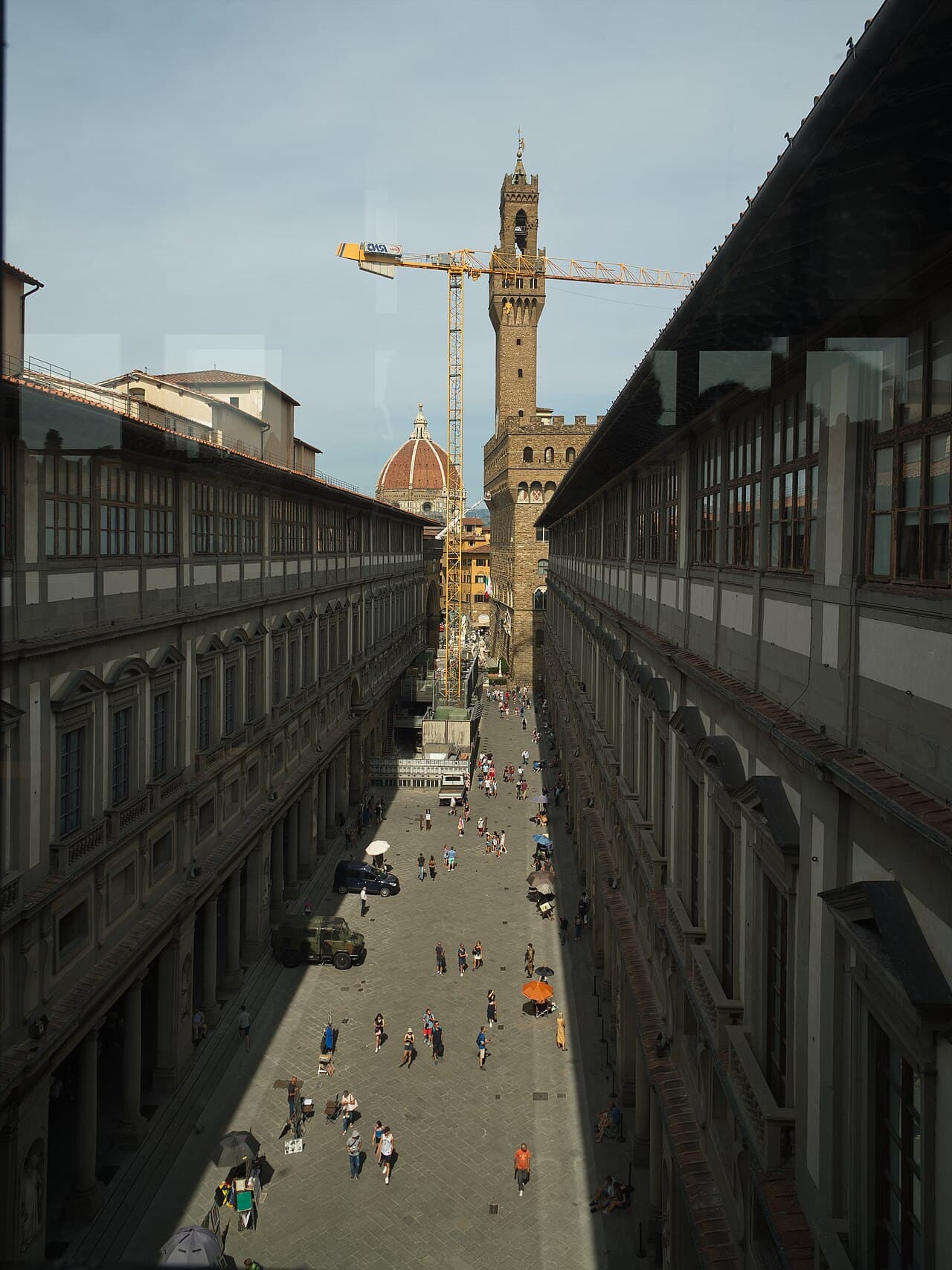
You've just walked into what architectural historians consider the first regularised streetscape in Europe. This long, narrow courtyard — open at the far end to the Arno River through a screen of columns — was designed by Giorgio Vasari, and it's one of those spaces that gets more impressive the more you understand it.
Vasari was commissioned in fifteen sixty by Cosimo the First de' Medici with a practical problem: Florence had dozens of government offices, magistrates, and guilds scattered all over the city. Cosimo wanted them all in one place where he could keep an eye on them. Hence the name — uffizi simply means offices. Vasari designed this U-shaped building with that brilliant open courtyard in the middle, creating a visual corridor that pulls your eye straight through to the river. The building was completed in fifteen eighty-one, and the top floor was gradually converted into a gallery for the Medici art collection — which eventually became the Uffizi Gallery, one of the most visited museums in the world.
Read more...Show less
Look at the niches along the columns on either side of you. Between eighteen forty-two and eighteen fifty-six, twenty-eight marble statues of famous Tuscans were installed here. This is the hall of fame. See if you can spot Dante, Petrarch, Boccaccio, Machiavelli, Leonardo da Vinci, Michelangelo, Galileo, and Amerigo Vespucci — the man whose first name was given to two entire continents. Each statue represents someone who helped make Tuscany, and by extension Italy, the cultural powerhouse it is.
Now, a practical note: if you want to visit the Uffizi Gallery, book your tickets online well in advance. The queue for walk-ins can stretch for hours. Inside, you'll find Botticelli's Birth of Venus and Primavera, Leonardo's Annunciation, Caravaggio's Medusa shield, and room after room of art that will make your knees weak.
But even from out here, Vasari's architecture is doing something clever. Stand at the far end, near the river, and look back through the courtyard toward the Palazzo Vecchio. Vasari designed the perspective so that the tower is perfectly framed at the end of the corridor — a visual exclamation point that says: power lives here. The man wasn't just an architect. He was a propagandist with a set square.
Alright. Walk through to the river end of the courtyard, turn right along the Lungarno, and you'll see it. The bridge that needs no introduction.
Ponte Vecchio
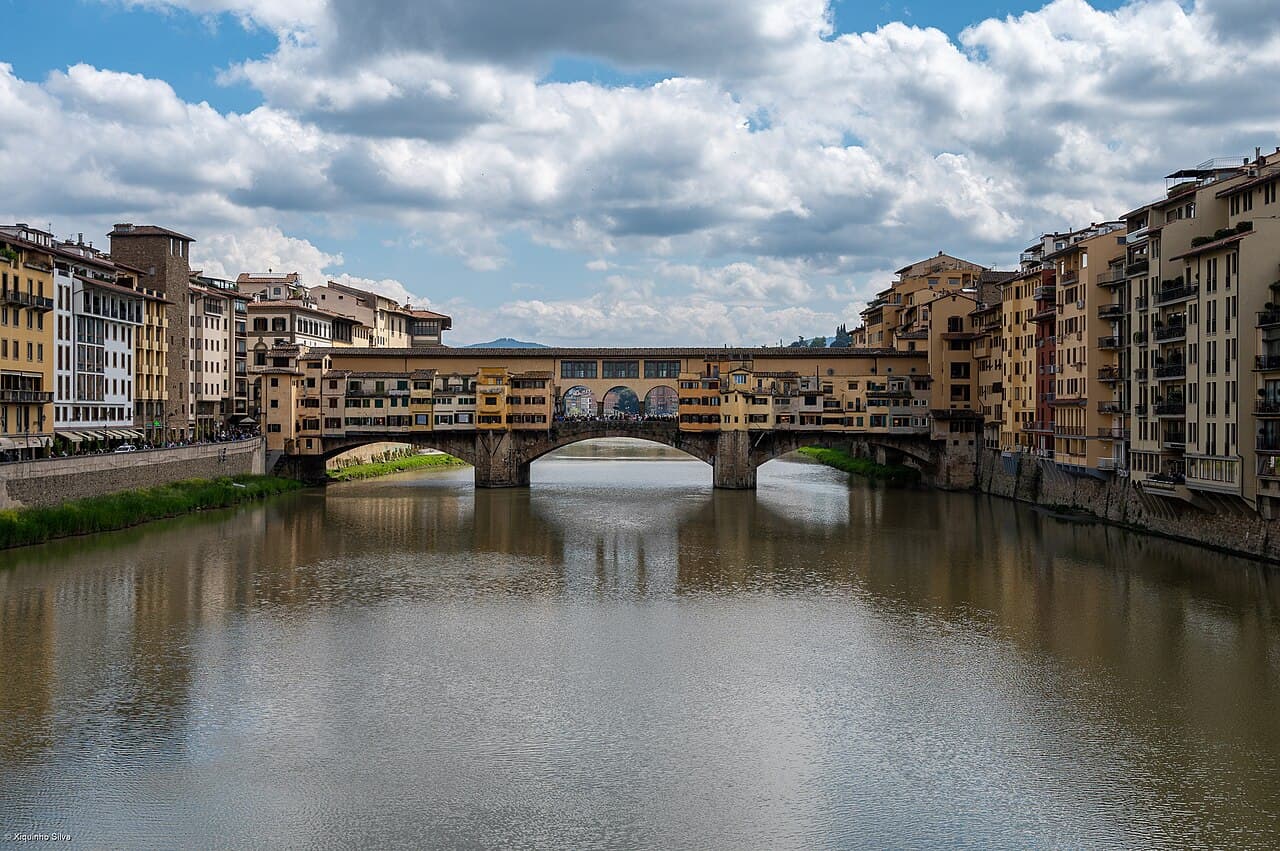
There she is. Ponte Vecchio. The Old Bridge. And before you join the crowd shuffling across it, stop for a moment on this side and just take it in. Those higgledy-piggledy shops hanging off the edges, the windows jutting out over the water on wooden brackets, the enclosed corridor running along the top — this bridge looks like it shouldn't exist. Like it was assembled by a slightly chaotic but very determined group of medieval builders who just kept adding bits. Which is basically what happened.
A bridge has stood at this narrow point of the Arno since Roman times. The current structure was rebuilt in thirteen forty-five after a catastrophic flood destroyed its predecessor in thirteen thirty-three. The design is attributed to Taddeo Gaddi — one of Giotto's pupils — though some historians credit Neri di Fioravanti instead. Either way, three elegant stone arches span the river, and almost immediately, shops were built along both sides.
Read more...Show less
For the first two centuries, those shops were mostly butchers, tanners, and fishmongers. Imagine the smell. Blood and offal dripping through the floorboards into the Arno. The river below running pink. It was efficient — the bridge was basically a self-cleaning waste disposal system — but it was grim. Then in fifteen sixty-five, everything changed. Cosimo the First commissioned Giorgio Vasari to build an elevated private corridor connecting the Palazzo Vecchio, through the Uffizi, over the Ponte Vecchio, and all the way to the Pitti Palace on the other side of the river. This was the Vasari Corridor — a kilometre-long secret passageway so the Medici could move between their residences without ever setting foot among the common people.
But there was a problem. The corridor ran directly above the bridge shops, and the Grand Duke Ferdinando the First — Cosimo's son — could not tolerate the stench of butchered meat wafting up into his private walkway. So in fifteen ninety-three, he issued a decree: all butchers, off the bridge. From now on, only goldsmiths and jewellers would be permitted. That decree has held for over four hundred years. The glittering gold shops you see today are there because a Medici prince had a sensitive nose.
One more story, and it's an important one. On the night of the third of August, nineteen forty-four, German troops retreating from Florence blew up every bridge across the Arno — the Ponte Santa Trinita, the Ponte alle Grazie, the Ponte alla Carraia — all of them. Every bridge except this one. The Ponte Vecchio survived. The most widely accepted explanation is that Hitler himself ordered it spared. He had visited Florence in May nineteen thirty-eight, called it the jewel of Europe, and gave specific instructions that the Ponte Vecchio be excluded from the demolitions. The Germans did, however, destroy the medieval buildings at both ends of the bridge to block Allied access — which is why the buildings on either side of the bridge look newer than the bridge itself.
You've made it. Walk across, browse the gold if you like — or just lean over the railing and watch the Arno slide past below. If you're hungry after this walk, cross the bridge and explore the Oltrarno neighbourhood. Trattoria Mario on Via Rosina near the market is legendarily cheap and chaotic. Or for something special, find a table at a wine bar and order a glass of Chianti Classico with a plate of crostini neri — chicken liver pate on toast. It's the taste of Tuscany.
This walk covered nearly three kilometres and about two thousand years of history — from Roman forum to Renaissance genius to wartime survival. Florence doesn't do things by halves. Neither should you. Enjoy the rest of your time here.
Free
GPS-guided walking tour
No account needed. Walk at your own pace.
Free
13 stops · 2.9 km