14 stops
GPS-guided
54 min
Duration
Free
No tickets
About this tour
A guided tour of Rome — Vatican Museums in Italy with 14 stops. Highlights include The Vatican Museums, Apollo Belvedere, and Laocoön.
14 stops on this tour
The Vatican Museums
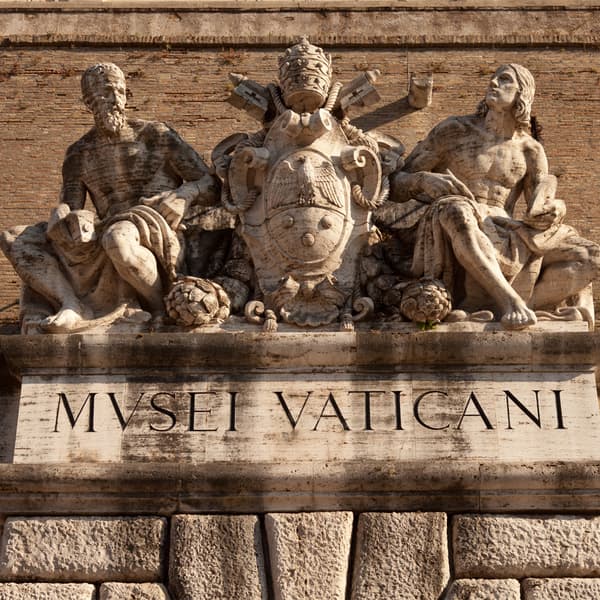
The Vatican Museums. The glories of the ancient world displayed in a lavish papal palace, decorated by the likes of Michelangelo and Raphael. That's the winning formula for that treasure chest of sites called the Vatican Museums. Hi, I'm Rick Steves.
Thanks for joining me on a walk through one of the greatest collections of art anywhere. We'll start with the ancient world, with rare statues of ancient Greece and Rome. There's the dreamy Apollo Belvedere and the over-the-top Laocoon, a man wrestling with reptiles. Next, we'll see how, after the fall of Rome, the Catholic Church carried the torch of civilization for 1,000 years, collecting and preserving the ancient statues.
Read more...Show less
We'll walk the hallways of the pope's luxury palaces, fit for a Caesar, seeing glorious tapestries, painted ceilings, and priceless artifacts. And we'll see how, in the Renaissance, the ancient world was reborn. The highlight here? Large-scale frescoes by Raphael, who many consider to be the greatest Renaissance painter.
The culmination of any visit to the Vatican Museums is Michelangelo's Sistine Chapel. This tour leads you right up to the Sistine, but the Sistine Chapel itself is covered in a separate audio tour. So make sure you download my Sistine Chapel audio tour, before your visit. This huge, confusing, and crowded mega-museum can be a challenge to navigate.
So consult a good guidebook for tips on when and how to visit. Then, with this audio tour as your guide, you should swing through with ease, enjoying the highlights and getting to the Sistine just before you collapse. Now, let's get going as we see priceless artifacts of both the classical and Christian worlds, the 2,000-year scrapbook of humankind, the Vatican. and the Vatican Museums.
To help us along the way, I've invited a good friend and virtual travel buddy. Welcome, Lisa. Buongiorno, Rick. Lisa will give us helpful directions and sightseeing tips throughout the tour.
And my first tip is to be sure you get our tour updates. Just press the icon at the lower right of your device. You'll find any updates and helpful instructions unique to this tour. Things like closures, opening hours, and reservation requirements.
There's also tips on how to use this audio tour and even the full printed script. Yes, so pause for just a moment right now to review our updates and special tips. It's okay. We'll wait. And then... Let the tour begin! The tour begins.
Tour Begins
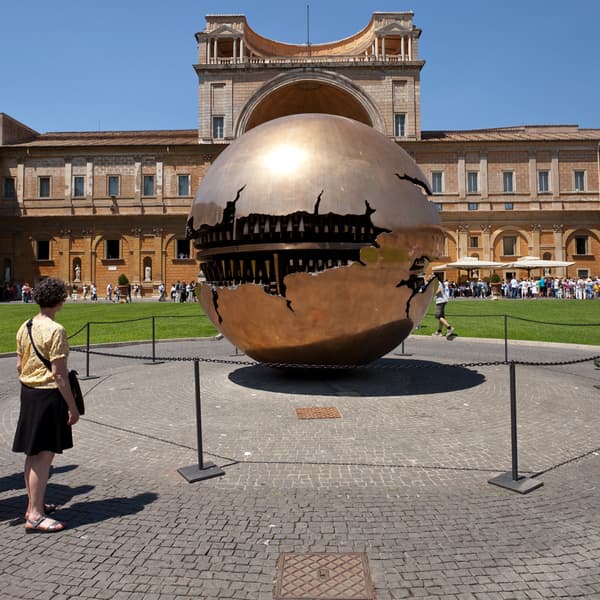
The Pinecone Courtyard. Our tour starts in... inside the museum in the Pinecone Courtyard. It's a huge open-air piazza dominated by two big statues, a shiny bronze sphere, and a giant green pinecone.
To reach this courtyard, you enter the museum and ascend several staircases and escalators. When you reach the top, turn left. As you head to the left, you emerge into the open air in the Pinecone Courtyard, or Cortile della Pina. Locate the big bronze ball in the center and the 12-foot-tall pinecone.
Read more...Show less
Stand near the pinecone and take it all in. This vast space is the perfect place to start with this vast collection. Rick? Thanks, Lisa.
The Pinecone Courtyard sums up the Vatican's entire collection. Pinecone, ancient. Bronze sphere, modern. And the courtyard around it, Renaissance, designed by Bramante.
The pinecone is 2,000 years old. It originally stood near the Pantheon to honor Isis, the Egyptian goddess of fertility. For the ancients, the perfect symbol of fertility was the pinecone, bursting with seeds. In Christian times, this big bronze statue was moved to the entrance of the old St.
Peter's Church. During the Renaissance, when popes reigned supreme, it was brought here to decorate this courtyard in what was, back then, the pope's breezy summer palace on a hill. The bronze ball in the center of the courtyard by the Italian sculptor Pomodoro arrived here in 1990. It symbolizes...
Well, there's a lot of interpretations. It may represent the cosmos or the Earth surrounded by the heavens. Or the eternity it takes to see this huge museum. Whatever.
It's big, it's shiny, and its presence here... completes the march through history. Ancient, Christian, Renaissance, modern. All right.
Let's get cracking. Let's. There's a lot to see here. Our next stop is the octagonal courtyard.
To get there, face the pinecone and turn right. Cross the courtyard and follow the crowds through the door about 50 yards to the right of the pinecone. ¦ ¦ ¦ We're headed to see some classic ancient statues. After that, we'll browse 2,000 years of historical knick-knacks and end up at the Sistine Chapel.
We'll move quickly so we don't burn out before the all-important Sistine Chapel. As we go, we'll see how each civilization borrows from and builds up the previous one, all part of the story of humankind. When you reach the doorway, enter the building and turn left. But first, pause for a second and glance down the hallway to the right.
It's full of statue busts. You can look, but don't go there. But I want to. No.
Don't even think about going there. Remember, we've got to keep moving. You know, Lisa, you're probably right. You could spend all day in this wonderful museum, but let's stick to the tour as designed to save enough time and energy for the highlights and for the Sistine Chapel.
So, turn left and climb the stairs. Man, Lisa, there are more heads down there than a Grateful Dead concert. At the top of the stairs... Or a cabbage patch.
Ahem. At the top of the stairs, turn left. But first, glance to the right... Ah.
...where there's a window with a great view of Rome. You're actually in a palace called the Belvedere. Named for this wonderful view. Yes, it is a great view, but our tour is turning left.
As you turn left, you enter another open-air courtyard. This is the octagonal courtyard. Quite a setting. You really get a sense of the museum as a Renaissance palace.
Classical architecture, a fountain in the middle, and lined with ancient statues. Start with the statue immediately to the left. The statue to the left. Inside the arcade.
It's of a handsome nude man with one arm outstretched. Appropriately enough in this palace called the Belvedere, this is the Apollo Belvedere. Apollo Belvedere
Apollo Belvedere
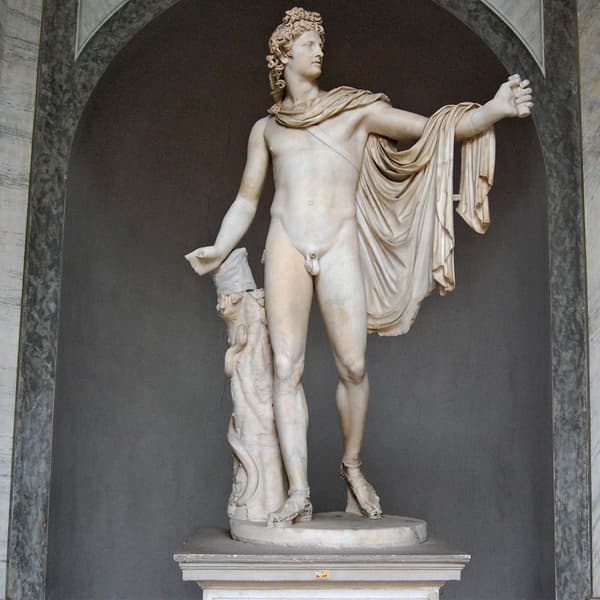
Apollo Belvedere Apollo, the Greek god of the sun, is hunting. He's been running through the woods and now he spots his prey. Keeping an eye on the animal, he slows down and prepares to put an arrow, now missing, into his also-missing bow. This Apollo is 2,000 years old.
It's done in the style of an even earlier statue by the great Greek sculptor Prax Italis. Apollo embodies all that was good about classical-age Greece. It fully captures the beauty of the human form. You see, the optimistic Greeks conceived of their gods as perfect humans and usually showed them buck-naked.
Read more...Show less
The anatomy is perfect. His pose is natural. Instead of standing at attention, face forward with his arms at his sides like earlier primitive statues, Apollo is on the move, coming gently to rest with his weight on one leg. The Greeks loved balance.
A well-rounded man was both a thinker and an athlete, a poet and a warrior. Apollo Belvedere is also a balance of opposites. He's moving, but not out of control. He eyes his target, but has yet to attack.
The smoothness of his muscles is balanced by the rough folds of his cloak. And he's realistic, like a living, breathing human being, but also idealized, with godlike features. As you gaze at Apollo and the other ancient statues in this pleasant courtyard, think about those classical Greeks. 500 years before Christ, the city of Athens had a population of only about 50,000.
Yet they practically invented what became Western culture. Democracy, theater, economics, literature, art, they all flourished during the Greek Golden Age. It set the stage for Apollo's success in the Middle Ages. When Greece was eventually conquered by Rome, Greek culture was appropriated by the Romans.
In fact, this Apollo is a Roman copy of a Greek original. Greek culture surfaced again a thousand years later during the Renaissance when this statue of Apollo was unearthed. It was considered the most perfect work of art in the world. The handsome face, eternal youth, and his body that seems to float just above the pedestal.
It made Apollo Belvedere seem superhuman, divine, and godlike, even for devout Christians. It inspired Renaissance artists. In fact, when Michelangelo was painting the face of Jesus for his last judgment in the Sistine Chapel, his model was none other than the noble features of the Apollo Belvedere. Let's move on.
Take a few steps to the right. In the niche just to the right, a bearded old, Roman river god lounges in the shade. This ancient statue also inspired Michelangelo in the Sistine Chapel. He used the river god pose for the figure of Adam, reclining and reaching out to accept the spark of life from the finger of God.
No wonder they call the Renaissance the re-nascence, the re-birth of the ancient world. Exactly. By the way, as you browse around this courtyard, you'll see what look like fancy stone bathtubs. Most of these are sarcophagi, that is, coffins to hold the bones of ancient Romans.
The carvings on the sides are something like the deceased's epitaph in picture form. Now take a few more steps to the right. You'll find a statue of a man and his two sons wrestling with snakes. ¶¶ ¶¶ Laocoon.
Laocoön
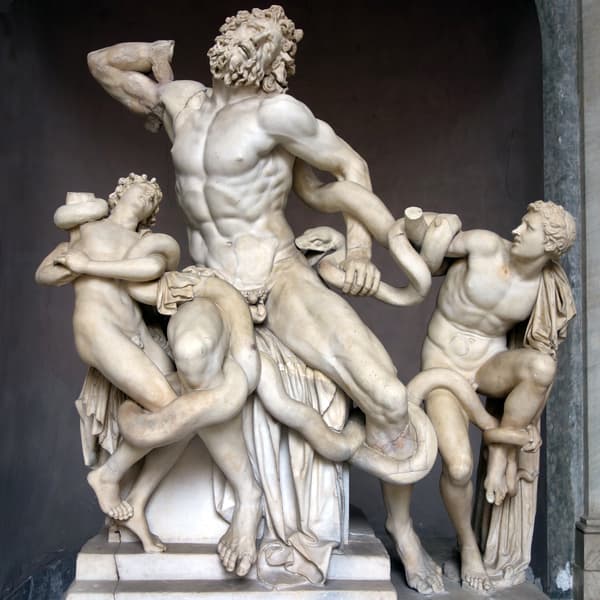
This man's agony captures the dramatic climax of the Trojan War. Laocoon, a priest of Troy, has tried to warn his people that the Trojan horse sent by the Greeks is really a trick, a trick to get into the city. So the Greek gods send huge snakes to crush Laocoon and his two sons to death. The sculptor captures the scene at its most intense moment, Laocoon is struggling to survive, but he's just now realizing that the snakes are too much for them.
Look at his face. His agonized expression says it all. I and my people are doomed. Either that or snakes.
Read more...Show less
Why did it have to be snakes? The figures were carved from four blocks of marble pieced together seamlessly. The poses are as twisted as possible, accentuating every range with a rippling muscle and bulging vein. Follow the line of motion.
It starts with Laocoon's left foot, then up his leg, running diagonally through his body and out his right arm. It's a dramatic scene, rippling with motion and emotion. Laocoon was sculpted four centuries after the Golden Age. Mentally compare these figures with Apollo Belvedere, where Apollo is serene, graceful, and godlike, Laocoon is powerful, emotional, and gritty.
Where Apollo is a perfect balance between stillness and motion, this is textbook Hellenism. Unbridled motion. Laocoon was one of the most famous statues in the ancient world, but after the fall of Rome, the statue was lost for a thousand years. Then, in 1506, the statue was unexpectedly unearthed right across town from here, near the Colosseum.
In the late 19th century, it was cleaned off and paraded through the streets before an awestruck populace. One of the first to lay eyes on Laocoon was the young Michelangelo. In fact, he was hired by the Pope to help reassemble the fragments. Look at Laocoon's right arm.
In Michelangelo's day, that arm was completely missing. Many thought that Laocoon originally had his arm extended straight out, holding the snakes off at arm's length. But Michelangelo thought the arm must have been bent at the elbow because he had studied cadavers and he knew just how the muscles worked. Then, in the early 1900s, archaeologists excavated the original elbow, and everyone realized Michelangelo had been right all along.
The discovery of Laocoon in 1506 had a considerable impact on art history. It inspired Michelangelo to amp up his figures with more motion and more emotion. Just two years ago, he started work on the Sistine Chapel and took the Renaissance to a whole new level. The statue also inspired Renaissance popes who were in the midst of building these palaces at the Vatican.
They started collecting statues like Laocoon and the Roman sarcophagi. This octagonal courtyard was where popes would entertain VIPs by showing off their fine collection of artifacts. Laocoon was the first and the most prized piece of this collection. And so, in a sense, the Vatican Museums were born right here.
Nice story. But as I look again at Mr. Laocoon's face, I think his expression is actually saying, "Time to move on!" Yes. So, let's leave the courtyard, to the right of Laocoon.
You'll pass through the Hall of Animals. As you enter, plans both left and right to enjoy this Hellenistic zone. This is the Hellenistic Zoo of beasts real and surreal. Continue straight ahead. In the next large hall, you'll see a headless and limbless body, the Belvedere Torso. ♪ ♪
Belvedere Torso
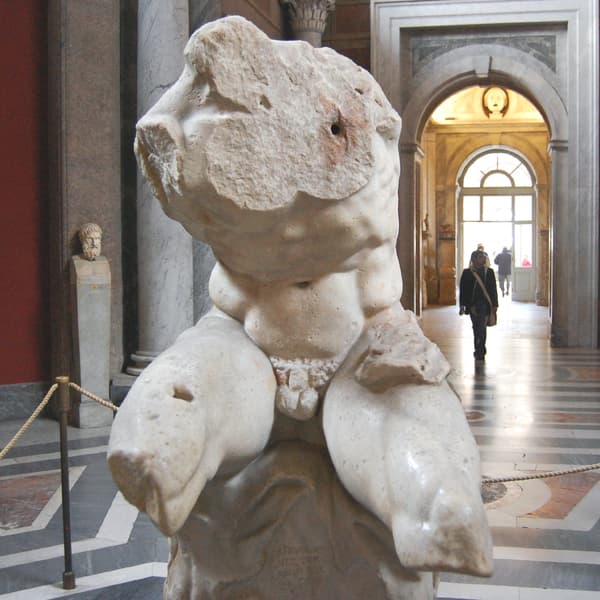
The Belvedere Torso. This is all that remains of an ancient statue damaged by time. It's a powerful man seated on an animal skin. Maybe it's Hercules with his lion skin.
Or a cyclops. No one's quite sure. Look closer at the base. You can see that it's signed by a sculptor named Apollonius from the 1st century B.C.
Read more...Show less
Scholars think Apollonius may have actually been copying an older statue, so it's clear this subject was popular in the ancient world. Michelangelo loved this old rock. He instantly recognized that the sculptor was really good. Michelangelo was the best sculptor of his day, so the ancients were his only peers and his rivals.
He'd caress this statue lovingly and tell people, "I am the pupil of the torso." To him, it contained all the elements of classical beauty. But he's not beautiful. Not like Apollo Belvedere. He's dreamy.
True. Michelangelo was an ugly man himself. He was looking for a new kind of beauty, not the beauty of idealized gods, but the inner beauty of every person. This torso, with its knotted lumps of muscle, has brute power and a distinct personality.
And his slightly turned pose captivated Michelangelo. In fact, he used it for the torso of Jesus in the Last Judgment. So, in the Sistine Chapel, Jesus has the body of the torso and the face of Apollo. Right.
And his Adam is a reclining river god. Yes, Michelangelo was in awe of these ancient sculptors. Now, all I know about sculpting is making a snowman. But when you stand face to face with a hunk of rock like this, it makes you appreciate the sheer physical labor it takes to chip a figure out of solid marble. It takes great strength, and a great touch. Let's continue on into the next domed room. The round room.
Round Room
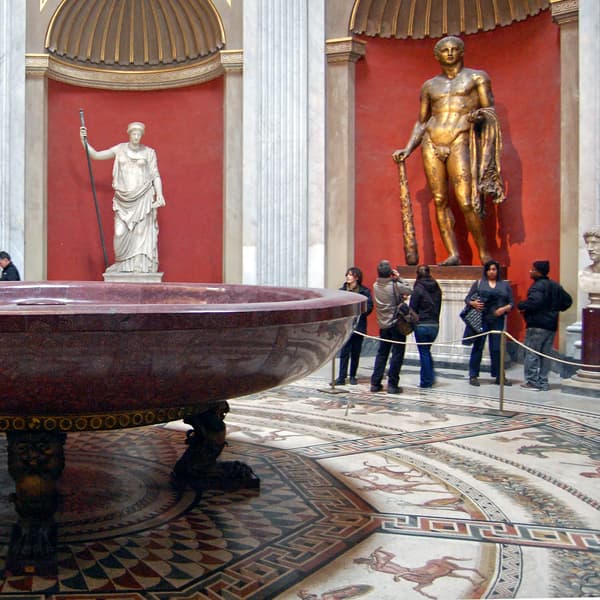
The room is modeled on the Pantheon, with its coffered dome. Around the room are artifacts from ancient Rome. As you slowly circle the room, you get a sense of the Roman flair for over-the-top grandeur. Romans took Greek ideas and made them bigger.
Case in point, the big bronze statue of Hercules, a Greek hero blown up to Roman proportions. This once stood at the ancient theater of Pompey, by the modern-day Campo di Fiori. The mosaic floor you're walking over is 1,700 years old. Its battle scenes once decorated the bottom of a pool in a public bath.
Read more...Show less
But nothing says Roman grandeur like the enormous purple basin that dominates the room. It's over 15 feet across and was carved from a single block of stone. This Roman basin decorated Emperor Nero's golden house. It's unclear whether it was mere decoration or used as a cistern or...
Or Nero's hot tub? Why not? An orgy that seats 50. Bring your friends.
The thing is so big that when it was moved to the Vatican in the 18th century, this room had to be built around it. The purple stone is called porphyry, and it's extremely valuable. This particular variety is called imperial porphyry because of its deep purple color. In ancient times, purple was the color of royalty.
Upper-class Romans wore purple robes made from an incredibly expensive dye. For important monuments, their first choice was purple stone. While red-tinted porphyry can be found all over, purple imperial porphyry comes only from a single source -- a mountain in Egypt. Roman emperors claimed it for themselves, quarried it, and laboriously shipped the precious stone across the Mediterranean.
In fact, any purple porphyry you see anywhere in Europe came from that single mountain, in Egypt. Now that source in Egypt has been quarried out, making this precious purple porphyry even more rare. Enter the next room, and pause at two more examples of this precious purple porphyry. ♪ ♪ Sarkophagi.
Sarcophagi
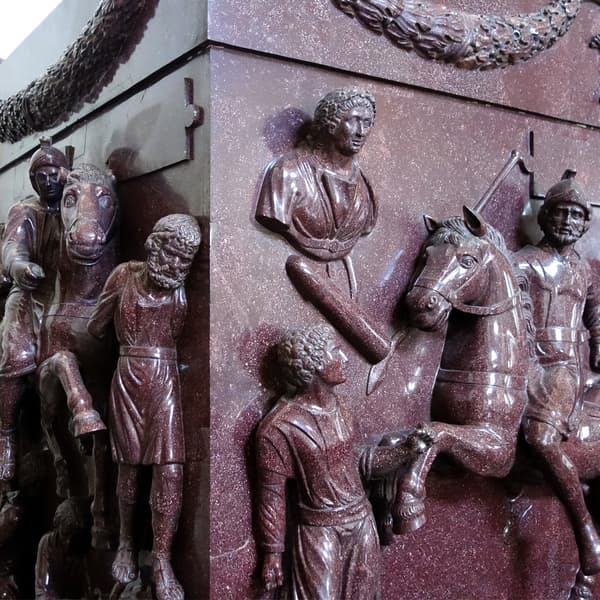
Imperial porphyry was used for the coffins of the imperial family. These two large sarcophagi were made, though not used, in the 4th century for two very important people -- the mother and the daughter of the great Roman emperor Constantine. Mother Helena's sarcophagus is on the left, and daughter Constanza's is on the right. Get a closer look at Helena's coffin.
It depicts a battle. Roman soldiers gallop proudly across the coffin. They trample barbarians beneath their hooves. Now check out Constanza's sarcophagus.
Read more...Show less
It's decorated with traditional motifs of the pagan world. There's little-winged cupids harvesting grapes for a pagan bacchanal. But there's also symbolism of a brand-new sort -- Christian. I can see a Lamb of God, and peacocks -- symbols of eternal life.
These sarcophagi stand on the cusp between pagan Rome and Christian Rome. Helena and Constanza were two of the first openly Christian nobles in Rome. In the year 312, they were outlaws. Then, in the next year, Emperor Constantine made Christianity legal, and they eventually became saints.
Study the fine detail work on these sarcophagi. The intricate garlands, the twisting vines. Porphyry is extremely hard, so carving it was a challenge. It required special tools.
These tools required a special tempering process to make the metal strong enough. This high-tech knowledge was lost as Rome declined, and porphyry was not chiseled again for 1,000 years. Before you move on, take note of a detour you might consider making. Look ahead and to the left.
You'll see the doorway leading to the Egyptian collection, or Museo Gregoriano Egizio. You probably can't enter directly from here, but you can enter just ahead. So let's move on. From the sarcophagi, continue straight ahead.
You'll go up some stairs to the next level. There, you'll be at the entrance to a long hallway that's lined with statues. This hallway is called the Gallery of the Candelabra. Stop here and take a moment before you enter the gallery.
Remember, the Egyptian collection is directly behind you, just down a short staircase. And the Etruscan collection is also behind you. It's just a little side trip up a few steps from this level. It's labeled Museo Gregoriano Etrusco.
Though our tour won't visit either collection, you could pause your audio guide now, see what you want, and return to this spot to continue. Now, get ready to head down the Gallery of the Candelabra. From here, we'll be walking straight down that hallway, about a quarter of a mile, through a series of rooms featuring statues, tapestries, and maps. Fortunately, it's all downhill.
This heavyweight museum is shaped like a barbell. Two former palaces connected by a long hall. We're standing in the Belvedere Palace, once the Pope's summer palace ghetto, the main palace is far away, near St. Peter's Church.
In the 16th century, they built this hallway to connect the two. Now, enter the gallery and keep strolling, as Rick and I guide you along as you go. Gallery of the Candelabra: Classical Sculpture.
Gallery of the Candelabra
Our first stop is about 30 yards down the gallery, on the right-hand side. Find the statue of a woman whose dress is covered in strange orbs. This was the ancient Roman goddess Artemis. Farmers prayed to her as the goddess of fertility.
That's why she's covered with all these stylized breasts, to show her as a giver of life and nourishment. Boobs? Or bull's balls? What?
Read more...Show less
Well, I've heard that some historians say that these orbs don't represent breasts, but testicles of bulls. In the cult of Artemis, bulls were sacrificed and castrated with the testicles draped over the statues as symbols of fertility. Hmm, Lisa, you've become quite an expert on this ancient art. Well, just about boobs and bull's balls.
Well, then I guess we can just take our pick. There's another symbol of plenty directly across from Artemis. On the opposite wall is a statue of Diana. Here, the virgin goddess is off hunting.
While Roman farmers prayed to Artemis, hunters would pray and give offerings to Diana to help them find food. Now, let's continue shuffling along down the gallery. As you pass by this great collection of statues, bear in mind that back in ancient times, many of them would have been painted. They might have had black hair, rosy cheeks, flesh-colored flesh, and some even had inlaid breasts.
Some even had inlaid glass eyes to make them come to life. But time and weather have eroded away those once vibrant colors. And many of the statues have fig leaves. Yes, fig leaves were added later, mostly from the years 1550 to 1800, when the church decided that certain parts of the human anatomy were obscene.
Perhaps they associated nudity with the outbreak of Renaissance humanism that threatened their power in Europe. Whatever the case, they covered these classical crotches with plaster fig leaves, like Adam and Eve used when the concept of privates was invented. Maybe we should lobby the Vatican to remove them. Yeah, we could start an organized campaign.
Organized? Yes, rise up. No. Solidarity.
Come on. No more fig leaves. No more fig leaves. Rick, this is the Vatican.
Oh, you're right. Let's continue. Soon you reach the next section of the long hallway, the part lined with tapestries. Gallery of Tapestries.
Gallery of Tapestries
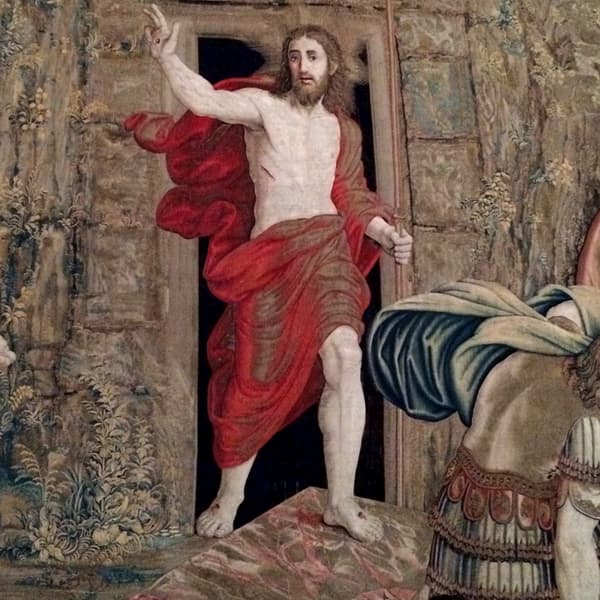
These tapestries depict scenes from the life of Christ. The first one is baby Jesus, born in a manger. Then you'll see him being adored. The presentation in the temple.
And so on. The most dramatic tapestry is the episode when all the baby boys were slaughtered by King Herod to prevent the rise of the Messiah. Keep going. These tapestries were created by students of the undisputed master of tapestries, Raphael.
Read more...Show less
First, they painted the scene on paper, full size and full color. These so-called "cartoons" were then sent to the famous weaving factories in Brussels. There they were cut up into manageable strips and placed on the looms. The Vatican tapestries are remarkable for their lifelike realism, almost like oil paintings.
Notice the tiny details and subtle changes in color. In the weaving process, the vertical threads are a neutral color. It's the horizontal threads that create the design. Imagine the equivalent of each brush stroke had to be reproduced by thousands of short pieces of colored thread, woven horizontally into exactly the right spot.
Three-quarters of the way down the hall, on the left wall, look for the tapestry that depicts the resurrection. It shows Jesus striding out the doorway of the tomb. It's curiously interactive. As you walk past, watch how Jesus follows you across the room.
His eyes, feet, knee, and even the stone slab seem to follow you as you pass by. Try it. The next tapestry, "The Supper at Emmaus," with Jesus sitting at a table, seems equally curious about where you're going. Well, let's keep going as we make our way to the next section, "The Gallery of Maps." As you walk, look up.
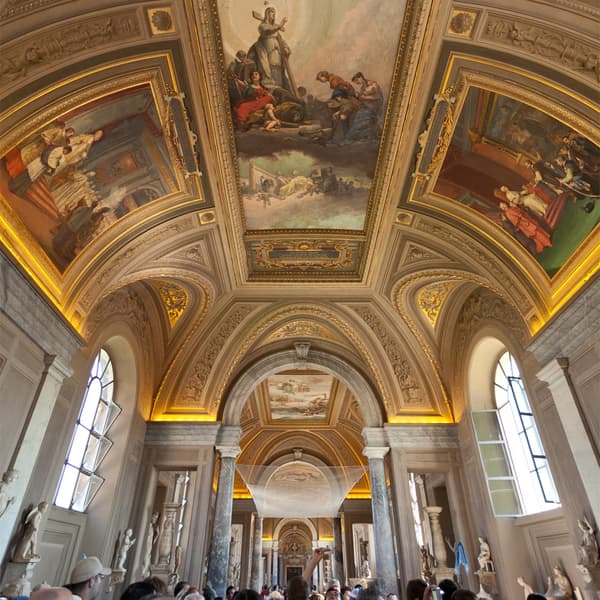
The ceiling is covered with beautiful sculpted reliefs, cameo-like scenes carved into the frames and medallions of the stucco. Incredible workmanship. Now, realize that, in fact, these are not reliefs at all. They're painted on a flat surface.
Popes loved illusions like these to entertain their guests. For the artists who made them, this was proof that they'd mastered the challenge of 3-D realism. Continue on until you enter the section of hallway lined with murals of maps. ♪♪ The Map Gallery.
Map Gallery
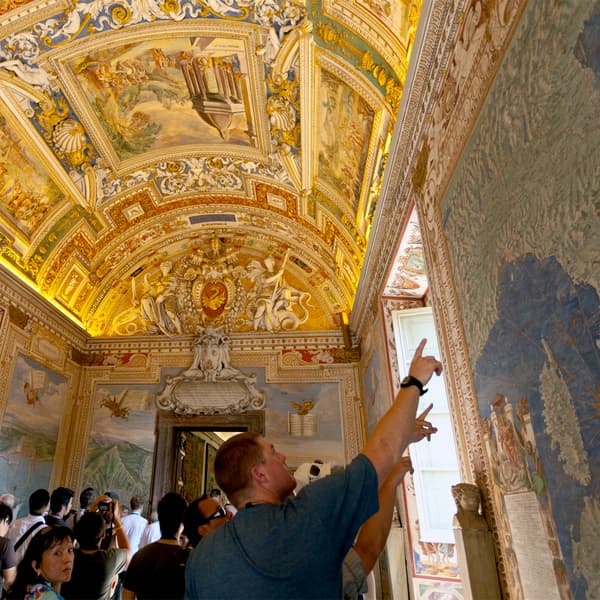
Stroll this colorful gallery from end to end. This particular hall is a good chance to fully appreciate the splendor of this papal palace. The 40 maps on the walls show the regions of Italy as they were in the 1500s. Popes could take visitors on a virtual tour of Italy from south to north.
From the toe, here at the entrance end, all the way to the Alps, way down at the far end. East Italy is on the right wall. West is on the left. These maps actually functioned as the Vatican's official maps from 1582, when they were painted, until the 19th century.
Read more...Show less
Notice how some have a detail map of the region's major city. Notice also what look like royal proclamations that appear to be thumbtacked on. Somewhere along this map walk, stop and find places you've enjoyed in your travels, as they'd be portrayed over 400 years ago. As you stroll, keep an eye out for a window where you can catch a view outside.
That's the Vatican Gardens. This is the visitor's best chance to see Vatican City without special permission. The tiny country of Vatican City was officially established as an independent nation in 1929. What you can see from here is pretty much the entire country -- the gardens, the palaces you're in, plus St.
Peter's Basilica. Vatican City has its own radio station. That's the tower on the hill. Just in front of that radio tower is a building with three green shutters.
When ex-Pope Benedict XVI retired, he moved in here, enjoying an occasional stroll on the rooftop terrace. If you have a chance to lean out a window and look left, you'll see the dome of St. Peter's the way Michelangelo would have liked you to see it -- without that bulky Baroque façade blocking the view. Keep going down the gallery.
Admire the colorful ceiling. It's made of molded stucco or plaster that's been painted. The scenes in the frames portray exciting moments in church history. The events happened in the particular region of Italy that's depicted on the wall below.
The decoration is based on ancient designs -- lots of ornate garlands and intertwined vines, cupids, scallop shells, Roman vases, winged nymphs. It's the so-called grotesque style, named for the excavated Roman grottoes they were discovered in. This gallery still feels like what the Vatican museums once were -- a pope's palace. Seeing themselves as heirs of imperial Rome, the popes felt that they deserved such luxury.
You could see abandoned frescoed walls, stuccoed ceilings, tapestries, and priceless statues. Ironically, it was this very insistence on luxury that contributed to their downfall. Extravagant spending like this inspired Martin Luther and the Protestants to demand reforms. After the Reformation, popes had to give up their temporal powers and focus more on spiritual leadership.
Eventually, the popes made their palaces and collections available to the public, and around 1800, the first Vatican museum opened its doors. As you near the end of the gallery, look for a few particular maps. Here you'll find some maps that travelers today might recognize. On the left wall, find the region of Liguria.
It shows the main city, Genoa. You can even make out the five little towns of the Cinque Terre, circa 1582. Notice the sea chariot captained by Neptune himself. He's taking Christopher Columbus from his hometown of Genoa to the New World.
A few steps further along on the left wall is a map of the entire peninsula of Italy in the 16th century. Compare that with the map on the right wall showing Italy as it was in ancient times. Finally, before you exit the gallery, find the map of the Italian city situated on an island shaped like a fish. Venice.
When you reach the end of the gallery of maps, take a moment to plan your next move. We've now traversed the long corridor that connects the two former Vatican palaces. From here, we're headed for the final stretch, the Raffael Rooms, or Stanze di Raffaello. Now, exit the map room and continue through the next long room.
As you approach the end of the room, you'll turn left. Remember, turn left. The museum may offer you an alternate route. Both routes lead to the Sistine Chapel, or Capella Sistina.
But our tour turns left in order to include the Raffael Rooms. As you turn left, you immediately enter a room with an enormous painting on the left wall.
Epic-Scale Paintings
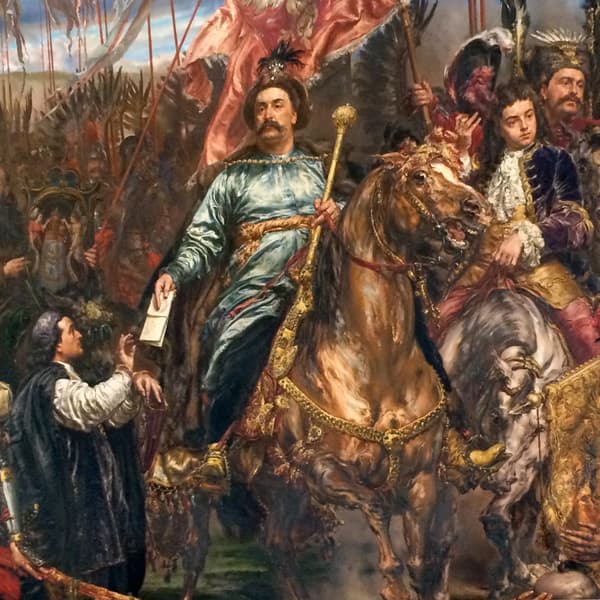
Epic-scale paintings on the way to the Raffael Rooms. This first huge painting is not by Raffael. He's coming up, but it is impressive. It shows the chaotic scene when Vienna was saved from the Muslim Turks.
It's 1683, and the Ottoman armies have surrounded Vienna. You can see their tents on the left. On the right, in the distance, are the church spires of Christian Vienna. Just when the city was about to fall, it was saved by King Jan Sobieski, who rides in at the center.
Read more...Show less
He brings peace to the city, and a rainbow breaks through the clouds. Keep shuffling with the masses into the next room, which also has huge paintings on the walls. The second room commemorates the doctrine of the Immaculate Conception. This is the idea that Mary herself was conceived free from original sin.
The room's decor hammers home the point. The elaborate bookcase in the center displays copies of the papal pronouncement that established the dogma. The room's frescoes show scenes of Mary and the history of the idea through ancient and medieval times. Find the largest of the wall's frescoes.
This depicts the moment when the doctrine became official in 1854. Church leaders and secular VIPs gather below, while a heavenly host watches from above. In the center, the pope rises to proclaim the new doctrine. Notice how his inspiration comes straight from heaven.
From the upper left corner of the painting, a thin ray of light beams directly down onto the pope. Next, you'll pass along an outside walkway that overlooks a courtyard. This ramp leads to the Raphael rooms. You're walking above a parking lot for some of the 4,000 people who commute to work here every day.
If you look far in the distance, you'll see a hemispherical wall. That's the pinecone courtyard where we started our tour. We've come a long way, both in space and also in time. Back there, we saw the ancient world.
Now we'll see its rebirth in the Renaissance. We're entering the living quarters of the great Renaissance popes, where they ate, slept, worked, and worshipped. In 1508, the great Pope Julius II, the same guy who hired Michelangelo for the Sistine Chapel, decided to redecorate his apartment. To paint it, he hired a relative unknown.
The artist was only 25, with a thin résumé, but he came with a reputation as a one-of-a-kind prodigy. It was Raphael Sanzio from Urbino. Unlike the moody Michelangelo, Raphael was easygoing and graceful, with just the kind of style to brighten the pope's apartment. At the end of the walkway, you enter the first of the Raphael rooms. The Constantine Room.
Constantine Room
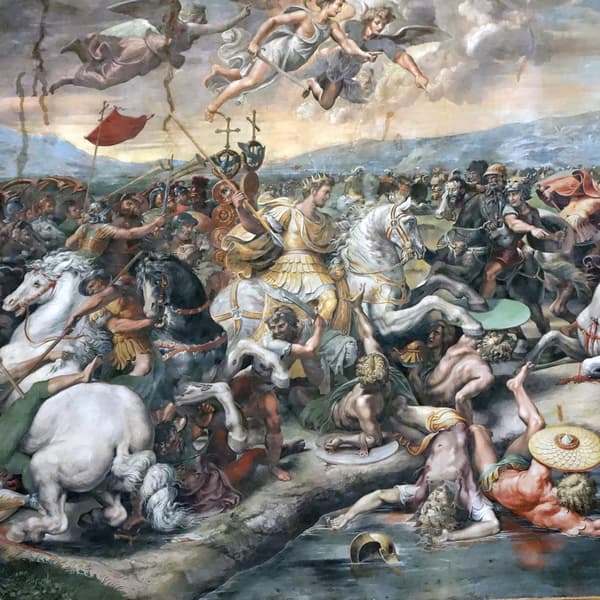
This is the first of four rooms decorated by Raphael. Full disclosure -- in this first room, the frescoes were only designed by Raphael and actually painted by his students. Raphael wanted his frescoes to reflect the spirit of the Renaissance, how the classical world and Christian world complemented each other perfectly. Fittingly, this first room shows the pivotal moment when the baton was passed from pagan Rome to a rising new cult from the East -- Christianity.
The story unfolds in four scenes from the life of the first Christian emperor, Constantine. Start with the left wall. It's October 27, in the year 312, on the eve of a big battle. Find General Constantine.
Read more...Show less
He's the guy in gold with the crown. He's preparing his troops for a coup d'etat against a pagan emperor. Suddenly, he looks up and sees something strange. It's a cross, the symbol of Christianity, appearing in the sky.
The vision came with a banner proclaiming, "With this sign, you shall conquer." Now turn your attention to the next wall, with the biggest painting. It's the next day, and Constantine's troops rage into battle. They carry their Roman eagle banners, but now they're topped with the Christian cross. There's Constantine in the center, slashing through the enemy.
Notice the confident smile on his face. He's sure of victory, because overhead, God's warrior angels have his back. Now turn to the right wall. Constantine humbly disrobes and kneels before the pope.
He's become the new emperor by the grace of the Christian god, so he's ready to be baptized a Christian. Historians debate whether that actually happened, but there's no dispute that, as emperor, Constantine legalized the once outlawed religion. Now to the final wall. We see Constantine handing a document to the pope, giving him the keys to the city, as the two worked hand in hand.
Constantine would build the first great Christian church in Rome, Old Saint Peter's. Soon, Christianity would be the official religion of the entire Roman Empire, spreading all across Europe. Before moving on, look up at the painting on the ceiling. A classical statue is knocked backward, crumbling before the overpowering force of the cross.
Whoa, Christianity has triumphed over pagan Rome. By the way, this painting wasn't actually by Raphael. It was done, I believe, by Raphael's surrealist colleague. Oh, really?
And what was his name? Uh, yeah, his name was, um, Salvadorus Dalio. Hmm, I'll have to Google that. For now, let's continue on into the next of the Raphael Rooms. ♪♪ ♪♪
Room of Heliodorus
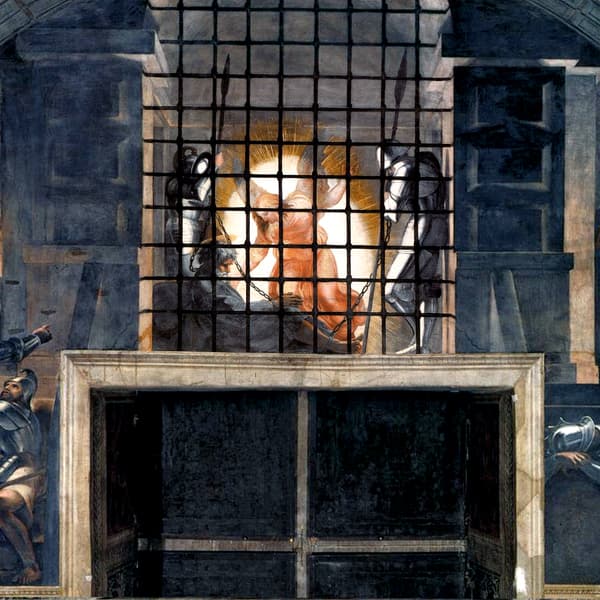
The Room of Heliodorus. Remember, these rooms were Pope Julius's personal apartments. In this room, he welcomed visitors for private audiences. Find a portrait of Julius.
He's in the painting opposite the windows. It's called "The Mass at Bolsena." Julius is the gray-bearded man kneeling piously before the altar. Julius was the pope who began building the new Saint Peter's Basilica. Besides being the church's spiritual father, Julius was also the biological father of several illegitimate children.
Read more...Show less
Find his daughter, Felice, who's portrayed on the left. She's kneeling. She's kneeling among the crowd with dark hair and dark clothes. Now focus on the lower right of the painting.
There, you'll find a young man who's looking directly out at us. That's a self-portrait of Raphael. Raphael lived a charmed life. He was handsome and sophisticated and soon became Julius's favorite.
Raphael painted masterpieces effortlessly. His many love affairs were legendary. In this different decade, he might have been thrown out of the church as a great sinner, but his devil-may-care personality seemed to epitomize the bold spirit of the times. Now, turn your attention to the painting on the opposite wall, the one that arches over the windows.
That's "The Liberation of Peter." Block the sunlight with your hand to see the drama unfold in three acts. In act one, the central scene, we see Peter, Jesus' right-hand man. He's the bearded guy, slumped over and chained to the wall. Then, in the middle of the night, an angel appears to rescue him.
It's easy -- the guards are asleep on their feet. To the right is act two. The angel leads him to safety, past the sleeping guards. Finally, on the far left, we see the final act.
Peter's long gone, and the guards take hell from their captain. Raphael makes this little play even more dramatic with his lighting design. He uses four different kinds of light. There's the moonlit sky on the left.
The captain's torch adds another set of light and shadows. There's the brilliant radiance of the angel. And there's the natural light spilling through the museum's window, dazzling the viewer. As you look at this painting, it's clear how Raphael's mastery of realism, rich colors, and sense of drama made him understandably famous.
Enter the next room, which contains Raphael's undisputed masterpiece. A heads-up -- this room will be the final stop on this audio tour. At that point, you'll be free to make your way to the Sistine Chapel, where you can continue by using my companion audio tour. By the way, there's also a convenient toilet just a few yards ahead. Now, find a spot amid the crowds to get as comfortable as you can. The Room of the Signatura
Room of Segnatura
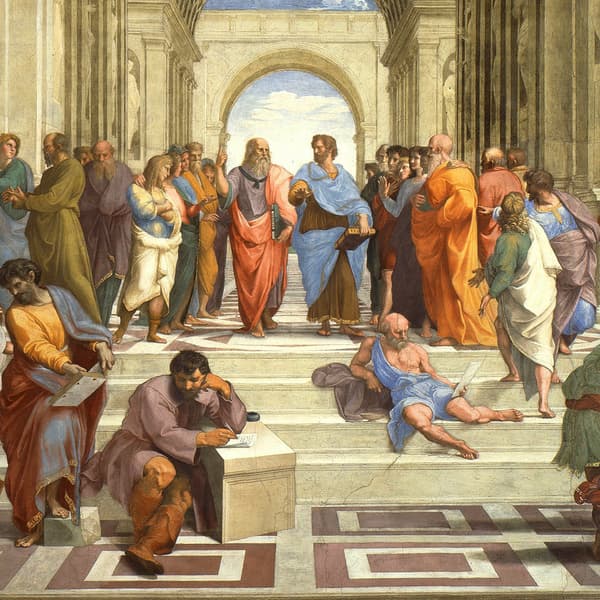
with the School of Athens. This room was the pope's private study and library, so Raphael depicted scenes featuring knowledge and high-minded debate. The frescoes, in both style and subject matter, sum up the spirit of the Renaissance. Start with the School of Athens, a scene that celebrates the great thinkers of ancient Greece.
Raphael imagines a mythical university where scientists and philosophers from the ages are gathered together in a kind of rock-and-roll heaven. In the center are Plato and Aristotle. Plato points up, indicating his philosophy that mathematics and pure ideas are the source of truth. Aristotle gestures down, showing his preference for hands-on study of the material world.
Read more...Show less
Now find their master, Socrates. He stands midway to the left, in green. He's debating the meaning of it all with his colleagues, ticking off arguments on his fingers. In the lower left, a man sits and writes in the textbook.
That's the mathematician Pythagoras. A squared plus b squared equals c squared. Exactly. A geometric formula that seemed heaven-sent to Renaissance minds.
Now look to the right. In the lower right is a bald man bending over. This is Euclid, using a compass to demonstrate a geometrical formula. There's another way to look at this who's-who of great minds.
You see, Raphael thought that Renaissance thinkers were as enlightened as the ancients. So he cast many of his contemporaries in the role of these enlightened people of the past. Take Plato, for example. With his long beard and receding hairline, he's clearly Leonardo da Vinci, the artist who most influenced the young Raphael.
And Euclid. Again, he's the bald guy in the lower right. Euclid is the architect Donato Bramante, who was designing the famous church currently under construction, St. Peter's Basilica.
In fact, this entire scene is set amid the arches and pillars Bramante would have seen in the ancient ruins littering the city of Rome in his day -- places like the Baths of Caracalla and the Basilicum Accentius. And these ruins likely inspired the design of Bramante's work in progress, St. Peter's. Now find Raphael himself in the scene.
His self-portrait is on the far right. He's the young man wearing a black beret and peering out. He portrays himself as the incarnation of the great Apelles, who painted Alexander the Great. The message was clear: the enlightened ancient world had been reborn in the Renaissance.
Now step back. If you can in all the crowds... Well, at least try to take in the whole scene. Raphael balances everything symmetrically.
He places a couple dozen figures to the left, a couple dozen to the right, with Plato and Aristotle dead center. Now focus on the square floor tiles in the foreground. If you laid a ruler over them and extended the line upward, it would run right to the center of the picture. Do you see that?
I do. Now put your ruler on the tops of the columns. Those lines all point down to the middle. Subconsciously, this creates the feeling of a world that's geometrically perfect.
All the so-called lines of sight draw our attention to Plato and Aristotle and to the small arch over their heads. It's almost like a halo over these two secular saints who dedicated their lives to the divine pursuit of knowledge. Pretty cool. But who's the guy who's sitting right up front and center, dressed in light purple and leaning on a block of marble?
Ah, yes. That's the brooding Greek philosopher Heraclitus. He was a last-minute addition to the scene. You see, just as Raphael was wrapping up the school of Athens, another painter was at work down the hall in the Sistine Chapel.
Raphael got a sneak peek at that artist's work. He was astonished. He returned to the school of Athens, scraped off a section of fresco, replastered it, and added this final figure. It's supposed to be Heraclitus, but everyone recognized him as none other than the great painter, sculptor, and poet, Michelangelo Bonarroti.
Now turn your attention to the opposite wall and the fresco known as La Disputa. As if to underline the idea that ancient philosophy and Christian thinking could coexist, Raphael painted La Disputa directly facing the school of Athens. Christ and the saints float atop the clouds in heaven, overseeing a pantheon of great thinkers on earth. In the lower left, a guy in blue and gold looks out as if to say, "Hey, the pagans had their school of Athens, but we Christians have this -- the school of heaven." The crowd in the scene is discussing the nature of the Eucharist, the communion wafer.
There it is, standing on the altar in the very center of the painting. In Christian thought, the communion wafer miraculously becomes the body of Christ, bringing a little bit of heaven into the material world. So Raphael's painting also connects heaven and earth. Follow the descending circles.
First, there's Jesus in a circular halo. Below him is a circle surrounding the dove of the Holy Spirit. This beams down toward the circular communion wafer on the altar. Balance and symmetry reign.
Saints to the left, saints to the right. Three angels in the upper left, another trio in the upper right. Even the books littering the floor seem artfully arranged. Most of all, everything in the painting radiates outward from this powerful communion wafer, uniting spirit and flesh, heaven and earth.
In these rooms, Raphael summed up the spirit of the Renaissance. He captures all that was good in the classical world and fuses it with Christian thought. The perfect symmetry echoes the geometrical order found in the world created by a perfect God. The paintings exude a spirit of learning, discovery, and the optimistic notion that man is a rational creature.
In a way, this is the feeling I take away from the entire Vatican Museums. By combining the classical and modern worlds, it's a celebration of both the divine and the divine creations of man. That's it. This audio tour ends here.
But of course, what's just ahead is the Sistine Chapel. For that, you'll need to download my companion audio tour of the Sistine Chapel. To get to the Sistine, simply continue through the final Raphael room and follow the signs to the Cappella Sistina, a few minutes' walk away. See you there!
We hope you've enjoyed this slice of Rome. Thanks to Jean Openshaw, the co-author of this tour. If you're planning more sightseeing, we have lots of audio tours available for Rome, including a walk through the heart of Rome, the Colosseum, the Roman Forum, the Pantheon, St. Peter's, the Vatican Museums and Sistine Chapel, as well as walks through Trastevere, the Jewish Ghetto, and the remains of Ostia and Pompeii.
In one day? No. Remember, this tour was excerpted from the Rick Steves Rome Guidebook, by Rick Steves and Jean Openshaw. For more details on eating, sleeping, and sightseeing in Rome, refer to the latest edition of that guidebook.
For more free audio tours and podcasts, and for information about our TV shows, bus tours, and travel gear, visit our website at ricksteves.com. This tour was produced by Cedar House Audio Productions. Grazie! Ciao!
And buon viaggio! Buon viaggio! Ciao! Ciao! Ciao! Ciao! Ciao!
Free
GPS-guided walking tour
No account needed. Walk at your own pace.
Free
14 stops ·