17 stops
GPS-guided
79 min
Duration
Free
No tickets
About this tour
A 17-stop walking tour through the heart of Italy. Visit Siena City Walk, City Hall , Fountain of Joy, and Via di Città — with narrated stories at every stop.
17 stops on this tour
Siena City Walk
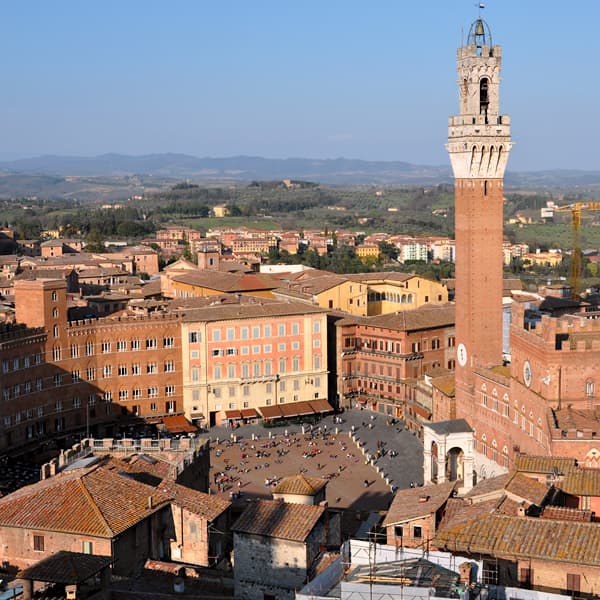
Siena City Walk Whenever someone in my office mentions Siena, someone else always seems to chime in, Siena, I love Siena. Located in the heart of Tuscany, Siena is historic, atmospheric, and laid-back, exactly the kind of Italy people dream about. Hi, I'm Rick Steves. Thanks for joining me on this walk through the core of Siena.
We'll start in the city center, the red-brick piazza known as Il Campo. From there, we'll explore the city's narrow lanes, soaking up the medieval ambiance from the days when Siena was one of Italy's most powerful cities. A highlight of our walk is the magnificent cathedral, or Duomo. We'll go inside to see a treasure chest of art, including works by Michelangelo, Donatello, and Siena's own master, Duccio.
Read more...Show less
Note that the Duomo interior is only open during daytime hours and requires a ticket, but you could easily do the Duomo apart from this tour. You can do the church portion of this tour during the day and do the rest at night, when the city streets are especially atmospheric. For those who dream of a fiat-free Italy, this pedestrian-friendly city is your place. As the city is perched atop three hills, Siena could qualify as Italy's ultimate hill town.
Now, let's get started as we tour the heart of this fascinating town with a modern sensibility and a medieval soul. Siena. To help us along the way, I've invited a good friend and virtual travel buddy. Welcome, Lisa.
Ciao, Riccardo. Lisa will give us helpful directions and sightseeing tips throughout the tour. And my first tip is to be sure you get our tour updates. Just press the icon at the lower right of your device.
You'll find any updates and helpful instructions unique to this tour. Things like closures, opening hours, and reservation requirements. There's also tips on how to use this audio tour and even the full printed script. Yes, so pause for just a moment right now to review our updates and special tips.
It's okay. We'll wait. And then... Let the tour begin! The tour begins.
Tour Begins: Il Campo
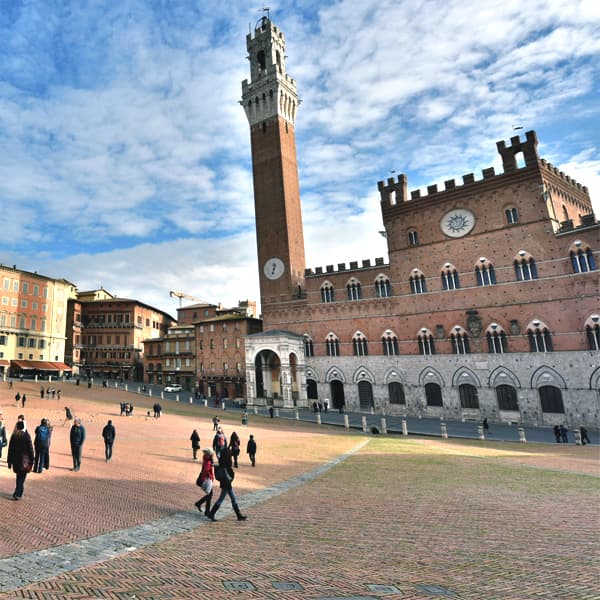
Il Campo. Start in the main square. Find a place right in the center and take in the 360-degree view. Dominating the square is the magnificent city hall with its soaring tower.
From there, the brick-paved square fans out almost like an amphitheater. All around, the square is enclosed by a curving arc of brown-colored palaces. Ric? This square is the heart of Siena, both geographically and metaphorically.
Read more...Show less
On the Siena city map, it sits right in the middle, surrounded by the various neighborhoods. The square still looks and feels like it did back in the 1300s, Siena's golden age. Back then, it was a city of rich bankers and businessmen. All Europe passed through here because Siena was situated on the main north-south highway to Rome.
With a population of 50,000, Siena was about as big as Paris. With a population of 50,000, Siena was about as big as Paris. With a population of 50,000, Siena was about as big as Paris. With a population of 50,000, Siena was about as big as Paris.
With a population of 50,000, Siena was about as big as Paris. With its large army, it was a rival of Venice, Genoa, and its closest neighbor, Florence. Ah, yes, Florence, my old nemesis. Yes, the two city-states became bitter enemies, as we'll soon see.
The focus of Il Campo is the city hall, not the cathedral, as with most European cities. That's significant. You see, originally, this area was far from the old city center, which gathered around the cathedral, or Duomo. Today's piazza was just a field, or campo, outside the former city walls.
But by the 1200s, the energetic city was expanding. This field became a thriving marketplace. Meanwhile, as Siena was becoming more democratic and secular, power was shifting away from the bishop and to the secular powers. By 1300, the center of the city had moved here, to Il Campo, and the focus was...
the city hall. Psst. By the way, folks, I've got a feeling Rick's gonna be talking a while, so feel free to wander around the square while he goes on about Il Campo. Uh, Lisa, who are you talking to?
Sorry, I'm here. Today, the square is arguably the best in Italy. The buildings and pavement are all a harmonious red-brown color. It's the same color as the soil they stand on, a color known to artists, as burnt Siena.
Yeah, I remember burnt Siena from my crayon box. Il Campo is still the city's gathering place. It's where locals text each other and say, meet you there in ten. It feels very relaxed.
I've actually seen people stretch out here like they're at the beach. Il Campo is the historic junction of Siena's 17 traditional neighborhoods, called Contradas. As we'll learn, these neighborhoods are fiercely competitive, but here at Il Campo, everyone can meet and put their guard down. It's considered neutral territory.
Il Campo is the site of Siena's international claim to fame, the Palio Horse Race. Twice each summer, crowds assemble here to watch horses race around the square. As big as this square is, it's still unbelievably small for a horse race. Yes, it is.
But picture the scene. For weeks, Siena's been building up for the race. Siena's been building up for the race. Siena's been building up for the race.
Siena's been building up for the race. Siena's been building up for the race. Siena's been building up for the race. Siena's been building up for the race.
Siena's been building up for the race. Of the 17 neighborhoods, 10 are selected. The tension builds. The horses are trained.
Jockeys are hired. Bets are placed. Il Campo is turned into a racetrack. They put up bleacher seats around the perimeter.
They haul in clay and pack it down to make the track. Mattresses are put up at the sharpest corners to protect the walls and the buildings. And the horses and riders, who often crash. Finally comes race day.
The crowds start arriving, very early. In the surrounding apartments, the owners have invited their friends to watch from the best spot in town, the balconies. Some splurge for a reserved bleacher seat. Everyone else packs into the center, where it's standing room only.
By evening, Il Campo is stuffed to the brim with 60,000 people. 60,000? Yes, 60,000 sweating, partying fans with noisemakers, neighborhood scarves. And straining bladders.
How do they do it? Depends. The horses are led in. Ten snorting horses, and they're very nervous riders.
They approach the starting line. The starting point is over there, by... Well, with your back to the city hall, it's on your left, near the upper left corner of the square. By the old pharmacy.
The horses line up. The crowd is hushed, and for a moment, you can hear a pin drop. Then they're off. The crowd roars, and the horses race like crazy, heading clockwise around the square.
The jockeys play. There's only one rule. There are no rules. Horses skid.
Horses tumble. Jockeys, forced to ride bareback, hang on for dear life, and many bite the dust. The horses go once around the square, about 400 yards. Then, once again, after a third lap, the crowd goes wild, waving their scarves as they approach the finish.
The horses streak across the finish line. A winner is declared, and the crowd goes berserk. Or rather, the winning contrada... After months of preparation, it's all over.
The whole thing took barely 90 seconds. The winner is awarded the traditional prize. By the way, the winner is not the first jockey. It's the first horse to cross the line, even if the jockey fell off.
The winner's prize is not money. It's a simple banner of the Virgin Mary. That's the so-called palio that gives the Palio di Siena its name. But the winning neighborhood has won something even more precious, bragging rights for the coming year.
And that's gone on here virtually every year for nearly 400 years. Now, let's turn our attention to the City Hall. The City Hall.
City Hall
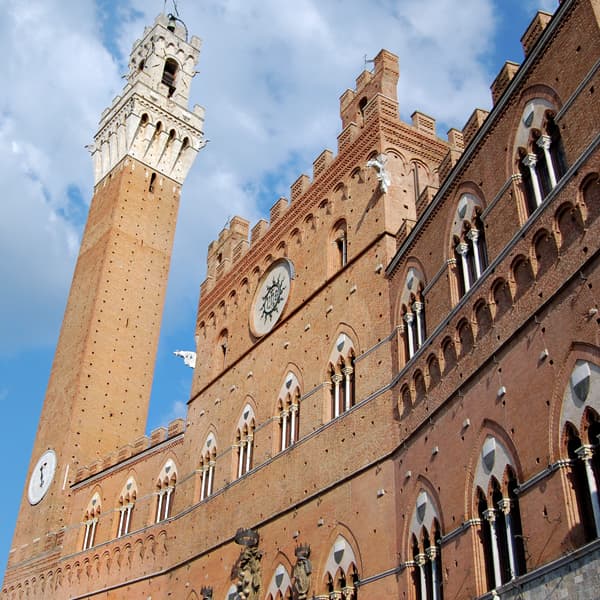
With its skyscraping tower, the City Hall is a place where the City Hall dominates the square. During Siena's Golden Age, around 1300, this was the center of the city. Even today, the whole focus of Il Campo flows down to the City Hall. The Sienese called their City Hall the Palazzo Pubblico, the Palace of the People.
In medieval times, that was a big deal. This magnificent building symbolized a republic whose people could govern themselves. They were independent from kings, popes, and rulers. And the Holy Roman Emperor, and proud of it.
Read more...Show less
Today, the building is still home to the city government. Inside, there's also a museum with a fascinating fresco showing 14th century Siena as a kind of utopia governed by enlightened citizens. It's clear that proud Siena considered itself the vanguard of Western civilization. And the exclamation point of that sentiment was that tower.
Yes. The tower was built around 1340 at 330 feet. It's still one of Italy's tallest towers. Or, rather, tallest secular towers.
In most cities, it was the church bell tower that was the biggest thing in town. This tower represents the rise of secular society, a movement that first appeared here in Tuscany, then spread through Europe with the Renaissance. This tower stands like a 330-foot Declaration of Independence as Europe moved out of medieval repression and into the modern age. By the way, you can climb the tower.
It's nearly 400 steps, but you're rewarded with one of Italy's best views. At the base of the tower is a small chapel. It was built in 1348. 1348, the year the bubonic plague swept through Europe.
Yes. This chapel was a way of thanking God for sparing Siena from the Black Death. Sparing them after it had already killed more than a third of the city. The plague was a watershed event in Siena's history, as we'll see later on.
They should also thank God that that heavy tower just plunked onto the city hall with no extra foundation still stands. These days, the chapel is used to bless the Palio contestants before the race. And it's also used as a temporary emergency room for doctors during the race. Now focus on the city hall's main decoration, a medallion with a stylized sun.
That's the logo of one of Siena's famous residents, Saint Bernardino. His mission was to bring peace between Italy's warring factions. Like the Montagues and Capulets in Romeo and Juliet. Or like Siena's warring neighborhoods.
Bernardino would invite the Contradas to meet here on Il Campo, neutral territory. He'd preach peace. They'd make up and seal it with what was called a baccio di pace, a sign of peace. a sign of peace.
a sign of peace. A kiss of peace. The sun logo became a symbol of the city. The most famous city symbol is the she-wolf.
Notice the two she-wolf gargoyles on either side of the sun. They lean out like they're saying, Hey, tyrants, don't mess with Siena. The city hall's windows are distinctly Sienese. They're divided into three windows each, all topped with a pointed arch.
Inside the arches are little black and white shields. These are another symbol of the city. And near ground level, notice the iron rings. Another city symbol?
Nope. Those are for tying up your horse. Oh. And the fixtures you see above them?
For torches? Nope. Those are for flags. Darn.
You'll see features like these on other old palazzos along our walk. Let's turn to one final highlight of the square. Locate the Fountain of Joy, it stands at the top of the square. It's that rectangular pool of water enclosed by white marble walls. The Fountain of Joy, or Fontegaya.
Fountain of Joy
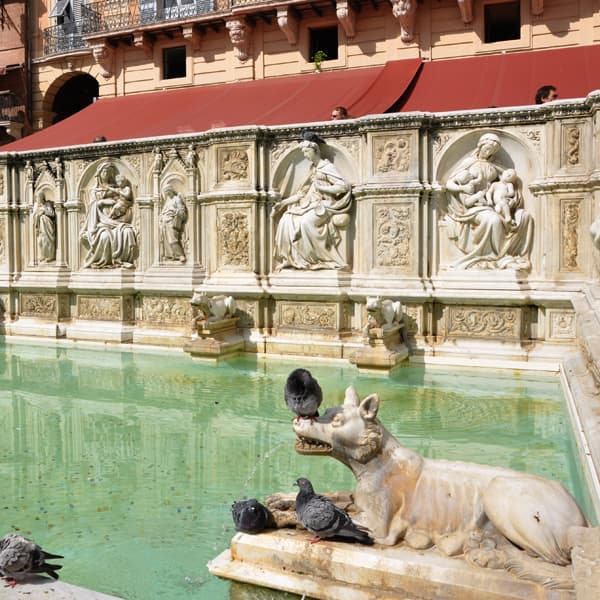
For six centuries, this public fountain has brought water and joy to countless citizens of Siena. It's a monument by and for the people. In the 1340s, the Sienese Republic financed a massive engineering project to bring fresh water to this spot from hillsides 15 miles away. Then, in 1419, the communal water source was decorated with this marble enclosure by the Sienese sculptor Jacopo della Quercia.
The Fountain of Joy got its name from the delight it gave the Sienese to have fresh water completely free. I can imagine old-time residents, gathering here to fill their jugs and just cool off. Della Quercia's carved reliefs link the Sienese with their illustrious past. In the center is the Virgin Mary.
Read more...Show less
She's seated, cradling baby Jesus. The other robed women represent virtues. To the right of Mary, Lady Justice, holding her scales and sword, oversees the free distribution of water to all. Other reliefs honor famous mothers through the ages, the bringers of life, and sustenance.
In a way, even the waterspouts are mothers of a sort. They're she-wolves, the legendary creature that raised Romulus and Remus, who founded Siena. Check out the relief on the far left. It shows God creating Adam by helping him to his feet.
It's said that this reclining Adam later influenced Michelangelo when he painted the Sistine Chapel. By the 1800s, the fountain was in need of repair, and they replaced it with this copy. The original statues are exhibited in a museum I'll point out later. Now step back and just check out the scene.
Locals still stop here for a drink, even the pigeons. They politely wait their turn, then tightrope down to the spout for a drink. The fountain of joy still reminds locals that life in Siena is very good. Let's leave Il Campo and explore more of the city.
To get oriented, stand with your back to City Hall. We'll exit uphill to the left. Start heading for that corner now. We're basically heading for the cathedral, or Duomo, and taking the scenic route.
Exit Il Campo going uphill on the widest ramp. After a few steps, you reach Via di Città. Turn left on Via di Città and start walking uphill. Via di Città
Via di Città
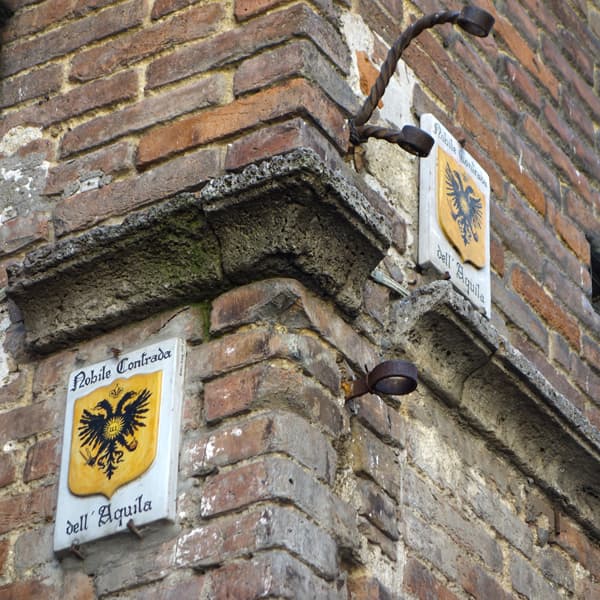
Work your way uphill, about 100 yards, heading toward where the street bends to the right. Via di Città is Siena's main street today, just as it has been for centuries. In fact, the city looks much as it did in the 1300s during Siena's Golden Age. There are brownstone palazzos that house apartments and shops.
And just as it has been for centuries, the 17 neighborhood divisions, the Contradas, are still strong. Each is a self-contained world with its own parish church, its own neighborhood well, and a square where people gather. Each is represented by a mascot, usually an animal, like an eagle, porcupine, unicorn, wolf, and so on. You'll see these symbols posted on many street corners.
Read more...Show less
Case in point, you'll soon reach a small intersection on the right. Pause here and look up. Find the tiny plaques on the buildings, on corners where street signs are posted. These plaques tell you which neighborhood you're in.
We've been walking through the Forest Contrada, shown by a green branch on an orange background. At this intersection, we'll be stepping from the Forest neighborhood into the Eagle Contrada. That would be a black eagle on a yellow background. You'll see more plaques like these, all along our walk.
Keep making your way uphill toward the bend in the street. Each Contrada has its unique colors. These colors are displayed by proud locals on flags, scarfs, and t-shirts. The Contradas still play an active role in the life of the city.
Contrada pride is evident year-round in Siena's parades. If you ever hear the thunder of distant drumming, make your way there. There's a good chance it's a Contrada on parade, featuring medieval banners and flag throwers. At some point in your visit, consider buying a scarf in Contrada colors and join in the fun of these lively neighborhood festivals.
When the road curves to the right, pause to take in the light gray palace on the left at number 89. The Kiji-Saraceni Palace.
Chigi-Saracini Palace
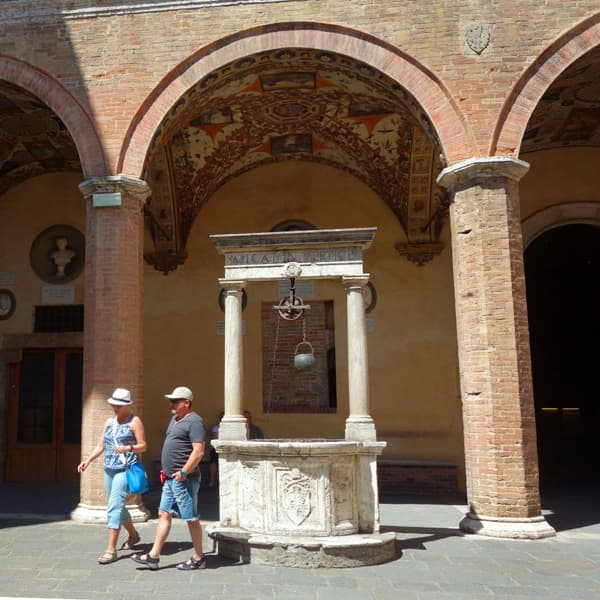
This fortified noble palace has a graceful curved facade that echoes the name of the city. It echoes the bend in the street. It dates from the 13th century and is typical of a rich man's home during the Golden Age. If it's open, step into the palace courtyard.
There you'll find a photogenic well. Mansions like this enjoyed a direct connection to the city aqueduct. The loggia is decorated with busts. These are patriarchs of the powerful Kiji-Saraceni family.
Read more...Show less
The vaults are painted in the popular Renaissance style called grotesque. They're not grotesque. They're pretty. No, grotesque is named for the style found in ancient Roman grottos.
Grottoesque or grotesque. What are those holes that look like pigeonholes? They're actually part of the original structure. They were used to hold wooden beams for scaffolding, both for the initial construction and for ongoing maintenance.
And the wire mesh of today keeps the pigeons from nesting. You got it. The palace's last owner, Count Kiji-Saraceni, loved music, and had no heirs. So he willed his estate to fund the music academy that operates here today.
It hosts festivals every summer with nightly concerts, international talent, and affordable tickets. Keep going up Via Dicita another 100 yards toward the next big intersection. As you walk, think about Siena today. Locals live completely modern lives behind these medieval facades.
Siena's population is about what it was back in the day. Back in medieval times, around 50,000. But only 18,000 of those live here in the center, within the old walls. Many people work, of course, in the tourist trade, manning shops and restaurants like those along this street.
If you own one of these homes in the city center, you have strict rules protecting the historic exterior. Everything has to still look like it did in the 1300s. All the shutters, for example, have to be the same color. This can be deceiving, making it look like one big building when it's actually subdivided into several separate apartments for different families.
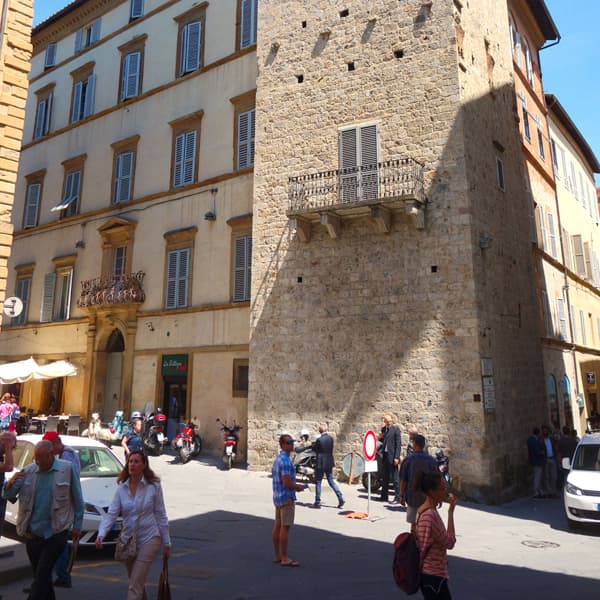
Inside, apartments have all the modern conveniences. And they're expensive, some of the most expensive in Italy. Keep going until you reach an intersection marked by a column with a wolf on top. The little square is called both Piazza di Postierla and Quattro Cantoni.
Take a moment to enjoy the fine palaces and bustling city. The city is a place where you can see the city. The city is a place where you can see the city. The city is a place where you can see the city.
The city is a place where you can see the city. The city is a place where you can see the city. The city is a place where you can see the city. The city is a place where you can see the city.
The city is a place where you can see the city. The city is a place where you can see the city. The city is a place where you can see the city. The city is a place where you can see the city.
The city is a place where you can see the city. The city is a place where you can see the city. The city is a place where you can see the city. The city is a place where you can see the city. The city is a place where you can see the city.
Piazza Quattro Cantoni
The city is a place where you can see the city. The city is a place where you can see the city. The city is a place where you can see the city. The city is a place where you can see the city.
The city is a place where you can see the city. The city is a place where you can see the city. The city is a place where you can see the city. The city is a place where you can see the city.
Read more...Show less
The city is a place where you can see the city. The city is a place where you can see the city. The city is a place where you can see the city. The city is a place where you can see the city.
The city is a place where you can see the city. The city is a place where you can see the city. The city is a place where you can see the city. The city is a place where you can see the city.
The city is a place where you can see the city. The city is a place where you can see the city. The city is a place where you can see the city. The city is a place where you can see the city.
The city is a place where you can see the city. The city is a place where you can see the city. The city is a place where you can see the city. The city is a place where you can see the city.
The city is a place where you can see the city. The city is a place where you can see the city. The city is a place where you can see the city. The city is a place where you can see the city.
The city is a place where you can see the city. The city is a place where you can see the city. The city is a place where you can see the city. The city is a place where you can see the city.
The city is a place where you can see the city. The city is a place where you can see the city. The city is a place where you can see the city. The city is a place where you can see the city.
The city is a place where you can see the city. The city is a place where you can see the city. The city is a place where you can see the city. The city is a place where you can see the city.
The city is a place where you can see the city. The city is a place where you can see the city. The city is a place where you can see the city. The city is a place where you can see the city.
The city is a place where you can see the city. The city is a place where you can see the city. The city is a place where you can see the city. The city is a place where you can see the city.
The city is a place where you can see the city. The city is a place where you can see the city. The city is a place where you can see the city. The city is a place where you can see the city.
The city is a place where you can see the city. The city is a place where you can see the city. The city is a place where you can see the city. The city is a place where you can see the city.
The city is a place where you can see the city. The city is a place where you can see the city. The city is a place where you can see the city. The city is a place where you can see the city.
The city is a place where you can see the city. The city is a place where you can see the city. The city is a place where you can see the city. The city is a place where you can see the city.
The city is a place where you can see the city. The city is a place where you can see the city. The city is a place where you can see the city. The city is a place where you can see the city.
The city is a place where you can see the city. The city is a place where you can see the city. The city is a place where you can see the city. The city is a place where you can see the city.
The city is a place where you can see the city. The city is a place where you can see the city. The city is a place where you can see the city. The city is a place where you can see the city.
The city is a place where you can see the city. The city is a place where you can see the city. The city is a place where you can see the city. The city is a place where you can see the city.
The city is a place where you can see the city. The city is a place where you can see the city. The city is a place where you can see the city. The city is a place where you can see the city.
The city is a place where you can see the city. The city is a place where you can see the city. The city is a place where you can see the city. The city is a place where you can see the city.
The city is a place where you can see the city. The city is a place where you can see the city. The city is a place where you can see the city. The city is a place where you can see the city.
The city is a place where you can see the city. The city is a place where you can see the city. The city is a place where you can see the city. The city is a place where you can see the city.
The city is a place where you can see the city. The city is a place where you can see the city. The city is a place where you can see the city. The city is a place where you can see the city.
The city is a place where you can see the city. The city is a place where you can see the city. The city is a place where you can see the city. The city is a place where you can see the city.
The city is a place where you can see the city. The city is a place where you can see the city. The city is a place where you can see the city. The city is a place where you can see the city.
The city is a place where you can see the city. The city is a place where you can see the city. The city is a place where you can see the city. The city is a place where you can see the city.
The city is a place where you can see the city. The city is a place where you can see the city. The city is a place where you can see the city. The city is a place where you can see the city.
The city is a place where you can see the city. The city is a place where you can see the city. The city is a place where you can see the city. The city is a place where you can see the city.
The city is a place where you can see the city. The city is a place where you can see the city. The city is a place where you can see the city. The city is a place where you can see the city.
The city is a place where you can see the city. The city is a place where you can see the city. The city is a place where you can see the city. The city is a place where you can see the city.
The city is a place where you can see the city. The city is a place where you can see the city. The city is a place where you can see the city. The city is a place where you can see the city. The city is a place where you can see the city.
Duomo Exterior
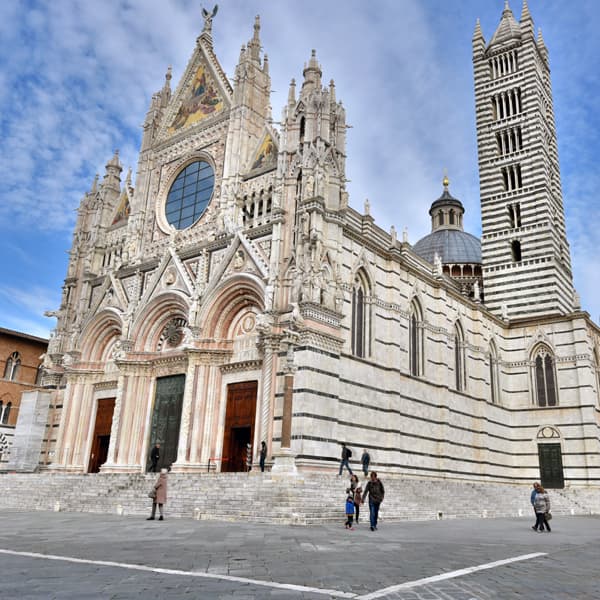
The Duomo Exterior The city is a place where you can see the city. The city is a place where you can see the city. The city is a place where you can see the city. The city is a place where you can see the city.
The city is a place where you can see the city. The city is a place where you can see the city. The city is a place where you can see the city. The city is a place where you can see the city.
Read more...Show less
The city is a place where you can see the city. The city is a place where you can see the city. The city is a place where you can see the city. The city is a place where you can see the city.
The city is a place where you can see the city. The city is a place where you can see the city. The city is a place where you can see the city. The city is a place where you can see the city.
The city is a place where you can see the city. The city is a place where you can see the city. The city is a place where you can see the city. The city is a place where you can see the city.
The city is a place where you can see the city. The city is a place where you can see the city. The city is a place where you can see the city. The city is a place where you can see the city.
The city is a place where you can see the city. The city is a place where you can see the city. The city is a place where you can see the city. The city is a place where you can see the city.
The city is a place where you can see the city. The city is a place where you can see the city. The city is a place where you can see the city. The city is a place where you can see the city.
The city is a place where you can see the city. The city is a place where you can see the city. The city is a place where you can see the city. The city is a place where you can see the city.
The city is a place where you can see the city. The city is a place where you can see the city. The city is a place where you can see the city. The city is a place where you can see the city.
The city is a place where you can see the city. The city is a place where you can see the city. The city is a place where you can see the city. The city is a place where you can see the city.
The city is a place where you can see the city. The city is a place where you can see the city. The city is a place where you can see the city. The city is a place where you can see the city.
The city is a place where you can see the city. The city is a place where you can see the city. The city is a place where you can see the city. The city is a place where you can see the city.
The city is a place where you can see the city. The city is a place where you can see the city. The city is a place where you can see the city. The city is a place where you can see the city.
The city is a place where you can see the city. The city is a place where you can see the city. The city is a place where you can see the city. The city is a place where you can see the city.
The city is a place where you can see the city. The city is a place where you can see the city. The city is a place where you can see the city. The city is a place where you can see the city.
The city is a place where you can see the city. The city is a place where you can see the city. The city is a place where you can see the city. The city is a place where you can see the city.
The city is a place where you can see the city. The city is a place where you can see the city. The city is a place where you can see the city. The city is a place where you can see the city.
The city is a place where you can see the city. The city is a place where you can see the city. The city is a place where you can see the city. The city is a place where you can see the city.
The city is a place where you can see the city. The city is a place where you can see the city. The city is a place where you can see the city. The city is a place where you can see the city.
The city is a place where you can see the city. The city is a place where you can see the city. The city is a place where you can see the city. The city is a place where you can see the city.
The city is a place where you can see the city. The city is a place where you can see the city. The city is a place where you can see the city. The city is a place where you can see the city.
The city is a place where you can see the city. The city is a place where you can see the city. The city is a place where you can see the city. The city is a place where you can see the city.
The city is a place where you can see the city. The city is a place where you can see the city. The city is a place where you can see the city. The city is a place where you can see the city.
The city is a place where you can see the city. The city is a place where you can see the city. The city is a place where you can see the city. The city is a place where you can see the city.
The city is a place where you can see the city. The city is a place where you can see the city. The city is a place where you can see the city. The city is a place where you can see the city.
The city is a place where you can see the city. The city is a place where you can see the city. The city is a place where you can see the city. The city is a place where you can see the city.
The city is a place where you can see the city. The city is a place where you can see the city. The city is a place where you can see the city. The city is a place where you can see the city.
The city is a place where you can see the city. The city is a place where you can see the city. The city is a place where you can see the city. The city is a place where you can see the city.
The city is a place where you can see the city. The city is a place where you can see the city. The city is a place where you can see the city. The city is a place where you can see the city.
The city is a place where you can see the city. The city is a place where you can see the city. The city is a place where you can see the city. The city is a place where you can see the city.
The city is a place where you can see the city. The city is a place where you can see the city. The city is a place where you can see the city. The city is a place where you can see the city.
The city is a place where you can see the city. The city is a place where you can see the city. The city is a place where you can see the city. The city is a place where you can see the city.
The city is a place where you can see the city. The city is a place where you can see the city. The city is a place where you can see the city.
Duomo Interior: Sights in the Nave
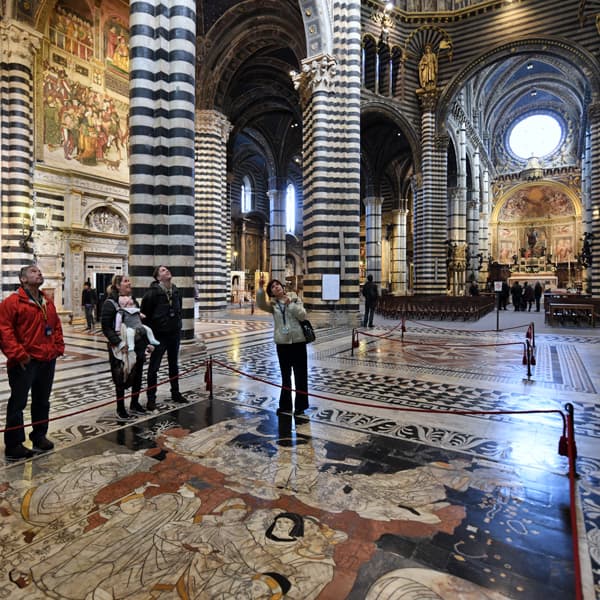
The city is a place where you can see the city. The city is a place where you can see the city. The city is a place where you can see the city. The city is a place where you can see the city.
The city is a place where you can see the city. The city is a place where you can see the city. The city is a place where you can see the city. The city is a place where you can see the city.
Read more...Show less
The city is a place where you can see the city. The city is a place where you can see the city. The city is a place where you can see the city. The city is a place where you can see the city.
The city is a place where you can see the city. The city is a place where you can see the city. The city is a place where you can see the city. The city is a place where you can see the city.
The city is a place where you can see the city. The city is a place where you can see the city. The city is a place where you can see the city. The city is a place where you can see the city.
The city is a place where you can see the city. The city is a place where you can see the city. The city is a place where you can see the city. The city is a place where you can see the city.
The city is a place where you can see the city. The city is a place where you can see the city. The city is a place where you can see the city. The city is a place where you can see the city.
The city is a place where you can see the city. The city is a place where you can see the city. The city is a place where you can see the city. The city is a place where you can see the city.
The city is a place where you can see the city. The city is a place where you can see the city. The city is a place where you can see the city. The city is a place where you can see the city.
The city is a place where you can see the city. The city is a place where you can see the city. The city is a place where you can see the city. The city is a place where you can see the city.
The city is a place where you can see the city. The city is a place where you can see the city. The city is a place where you can see the city. The city is a place where you can see the city.
The city is a place where you can see the city. The city is a place where you can see the city. The city is a place where you can see the city. The city is a place where you can see the city.
The city is a place where you can see the city. The city is a place where you can see the city. The city is a place where you can see the city. The city is a place where you can see the city.
The city is a place where you can see the city. The city is a place where you can see the city. The city is a place where you can see the city. The city is a place where you can see the city.
The city is a place where you can see the city. The city is a place where you can see the city. The city is a place where you can see the city. The city is a place where you can see the city.
The city is a place where you can see the city. The city is a place where you can see the city. The city is a place where you can see the city. The city is a place where you can see the city.
The city is a place where you can see the city. The city is a place where you can see the city. The city is a place where you can see the city. The city is a place where you can see the city.
The city is a place where you can see the city. The city is a place where you can see the city. The city is a place where you can see the city. The city is a place where you can see the city.
The city is a place where you can see the city. The city is a place where you can see the city. The city is a place where you can see the city. The city is a place where you can see the city.
The city is a place where you can see the city. The city is a place where you can see the city. The city is a place where you can see the city. The city is a place where you can see the city.
The city is a place where you can see the city. The city is a place where you can see the city. The city is a place where you can see the city. The city is a place where you can see the city.
The city is a place where you can see the city. The city is a place where you can see the city. The city is a place where you can see the city. The city is a place where you can see the city.
The city is a place where you can see the city. The city is a place where you can see the city. The city is a place where you can see the city. The city is a place where you can see the city.
The city is a place where you can see the city. The city is a place where you can see the city. The city is a place where you can see the city. The city is a place where you can see the city.
The city is a place where you can see the city. The city is a place where you can see the city. The city is a place where you can see the city. The city is a place where you can see the city.
The city is a place where you can see the city. The city is a place where you can see the city. The city is a place where you can see the city. The Piccolomini Altar is made of white Carrara marble and stands three stories high.
It was built in the 1480s for a well-known member of that Sienese family who became pope. The Piccolomini Altar's most interesting feature is a single statue by Michelangelo. In 1501, 25-year-old Michelangelo was asked to sculpt 15 statues for this altar, but he ended up finishing only one statue. It's St.
Paul in the lower right. Bearded Paul poses with great gravitas. He gazes into the distance like the visionary he was. The statue of Paul is clearly better than the bland popes above him.
They look bored. Yes, look closer. Paul has the intense look of Michelangelo's Moses. He has the broken-nosed self-portrait of the sculptor himself and the relaxed hand of Michelangelo's David.
In fact, it was because Michelangelo got sidetracked doing David that he ended up abandoning this less interesting altar. Now shuffle farther up the nave and grab a seat under the dome. ♪ ♪ ♪ ♪ ♪ Sights near the dome.
Sights near the Dome
Start by gazing up into the dome. It sits on a 12-sided base. The dome from the mid-1200s was the marvel of its day. It was built almost a century before Brunelleschi's dome in Florence.
The technology of creating a truly hemispherical dome like the ancients had yet to be mastered. This dome has a coffered ceiling. Or does it? You're right, Lisa.
Read more...Show less
Looking closely, you realize those are not sunken panels. They're actually a painted illusion. They narrow as they rise to make the dome look taller than it actually is. The church is glorious, but it was intended to be even bigger than it is today.
As you stand here under the dome, look to the right, into the right transept. Now mentally blow a hole in that wall. You'd be looking down what was to have been the long central nave of a massive church. That is, if the original plan had been completed.
More on that later. Ooh, the suspense is killing me. Now let's see some nearby sights. Start by gazing to the far end of the church at the round, stained-glass dome.
The rose window, made in 1288, is 20 feet across. It's a kaleidoscope of colors and intricate designs. And if you zoomed in close, you'd see that the central panel depicts the Virgin Mary. She's dressed in blue and red, sitting in a holy bubble as winged angels carry her up to heaven.
The window is dedicated to the Virgin Mary. As is the church and the city itself. The work is by Siena's groundbreaking artist, Duccio. Around the year 1300, Duccio pioneered the revolution in realism and 3-D, setting the stage for the Renaissance a century later.
The best place to see Duccio's work is in the nearby Duomo Museum. I'll point it out later on our tour. There you can get up close with this rose window, because that's where the original rose window is displayed. This one is a copy.
Our next sight is found almost directly under the dome. As you face the rose window, it's behind you. Look for two big pillars. These have long wooden poles attached to them.
These 60-foot-tall wooden poles are dear to any Sienese heart. They're flagpoles, 700 years old. These flagpoles once held the battle flags of Siena's arch rival, Florence. They were captured during the pivotal battle of Monteperti of 1260.
It was fought near Siena. Picture the scene: 20,000 Sienese soldiers squared off against 35,000 Florentines. All day long, the two armies battled back and forth. Then, one brave Sienese soldier had a plan.
He went undercover, dressed up like a Florentine, snuck up behind Florence's standard-bearer, and attacked. Florence's flag fell to the ground. The army was rattled. It lost its bearings and confidence, and Siena seized the moment to counterattack and win.
It was the city's finest hour. This victory at Monteperti ushered in Siena's 80-year golden age. And today, the flagpoles stick out here like an eternal flip of the finger to their perennial rival, Florence. Our next sight is a big marble pulpit decorated with statues and reliefs.
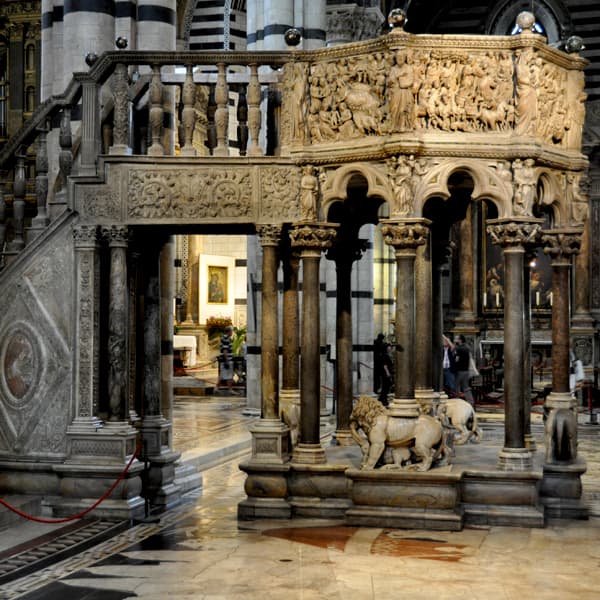
To find it, start walking toward the rose window. You'll see the big pulpit on the left-hand side between the pillars. Pisano's Pulpit The pulpit is octagonal, made of the finest Carrara marble. Its columns rest on the backs of lions, symbols of Christianity triumphant.
Like the lions, the church symbolically devours heresy and nurses its cubs. This pulpit from 1268 is the work of Nicola Pisano. He's often called the Giotto of Sculpture, a precursor of the Renaissance. He revived the ancient style, like the classical columns.
And the relief panels are carved in the style of an ancient sarcophagus. Get a closer look at the relief panels. These seven panels tell the life of Christ in vivid detail. Parts of these were done by Nicola's son, Giovanni.
Wasn't it Giovanni who also worked on the church façade? Hey, I'm paying attention. Now find the crucifixion panel. It's the one facing the nave under the eagle.
Look how realistic Christ's anatomy is, surprisingly so for a work more than a century before the start of the Renaissance. Now find Mary at the bottom left of the scene. She swoons into the arms of the other women. It's a very human outburst of emotion.
And to the right, a Roman soldier turns to look back. It's an easy, natural motion that breaks the stereotype of stiff, frontal medieval statues. Now walk around to the other side of the pulpit. Check out the two panels that face the rose window.
It's judgment day. On Christ's right hand are the saved. They look almost hypnotized by Christ's awesome presence. And on the left hand of Christ are the damned.
They look desperate as they anticipate their fate. The budding realism of scenes like these was very influential. It influenced generations of Renaissance sculptors to come, sculptors like Donatello and even Michelangelo. There are more sites nearby in the left transept, that is, left as you face the rose window.
Our first site is just a few steps from the pulpit, so head into the left transept. In the floor pavement, you'll find a large, colorful mosaic panel. "The Slaughter of the Innocents." Sites in the transepts.
Sights in the Transepts
We'll start with the floor mosaic of "The Slaughter of the Innocents." Wicked King Herod is on the left, sitting enthroned amid Renaissance arches. He orders the massacre of all babies to prevent the coming of the promised Messiah. It's a chaotic scene of angry soldiers, grieving mothers, and butchered babies. The mosaic was a constant reminder to locals that a republic ruled by a tyrant always brings trouble.
The work by a Sienese artist of the late 1400s clearly shows Renaissance realism and human emotion. The mosaic was inlaid with a colorful array of marble. The yellow marble is a Sienese specialty quarried nearby. Our next site is in the chapel, located just a few steps further away from Pisano's pulpit.
Read more...Show less
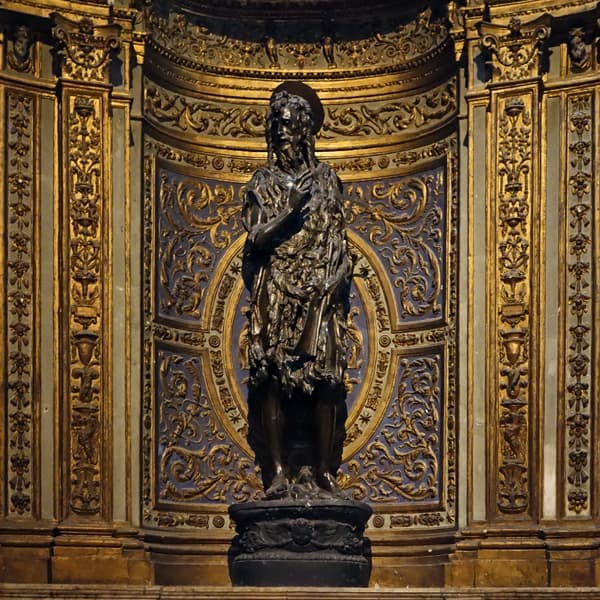
Find the chapel door and go in. This chapel is dedicated to St. John the Baptist. His right arm is supposedly housed here.
But the chapel's highlight is a bronze statue of John. Donatello's "St. John the Baptist." The rugged saint is dressed in his famous rags. Appreciate John's expressive face, his emaciated flesh, and the realistic stance of his body.
His ragged clothes ripple, like they're animated from within by John's strong spirit. The statue is by Donatello, the great Florentine sculptor who pioneered Renaissance realism two generations before Michelangelo. When Donatello created this, he was an old man, and his style was becoming passé in his hometown of Florence. But Siena treated him like a rock star.
He was invited to build bronze doors for this church. He didn't complete the doors, but he did finish this bronze statue in 1457. Now look up, high above in the small dome of this chapel. I like the little cherubs playfully dangling their feet.
Our next site is directly across the church in the right transept. So leave the chapel and start crossing the church. As you go, you'll pass once again into the big central dome, the one with the fake coffers. We're headed for another chapel that's well worth a short walk.
So far in this church, we've seen medieval art, we've seen Renaissance masterpieces, and now we'll head to the next phase: Baroque. Cross beneath the dome and into the right transept. Directly ahead is a chapel called the Chapel of the Madonna del Voto. The Chapel of the Madonna del Voto.
Step inside and get a feel for why Bernini is considered the greatest Baroque sculptor. It's sumptuous, a riot of colors, statues, and architecture. Bernini was from the 1600s. For his artistry and enormous influence, he's often called the Michelangelo of the Baroque era.
He designed this chapel in the 1660s for a member of Siena's wealthy Chigi family, a man who became pope. Take a few steps toward the altar. Now look back. There are two Bernini statues.
Mary Magdalene stands in a state of spiritual ecstasy, flickering like a flame up toward heaven. St. Jerome lovingly embraces a small crucifix. He plays the crucifix like a violinist lost in beautiful music.
Now look around. The chapel is classic Baroque, a multimedia extravaganza. There's colored marble, statues, stained glass, paintings, a dome. Ooh, yeah, I love the dome.
And now, back on earth, there's the glorious altar. Golden angels are holding up the golden frame of an icon-like painting. Taken together, the whole chapel creates an artistic ensemble that offered the faithful a glimpse of heaven. It's enough to make even a Lutheran light a candle.
Don't push it. Now focus on that framed painting at the altar. This is the Madonna del Voto. Mary and baby Jesus are both adorned with real crowns of gold and jewels.
The painting is not by Bernini. It's much older, by a Sienese master from the mid-13th century. In typical medieval fashion, the scene is set in the golden light of heaven. Mary looks like an Orthodox icon.
Almond eyes, long fingers, and golden folds in her robe. She tilts her head and looks out sympathetically, ready to listen to the prayers of the faithful. This painting of Mary is dear to the hearts of the Sienese. For untold generations, they've prayed to her for help.
It was Mary, the Sienese believe, who helped them win the Battle of Monteperti, which ushered in their golden age. The Madonna del Voto is the Mary to whom the Palio is dedicated. And for generations, she's helped everyday people in need. So in thanks, locals come to this chapel of the Madonna del Voto to give offerings.
That's what a voto is. To leave an offering yourself, you can put a coin in the box to light a candle. Let's see some of the offerings that Siena's faithful have left. Step back outside the chapel door.
As you exit, glance to the left. You'll see some silver hearts and medallions displayed on the wall. On the other side of the chapel door, you'll find a glass display case on the wall that looks like a jewelry store's front window. This has rings, necklaces, and other precious items given to Mary by grateful worshipers.
For our final sight, return to the nave. Make your way back toward the Piccolomini altar. That's the one we saw earlier with the Michelangelo statue. Next to that altar is the site we'll see next: the Piccolomini Library.
Both the altar and the library were dedicated to that powerful family from Siena. The Piccolominis were nobles who got rich back in medieval times as bankers and businessmen. They went on through the centuries to produce many important people: two popes, many generals, bishops, even a famous opera singer. Once at the Piccolomini altar, to the right of that is a door leading into our next sight: the Piccolomini Library. Step inside. The Piccolomini Library.
Piccolomini Library
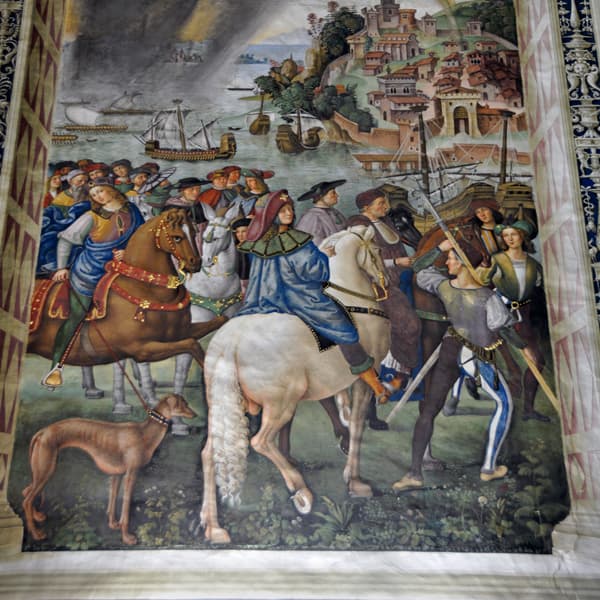
This rich, colorful library captures the exuberant, optimistic spirit of the 1400s, when humanism and the Renaissance were born. The library was built by the Piccolomini family, to honor one of their most illustrious family members: Aeneas Piccolomini. Aeneas was born in Siena and grew up to be one of the most celebrated people of his age, Pope Pius II. Because of his brilliant intellect, expansive personality, and passion for life, this pope set the tone for the early Renaissance.
In fact, many have called Pope Pius II the first humanist. The radiant frescoes that line the walls tell the pope's story, in ten episodes. They're the work of the painter Pintoricchio, done around the year 1500. Each of the ten scenes is a dramatic snapshot, and each scene is framed with an arch, as if the artist was opening a window onto the spacious 3D world that we inhabit.
Read more...Show less
Start with the episode to the right of the window. From there, we'll follow the frescoes clockwise. The first scene shows the young Piccolomini lad atop a white horse. Scene 1: Leaving for Basel.
The story begins long before he became Pope Pius II. Here, he's just a restless 27-year-old kid from Siena named Aeneas. We see young Aeneas mounting his white horse and riding off. He pauses to take one last look back at his hometown.
Look at that ridiculous hat. What a dandy. Aeneas is leaving home to seek his fortune. This was just the first of many adventures in his sometimes sunny, sometimes stormy life.
Aeneas has soaked up all the classical learning that Siena has to offer. Now he heads off to a church council meeting in Switzerland. He makes a name for himself by taking a bold stand. He actually sides against the reigning pope.
Now move clockwise to the next scene, where Aeneas meets the King of Scotland. Aeneas is the one with the long brown hair. Scene 2: Meeting James II. Aeneas charmed King James and his well-dressed, educated, worldly crowd.
Aeneas would go on from here to visit London, survive a storm at sea, and broker a peace deal between England and France. And he even found time to father two illegitimate children. So they say. In the next scene, Aeneas is kneeling as he receives a crown from a king.
Scene 3: Aeneas crowned by Frederick III. When we next see Aeneas, he's a thousand miles away, in Vienna. Here he found work as a secretary to the German king. In this fresco, Aeneas kneels to receive the laurel crown of a poet.
Aeneas had become famous as the author of a best-selling novel, "The Tale of Two Lovers." The story featured a married Sienese woman. It was a kind of Madame Bovary of the 15th century. Aeneas also penned romantic poetry, racy stories, and a comedic play. He's best known for his frank memoirs telling the unvarnished story of his colorful life.
Now in his mid-30s, Aeneas was the toast of Europe -- an esteemed writer, speaker, diplomat, a lover of the arts, and of pretty women. In other words, he was the very essence of his times -- a uomo universale. That's right -- a Renaissance man. But as he approached age 40, his life changed dramatically.
I can't wait. Let's head to the next scene. Scene 4: Submitting to Pope Eugene IV. Here, Aeneas kneels before the pope and kisses his foot.
Hmm. What's up with that? Well, nearing 40, Aeneas had a spiritual crisis. He became convinced he was a miserable sinner.
He quickly journeyed to Rome, where he begged the pope for forgiveness. He repented for all the wild things he'd done in his youth, especially chasing after women. Well, actually, in his autobiography, he confessed that it was time to change anyway. He'd lost interest in women, and they lost interest in him.
Aeneas gave up wine, women, and song and became a priest. Next, Aeneas is back in Siena. Scene 5: Introducing Frederick III and Eleonora. Aeneas rose quickly through the church ranks.
Here, you can see he's already bishop of Siena. You can see his white-pointed bishop's hat. Notice this cathedral's bell tower. It's in the distance.
Aeneas was now a man of the cloth, but he never gave up his secular connections and romantic spirit. Here, he's welcoming his old friend the emperor to his hometown. Aeneas offered Siena as a romantic getaway for Frederick and his fiancée. Aeneas was a real schmoozer.
He always seemed to make the scene at every important event in Europe. And his star was rising. Turn to the next scene. Scene 6: Aeneas made cardinal.
Here, he kneels before the pope. His head is shaved, and his hands are joined in humble prayer. He's being made a cardinal, receiving the traditional red hat. Notice how the artist uses all the latest 3-D effects.
Floor tiles and ceiling coffers create receding lines that lead into the distance. He tears down palace walls in order to let us peek inside, witnessing the day's events, both big and small. In the next panel, Aeneas reaches his crowning achievement. Scene 7: Aeneas Piccolomini becomes Pope Pius II.
In 1458, at age 53, Aeneas was elected Pope Pius II. Carried in triumph, he blesses the crowd. As pope, he spoke out against enslaving, newly baptized natives in the New World. But, surprisingly, given his wild youth, his reign was rather conservative.
One of his first acts as pope was to crack down on heresies. Including some of the very anti-pope doctrines he himself had championed in his youth. Move to the next scene. Scene 8: He proclaims a crusade.
As pope, he called upon all of Europe's leaders. To send troops on a crusade. The mission? To liberate the Christian city of Constantinople.
Modern-day Istanbul. Which had recently fallen to the Ottoman Turks. In the next scene, Pope Pius introduces us to another famous citizen born in Siena. Scene 9: He canonizes Saint Catherine.
From his papal throne, Aeneas looks down on the mortal remains of a woman much beloved throughout Europe. Catherine of Siena. Here, Aeneas proclaims Catherine a saint, nearly a century after her death. The corpse clutches her symbol, the lily.
The well-dressed candle holders in the foreground pose proudly. Catherine was born, raised, and died right here in Siena. Her piety inspired popes and kings to find peace in war-torn Europe. More on Catherine later.
Another cliffhanger. For now, we arrive at the final chapter in the long, strange trip of Aeneas Piccolomini. Scene 10: He arrives in Ancona. Old and sick, the pope now has to be carried everywhere on a litter.
He's preparing to board a ship to fight the Turks in the crusade. It would prove to be his final adventure. The crusade petered out, and Aeneas, disheartened, died. But his legacy of humanism lived on.
Countless generations read his memoirs and were inspired to live lusty lives of their own. His pagan spirit fueled the growing Renaissance. Even though Aeneas himself became a pious pope late in life, he never lost his frank and self-assured perspective. He wrote, "I do not deny my past.
"True, I have been a great wanderer, "wandering away from the right path. "At least I realize it." There's no better legacy for this Renaissance man than this rich library. Before leaving the library, circle around a second time to appreciate the collection of musical manuscripts. These are made of sheepskin and beautifully illuminated, or illustrated.
They're huge! Yes, that's so many singers could read off the same single sheet of music at the same time. I know a little music, but these notes don't make a lot of sense to me. That's because 15th-century Italians used a sliding C clef, not the fixed C clef or F or G clefs that musicians know today.
This early clef marked middle C, and the melodies could be chanted in relation to it. So the monks knew how to instantly transpose what was written here to the right key. Get up close and appreciate the fine-painted decorations, the miniature figures. Check out the gold-leaf highlights.
Ooh, I like this one -- in the fourth case to the right of the window. Yes, check out that blue god of wind with the big hair -- totally wild. By the way, the blue tones are made from especially precious lapis lazuli, an expensive pigment imported all the way from Afghanistan. All of this exquisite detail was lovingly crafted by Benedictine monks for the glory of God.
At this point, our tour leaves the church, so start heading outside. If you'd like to linger, press pause. Otherwise, turn to the next track, where Rick and I will lead you to the next site and explain things along the way. The Unfinished Church
Unfinished Church
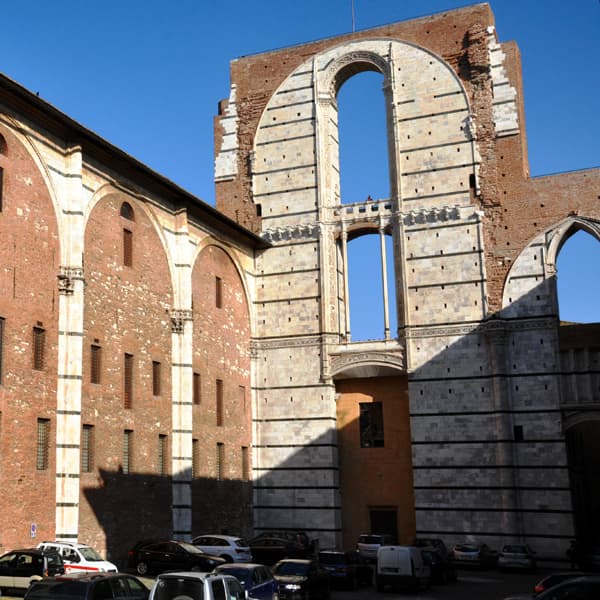
Whether you've just finished touring the church interior or you're picking up the tour from Track 8, our next stop is outside the Duomo. It's along the church's right side -- that's the east side -- in Piazza Jacopo della Quercia. So start making your way there. For those still inside the church, you'll exit through the main door and make a U-turn left.
As you make your way to Piazza Jacopo della Quercia, consider the tragic tale of Siena's downfall. It starts in the early 1300s with Siena in the midst of its golden age. As we've seen, it had a brand-new city hall, a proud tower, and a public water system. The population was nearing 70,000, and this church, the Duomo, was glorious, with a soaring bell tower, a groundbreaking pulpit, and Duccio's radiant stained-glass window.
Read more...Show less
Just a reminder -- as you exit the church, make a U-turn left. The church was glorious, but the Sienese wanted more. You see, their arch-rival Florence had begun building an even bigger cathedral. Proud Siena decided to top them.
They'd expand their Duomo and make it even bigger than the one in Florence -- in fact, the biggest church in all of Christendom. They began construction, and then -- well, that construction zone is basically what we'll see now. Find a place along the east side of the church in Piazza Jacopo della Quercia. There's a huge wall that sticks out from the side of the church at a 90-degree angle.
It's made of white columns filled in with brick. This piazza, now a parking lot, is all that remains from that proposed church expansion. You can still see some of the unfinished construction, like the green- and white-striped columns and arches. They were built to be part of the church, but they were never finished and are now filled in with brick.
Find the set of white stones in the pavement. These mark where a row of pillars would have been. There are a few window frames, but they were never filled with stained glass. And there's no roof at all.
But stand here and envision the size of this audacious vision. Had the church extension been built, this parking lot would have been the new nave. At the far end, at the white wall with windows open to the sky, that wall would have been the entrance. Worshippers would have entered from there and walked up the grand nave to stand under the church's dome.
So today's cathedral, though huge, would have been little more than the transepts. But obviously, their grand plans ended in disaster, the disaster known to Europe as the Black Death. The Bubonic Plague. In 1348, Siena was a wealthy city with 70,000 people.
Two years after the plague struck, it was 45,000. Siena never recovered. The Sienese saw the plague as a sign from God, punishing them for their pride. It killed the city's will.
They canceled their plans for a bold church and humbly faded into the background of Tuscan history. Before we move on, look at the unfinished entrance. Note the blue sky where the windows would have been. And ponder the struggles, triumphs, and failures of the human spirit.
Ooh, heavy. From here, we'll continue exploring more Siena backstreets. On the next track, Rick and I will guide you there. The sights on the way to Piazza di Independenza.
Sights on Way to Piazza di Indipendenza
Before leaving Piazza Jacopo della Quercia, take note of a couple of things. The enjoyable Duomo Museum is here, just under the unfinished wall, though we won't go inside. Inside, you can see art treasures from the church. You can get up close and personal with Pisano's original church statues and with Duccio's original rose window.
The highlight is Duccio's majestic painting of Mary. It's called the Maestà. Now, look way up. On your right, at the highest part of the wall.
Read more...Show less
That's one of the best viewpoints in the entire city. And you can access it from inside the Duomo Museum. Let's start out toward Piazza di Independenza, a 10-minute walk away. Make your way toward the back end of the church.
You'll exit the piazza through a doorway in the unfinished wall. As you pass through that doorway, veer left and find the marble staircase that goes downhill along the side of the church. From here, you can understand the problems with building a church that was just too big for this tiny hilltop. See how the church sticks out high above the lower street level.
They built a big church anyway and propped it up with huge foundations. Start down the stairs. On your left, you'll pass the entrance to the church crypt. The cathedral crypt was actually a church back in the 12th century.
It was filled in with dirt to prop up the Duomo. Today, you can go inside and see the oldest frescoes in town. Continue down the stairs, nicknamed "The Steps of St. Catherine." She would have climbed them each day on her walk from home to her work in that medieval hospital by the Duomo entrance.
At the bottom of the stairs, directly under the back end of the Duomo, you'll find the church's baptistery. This tucked-away cave of art is also part of the new church's foundation. It has an ornate ceiling and a baptismal font by Della Quercia, Ghiberti, and Donatello, an incredible early Renaissance masterpiece. Which we won't see because we're moving on.
At the base of the stairs, keep going straight ahead. As you keep walking, get ready for some quick directions. First, jog right on Via dei Pellegrini. Now, turn immediately left and into a short tunnel.
I'm with you. Keep going. Make your way through the tunnel and down Via di Diacetto. Keep going.
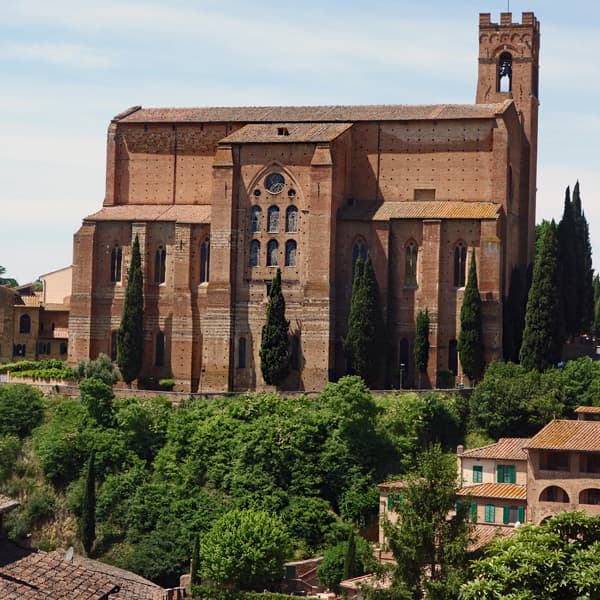
Just ahead on Via di Diacetto, you'll find a viewpoint on your left. Stop here for a beautiful view of the city. Gazing into the distance, you'll see the towering brick Church of San Domenico. This Dominican church houses a few relics of St.
Catherine of Siena. On display is a page from her devotional book. And you can see her thumb in a reliquary. And the highlight is Catherine's head.
Seriously? Yes. What you actually see is a clay mask that surrounds her skull. But you can see her actual teeth showing through, and it is her head.
Oh, my goodness. Let's continue on, walking toward Piazza di Independenza. Rick, tell us more about St. Catherine.
Catherine was born in 1347 here in Siena. She was the child of a humble dyer of wool. At age 16, she became a Dominican nun. For the next three years, she locked herself away, living the life of an ascetic.
This culminated in her experiencing a supernatural vision. She saw herself getting married, and her bridegroom was none other than Jesus Christ. Oh, my goodness. Later, she had another vision.
This was a heavenly command. She was instructed to find peace for a war-ravaged Italy. She began writing eloquent letters to Europe's movers and shakers -- kings, bishops, and popes. They were so moved that Catherine was invited to see the pope.
She traveled to Avignon in France, where the pope had taken up residence -- a move that bitterly divided Europe. Catherine charmed the pope and his court with her intelligence, sincerity, and reputation for holiness. Still only in her 20s, she achieved her greatest triumph. She convinced the pope to return the papacy to Rome.
Shortly after that, she died -- only 33 years old. And was later made a saint by Siena's Pope Pius II, as we saw inside the church. Today, Catherine is revered as the patron saint of Europe. Via di Diecetto leads into a big square -- Piazza di Independenza. ♪♪ Piazza di Independenza.
Piazza di Indipendenza
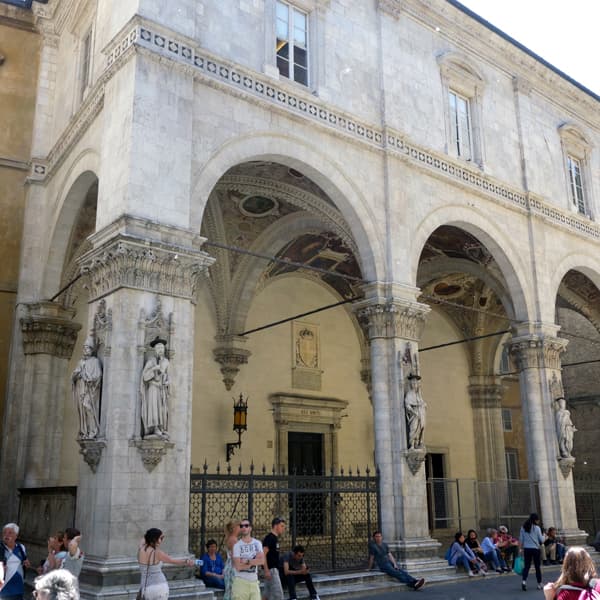
The piazza celebrates the creation of the modern Italian nation in 1870. It's marked with a loggia -- that is, a shaded arcade with three arches. Under the arcade are busts of the first two Italian kings. Stacking history, that 19th-century neo-Renaissance loggia is topped by a Gothic palace.
That, in turn, is topped by an even older medieval tower. Turn right and start heading downhill. Go down Via dei Termini, one short block. We're headed back in the direction of Il Campo in the center of town.
Read more...Show less
For eight centuries, this neighborhood has been a bustling business center of the town. Remember, Siena sat along the Via Francigena. That was the main thoroughfare that ran from England through France, Switzerland, and the Alps all the way to Rome. It brought countless pilgrims, and they brought money.
At the T-intersection, turn left. You're back on Via di Citta, the town's main street. As you walk up Via di Citta, you'll catch glimpses on the right of Il Campo. We're right in the center of Siena.
A few steps further on the right, pause at another fancy loggia with three arches. This is the loggia della mercanzia, or loggia of the merchandise. Here, businessmen would display their goods in shaded comfort. The impressive structure was built in around 1420 as a kind of headquarters for the union of merchants.
Yet another example of an early secular building for common workers. It was perfectly located here on Siena's main street next to Il Campo and right by the main intersection of the town. You can see that Y intersection just up ahead. By the way, the loggia, once for merchants, was subsequently purchased by Siena's nobility.
It then became the clubhouse of the local elites. To this day, it's a private ritzy and notoriously out-of-step-with-the-times men's club. The inscription over the door reads "Gli Uniti." I guess that whether it's merchants, nobles, or good old boys, the motto still applies: "Let's stick together." Our tour continues just a few steps past the loggia at the Y intersection. The intersection of Via Banchi di Sopra
Intersection
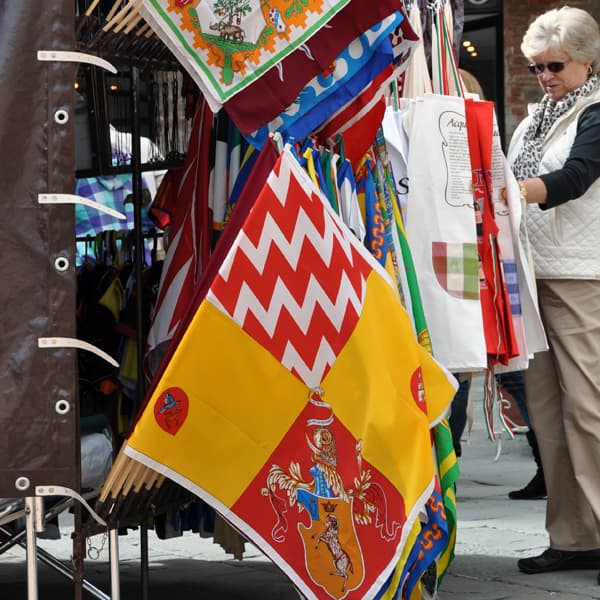
and Via Banchi di Sotto. In medieval times, this was a main intersection, just as it is now. These two streets brought pilgrims and other travelers into the city from the Via Francigena. To the left, going uphill, is Via Banchi di Sopra, which means "upper row of banks." To the right, downhill, is Via Banchi di Sotto, the "lower row of banks." Both streets were once lined with tables or benches to display their merchandise.
In Italian, these benches are called banchi. Whichever route pilgrims took on their way to the Duomo, they couldn't get away from Siena's aggressive salesmen. These merchants paid rent to the city to put their bench out. By the way, if the owner neglected to pay the rent for his space, thugs came along, took his bench, and broke it.
Read more...Show less
Where are you going with this? They took his bench -- that's "banco" -- and broke it -- "rotto." "Banco rotto." That's where we get our English word for... Bankrupt! Exactly.
Utterly fascinating. At least, that's a story that tour guides just love to tell. Let's start heading up Via Banchi di Sopra -- that is, veering left and going uphill. For centuries, Via Banchi di Sopra has been lined with shops.
Originally, back in medieval times, the Sienese specialty was selling simple wool clothing. As you can see now, strolling up this street, it's got high fashion and Siena's finest shops. In the evening, this street is a main drag for strolling locals who just love to grab an ice cream cone to go and make the scene for their passeggiata. Ooh, can we stop here, on the right, at Nannini's, at number 24?
Yes. If it's open, let's go inside and head for the back. Nannini's is a venerable café and pastry shop, or pasticceria. It's famous among locals for its traditional Sienese sweets.
For a closer look, go all the way to the back and turn left. Here you'll find Sienese cantucci -- that's biscotti with almonds baked in. Those biscotti, invented right here in this region, are now found in coffee shops all over the world. The Sienese love to dunk them into the dessert wine, or vinsanto.
Nannini also sells traditional ricciarelli, or almond cookies. And there's panforte, a dense fruitcake with nuts that's especially popular at Christmas time. You can buy a small slice here for just a few euros. When you're ready, exit the store.
Turn right and continue up the street. We're now walking through a new neighborhood district. This is the Contrada of the Owl. Their colors are red and black.
Traditionally, each contrada had a specialty trade. These were the shoemakers. And their community center is just ahead. The street opens up into a small square -- Piazza Tolomei, marked with another she-wolf column.
The imposing building with the column statues and pediment is the Tolomei Family Palace. It's now a community center for the Owl Contrada. The she-wolf column serves as the Owl's bulletin board. They post their flags, wedding announcements, births, obituaries, and community festivals here.
Keep going up the street. We're headed to the final stop on our tour. Fittingly, we're passing by Siena's finest stretch of old palaces. Remember, Siena got rich by trading with medieval pilgrims.
By 1300, it was one of Europe's most powerful and progressive cities. They built the city hall and the tower, and they were constructing a cathedral that would be the biggest in the world. But then came the plague. Indeed.
The 1348 plague devastated Siena. In the chaos, Florence got the upper hand on its arch rival. With the help of Spain, the Florentines conquered the struggling city-state of Siena, and Siena faded into irrelevance. But Siena's loss became our sightseeing gain.
Because the city was just too poor to rebuild, they ended up pickled in a medieval brine. Today, Siena is a delightful mix of medieval ambiance and modern energy. Like the Palio, it's not just some hokey tourist event. The Contradas get into it as much now as they did centuries ago.
And on the day of the big race, when you're packed into that square with 60,000 people, believe me, you feel it. Medieval Siena still lives. Via Banchi di Sopra opens up into another charming square. ♪♪ ♪♪ ♪♪ ♪♪ ♪♪
Piazza Salimbeni
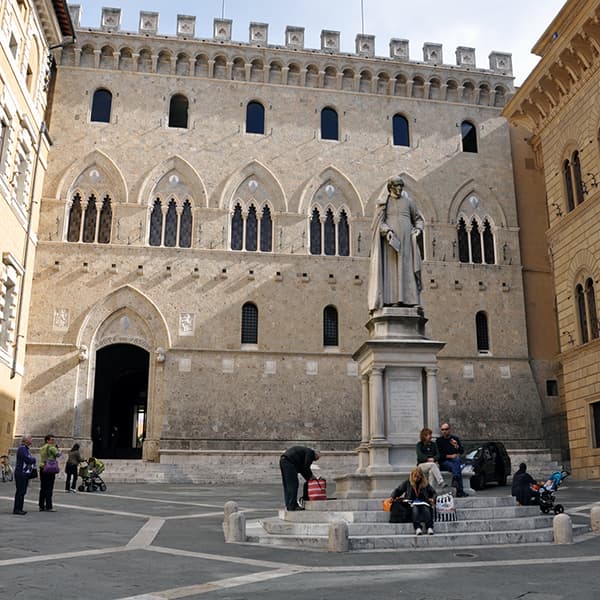
Piazza Salimbeni. This square captures the essence of Siena's greatness. It's bounded on three sides by three old palazzos. Note the three styles.
There's a Gothic palace in the middle. Its windows have pointed arches and are divided into three. Medieval-style crenellations adorn its roofline. To the right is a Renaissance palace, with round arches and, across the roofline, a row of Roman emperor busts.
Read more...Show less
The third palace, to the left, is Mannerist. Built after the Renaissance, it has a mix of elements. The palaces were once home to powerful families. The palace on the right was built by a Piccolomini descendant who served as Pope Pius II's treasurer.
The Gothic palazzo in the center was of the Salimbeni family, who were some of Siena's first bankers. This square is all about banking. In 1419, the Salimbeni established a bank here, at their palace on this hill, the Banca Monte. Notice the Fort Knox-style base of the building.
In 1472, the Sienese Republic chartered it, making it a kind of community bank for common people. It made sense that banking was largely invented here in Siena. The Sienese merchants sold products to foreigners, which required money changers, which led to banks. As Siena was a secular town, they were more than willing to loan money and charge interest, something prohibited in the Bible.
In 1674, this bank was made still richer by the powerful Duke of Tuscany. After Italy united in 1870, the bank expanded still more. It acquired the name we know it as today: the Banca Monte di Paschi di Siena. You can see the name written over the door.
Today, this palazzo is still the world headquarters of a bank that's been in continuous operation for over 500 years. It's the oldest bank in the world. The offices now include all three palaces, which are joined by interior passages. The Banca Monte di Paschi is one of Italy's top handful of banks.
And the statue in the middle of the piazza? That completes the banking theme. It honors Archdeacon Bandini, a well-known Sienese economist who invented the concept of collateral. Our walk is almost done.
But of course, there's much more in Siena to see. Directly across from Piazza Salimbeni, a steep little lane called Costa dell'Incrocetta leads straight to that big Dominican church we saw earlier from the viewpoint. The one with the head of St. Catherine of Siena.
And her teeth. Oh, my goodness. Also across from the piazza, behind the green newsstand, is the most elegant grocery store in town. Run by a group of local producers, it's almost like a museum of local olive oil, wines, and the like.
Now, with this walk, you've got the lay of the land. You're ready to delve into this great city. And with that, Siena waits for you. When will you realize?
Siena waits for you. We hope you've enjoyed your Siena City walk. Thanks to Jean Openshaw, the co-author of this tour. If your travels extend beyond Siena, we have more audio tours for Florence, Assisi, and other spots in Italy.
Remember, this tour was excerpted from the Rick Steves' "Florence and Tuscany Guidebook," co-authored with Jean Openshaw. For more details on eating, sleeping, and sightseeing in Siena and environs, refer to this year's edition of that guidebook. For more free audio tours and podcasts, and for information about our TV shows, bus tours, and travel gear, visit our website at ricksteves.com. This tour was produced by Cedar House Audio Productions. Grazie. Arrivederci. And buon viaggio.
Free
GPS-guided walking tour
No account needed. Walk at your own pace.
Free
17 stops ·