11 stops
GPS-guided
2.8 km
Walking
1 hour
Duration
Free
No tickets
About this tour
Amsterdam's gritty multicultural south — fresh stroopwafels at Europe's largest street market, craft beer in a converted nunnery, and streets named for every Dutch Golden Age painter.
11 stops on this tour
Heineken Experience
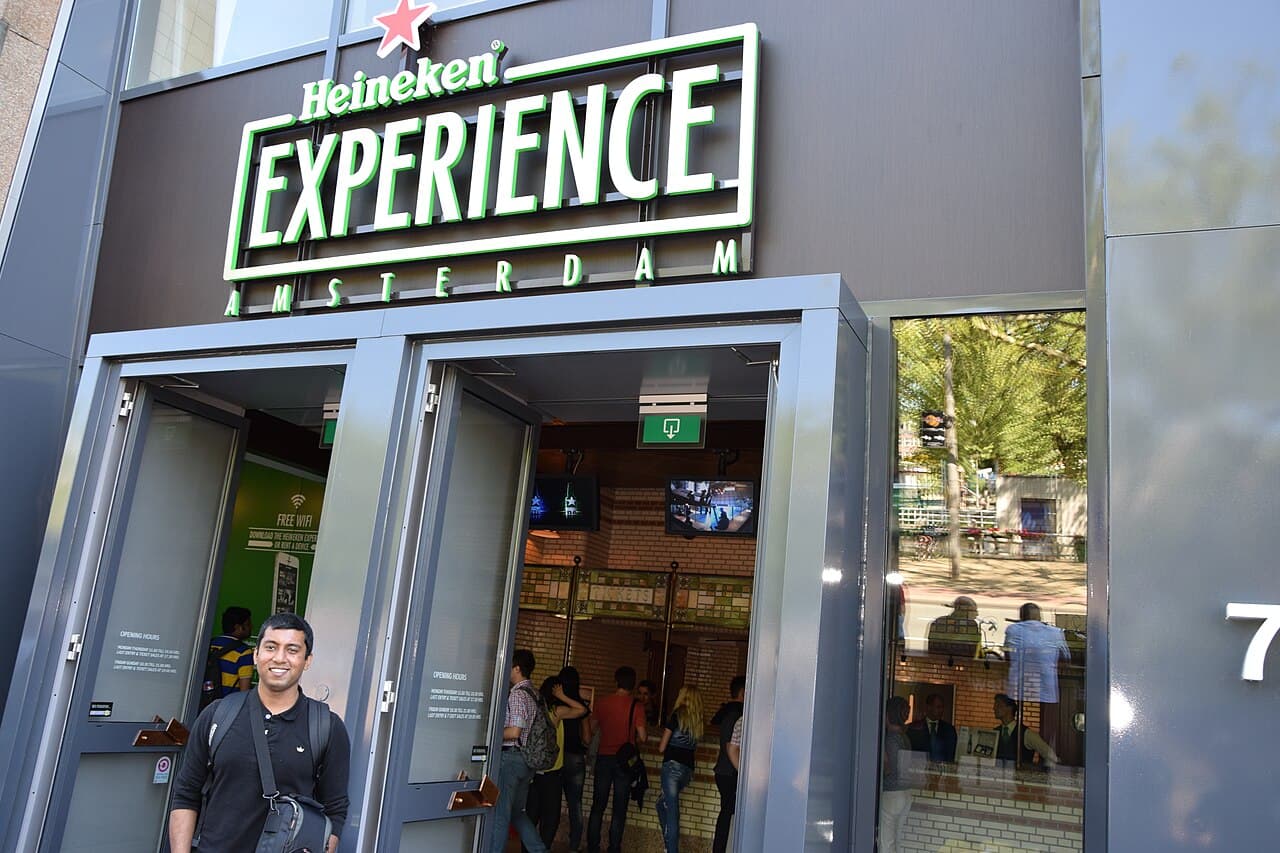
You're standing on the Stadhouderskade, right in front of a massive red-brick building with the word Heineken splashed across it. This is where one of the world's most recognisable beers was born — and it's also where our walk through De Pijp begins. Take a moment to look up at the facade. See those arched windows and that ornate brickwork? This wasn't built to be a tourist attraction. It was built to brew beer. A lot of beer.
Here's the story. In eighteen sixty-four, a twenty-two-year-old named Gerard Adriaan Heineken bought an existing brewery called De Hooiberg — that's Dutch for "the Haystack" — which had been operating on this spot since fifteen ninety-two. Think about that. When Gerard walked in, this brewery was already older than the Taj Mahal. But young Gerard had ambitions far beyond Amsterdam. He moved operations to this larger site on the Stadhouderskade in the early eighteen seventies and got serious about science. In eighteen eighty-six, a researcher named Doctor Hartog Elion — who had trained under Louis Pasteur himself — developed a proprietary yeast strain in the Heineken laboratory. They called it Heineken A-yeast, and here's the wild part: it's still used in every single bottle of Heineken brewed today. One yeast strain, a hundred and forty years of continuous use.
Read more...Show less
The brewery pumped out beer on this site for over a century, right in the middle of the city. On December thirtieth, nineteen eighty-seven, the very last batch — called Brouwsel fourteen sixty-six — rolled off the copper kettles. Production moved to the town of Zoeterwoude, south of Leiden, and this building reopened as a visitor centre in nineteen ninety-two, eventually becoming the Heineken Experience you see today.
Now, you might be wondering — why is a beer factory the gateway to De Pijp? Because this neighbourhood was literally built around industry and workers. De Pijp went up in the eighteen seventies to house the rapidly growing population that places like this brewery employed. The name means "the Pipe" — probably a reference to the long, narrow streets that funnel through the neighbourhood like, well, pipes.
Alright, let's head into De Pijp proper. Walk to the right of the brewery building, heading south along Ferdinand Bolstraat. In about a hundred metres, the street opens up into a lively square. That's our next stop — Marie Heinekenplein.
Marie Heinekenplein
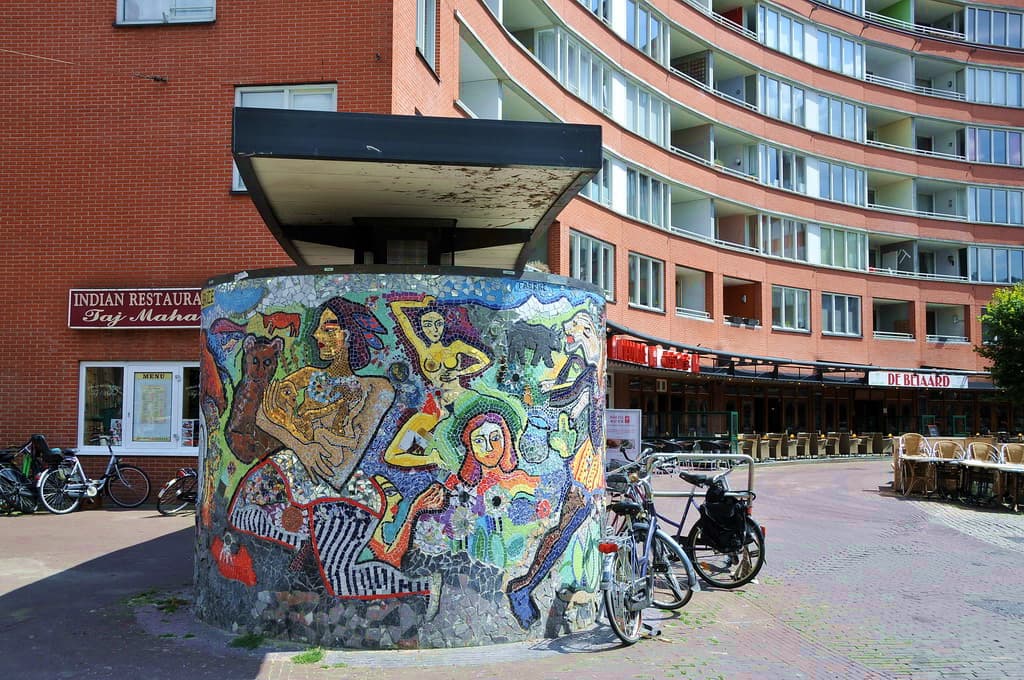
Welcome to Marie Heinekenplein. You're standing in one of De Pijp's main social hubs — a wide, open square buzzing with cafe terraces, especially if the sun is out. Find a spot where you can see the whole square, maybe near one of the benches along the edge.
Now, who was Marie Heineken? You'd be forgiven for assuming she was the beer magnate's wife. She wasn't. Marie Heineken was actually Gerard's cousin, born in eighteen forty-four right here in Amsterdam, on the Korte Prinsengracht. And she wasn't in the beer business at all — she was a painter. A talented one, known for her detailed still lifes. She picked up a brush as a teenager, with her earliest work dating from eighteen fifty-nine, and kept painting for the rest of her life until she died in nineteen thirty at the age of eighty-five.
Read more...Show less
But here's the really juicy part of this square's history — the naming drama. When the old brewery was partially demolished in nineteen eighty-eight and this space was created, the city needed a name. The first proposal? Nelson Mandela Square. This was the early nineties — Mandela had just been freed from prison and was a global icon. But then Winnie Mandela was convicted in nineteen ninety-one of kidnapping and assault in connection with the death of fourteen-year-old James Seipei, and the plan was quietly shelved. Then someone suggested just calling it Heinekenplein — simple, right? Nope. Amsterdam has a rule: you can't name a street after a living person or a commercial company. So the city got creative and landed on Marie Heineken, the painter cousin. The square was officially named in nineteen ninety-four.
Look around you. On a warm day, this square transforms into one massive outdoor living room. The terraces fill up, people spill out onto the pavement with beers and bitterballen. This is De Pijp's personality in a nutshell — casual, social, unpretentious. The neighbourhood earned the nickname "Amsterdam's Latin Quarter" because, like its Parisian counterpart, it attracted students, artists, and bohemians who were drawn to the cheap rents and lively cafe culture.
Now, from the square, head east along Albert Cuypstraat. You'll see it branching off to your right — it's the street with all the market stalls. Walk straight into the heart of it. You can't miss it.
Albert Cuyp Market
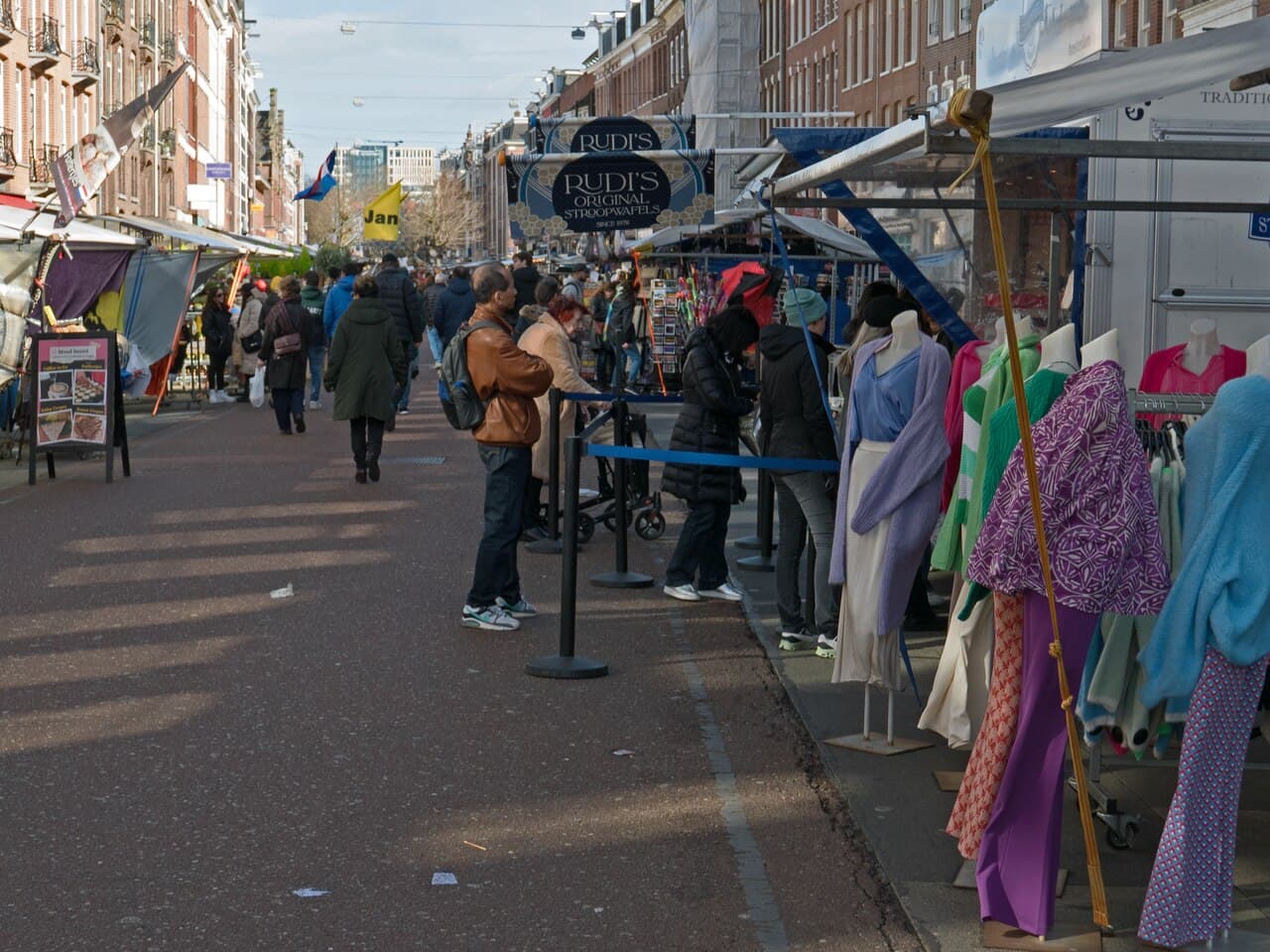
You're now standing in the middle of the Albert Cuyp Market — or Albert Cuypmarkt, as the locals say it. This is the largest daily street market in the Netherlands, stretching about a third of a kilometre with roughly two hundred and sixty stalls, six days a week, Monday through Saturday.
Take a breath. Seriously. What can you smell? If you're near the middle, it's probably a mix of fresh stroopwafels, fried fish, Surinamese roti, and flowers. This market is Amsterdam in concentrate.
Read more...Show less
The street is named after Aelbert Cuyp, a seventeenth-century landscape painter from Dordrecht, born in sixteen twenty. He was one of the Dutch Golden Age greats — known for his luminous riverscapes bathed in golden light. He actually studied with Rembrandt's circle and was sometimes called the Dutch Claude Lorrain. Funny enough, after marrying a wealthy widow in sixteen fifty-eight, he pretty much stopped painting. Apparently, when you marry rich in the Golden Age, you retire to church committees.
But the market itself has a separate origin story. Back in nineteen oh five, the city formalised what had been a chaotic mess of pushcarts and street vendors into an official market. By nineteen twelve, the city council made it a daily market. At the time, it was actually the smallest market in Amsterdam. And now? It's the biggest. That's a comeback story.
Here's what you need to do. Find a stroopwafel stall — there are several, but look for Rudi's Original Stroopwafels near number one eighty-two, the building with the golden angel on top. Rudi's family has been pressing stroopwafels here since nineteen seventy-eight. Watch them pour the caramel syrup onto a fresh waffle, press it, and hand it to you warm. A stroopwafel eaten cold from a packet and a stroopwafel eaten warm from the press are two completely different foods. This is one of those foods you absolutely must eat on this walk.
While you eat, look around at the stalls. You'll see everything from Gouda cheese wheels to Moroccan spices to knock-off designer sunglasses to fresh herring served raw with onions and pickles — another Dutch classic you should try if you're feeling brave.
When you've had your fill, continue walking along the market in the same direction, then take a left turn south onto Eerste van der Helststraat. Walk about a hundred metres down and you'll see Sarphatipark ahead. But first, on your right at Sarphatipark thirty-four, you'll spot a beautifully minimal cafe. That's our next stop.
Scandinavian Embassy
You've arrived at Scandinavian Embassy, tucked right here at Sarphatipark thirty-four, looking out over the park. If you want to pop in for a coffee, now's a good time — but even from outside, this place tells an important story about what De Pijp has become.
Scandinavian Embassy opened in twenty thirteen, founded by Nicolas Castagno, who was the Swedish Brewers Cup Champion that same year. The concept was simple but radical for Amsterdam at the time — take the Scandinavian approach to specialty coffee, where every cup is treated with the seriousness of a fine wine, and pair it with seasonal, Nordic-inspired food in a stripped-back, intimate space.
Read more...Show less
Look at the interior through the window if you're not going in. Clean lines, natural materials, lots of light. It's the antithesis of the traditional Amsterdam brown cafe with its dark wood and cigarette-stained walls. And that contrast tells you everything about De Pijp's evolution. This neighbourhood went from being one of Amsterdam's poorest districts — built cheaply in the eighteen seventies to house factory workers — to one of its most desirable. The same apartments that were considered cramped and undesirable a century ago now sell for eye-watering prices. And where workers once grabbed a quick jenever at a corner bar, you now have people debating the merits of Ethiopian single-origin pour-overs.
But here's what's interesting: Scandinavian Embassy isn't some corporate chain that moved into a gentrified neighbourhood. It was part of a wave of independent, quality-obsessed small businesses that transformed De Pijp from the inside. The owners source beans exclusively from top Scandinavian roasteries — places like Tim Wendelboe in Oslo and Drop Coffee in Stockholm — and they change their offerings seasonally. If you're a coffee person, this is genuinely one of the best cups you'll find in Amsterdam.
Whether you grab a coffee or not, take a moment to appreciate the view from here across to Sarphatipark. That green oasis is where we're heading next.
Walk across the street and enter the park through the nearest gate. Head toward the monument you'll see in the centre — the one that looks like a small classical temple.
Gerard Douplein
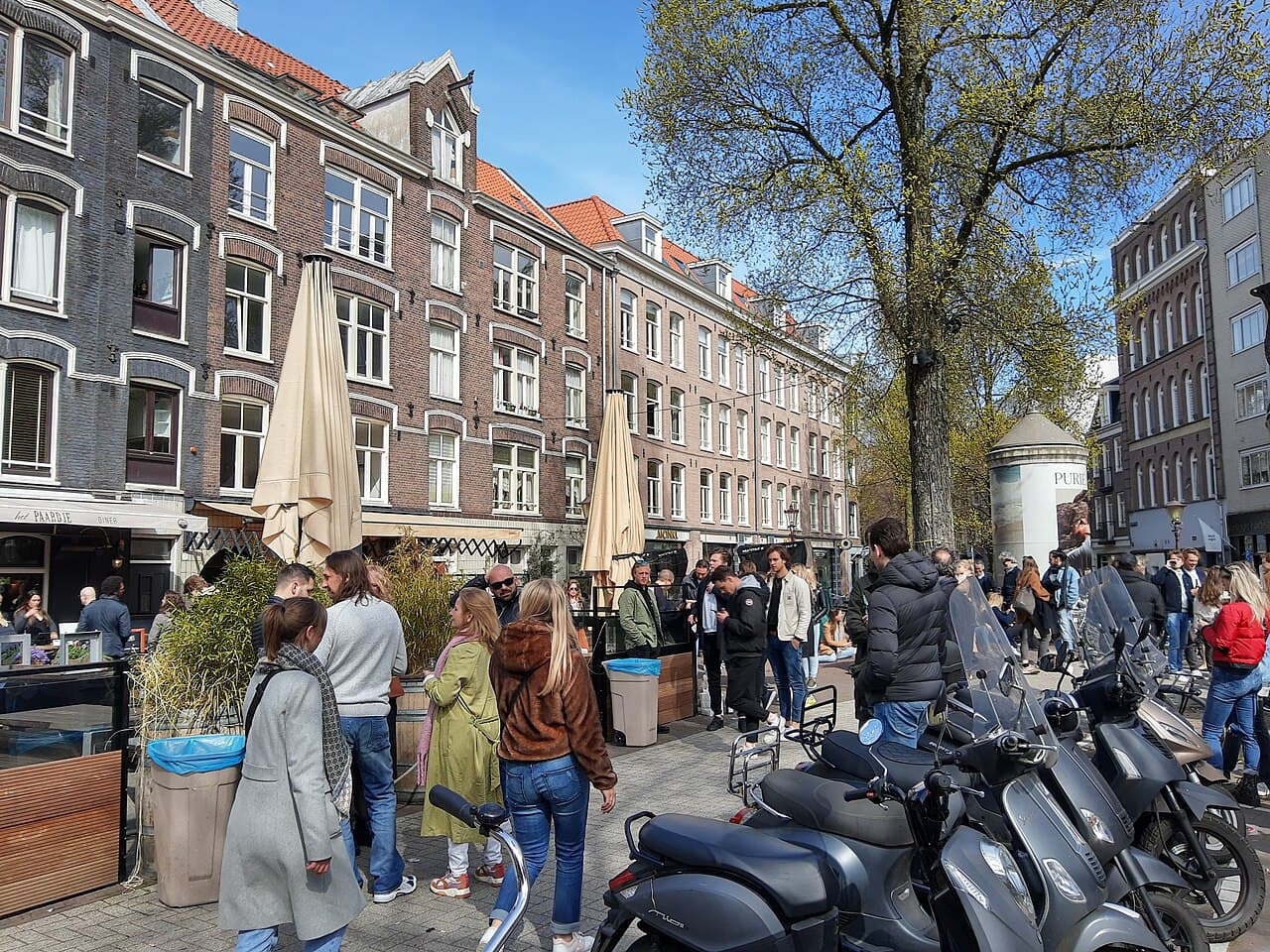
You're now at Gerard Douplein, one of the cosiest little squares in De Pijp. Find a spot where you can take in the whole scene — the ring of cafe terraces, the big trees, the people sitting out with their drinks.
This square was built at the end of the nineteenth century and it was, at the time, one of the only open spaces in this absurdly dense neighbourhood. Remember, De Pijp was thrown up quickly and cheaply to solve a housing crisis. The builders packed in as many apartments as they could, with narrow streets and minimal daylight. A square like this was a luxury — a place to breathe.
Read more...Show less
It's named after Gerard Dou — or Gerrit Dou, depending on who's spelling it — a seventeenth-century Dutch painter born in Leiden in sixteen thirteen. And here's the thing that makes him fascinating: he was Rembrandt's very first pupil. At the age of just fourteen, in sixteen twenty-eight, young Gerard was sent by his father — a stained-glass maker — to study in Rembrandt's studio right there in Leiden. He spent about three years learning from the master.
But Gerard Dou didn't become a mini-Rembrandt. He went in the complete opposite direction. While Rembrandt was all about bold, sweeping brushstrokes and dramatic light, Dou became famous for the most insanely detailed, tiny paintings you've ever seen. He was the founder of the Leiden fijnschilders — the "fine painters." We're talking about a man who reportedly spent five days painting a single hand. He made his own brushes because commercially available ones weren't precise enough. He used a concave mirror and would look at his subjects through a frame strung with silk threads to get the proportions absolutely perfect.
And here's the kicker — in his own lifetime, Dou was actually more famous and more expensive than Rembrandt. His work commanded enormous prices for two centuries after his death. Then, around the eighteen sixties, taste shifted, and he fell into almost complete obscurity. The Met in New York once held a major Dutch art exhibition with thirty-seven Rembrandts and zero Dous. It wasn't until the nineteen seventies that art historians rediscovered him.
So this little square in De Pijp is named after a man who went from being the most celebrated painter in the Netherlands to being completely forgotten and back again. There's a metaphor for this neighbourhood in there somewhere.
Now, from the square, head south. Walk straight down Eerste van der Helststraat toward Sarphatipark. You'll enter the park from its northern edge.
Sarphatipark
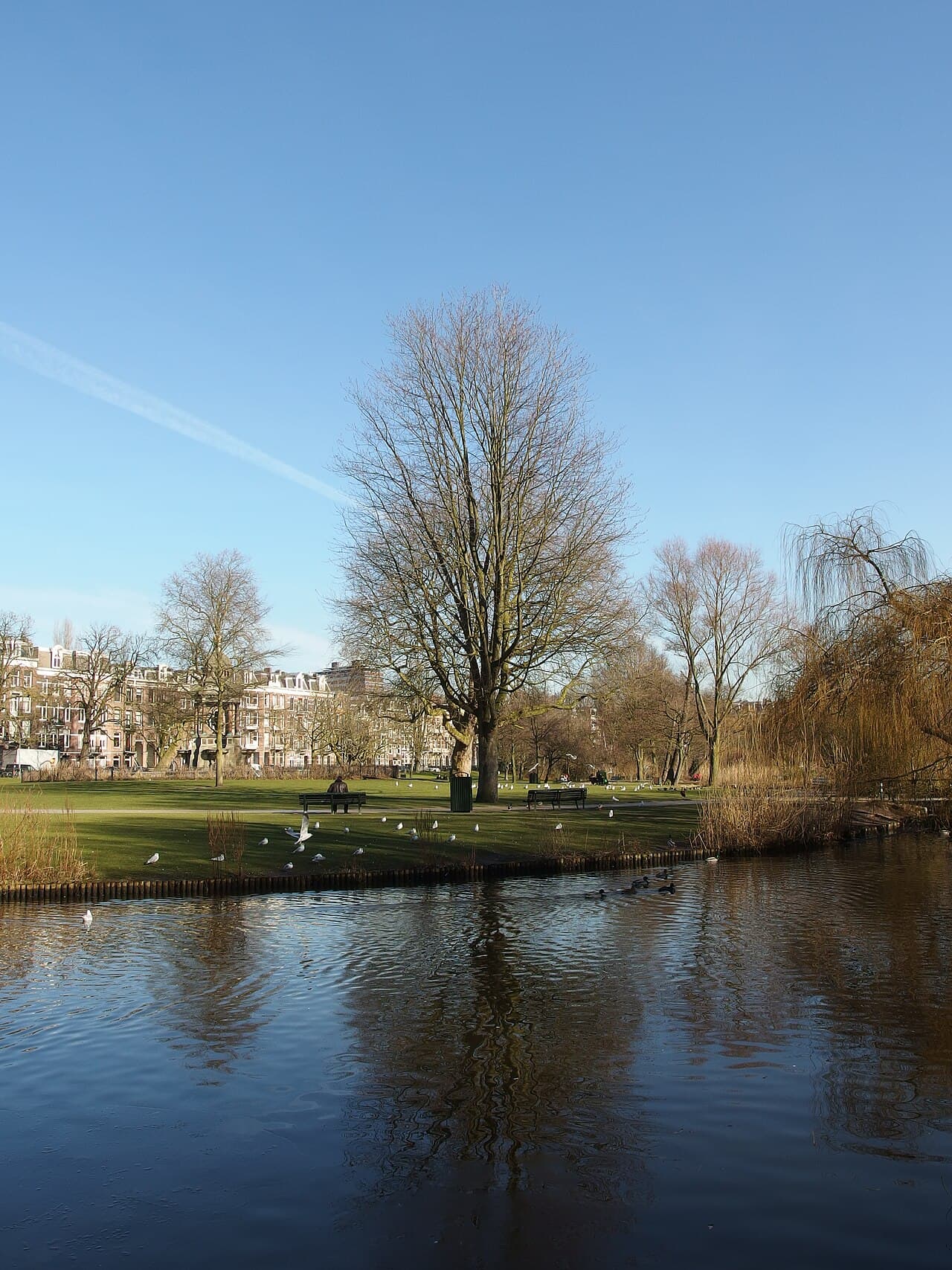
Welcome to Sarphatipark — De Pijp's green lung. Walk toward the centre of the park, where you'll see a striking monument: a small classical temple with columns, topped with a crown, housing a bronze bust. That's the memorial to Samuel Sarphati, and his story is one of the most remarkable in Amsterdam's history.
Samuel Sarphati was born on January thirty-first, eighteen thirteen, into a Jewish family. He became a doctor and started treating the poor in the Jordaan — Amsterdam's other famous working-class neighbourhood, on the west side of the city. But Sarphati quickly realised that treating sick people was pointless if the conditions that made them sick never changed. So he became something much bigger than a doctor. He became a city transformer.
Read more...Show less
In eighteen forty-seven, he organised Amsterdam's first proper waste collection service — before that, people literally threw their refuse into the canals or the streets. He then built a bread factory that produced affordable, wholesome bread and sold it at thirty percent less than what bakers were charging. He wasn't just doing charity — he was building businesses with a social mission. His biggest dream was the Paleis voor Volksvlijt — the Palace of Industry — a massive glass-and-steel exhibition hall inspired by London's Crystal Palace. It opened in eighteen sixty-four but sadly burned down in nineteen twenty-nine.
Now, here's the part that gives this park its emotional weight. Look at that monument — it was built in eighteen eighty-six, designed by the architect J.R. Kruyff. Notice the shape of the fountain at its base. It's a stylised Star of David, honouring Sarphati's Jewish heritage. The park was created between eighteen eighty-one and eighteen eighty-six specifically to give the crowded residents of De Pijp some green space — exactly the kind of public-health thinking Sarphati championed.
Then came nineteen forty-two. The Nazis occupied Amsterdam and decided a park named after a Jewish man was unacceptable. They renamed it Bollandpark, after a Dutch philosopher they found more "racially suitable." The original name was restored immediately after liberation in nineteen forty-five. That renaming and un-renaming is a small but powerful reminder of what Amsterdam's Jewish community endured during the war.
The park became a National Heritage Site in two thousand and four. On a sunny day, it's packed with locals reading, picnicking, walking dogs — a living monument to everything Sarphati believed in.
Exit the park on its western side and head north along Eerste Jan Steenstraat toward Quellijnstraat. It's a short walk — just a couple of minutes.
Quellijnstraat
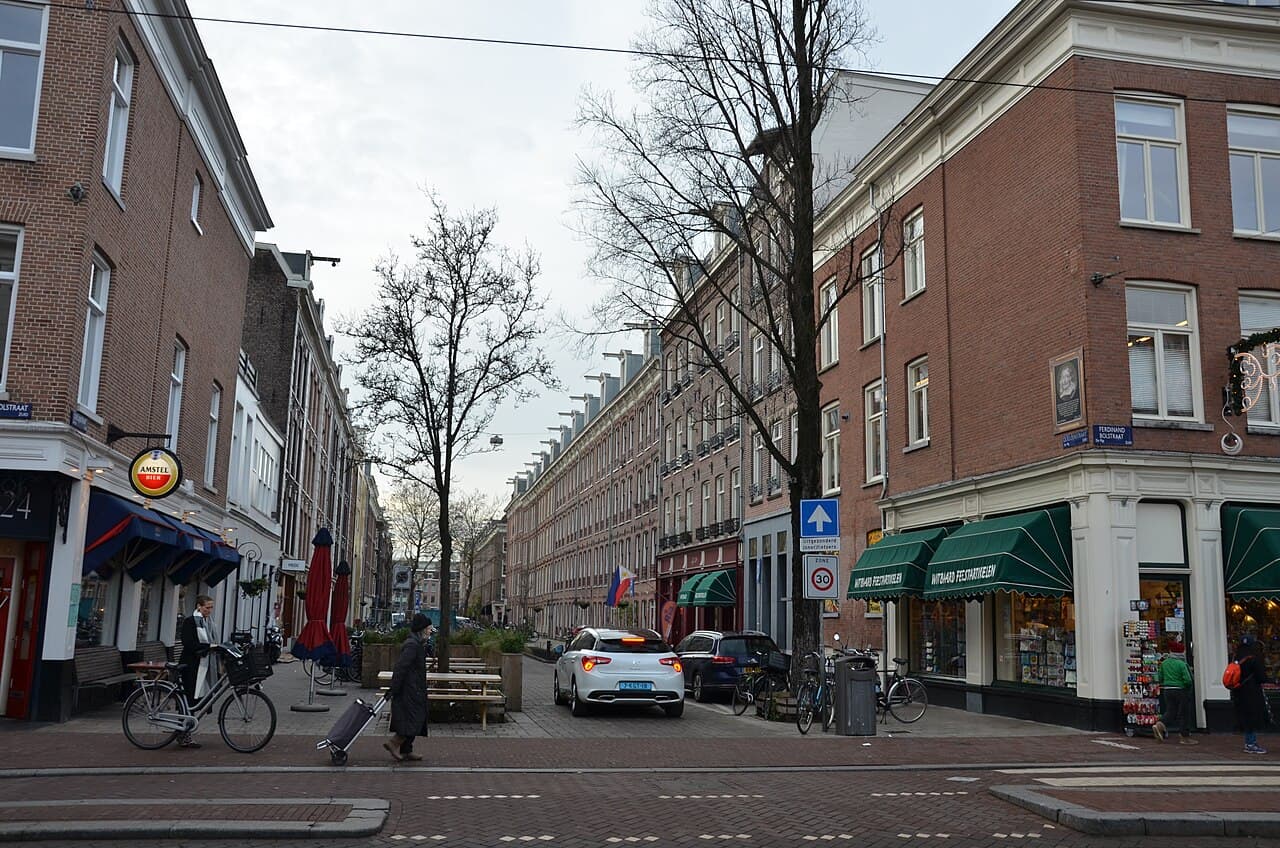
You're now on Quellijnstraat, one of those classic De Pijp residential streets — narrow, lined with late nineteenth-century buildings, bikes chained to every railing. Stand somewhere in the middle and look down the length of the street. This is the De Pijp that most tourists never see. It's not a market or a park or a brewery. It's just a street where people live. And that's exactly why it's on this tour.
The street is named after Artus Quellinus — or Quellijn, in the Dutch spelling — a sculptor born in Antwerp in sixteen oh nine. He moved to Amsterdam in sixteen fifty to take on the most prestigious artistic commission in the entire Dutch Republic: decorating the brand-new city hall on Dam Square. That building — which is now the Royal Palace — was meant to be a statement of Amsterdam's power and wealth during the Golden Age. And Quellinus was the man they trusted to make it magnificent.
Read more...Show less
He spent fifteen years in Amsterdam, working from a studio on the Keizersgracht with a whole team of assistants. He carved the enormous Atlas figure that holds up the globe on the palace facade, created imposing marble sculptures in the Burgerzaal — the Citizens' Hall — and designed the relief panels in the Vierschaar, the court of justice, which are sometimes called "the Night Watch of sculpture." If you visit the Royal Palace on Dam Square, you're walking through Quellinus's life's work.
But here's what I love about this street. These buildings were thrown up as cheaply as possible in the eighteen eighties and nineties during a severe housing shortage. The contrast between the subject — a sculptor who made palaces — and the reality of these modest workers' flats is pure De Pijp irony. The neighbourhood gives its streets the most illustrious names in Dutch art while housing the people who could never afford to buy a painting.
And one more thing — in eighteen ninety-five, right here on Quellijnstraat, Dutch cabaret is believed to have been born. So this humble little street has a legitimate claim as the birthplace of an entire Dutch performance art tradition.
From here, head north on any cross street to reach Frans Halsstraat. Turn left and walk west along Frans Halsstraat. You'll feel the energy shift — this is one of De Pijp's liveliest strips.
Frans Halsstraat
You're on Frans Halsstraat, and if you can hear the clink of glasses and the hum of conversation spilling out of doorways, you're in the right place. This is De Pijp's bar and restaurant row — especially lively on weekend evenings when it can feel like the entire neighbourhood has come out to eat and drink.
The street is named after one of the truly great Dutch painters — Frans Hals, born around fifteen eighty-two in Antwerp. Like many Flemish families, the Hals family fled north to the Dutch Republic after the Fall of Antwerp in fifteen eighty-four. They settled in Haarlem, where Frans spent the rest of his life. He became the city's most sought-after portrait painter, famous for capturing people who look genuinely alive — not stiff and posed, but caught mid-laugh, mid-thought, with a glint in their eye and a smirk on their lips.
Read more...Show less
His brushwork was revolutionary. Where other painters of his era laboured over smooth, polished surfaces, Hals attacked the canvas with loose, rapid strokes that somehow looked more real, not less. Art historians now consider him one of the forerunners of Impressionism — two centuries before Impressionism existed. His most famous works are probably the group portraits of Haarlem's civic guards, painted with such energy that you can almost hear the conversation.
But here's the sad part. Hals lived to be about eighty-four — an extraordinary age for the seventeenth century — and he simply outlived his fame. He went out of fashion, fell into poverty, and the city of Haarlem had to give him a small annual pension of two hundred florins just to survive. He died in sixteen sixty-six and was buried in the Grote Kerk.
Now, look around you on this street. De Pijp's dining scene is remarkable for its diversity. Within a few blocks you can find Surinamese roti shops, Turkish kebab joints, Japanese ramen bars, French bistros, and traditional Dutch brown cafes all stacked next to each other. It's a reflection of the neighbourhood's immigrant history — waves of newcomers from Suriname, Turkey, Morocco, and Indonesia settled here from the nineteen sixties onward, each bringing their food culture with them.
Continue walking east along Frans Halsstraat. When you reach the intersection with Eerste van der Helststraat, turn right and walk south. Our next stop is just a block down, on the left side.
Katsu Coffeeshop
You're now outside Katsu, at Eerste van der Helststraat seventy, and yes — we're talking about that kind of coffeeshop. In the Netherlands, a "coffeeshop" with a space between the words means cannabis. A "koffie huis" or cafe is where you get your espresso. It's a linguistic distinction that has confused tourists since the nineteen seventies.
Katsu has been here since nineteen eighty-five, making it one of De Pijp's longest-running coffeeshops. Look at it from the outside — it doesn't shout for attention. No neon green signs, no reggae flags, no Bob Marley posters. Inside, it's more art gallery than smoke den, with rotating exhibitions by local artists on the walls. It's a neighbourhood spot through and through.
Read more...Show less
So how does this all work legally? Here's the fascinating bit. Cannabis is technically illegal in the Netherlands. Possessing it, selling it, growing it — all against the law. But since the nineteen seventies, the Dutch government has operated under something called the gedoogbeleid — the tolerance policy. The idea is pragmatic and very Dutch: rather than waste resources prosecuting small-scale cannabis use, the government decided to tolerate licensed coffeeshops under strict rules. No hard drugs, no advertising, no selling to minors, no more than five grams per transaction, and no alcohol on the premises.
The policy created what became known as the "back door problem." The front door is legal — a licensed coffeeshop, inspected and regulated. But the back door, where the supply comes in? That's still technically criminal, because growing and wholesale distribution remain illegal. Coffeeshop owners were operating in a legal grey zone for decades, buying their stock from an unregulated supply chain. In twenty twenty-five, the Dutch government launched a pilot programme in ten municipalities to test fully regulated, legal cannabis supply from licensed growers — though Amsterdam, ironically, is not one of the pilot cities.
Whether or not you partake, Katsu is worth knowing about because it represents something uniquely Dutch: the willingness to manage reality pragmatically rather than legislate it away.
From Katsu, walk south to the end of Eerste van der Helststraat and turn right onto Ceintuurbaan. You'll know it — it's the wide boulevard with the tram tracks.
Ceintuurbaan
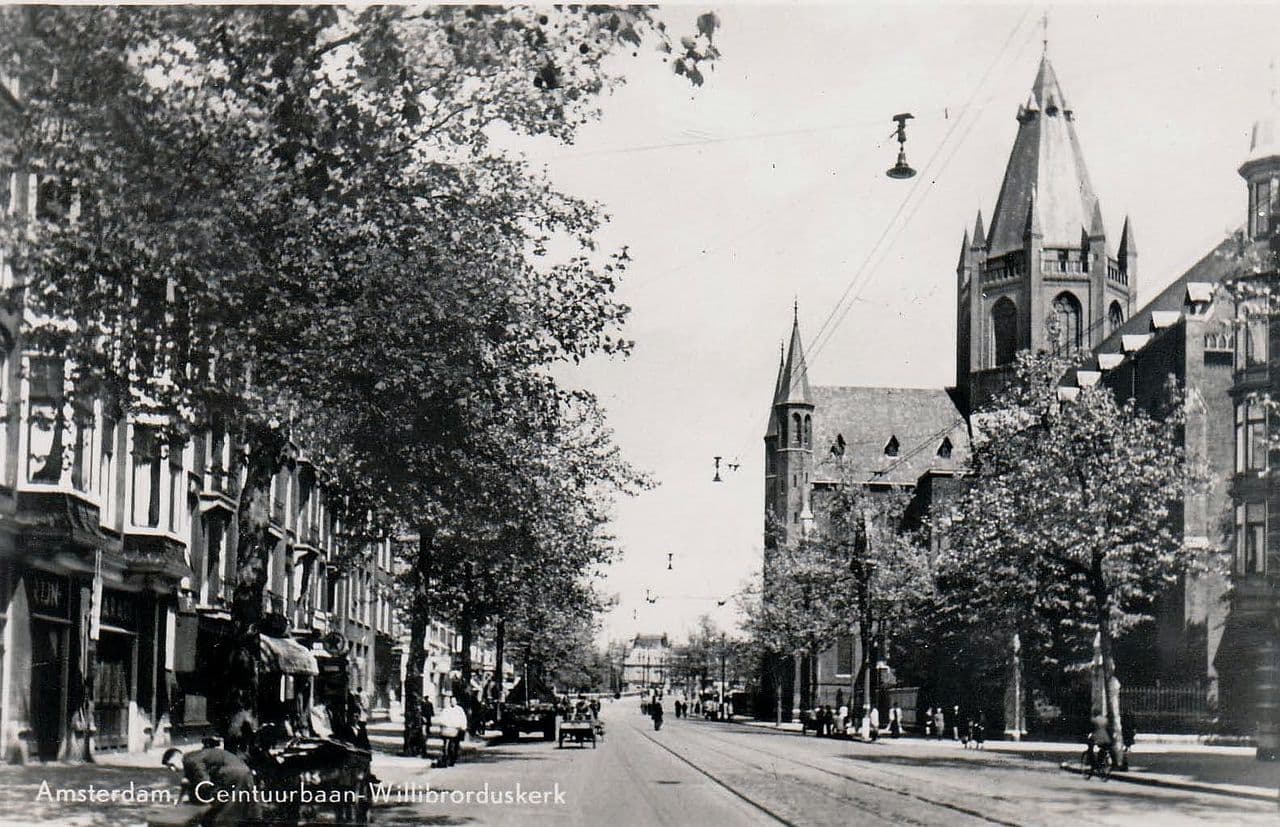
You're now on the Ceintuurbaan — say it "SAYN-toor-bahn" — one of De Pijp's main arteries. It's a wide boulevard with tram tracks running down the middle, lined with shops, cafes, and some seriously interesting architecture. Stand somewhere where you can look down the length of the street in both directions.
The Ceintuurbaan was established in eighteen eighty-one and it serves as the dividing line between two different eras of De Pijp. Everything north of here — where we've been walking — is the Oude Pijp, the old part, built rapidly and cheaply in the eighteen seventies and eighties. Everything south is the Nieuwe Pijp, built in the early twentieth century with slightly better planning and marginally wider streets.
Read more...Show less
There's a fun piece of "what if" history here. The original city plan actually called for building Amsterdam's central train station right in the middle of De Pijp, with a modern railway running along the Ceintuurbaan. Imagine that — a major railway terminus right where you're standing. Instead, a new plan was drafted, and the station ended up being built on its current artificial island in the IJ river, north of the city centre. De Pijp got apartment buildings instead of platforms.
Now, look around for one of the Ceintuurbaan's hidden gems. If you walk east along the street, at numbers two fifty-one to two fifty-five, you'll find the Huis met de Kabouters — the House with the Gnomes. It's a wonderfully ornate building from eighteen eighty-four, designed by the architect A.C. Boerma. Up on the roofline, you'll see two gnome statues, each about two and a half metres tall, who appear to be tossing a ball back and forth. They're thought to be a visual pun on the original owner's surname — Van Ballegooijen — which roughly translates to "throwing a ball." The building became a national monument in nineteen eighty-four. There's a local legend that the ball switches from one gnome's hands to the other at midnight, though nobody seems to agree on whether that happens every night or only on New Year's Eve.
Also along this stretch is the Rialto cinema, at number three thirty-eight. It opened in nineteen twenty-one and remains one of Amsterdam's best arthouse cinemas, showing world cinema, documentaries, and hosting filmmaker Q and As. If you're around in the evening, it's a lovely way to end a day in De Pijp.
For our final stop, head south from the Ceintuurbaan. Walk down Ferdinand Bolstraat and take a left onto Cornelis Troostplein. You'll see the brewery ahead of you.
Brouwerij Troost
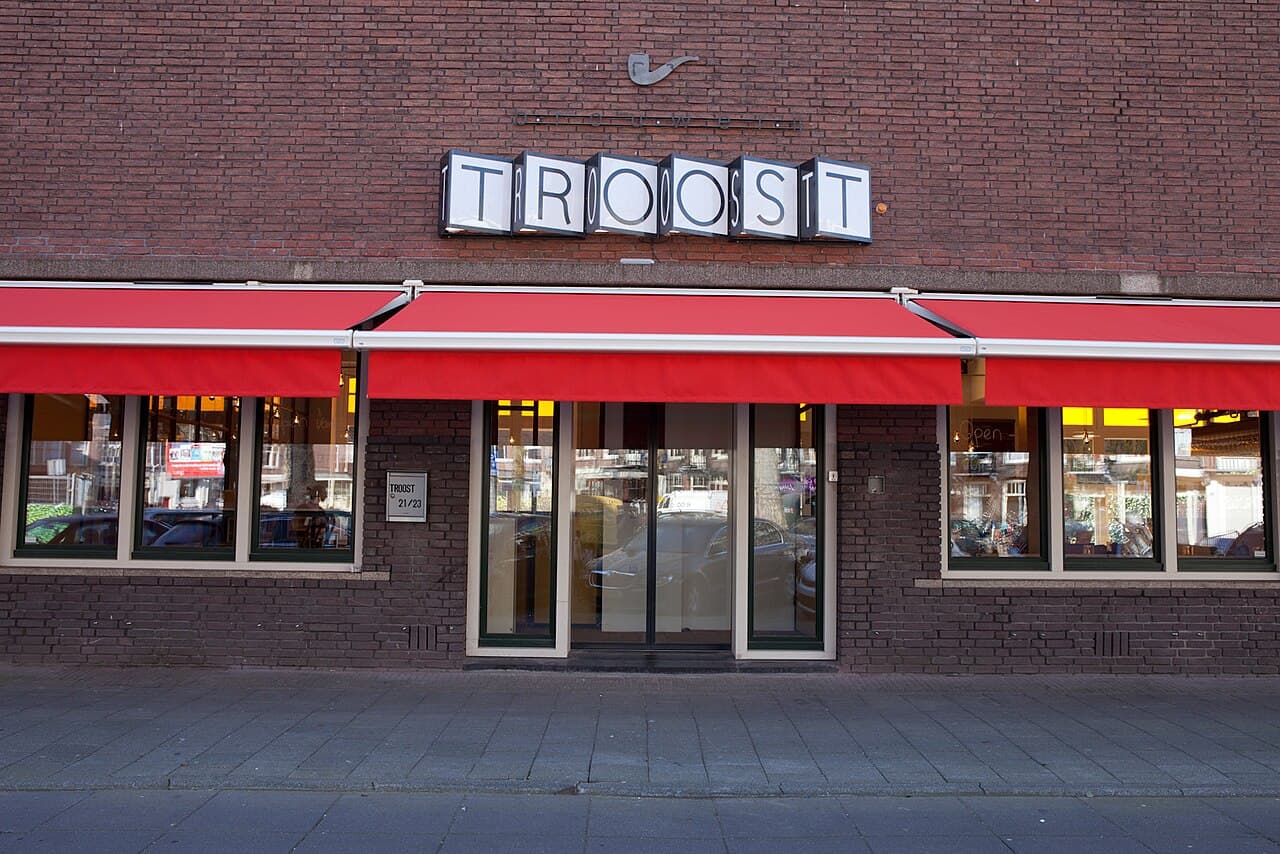
You've made it to the final stop — and what better way to end a walking tour than at a brewery? You're at Brouwerij Troost, on Cornelis Troostplein twenty-one, and I strongly recommend you go inside.
First, look at this building. It's a beautifully preserved nineteen twenties monumental structure that originally served as a nunnery and school complex, connected to the Vredeskerk — the Peace Church — nearby. Let that sink in for a second. You're about to drink craft beer in a former convent. The nuns would either be horrified or secretly thrilled.
Read more...Show less
Brouwerij Troost opened here in twenty thirteen, making it one of Amsterdam's first modern craft breweries. The founders saw this disused convent space and did what any reasonable person would do — they filled it with fermentation tanks. They brew everything on-site, and the tap list rotates, but you'll usually find their flagship blonde — a honey-infused golden ale that won an audience award for best beer in the province of Noord-Holland — along with a citrusy tripel, a smoked porter that somehow tastes like bacon, and a properly hoppy IPA. Order a tasting flight — four small glasses for about ten euros — and work your way through the range.
The square outside is named after Cornelis Troost, an eighteenth-century Amsterdam painter and actor born in sixteen ninety-six. He's sometimes called "the Dutch Hogarth" for his witty, satirical depictions of Amsterdam society — scenes of drunk banquets, foolish suitors, and pretentious merchants. He started as an actor, married an actress named Susanna Maria van der Duyn, then gave up the stage for painting in seventeen twenty-three. His most famous work is a series of five pastel paintings called NELRI — each letter stands for a different stage of an increasingly drunken party.
So here you are, sitting in a former nunnery turned brewery, on a square named after a painter who loved painting drunk people. De Pijp has a sense of humour.
And that humour is really what defines this neighbourhood. De Pijp was never meant to be charming. It was built fast and cheap to solve a housing crisis. The streets were given grand names of Golden Age masters while the buildings themselves were anything but grand. But over a hundred and fifty years, that mix of high culture and working-class grit created something genuinely special — a neighbourhood that's diverse, lively, a little rough around the edges, and deeply, proudly itself.
Cheers. You've earned that beer.
Free
GPS-guided walking tour
No account needed. Walk at your own pace.
Free
11 stops · 2.8 km