13 stops
GPS-guided
49 min
Duration
Free
No tickets
About this tour
A 13-stop walking tour through the heart of Netherlands. Visit Amsterdam’s Red Light District, Old Church (Oude Kerk), Bulldog Coffeeshop, and Prostitutes in Narrow Alleyways — with narrated stories at every stop.
13 stops on this tour
Amsterdam’s Red Light District
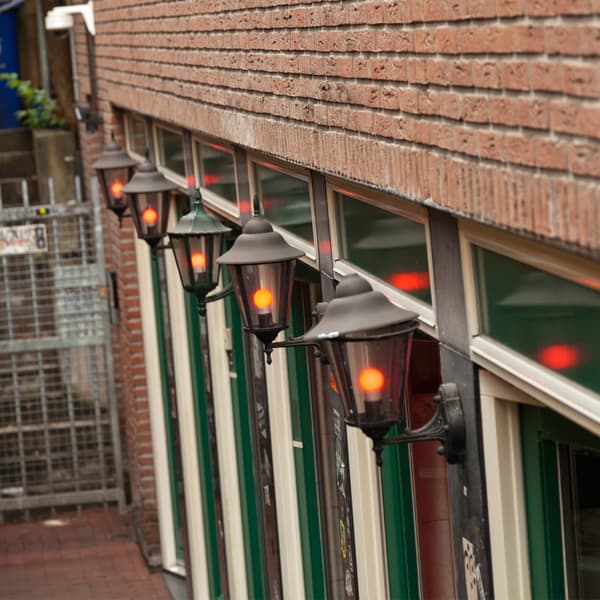
Amsterdam's red-light district. Amsterdam's oldest neighborhood has hosted the world's oldest profession since medieval times. Today, prostitution and public marijuana use still thrive here, creating a spectacle that's unique in all of Europe. Hi, I'm Rick Steves.
Thanks for joining me, if you dare, on a walk through Amsterdam's colorful red-light district. We'll see history, sleaze and cheese, Thai transvestites in windows, drunks in doorways, cruising packs of foreign 20-somethings, cannabis being enjoyed, and sex for sale. The main event is open prostitution. Ladies in bras, thongs, and high heels standing in window displays, offering their bodies for sale, and it's all legal.
Read more...Show less
Still, this is an area to keep your wits about you. The best times to visit are afternoons and early evenings, when the streets are filled with tourists. Don't take photos of ladies in windows, or you'll risk dealing with a snarly bouncer. Despite the strong police presence, be on the lookout for pickpockets, drug pushers, and con artists.
With each passing year, the neighborhood becomes more gentrified, with fewer sex workers in windows. But you'll still see your share. Finally, the red-light district seems to have something to offend everyone. Whether it's in-your-face, images of whips and chains, exploited immigrant women, the smell of pot and urine, or just the shameless commercialization of it all, it's not everyone's cup of tea.
It's perfectly okay to say, no thank you, and not take this tour. But if you're ready to expand your cultural horizons, that's a great thing about travel. It awaits you in Amsterdam's most talked-about tourist attraction, the red-light district. To help us along the way, I've invited a good friend and virtual travel buddy.
Welcome, Lisa. Hey, Rick. After that introduction, I almost backed out. But it should be, well, interesting.
Lisa will give us helpful directions and sightseeing tips throughout the tour. And my first tip is to be sure you get our tour updates. Just press the icon at the lower right of your device. You'll find any updates and helpful tips and helpful instructions unique to this tour.
Things like closures, opening hours, and reservation requirements. There's also tips on how to use this audio tour and even the full printed script. Yes, so pause for just a moment right now to review our updates and special tips. It's okay. We'll wait. And now, prepare to be amazed and appalled as we enter the red-light district.
Tour Begins: Dam Square to Warmoesstraat
The tour begins from Dom Square to Wormistrat. Start on Dom Square. Face the big, fancy Grand Hotel Krasnopolsky. To the left of the hotel stretches the street called Wormistrat.
Start walking down Wormistrat, which is several hundred yards long. Rick will point out a few things along the way. As you walk down Wormistrat, you're walking along one of the city's oldest streets. It's the traditional border of the neighborhood tourists call the red-light district.
Read more...Show less
Amsterdammers call this area De Wallen, or The Walls, after the old retaining walls that once stood here. De Wallen is the oldest part of town with the oldest church. It grew up between the harbor and the Dom Square, where the city was born. Amsterdam was a port town, located where the river met the sea.
The city traded in all kinds of goods, including things popular with sailors and businessmen away from home, like sex and drugs. The sex trade has been plied here since the 1200s. For centuries, it existed alongside everyday life. Then, in the 1980s, the city designated De Wallen as the neighborhood where prostitution could be legally conducted.
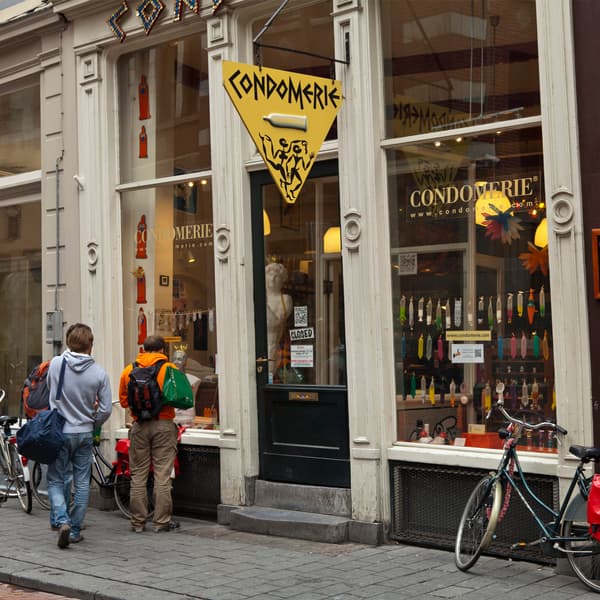
Excuse me, Rick, but our first stop is up ahead. At Wormistrat No. 141 is a small shop on the right with a large yellow triangle sign. Yes, the Golden Fleece.
Located at the entrance of the red-light district, this is the perfect place to get prepared. It's a condom shop. Besides selling an amazing variety of condoms, this place has a knack for entertainment. Inside is a small glass case displaying a condom museum.
On the counter is a three-ring notebook showing off all the inventory. From here, continue along Wormistrat. As you pass the two little street barricades with cute red lights around them, you enter the traffic-free world of De Wallen. Throughout our walk, prepare yourself for an onslaught of so-called sex shops.
These places deal in erotic paraphernalia, like dildos, S&M starter kits, and kinky magazines. Browsers are welcome. Some shops have video arcades of porn films charging by the minute. Haven't these guys heard of the Internet?
While Amsterdam is notorious for its red-light district, even small Dutch towns often have a sex shop and a brothel, to satisfy their citizens' needs. But Amsterdam has a sprawling district of glitzy nightclub sex shows featuring strippers and sex acts and prostitution. Amsterdam keeps hundreds of prostitutes employed, and it's all legal. By the way, keep an eye out for the Winston Hotel.
It's on the right at number 129. According to legend, Quentin Tarantino holed up here for three months in 1993 to write Pulp Fiction. Keep walking down Wormistrat. You'll know why.
You'll notice that the area attracts many out-of-towners, especially Brits. You'll see Irish pubs, advertisements for football games, and British, Scottish, and Irish flags. From the British Isles, the red-light district is just a cheap flight away. Brits come here in droves for stag parties or just a wild weekend.
And money-savvy Dutch know their best customers. You'll soon reach the intersection of Wormistrat and Weidekerkstag. Here you can look to the right and see the city of Wormistrat. To see the old church tower.
We'll be heading to the church in a moment. But first, just stand here at the intersection for a second and look around. Notice the gay rainbow flags and the S&M flags. That's black and blue with a heart.
Also notice the security cameras and modern lighting. Freedom reigns in this quarter, but everything is kept under a watchful eye by the two neighborhood police departments. Now continue down Wormistrat a few more steps. At number 129, you'll find the Elements of Nature Smart Shop.
This is a little grocery store of mind-bending natural ingredients. Smart shops like this one are clean, well-lighted, fully professional retail outlets that sell powerful drugs, many of which are illegal in America. Some of their natural products are harmless nutrition boosters like royal jelly. You'll also find organically grown tobacco and herbal versions of popular dance club drugs like ecstasy.
The big item here is marijuana seeds. Hallucinogenic mushrooms used to be big business here, but the EU made them illegal. To get around that, smart shops now sell mind-bending truffles. Since truffles grow underground, they're technically not mushrooms.
The knowledgeable salespeople can give you more information on their 100% natural products that play with the human senses. And here in the Netherlands, it's all perfect. It's perfectly legal. Continue down Varmestrat to No.
86, a shop called D.D. That stands for Dirty Dicks. It's a men's-only place that takes macho to painful and what seems like anatomically impossible extremes. Ouch!
Downstairs, you'll find some irresistible deals on whips and masks. Ooh, I do love a sale. Across the street, notice the very low-profile entrances to several men-only shops. There are only leather bars with their black doors and windows.
These places come with a bar, a dance floor, and a dark back room. A good reason to get a glow-in-the-dark condom back at Condomery. Let's switch gears now and go see the historic Old Church. Backtrack a few steps up Varmestrat to the intersection.
When you reach the intersection with Weidekerksteg, turn left and head to the church. Park yourself at the base of the tower and take in the church. There's a lot to observe from here, including nearby prostitutes in windows. Hi, ladies! Rick, please. Let's start with the church, which is Amsterdam's most historic. The Old Church, or Odekerk.
Old Church (Oude Kerk)
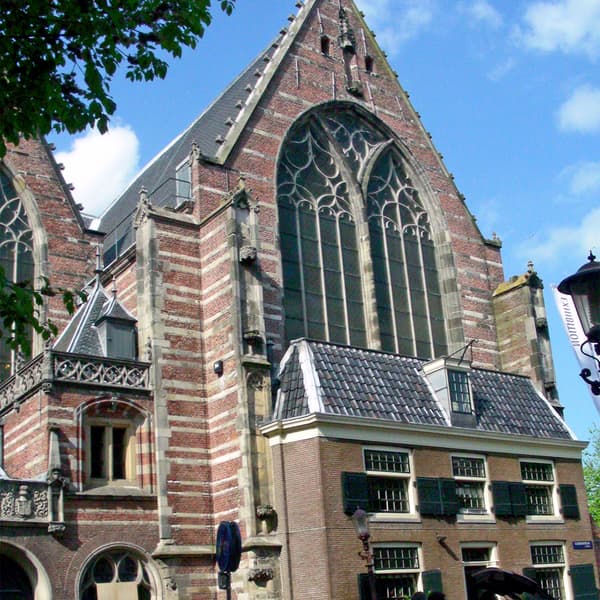
As the name implies, this was the medieval city's original church. Returning from a long sea voyage, sailors of yore would spy the steeple of the old church on the horizon and know they were home. Having returned safely, they'd come here to give thanks to St. Nicholas, the patron saint of this church, of seafarers, of Christmas, and of the city of Amsterdam.
The church was begun about 1300. Construction continued in fits and starts for the next 300 years, as is apparent in the building's many gangly parts. Then, in the 15th century, Amsterdam built the Nieuwkerk, or New Church, on Dam Square. But the Old Church still had the tallest spire, the biggest organ, the most side altars, and remained the city's center of activity, bustling both inside and out with merchants and street markets.
Read more...Show less
The tower is 290 feet high with an octagonal steeple atop a bell tower. You can pay to climb to the top. This tower served as the model for many other Dutch steeples, but it was built for this purpose. The carillon has 47 bells.
They can chime mechanically, or they can be played by one of Amsterdam's three official carillonneurs. While the church is historic, there's not much to see inside. If you pay the admission, you'll see a big, empty church with 2,500 gravestones in the floor. The most famous grave is Rembrandt's wife, Saskia.
The church is so bare because it was vandalized during the religious wars of the 16th century. Protestants gutted this Catholic church, smashing windows and removing politically incorrect statues they considered graven images. They transformed the church from Catholic to Dutch Reformed, which it is to this day. Nowadays, the church is the holy needle around which the unholy red-light district spins.
This marks the neighborhood's most dense concentration of prostitution. Explore around the right side of the church. You'll see a statue dedicated to the unknown prostitute. She's nicknamed Belle, and the statue honors sex workers around the world.
Also nearby, you might trip over a bronze breast sculpted into the pavement being groped by bronze hands. Attached to the church, like barnacles, are small buildings. These were originally used as homes for priests, church offices, or rental units. The house to the right of the entrance at No.
25 is very tiny, 32 feet by 8 feet. An elderly woman lives here, so be discreet. Now, check out the green metal urinal over by the canal. This one gets lots of use.
Fact. Amsterdam has, on average, about 12 drownings every year. When the bodies are found, they're mostly men with zippers down. Imagine the scene.
A guy is drunk as a skunk at 3 a.m., goes to the edge of the canal to take a pee, and falls in. Rick, you are a fountain, a fascinating statistic. Affirmative. And here's another one.
Amsterdam's very first marijuana coffee shop opened in 1975. And there it is. Oh, I see it. From the urinal, look to the right and find the Bulldog Cafe a half block away. Let's go. The Bulldog Coffee Shop.
Bulldog Coffeeshop
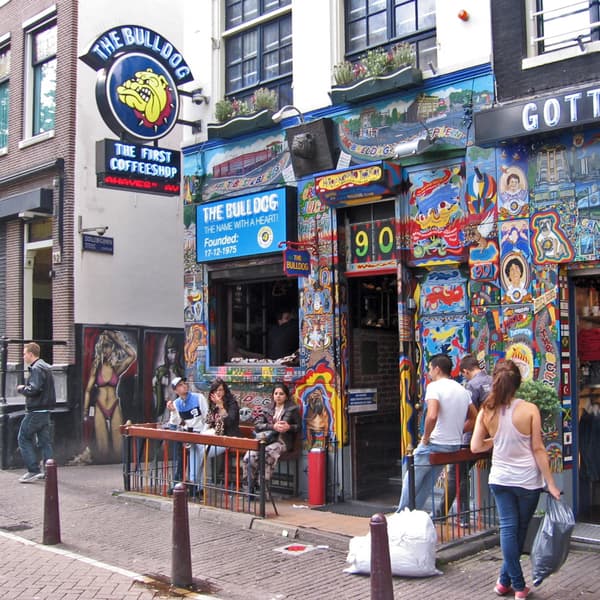
This claims to be the place that claims to be Amsterdam's very first marijuana coffee shop, established here in 1975. Now there's a chain of Bulldogs all around the city. Coffee shops, like the Bulldog, sell marijuana. If you've never been to a coffee shop, it's fascinating to just poke around.
They're used to people just looking, so don't feel out of place or like you need to buy. But stow your camera while inside. Be sure to go downstairs. The lounge is on one floor, and the retail business is on another.
Read more...Show less
The bartender, or you could say the bud-tender, is happy to show you the menu and answer any questions. There's different varieties of weed, sold in baggies or pre-rolled joints, all clearly priced. You can buy it to go or smoke it on the premises. They have rolling papers and loner bongs.
You'll see people relaxing with a joint while they sip a Coke, but no beer, as alcohol is not allowed. And neither, is tobacco. Nope. It may seem strange, but a coffee shop can actually lose its license to sell pot if it allows tobacco to be smoked inside.
That protects workers from being exposed to unhealthy tobacco smoke in the workplace. The retail sale of marijuana is strictly regulated in the Netherlands. The minimum age for purchase is 18, and coffee shops can sell up to 5 grams of marijuana per person per day. The proceeds, as coffee shops go, the bulldog is considered pretty touristy.
Timid first-timers are guided through the process, and the selections are reliable. Connoisseurs seek out smaller places with better quality pot, places that earn the prestigious Cannabis Cup Awards. While the bulldog caters to a young crowd, other coffee shops play Donovan and target an older, mellower market. Recently, the Netherlands has proposed new laws to forbid sales of marijuana to non-residents.
Their big worry is European drug dealers who drive over the Dutch border, buy up large quantities, and return home to sell their marijuana. But the mayor of Amsterdam has been adamant that the city's coffee shops will remain open. It's a big draw for out-of-towners, and the city believes that making marijuana illegal will not reduce consumption. It'll just drive business back into the black market, enriching criminals, and it'll cause crime on the streets to spike.
The legal situation surrounding marijuana in the Netherlands is always evolving. Stay tuned. But enough about drugs. Let's turn to sex.
Get ready. We're about to dive right into one of the neighborhood's main streets for legal prostitution. Remember, don't take pictures and watch for pickpockets if crowds jostle together. Most of all, remember that if you keep your pants on, you'll be just fine.
Trust me. Do I? Do I have a choice? Nope.
Okay, let's go. Immediately adjacent to the coffee shop is a three-foot-wide entrance to a narrow alleyway. It's called Dala Beguinensteg. Take a deep breath, set your sights on those red lights, and let's plunge ahead. Prostitutes in Narrow Alleyways.
Prostitutes in Narrow Alleyways
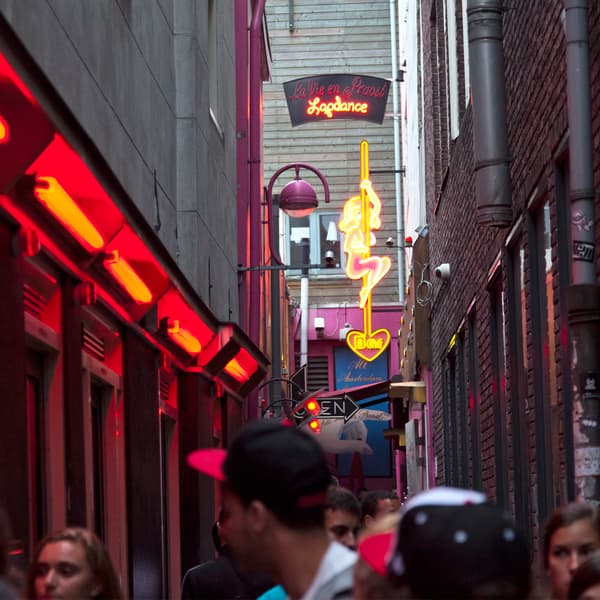
Walk the length of the block, where we'll then turn right to go back to the church. As you go, you pass what for years was window after window of women in panties and bras. But with gentrification, many sex workers have moved to other areas, which we'll see later. The women wink at horny men, rap on the window to attract attention, and look disdainfully at sightseers.
This alleyway is just one of several in the area. You can take your time here and then explore deeper. Or you can hurry to the end of the block and turn right and go right back to the church. That's for me.
Read more...Show less
Meet you there. The church is a quiet place to get your bearings. Then you might want to explore further. While you walk back to the church, let me talk for a moment about the prostitution trade.
While there's always been prostitution here, it's been legal since the 1980s. In recent times, there have been as many as 250 windows, though that number has been going down lately. You must be 21 to get your license. Women from countries like Bulgaria and Romania come here the way a plumber might work as a guest laborer in Germany.
To work hard just long enough to return home and set up their family. The system is simple. A customer browses around. A prostitute catches his eye.
If the prostitute's interested in his business, they're selective for their own safety. She winks him over. They talk at the door as she explains her price and what she has to offer. Many are very aggressive at getting the man inside where the temptation game revs up.
A price is agreed on and paid in advance. A typical visit can cost 30 to 50 euros for 20 minutes or so. The man goes in. The woman draws the curtain.
Where do they actually do it? The rooms look tiny from the street, but these are just display windows. There's a bigger room behind or upstairs that comes with a bed, a sink, and not much more. So you've heard.
The women are self-employed, entrepreneurs, renting space and running their own business. They usually work a four- to eight-hour shift. A good spot costs 100 euros for a half-day shift and 150 euros for an evening. Prostitutes have to keep their premises hygienic, make sure their clients use condoms, and avoid minors.
Popular prostitutes can make about 500 euros a day. They fill out tax returns and many belong to a loose union called the Red Thread. The law, not pimps, protects prostitutes. If a prostitute is diagnosed with HIV or AIDS, she loses her license.
As shocking as legalized prostitution may seem to some, it's a good example of a pragmatic Dutch harm reduction solution to a persistent problem. Are there male prostitutes? Certainly. Anything you want is available somewhere in the Red Light District.
But an experiment back in the 1990s to put male prostitutes in windows didn't stand up. There are, however, reconstructed women. These are gorgeous transvestites who may or may not warn their customers to ward off any rude surprises. Blue lights, rather than red, mark where transvestites do business.
Wherever you may have wandered, return to the old church. Are those directions or a moral exhortation? Whatever works for you. Return to the Odekerk and get oriented. From here, start circling the church clockwise, headed around the back side of the church. More prostitutes
Prostitution Info Center
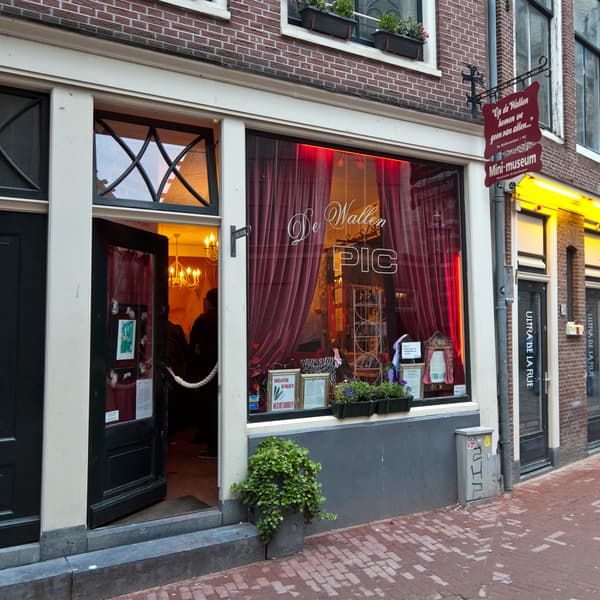
and the Prostitution Information Center. As you circle around back, you start seeing older, plumper, and chubbier prostitutes. Different zones feature prostitutes from different lands. Asia, Africa, Eastern Europe.
This is to cater to customer tastes, as regulars know what they want. Behind the church, look for an office called the Prostitution Information Center, or PIC. It's at No. 3 Enga Kirkstig.
Read more...Show less
The center is only open on Saturdays. Their purpose? To demystify prostitution. They dole out pamphlets, books, condoms, t-shirts, and offbeat souvenirs.
They give frank information on how the trade works and what it's like to be a sex worker. Now look next door. This is a room rental office. Prostitutes come here to rent window space and bedrooms to use for their work.
Several of the available rooms for rent are just next door. The office also sells supplies, condoms by the case, lubricants, and soft drinks. The man at the desk does not arrange sex. The women who rent space from this business are self-employed, and they negotiate directly with their customers.
In return for their rental fees, prostitutes get security. The man in the office keeps an eye on them by video surveillance. You can see the monitors inside. Looking down the street, you can see small cameras and orange alarm lights above the doors.
If prostitutes have any trouble, they press a buzzer that swiftly unleashes not a pimp, but a burly bouncer or the pimp. The area sure looks rough, but aside from tricky pickpockets, these streets are actually pretty safe. Although some women choose prostitution as a lucrative career, others are forced into it by circumstance. Poverty, drug addiction, abusive men, and immigration scams.
Since the fall of the Iron Curtain, many Eastern Europeans have flocked here for the high wages. Russian and East European crime syndicates have muscled in. While the hope here in the Netherlands is that sex workers are smartly regulated small business people, in reality, the line between victim and entrepreneur is not always so clear. Continue circling clockwise around the church. We're heading down Oderkerksplein towards the canal. © transcript Emily Beynon
Pill Bridge, Princess Juliana Daycare
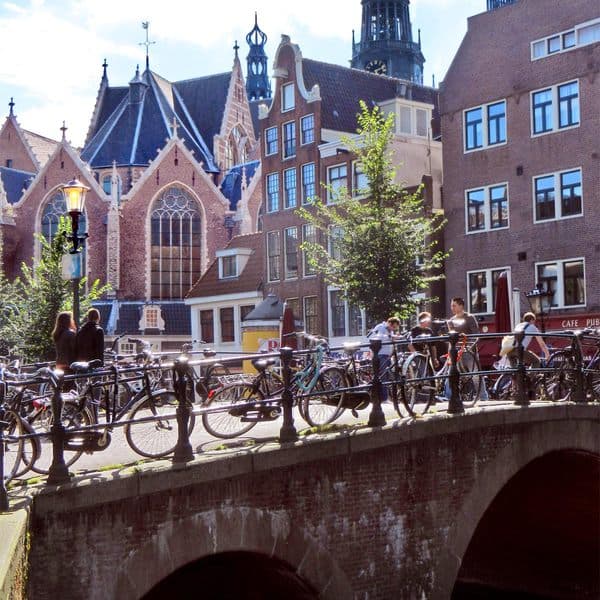
To Pilbridge by way of the Princess Juliana Daycare. As you walk, you'll pass still more prostitutes in windows. But Devalin is also a residential neighborhood where ordinary citizens go about their daily lives. Locals need some place to send their kids.
And there's a preschool just up ahead. Find the orange brick building on the left at Oderkerksplein No. 8. It's discreet and sealed up tight.
Read more...Show less
Look for the black and white photo of the princess near the door. It's near the gunmetal gray door. The Princess Juliana Daycare is for newborns up until four-year-olds. It was built in the 1970s when the idea was to mix all dimensions of society together, absorbing the seedy into the decent.
Boy, that'd be a tough sell where I come from. Continue ahead to the canal where you'll turn left. Amsterdam's city government is hoping to spice other commerce into this one-business district. As many as half of the sex businesses may close over the next year.
for the next few years. Not because of prudishness, but to bring a different dimension to the area. The city hopes to buy up the leases on prostitution rooms and convert them to little shops. Windows that once showcased girls for rent now showcase mannequins wearing the latest fashions, lit by lights that aren't red.
When you reach the canal, turn left and head for the first bridge. Back in the 1970s, that bridge was nicknamed Pill Bridge for the retail items sold by the city. Sold by the seedy guys who used to hang out here. Now it's a pleasant place for a photo op.
Another example of how this neighborhood's being gentrified. Pause at the bridge and enjoy the canal and all the old buildings with their gables. Just past the bridge is the Amstelkring Museum. It's at Odesides-Vorburgval number 40.
Amstelkring Museum
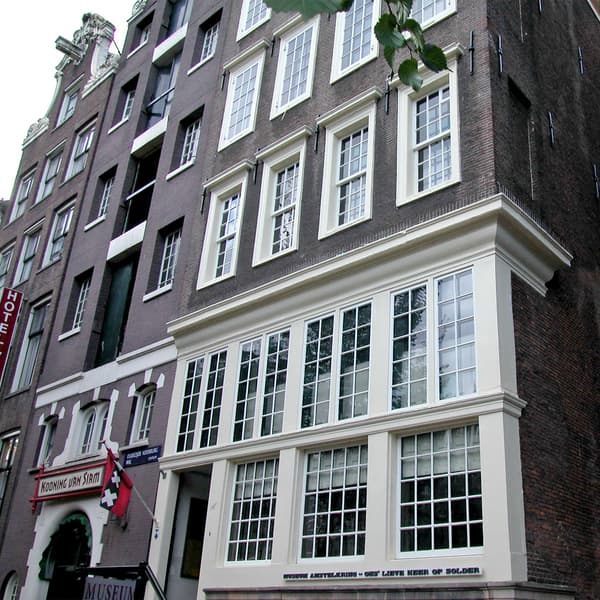
The Amstelkring Museum, also known as the Church of Our Lord in the Attic. With its triangular gable, this building looks like just another townhouse. But inside, it holds a secret, a small, lavishly decorated place of worship hidden in the attic. Back in the 16th century, some Amsterdammers had to meet here, unable to practice their faith in the open.
Although Amsterdam has long been known for tolerating prostitutes and drug users, back then there was one group they kept in the closet, Catholics. The anti-Catholic laws were imposed by Protestants during the religious wars of the 1500s. In medieval times, Amsterdam, like all of Europe, had practiced the religion of the popes in Rome. But during the Reformation, Protestants took control of Amsterdam.
Read more...Show less
Catholics had to worship out of sight. In 1663, the wealthy merchant who owned this home converted an upper floor into a Catholic church, complete with balconies and an elaborate Baroque altar. Imagine the jubilation when things changed and Catholics could finally gather together and worship in public without feeling like two-bit criminals. From the Amstelkring Museum, continue north on Odeside's Vorburgwall, heading toward the end of the canal. From Amstelkring to the harbor,
Historic Amsterdam
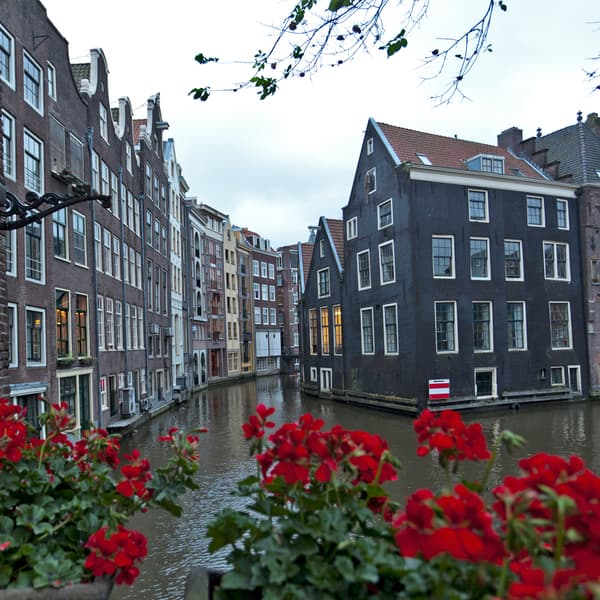
historic Amstelkring, historic Amsterdam. As you stroll along the canal, let's turn away from the sex and drugs for a minute. Remember, this neighborhood, called De Wallen, is Amsterdam's oldest. It sits on formerly marshy land that was reclaimed by diking off the sea's tidal surge.
That location gave Amsterdam's merchants easy access to both river trade and the North Sea. By the 1500s, Amsterdam was booming. And speaking of the 1500s, up ahead, is a historic building from around 1580. You'll find it near the next bridge, at number 14.
Read more...Show less
Around the time this building was constructed, Amsterdam's citizens were rising up in revolt to throw out their Spanish rulers. Now free to govern themselves, a group of energetic businessmen turned the city into a sea-trading hub. By 1600, brave Dutch sailors, including Henry Hudson, were traveling as far as Africa, America, and Asia. They returned with shiploads of exotic goods to sell to the rest of Europe.
In 1602, the Dutch East India Company formed. This was a state-subsidized import-export business with a huge fleet of ships. Using new sailing technology and capitalist investing, they established trading posts all over the world. The 1600s were Amsterdam's heyday.
With its canals and fine townhouses, it became known as the Venice of the North. The part of the canal we're walking along now is known as Little Venice. Houses rise directly from the water here with no quays or streets. Like Venice, the city was built in a marshy delta area on millions of pilings.
And, like Venice, it grew rich on sea trade. You'll soon reach the end of the canal. At this point, continue straight up a small lane. Before you start up that lane, notice the collection of fine gable stones embedded in the wall on the left.
Then, continue straight up the small lane called St. Olaf's Steg. As you climb this incline, you're ascending the original dam, or dike, that kept out the tidal surge. At the top, the lane intersects with Zee Dijk Street.
Turn left on Zee Dijk and head about 100 yards to the end of the block. The street called Zee Dijk runs along the top of the Sea Dijk that historically protected sea-level Amsterdam from the North Sea tide. Up ahead was the harbor where ocean-going ships docked. Cargo could be transferred from there to smaller river trade boats that sailed up the Amstel to Europe's interior.
In the 1600s, Golden Age Amsterdam was perhaps the wealthiest city on Earth, known as the Warehouse of the World. I thought it was the Venice of the North. Anyway, soon Zee Dijk Street opens up to a viewpoint. It overlooks the marina, dam rack, and central station.
On the corner at Zee Dijk No. 1, you'll find an old wooden house. Pause at this viewpoint and turn your mind back a few centuries. Old wooden house
Old Wooden House and Harbor
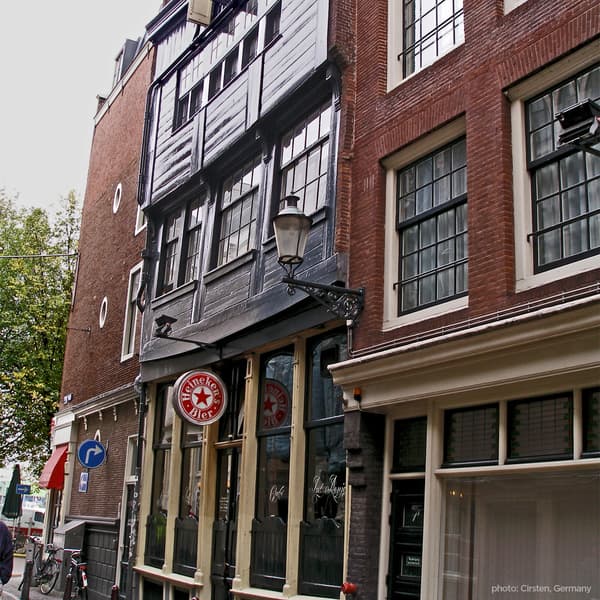
and view of the old harbor. Picture the scene in the 1600s. This café was a tavern sitting right at what was then the water's edge. Today's marketplace, Marina, was the city's harbor.
Boats sailed in and out of the harbor through an opening located where the central station sits today. The station was built on reclaimed land. From there, they could sail along the I River out to the North Sea. The Dutch East India Company alone had some 500 ships that docked here.
Read more...Show less
Most of them were about 150 feet long. It was the first great multinational corporation. Meanwhile, the Dutch West India Company concentrated on the New World, trading African slaves for South American sugar. From 1600 to 1800, the combined companies would send half a million Dutch people on business trips all over the world, broadening their horizons and enriching their homeland.
And goods from all around the world flowed into this port. From the Far East came spices like pepper and cinnamon, coffee and tea, and silk from China. Chinese porcelain became the inspiration for the famous blue-and-white dolphin. With all its wealth, Amsterdam built in grand style, erecting the gabled townhouses we see today.
The growing city had to expand beyond De Wallen, adding new neighborhoods to the West and South. Picture a ship tying up in the harbor. They've just returned home from a two-year voyage to Bali. They're bringing home fabulous wealth.
Sailors celebrate their homecoming spilling out into Zee Dijk Street. Here they'd be greeted by swinging ladies swinging red lanterns. Their first stop might have been at Zee Dijk No. 1, a tavern where they'd drop anchor for a good Dutch beer.
Ah! But our journey continues on. Start backtracking up Zee Dijk Street. We'll be following the street a couple hundred yards as it curves to the right, back into the heart of the red-light district.
Let Rick point out some things along the way and bring us up to date on the history of De Wallen. Walking Along Zee Dijk
Walking along Zeedijk
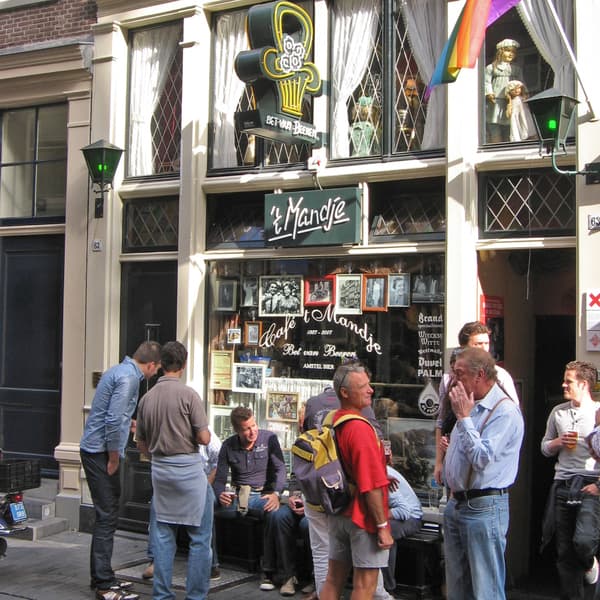
From Sleaze to Diversity In the 1600s, Zee Dijk Street was thriving with overseas trade. But soon, Amsterdam would be eclipsed by new maritime superpowers, England and France. Wars with their rivals destroyed the Dutch trading fleet and drained the economy. By the 1700s, Amsterdam had become a city of backwater bankers rather than international traders.
De Wallen never really recovered. It languished as Amsterdam's grimy old sailors' quarter. But then, in the 1960s, the neighborhood began the transformation to the place we see today. As you continue down Zee Dijk Street, you'll reach a bridge over a canal.
Read more...Show less
Remember, this street runs atop a dike. The canal is part of Amsterdam's system of locks. Until recently, once a day, a city worker would open this lock and lock it. And let the tide flush out the city's canals.
Now, bigger locks farther away control the water level and protect Amsterdam from flooding. Continue walking down Zee Dijk Street into what's now a busy and colorful neighborhood. You'll find a mix of ethnic restaurants, Thai, Portuguese, Chinese. There's bars, like the Queen's Head at number 20 on the left.
It draws a gay clientele. Remember, the red-light district is more than a sprawling brothel and a magnet for gawking tourists. People live here. As a matter of fact, there's a movement by locals to reclaim the neighborhood from tourists and from the sex trade.
The city government is shaping the character of the community by controlling business licenses. They're cutting back on red-light windows and businesses catering just to tourists and granting other businesses licenses instead. Someday, the red lights may be gone completely, but I bet there'll still be sex workers somewhere and plenty of gawking tourists. As you continue down the street, rounding the bend, it's clear that Zee Dijk is increasingly gentrified.
But back in the 1960s, it was a whole different story. Amsterdam was the world capital of experimental lifestyles, a wide-open city of sex and drugs. Then, by the 1970s, Zee Dijk Street had become unbelievably sleazy. That's where I come into the story.
When I made my first trip here, this street was nicknamed Heroin Alley. Thousands of hard-drug addicts wandered the neighborhood and squatted in old buildings. Pilbridge, the bridge we saw earlier, was a no-man's land of junkies fighting among themselves. The police just kept their distance.
Then the Dutch decided to take back this corner of their city. The first step was legalizing marijuana. They allowed coffee shops to sell pot legally. Then they crafted down on hard drugs, heroin, cocaine, and pills.
Almost overnight, the illicit drug trade dropped dramatically. Dealers got stiff sentences. Addicts got treatment. Now it's three decades later, and the policy seems to have worked.
Pot smoking has not gone up, hard drug use has gone down, and Zee Dijk Street belongs to the people of Amsterdam once again. Pause at number 63, on the left. The Café Timanja was perhaps Europe's first gay bar. It opened in 1927, closed in 1985, and is now a working bar once again.
It stands as a memorial to the woman who ran it during its heyday in the 1950s and 60s, Bette van Beren, the Queen of Zee Dijk. Bette was a lesbian, and her bar became a hangout for gays. It still is, though all are welcome. If you go inside for a drink, you'll enjoy a tiny interior crammed with photos and memorabilia.
You might see a picture of Bette cruising the streets on her motorcycle, decked out in leather. Neckties hang from the ceiling, a reminder of Bette's tradition of scissoring off customers' ties. Continue along Zee Dijk Street up to the next intersection. De Wallen is a pioneer of the Dutch concept of social control.
Here, neighborhood security doesn't come from just the police. Rather, it's neighbors looking out for each other. If Jurgen doesn't buy bread for two days, the baker asks around if anybody's seen him. Unlike in many big cities, there's no chance that anyone here could die or be in trouble and go unnoticed.
Video surveillance cameras keep an eye on the streets. So do prostitutes, who buzz for help if they spot trouble. As you stroll, watch the men who watch the women who watch out for their neighbors. Social control.
At the intersection, turn right at Korta Stormsteg Street. Head a few steps down this narrow street to the Korta Stormsteg Street. Turn left and walk along the canal. You're walking down Odeside's Akterbergwall. Sex attractions
Sex Attractions on Oudezijds Achterburgwal
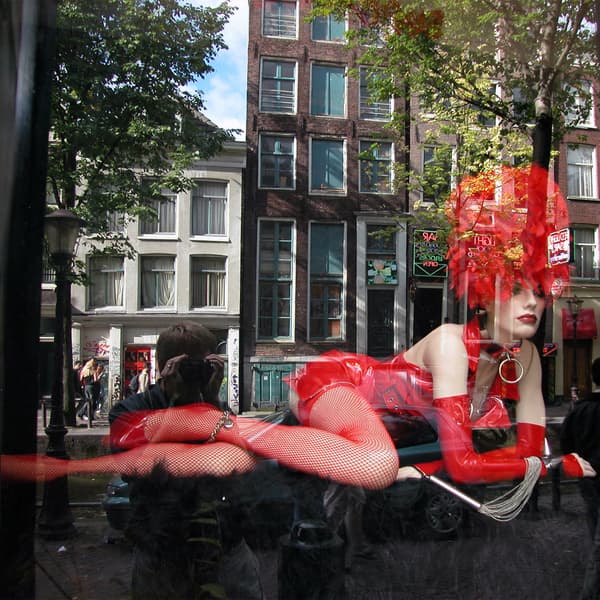
along Odeside's Akterbergwall. We're back in the familiar world of the glitzy red-light district. This beautiful tree-lined canal is the heart of neighborhood nightlife. Keep walking along the left side of the canal, making your way to the first bridge.
And now, A History of Sex, Part 1. Sex has been a very popular human activity for many years. Actually, archaeologists have found evidence of the sex trade going back to the earliest times. Roman cities always had brothels, complete with frescoes on the wall showing a menu of sex options available.
Read more...Show less
Buddhist temples have erotic carvings of couples having sex as a path to enlightenment. And the venerable Kama Sutra gives us a Hindu sex manual. The Banana Bar, up ahead at number 37, continues that grand tradition. This popular nightclub has a classy, erotic, art nouveau façade.
Inside, it's basically a strip club, but with a twist. For 50 euros, you get admission for an hour, drinks included. Undressed ladies serve the drinks perched on the bar. Touching is not allowed, but you can order a banana, and the lady will serve it to you any way you like.
Hmm. Well, I think that over. Let's continue along a few more steps. At Molensteg, turn right and cross the bridge to the other side of the canal.
Once across the bridge, you'll be turning left. But first, pause and look right to find the erotic museum at number 54. Of Amsterdam's two sex museums, this one isn't as good as the one on the dam rack in front of the station. But the erotic museum offers a peek at some of the sex services found here in the Red Light District.
Its displays include reconstructions of a prostitute's chambers, sex shop window displays, and videos of the kind of show you'd see if you went into a sexy nightclub. There's also a room dedicated to S&M, where S mannequins torment M mannequins for their mutual pleasure. Now, from the bridge, turn left. Start walking south down Odeside's Forberg Wall.
You'll pass by a shop called Absolute Danny at number 76. This shop bills itself as the place for all your sensual clothing. They sell leather and rubber outfits with dog collars, suggesting bondage scenarios. It comes in a full array of colors, from red to black to...
well, I guess that's about it. Continue south on Odeside's Okterberg Wall. We're headed for the Casa Rosso nightclub. As you walk along here, you gotta wonder, why does Amsterdam embrace prostitution, sex, and drugs?
Yeah. Don't they know how destructive these things can be? Well, it's not that the Dutch are any more liberal in their attitudes. They aren't.
They're simply more pragmatic. They understand that trying to legislate morality just doesn't work. Their solution is to make it legal and regulate it. For example, they've found that when the sex trade goes underground and unregulated, you get pimps, lobsters, and the spread of venereal disease.
When marijuana goes unregulated, you get drug dealers, gangs, and violent turf wars. Prohibition ends up causing more problems than it solves. Statistics support the Dutch system. Per capita consumption of marijuana in the Netherlands is less than half the American average.
Dutch prisons are almost empty. They actually rent them out to the Belgians who still lock up lots of people. Amsterdam's city leader, also recognized that marijuana and prostitutes are part of the edgy charm of the city. The mayor wants to keep both, but is working to get rid of the accompanying sleaze.
And speaking of legalized sleaze, up ahead, lined by pink elephants, you'll find the Theater Casa Rosso. This is the Red Light District's best-known nightclub for live sex shows. Unlike some strip clubs that draw you in to rip you off with hidden charges, the Casa Rosso is a legitimate operation. You pay a single price that includes drinks and a show.
Evening performances feature strippers. The main event is naked human beings on stage engaging in sex acts, some simulated, some completely real. You know, Rick, I think I'm reaching my limit of sights related to sex. Me too.
So let's talk about drugs again. Don't worry. We're headed for the homestretch. Continue up the canal while Rick points out several sites along the right-hand side. Marijuana sites.
Marijuana Sights
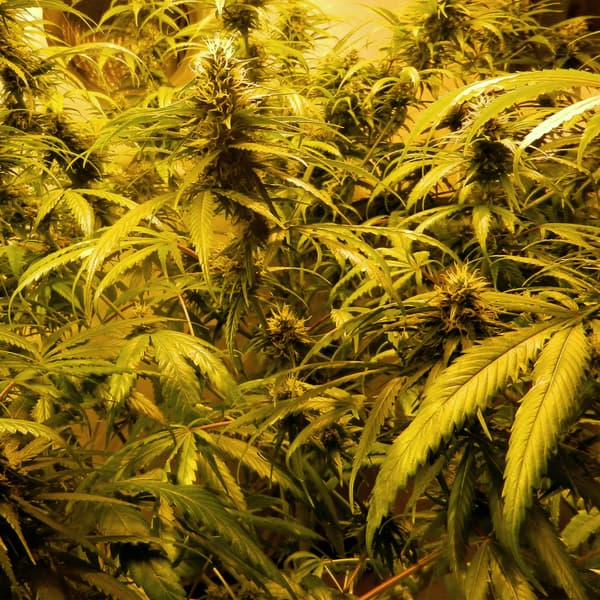
Along this block, there are four establishments dedicated to the plant known as cannabis, or marijuana. Certain strains of the cannabis plant, particularly mature females of the species sativa and indica, contain the psychoactive alkaloid tetrahydrocannabinol, or THC. When ingested, this chemical makes a person experience the sensation of being like, hi, man. The cannabis plant also has tough, fibrous stalks that can be turned into hemp products.
The buds, flowers, and leaves can be dried and smoked. The brown sap that oozes out of the leaves, called hashish, or hash, can also be smoked. The result is effects ranging from euphoria to paranoia to the munchies. The first marijuana-related site is the Cannabis College at number 124.
Read more...Show less
This is a free, non-profit public study center that explains the pros and cons of cannabis. You can read about practical hemp products, the medical uses of marijuana, and how the police persecute cannabis. You mean prosecute. Prosecute.
Ah, yes, how the police prosecute cannabis users. The pride and joy of the college is downstairs. For a small donation, you can visit the Organic Flowering Cannabis Garden, where, the sign tells you, you can admire the plant in all her beauty. The garden is small.
It fits the Dutch legal limit of three plants per person or five per household. And, if you bring your own pot, they'll let you try out their vaporizer, a device that lets you inhale without having to drink and without actually smoking, making it healthier. Continue up the street to the next cannabis site, the Hemp Gallery, at number 130. By the way, no one would say smoking pot is healthy or good for you.
It's a drug, it's dangerous, and it can be abused. The Dutch are just a fascinating example of how a society can allow its responsible adult use as a civil liberty and treat its abuse as a health and an education challenge rather than a criminal issue. They have a 24-hour track record of not arresting pot smokers and have learned that the worst way to control a substance that should be controlled is to keep it illegal. Regulations are strictly enforced.
While the sale of marijuana is allowed, advertising is not. You'll never see any promotions or advertising in windows. In fact, in many places, the prospective customer has to actually take the initiative and push a button to illuminate the menu in order to know what's for sale. And, surprisingly, marijuana is just not a big deal here, except for tourists coming from lands where you can do hard time for lighting up.
By every measure, the Dutch smoke less than the European average and about half per capita what Americans do. The Hemp Gallery is part of the Hash Museum, which we'll see next. One ticket admits you to both places. The Hemp Gallery focuses more on the wonders of industrial hemp.
You'll learn how valuable the cannabis plant was for Holland during its golden age. The leafy green plant was grown on large plantations. They turned the fibrous hemp stalks into rope and canvas for ships, and they used it to make clothing and lace. So without good old-fashioned hemp, Henry Hudson wouldn't have made it out of the harbor.
Nope. And when they got low on grog, the sailors smoked the sails. Yeah, yeah, yeah. Continue a few more steps up the street to the Hash Hemp and Marijuana Museum at number 148.
This small museum is earnest, informative, and educational. If you patiently read the displays, you'll learn plenty. Throughout history, people have used cannabis as a sacred ritual drug, from ancient Scythians to Hindus to modern Nepalis and Afghanis. And Rastafarians also smoke cannabis.
This is a Bible-based religion centered in Jamaica. To worship, they get high, bob to reggae music, and praise God. They love the Bible verse from Genesis, chapter 1, that says, God created every herb and called them all good. All over Amsterdam, you'll see the Rastafarian colors, green, gold, and red.
Yeah, man. The museum's highlight is the grow room. Here you can look through windows at real, live cannabis plants in various stages of growth, some as tall as me. These plants are grown hydroponically, in water, not soil, using grow lights.
At a certain stage, the plants are set sexed to weed out the boring males. Then they're selected to produce the most powerful strains. Our final stop is just next door, the Sensi Seed Bank store. This store serves as the museum's gift shop.
Its products are geared towards cannabis growers. They sell seeds, how-to books, and related knick-knacks. Most of the pot sold in Amsterdam's coffee shops is grown locally. Technological advances have made it easier to cultivate exotic strains each coffee shop is allowed to keep an inventory of about a pound of pot in stock at any one time.
A shop can lose its license if it exceeds this amount. With moves afoot to try to shut down Holland's marijuana business, the coffee shops are on their best behavior. On a good day, a shop like, say, the Bulldog sells about six pounds, requiring six separate deliveries. Shops with better boutique suppliers get the reputation for having better quality weed.
These are the places that proudly display a decal announcing them as winners of Amsterdam's annual Cannabis Cup. Well, we've reached the end of our tour. Dom Square is just two blocks away. Continue a few steps further up the canal to the big and busy Ode Dolan Street.
Look right, and you'll see the Royal Palace on Dom Square. We've seen a lot. We've peeked at locals from prostitutes to drug pushers to pioneer lesbians to political activists to politically active heads with green thumbs. We've talked a bit of history, a little politics, and a lot of sleaze.
Congratulations. You've survived. Now, go back to your hotel and take a shower. We hope you've enjoyed this walk through Amsterdam's red-light district.
Thanks to Jean Openshaw, the co-author of this tour. If you're doing more sightseeing in Amsterdam, check out our other tours, the Amsterdam City Walk and the Jordaan Walk. This tour was excerpted from the Rick Steves Amsterdam, Bruges, and Brussels Guidebook. For more details on eating, sleeping, and sightseeing in those cities, refer to the most recent edition of that guidebook.
For more free audio tours and podcasts, and for information about our guidebooks, TV shows, bus tours, and travel gear, visit our website at ricksteves.com. This tour was produced by Cedar House Audio Productions. Thanks! Dank u wel! Tot ziens! And goodbye for now!
Free
GPS-guided walking tour
No account needed. Walk at your own pace.
Free
13 stops ·