9 stops
GPS-guided
3.5 km
Walking
1 hour 30 minutes
Duration
Free
No tickets
About this tour
One street connects faith, democracy, literature, art, and monarchy. Then a short tram ride takes you to the park where one sculptor spent twenty years carving 212 figures about the human condition — all free, all outdoors, all extraordinary.
9 stops on this tour
Oslo Cathedral & the Iron Roses
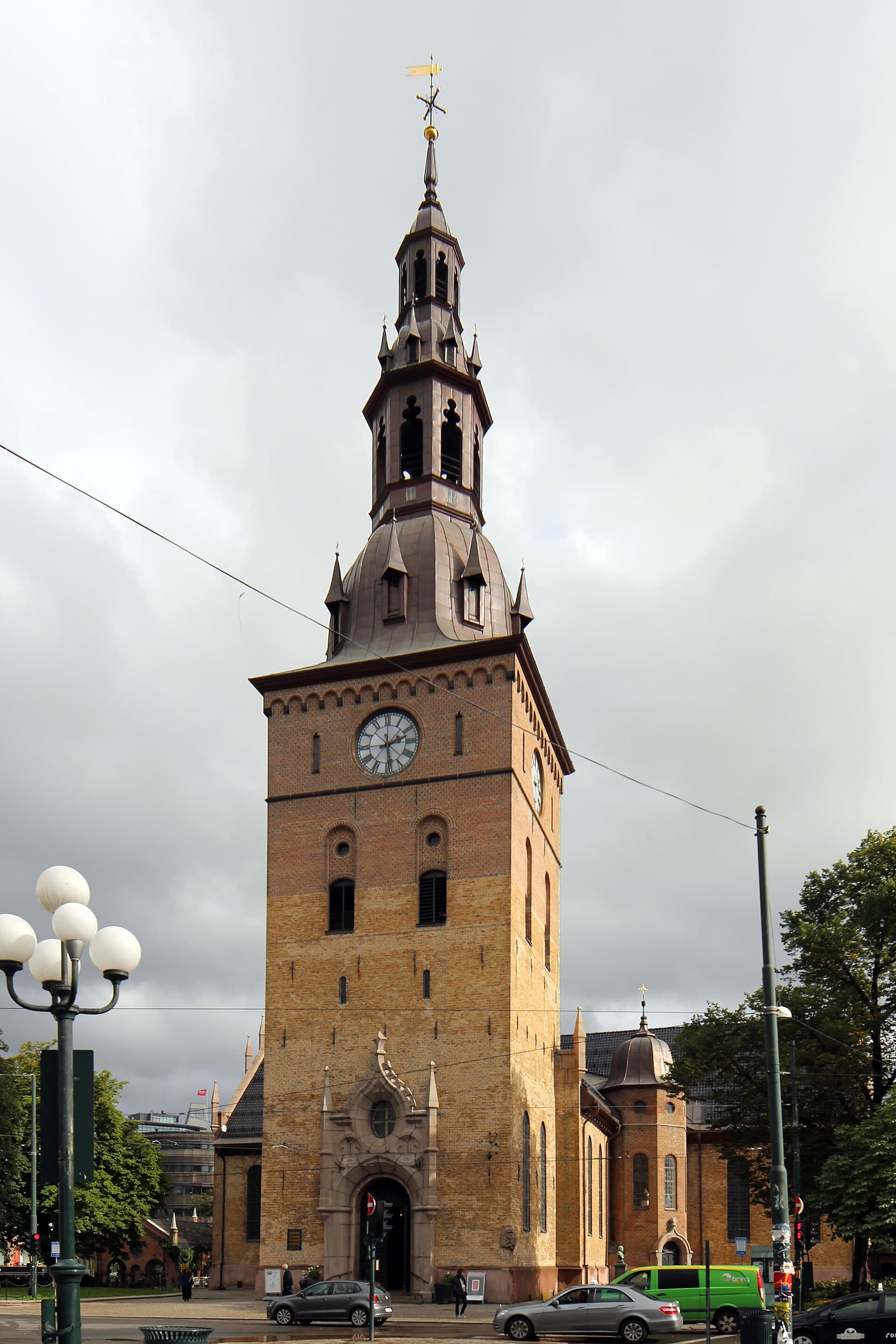
Welcome to Oslo. We're starting at the cathedral, and we're starting with something heavy — because Norway doesn't shy away from the hard stuff.
Look at the low wall beside the church. Those iron sculptures that look like roses — there are a thousand of them. Each one was handcrafted by a different person: survivors, families of victims, and ordinary people from around the world. They're a memorial to July 22, 2011, when a far-right extremist killed seventy-seven people in Oslo and on the island of Utoya. Most of the victims were teenagers at a summer camp.
Read more...Show less
Norway is a country of five million. Everyone knew someone. In the days after the attack, this cathedral became ground zero for the nation's grief. Flowers piled up against the walls — a sea of roses stretching into the street. Prime Minister Stoltenberg stood here and promised Norway would respond with more democracy, more openness, more humanity. Not revenge. Not fear. Roses.
The cathedral itself is Oslo's third attempt. Medieval Oslo had St. Hallvard's Cathedral, but the city burned to the ground in 1624. The replacement, Holy Trinity, also burned down. This building, consecrated in 1697, has managed to stay upright. Inside, the ceiling murals by Hugo Lous Mohr span from the 1930s to 1950. The stained glass windows are by Emanuel Vigeland — the lesser-known brother of the sculptor whose park we're walking to later. Emanuel's public work was sacred and beautiful. His private work was spectacularly different. We'll get to that.
Now look west, up the gentle slope. That's Karl Johans gate — Norway's most famous street, and the spine of our walk. The spire at the far end? That's where we're headed eventually — the Royal Palace. But first, we've got democracy, literature, and art to get through.
Let's walk. Head west on Karl Johans gate toward the Parliament building — about three hundred meters ahead.
Storting — Parliament
The yellow brick building on your left is the Storting — the Norwegian parliament. It's modest. Deliberately so.
Designed by the Swedish architect Emil Victor Langlet and completed in 1866, the Storting sits exactly at the midpoint of Karl Johans gate — halfway between the Cathedral and the Palace. In the symbolic geography of this street, democracy occupies the center, mediating between faith and monarchy. That placement was intentional.
Read more...Show less
Norway's democratic story begins with one extraordinary document. On May 17, 1814, at a farmstead called Eidsvoll, a hundred and twelve men gathered to write a constitution. Norway was being passed from Danish to Swedish control after the Napoleonic Wars, and these men decided to write their own rules before anyone could impose theirs. They finished in six weeks. It was one of the most liberal constitutions in the world — parliament, limited monarchy, freedom of speech. Influenced by the American and French revolutions, but with Scandinavian pragmatism. No guillotine. Just a hundred and twelve men in a farmhouse.
Every May 17th, Norwegians celebrate Constitution Day right here on Karl Johans gate. Children's parades march past this building waving flags and eating ice cream. The Royal Family waves from the Palace balcony at the top of the street. It's the biggest day of the Norwegian year, and it celebrates — of all things — a document. Only in Scandinavia would the national holiday be about paperwork.
By the way, the Storting has a hundred and sixty-nine members. The entire Norwegian parliament could fit in a large cinema. But this small parliament from this small country selects the committee that awards the Nobel Peace Prize — making it arguably the most influential legislative body of its size on earth.
Now look across the street. That ornate building with the corner windows is the Grand Hotel. See the first-floor windows facing the street? That's where Henrik Ibsen sat. Every single day. Let's cross over.
Grand Hotel — Ibsen's Window
Look up at those windows on the first floor of the Grand Hotel. Imagine it's 1901. An old man with enormous white mutton-chop whiskers is sitting at a corner table inside the Grand Cafe, right behind the glass. He has a newspaper, a drink, and absolutely no interest in conversation. This is Henrik Ibsen, and this is his daily ritual.
Every day — every single day — Ibsen would walk from his apartment around the corner to the Grand Cafe, sit at his regular table by the window, and watch the street. And every day, crowds would gather outside on the pavement to watch him watching them. The most famous playwright in the world, sitting in a window, being observed by the city he'd spent his career dissecting. It was one of Oslo's great daily spectacles.
Read more...Show less
Ibsen is Norway's Shakespeare. A Doll's House, Hedda Gabler, Peer Gynt, The Wild Duck — he invented modern realistic drama. Before Ibsen, plays were about kings and myths. After Ibsen, they were about unhappy marriages, social hypocrisy, and the lies people tell themselves. Every serious playwright for the next century — Arthur Miller, Tennessee Williams, Eugene O'Neill — was working in his shadow.
He spent his last eleven years here in Oslo, from 1895 until his death in 1906. Wrote nothing. Just walked, sat, watched, and drank. His apartment on Henrik Ibsens gate — yes, they named the street after him — is now a museum. His study is preserved exactly as he left it.
Here's the detail that gets me. On his deathbed, Ibsen lay unconscious for days. A nurse, comforting visitors, said: "He seems to be feeling better today." Ibsen opened his eyes and said, clearly: "Tvert imot." On the contrary. Then he died. Whether he was correcting the nurse or delivering his own final curtain line, it's perfect Ibsen.
The Grand Hotel also hosts every Nobel Peace Prize winner before the December ceremony. The balcony above you is where they wave to the crowd. King, Mandela, Mother Teresa, Obama — all up there.
Continue west on Karl Johans gate. About two hundred and fifty meters ahead on your left, you'll see the University. That's where Edvard Munch left his greatest gift to Oslo — and it's not The Scream.
University Aula — Munch's Sun
The neoclassical building with the columns on your left is the University of Oslo's old campus. Inside is one of the great hidden treasures of European art — Edvard Munch's Aula murals.
Everyone knows The Scream. But Munch's real masterpiece might be in this building. The centerpiece is called The Sun — an enormous painting of a blazing sun rising over the Oslofjord, its rays exploding outward in bands of gold and white. It's eleven and a half meters wide. It fills an entire wall. And it's not anxious or tortured — it's triumphant. This is Munch at peace.
Read more...Show less
The story behind these paintings nearly destroyed him. In 1909, the university announced a competition to decorate the Aula — the great ceremonial hall. Munch entered. So did Emanuel Vigeland. The competition dragged on for years. Munch worked obsessively, painting and repainting enormous canvases. The jury deadlocked. Critics attacked. It became a national drama.
Finally, in 1916, Munch won. He'd spent seven years on the project. Eleven paintings line the walls, depicting the sun, human history, and the Norwegian landscape. They're considered among his greatest works, and almost nobody outside Norway has seen them.
Imagine Munch watching workmen install these canvases. He was fifty-three. He'd survived alcoholism, a nervous breakdown, and a gunshot wound to his hand during a fight with a lover. The man who painted The Scream had found a way to paint pure light.
Check if the Aula is open — step inside if you can. Stand under The Sun. Most visitors come to Oslo knowing The Scream. They leave knowing The Sun.
Keep walking west. In about a hundred and fifty meters you'll see the National Theatre on your right — the building with two bronze men standing guard at the entrance. They're friends of ours.
National Theatre
Those two bronze statues flanking the entrance are Henrik Ibsen on the left and Bjornstjerne Bjornson on the right. We've already met Ibsen. Bjornson was his counterpart — poet, novelist, and the man who wrote Norway's national anthem. He won the Nobel Prize in Literature in 1903.
Think of them as two sides of the Norwegian soul. Ibsen probed the darkness — repression, hypocrisy, the lies behind respectable facades. Bjornson celebrated the light — Norwegian landscapes, folk culture, national pride. Ibsen made Norwegians uncomfortable; Bjornson made them proud. Together, they gave a young nation a literature that rivaled anything from London, Paris, or St. Petersburg.
Read more...Show less
The theatre itself was designed by Henrik Bull and opened in 1899. Norway wouldn't gain full independence from Sweden until 1905, so a national theatre was a statement of intent: we are a real country, with a real culture, and here's the proof.
Now look up Karl Johans gate toward the Palace. This is the money shot. The yellow palace sits perfectly framed at the end of the boulevard, crowning the gentle hill like a full stop at the end of a sentence. Every line of this street leads to that building. That's where we're headed.
As you walk up the gentle incline, notice how the character of the street changes. The pedestrian shopping zone gives way to a wider, tree-lined promenade. The pace slows. The people thin out. You're leaving democratic Oslo behind and entering royal Oslo. The lime trees — lindens — have been here since the boulevard was first planted in the 1840s.
Edvard Munch painted this street twice, and the two paintings tell you everything about his journey as an artist. In 1890, he painted a bright, warm, pointillist scene of people strolling in sunshine. Two years later he painted the same street as a nightmarish procession of corpse-white faces marching toward the viewer. Same street. Same painter. Two completely different minds. He was waiting for a lover who never showed up.
The Palace is just ahead. Walk to the top of the hill.
Royal Palace
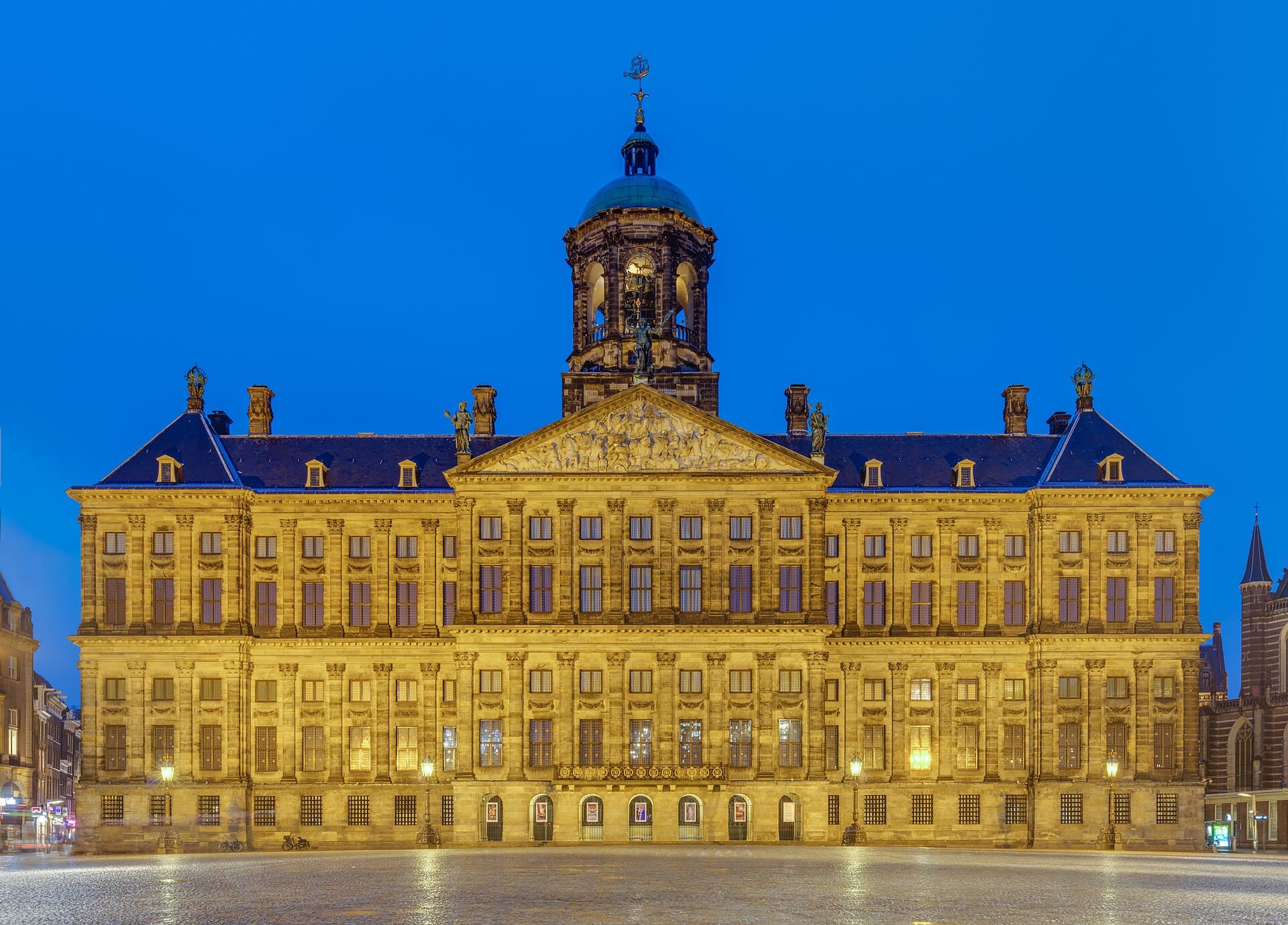
Turn around. Look back down Karl Johans gate. The Cathedral spire is visible in the distance. You've just walked the entire symbolic axis of Norway — faith, democracy, literature, art, theatre, monarchy — in about a kilometer and a half.
Now look at the palace. The man who commissioned it was born Jean-Baptiste Bernadotte in southern France. He was one of Napoleon's marshals who, through a spectacularly unlikely chain of events, was elected Crown Prince of Sweden and Norway in 1810. He didn't speak Norwegian. He didn't speak Swedish. He took the name Karl Johan and decided his new kingdom needed a palace.
Read more...Show less
Construction started in 1824. The parliament kept cutting the budget as a political protest against the king's push for closer Swedish-Norwegian union. They halted funding entirely from 1827 to 1833. When the palace finally finished in 1849, Karl Johan had been dead five years. He never slept here.
Notice what's missing. No wall. No fence. No gate. The Palace Park is open to everyone, always. You've been walking through it. In a continent of walled-off royal residences, this is a quiet revolution — Norwegian democracy expressed in landscaping.
The palace wasn't opened to public tours until 2002. A hundred and fifty years of "look but don't touch" before they finally let people inside.
All right — here's where the walk takes a turn. We've covered Norway's political and cultural heart. Now we're going to meet the man who spent twenty years sculpting the human body in every possible state — birth, love, rage, death — and put it all in a public park for free.
Vigelands park is about two kilometers northwest. We could walk it, but I'd rather you save your legs for the park itself. Head to the Nationaltheatret tram stop — it's right behind the National Theatre we passed. Take tram 12 toward Majorstuen. Three stops, five minutes. I'll meet you at the park gate.
While you ride, look out the window. You're passing through Frogner — Oslo's wealthiest neighborhood. Embassy row. Hundred-year-old apartment buildings. Volvo station wagons. This is the other Oslo — quiet, moneyed, and about to be confronted with two hundred and twelve naked sculptures.
Vigeland Park — Main Gate & The Bridge
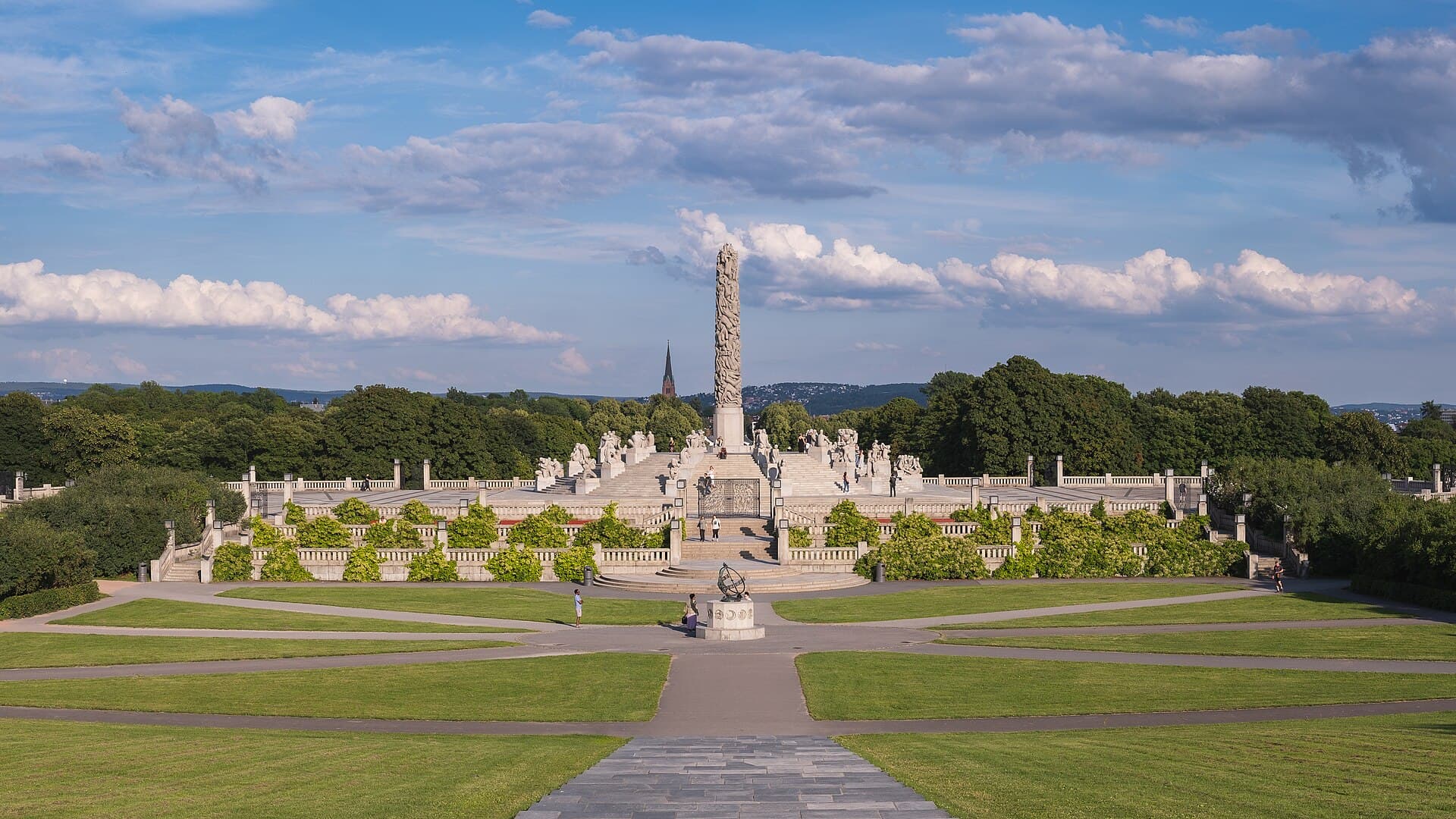
Welcome to Frognerparken — and to the Vigeland Installation inside it. If you came by tram, walk from Majorstuen station along Kirkeveien about five minutes to the main gate. You'll see the wrought-iron entrance and the bridge ahead.
Stop at the gate and take this in. Everything you're about to see — every statue, every relief, every granite figure — was made by one man. Gustav Vigeland. Two hundred and twelve sculptures in bronze and granite, covering eighty acres, open twenty-four hours a day, every day of the year, completely free. There is nothing else like this anywhere on earth.
Read more...Show less
The deal Vigeland struck with Oslo was extraordinary. In exchange for donating all his future work to the city, Oslo gave him a studio to live and work in for the rest of his life. He kept his end of the bargain. So did Oslo.
Now walk onto the bridge. It's a hundred meters long and lined with fifty-eight bronze sculptures depicting the full range of human life — men, women, children, lovers, fighters, dreamers. Look at them as you walk. They're not idealized Greek bodies. They're real. Muscles strain, bellies sag, babies wail. Vigeland was interested in the truth of the human form, not the flattery.
About halfway across on the left side, look for a small bronze figure of a toddler stamping his foot in pure rage. That's Sinnataggen — the Angry Boy — and he's Vigeland's most famous individual sculpture. His left hand has been polished golden by millions of visitors rubbing it for luck.
In 1992, thieves sawed Sinnataggen off at the ankle and dumped him in a garbage heap. He was recovered, repaired, and given a more secure base. A tiny bronze toddler, thrown in the trash and rescued. There's something deeply Norwegian about the outrage that followed.
When you reach the end of the bridge, keep walking straight ahead. The Fountain is next — and it's where Vigeland's vision gets seriously ambitious.
Vigeland Park — The Fountain
You're standing at the Fountain — the middle tier of Vigeland's grand axis. Six bronze giants hold a massive bowl above their heads while water cascades down around them. Beneath their feet, a pool is surrounded by twenty tree-of-life groups: bronze figures entwined with trees at every stage from sapling to decay. Birth, growth, death, renewal — the whole cycle, cast in metal.
Vigeland worked on the Fountain from 1907 to 1928 — over twenty years. He originally envisioned it for a square in central Oslo, but the city kept changing its mind about where to put it. By the time they settled on Frognerparken, Vigeland had expanded his vision into the massive installation you're walking through now.
Read more...Show less
Look closely at the tree sculptures. In one, a young man reaches upward through branches. In another, an old woman sinks into roots. Each figure tells a chapter of the same story — the human body as it grows, loves, struggles, and returns to the earth. Vigeland saw no difference between the beautiful and the grotesque. It was all life.
The floor around the fountain is a mosaic labyrinth — 1,800 square meters of black-and-white granite forming geometric patterns. Walk it slowly. Vigeland designed every inch.
By the way, some art historians have noted uncomfortable parallels between Vigeland's monumental, nude, idealized forms and the aesthetic preferences of European fascism in the 1930s. He did invite Nazi officers to his studio during the occupation. The academic consensus is that there's no political content in the actual sculptures — they're about biology, not ideology — but the debate has never fully resolved. Art doesn't exist in a vacuum, even in a park.
Now look up the hill ahead. See the column rising above everything? That's the Monolith — Vigeland's masterpiece, and the reason this park exists. Walk up the stairs. It's about two hundred meters and the climb is worth every step.
Vigeland Park — The Monolith
You're at the highest point of the park, and in front of you is the Monolith — seventeen meters of solid granite depicting a hundred and twenty-one intertwined human figures struggling upward.
Stand close and look up. The figures are tangled together in a single vertical mass — bodies climbing, reaching, falling, holding on. It depicts the full cycle of human life from birth at the base to death at the top, all merged into one column. Depending on where you stand, it looks different every time. Walk around it slowly.
Read more...Show less
The original granite block was quarried from Iddefjord in southeastern Norway and weighed around two hundred and seventy tons. Three stone carvers — Nils Jonsson from Sweden, Karl Kjaer from Denmark, and Ivar Broe from Norway — spent fourteen years chiseling it into shape, from 1929 to 1943. Vigeland designed every figure, every gesture, every hand. He made full-size plaster models that the carvers followed.
Vigeland died in 1943 — the same year the Monolith was finished. He never saw it installed in the park. The man who spent two decades creating the most ambitious sculpture project of the twentieth century didn't live to see it completed.
The thirty-six figure groups on the plateau around the Monolith continue the theme — circles of human life at every age. Children playing. Lovers embracing. Old people resting. The dead being carried away. It's all here, under the open sky, in the middle of a public park in Oslo.
This park gets up to two million visitors a year, making it Norway's most visited attraction. More than the fjords. More than the Northern Lights. People come here from all over the world to see what one man's obsession produced.
Come at sunrise sometime, if you can. The long shadows turn the Monolith into something otherworldly, and you'll have the whole place to yourself.
Our walk ends here — at the top of a hill, in front of a column of human life, in a park that's open to everyone, always, for free. That's the most Norwegian ending I can think of.
If you're hungry, walk south through the park toward Frogner Manor — there's a cafe and restaurant in the old estate building. If you want to see where Vigeland actually lived and worked, his studio is now the Vigeland Museum, just south of the park entrance. And if you want the strangest museum in Scandinavia, take the T-bane to Slemdal and find the Emanuel Vigeland Museum — Gustav's brother built his own mausoleum, bricked up the windows, and covered the walls with erotic frescoes. You have to bow under his ashes to get out.
Thanks for walking with me. Enjoy Oslo.
Free
GPS-guided walking tour
No account needed. Walk at your own pace.
Free
9 stops · 3.5 km