13 stops
GPS-guided
3.8 km
Walking
1 hour 40 minutes
Duration
Free
No tickets
About this tour
From a palace built by a Frenchman who couldn't speak Norwegian to a thousand-year-old city buried under your feet. Walk Norway's grand boulevard, stand where the Nobel Peace Prize is awarded, and end at the edge of the fjord.
13 stops on this tour
Royal Palace
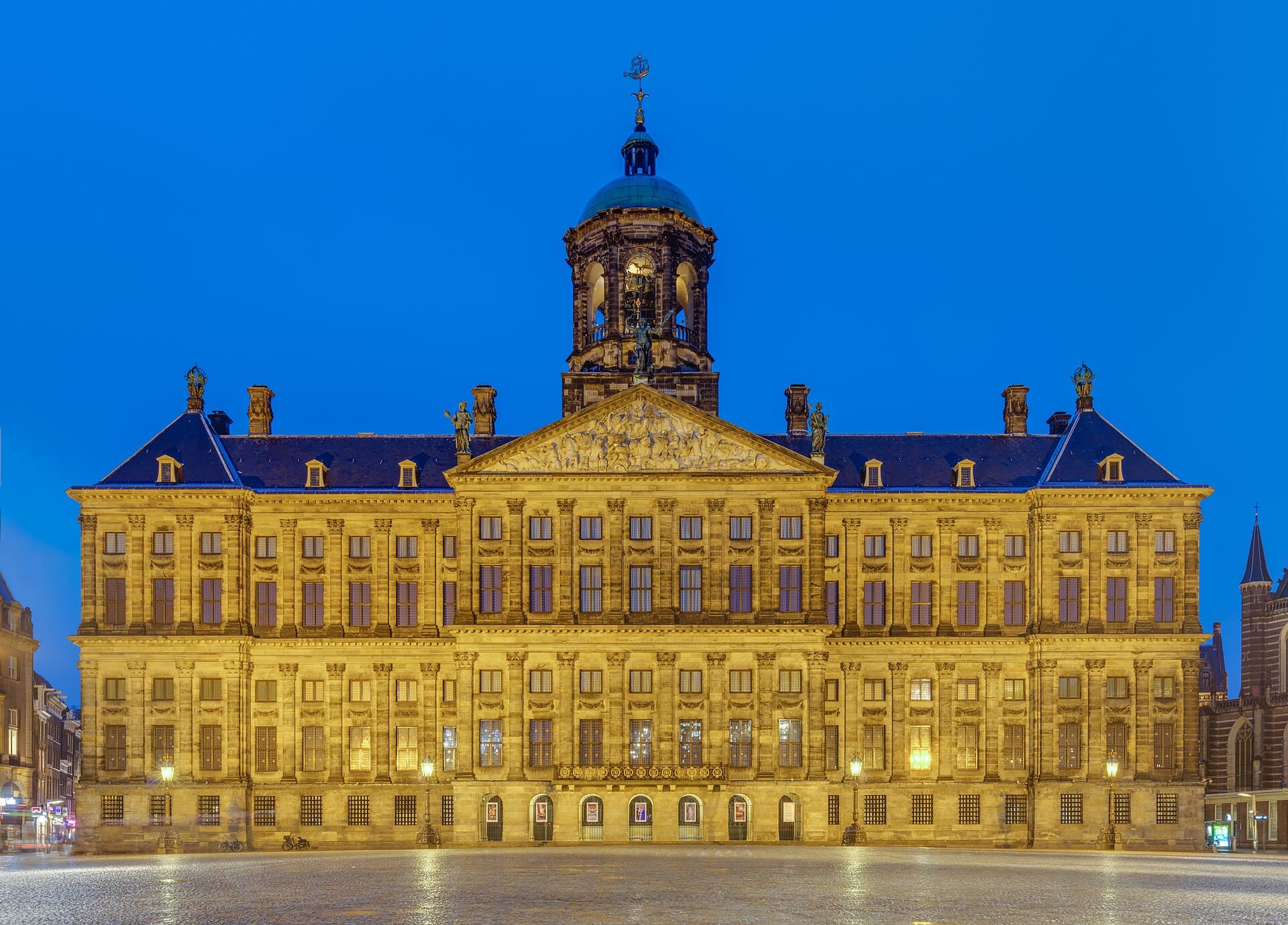
Welcome to Oslo. I'm so glad you're here. We're starting at the top of the hill, at the Royal Palace, because this is where Norway's modern story begins — and it begins with one of the strangest career changes in European history.
Look up at the yellow neoclassical building in front of you. It's handsome, restrained, not trying too hard. That's very Norwegian. But the man who commissioned it was anything but restrained. His name was Jean-Baptiste Bernadotte. He was born in southern France, became one of Napoleon's top marshals, and then — through a truly bizarre chain of diplomatic events — was elected Crown Prince of Sweden and Norway in 1810. He didn't speak a word of either language. He took the name Karl Johan and decided his new kingdom needed a proper palace.
Read more...Show less
Construction began in 1824. The architect, Hans Linstow, was a Danish-born architect with a military-administrative background and no major buildings to his name. His original design was ambitious — a grand H-shaped building — but the Norwegian parliament kept cutting his budget. They weren't just being cheap. They were making a political statement: we don't want closer union with Sweden, and we're not paying for your palace. Construction halted entirely from 1827 to 1833 while politicians refused funding. When it finally finished in 1849, King Karl Johan had been dead for five years. He never spent a single night here.
Now, notice something unusual about this palace. Look around. Where's the wall? Where's the fence? Where's the gate? There isn't one. The Palace Park is completely open to the public. You can walk right up to the building. In a continent full of walled-off royal residences, this is remarkable — and it's deliberate. It's a statement about Norwegian democracy, about the relationship between the monarchy and the people. The changing of the guard happens daily at one-thirty in the afternoon, but it feels casual, almost folksy.
By the way, the palace wasn't opened to public tours until 2002. For over a hundred and fifty years, ordinary Norwegians could see the outside but never step in.
When you're ready, turn around and face downhill. That boulevard stretching out below you — all the way to the spire in the distance — that's Karl Johans gate, Oslo's grand promenade. We're going to walk the whole thing. Let's go.
Palace Park
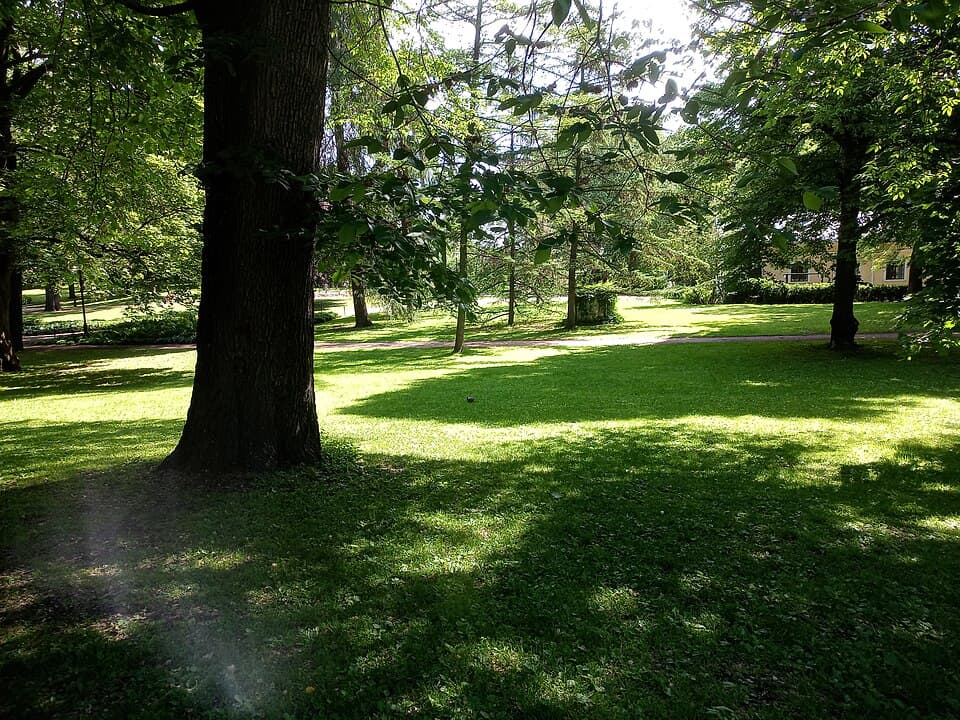
As you start walking downhill, you're entering the Palace Park — Slottsparken. Take a moment. This is one of the loveliest green spaces in any European capital, and hardly anyone outside Norway knows it exists.
The park was designed in the English landscape style in the 1840s by the same team that laid out Karl Johans gate, with winding paths, mature trees, and rolling lawns that feel a world away from the city below. In summer, Oslo residents spread out on the grass with picnic blankets, books, and bottles of wine. In winter, the bare trees frame views of the city below that look like a black-and-white photograph. The park is open to everyone, always — no tickets, no closing time. That open-access philosophy that started with the fence-free palace extends to every blade of grass here.
Read more...Show less
Look to your left as you walk. Through the trees, you can see the rooftops of Oslo stretching toward the Oslofjord. On a clear day, the water glitters in the distance. That's where we're headed — all the way down to the harbor.
Now, the boulevard you're about to step onto connects three pillars of Norwegian governance in a single straight line. The Palace behind you — the monarchy. The Parliament building halfway down — democracy. And the Cathedral at the far end — the church. Three institutions, one street, one line of sight. It was designed that way on purpose. When they laid out Karl Johans gate in the 1840s, this symbolic axis was built right into the urban plan.
The street is named after King Karl Johan — our French-born king who never lived in his own palace. It was renamed in 1852, after his death. Norwegians are generous like that.
Here's something wonderful about this park. Edvard Munch used to walk through here. Ibsen used to walk through here. Every significant Norwegian figure of the last century and a half has passed under these trees at some point. It's not a grand formal garden — it's a shortcut, a meeting place, a spot to sit with a takeaway coffee. That casualness is the whole point.
Keep walking downhill. The trees lining the upper section are lime trees — lindens — and this part of the boulevard has a wide, relaxed, promenade feel. Enjoy it. In about two hundred meters, on your right, you'll see a grand building with two statues flanking the entrance. That's our next stop — the National Theatre.
National Theatre
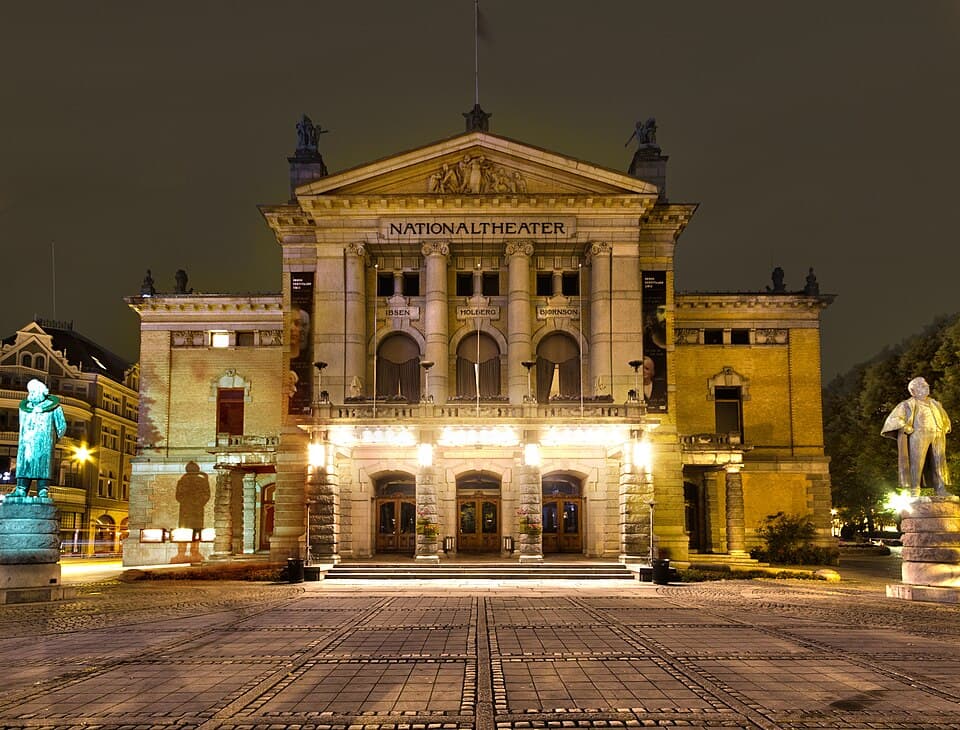
Stop here and look at the entrance to the National Theatre. See those two statues guarding the front door? The man on the left is Henrik Ibsen — probably the most important playwright since Shakespeare. The man on the right is Bjornstjerne Bjornson — poet, novelist, and the man who wrote Norway's national anthem. Between them, these two giants essentially invented Norwegian cultural identity. And here they are, frozen in bronze, eternally keeping watch over the country's main theatre.
The building was designed by Henrik Bull and opened in 1899, in a style that blends neo-rococo with national romanticism — a deliberate architectural statement about where Norwegian culture was heading. It's deliberately grand — Norway had only been writing its own constitution since 1814 and wouldn't gain full independence from Sweden until 1905. A national theatre was a statement of intent: we are a real country, with a real culture, and here's the building to prove it.
Read more...Show less
Ibsen is the bigger story. He's Norway's most famous cultural export, the man who wrote A Doll's House, Hedda Gabler, Peer Gynt, and The Wild Duck. He basically invented modern realistic drama. Before Ibsen, most plays were about kings and myths. After Ibsen, plays were about unhappy marriages, social hypocrisy, and the lies people tell themselves. Every serious playwright for the next century — Arthur Miller, Tennessee Williams, Eugene O'Neill — was working in Ibsen's shadow.
Bjornson, on the other side, was equally important in his time. He won the Nobel Prize in Literature in 1903, the first Norwegian to win a Nobel in anything. His song "Ja, vi elsker dette landet" — Yes, We Love This Country — became the national anthem. While Ibsen probed the dark corners of the human soul, Bjornson celebrated Norwegian landscapes, folk culture, and national pride. Ibsen made Norwegians uncomfortable; Bjornson made them proud. Norway needed both. Together, they gave a small, young nation a literature that rivaled anything being written in London, Paris, or St. Petersburg.
By the way, we're going to meet Ibsen again in a few minutes, at his favorite table in the Grand Hotel. That story is even better.
Now, continue east along Karl Johans gate. About a hundred and fifty meters ahead on your left, you'll pass the University of Oslo. Look for the grand neoclassical building set back from the street. That's where Edvard Munch — Norway's other genius — left his mark.
University Aula — Munch's Sun
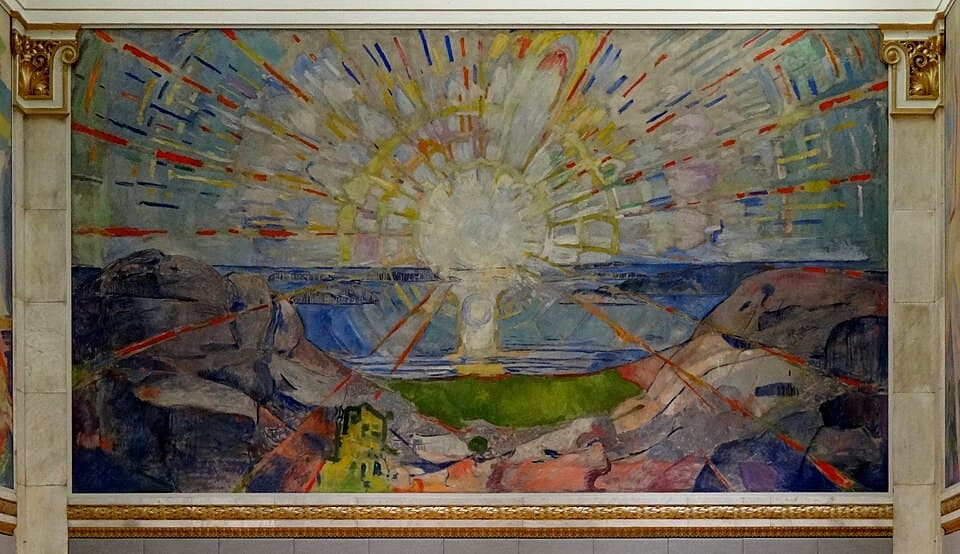
Look to your left. That neoclassical building with the columns is the University of Oslo's old campus, and inside is one of the great hidden treasures of European art — Edvard Munch's monumental Aula murals.
Most people know Munch for The Scream — the swirling sky, the agonized face, the bridge over the fjord. But the Aula murals are something completely different. The centerpiece is called The Sun — an enormous painting of a blazing sun rising over the Oslofjord, its rays exploding outward in bands of yellow, gold, and white. It's eleven and a half meters wide. It fills an entire wall. And it's not anxious or tortured — it's triumphant. This is Munch at peace.
Read more...Show less
The story behind these paintings nearly destroyed him. In 1909, the university announced a competition to decorate the Aula — the great ceremonial hall. Munch entered, and so did Emanuel Vigeland, whose brother Gustav was already the most famous sculptor in Norway. The competition dragged on for years. Munch worked obsessively, painting and repainting enormous canvases in a rented outdoor studio. The jury couldn't decide. The public debated. Critics attacked. The whole thing became a national drama.
Finally, in 1916, Munch won. He'd spent seven years on the project. The result is extraordinary — eleven paintings lining the walls of the hall, depicting the sun, human history, and the Norwegian landscape. They're considered among his greatest works, and hardly anyone outside Norway has seen them.
Imagine Munch in 1916, watching workmen install these canvases. He was fifty-three. He'd survived alcoholism, a nervous breakdown, and a gunshot wound to his hand during a fight with a lover. The man who painted The Scream had found a way to paint pure light.
The Aula is sometimes open to visitors — check at the entrance. If it's open, step inside and stand under The Sun. Let the light hit you. This is the painting that proves Munch was more than his darkest moment. Most people come to Oslo knowing The Scream. They leave knowing The Sun. You won't regret the detour.
Continue along Karl Johans gate. In about two hundred meters, across the street on your right, you'll see the Grand Hotel. Look for the ornate facade and the corner windows on the first floor. That's where our friend Henrik Ibsen is waiting.
Grand Hotel — Ibsen's Window
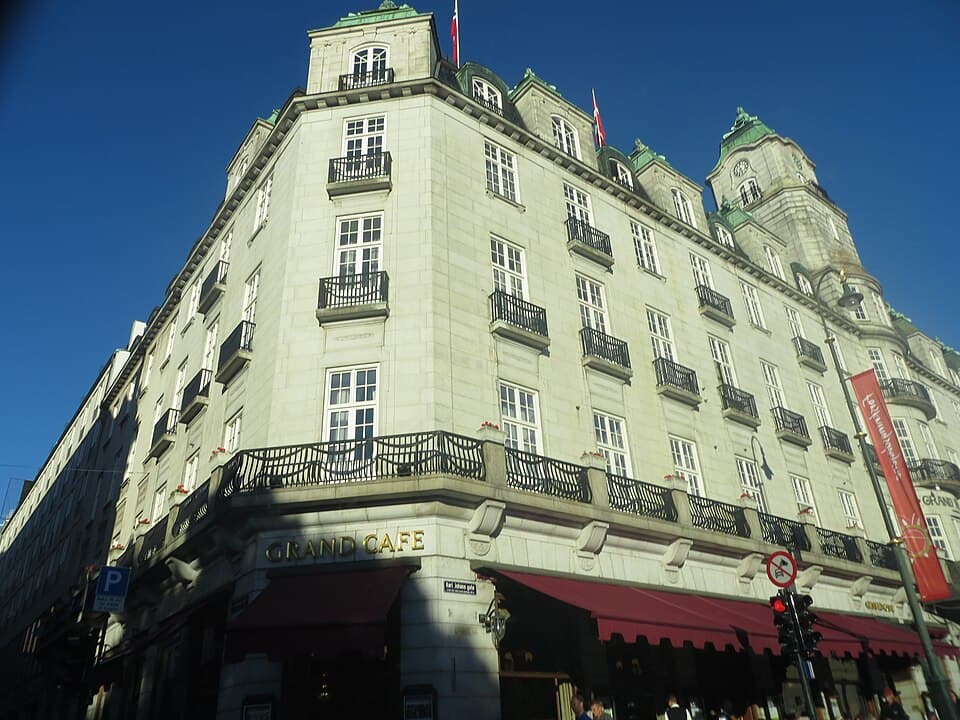
Look across at the Grand Hotel — the most storied hotel in Norway. See the windows on the upper floor, the ones overlooking Karl Johans gate? Now imagine it's nineteen-oh-one. An old man with magnificent white mutton-chop whiskers is sitting at a corner table inside the Grand Café, right behind those windows. He has a newspaper, a drink, and absolutely no interest in talking to anyone. This is Henrik Ibsen's daily ritual.
Every single day, without fail, Ibsen would walk from his apartment around the corner to the Grand Café, sit at his regular table by the window, and spend the afternoon watching the street. And every day, people would gather outside on the pavement to watch him watching them. It became one of Oslo's great daily spectacles — the most famous playwright in the world, sitting in a window, being observed by the city he'd spent his career dissecting.
Read more...Show less
Ibsen lived the last eleven years of his life in Oslo, from 1895 until his death in 1906. He wrote nothing during those final years. He just walked, sat, watched, and drank. His apartment on Henrik Ibsens gate — yes, they named the street after him — is just a few minutes from here, and it's now a museum. If you visit, you'll see his study exactly as he left it, down to the paintings on the wall and the position of the desk. The man who dissected other people's domestic lives kept his own remarkably intact.
Here's the detail that gives me chills. On his deathbed, Ibsen lay unconscious for several days. His nurse, trying to comfort visitors, said, "He seems to be feeling a little better today." Ibsen opened his eyes and said, clearly: "Tvert imot" — "On the contrary." Then he died. Nobody knows if he was correcting the nurse, making a philosophical statement, or delivering his own final curtain line. It's perfect Ibsen either way.
By the way, the Grand Hotel has another claim to fame. Every December, the Nobel Peace Prize winners stay here before the ceremony. The balcony overlooking Karl Johans gate is where they wave to the crowd. Martin Luther King, Nelson Mandela, Mother Teresa, Barack Obama — they all stood up there.
Now look directly across the street from the Grand Hotel. That yellow brick building with the semi-circular facade is the Storting — Norway's parliament. Let's cross over.
Storting — Parliament
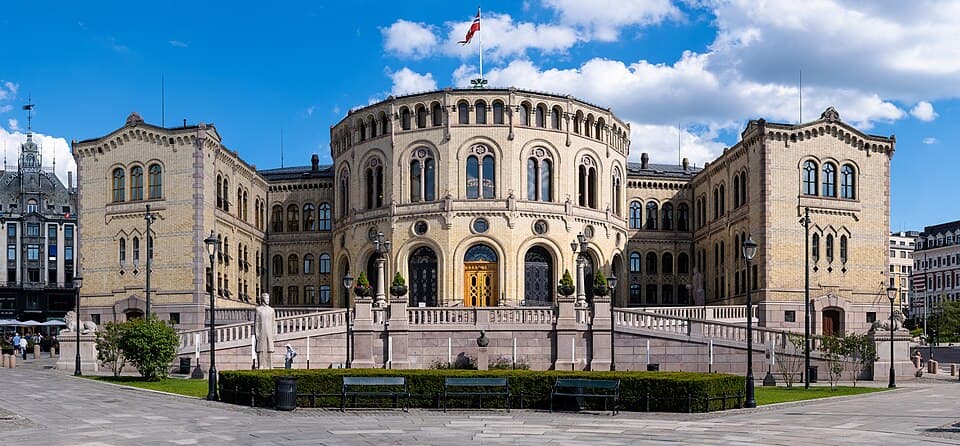
You're standing in front of the Storting, the Norwegian parliament. It's not a big building. It's not a grand building. And that tells you something important about Norway.
The building was designed by the Swedish architect Emil Victor Langlet and completed in 1866. Yellow brick, round-arched windows, a style that blends Romanesque and Renaissance elements. It sits right at the midpoint of Karl Johans gate, exactly halfway between the Palace and the Cathedral. That placement is no accident. In the symbolic geography of this street, democracy sits between monarchy and faith — mediating, balancing, holding the center.
Read more...Show less
Norway's democratic story starts with a single extraordinary document. On May 17, 1814, at a farmstead called Eidsvoll, one hundred and twelve men gathered to write a constitution. Norway was being transferred from Danish to Swedish control after the Napoleonic Wars, and these men decided their country needed its own set of rules before anyone else could impose theirs. They wrote the Eidsvoll Constitution in just six weeks. It was one of the most liberal constitutions in the world at the time — it established a parliament, limited the power of the king, and guaranteed freedom of speech and religion. It was influenced by the American and French constitutions, but with a distinctly Scandinavian pragmatism. No revolution, no guillotine — just a hundred and twelve men in a farmhouse, writing the rules.
Every May 17th, Norwegians celebrate Constitution Day, and Karl Johans gate is the center of everything. Children's parades march past this building, waving flags and eating ice cream. The Royal Family watches from the Palace balcony at the top of the street. It's Norway's biggest national celebration, and it's not about military strength or imperial glory — it's about a constitution. Only in Scandinavia.
By the way, the Storting has one hundred and sixty-nine members. Norway's entire parliament would fit comfortably in a mid-sized movie theatre. But this small parliament from this small country has made outsized contributions to global peace — not least through the Nobel Peace Prize, which is selected by a committee appointed by this very body.
Look downhill from here. See the spire in the distance? That's Oslo Cathedral, our next major stop. Walk about three hundred meters east along Karl Johans gate. As you walk, notice how the street changes — the wide promenade gives way to a pedestrian shopping street. Buskers, ice cream shops, the occasional accordion player. This is Karl Johans gate at its most democratic — everyone's here, everyone's equal, everyone's window-shopping.
Oslo Cathedral & the Iron Roses
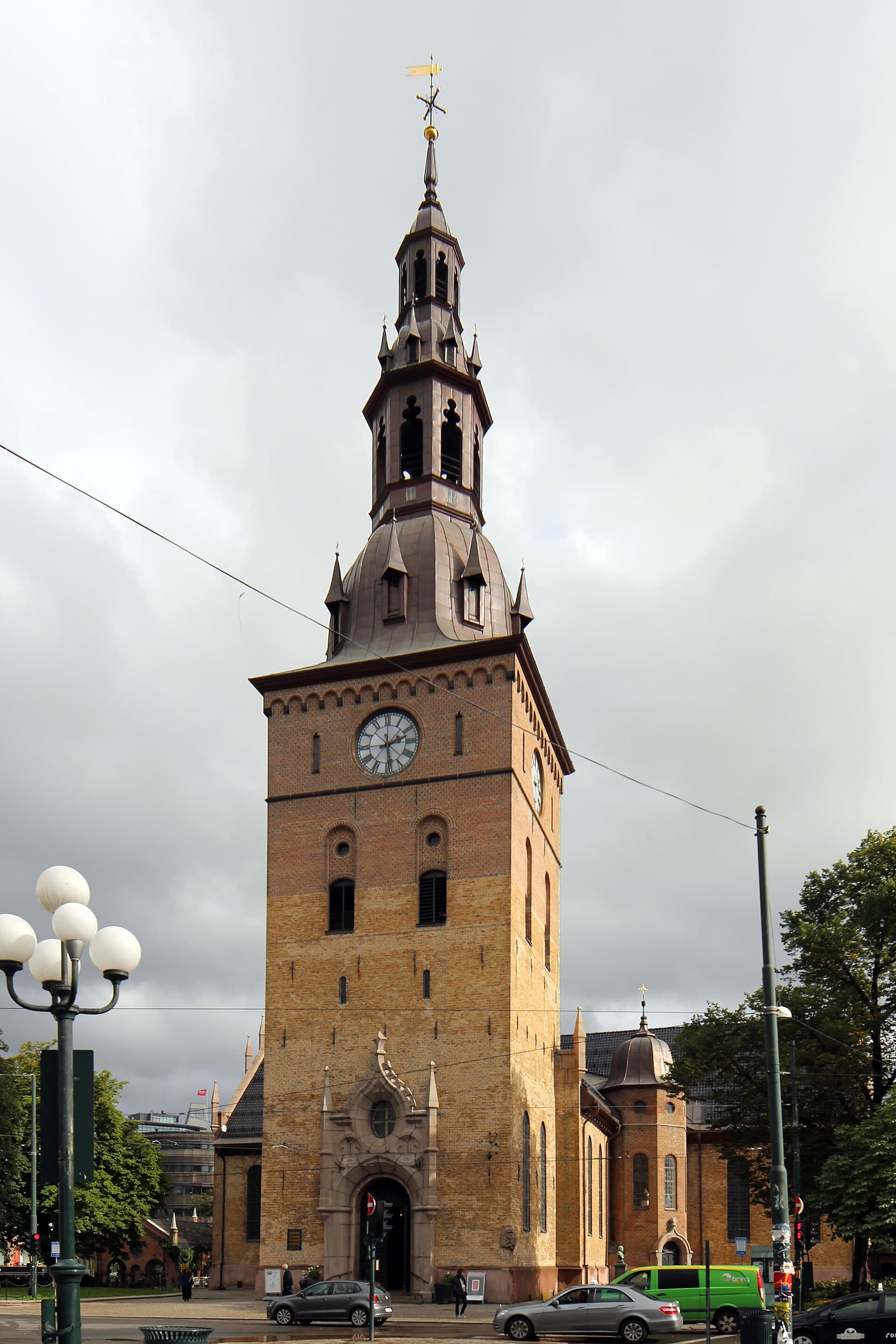
Here we are at Oslo Cathedral, and before we talk about the building, I need to tell you about the roses.
Look along the low wall beside the cathedral. You'll see a permanent installation of iron roses — one thousand of them, each one handcrafted, each one unique. They were made by survivors, victims' families, and ordinary people from around the world. They're a memorial to the July 22, 2011 attacks — the worst act of violence in Norway since the Second World War.
Read more...Show less
On that day, a far-right extremist detonated a car bomb in the government quarter, killing eight people, then drove to the island of Utoya and opened fire at a youth summer camp. Sixty-nine more were killed, most of them teenagers. Seventy-seven people died in total. The nation was shattered.
Norway is a country of five million people. Everyone knew someone who knew someone. In the days that followed, this cathedral became the center of the nation's grief. A vast sea of real flowers appeared outside — roses, tulips, bouquets — piling up along the walls and spilling into the street. Prime Minister Jens Stoltenberg stood here and said Norway would respond with "more democracy, more openness, and more humanity." The country did not turn toward revenge. It turned toward each other. The iron roses are a permanent reminder of that choice.
Now — the cathedral itself. This is Oslo's third attempt. The medieval St. Hallvard's Cathedral was destroyed when the entire city was relocated after a devastating fire in 1624. Its replacement, Holy Trinity, burned down after just fifty years. So this building, consecrated in 1697, represents Norway's determination to stop losing cathedrals.
Step inside if it's open. The ceiling murals were painted by Hugo Lous Mohr between 1936 and 1950. And look carefully at the stained glass windows — they're by Emanuel Vigeland, the younger brother of sculptor Gustav Vigeland. Emanuel's day job was sacred art, but his private work was spectacularly different. If you have time later, visit his mausoleum across town. It's the strangest museum in Scandinavia.
When you're ready, exit the cathedral and look south. We're leaving Karl Johans gate now and heading toward the water. Walk south on Kirkegata for about four hundred meters. You'll arrive at a small cobbled square — Christiania Torv. That's where Oslo's second life began.
Christiania Torv
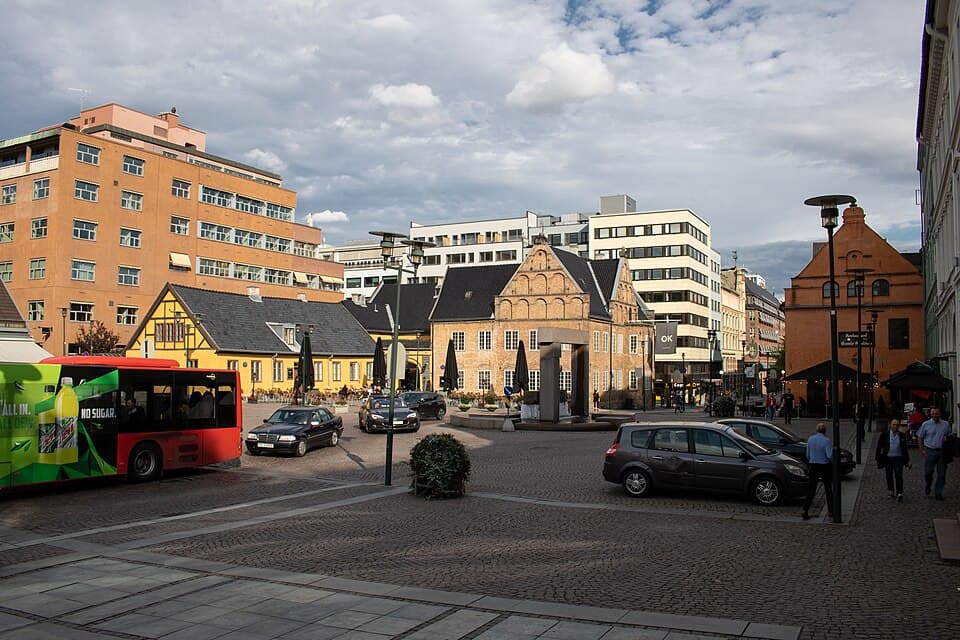
You've arrived at a small cobblestoned square that most visitors walk right through without stopping. That's a mistake. This is Christiania Torv, and this is where Oslo was reborn.
In 1624, a catastrophic fire destroyed medieval Oslo — the original city, which was located about a kilometer east of here near the harbor. King Christian IV of Denmark, who ruled Norway at the time, made a radical decision: he would not rebuild the city where it stood. Instead, he ordered the entire population to relocate here, closer to the protective walls of Akershus Fortress. And because kings are not known for their modesty, he named the new city after himself — Christiania.
Read more...Show less
Imagine that. You wake up one morning and your entire city — your home, your street, your church — is gone. Burned to the ground. And then a Danish king tells you that you're not rebuilding where you were. You're starting over, right here, because he says so. That's what happened right here. Christiania was a planned city, laid out in a grid, built from brick and stone instead of wood to prevent another fire. It remained Christiania until 1925, when the city was finally renamed Oslo.
Look for the bronze sculpture in the square — it's called Hansken, "The Glove." It's a bronze hand in a royal glove, pointing down toward the ground, and it represents Christian IV directing the construction of his new city. "Build it here," the hand says. The sculpture was created by Wenche Gulbransen in the 1990s, but the image it captures is four centuries old: a Danish king, pointing at Norwegian soil, declaring where the future goes.
Look around and you'll see some of Christiania's original architecture — solid, practical buildings from the seventeenth and eighteenth centuries. This was the commercial center of the new city. Markets, trades, daily life. It's much quieter now, a pleasant square with a few restaurants and the constant background presence of the fortress looming to the south.
Speaking of which — turn south and walk about four hundred meters toward the waterfront. You'll see the twin brick towers of Oslo City Hall rising ahead of you. That's where the Nobel Peace Prize is awarded, and that's our next stop.
City Hall & the Nobel Peace Prize
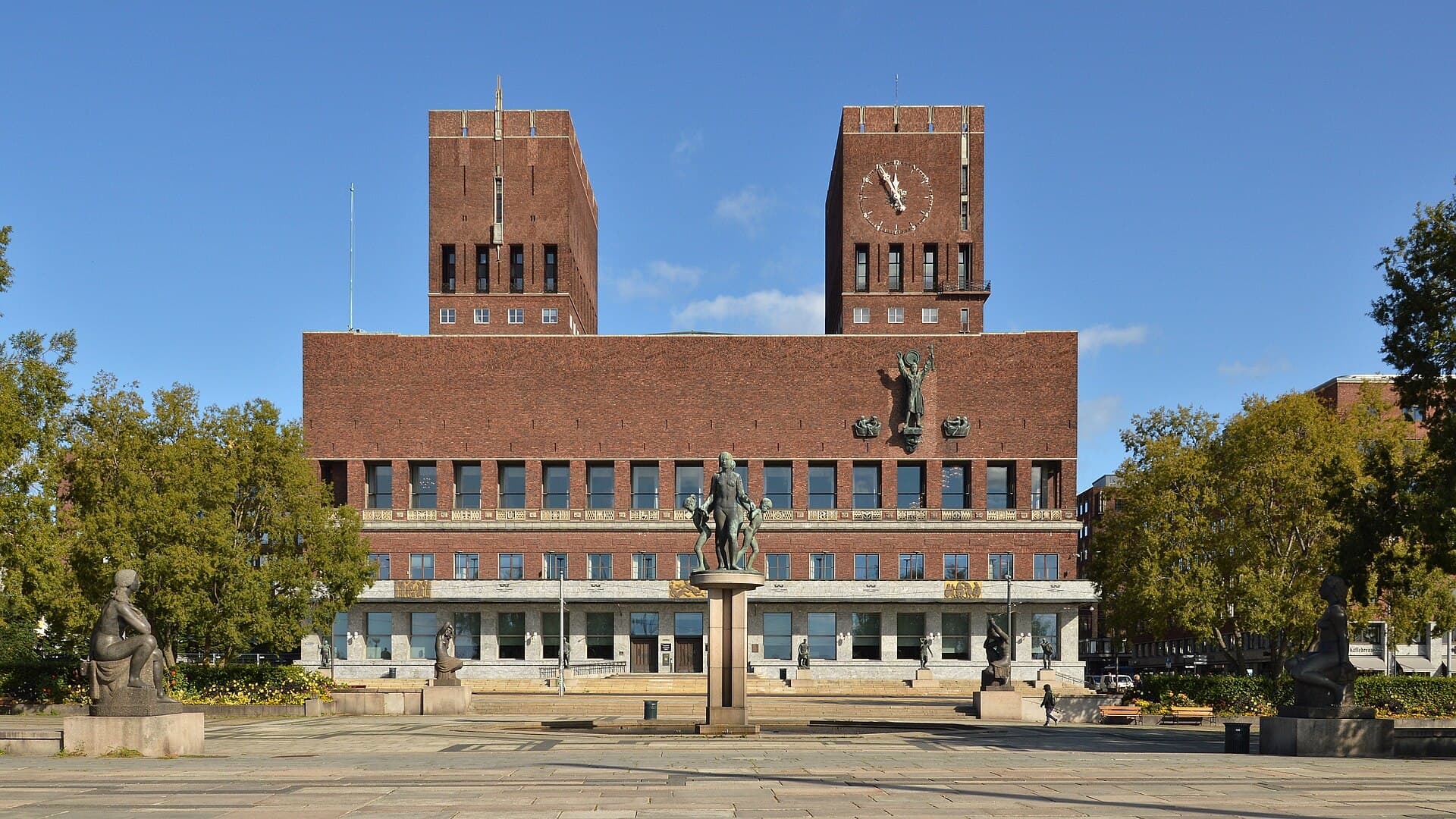
Those twin brick towers in front of you belong to Oslo City Hall — Radhuset — and every December 10th, something extraordinary happens inside.
The Nobel Peace Prize is awarded in the main hall of this building. It's the only Nobel Prize not given in Stockholm — all the others take place in Sweden. Alfred Nobel specified in his will that the Peace Prize should be selected by a Norwegian committee, but nobody knows exactly why. Nobel died in 1896 without explaining the decision. The best theory is that Norway, at the time in union with Sweden, was considered less militaristic and more neutral. It was a backhanded compliment that turned into one of the most prestigious ceremonies on earth.
Read more...Show less
Step inside if you can — the main hall is open to visitors. The scale will hit you immediately. The room is enormous, and the walls are covered floor to ceiling with massive murals by Henrik Sorensen depicting Norwegian life — fishermen hauling nets, factory workers at their machines, farmers in golden fields. These were painted between 1938 and 1950, interrupted by five years of German occupation during which the unfinished building stood as a skeleton overlooking the harbor.
City Hall opened on May 15, 1950, deliberately timed to mark Oslo's nine hundredth anniversary. The architects, Arnstein Arneberg and Magnus Poulsson, designed something intentionally different from the neoclassical Palace and Parliament we've already seen. This building is muscular, modern, working-class in its brick aesthetic. Not everyone loved it. Some found it ugly. But those murals — and that ceremony every December — have given the building a gravity that silences the critics.
The square in front is named after Fridtjof Nansen, the polar explorer who won the Peace Prize himself in 1922 for repatriating displaced people after World War I. Nansen is everywhere in Oslo — explorer, scientist, humanitarian, diplomat. Norway's ultimate overachiever.
Now turn right and look south. Through the buildings, you'll see the medieval walls of Akershus Fortress on the headland. Walk about two hundred and fifty meters toward it. As you approach, look up at the stone walls and green copper roofs. This fortress has been watching over Oslo for more than seven hundred years — and it has quite the story.
Akershus Fortress
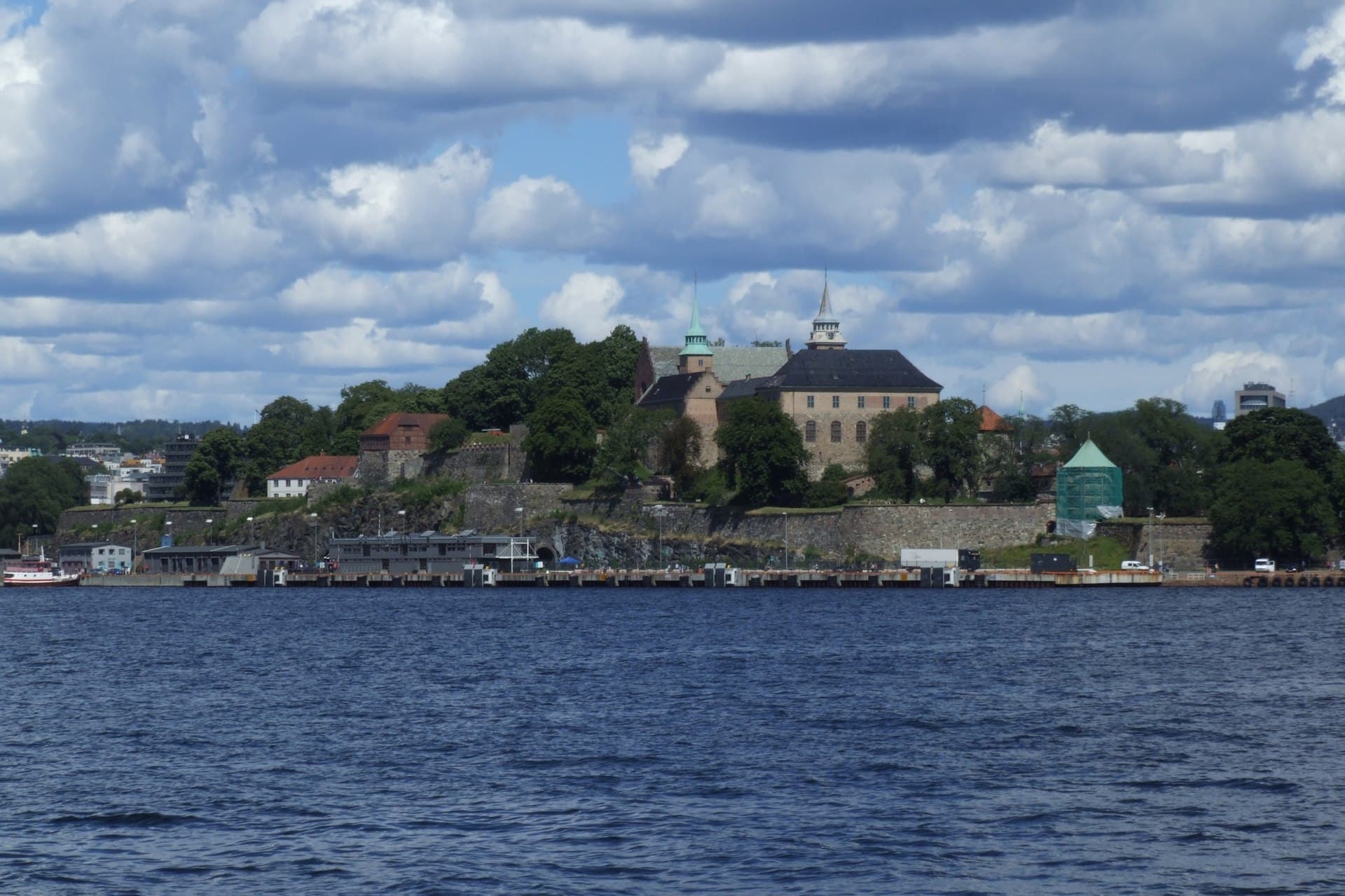
This fortress has been besieged at least six times and never once been taken. Let that sink in. The Swedes tried in 1308. They tried again in 1449, 1502, 1523, and 1567. King Charles XII of Sweden had another go in 1716. Every single attempt failed. Akershus has stood on this rocky headland above the fjord since around 1299, when King Haakon V ordered its construction to protect his young capital.
Walk through the main gate and across the courtyard. Take a moment to absorb the scale of this place — the walls are meters thick, and the ground beneath you has been fortified for seven centuries. The fortress started as a medieval stronghold and was gradually converted into a Renaissance palace in the sixteen hundreds. Inside, you'll find the Royal Mausoleum where Norwegian kings and queens are entombed — King Haakon VII, King Olav V, and medieval King Haakon V himself, who started the whole thing.
Read more...Show less
But this place has a much darker side. During the German occupation from 1940 to 1945, Akershus became a prison and execution site. At least forty-two members of the Norwegian resistance were shot in the courtyard. You may be standing near the spot right now. The Resistance Museum is housed inside the fortress — it's one of the most powerful small museums in Europe, and if you have time later, I'd strongly recommend it.
After liberation in May 1945, the tables turned. Eight Norwegian collaborators convicted of treason were executed here, including Vidkun Quisling — the man who collaborated so eagerly with the Nazis that his surname entered the English dictionary as a synonym for traitor. Look up the word "quisling" in any English dictionary. It means a person who betrays their country by collaborating with an enemy. One man's infamy, stamped permanently into a foreign language. It happened right here.
Here's something lighter. If the name Akershus looks familiar, it might be because of a certain animated film. Disney's creative team visited this fortress during their research trip for Frozen. The green roofs, the stone walls, the fjord setting — Akershus was the primary inspiration for Arendelle Castle.
Walk to the ramparts on the south side and look out over the Oslofjord. On a clear day you can see the islands dotting the water. That view has been the reward for seven centuries of guards, soldiers, prisoners, and kings.
When you're ready, exit the fortress heading east along the harbor. Follow the waterfront promenade — it's called Akershusstranda. In about six hundred meters, you'll smell the food before you see it. That's Vippa.
Vippa Food Hall
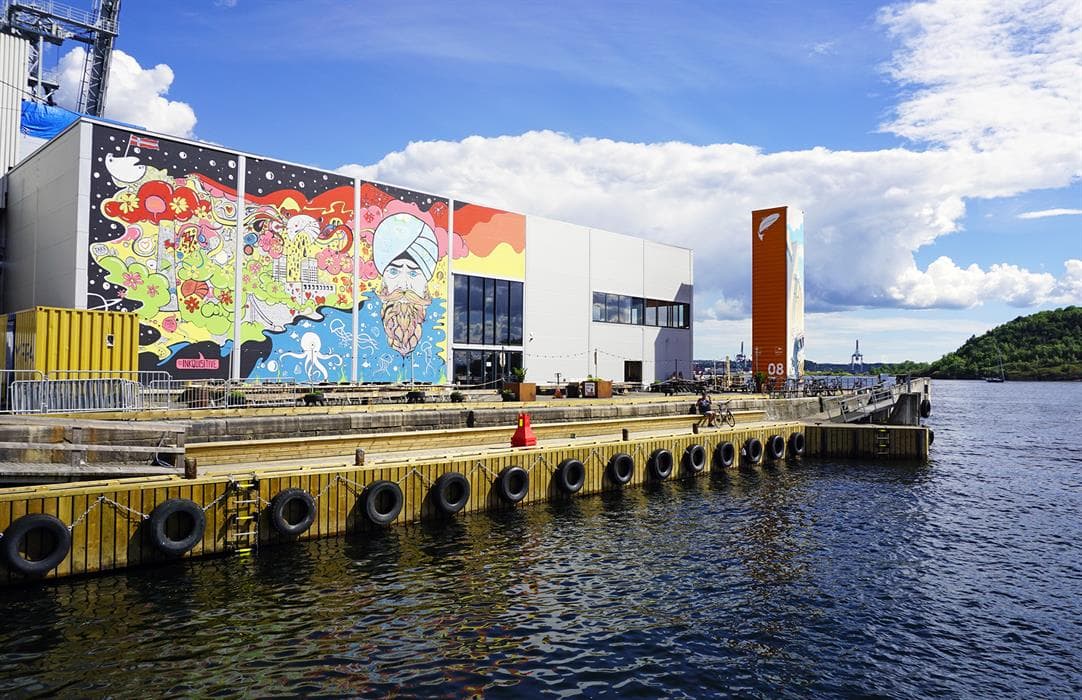
Welcome to Vippa, and welcome to the part of the walk where you eat. You've earned it — we've been going for about an hour, and there's still magic ahead, so let's refuel.
Vippa is a converted warehouse at the water's edge, and it opened in 2017 with a mission that goes beyond food. This is a social enterprise. Each of the food stalls is run by people from different countries — Syria, Eritrea, Pakistan, Vietnam, Korea, Norway. The idea is simple: use street food as a way to integrate immigrants and refugees into Norwegian society. Help people become financially independent by doing what they do best — cooking the food they grew up with.
Read more...Show less
At the Aleppo Bahebek stand, Syrian refugees make authentic Damascus street food using locally sourced Norwegian ingredients. There's a Vietnamese stall doing pho. An Eritrean stall doing injera. A Korean stall doing bibimbap. And in between, Norwegian vendors selling smoked salmon and shrimp. The food is excellent and costs about half what you'd pay in the city center. In Oslo, where a simple lunch can set you back thirty dollars, that's not just nice — it's a public service.
Look around. The building is a rough-hewn former fish market warehouse. Outside, the fjord glitters. Inside, a Syrian grandmother is making kibbeh next to a Vietnamese family rolling spring rolls next to a Norwegian guy pulling espresso. This is what modern Oslo actually looks like — not the curated, expensive, design-magazine version, but the real one.
By the way, notice the harbor water. People are swimming in it. Yes, right here. Oslo's fjord water is now clean enough to swim in, which would have been unthinkable thirty years ago. A massive cleanup effort starting in the nineties transformed the harbor from an industrial waste zone into genuine swimming territory.
My recommendation: grab the Syrian falafel plate or the Vietnamese pho, find a table by the window, and watch the ferries heading out to the islands. If you want a beer, they have a good selection of Norwegian craft brews — though at Oslo prices, naturally.
Take your time. This is the reward for all that walking. When you're done, we've got two more stops, and they're both spectacular. Exit Vippa and continue east along the waterfront. In about four hundred meters, you'll see it — a white angular shape rising from the water like an iceberg. That's the Oslo Opera House.
Oslo Opera House
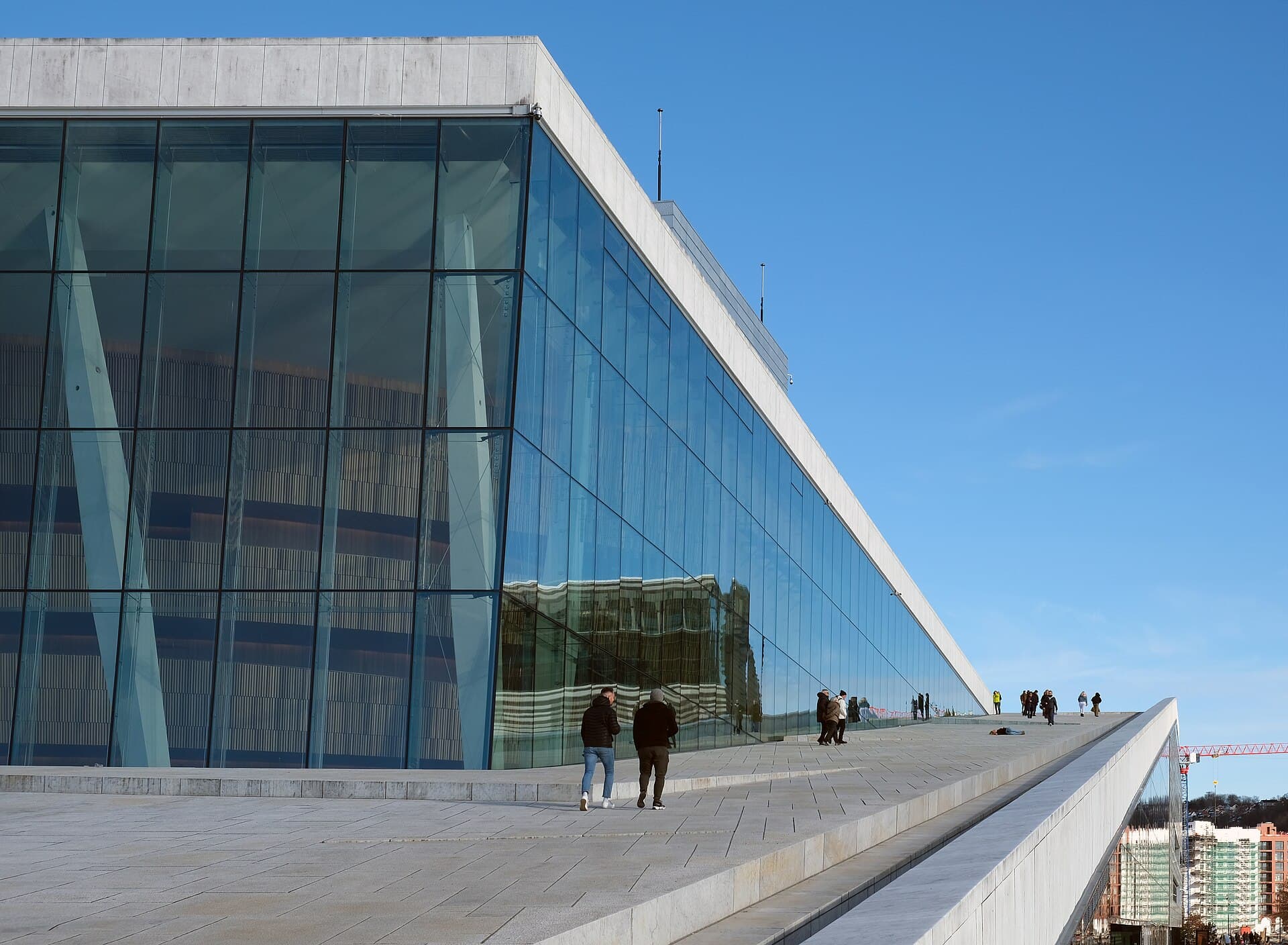
And here it is. The building that changed Oslo.
The Opera House was designed by the Norwegian architecture firm Snohetta and completed in 2008. From a distance it looks like an iceberg that's run aground on the waterfront. Up close, it looks like a glacier calving into the fjord. The entire roof is a public space — made from white Carrara marble from Italy, the same marble Michelangelo used, and Norwegian white granite. Twenty thousand square meters of it. And anyone can walk on it, any time, for free.
Read more...Show less
That was Snohetta's radical idea. In a country where opera is associated with the elite, they designed a building that belongs to everyone. The roof slopes from street level down to the water, so you can literally walk from the pavement onto the roof and up to the top without a ticket, without permission, without paying a cent.
Do it now. Walk up. It slopes gently — your grandmother could do this. At the top, turn around. You'll see the whole city spread behind you — the Palace where we started, the fortress on the headland, the green hills beyond. To your left, that leaning tower clad in perforated aluminum is the new MUNCH Museum, opened in 2021. It holds approximately twenty-eight thousand works that Edvard Munch bequeathed to Oslo upon his death in 1944 — including two versions of The Scream, which has the distinction of being the only masterpiece stolen twice. The first theft, in 1994, was timed to coincide with the opening of the Lillehammer Olympics for maximum national embarrassment. The thieves left a note: "Thanks for the poor security."
Here's a construction fact that tells you something about Norway: the Opera House was finished ahead of schedule and three hundred million kroner under budget. Name another country where a major public building comes in early and under budget. I'll wait.
Sit on the marble slope for a few minutes. Watch the light change on the fjord. Teenagers skateboard on the roof. Couples share wine at sunset. Tourists try to figure out where the building ends and the landscape begins. This is Oslo at its most confident — a city that built a public park on top of an opera house and didn't charge anyone to use it.
When you're ready, walk down the eastern slope toward the water. See the pier and residential area jutting into the harbor south of the Opera House? That's Sorenga — our final stop. Cross the pedestrian bridge. You're about to walk on top of the original Oslo.
Sorenga & Medieval Oslo
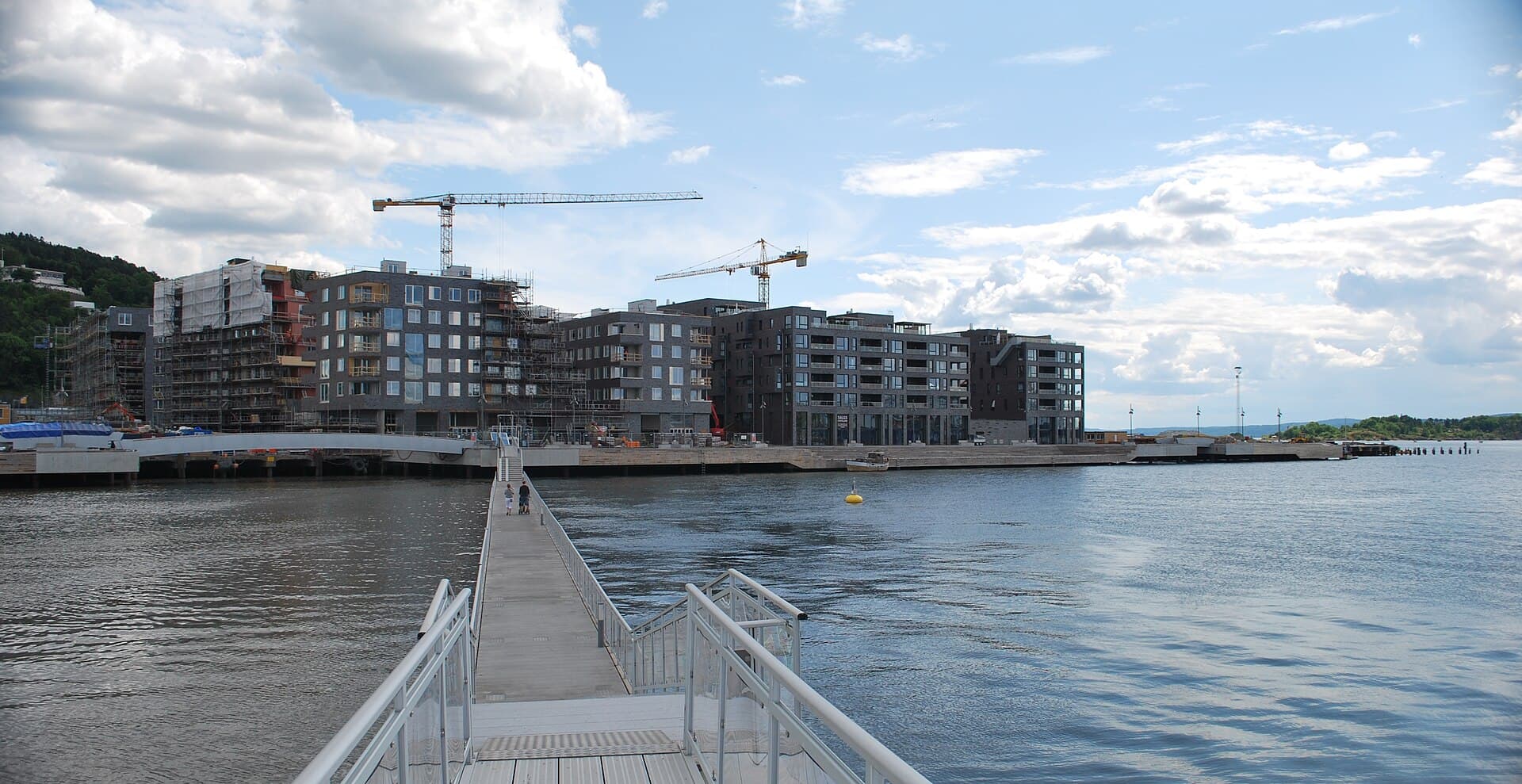
You're standing on top of a buried city.
Before there was a Christiania, before there was a Karl Johans gate, before a French soldier became king — there was Oslo. The original Oslo. And it was right here, under your feet.
Read more...Show less
In 1624, a catastrophic fire destroyed the medieval city. King Christian IV — the same king we met at Christiania Torv — forced the entire population to relocate west, closer to the fortress. The original Oslo was abandoned. Over the centuries, it was buried under fields, roads, and eventually railway tracks. Forgotten.
But the ruins are still here. Walk south from the main residential area and you'll find Middelalderparken — Medieval Park — where the excavated bones of the original city are now exposed. The remains of St. Clement's Church, built around 1100, sit exposed to the sky. And beneath it, in a discovery that stunned archaeologists, they found over eighty burials carbon-dated to 980 AD — believed to be among the oldest Christian burials in Norway. Let that settle: people were being buried here according to Christian rites forty years before the Norman Conquest of England.
The ruins of St. Mary's Church are nearby, with fourteenth-century Gothic additions. During excavations, the remains of King Haakon V — the same king who built Akershus Fortress — and his Queen Euphemia of Rugen were discovered. Development in this area is now legally prohibited due to the archaeological layers above and below the surface.
And right beside all this history, twenty-first-century Oslo has built something wonderful: the Sorenga Seawater Pool. Opened in 2015, it's a hundred-and-ninety-meter-long public swimming area made of sustainable Kebony wood, right at the water's edge. Locals come here year-round — yes, even in January — for cold-water swimming and sauna sessions. In summer, it's one of the best spots in the city.
So here's where we are. You started at a palace built for a French king. You walked down Norway's most symbolic boulevard, past the church, past the parliament, past two geniuses who defined what it means to be Norwegian. You turned south to the fortress that survived six hundred years of sieges, stood where the Peace Prize is awarded, ate where refugees cook their grandmother's recipes, walked on the roof of an opera house. And now you're standing above a city that's been buried for four hundred years, beside a swimming pool where Norwegians jump into the fjord in winter because — well, because they're Norwegian.
That's Oslo. A city that keeps burying itself and rising again. A city that responds to tragedy with roses instead of revenge. A city that puts a public park on top of an opera house and lets anyone climb it.
If you've got energy left, here are my suggestions. For art, the MUNCH Museum is right across the harbor — you can see it from here. For nature, take the ferry to Hovedoya island — medieval monastery ruins, beaches, and a population of five people. For beer, take the tram to Grunerlokka and find Grunerlokka Brygghus on Thorvald Meyers gate. And if you want one more secret: take bus thirty-four to Ekebergparken and walk to the Valhallveien viewpoint. That's the exact spot where Edvard Munch stood in 1893 and heard, as he wrote in his diary, a great infinite scream passing through nature. He painted it the following year. It became the most famous artwork in Scandinavian history.
Thanks for walking with me. Enjoy the city.
Free
GPS-guided walking tour
No account needed. Walk at your own pace.
Free
13 stops · 3.8 km