11 stops
GPS-guided
3.1 km
Walking
55 minutes
Duration
Free
No tickets
About this tour
The ancient Moorish quarter that survived the earthquake — fado music born in these alleys, azulejo tiles on every wall, and the best viewpoints in the city.
11 stops on this tour
Sé Cathedral
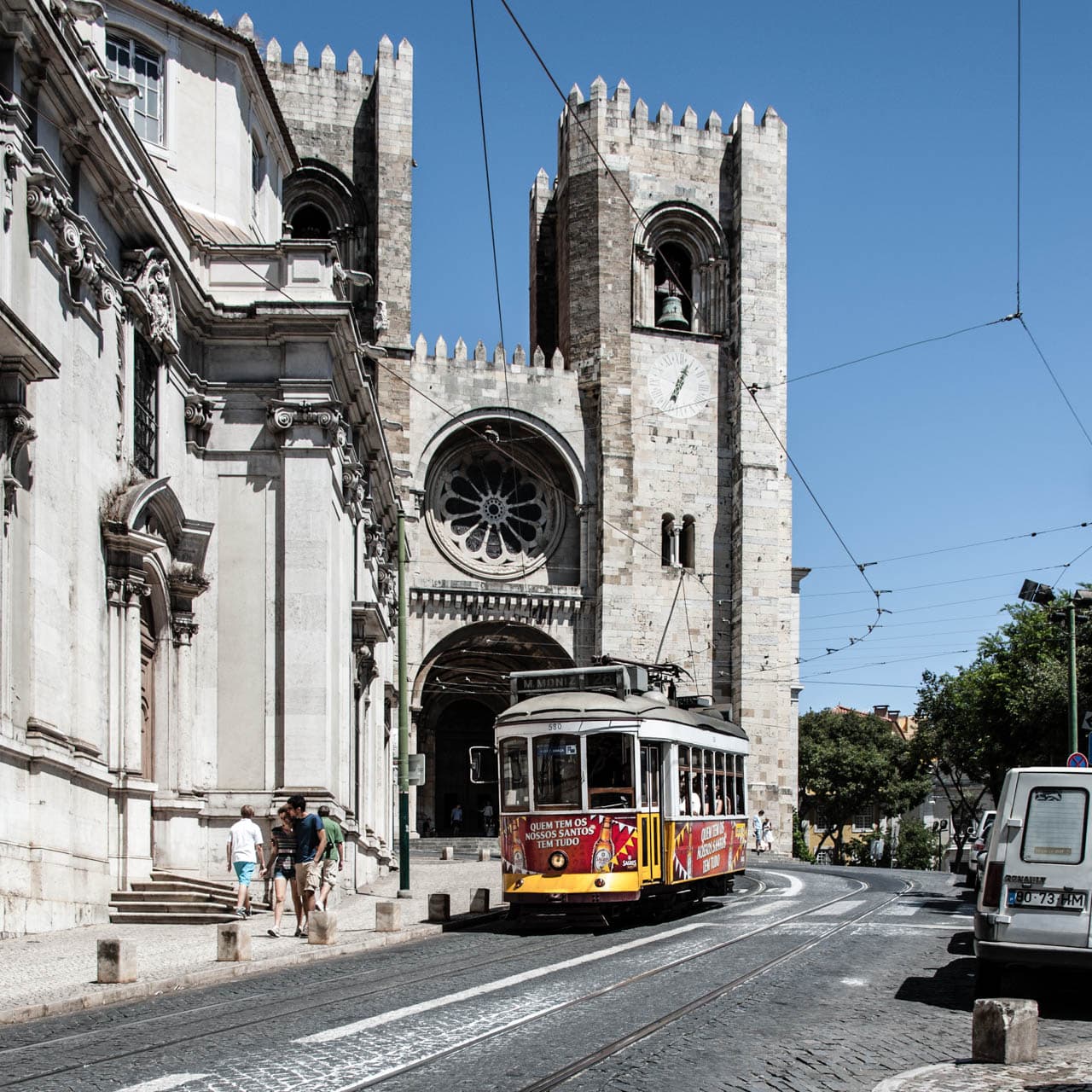
Welcome to the Sé de Lisboa — Lisbon's oldest church, and honestly, one of the most underrated cathedrals in all of Europe. You're standing on Largo da Sé, the small square right in front of the building. Take a moment and look up at those two enormous bell towers flanking the entrance. Notice how this place looks more like a medieval fortress than a house of worship? That's completely intentional.
Here's what blows my mind about this spot. You're standing on ground that has been sacred for over two thousand years. Before this cathedral, there was a mosque here. Before the mosque, a Visigothic church. Before that, a Roman temple. Excavations in the cloister — which you can visit inside — have uncovered a Roman road with shops on either side, a Roman kitchen, and even a sewage system. Layers upon layers of civilisation, all stacked right beneath your feet.
Read more...Show less
The cathedral you see today was begun in eleven forty-seven, the same year King Afonso Henriques wrestled Lisbon from the Moors with the help of a ragtag army of northern European crusaders on their way to the Second Crusade. The first bishop? An Englishman named Gilbert of Hastings. That's right — an English crusader became the first bishop of Lisbon. The architect was a Frenchman called Mestre Roberto, probably of Norman origin, who also designed the Old Cathedral up in Coimbra. So from day one, this building has been an international affair.
Look at the rose window above the main entrance — that's original twelfth-century Romanesque work, nearly nine hundred years old. Inside, you'll find the relics of Saint Vincent of Saragossa, Lisbon's patron saint. His bones were brought here from the Algarve in eleven seventy-three, and according to the city's founding story, ravens guarded the boat the entire journey. That's why Lisbon's coat of arms features a ship with two ravens — one on the bow, one on the stern.
One more thing before we move on. See that rose window again? This cathedral has survived multiple earthquakes, including the catastrophic one of seventeen fifty-five that flattened most of Lisbon. The Gothic cloister, built by King Dinis in the late twelve hundreds, was badly damaged, but the Romanesque bones of this building held firm. It's a survivor, just like the neighbourhood you're about to walk through.
Alright, let's head to our next stop. From the cathedral's front door, turn right and walk downhill along Rua Augusto Rosa. After about a minute, bear left onto Rua dos Bacalhoeiros — the Street of the Cod Fishermen. You'll spot our next stop immediately: a building absolutely covered in stone spikes. You can't miss it.
Casa dos Bicos
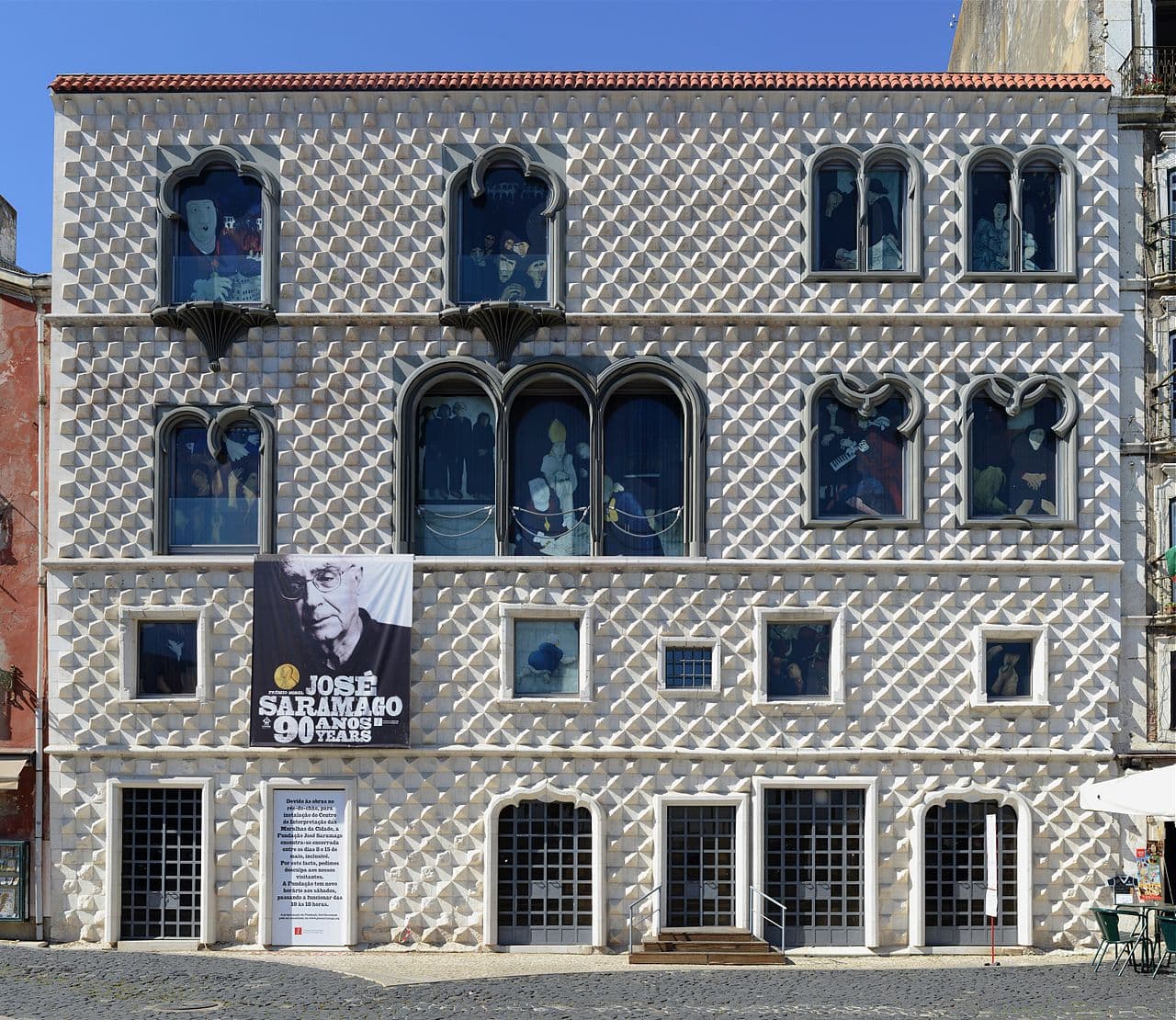
You're now standing in front of one of the weirdest, most wonderful buildings in Lisbon — the Casa dos Bicos, the House of Spikes. Look at that facade. Over a thousand diamond-shaped stone points jutting out of the wall, catching the light and casting these tiny shadows that shift all day long. It looks like something between a Renaissance palace and a medieval weapon.
This building was constructed around fifteen twenty-three by a man named Brás de Albuquerque, and here's where the story gets good. His father was Afonso de Albuquerque, the first governor of Portuguese India — the man who conquered Goa, Malacca, and Hormuz and basically built Portugal's entire Indian Ocean empire. Brás grew up hearing stories of Italian palaces, and he modelled this house on the Palazzo dei Diamanti in Ferrara, Italy, with its own diamond-point facade. So what you're looking at is the Renaissance dream of a Portuguese empire-builder's son, right here on a Lisbon backstreet.
Read more...Show less
Now, this building has had a wild life. The seventeen fifty-five earthquake destroyed its top two floors and its main facade. For centuries after that, it was used as a warehouse for salting cod — which, given that it sits on the Street of the Cod Fishermen, is almost poetic. The upper floors weren't restored until the nineteen eighties, using pre-earthquake drawings and paintings as guides. Look closely and you can see the Manueline-style windows and the Renaissance loggia on the third floor — all faithful reconstructions.
But here's maybe the best part. Go to the ground floor and you'll find something from way before the fifteen hundreds. Archaeological excavations uncovered an entire Roman fish-salting factory from the first century, right underneath this building. They found thirty-one cetariae — stone tanks used for salting fish and making garum, that pungent fish sauce the Romans were obsessed with. So two thousand years ago, people were processing fish on this exact spot, right on the banks of the Tagus.
Today the upper floors house the José Saramago Foundation, dedicated to Portugal's Nobel Prize-winning novelist. Saramago won the Nobel in nineteen ninety-eight, and after he died in twenty ten, this became the home of his literary legacy. His personal library is here, along with temporary exhibitions about his work.
Time to head deeper into the Alfama. From the front of Casa dos Bicos, turn left and walk along Rua dos Bacalhoeiros heading east. After about two hundred metres, the road curves into Rua do Terreiro do Trigo, then continue onto Largo do Chafariz de Dentro. You'll see the Fado Museum on your left, right on the square.
Museu do Fado
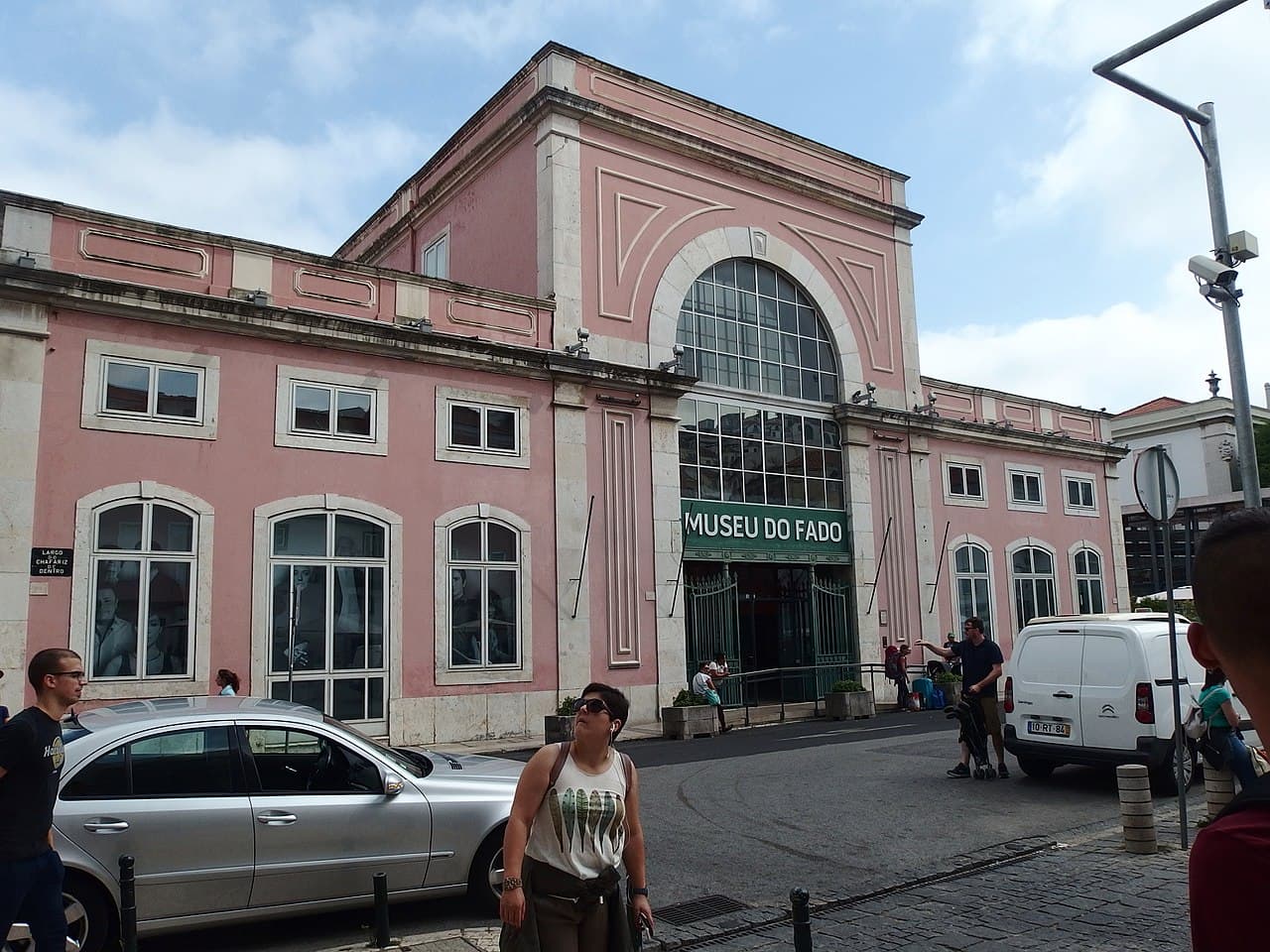
You've arrived at Largo do Chafariz de Dentro, and that building right in front of you with the tiled facade is the Museu do Fado — the Fado Museum. Before we talk about what's inside, take a moment to absorb this square. That fountain in the middle — the chafariz — has been here for centuries. This was once where the neighbourhood came for water, and for gossip, and quite possibly for heartbreak. Which is fitting, because fado is basically the sound of Portuguese heartbreak set to music.
So what exactly is fado? The word translates simply as "fate," but it means something much deeper. The Portuguese have a concept called saudade — a longing for something lost, an ache for what's absent, a nostalgia that borders on the spiritual. Fado is saudade turned into song. And this neighbourhood, the Alfama, is where it was born.
Read more...Show less
The origins of fado are debated among scholars — some trace it to Moorish chants, others to Brazilian modinhas brought back by the royal court. But what we know for certain is that recognisable fado first emerged in Lisbon's port neighbourhoods sometime after eighteen forty. The earliest form was called fado do marinheiro — sailor's fado — sung by seafarers in dockside taverns. The first great star was Maria Severa Onofriana, born in eighteen twenty, a tavern singer in the nearby Mouraria district. She died of tuberculosis at just twenty-six, but her fame only grew after death. In nineteen thirty-one, Portugal's first sound film was made about her life.
Then came Amália Rodrigues, born in nineteen twenty, who took fado from Lisbon's backstreets to stages in sixty-eight countries, including Carnegie Hall and the Olympia in Paris. She sold over thirty million records. When she died in nineteen ninety-nine, the government declared three days of national mourning. She was the first woman to be entombed in the National Pantheon — which you'll visit later on this walk.
The museum itself, which opened on the twenty-fifth of September nineteen ninety-eight, is housed in a former pumping station for Lisbon's water supply. Inside, you'll trace fado's journey from those rough tavern beginnings to its recognition by UNESCO as Intangible Cultural Heritage of Humanity in twenty eleven. The audio guide is free and excellent — you can actually hear the evolution of the sound.
If you want to hear live fado tonight, this neighbourhood is the place. But a tip from a local: skip the spots with touts outside and look for the smaller casas de fado tucked into the alleys.
Ready to climb? From the museum, face away from the building and take Rua de São João da Praça uphill. It's a steady climb, but after about five minutes you'll reach the terrace of the Miradouro de Santa Luzia. The view is worth every step.
Miradouro de Santa Luzia
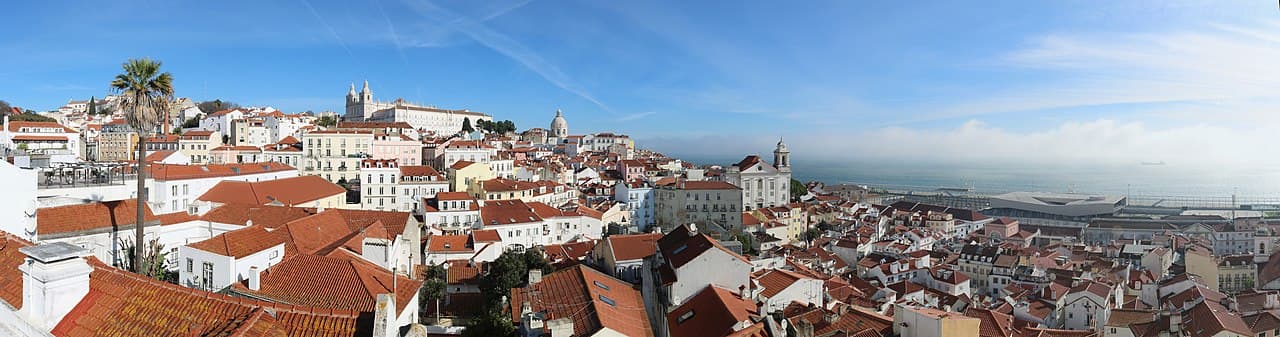
You've earned this view. Welcome to the Miradouro de Santa Luzia, and if you've been to Lisbon for more than five minutes, you've probably already seen this terrace on someone's Instagram. But I promise the real thing is better. Find a spot along the railing and look out.
Below you, the Alfama tumbles down the hillside in a cascade of terracotta rooftops, whitewashed walls, and tangled laundry lines. Beyond that, the wide silver shimmer of the Tagus River, and on a clear day, you can see all the way across to the other bank. This is, quite simply, one of the finest urban views in Europe.
Read more...Show less
Now turn around and look at the wall of the little church behind you — the Igreja de Santa Luzia, also called the church of São Brás. See those enormous blue-and-white tile panels? These are azulejos, and they're telling you stories. The panel on the left depicts the Praça do Comércio — Lisbon's grand waterfront square — as it looked before the seventeen fifty-five earthquake destroyed it. The panel on the right shows the Christian siege of the Moorish castle in eleven forty-seven, the same siege we talked about at the cathedral. These tiles are basically illustrated history textbooks mounted on a church wall.
Azulejos are everywhere in Portugal, and the tradition dates back to the thirteenth century, originally brought by the Moors. The word comes from the Arabic az-zulayj, meaning "polished stone." But while the Moors used geometric patterns, the Portuguese ran wild with figurative scenes — battles, saints, ships, daily life. You'll see them on nearly every building in the Alfama.
The church of Santa Luzia itself dates back to shortly after the reconquest of eleven forty-seven, though the original was destroyed in the seventeen fifty-five earthquake and rebuilt in the eighteenth century. It's a small church, easy to overlook, but the bougainvillea-draped pergola and the benches under the trees make this one of Lisbon's most romantic spots. If you're here in the late afternoon, the light turns everything gold.
While you're taking in this view, know that the Alfama survived the seventeen fifty-five earthquake largely intact — one of the only neighbourhoods in central Lisbon that did. Why? Geology. The Alfama sits on solid stone bedrock that absorbed the seismic energy far better than the soft river sediments under the Baixa and other districts. And it's elevated enough that the tsunami that followed the earthquake couldn't reach it. So the medieval streetplan below you is genuinely medieval — not a reconstruction.
Your next stop is practically next door. Just continue walking east along the terrace for about thirty metres, and you'll arrive at the Miradouro das Portas do Sol. You'll know you're there when you see the statue.
Miradouro das Portas do Sol
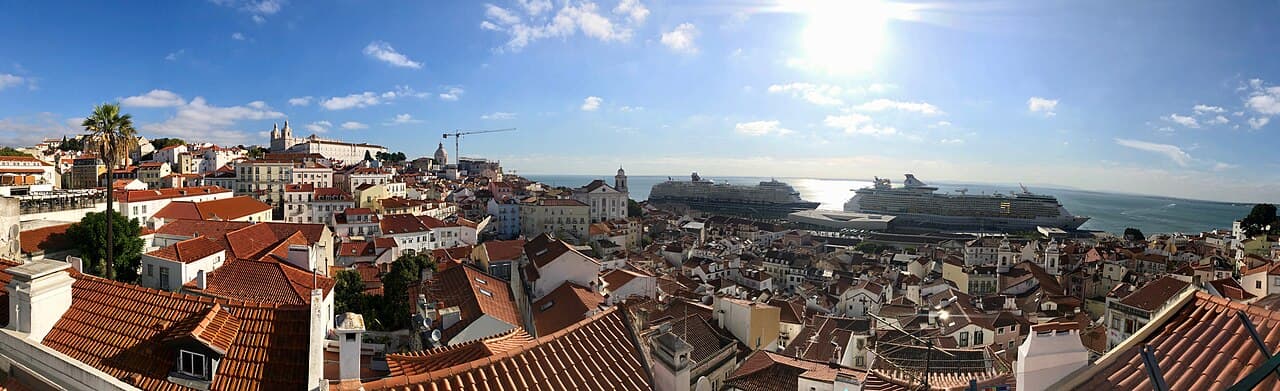
Just a few steps from Santa Luzia, and you're at the Miradouro das Portas do Sol — the Viewpoint of the Gates of the Sun. Look for the bronze statue overlooking the terrace. That's Saint Vincent, Lisbon's patron saint, holding a boat and flanked by two ravens. Remember the story from the cathedral? His relics carried by ship from the Algarve, guarded by ravens the whole way. The city loved that story so much they put it on their coat of arms and stuck a statue right here where everyone can see it.
The name Portas do Sol — Gates of the Sun — comes from an ancient city gate that once stood on this spot. It was the easternmost gate in the old Moorish walls, the first place where the morning sun would hit the city. Imagine being a sailor on the Tagus in the ninth century, watching the sun rise and strike this gate. That's your welcome to al-Ushbuna — the Arabic name for Lisbon.
Read more...Show less
This viewpoint is essentially a giant balcony hanging over the Alfama, and the view from here is slightly different from Santa Luzia's. From this angle, you get a clear line of sight to two buildings you'll visit later: look to the right and you'll see the white facade and twin towers of the Mosteiro de São Vicente de Fora, and just beyond it, the distinctive dome of the National Pantheon. Keep those in your mind — we're headed there.
Below you is the Alfama proper, and what you're looking at is essentially a Moorish street plan that has survived a thousand years. The Moors ruled Lisbon from the eighth to the twelfth century, and the Alfama was the heart of their city. The name itself likely comes from the Arabic al-hamma, meaning "hot springs" — there were thermal baths near here. After the Christian reconquest, this became a fishermen's quarter, home to dock workers, small traders, and the kind of people who don't show up in official histories but actually build a city's character.
If you're craving something sweet right about now, look for a nearby cafe and order a pastel de nata — that flaky, custardy tart that Portugal does better than anywhere else. Pair it with a bica, which is what Lisboetas call an espresso. A perfect mid-walk fuel stop.
Now we're going to drop down into the heart of the Alfama. From the viewpoint, head downhill — look for the steps descending to your left. Follow the narrow Rua de São Tomé downward, then take the steps on Beco de Santa Helena. You'll twist through a few tight alleys and emerge at Largo de São Miguel, a beautiful little square. Let the alleys be your guide — if you're going downhill, you're going the right way.
Largo de São Miguel
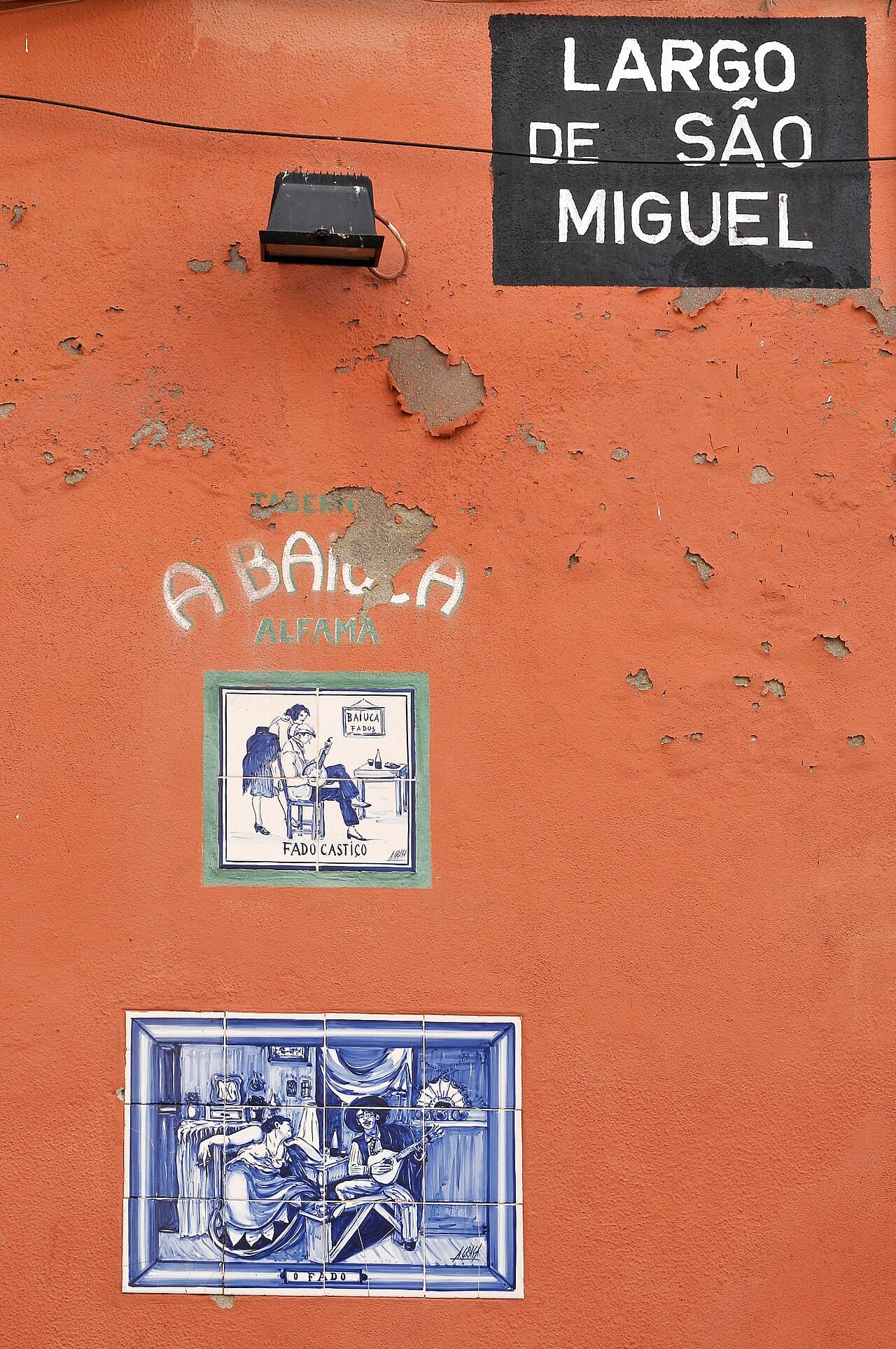
And here you are in the beating heart of the Alfama. Largo de São Miguel is the kind of square that makes you understand why people fall in love with Lisbon. It's small and intimate — more of a widening in the maze than a proper plaza. Look around you: laundry strung between windows, potted plants on iron balconies, maybe a cat or two making themselves comfortable on the warm cobblestones. This is neighbourhood life, completely unfiltered.
The church dominating the square is the Igreja de São Miguel. The original church on this site dates back to around eleven fifty, just a few years after the Moors were expelled, but what you see now was completely rebuilt between sixteen seventy-three and seventeen twenty in Baroque style by architect João Nunes Tinoco. Step inside if it's open — the ceiling is extraordinary, covered in ornamental painted panels, and there are sixteen paintings in gilded wood frames, some attributed to Bento Coelho da Silveira, who was the official royal painter of King Pedro the Second. For a small neighbourhood church, the amount of gold leaf in there is almost absurd.
Read more...Show less
But Largo de São Miguel isn't really about the church. It's about the life that happens around it. This square is one of the epicentres of Lisbon's wildest annual party — the Festa de Santo António, which peaks on the night of June twelfth. Every year, the Alfama transforms into one enormous open-air barbecue. Charcoal grills line the narrow streets, pumping out smoke from sardines — sardinhas assadas — grilled whole and eaten with bread and roasted peppers. There's cheap beer and wine, pimba bands playing impossibly catchy pop music with innuendo-laden lyrics, and people dancing in the alleys until sunrise. It's the tradition to give someone you love a manjerico — a little basil plant with a love poem attached. Half a million people pack into the old neighbourhoods for this.
If you're here in June, congratulations, you've hit the jackpot. If not, just imagine this quiet square absolutely heaving with people, music, smoke, and laughter.
This is also fado territory. On any given evening, if you wander the alleys around this square, you might hear someone singing through an open window — raw, unaccompanied, just voice and longing echoing off the stone walls. That's the real thing, the sound of a neighbourhood that birthed an art form.
Alright, time to climb to the castle. From Largo de São Miguel, find Rua de São Miguel heading north out of the square, then look for Rua de Santiago going uphill to the left. Keep climbing — follow the signs for the Castelo de São Jorge. It's about a ten-minute walk uphill, and you'll pass through some of the most picturesque streets in the city on the way.
Castelo de São Jorge
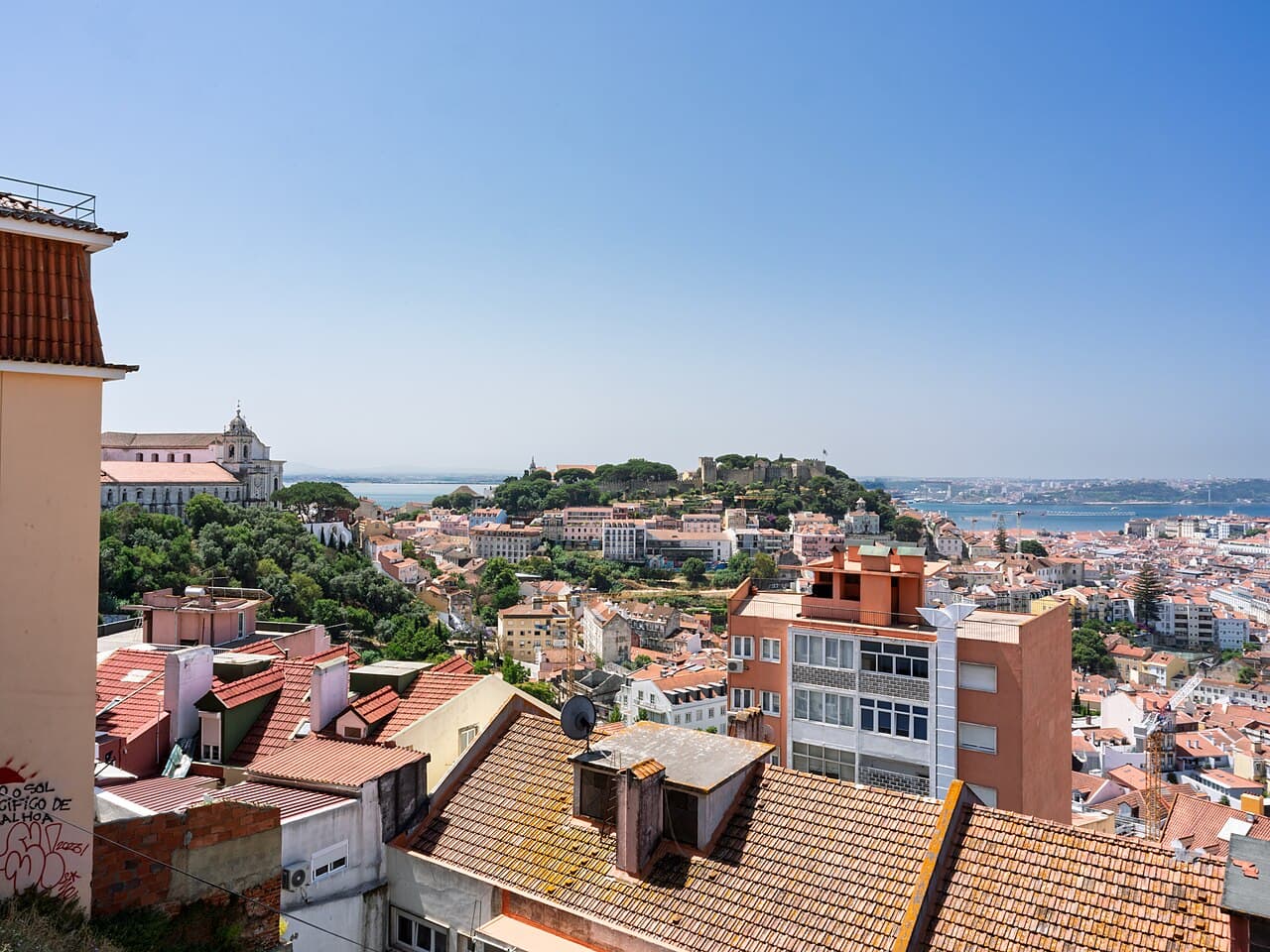
You made it to the top. Welcome to the Castelo de São Jorge, perched on the highest hill in old Lisbon, and quite possibly the most fought-over piece of real estate in Portuguese history. Take a breath, look around, and know that you're standing on ground that has been occupied since at least the eighth century BC — first by Celtic tribes, then Phoenicians, Greeks, Carthaginians, Romans, Visigoths, Moors, and finally the Portuguese. That's almost three thousand years of human ambition concentrated on one hilltop.
The fortifications you see today were built in the tenth century during Islamic rule. Around nine eighty-five, the caliph Hisham the Second ordered major construction here, and the Moors built the walls known as the Cerca Moura — the Moorish Encirclement — that once ringed the entire hillside. For over two centuries, this was an Islamic stronghold.
Read more...Show less
Then came eleven forty-seven, and one of the most dramatic sieges in Portuguese history. King Afonso Henriques, Portugal's very first king, led his army along with northern European crusaders — English, Flemish, German — in a siege that lasted seventeen gruelling weeks. The Moors held out behind these walls until food ran out and the crusaders breached the defences. There's a story about a knight named Martim Moniz who spotted a small side gate being closed by the defenders, and hurled his own body into the gap to keep it open. His fellow soldiers reached the gate, forced it wide, and stormed the castle. Moniz was crushed to death, but the city was taken. Whether it happened exactly that way is debated — the nineteenth-century historian Alexandre Herculano called it legendary — but the gate is still called the Porta de Martim Moniz in his honour, and a Lisbon metro station bears his name.
After the conquest, King Denis transformed the old Moorish palace into the Royal Palace of the Alcáçova around thirteen hundred, and Portuguese kings lived here until the fifteen hundreds when they moved to a waterfront palace. Then came seventeen fifty-five — the earthquake badly damaged the castle and it fell into disrepair for nearly two centuries before being restored in the nineteen thirties and forties.
Walk along the outer walls if you can. The views from the ramparts are the best in the entire city — a full three-sixty panorama that takes in the Tagus, the Ponte Vinte e Cinco de Abril bridge, the Baixa, and on a clear day, the hills of Sintra.
When you're ready, exit the castle and head northwest. Take Rua de Santa Cruz do Castelo downhill, then follow Calçada da Graça uphill toward the Graça neighbourhood. It's about a twelve-minute walk, and you'll pass through a quieter, more residential part of the city. Your destination is the Miradouro da Graça, where another spectacular view awaits.
Miradouro da Graça
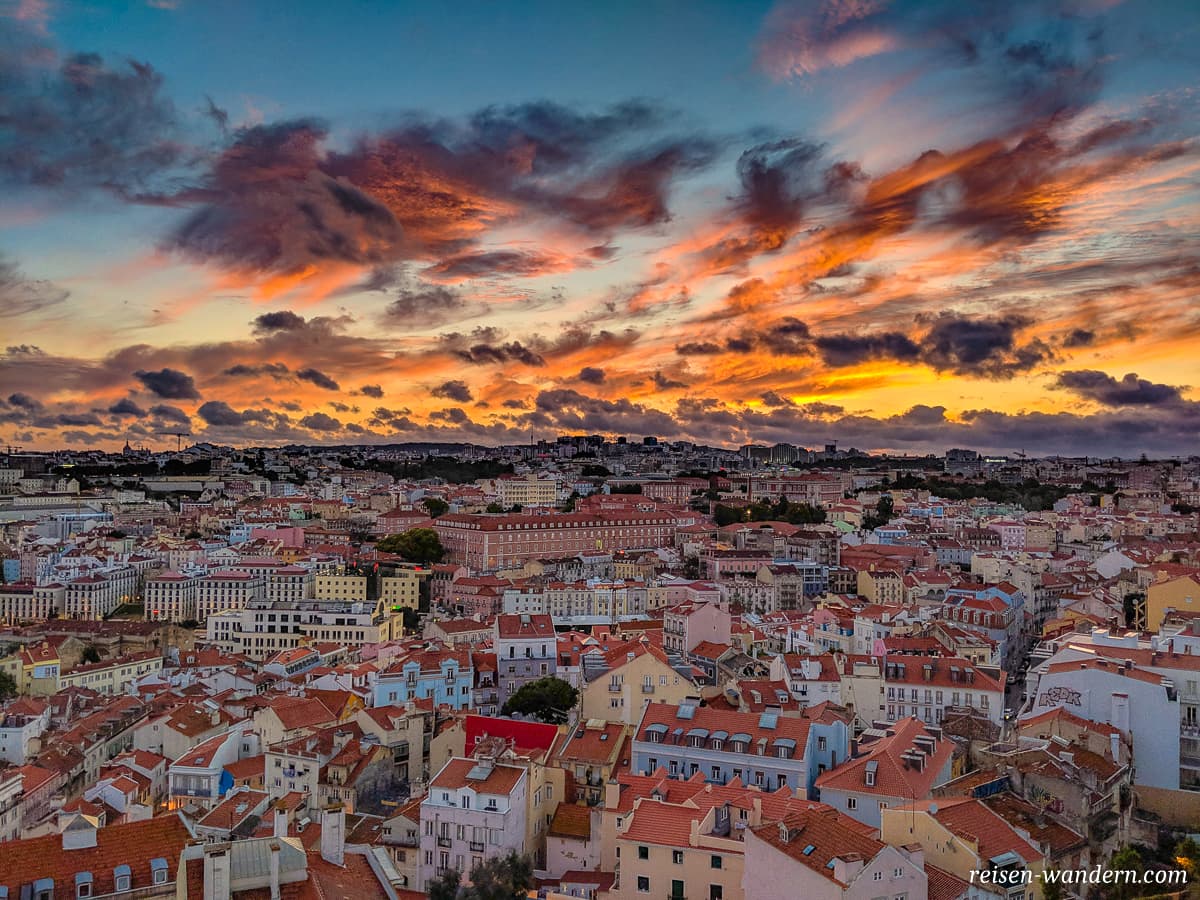
Welcome to the Miradouro da Graça — or, to use its full official name, the Miradouro Sophia de Mello Breyner Andresen. It was renamed in honour of one of Portugal's greatest poets after her death in two thousand and four, and this viewpoint is just about worthy of her.
Sophia de Mello Breyner Andresen was born in Porto in nineteen nineteen to an aristocratic family — her grandfather was a Danish merchant, hence the Scandinavian surname. She moved to Lisbon for university and became one of the most important Portuguese poets of the twentieth century, publishing fourteen poetry collections between nineteen forty-four and nineteen ninety-seven. But she wasn't just a literary figure. She was a fierce opponent of the Estado Novo dictatorship, a founder of the National Commission for Support of Political Prisoners, and after the Carnation Revolution of nineteen seventy-four, she served in the Constituent Assembly that drafted Portugal's democratic constitution. In nineteen ninety-nine, she became the first woman to win the Prémio Camões, Portugal's highest literary honour. Her remains were moved to the National Pantheon in twenty fourteen — the same building you'll see later on this walk.
Read more...Show less
Now, the view. Look straight ahead and you'll see the Castelo de São Jorge you just left, sitting magnificently on its hilltop. Below it, the jumble of the Alfama rooftops. Beyond that, the Tagus, and spanning it, the Ponte Vinte e Cinco de Abril — that red suspension bridge that everyone thinks looks like the Golden Gate, because the same company built both. To the left, you can pick out the white dome of the National Pantheon and the towers of São Vicente de Fora.
Behind you is the Convento da Graça, one of the first convents established in Lisbon, founded in twelve ninety-one under King Afonso the Third. It was badly damaged in the seventeen fifty-five earthquake, rebuilt in heavy Baroque style, and after religious orders were dissolved in eighteen thirty-four, it became a military complex. It only opened to the public in twenty twelve. If you have time, the chapter room inside has extraordinary eighteenth-century tile paintings depicting medieval martyrs in surprisingly violent battle scenes — not your typical church decor.
This neighbourhood, Graça, is one of the most authentic and least touristy parts of central Lisbon. The square behind you, Largo da Graça, is where Tram Twenty-Eight makes one of its turns — if you hear a clanging bell, that's your cue to watch one of those iconic yellow trams negotiate the narrow streets.
From here, head back down toward the Alfama. Walk along Largo da Graça and continue onto Calçada da Graça heading southeast. After about four hundred metres, you'll reach the imposing white facade of the Mosteiro de São Vicente de Fora on your right.
Mosteiro de São Vicente de Fora
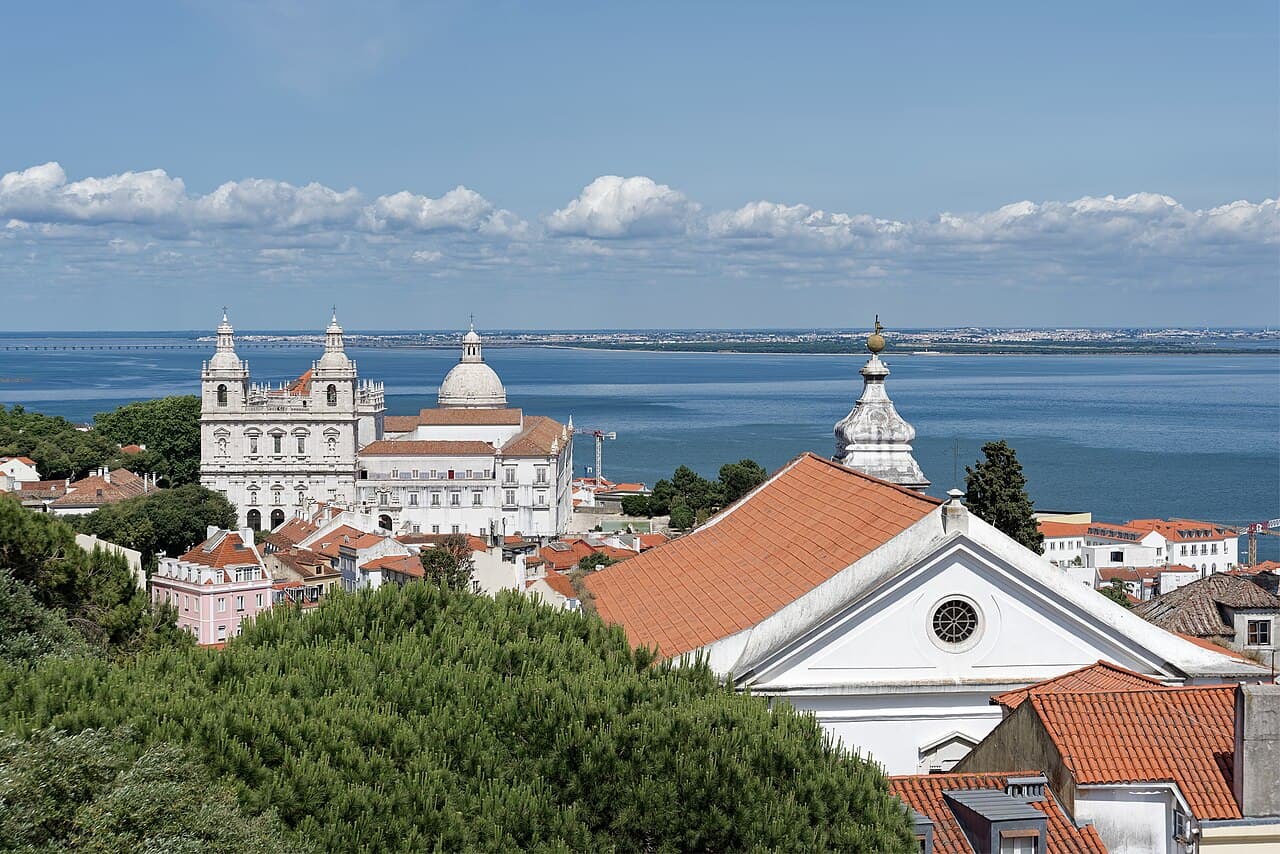
You're standing in front of one of the most significant buildings in all of Portugal, and one of the most overlooked by tourists. The Mosteiro de São Vicente de Fora — the Monastery of Saint Vincent Outside the Walls. That "de Fora" part is key. When the original monastery was founded in eleven forty-seven by King Afonso Henriques — the same year he took Lisbon from the Moors — this site was outside the city walls. Today, of course, the city has swallowed it up completely.
Look at this facade. The building you see now isn't the original — it was completely reconstructed starting in fifteen eighty-two under orders from Philip the Second of Spain, who had become King Philip the First of Portugal after a dynastic crisis in fifteen eighty. The design is attributed to the Italian Jesuit architect Filippo Terzi and possibly the Spaniard Juan de Herrera, who designed the Escorial in Madrid. You can see the Spanish influence in the severe, geometric lines. Construction of the church was finished in sixteen twenty-nine, though other parts of the monastery weren't completed until the eighteenth century.
Read more...Show less
Now, here's why this place matters deeply to Portuguese history. After the religious orders were dissolved in eighteen thirty-four, the former monks' refectory was converted into a pantheon for the House of Braganza — the dynasty that ruled Portugal from sixteen forty until the monarchy ended in nineteen ten. Walk inside and you'll find the marble tombs of nearly every Portuguese king and queen from João the Fourth onward.
But the tomb that stops most visitors is that of Catherine of Braganza. Catherine was a Portuguese princess who married King Charles the Second of England in sixteen sixty-two. Her dowry changed the world — literally. It included the trading ports of Bombay and Tangier, plus a cash payment equivalent to millions in today's money. Charles later leased the seven islands of Bombay to the East India Company for ten pounds a year, and that's how Mumbai began its rise to becoming one of the world's great cities. Oh, and Catherine is widely credited with popularising tea drinking in England. So next time you have a cuppa, thank a Portuguese princess.
The monastery's cloisters contain what's said to be the most extensive collection of Baroque tiles in the world — including a series of thirty-eight panels illustrating the fables of La Fontaine, painted by master tile artist Policarpo de Oliveira Bernardes between seventeen forty and seventeen fifty. They're playful, detailed, and completely delightful.
From the monastery, your next stop is practically next door. Walk around the building to the south, following the road into Campo de Santa Clara, the open square. You'll see the white dome of the National Pantheon ahead of you, rising above the rooftops. It's less than a five-minute stroll.
Panteão Nacional
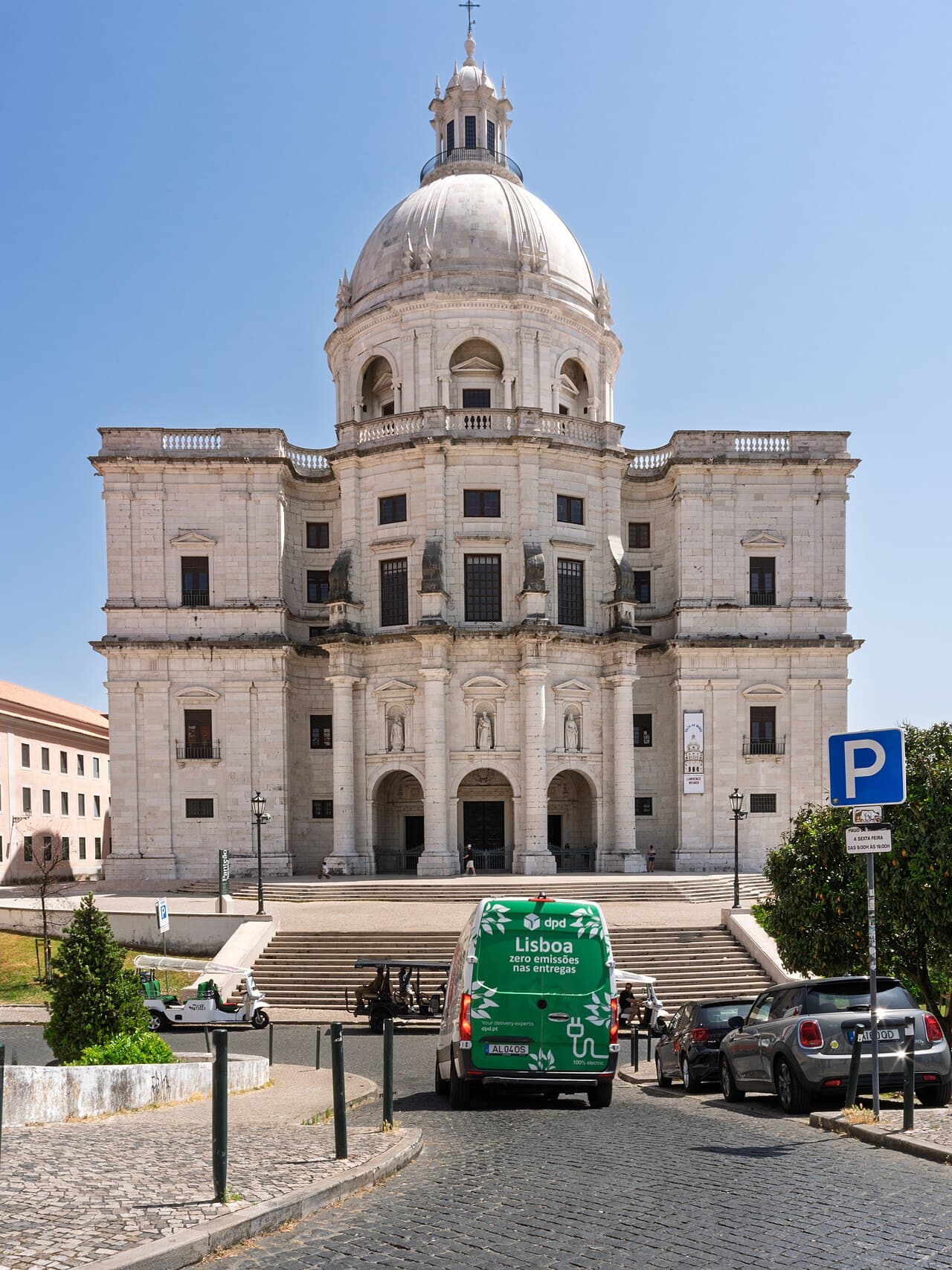
Here it is — the Panteão Nacional, the National Pantheon of Portugal, and a building that took so absurdly long to finish that it literally entered the Portuguese language as a proverb. When the Portuguese want to describe a project that's dragging on forever, they say it's like the obras de Santa Engrácia — the works of Santa Engrácia. And this is that building.
Look up at that baroque dome, those undulating facades inspired by the Italian master Borromini, those four corner towers. Now know this: construction began in sixteen eighty-two, and the dome wasn't completed until nineteen sixty-six. That's two hundred and eighty-four years. To put that in perspective, they started building this before Bach was born, and didn't finish until the Beatles were already recording Revolver.
Read more...Show less
The site has a complicated backstory. The first church dedicated to Saint Engrácia stood here around fifteen sixty-eight, but it was torn down after a robbery and desecration in sixteen thirty. The new building, designed by royal architect João Antunes in a centralized Greek cross plan, began in sixteen eighty-two — and immediately collapsed during a storm due to a shoddy foundation. They started again, but the money kept running out. For centuries, the building sat roofless and abandoned, used variously as an armaments depot and even a shoe factory.
Finally, in the nineteen sixties, the Salazar regime completed the dome and formally designated it as Portugal's National Pantheon. Today it honours Portugal's greatest figures with cenotaphs — symbolic tombs — for explorers like Vasco da Gama and writers like Luís de Camões, as well as actual tombs for more recent figures.
The tomb you should absolutely seek out is that of Amália Rodrigues — the Queen of Fado we talked about at the Fado Museum. After she died in nineteen ninety-nine, she became the first woman to be entombed here, in two thousand and one. Sophia de Mello Breyner Andresen, whose viewpoint we visited in Graça, joined her in twenty fourteen.
If you go inside — and I recommend you do — climb to the terrace around the dome. The rooftop view over the Alfama, the river, and the entire eastern part of the city is one of Lisbon's best-kept secrets. You'll see the neighbourhood you've been walking through from a completely different perspective.
Almost done — your final stop is just next door. Walk out of the Pantheon and into Campo de Santa Clara. On Tuesdays and Saturdays, you'll find this square full of stalls. That's the Feira da Ladra, and it's where we're headed.
Feira da Ladra
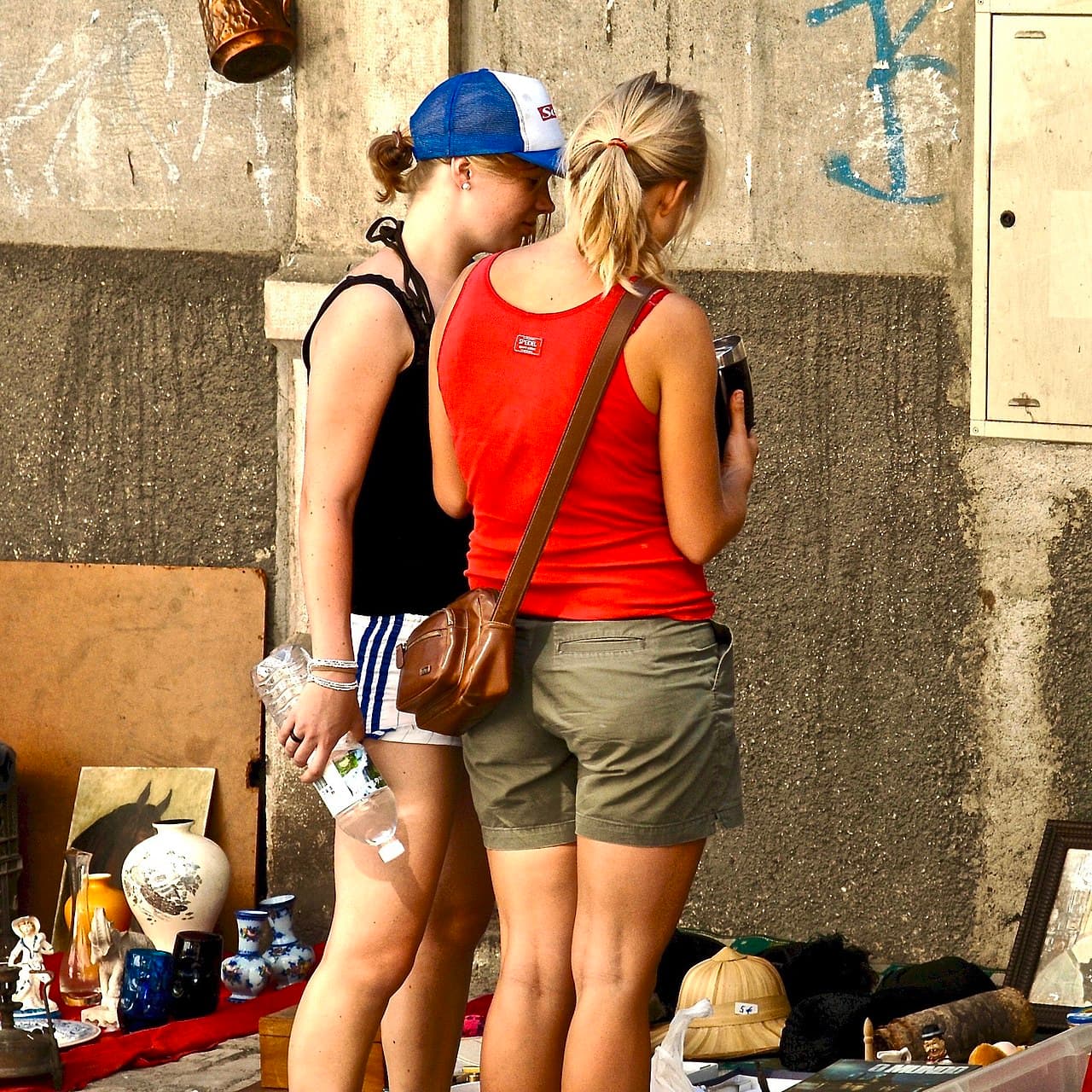
You've made it to the last stop on our Alfama walk, and it's a beauty. Welcome to the Feira da Ladra — Lisbon's legendary flea market, held right here in Campo de Santa Clara every Tuesday and Saturday.
The name Feira da Ladra is usually translated as the Thieves' Market, though there's a charming alternative theory that the name actually comes from the word ladro — a type of flea found in antique furniture. Either way, the name first appeared in documents from the seventeenth century, but the market's roots go all the way back to the thirteenth century. It moved around Lisbon for hundreds of years before settling here in Campo de Santa Clara in eighteen eighty-two. It was originally Tuesdays only; Saturdays were added in nineteen oh three.
Read more...Show less
If you're here on a market day, prepare yourself. The upper part of the square tends to have the more professional dealers — antique tiles, vintage clothing, old books, record collections, military paraphernalia, ceramics. The lower part, spreading down toward the river, is where things get gloriously chaotic — people literally laying out blankets and selling whatever they've got. Old keys, broken electronics, religious figurines, somebody's grandmother's cutlery. You'll find genuine treasures mixed in with absolute junk, and that's the whole point. The bargain hunters arrive at eight in the morning; by eleven, the good stuff is gone.
Even if it's not market day, this square is worth savouring. Campo de Santa Clara is one of the largest open spaces in this part of Lisbon, and from here you get a wonderful view of the Pantheon's dome on one side and the back of São Vicente de Fora on the other.
Look around this square and think about what you've just walked through. From a Romanesque cathedral built on Roman ruins and a Moorish mosque, past a spiked Renaissance palace hiding a Roman fish factory, through the birthplace of fado music, along viewpoints that the Moors once used as watchtowers, deep into the alleys where sardines are grilled in June and laundry hangs like flags of everyday life, up to a castle fought over for three thousand years, past a monastery where a Portuguese princess who changed England's tea habits is buried, and into a church that took two hundred and eighty-four years to finish.
That's the Alfama. Layer upon layer of history, tragedy, music, and stubborn, beautiful resilience. This neighbourhood refused to fall in seventeen fifty-five, and it refuses to lose its soul today.
If you're looking for a perfect way to end this walk, find a seat at one of the cafes nearby, order a ginjinha — that's the local cherry liqueur, sticky-sweet and slightly bitter — and toast to the Alfama. You've earned it. Thanks for walking with me today.
Free
GPS-guided walking tour
No account needed. Walk at your own pace.
Free
11 stops · 3.1 km