Barcelona: Las Ramblas — Beyond the Tourist Trap
11 stops
GPS-guided
1.2 km
Walking
45 minutes
Duration
Free
No tickets
About this tour
The real stories behind Barcelona's most famous street — an anarchist's bomb at the opera, a Miró mosaic everyone walks over, Gaudí's first commission, and an 800-year-old goat market turned foodie paradise.
11 stops on this tour
Font de Canaletes
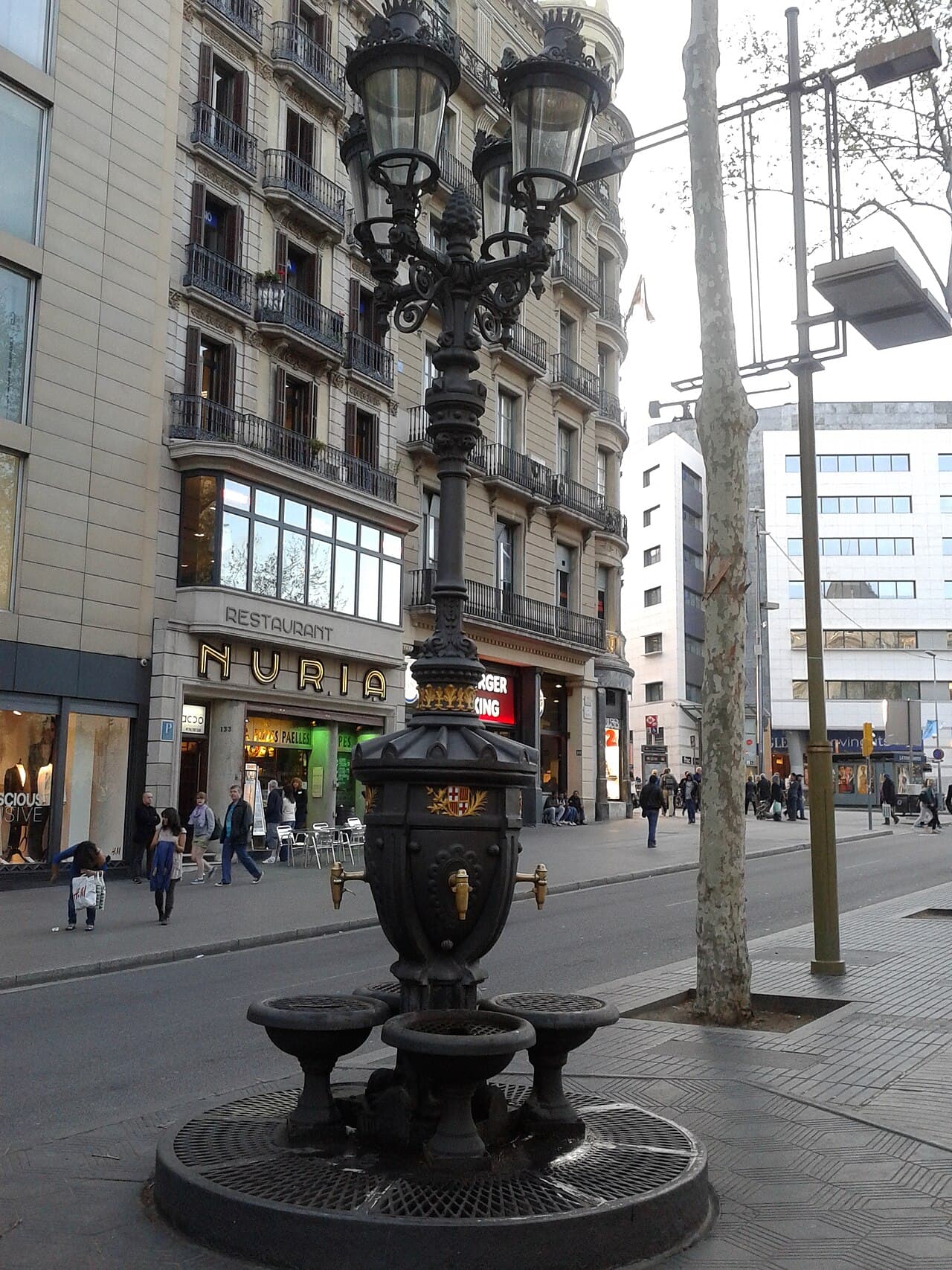
You're standing at the very top of La Rambla, right where it spills out of Plaça de Catalunya. Look for the ornate iron fountain with four taps, topped by an elegant lamp post. That's the Font de Canaletes, and this is where our walk begins.
Now, before we go any further -- take a drink. Go on. Because there's a tradition here that says if you drink from the Font de Canaletes, you'll always come back to Barcelona. There's even an inscription on the pavement that says so. Is it true? Well, I'm here for the third time, so maybe.
Read more...Show less
The fountain you're looking at was built in eighteen ninety-two, designed by an architect named Pere Falques as part of a project to install ornamental fountain-lampposts across the city. But the name Canaletes goes back much further. In the fourteenth century, Barcelona's old medieval wall ran right through here, and the water pipes -- the canaletes -- that supplied the city ran through a tower in that wall. When the walls came down in eighteen sixty-two, the original fountain vanished with them. Two temporary iron fountains took its place until this one arrived thirty years later.
But here's the thing that really makes this fountain special: football. Specifically, FC Barcelona. Since the nineteen thirties, this has been where Barca fans come to celebrate victories. It started because a sports newspaper called La Rambla had its office at number thirteen, just across the way. At the end of match days, someone would put a blackboard outside with the final scores, and fans would crowd around the fountain to get the results. The newspaper is long gone, but the tradition stuck. When Barca wins a league title or a Champions League, this is where tens of thousands of fans flood in, chanting and singing and climbing on everything in sight. The fountain has become a kind of open-air cathedral for the faithful of Camp Nou.
So you're standing at a spot that's been a gathering place for centuries -- for water, for news, and for sheer joy.
Now, start walking down La Rambla. Keep to the wide, tree-lined pedestrian boulevard in the middle. You're on the Rambla de Canaletes, the first of five sections that make up this famous street. After about a hundred meters, look to your right. You'll see a grand Baroque church facade rising above the cafes. That's our next stop -- the Esglesia de Betlem.
Església de Betlem
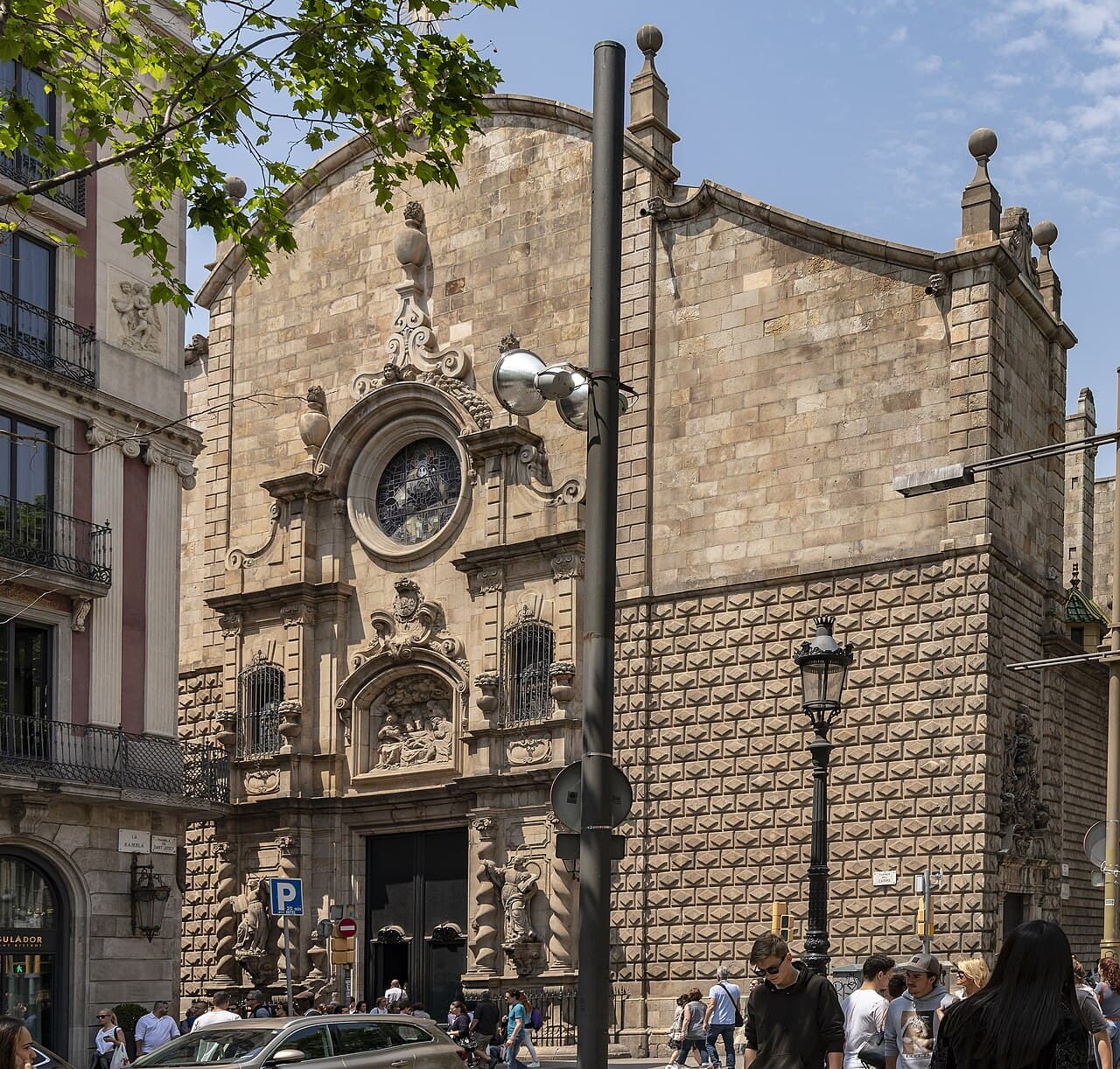
You should be standing on the right-hand side of La Rambla, looking at a big stone church with an elaborately decorated facade. If the main entrance is around the corner on Carrer del Carme, you're in the right place. This is the Esglesia de Betlem -- the Church of Bethlehem -- and it has one of the wildest histories of any building on this street.
The story starts in fifteen twenty-two, when a young Spanish soldier-turned-mystic named Ignatius of Loyola came to Barcelona. He'd recently had a spiritual awakening after being hit by a cannonball at the Battle of Pamplona, and he came here to study Latin. Seventeen years later, he founded the Society of Jesus -- the Jesuits -- and in fifteen fifty-three, his order got permission to build a church and college on this very site.
Read more...Show less
Now, the church you're looking at isn't that original one. A catastrophic fire destroyed the building in sixteen seventy-one. The Jesuits rebuilt from scratch between sixteen eighty and seventeen twenty-nine, and they went full Baroque. Walk around the corner to Carrer del Carme to see the main entrance -- it's framed by twisting Solomonic columns, with stone figures of Ignatius of Loyola and Francis of Borgia gazing down at you. Above the doorway is a beautifully carved Nativity scene by the sculptor Francesc Santacruz.
But here's where the drama really kicks in. In seventeen sixty-seven, King Carlos the Third expelled all Jesuits from Spain. Just like that -- gone. The church sat locked and empty for a decade until the Diocese of Barcelona reopened it.
And then came the Spanish Civil War. In nineteen thirty-six, anarchists set the church on fire. The roof collapsed. The entire interior -- every painting, every gilded altarpiece, every piece of that sumptuous Baroque decoration the Jesuits had spent fifty years creating -- was destroyed. What you see today from the outside is the real deal, the original Baroque stonework. But step inside and you'll notice it feels surprisingly bare. That's because everything in there is a reconstruction. The original interior is gone forever.
The church was finally restored in nineteen ninety-one and ninety-two. It's a building that's been burned twice, abandoned once, and somehow keeps standing on one of the busiest streets in Europe.
Keep walking down La Rambla. You're now on the section called Rambla dels Estudis, or Rambla of the Studies, named after the university that once stood here. In about two hundred meters, on the left side, you'll see a grand palace with a long balconied facade. That's the Palau de la Virreina.
Palau de la Virreina
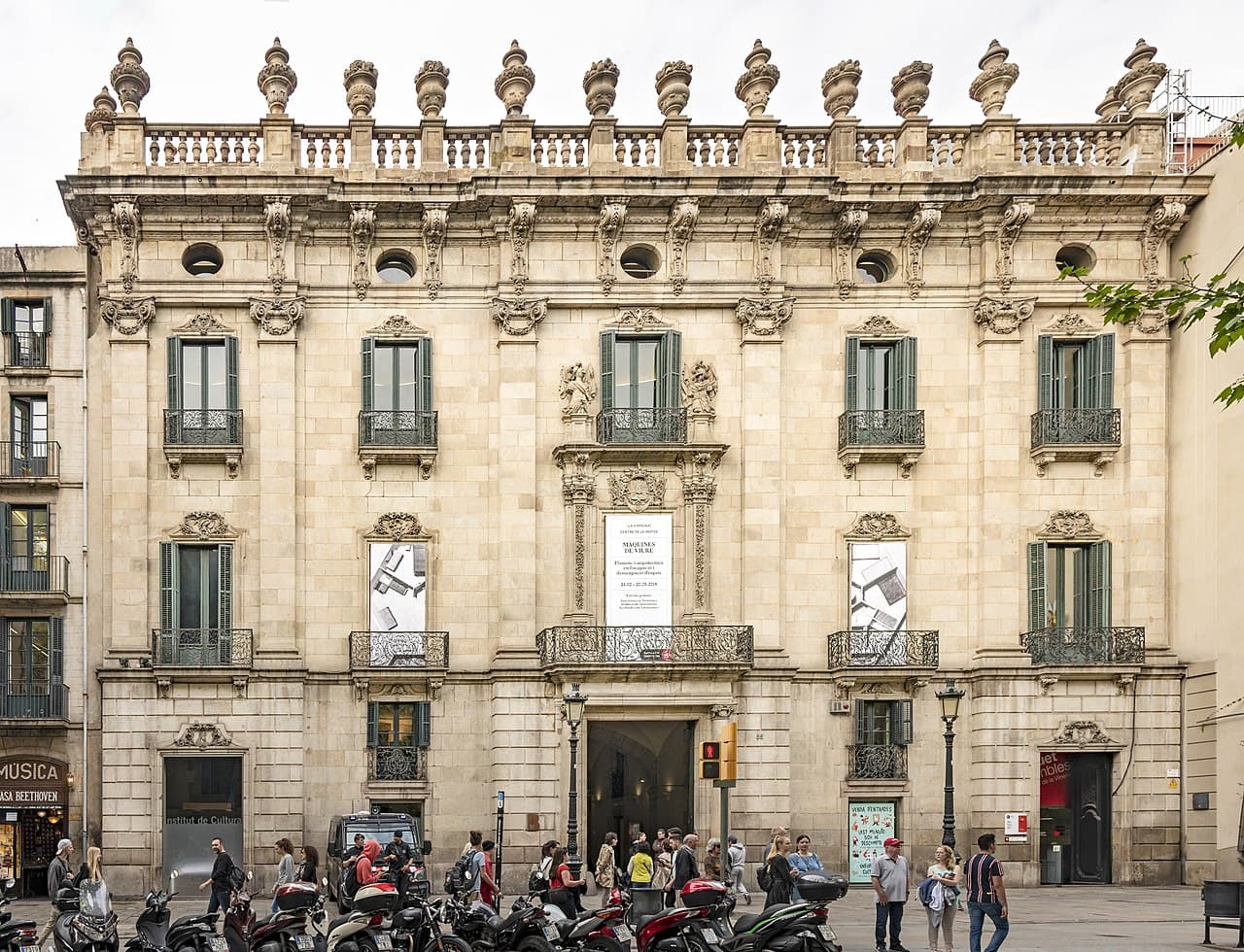
Look to your left. That enormous, elegant palace stretching along La Rambla, all balconies and carved stone? That's the Palau de la Virreina, and the story behind it involves a fortune made in Peru, a scandalous love affair, and a name that belongs not to the man who built it, but to the woman he left it to.
The palace was built between seventeen seventy-two and seventeen seventy-eight for a man named Manuel d'Amat i de Junyent, who had served as the Viceroy of Peru from seventeen sixty-one to seventeen seventy-six. Being Viceroy of Peru in the eighteenth century was essentially a license to become obscenely wealthy, and Amat took full advantage. He amassed a fortune and sent architectural sketches back to Barcelona so that his dream palace would be ready when he retired.
Read more...Show less
But here's the juicy part. While governing Peru, Amat -- who was by then in his sixties -- fell madly in love with a young actress and singer named Micaela Villegas, known to all of Lima as La Perricholi. She was roughly forty-four years younger than him. Their scandalous affair inspired theatrical lampoons accusing them of corruption and debauchery, and they even had a son together in seventeen sixty-nine. Their story became so famous it inspired operas, novels, and plays for the next two centuries.
When Amat finally returned to Barcelona in seventeen seventy-seven, he didn't bring Micaela. Instead, in seventeen seventy-nine, he married a young Catalan noblewoman named Maria Francesca Fivaller i Bru. He barely got to enjoy his grand palace. Amat died in seventeen eighty-two, just three years after his wedding, meaning he lived in this building he'd dreamed of from across an ocean for only about five years.
His widow, however, lived on for another twelve years, and the locals started calling the building the Palau de la Virreina -- the Palace of the Vice-Queen. The name stuck. The man who built it was forgotten; the woman who outlived him gave it her title.
Today the palace houses the city's cultural institute and hosts photography exhibitions. It's free to wander in, and the interior courtyard is worth a peek if the doors are open.
Keep heading down La Rambla. You're about to hit the stretch called Rambla de Sant Josep, or Rambla de les Flors. Just ahead on your left, you'll see a huge iron-and-glass entrance bustling with people. Get ready -- you're about to walk into one of the greatest food markets on the planet.
La Boqueria Market
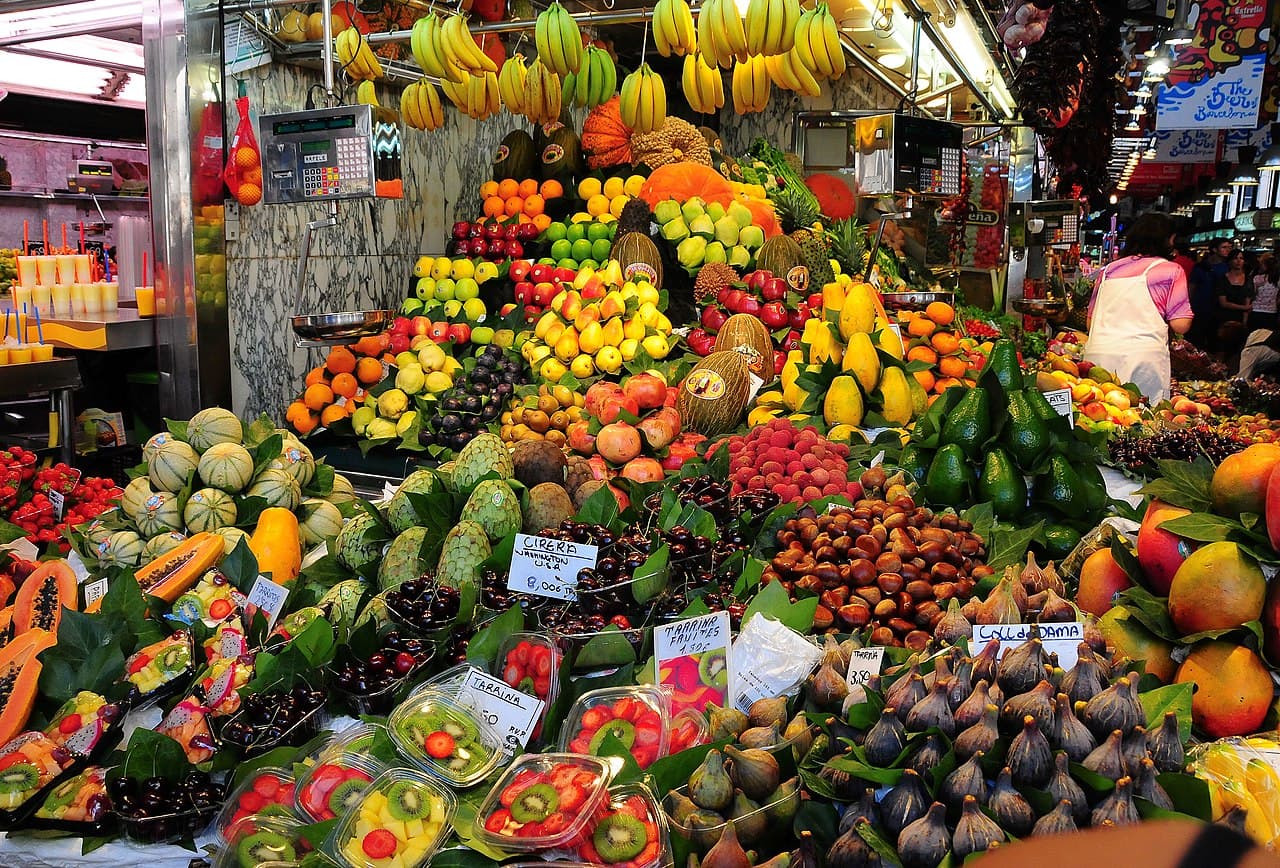
That enormous iron-and-glass entrance on your left, with the colorful modernista sign arching overhead? That's the Mercat de la Boqueria, and it has been feeding Barcelona in one form or another for over eight hundred years.
The first mention of a market on this site dates to twelve seventeen. Back then, it was nothing fancy -- just tables set up outside the old city gate where butchers sold meat. The name Boqueria comes from the Catalan word boc, meaning goat. So this started life as a goat market. By fourteen seventy, they'd added pigs. By the seventeen nineties, it was called the Mercat de la Palla -- the straw market. It wasn't until eighteen twenty-six that the market was officially recognized, and the structure you see today dates to around eighteen forty, designed by the Catalan architect Josep Mas i Vila.
Read more...Show less
Now, here's my honest advice. The stalls right at the entrance, facing La Rambla, are aimed squarely at tourists. The prices are higher, the fruit cups are pre-packaged, and you're basically paying a Rambla tax. Don't stop there. Walk past them. Go deep into the market, toward the back, and that's where the real magic happens.
If you want the quintessential Boqueria experience, find Bar Pinotxo. It's a tiny counter on the right just inside the main entrance -- look for the crowd of people and the cheerful old sign. The owner, Juanito, has been working there for over fifty years. Order the chipirones con mongetes -- baby squid with white beans in olive oil -- and you'll understand why people come back to this stall year after year. For breakfast, El Quim de la Boqueria does a famous plate of fried eggs with baby squid that is absurdly good for something so simple.
Beyond the food stalls, just wander and look. The heaps of scarlet peppers, the towers of spices, the legs of jamon iberico hanging like chandeliers, the fishmongers laying out everything from tiny anchovies to whole swordfish on beds of crushed ice. This is a market that feeds a real neighborhood, not just an attraction -- though it is absolutely both.
One tip: come early. Before ten in the morning, the produce is freshest, the aisles are passable, and you'll see locals doing their actual shopping.
When you leave the market, turn right and continue down La Rambla. About fifty meters ahead, look down at the pavement. You're about to walk over a masterpiece.
Joan Miró Mosaic
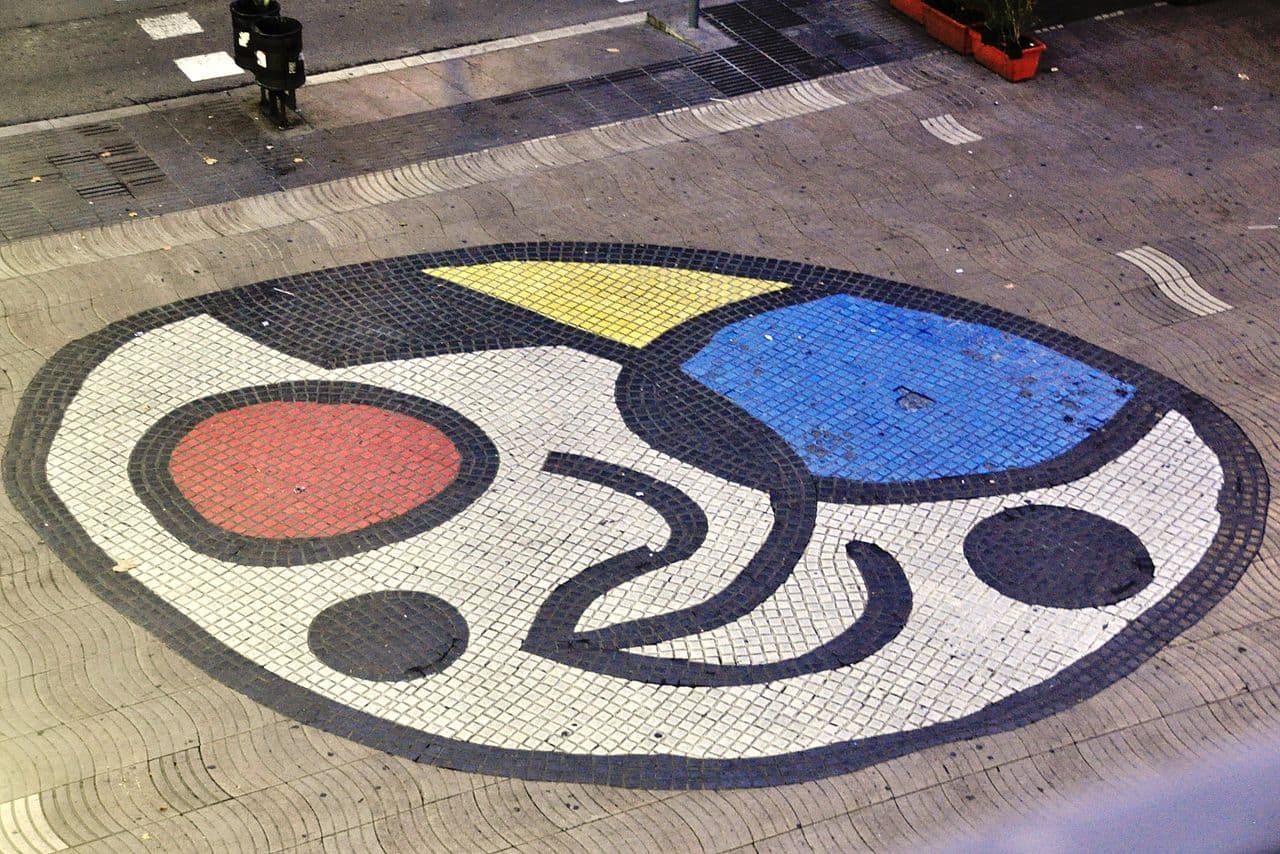
Stop. Look at the ground beneath your feet. You're standing on a work of art by Joan Miro, one of the most important artists of the twentieth century, and almost everyone walking down La Rambla steps right over it without noticing.
This circular mosaic is called the Mosaic del Pla de l'Os, and it was inaugurated on December thirtieth, nineteen seventy-six. It's eight meters across, made of over six thousand tiles of terrazzo -- a mixture of white cement and crushed glass -- in Miro's signature colors: bold red, blue, yellow, black, and white. The piece was executed by the ceramicist Joan Gardy Artigas and his father, Llorens Artigas, who had been Miro's collaborator for years.
Read more...Show less
The design might look abstract, but there's meaning in it. The circle represents the cosmos. Inside it, there's an arrow shape that was meant to guide travelers arriving by sea from the port into the city. Miro wanted this mosaic to be the first thing visitors encountered as they walked up from the harbor -- a welcome mat from Barcelona itself.
Here's what makes this story remarkable. In nineteen sixty-eight, Miro pledged to create four works of art and donate them to the city of Barcelona, to be placed in prominent public locations. He could have put them behind glass in a museum. Instead, he wanted people to walk on this one. Literally. He insisted the mosaic not be roped off, protected, or even signposted. He wanted it to be tough enough to handle the nearly seventy-eight million people who cross La Rambla every year. Art that lives in the street, worn smooth by the soles of the city.
Miro himself didn't attend the unveiling ceremony. He didn't see his finished mosaic until January fourteenth, nineteen seventy-seven. By then he was eighty-three years old. He died just six years later.
The name Pla de l'Os refers to this open space itself. It was created back in seventeen sixty when Barcelona's medieval walls were demolished and a city gate that stood here was torn down, leaving a wide clearing. For over two centuries, this has been one of La Rambla's natural gathering points. Miro just gave it a soul.
Now look up from the mosaic and across to the right side of La Rambla. You'll see a cafe with a dark green facade, old-fashioned signage, and an Art Nouveau feel. That's our next stop -- Cafe de l'Opera.
Cafè de l'Òpera
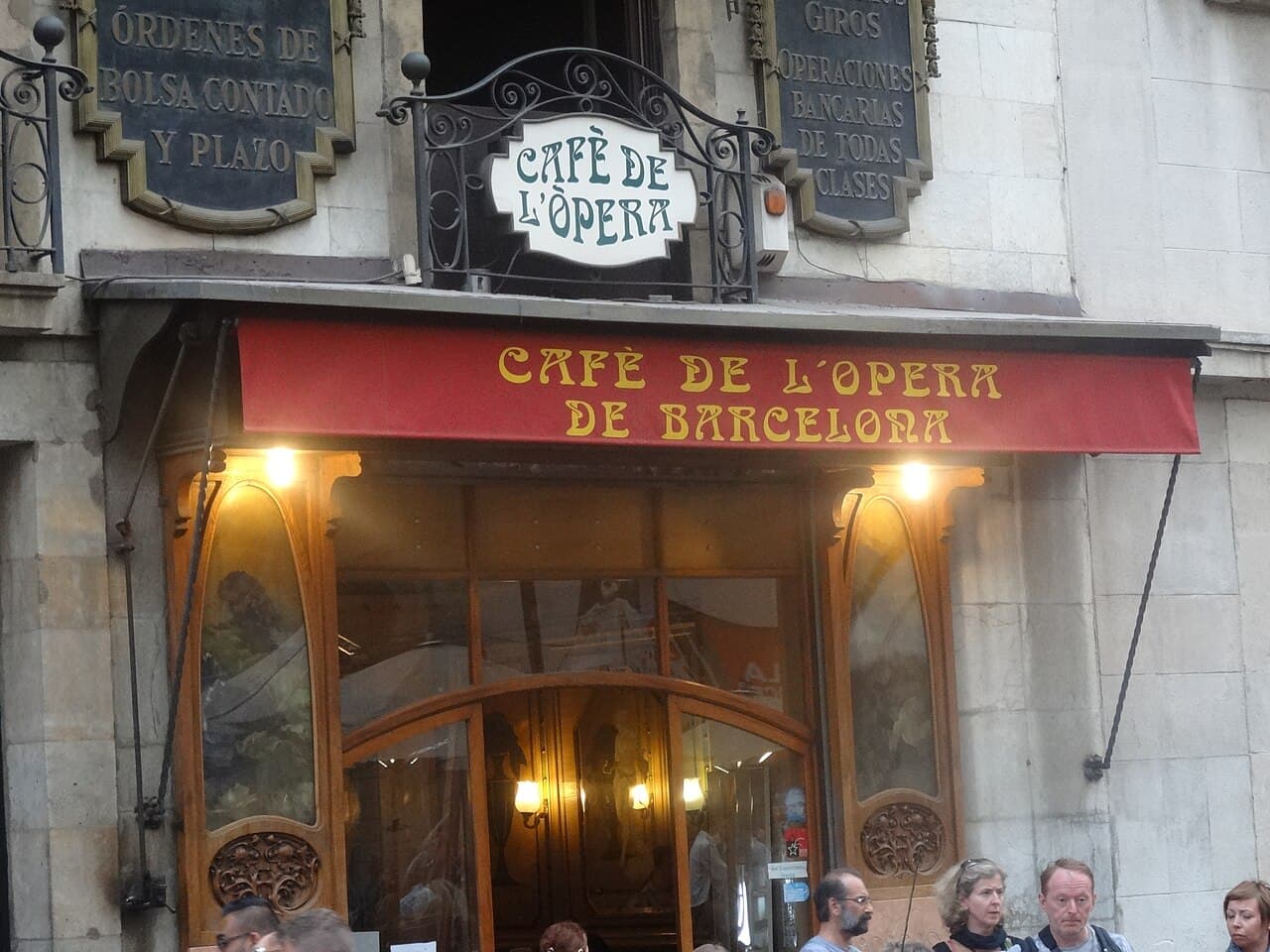
Cross over to the right side of La Rambla, to number seventy-four. You'll see a dark green wooden facade with old mirrors glinting inside. This is the Cafe de l'Opera, and it's been a meeting point on this street for over two centuries.
The building started life in the eighteenth century as a boarding tavern -- a place where carriages departed for other towns and cities. Imagine dusty passengers boarding horse-drawn coaches bound for Zaragoza or Madrid, fortifying themselves with food and wine before the journey. When the train arrived and made those carriage routes obsolete, the tavern reinvented itself. By the mid-eighteen hundreds, it had become a chocolateria, decorated in the Viennese style with wooden paneling, crystal chandeliers, and classical paintings.
Read more...Show less
In nineteen twenty-nine, a man named Antoni Doria rented the space, remodeled it in the Modernista style -- that's Barcelona's version of Art Nouveau -- and rechristened it the Cafe de l'Opera, after the Gran Teatre del Liceu directly across the street. It's been operating under that name ever since.
Step inside if you can. The interior is a time capsule. The carved wooden walls have sinuous, organic lines typical of Modernisme -- branches curling into leaves, flowers winding through frames. But the real treasures are the mirrors. They're etched with figures of women whose poses and flowing garments seem to represent characters from different operas -- sensual, dreamy figures with Art Nouveau curves. These mirrors survived the Civil War, survived Franco, survived the tourist boom. Some date back to the chocolateria era.
This was the place where operagoers came before and after performances at the Liceu. Writers, artists, intellectuals -- they all passed through here. If you sit down, order their Oliveta, a traditional vermouth. Or if you're feeling bold, try the absinthe. This is Barcelona, after all -- the drink was never quite as forbidden here as it was in Paris.
Now, look directly across La Rambla. That grand building with the classical facade? That's one of the most storied opera houses in Europe, and its history includes a bombing, a devastating fire, and a resurrection. Let's go take a look.
Gran Teatre del Liceu
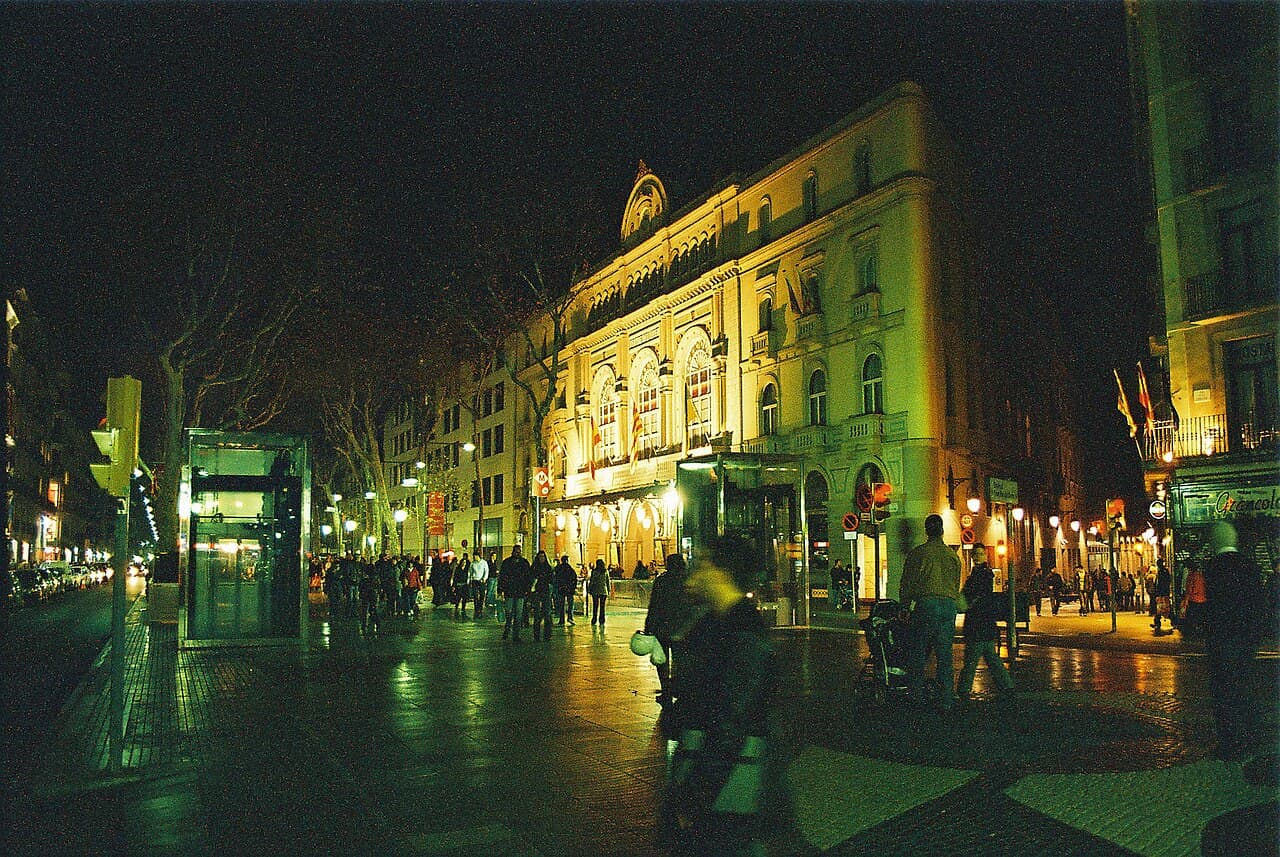
You're standing in front of the Gran Teatre del Liceu, Barcelona's opera house, and one of the most dramatic buildings -- in every sense of the word -- on La Rambla.
The Liceu opened on April fourth, eighteen forty-seven, and from the start it was different from every other opera house in Europe. While most opera houses were built by kings and funded by royal treasuries, the Liceu was funded entirely by private citizens. A society was formed, roughly a thousand shares were sold, and each shareholder received a seat in the theatre in perpetuity. This wasn't the monarchy's house of culture -- it was the bourgeoisie's. The wealthy families of Barcelona built it, owned it, and filled it every night. With four thousand seats, it was the largest opera house in Europe.
Read more...Show less
And that's exactly why it became a target.
On November seventh, eighteen ninety-three, it was opening night. The opera was Rossini's Guillaume Tell -- William Tell -- a piece that, rather ironically, celebrates freedom and the killing of tyrants. During the second act, a young anarchist named Santiago Salvador dropped two Orsini bombs from the fifth-floor balcony into the stalls below. Only one exploded. It killed twenty people and injured dozens more.
Salvador's motive was revenge. Weeks earlier, another anarchist named Pauli Pallas had tried to assassinate the Captain General of Catalonia and had been publicly executed. Salvador wanted to strike back at the Catalan elite, and the Liceu on opening night was the most potent symbol he could find. He hid for two months before being arrested in Zaragoza. He was executed by garrote in eighteen ninety-four.
A century later, disaster struck again. On January thirty-first, nineteen ninety-four, a fire broke out during routine maintenance. Within hours, the interior was gutted. The stage, the auditorium, the ceiling frescoes -- all gone. Only the main facade and the entrance hall with its grand staircase and Hall of Mirrors survived. The emotional impact on Barcelona was enormous. This wasn't just a building; it was the city's cultural heart.
The rebuilt Liceu reopened on October seventh, nineteen ninety-nine, with Puccini's Turandot -- which was, poetically, the next opera that had been scheduled in the season when the fire hit. The interior was reconstructed to match the original as closely as possible, but with modern engineering and acoustics.
Now, walk about thirty meters further down La Rambla and look to your left. You'll see an archway leading off the boulevard into a grand, palm-lined square. Step through it. Welcome to Placa Reial.
Plaça Reial
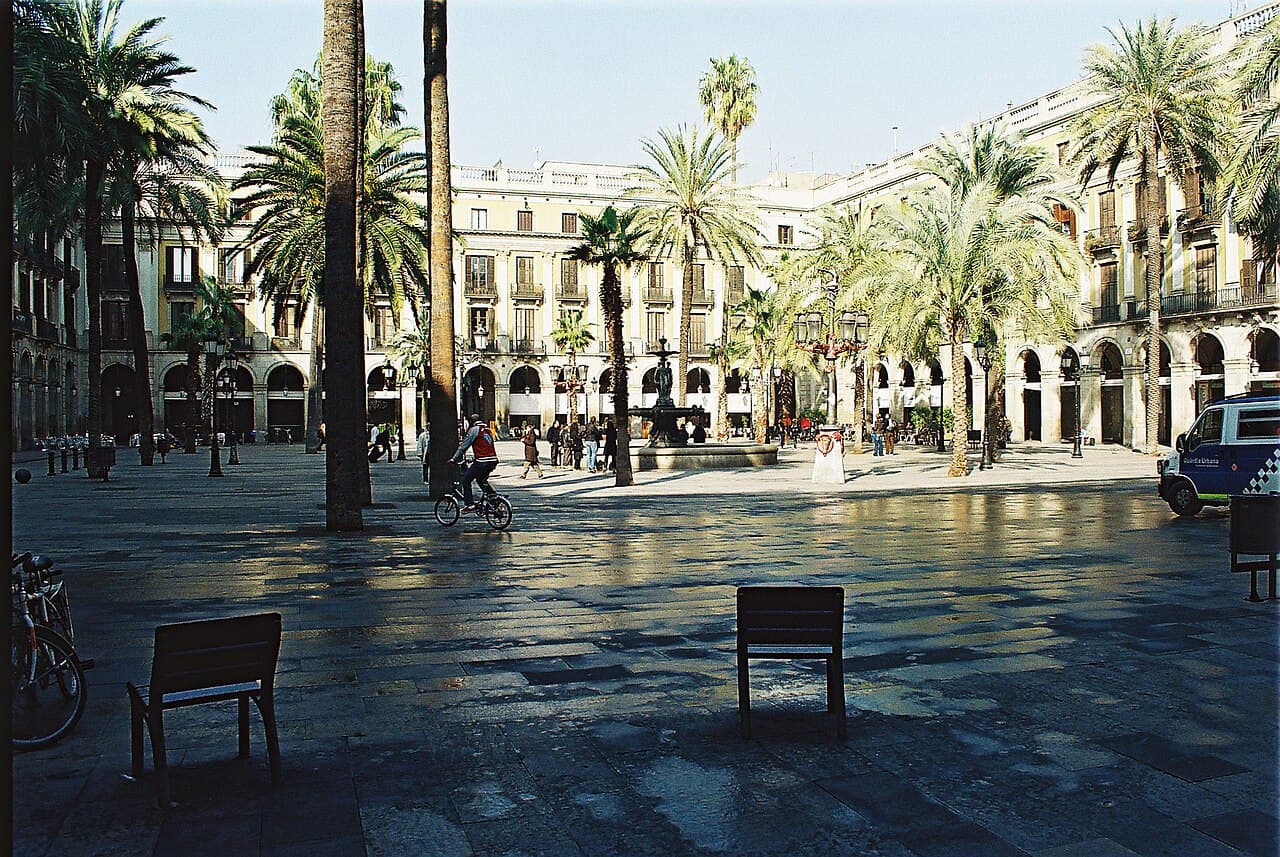
Walk through the archway and into this gorgeous arcaded square. Those tall palm trees, the ochre-colored buildings with their wrought-iron balconies, the central fountain -- this is the Placa Reial, and it's probably the most beautiful square in Barcelona.
But first, look at the lampposts. Specifically, the two six-armed lampposts flanking the central fountain. Those are by Antoni Gaudi. Yes, that Gaudi. And these were his very first public commission.
Read more...Show less
In eighteen seventy-eight, the Barcelona City Council asked the young architect -- he was just twenty-six -- to design street lamps for the square. Gaudi presented his plans on January fourteenth, eighteen seventy-nine. Look closely at the design. At the base, there's a large iron medallion with floral motifs. Partway up the column, you'll spot the Barcelona coat of arms with small red details above it. And at the top, the six arms hold glass lanterns, crowned by a winged helmet and two intertwined snakes -- the caduceus, symbol of Mercury, the Roman god of commerce. Even at twenty-six, Gaudi couldn't do anything simply. Every lamppost had to tell a story.
The square itself has a dramatic origin. This site was occupied by a Capuchin monastery -- the Convent dels Caputxins de Santa Madrona -- that had stood here since seventeen eighteen. Then in eighteen thirty-five, during a wave of church confiscations that swept Spain, religious properties were seized and demolished across Barcelona. The monastery was torn down, and the city decided to build something grand in its place.
The architect Francesc Daniel Molina designed the square between eighteen forty-eight and eighteen fifty-nine. The original plan was to place an equestrian statue of King Ferdinand the Seventh in the center. That never happened. Instead, in eighteen seventy-eight, the much more charming Fountain of the Three Graces was installed -- three figures representing the goddesses of charm, beauty, and fertility holding up a basin. A far better outcome, if you ask me.
Today the square is alive with restaurants, bars, and buskers. On Sunday mornings there's a coin and stamp market. At night it transforms into one of Barcelona's liveliest nightlife spots. But anytime of day, it's worth just standing in the middle and taking in those arcades, those palms, and the light filtering through.
Head back out to La Rambla through the archway and turn left to continue walking downhill. About forty meters along, on the right side, look for a grand old building with a classical facade. That's the Hotel Oriente.
Hotel Oriente
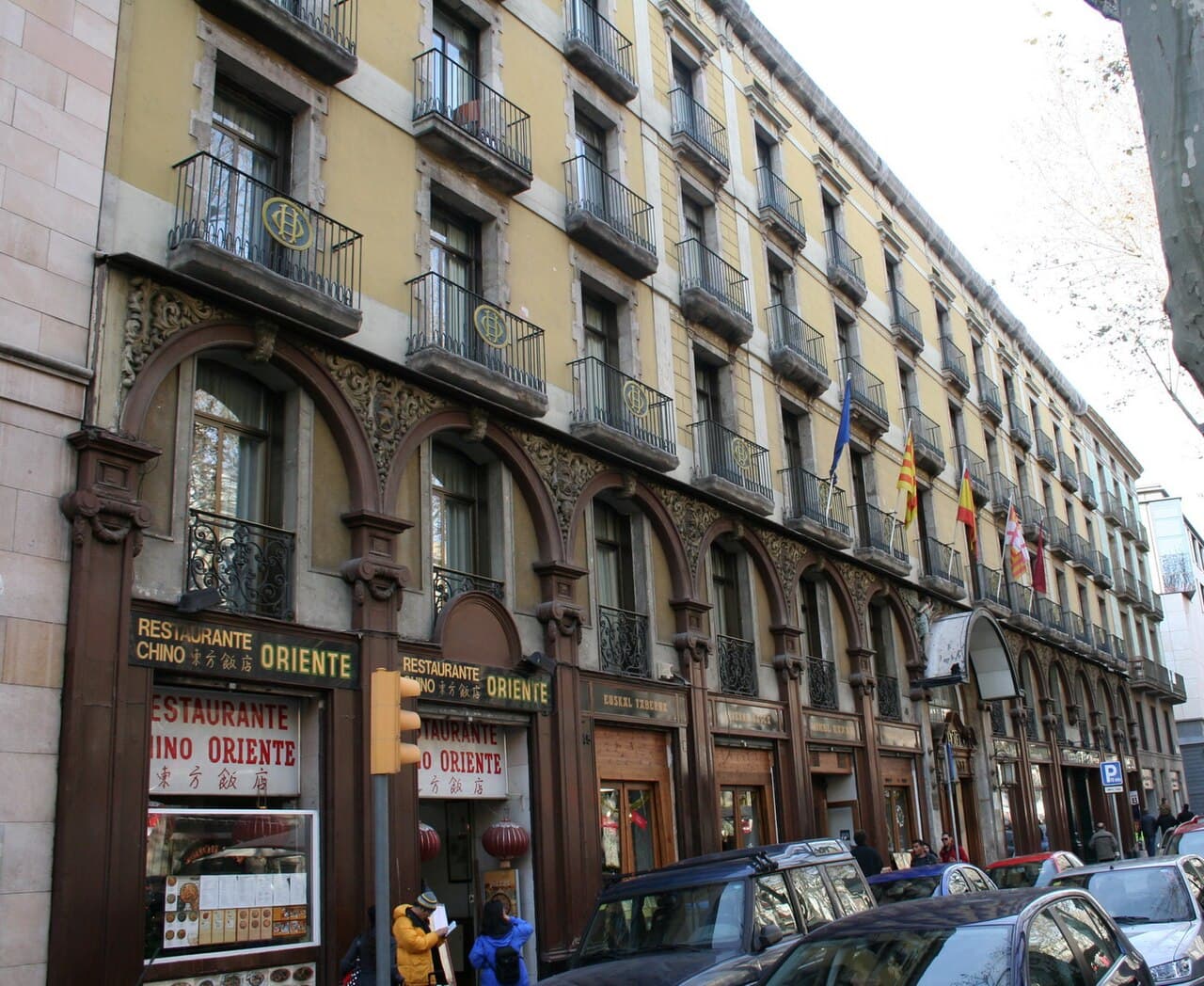
On the right side of La Rambla, look for a stately building with an old-world elegance about it. This is the Hotel Oriente, and it's been welcoming guests since eighteen forty-two, making it the oldest continuously operating hotel in Barcelona.
But the building is much older than that. This was originally the Franciscan College of San Buenaventura, built between sixteen fifty-two and sixteen seventy. For nearly two centuries, Franciscan friars studied and prayed here. Then came the Spanish confiscation of eighteen thirty-five -- the same wave of seizures that demolished the Capuchin monastery where we just stood in Placa Reial. Religious properties across Spain were taken by the state. The college was seized, and by eighteen forty-two it had been converted into the Gran Fonda de Oriente -- essentially, a grand inn.
Read more...Show less
The hotel became famous for a small but remarkable innovation: it was the first hotel in Barcelona to have gas lighting. In a city of oil lamps and candles, that was a genuine sensation.
Now, about the guest list. In September eighteen sixty-two, the Danish writer Hans Christian Andersen checked in. Yes, the fairy tale author -- The Little Mermaid, The Ugly Duckling, The Snow Queen. Andersen had come to Barcelona on a tour of Spain, and from his balcony here on La Rambla he witnessed something terrifying: a massive flood. On September fifteenth, intense rains devastated the city, and floodwaters surged down La Rambla -- which, remember, was originally a riverbed. Andersen watched the destruction from this very building.
Over the decades, the Oriente hosted a roll call of famous names. The opera singer Maria Callas stayed here during her performances at the Liceu across the street. In nineteen fifty-five, the Hollywood star Errol Flynn checked in while filming a movie in Barcelona. Bullfighters, politicians, artists -- they all came through these doors.
If you step inside, look for traces of the Franciscan cloister. The old arcade of the original college survives within the hotel's structure, a ghost of its monastic past hiding behind the reception desk and the bar.
Continue down La Rambla. You're now on the Rambla de Santa Monica, the final stretch before the sea. On the left side, in about a hundred and fifty meters, you'll see a large stone building with a Renaissance feel. That's Arts Santa Monica.
Arts Santa Mònica
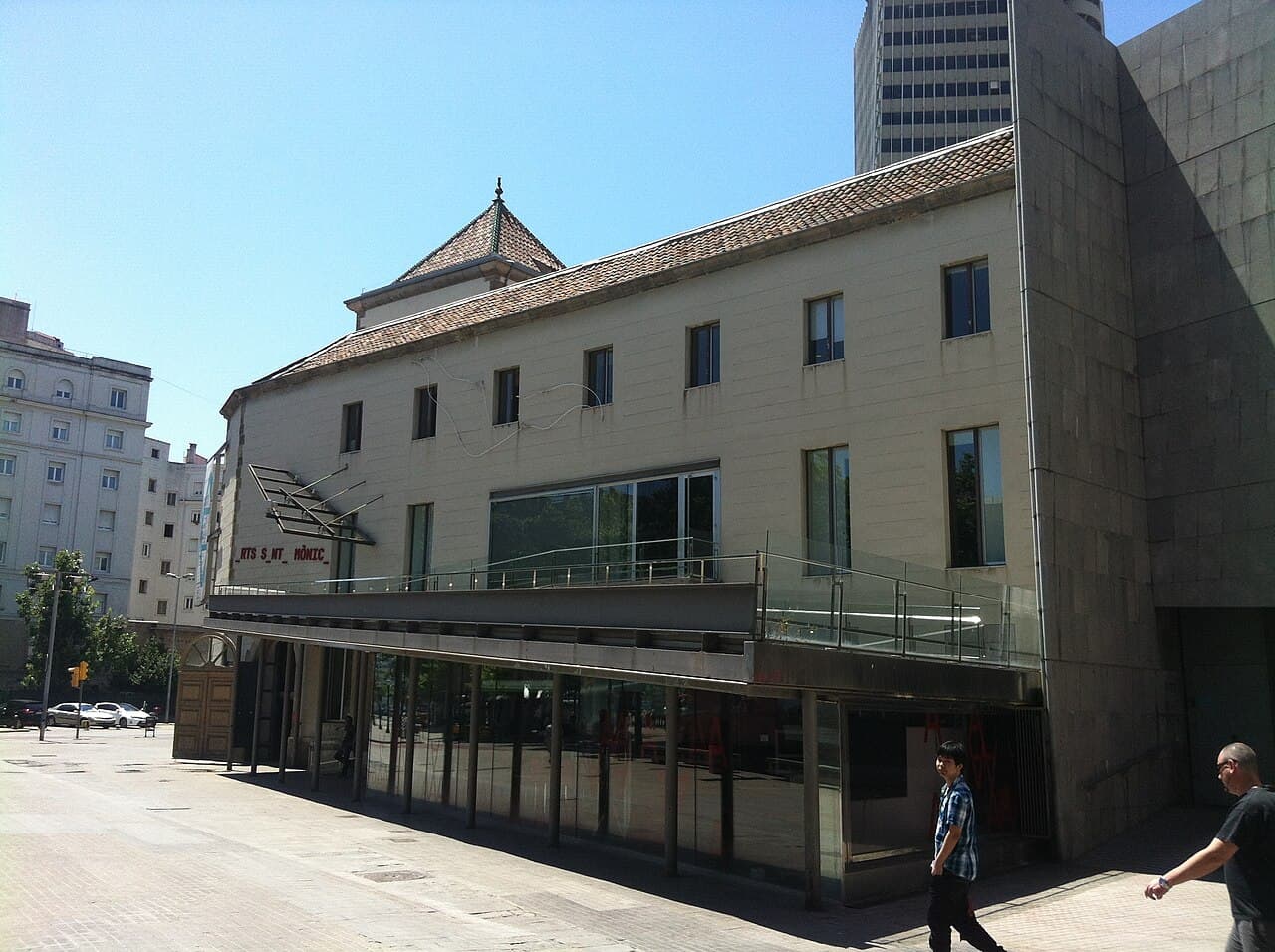
On the left side of La Rambla, you'll see a substantial stone building with round arches and an exterior ramp that looks strikingly modern against its old walls. This is Arts Santa Monica, and it's a place where the seventeenth century and the twenty-first century coexist in the same skin.
This building was originally a convent. The Barefoot Augustinians established themselves here in the sixteen twenties, building a monastery and church dedicated to Saint Monica at the very end of La Rambla, near the port. For two centuries, this was a place of prayer and silence at the edge of the city.
Read more...Show less
Then history got rough. In eighteen eleven, during the French occupation of Spain under Napoleon, the convent was seized and repurposed. After that, the building went through a dizzying series of uses -- it served as a straw warehouse, a gendarmerie, a military operations center. Each new tenant altered the layout, carving up the cloister and chapel spaces to suit their needs. The convent's spiritual life was over, and what followed was a long period of slow degradation.
The building sat in this state of neglect for decades until, in nineteen eighty-four, the Catalan government decided to transform it into a contemporary arts center. The architects Helio Pinon and Albert Viaplana carried out the renovation, cleverly keeping the Renaissance cloister with its round stone arches while adding modern elements like that dramatic exterior ramp, which doubles as a viewing platform above La Rambla. The center opened on May seventeenth, nineteen eighty-eight, with a show called Surrealism in Catalonia.
The result is a building that makes you do a double take. The old cloister arches are still there, solid and calm. But then you see glass walls, clean modern staircases, and exhibition spaces designed for video installations and digital art. Past and future, stacked on top of each other.
Admission is free, and the exhibitions rotate frequently. Even if contemporary art isn't your thing, the architecture alone is worth five minutes of your time.
You can feel the sea breeze now, can't you? Keep walking down La Rambla. You're almost at the end. Ahead of you, rising above the trees, you'll see a tall column topped by a figure pointing out to sea. That's the Columbus Monument, and it's the final stop on our walk.
Columbus Monument
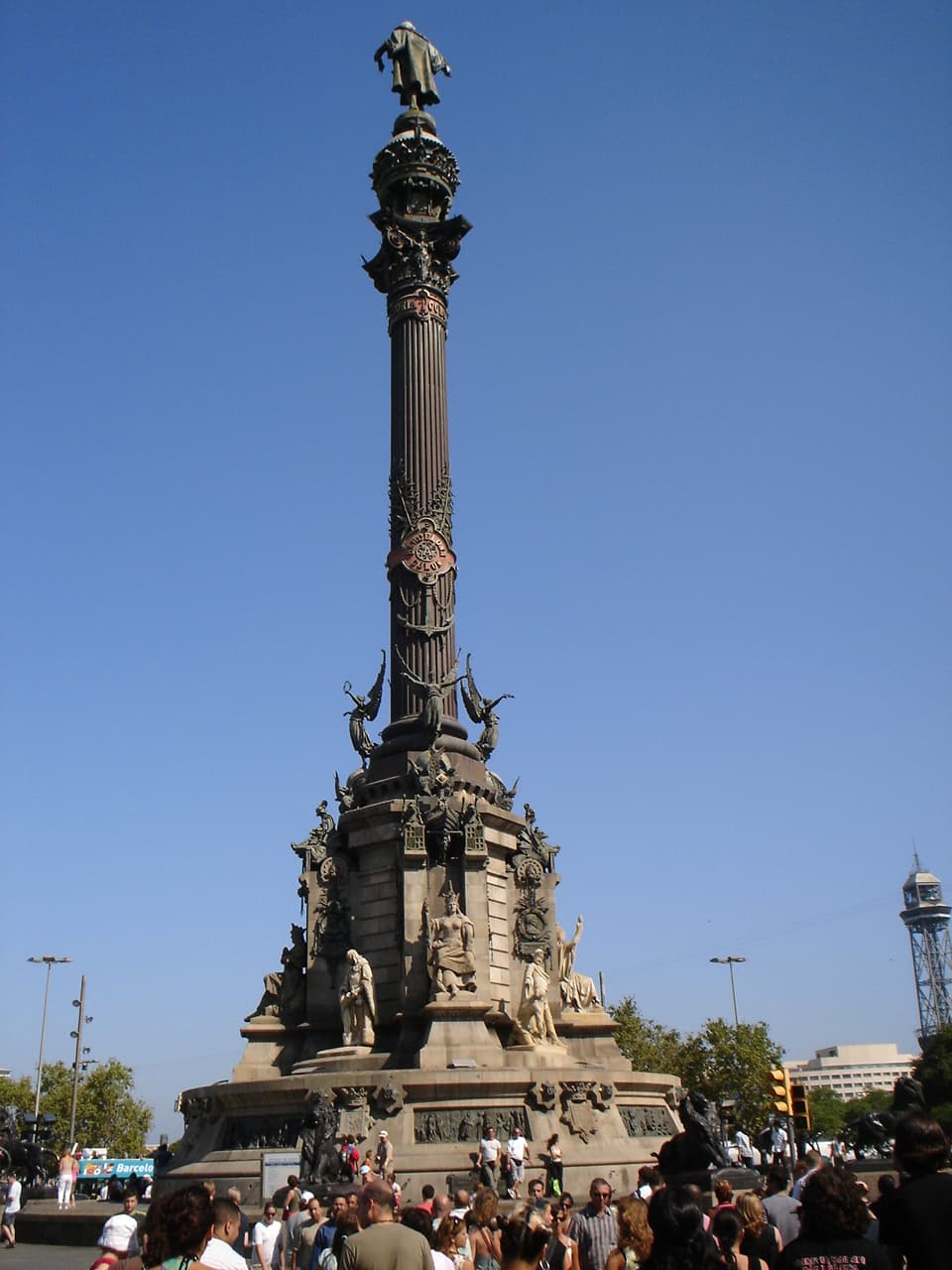
And here we are. The end of La Rambla, the edge of the sea, and towering sixty meters above you is the Monument a Colom -- the Columbus Monument.
It was built for Barcelona's Universal Exhibition of eighteen eighty-eight, designed by the Catalan architect Gaiera Buigas i Monrava. Construction started in eighteen eighty-two and the monument was inaugurated on June first, eighteen eighty-eight. At the top of a forty-meter Corinthian column stands a seven-point-two-meter bronze statue of Christopher Columbus, sculpted by Rafael Atche. He's holding a scroll in his left hand and pointing dramatically out to sea with his right.
Read more...Show less
But here's the thing everyone loves to point out: he's pointing in the wrong direction. His arm gestures southeast, toward the Mediterranean -- toward Mallorca, to be exact. The Americas are in the opposite direction. Was it a mistake? A deliberate joke by the sculptor? Nobody knows for sure. Some say it was overcast on the day the statue was mounted and they simply got their bearings wrong. Others argue it was intentional -- that Columbus is pointing toward the sea he actually sailed from Barcelona's port, not toward the destination.
The reason the monument is here, in Barcelona, is that Columbus came to this city after his first voyage in fourteen ninety-three to report to Queen Isabella the First and King Ferdinand the Fifth, who were holding court here at the time. Barcelona was where the news of a New World first reached the Spanish crown.
Here's a fun detail: inside that narrow column is an elevator. When it was first installed in eighteen eighty-eight, it was Barcelona's first ever lift -- a hydraulic mechanism that took four minutes to grind its way to the top. Today it's been replaced by a modern electric lift that takes thirty seconds. The viewing platform up top gives you a panoramic view of the port, Montjuic, the Gothic Quarter, and La Rambla stretching all the way back to Placa de Catalunya where we started.
From here, the sea stretches out in front of you. To your left, the wooden boardwalk leads to Barceloneta, the old fishermen's neighborhood, where you can find some of the best seafood in the city. To your right, the Port Vell marina gleams with yachts and the swooping footbridge called the Rambla de Mar.
You've just walked one point two kilometers down one of the most famous streets in the world. You've passed a fountain that makes football fans weep, a church burned twice, a palace built by a lovesick viceroy, a market that started selling goats in twelve seventeen, a mosaic that seventy-eight million people walk over every year, a cafe older than most countries, an opera house bombed by an anarchist, a square lit by a young Gaudi, a hotel where Hans Christian Andersen watched a flood, a convent turned art gallery, and a monument to a man pointing the wrong way.
Not bad for forty-five minutes. Welcome to Barcelona.
Free
GPS-guided walking tour
No account needed. Walk at your own pace.
Free
11 stops · 1.2 km