10 stops
GPS-guided
2.5 km
Walking
55 minutes
Duration
Free
No tickets
About this tour
Down the spine of Old Edinburgh — 300 witches burned, a stool that started a war, a sealed plague street, and a murder scene.
10 stops on this tour
Castle Esplanade & The Witches' Well
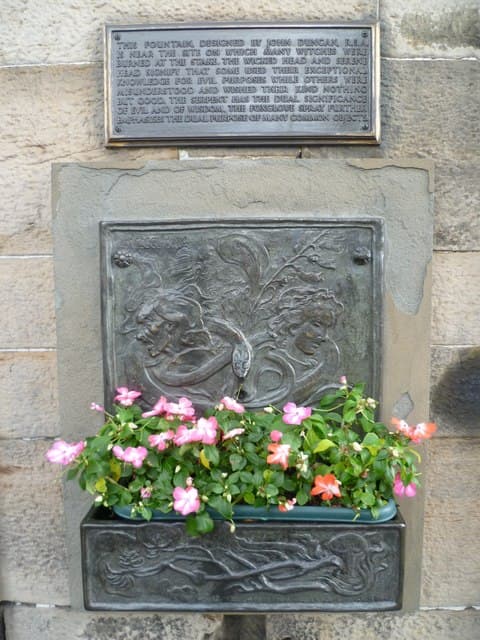
You're standing on the Castle Esplanade, the wide parade ground just below Edinburgh Castle, and the starting point of the Royal Mile. Before we head downhill, I need you to find something most people walk right past. On the wall to your left as you face away from the castle, near the entrance ramp, there's a small bronze fountain embedded in the stone. It's easy to miss. That's the Witches' Well, and it marks one of the darkest chapters in Scottish history.
Between fourteen seventy-nine and seventeen twenty-two, Scotland executed an estimated twenty-five hundred people for witchcraft — eighty-four percent of them women. Many were strangled and burned right here, on the spot where you're standing. The Castle Esplanade was one of the primary execution sites. Over three hundred accused witches met their end at or near this location. Think about that number for a moment. Three hundred people. On this patch of ground.
Read more...Show less
The memorial itself was commissioned in eighteen ninety-four by Sir Patrick Geddes, the great Scottish urban planner, and designed by his friend, the artist John Duncan. Look closely at the bronze relief. You'll see two faces — one serene, one wicked — representing the dual nature of how these women were perceived. Some were healers and herbalists whose knowledge frightened their neighbours. Others were simply unlucky. The foxglove spray in the design drives this home — foxglove can cure a failing heart or kill you, depending on the dose. The same plant, the same knowledge, used for good or for evil. The snake winding through the composition carries the same duality: wisdom and danger.
The dates in Roman numerals at the corners — fourteen seventy-nine and seventeen twenty-two — mark the period of Scotland's witch hunts. Parliament passed the Witchcraft Act in fifteen sixty-three, making the practice of witchcraft a capital crime. The frenzy peaked between fifteen ninety and sixteen sixty-two, fuelled in part by King James the Sixth himself, who personally attended witch trials and even wrote a book on demonology in fifteen ninety-seven.
Now look up from that small, sombre fountain and take in the view. Arthur's Seat to the east, the Firth of Forth glinting to the north. On a clear day, you can see all the way to Fife. This esplanade becomes the world's most famous performance venue every August during the Edinburgh Military Tattoo, when nine thousand people pack temporary grandstands right where you're standing.
Alright, let's begin our walk down the spine of Old Edinburgh. Head downhill from the esplanade. Within about fifty metres, you'll see a tall, quirky-looking building on your left with a rooftop camera obscura. That's our next stop.
Camera Obscura & Castlehill
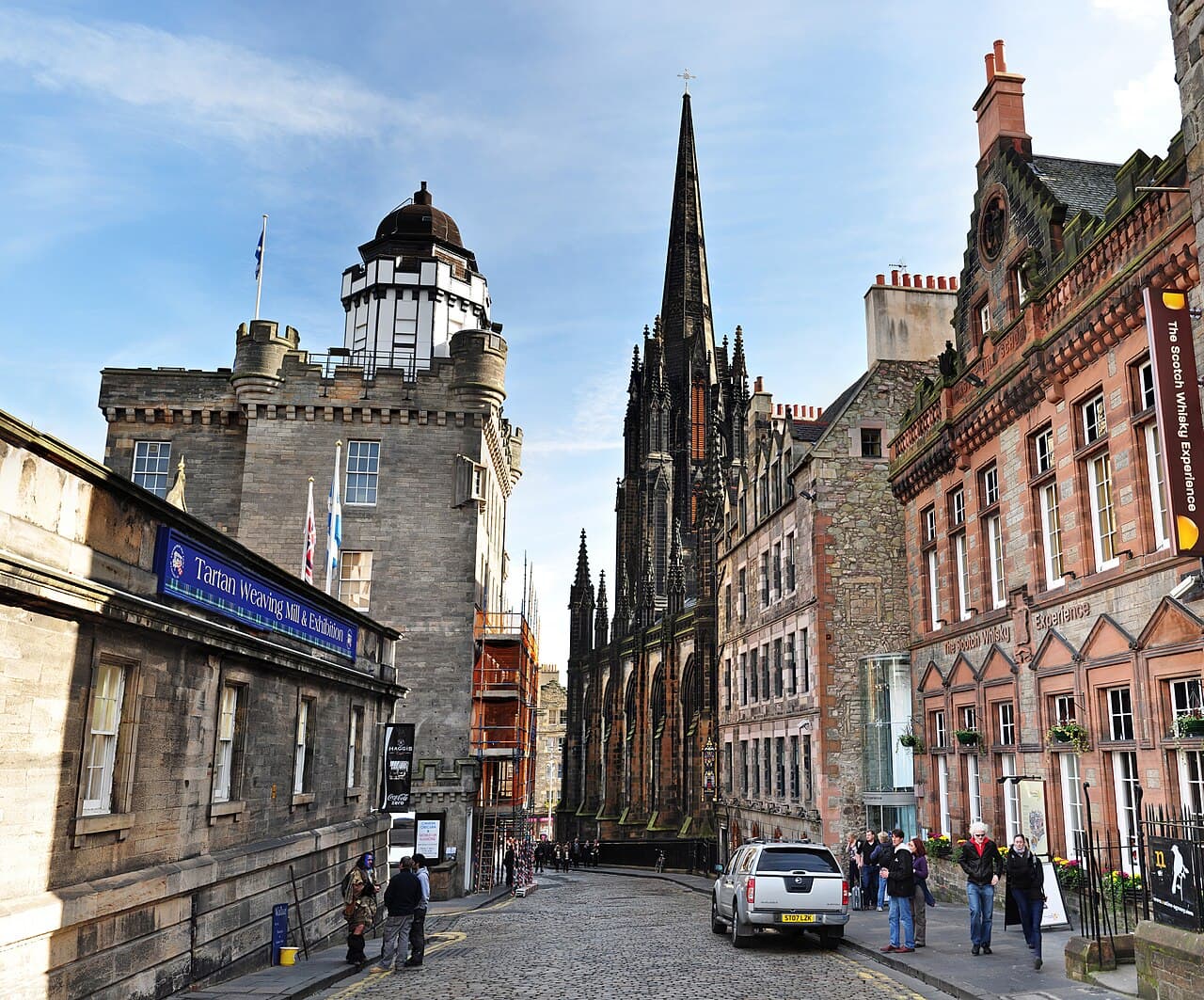
You're now on Castlehill, the very top section of the Royal Mile, and that tall building on your left is Camera Obscura and World of Illusions — Edinburgh's oldest purpose-built visitor attraction, and honestly, one of the most delightful places on this entire street.
The story starts with a woman named Maria Theresa Short. In eighteen thirty-five, she inherited a collection of optical instruments — telescopes, scientific curiosities, and a camera obscura — and opened an observatory on Calton Hill, over to your east. It was wildly popular. But in eighteen fifty-one, the authorities demolished her Calton Hill building against her protests to make way for the National Monument. Undeterred, Maria bought the Laird of Cockpen's townhouse right here on Castlehill and added two extra storeys to create Short's Observatory, Museum of Science and Art, which opened in eighteen fifty-three.
Read more...Show less
Now, if you don't know what a camera obscura actually is, imagine this: you're in a pitch-dark room at the top of a tower. A rotating mirror and a system of lenses on the roof project a live, moving image of the city below onto a white, concave table in the centre of the room. No electricity, no screens — just optics. You can watch people walking on the street below, cars crossing the bridges, seagulls wheeling over the rooftops. It's like a Victorian drone camera, and it's still up there working today, using essentially the same technology Maria installed over a hundred and seventy years ago.
In eighteen ninety-two, our friend Patrick Geddes — the same man who commissioned the Witches' Well — took over the building and renamed it the Outlook Tower. Geddes was obsessed with helping people understand their city, and he saw the camera obscura as the perfect tool. He organised it as an urban study centre, with each floor dedicated to a different geographic scale — Edinburgh, Scotland, the world.
While you're here on Castlehill, look across the road at the Scotch Whisky Experience, which is worth a visit if you want to understand why Scotland has over a hundred and thirty active distilleries. And if you glance further down, you'll spot the black iron facade of The Hub — that tall Gothic spire belongs to a former church that's now the headquarters of the Edinburgh International Festival.
One more thing: if you pop into the Whiski Bar and Restaurant just a bit further down on the right, they've got over three hundred whiskies and serve proper Scottish food with live music every night. A dram of something peaty while looking out at the Mile is hard to beat.
Keep walking downhill. The Royal Mile narrows as you enter the Lawnmarket — the old "land market" where country folk once sold linen and wool. About a hundred metres ahead on your right, look for a small archway. That's the entrance to Riddle's Court.
Riddle's Court
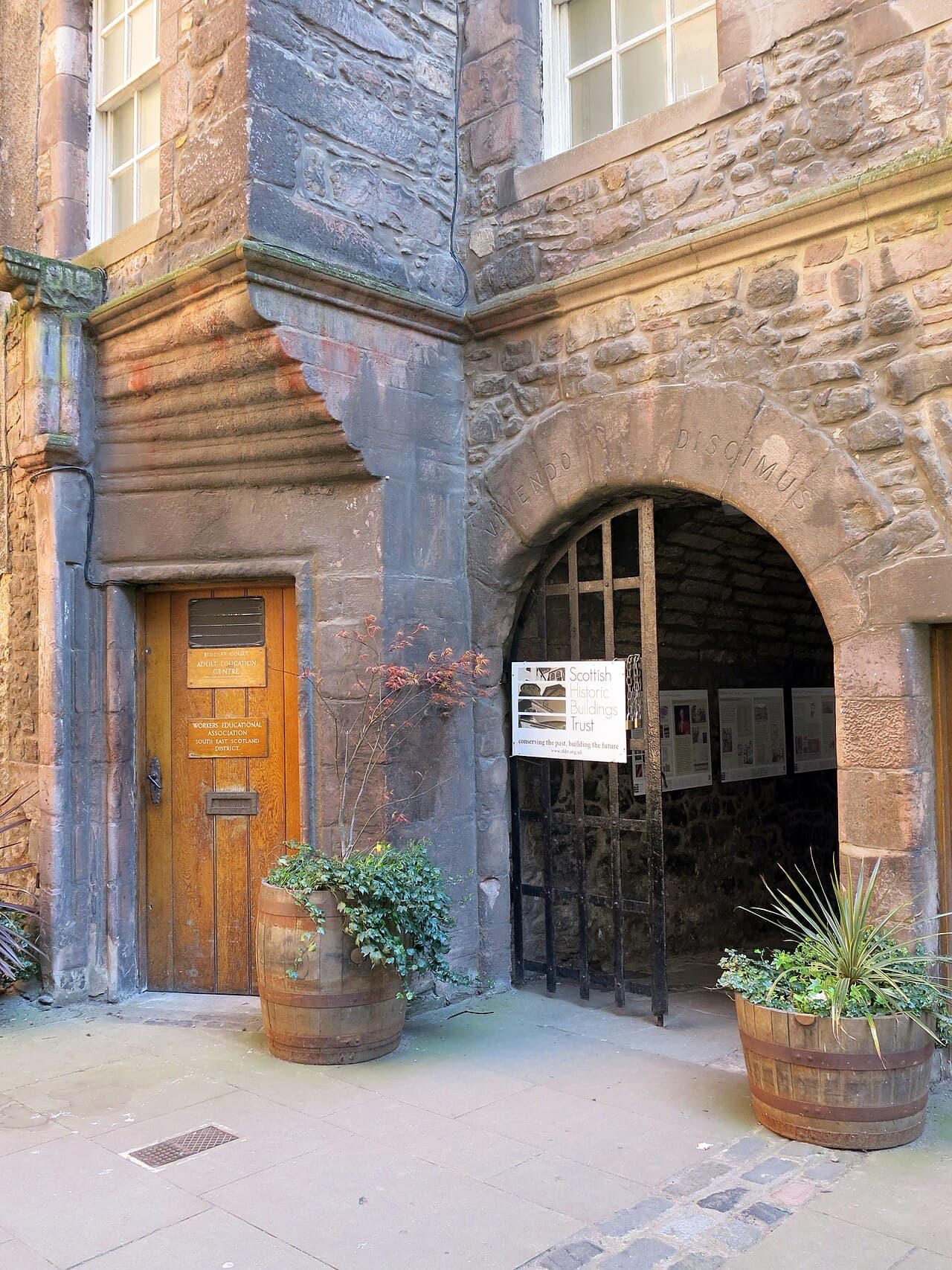
Step through that archway off the Lawnmarket and you've just left the twenty-first century. Welcome to Riddle's Court — a sixteenth-century courtyard hidden behind the facades of the Royal Mile. Most people walk right past the entrance without ever knowing this place exists.
The building you're standing in was built in fifteen eighty-seven by a wealthy merchant named John MacMorran. He was a bailie of Edinburgh — essentially a senior magistrate — and a major player in the city's shipping trade, with shares in nine vessels. MacMorran built himself a mansion here that was grand enough to host royalty.
Read more...Show less
And it did. In fifteen ninety-eight, King James the Sixth and his wife Anne of Denmark attended a lavish banquet in this very building, held in honour of Ulrik, Duke of Holstein. During renovations a few years ago, archaeologists discovered an enormous stove area hidden behind masonry on the ground floor — quite possibly the kitchen where that royal feast was prepared over four hundred years ago.
But here's where the story takes a dark turn. MacMorran never lived to see that banquet. In fifteen ninety-five, the boys at Edinburgh's Royal High School barricaded themselves inside the school building in a dispute over holiday length. The town council sent MacMorran, in his capacity as bailie, to break down the door with a battering ram. As he approached, a thirteen-year-old boy — William Sinclair, son of a powerful noble family — fired a pistol from a window and shot MacMorran through the head. He died instantly. The boy was never punished. Connections in high places, then as now.
After MacMorran, this courtyard attracted Edinburgh's greatest minds. The philosopher David Hume lived here in seventeen fifty-one, at the age of forty. He wrote to a friend that he had "at last arrived at the dignity of being a householder." Hume stayed for two years before moving down the Mile to the Canongate.
Look around this courtyard and imagine the layers of life that have passed through. By the late nineteenth century, it had fallen into serious decline. Patrick Geddes — yes, him again, the man is everywhere on this walk — rescued it and established it as a centre for learning. Between twenty fifteen and twenty seventeen, the Scottish Historic Buildings Trust completed a six-million-pound restoration, and today it operates as the Patrick Geddes Centre.
If you're hungry, pop back out to the Lawnmarket and cross the road to Deacon Brodie's Tavern. It's named after William Brodie, an eighteenth-century cabinet maker and city councillor who was secretly a burglar by night. He was hanged in seventeen eighty-eight, and his double life inspired Robert Louis Stevenson's Dr Jekyll and Mr Hyde. The pub does solid Scottish grub upstairs.
Head back to the Royal Mile, turn right, and continue downhill. About two hundred metres ahead, the massive Gothic church dominating the High Street is St Giles' Cathedral.
St Giles' Cathedral
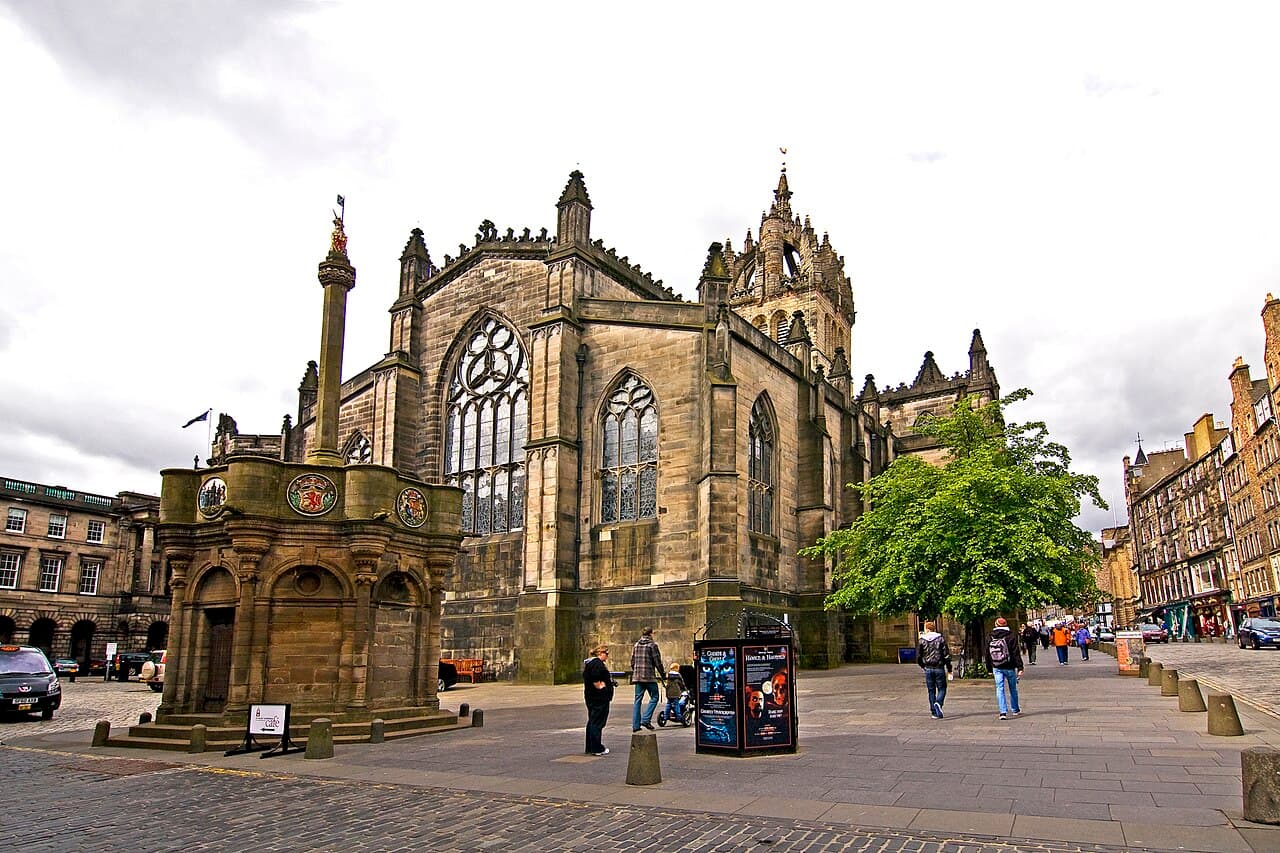
This is St Giles' Cathedral — the High Kirk of Edinburgh, the mother church of Presbyterianism, and one of the most important buildings in Scotland. Look up at that crown steeple. Those eight arched buttresses merging into a single spire have been the symbol of Edinburgh's skyline since the fourteen sixties. Dendrochronological dating — that's tree-ring analysis — places the timber framework of the crown between fourteen sixty and fourteen sixty-seven. It's one of only two surviving medieval crown steeples in Scotland; the other is at King's College Chapel in Aberdeen.
The church itself was founded in eleven twenty-four by King David the First, though the building you see today was mostly built in the fourteenth and fifteenth centuries. Step inside and let your eyes adjust. The interior is a forest of stone columns opening into side chapels and aisles that have accumulated over nine hundred years of worship.
Read more...Show less
Now, find the spot near the south side of the nave and look for a small brass plaque on the floor. This marks the approximate location of one of the most consequential tantrums in British history. On the twenty-third of July, sixteen thirty-seven, when Dean James Hannay opened the new Book of Common Prayer for the first time — imposed on the Scottish Kirk by King Charles the First — a woman reportedly hurled her folding stool at his head, shouting something along the lines of "Do not dare say Mass in my ear!" That woman is traditionally identified as Jenny Geddes, a local market trader.
Now, historians debate whether Jenny was a real individual or a composite figure — there's no definitive proof she threw the stool. But the riot that followed was absolutely real. It sparked a chain of events that led to the signing of the National Covenant in sixteen thirty-eight, the Bishops' Wars, and ultimately fed into the English Civil War. A stool thrown in this church helped topple a king. In nineteen ninety-two, a group of Scottish women donated a bronze sculpture of a three-legged stool, by artist Merilyn Smith, to commemorate the event.
Before you leave, find the Thistle Chapel, tucked away in the southeast corner. It was designed by Robert Lorimer and completed in nineteen eleven as the chapel of the Order of the Thistle — Scotland's oldest and most senior order of chivalry. It has stalls for sixteen knights and the sovereign. The carved detail in there is breathtaking — look up at the ceiling bosses and you'll spot an angel playing bagpipes.
Head out the main door, cross the High Street, and walk about fifty metres east. On your right, you'll see the grand neoclassical facade of the City Chambers. Our next stop is underneath it.
The Real Mary King's Close
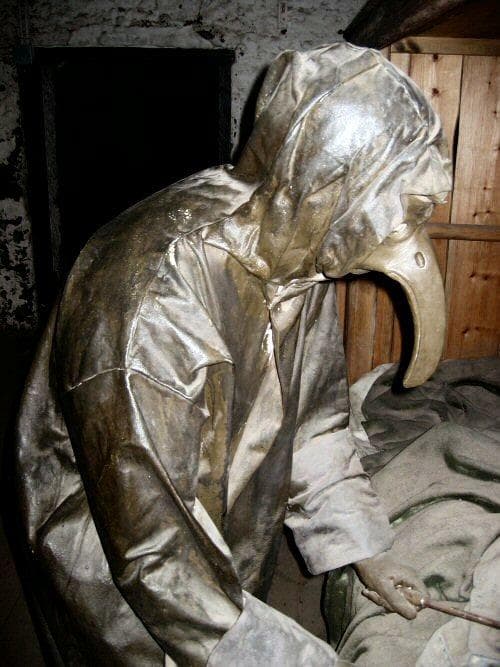
You're standing in front of the Edinburgh City Chambers, a handsome neoclassical building that serves as the headquarters of the city council. But what makes this spot extraordinary is what's beneath your feet. Buried under this building is an entire seventeenth-century street — Mary King's Close — sealed, preserved, and largely forgotten for centuries.
Here's the story. In the sixteen hundreds, the Royal Mile was a place of extreme density. Tenements rose six, seven, even eleven storeys high along narrow alleys called closes. Mary King's Close was named after Mary King, a fabric merchant who lived and ran her business here in the sixteen thirties after her husband died. Life in these closes was brutal — no sewage system, waste thrown from windows into the street, rats everywhere.
Read more...Show less
Then, in sixteen forty-five, the plague arrived in Edinburgh. The disease tore through these packed tenements. The city quarantined residents — healthy families who could be moved were relocated to Burgh Muir, outside the city walls. Those too sick to move put white flags in their windows so that food and coal could be delivered to their doorsteps. It wasn't the horror story of people being bricked up alive that some ghost tours will tell you. The city council actually managed the outbreak with what passed for compassion in the seventeenth century. But the death toll was still devastating — between a fifth and a half of Edinburgh's population died.
After the plague passed, people actually continued living in Mary King's Close for over two hundred and fifty more years. The last resident left in nineteen oh two. When the Royal Exchange — now the City Chambers — was built on top in the seventeen fifty-three, the lower levels of the close were simply incorporated into the foundations. The upper storeys were demolished, but the ground floors and basements survived intact, frozen in time beneath the new building.
Today, you can take a guided tour through these underground streets. You'll walk through rooms where seventeenth-century Edinburgh families lived, slept, and died. The temperature drops, the ceilings are low, and you're surrounded by original stonework. It's genuinely atmospheric, not a gimmick.
One thing to know: the close was never actually "sealed off" during the plague, despite what you might read. That's a myth that makes for a better ghost story but doesn't hold up to the historical record.
Continue east along the High Street. In about a hundred and fifty metres, you'll reach the intersection where the High Street meets South Bridge and the Bridges area. Look for the church with the distinctive spire on your left — that's the Tron Kirk.
Tron Kirk
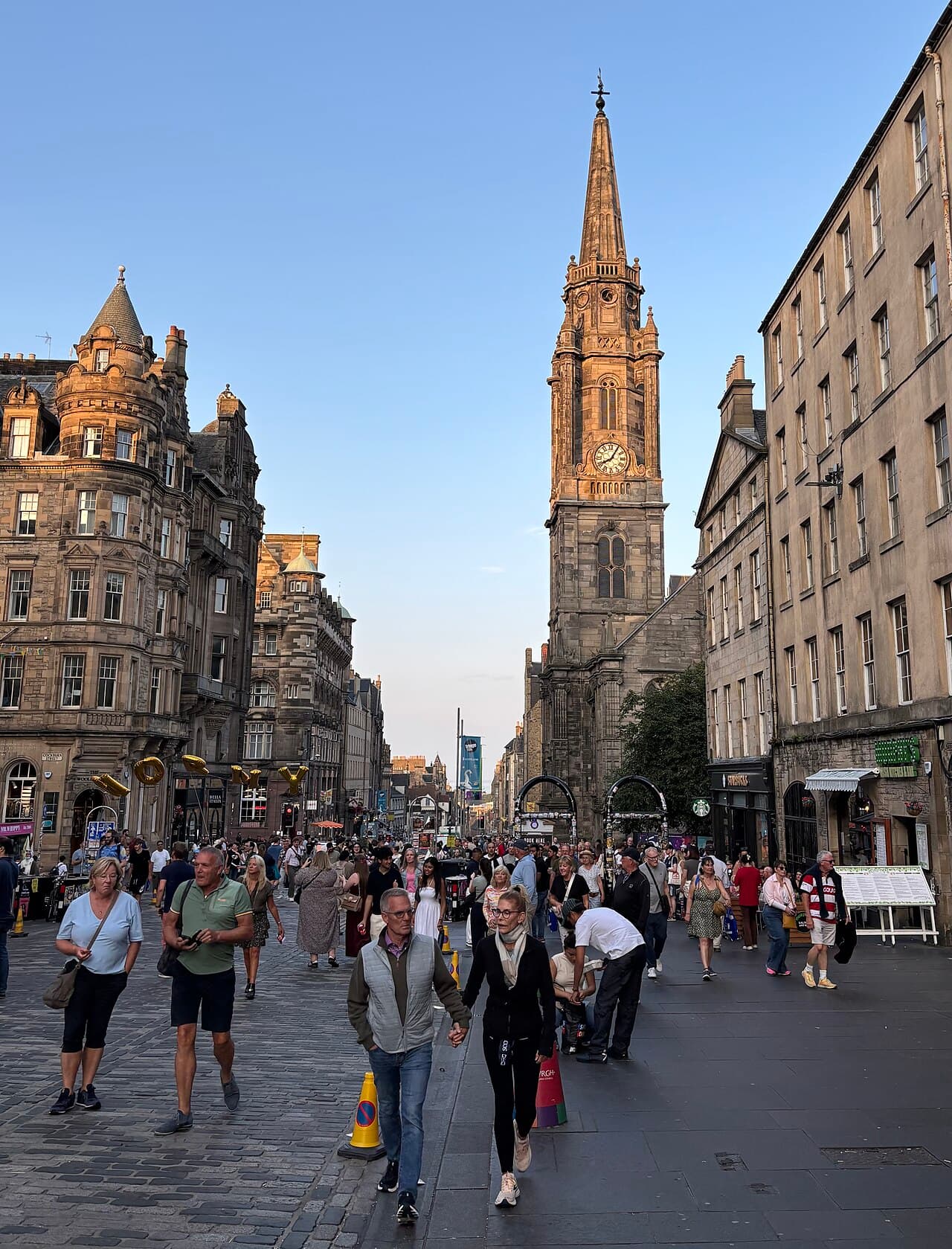
That church with the handsome spire on your left is the Tron Kirk, and its story is tangled up with kings, fire, and the single most important crossroads on the Royal Mile.
The Tron was built between sixteen thirty-six and sixteen forty-seven, designed by John Mylne, the Royal Master Mason. Why build a new church when St Giles' was just up the road? Because King Charles the First had decided St Giles' should become a cathedral for the newly created diocese of Edinburgh. The existing congregation needed somewhere to go, so the Tron was erected to house them. The name comes from the "tron" — the public weighing beam that stood nearby, where merchants had their goods weighed and taxed. It was the commercial heart of Old Edinburgh.
Read more...Show less
Now, look at that spire. The one you see today is not the original. On the evening of the fifteenth of November, eighteen twenty-four, a fire broke out in an engraving workshop on Old Assembly Close, just a few steps from here. That fire became the Great Fire of Edinburgh, and it raged for five days. Around four hundred homes were destroyed. Thirteen people died. Hundreds of families were left homeless. And on the second day, the sixteenth of November, the flames reached the Tron Kirk's original spire. The lead roof melted and poured down in molten rivers. The replacement spire, designed by R and R Dickson, went up in eighteen twenty-eight.
The fire was so catastrophic that it finally forced Edinburgh's leaders to take fire safety seriously. The city established one of Britain's first professional municipal fire brigades in its aftermath.
The Tron closed as a church in nineteen fifty-two, and the congregation relocated to a new church in Moredun. For decades it sat empty, and various plans for reuse have come and gone. But the building itself remains a gorgeous piece of seventeenth-century architecture.
You're standing at what was once the most important junction in Edinburgh. The road to the south — now South Bridge — connected the Old Town to the university and the fields beyond. This was where Hogmanay was traditionally celebrated, with crowds gathering around the Tron to hear the bells ring in the New Year.
If you fancy a drink at this point, The World's End pub is just ahead on your left — a sixteenth-century building whose exterior wall was once part of the Flodden Wall that protected the Old Town. Great fish and chips, proper Cullen skink, and live music at weekends.
Keep walking east. You'll notice brass studs set into the road surface ahead — these mark the site of the Netherbow Port, the medieval gate that once separated Edinburgh from the independent burgh of Canongate. About a hundred metres past those studs, look for the oldest-looking house on the street, with a timber gallery jutting out over the pavement. That's John Knox House.
John Knox House
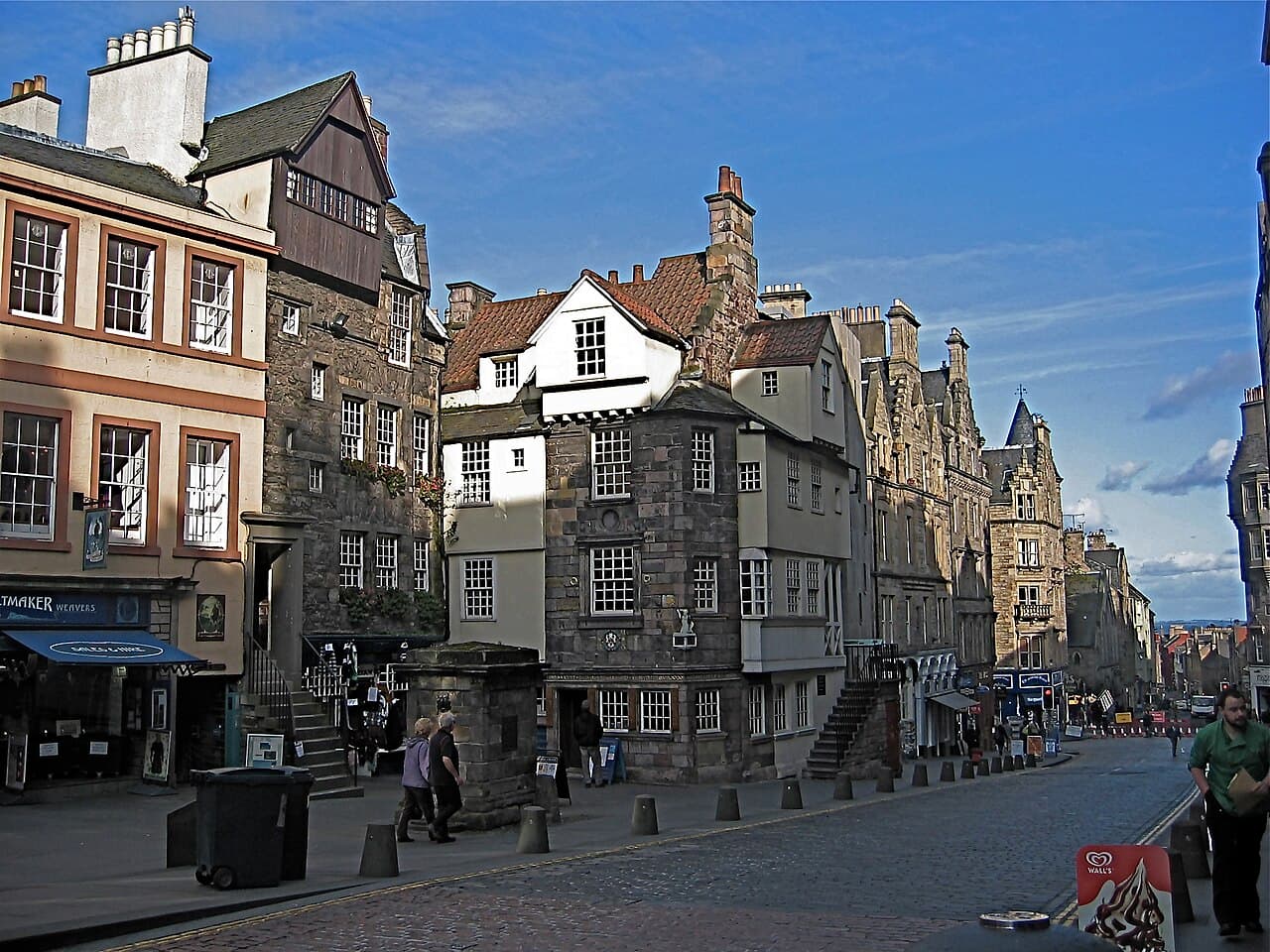
Look at this building. That timber gallery projecting out over the pavement, those tiny windows, the hand-painted ceiling visible through the glass — this is John Knox House, and it dates back to fourteen seventy. Along with Moubray House attached next door, it's the oldest original medieval building surviving on the Royal Mile.
Now, here's the thing about John Knox House: John Knox almost certainly didn't live here. The house was built by and belonged to the Mossman family — James Mossman was a goldsmith to the Stuart monarchs. His wife, Mariota Arres, is recorded as the owner. Knox may have stayed here briefly in fifteen seventy-two, the year before his death, but the evidence is thin. His actual residence was most likely in nearby Warriston Close, where a plaque marks the approximate spot.
Read more...Show less
So why is it called John Knox House? Because in eighteen fifty, when the building was slated for demolition to widen the road, the Church of Scotland stepped in and saved it by claiming the reformer's connection to it. It was a clever bit of historical branding that preserved one of Edinburgh's most precious medieval buildings. Sometimes a useful myth serves history better than strict accuracy.
Knox himself, though — whatever you think of him — was a force of nature. Born around fifteen fourteen, he spent nineteen months as a galley slave on a French warship after being captured at St Andrews Castle in fifteen forty-seven. He returned to Scotland in fifteen fifty-nine and led the Protestant Reformation that transformed the country. He thundered against what he saw as Catholic idolatry, clashed famously with Mary Queen of Scots in a series of personal audiences, and essentially reshaped Scottish religion, education, and national identity. He died in November fifteen seventy-two.
Step inside if you have time. The house is now a museum within the Scottish Storytelling Centre, and the painted ceilings alone are worth the visit — vivid Renaissance-era decorations that give you a genuine sense of how the wealthy lived in sixteenth-century Edinburgh. Look for Mossman's goldsmith marks and the elaborate ceiling in the Oak Room.
You've just crossed from the old city of Edinburgh into what was historically the separate burgh of Canongate. Remember those brass studs in the road a minute ago? Until eighteen fifty-six, crossing the Netherbow Port was like crossing an international border.
Continue downhill along the Canongate. The street widens and the buildings change character — fewer tourists, more local. In about three hundred metres, you'll see a distinctive building with a clock hanging out over the street on your right. That's the Canongate Tolbooth.
Canongate Tolbooth & Kirk
That handsome building with the clock projecting over the pavement on wrought-iron brackets is the Canongate Tolbooth, built in fifteen ninety-one. Look up at those ornamental turrets — they're called bartizans — flanking the clock, with decorative gunloops that were never meant to fire anything. Pure show. This was the administrative heart of Canongate when it was still an independent burgh, separate from Edinburgh.
The tolbooth served three functions: courthouse upstairs, town council chamber in the middle, and jail at the bottom. If you were caught stealing, brawling, or selling short measures in the Canongate, this is where you'd end up. The building was constructed for Sir Lewis Bellenden, the justice-clerk, and you can still see his initials carved over the archway to Tolbooth Wynd. A quick note on the clock — while the building dates to fifteen ninety-one, the clock was added much later, in eighteen eighty-four, manufactured by James Ritchie and Son.
Read more...Show less
Today the Tolbooth houses the People's Story Museum, a free museum that tells the story of Edinburgh's ordinary residents — their work, their homes, their pleasures — from the late seventeen hundreds to the present day. It's a brilliant counterweight to all the royal and aristocratic history on this walk. Actual working people lived on this street too.
Now look across the road and slightly downhill. That's Canongate Kirk, the parish church, completed in sixteen ninety-one. The churchyard behind it is one of Edinburgh's hidden treasures. Walk through the gate and you'll find the grave of Adam Smith — yes, the Adam Smith, author of The Wealth of Nations, published in seventeen seventy-six. Smith lived his final years in nearby Panmure House on the Canongate and died in seventeen ninety. His grave is marked by a large monument near the south wall.
Also buried here is Robert Fergusson, the brilliant poet who died tragically young at just twenty-four in seventeen seventy-four. Fergusson was the literary hero of Robert Burns, who was devastated to find Fergusson's grave unmarked when he visited Edinburgh in seventeen eighty-seven. Burns personally paid for the gravestone you can see today, which wasn't actually erected until eighteen oh three, seven years after Burns himself had died.
For lunch, the Tolbooth Tavern is right here — a Tripadvisor Travellers' Choice winner that does a magnificent haggis, neeps, and tatties tower, and their Cullen skink is properly smoky.
Continue downhill along the Canongate. The street opens up ahead, and in about two hundred metres you'll see a building that looks like nothing else on the Royal Mile — all angles and abstraction. That's the Scottish Parliament.
Scottish Parliament

Whatever your politics, this building is going to provoke a reaction. The Scottish Parliament Building, which opened in two thousand and four, is either a masterwork of modern architecture or an expensive eyesore, depending on who you ask. Very few people are neutral about it.
The architect was Enric Miralles, a Catalan visionary from Barcelona. When the design competition ran in nineteen ninety-eight, a concept by Rafael Vinoly actually won more public support, but the selection committee chose Miralles, whose proposal finished a close second. Miralles drew inspiration from the Scottish landscape — upturned boats on the shore, the shapes of the land, the flower paintings of Charles Rennie Mackintosh. The leaf-shaped windows and the irregular, organic forms are meant to connect the building to Scotland's natural world.
Read more...Show less
The controversy, though, was about money. The original estimate cited by opponents was forty million pounds. That was never a realistic figure — it was a consultant's guess for a generic office block before a site or architect had even been chosen. The first real estimate for Miralles' actual design was a hundred and nine million. By the time it opened, the bill had reached four hundred and fourteen million pounds. The spiralling costs triggered a formal inquiry.
Tragically, Miralles never saw his building completed. He died of a brain tumour on the third of July, two thousand, at just forty-five years old. His partner and wife, Benedetta Tagliabue, led the team that finished the project. The first parliamentary debate in the new building took place on the seventh of September, two thousand and four. Queen Elizabeth the Second formally opened it on the ninth of October that year.
Whatever you think of the cost, try to appreciate the craft. Walk up close and look at the materials — Scottish oak, granite from Kemnay in Aberdeenshire, and those distinctive concrete panels shaped like gently bent bamboo. The debating chamber is designed so that no member sits more than a sword's length from the Presiding Officer — a deliberate rejection of the confrontational Westminster layout.
The building has a public cafe inside that's open to visitors. You can sit there with a coffee and quite possibly spot a Member of the Scottish Parliament grabbing a sandwich.
You're nearly at the end of the Royal Mile now. Continue past the Parliament and you'll see the elaborate iron gates and the turrets of the Palace of Holyroodhouse directly ahead.
Palace of Holyroodhouse
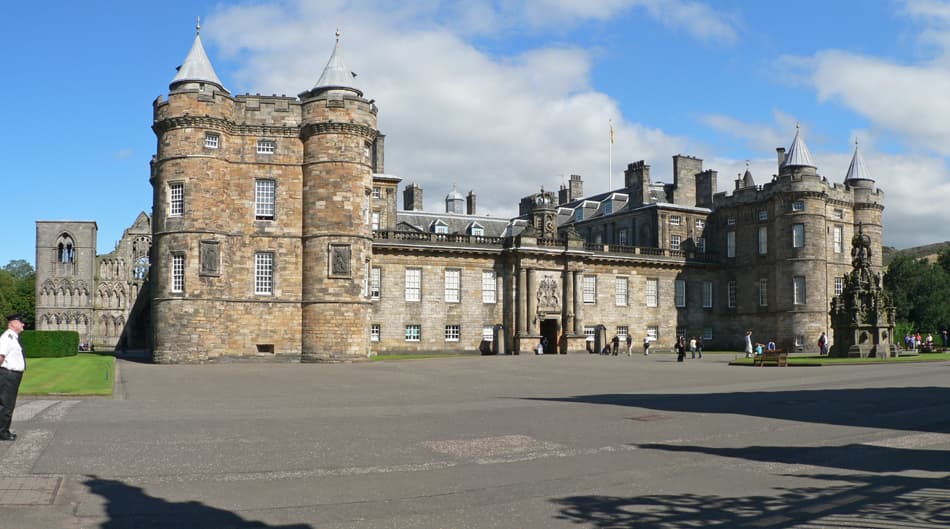
And here we are at the bottom of the Royal Mile, standing before the Palace of Holyroodhouse — the official Scottish residence of the monarch and one of the most dramatically storied royal palaces in Europe. You've walked from the castle at the top to the palace at the bottom, covering the full one-mile spine of Old Edinburgh.
The palace grew out of Holyrood Abbey, which was founded in eleven twenty-eight by King David the First. The founding story is wonderful: David was hunting in the royal forest below Arthur's Seat when a great white stag charged him and impaled him on its antlers. As he grasped at the beast, a crucifix — a "holy rood" — miraculously appeared in his hands, and the stag fled. In gratitude, David founded the abbey on this spot. Look to the right of the palace and you can see the roofless nave of the abbey — it's been a ruin since the roof collapsed in seventeen sixty-eight, but the Gothic stonework is still magnificent.
Read more...Show less
The abbey guesthouse evolved into royal lodgings over the centuries, but it was James the Fourth who transformed it into a proper palace between fifteen oh one and fifteen oh five, in preparation for his marriage to Margaret Tudor, sister of Henry the Eighth. Think about that connection — this marriage would eventually unite the Scottish and English crowns when James the Sixth inherited the English throne in sixteen oh three.
But the event this palace is most famous for is a murder. On the night of the ninth of March, fifteen sixty-six, Mary Queen of Scots was six months pregnant and having a private supper in her chambers on the second floor with a small group that included David Rizzio, her Italian secretary and musician. Mary's husband, Lord Darnley — jealous, petulant, and easily manipulated — led a group of around eighty armed men through the palace. They burst into the supper room, dragged the screaming Rizzio from behind Mary's skirts, and stabbed him fifty-six times. His body was flung down the staircase and stripped of its jewellery. You can visit Mary's chambers and see the tiny supper room where it happened. The bloodstain on the floor is almost certainly theatrical, but the room itself is genuine, and standing in that small space, imagining the terror, is unforgettable.
Just over a year later, Darnley himself was murdered — blown up at Kirk o' Field in February fifteen sixty-seven, quite possibly with Mary's knowledge. The cycle of violence that followed led to Mary's forced abdication and her long imprisonment in England, ending with her execution in fifteen eighty-seven.
The palace as you see it today was largely rebuilt by Charles the Second in the sixteen seventies, designed by Sir William Bruce in a classical French style. The entrance facade with its twin turrets is pure theatrical grandeur.
If you have the energy for one last treat, the Cafe at the Palace has an outdoor terrace in the historic Mews Courtyard with views up toward Arthur's Seat. Sit down, order a cup of tea, and reflect on the fact that you've just walked through nine hundred years of Scottish history in a single mile. Not a bad afternoon's work.
Thanks for walking the Royal Mile with me. If you're heading back uphill, the number thirty-five bus from the stop just outside will save your legs. Otherwise, Arthur's Seat is right there behind the palace, and the walk to the summit takes about forty-five minutes if you're feeling ambitious. Cheers.
Free
GPS-guided walking tour
No account needed. Walk at your own pace.
Free
10 stops · 2.5 km