London: Regent's Canal — Hitchcock to Hackney
9 stops
GPS-guided
2.5 km
Walking
50 minutes
Duration
Free
No tickets
About this tour
Walk the towpath from the studio where Hitchcock learned filmmaking, past narrowboat communities and ghost gasworks, to Broadway Market.
9 stops on this tour
Gainsborough Studios / Hitchcock Head
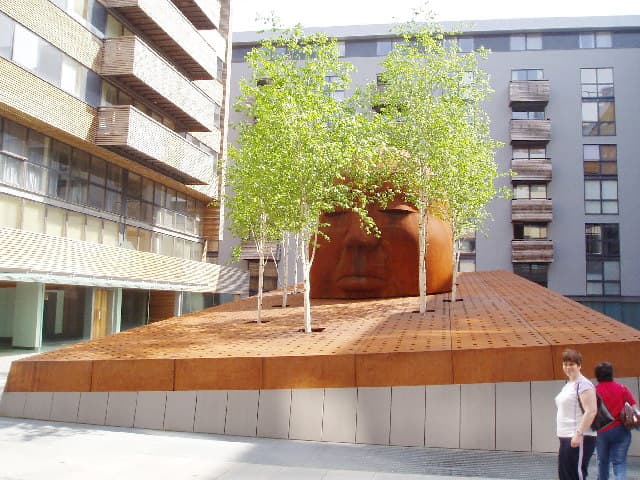
Welcome to East London. You're starting on Poole Street, right beside the Regent's Canal. Look for the entrance to number one Poole Street -- it's a residential development, but the courtyard is open to the public. Walk in through the entrance off the street, past the concierge, and into the central courtyard among the silver birch trees. The building wrapped around you? That used to be a film studio. And not just any film studio.
This was Gainsborough Studios, and for three decades it was the Hollywood of East London. They called it "Los Islington" around here. The studio opened in nineteen nineteen -- originally built as a power station for the Great Northern and City Railway -- and it was converted into a working film lot that pumped out movies until nineteen forty-nine.
Read more...Show less
Now, the name you need to know is Michael Balcon. In nineteen twenty-four, Balcon founded Gainsborough Pictures and took over this studio. And one of the first things he did was give a young assistant named Alfred Hitchcock his break as a director. Hitchcock made The Pleasure Garden here in nineteen twenty-five, and then The Lodger in nineteen twenty-seven -- a creepy Jack the Ripper story starring Ivor Novello that made Hitchcock famous overnight. The master of suspense cut his teeth right here, on this quiet canal bank, before Hollywood ever came calling.
Now look around the courtyard. You should see it -- a massive head of Hitchcock -- four meters tall from collar to crown, seven meters deep, made from Corten steel. The heaviest piece, the face itself, weighs eighteen tonnes. It was created by sculptor Antony Donaldson in two thousand and three, and it came about through one of those planning deals where developers agree to install public art in exchange for permission to build flats. Donaldson pushed the material to its limits -- this was believed to be the first time Corten steel had ever been cast. The foundry in Durham had to wait seventeen days before they could break the mould and reveal the face.
There is no plaque explaining who the head belongs to or why it's here. It's just this enormous, brooding Hitchcock, staring out from the courtyard of his old studio, watching residents come and go. It's wonderfully eerie.
Over the next hour or so, we're going to walk east along the Regent's Canal towpath, through narrowboat basins and past old gasworks, under mosaic-covered bridges and alongside kayakers, all the way to Broadway Market. It's flat, it's green, it's beautiful, and you will not believe you're in Zone Two.
Alright. Leave the courtyard and turn right onto Poole Street. Cross the bridge over the canal, then turn right and walk down the stairs to the towpath. You'll be walking east with the water on your right. After about five minutes, you'll come to a wide basin opening up on your right side. That's where we're headed next.
Kingsland Basin
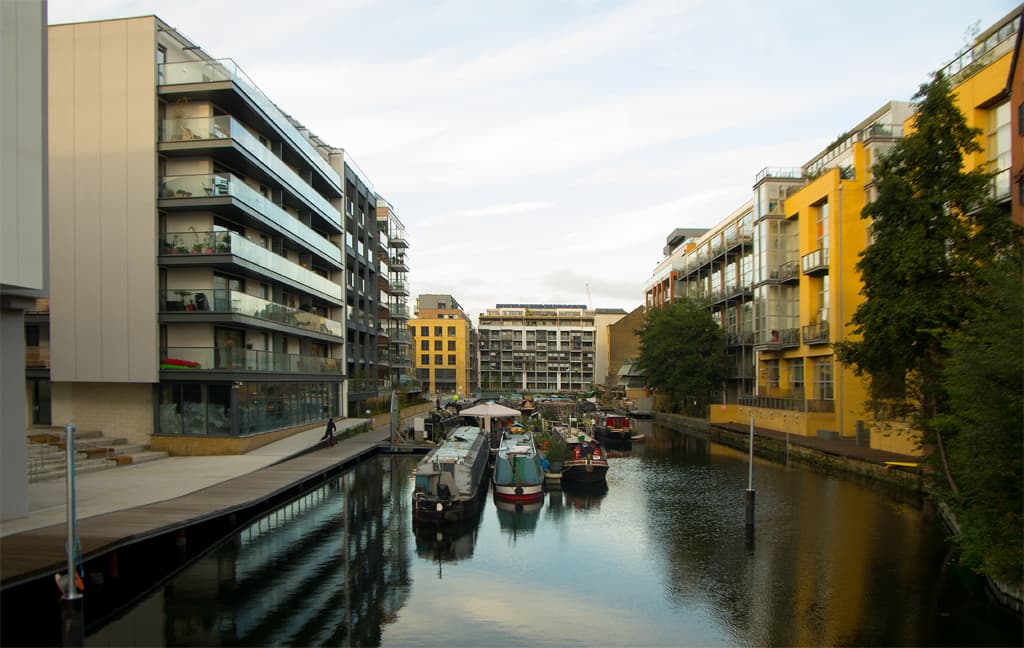
See how the canal suddenly opens up here? You've arrived at Kingsland Basin, and it's like stumbling into a secret village. Look at those narrowboats lined up along the water -- some of them painted in deep reds and greens, with plant pots on their roofs and little chimney stacks puffing away in winter. This is home. People live here year-round.
Kingsland Basin dates from eighteen thirty, a decade after the main canal was dug. It's one of the last working canal basins in this part of London, and it's run by a community group called Canals in Hackney Users Group -- CHUG, for short. The residents have nine-to-five jobs, they grow vegetables in pots on the towpath, and they chose this life. It's a pocket of calm tucked behind Kingsland Road, hidden from the buses and the kebab shops by a rickety black fence.
Read more...Show less
Now, here's something worth knowing. The path you're walking on right now -- this towpath -- was private for most of its life. When the Regent's Canal opened on the first of August, eighteen twenty, this path was strictly for the men and horses hauling barges. You and I would have been trespassing. It wasn't until nineteen sixty-eight that Westminster opened its stretch of towpath to the public, and other boroughs slowly followed. Camden opened theirs in nineteen seventy-four. The idea that anyone could just stroll along the canal is surprisingly recent.
And speaking of that opening day in eighteen twenty -- it was a proper spectacle. The canal's engineer James Morgan led a convoy of barges from St Pancras all the way to the Thames at Limehouse, with military bands playing and crowds waving from the bridges. The man who originally dreamed up the canal, a lawyer named Thomas Homer, was not there to see it. He'd been caught embezzling company funds and was sentenced to seven years' transportation. So the canal was finished, the party was thrown, and the founder was on a prison ship. You couldn't make it up.
The canal was built to carry coal. That's the simple version. Coal came up from the docks at Limehouse, loaded onto narrowboats, and was delivered to gasworks and factories all along the route. For a century, this was London's energy highway. The coal that heated your house, the gas that lit your street -- it came up this canal on boats just like the ones bobbing in front of you now.
Keep walking east along the towpath. In just a minute or two, you'll see a row of shuttered kiosks on your left, right on the water's edge. If they're open, get ready. You're about to hit one of the best cafes in London.
Towpath Cafe
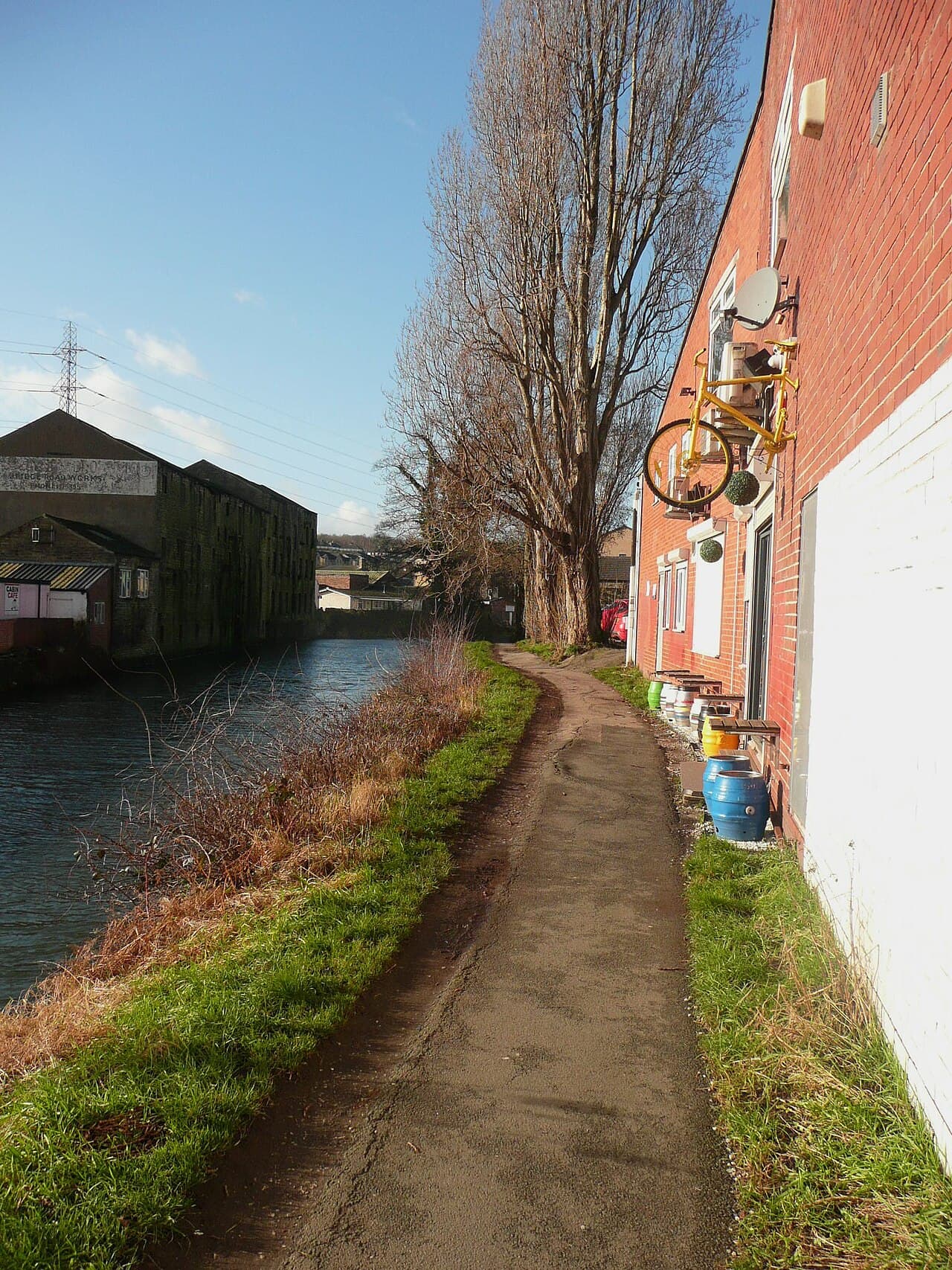
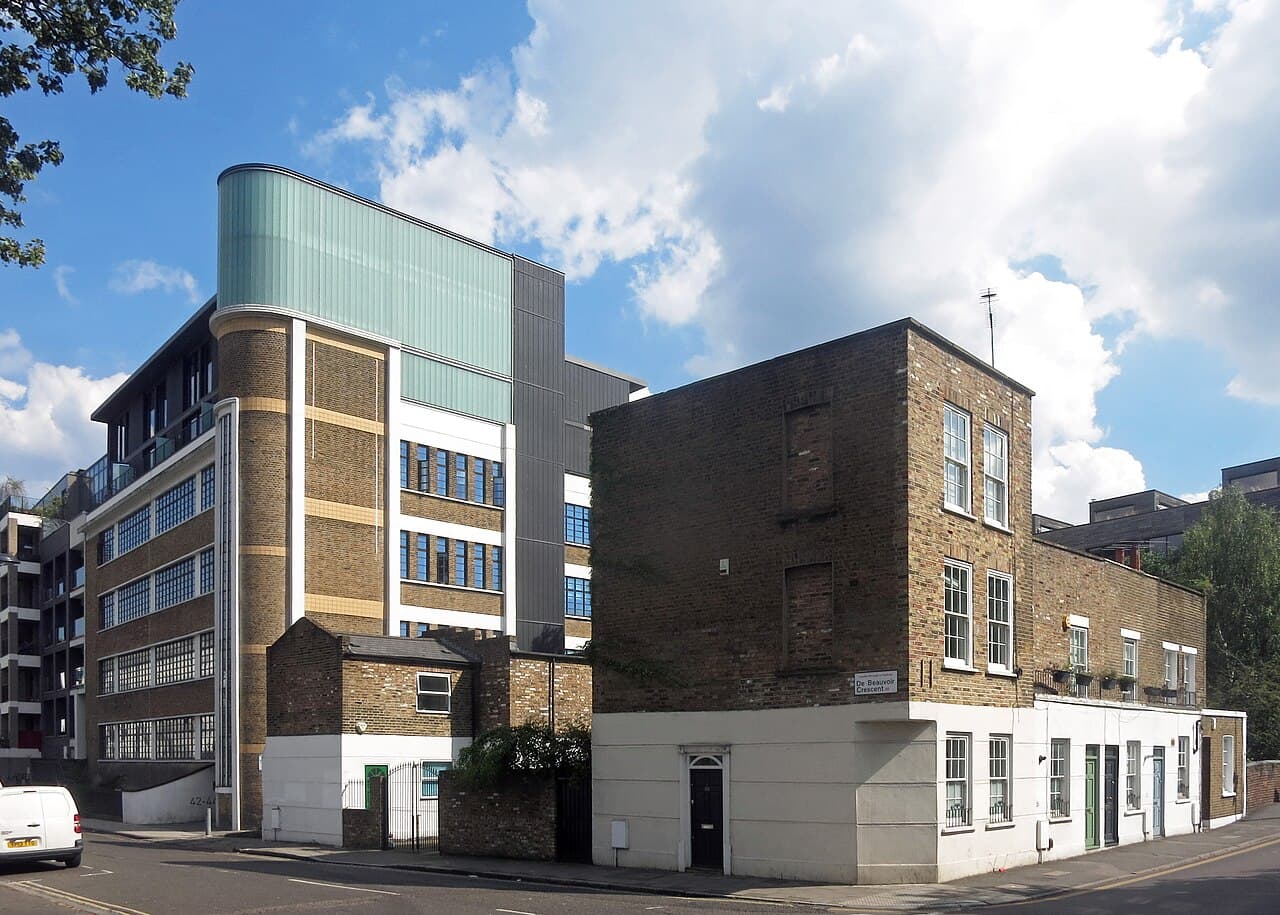
Those four little kiosks on your left, right here on the canal edge at De Beauvoir Crescent -- that's Towpath. And if you know, you know.
Towpath was opened in two thousand and ten by Lori De Mori and chef Laura Jackson. The story goes that Lori was living in a flat just across the water and noticed that a row of shuttered kiosks in the nineteen twenty-nine Bankstock Buildings were up for sale. She and Laura took them on and turned them into something that shouldn't work but absolutely does -- a cafe with no phone number, no reservations, no wifi, and no takeaway cups. You drink your coffee here, sitting by the water, or you don't drink it at all.
Read more...Show less
Each kiosk serves a purpose. One is the kitchen, one is the bar, one has seating, one is the larder. The menu changes daily -- Laura trained at Leith's Cookery School and worked at Rochelle Canteen before this -- and it leans Mediterranean and seasonal. Think grilled cheese toasties with quince jam. Roast chicken with whatever herbs looked good at the market that morning. Simple food done with an almost obsessive attention to ingredients.
The cafe is only open from March to November. When the cold hits, those metal shutters roll down and Towpath disappears until spring. It is, without exaggeration, one of the most beloved food spots in London. In twenty twenty, Lori and Laura published a cookbook -- simply called Towpath -- and it was named one of the best cookbooks of the year by the Guardian, the Independent, and the Daily Mail. Not bad for four kiosks on a canal path.
Here's what I love about this place. On a sunny Saturday, the queue stretches down the towpath. Cyclists lean their bikes against the railing. Dogs lap water from bowls by the door. Narrowboats idle past at two miles an hour. And nobody is looking at their phone, because there's no wifi and honestly, what would be the point? The canal is right there. The light is doing that thing on the water. Whatever email you were going to check can wait.
Grab something if they're open. If they're closed for winter, just appreciate the shutters and imagine the queue in June. Then keep walking east. In a few minutes, you'll see a basin opening up on your left with kayaks and canoes on the water. That's our next stop.
Laburnum Boat Club
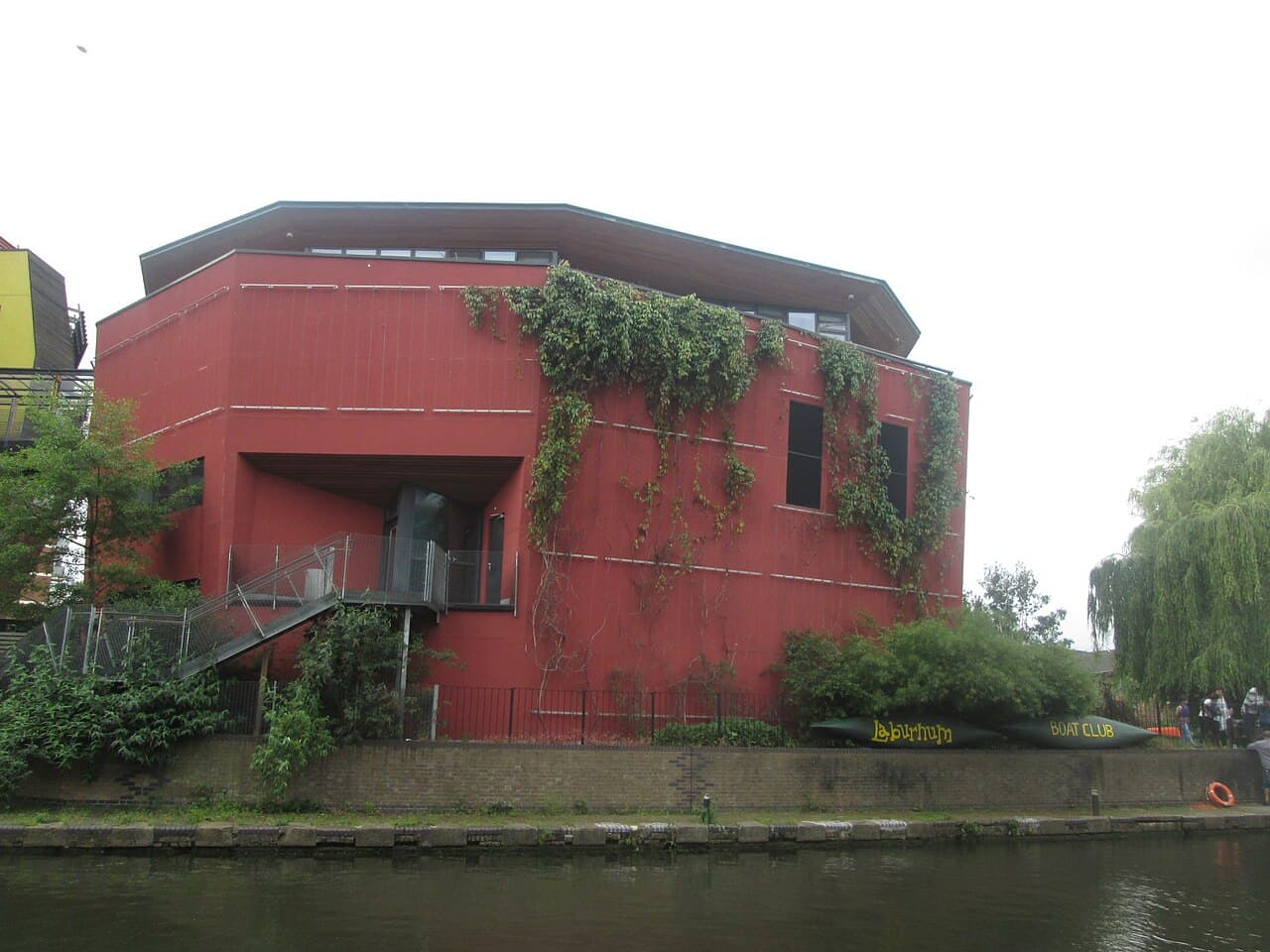
Listen. Can you hear splashing? If it's after school hours or a Saturday, look out onto the water. Those are kids from Hackney, in kayaks and canoes, learning to paddle on the Regent's Canal. Welcome to Laburnum Boat Club.
This place was founded in nineteen eighty-three by a group of local parents who had a beautifully simple idea: the canal is right there, the kids have nothing to do after school, so let's get them on the water. They set up a voluntary organisation, found some boats, and started teaching. Over forty years later, it's still going.
Read more...Show less
Laburnum Boat Club is a community-run project based right here on Laburnum Basin. It's open to young people between the ages of nine and nineteen, and they meet twice a week after school and every Saturday. The club also runs specific sessions for people with disabilities -- quieter, more controlled, with adapted boats and hand grips and hoists. Thousands of young people from the local area have learned to kayak here.
What makes this place special is what it represents. In the nineteen eighties, Hackney was one of the most deprived boroughs in London. Youth services were being cut. There wasn't much for kids to do. And here were these parents, dragging canoes to a canal basin, teaching teenagers to paddle, giving them something that had nothing to do with concrete and everything to do with water and sky and movement. The club has had a major refurbishment recently, but the spirit is exactly the same.
By the way, look at the basin itself. This is one of those little arms of the canal that were once used for loading and unloading cargo. Coal, timber, building materials -- they all came through basins like this one. Now it's full of kayaks and the sound of kids shouting encouragement to each other. That's a pretty good trade.
Keep walking east along the towpath. You'll pass under a bridge or two and the canal straightens out. Look out for something unusual on the water ahead -- something with fins.
The Shark Installation
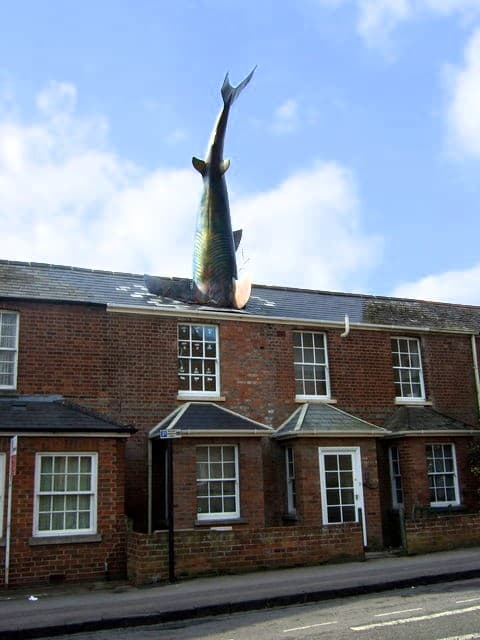
Alright, keep your eyes on the water around here, because you might spot something that does not belong in a London canal. Sharks. Fibreglass sharks, to be precise, on floating platforms.
This is the site of one of the best art controversies East London has produced in years. In twenty twenty, architect Jaimie Shorten won the annual Antepavilion competition -- an art contest run from number fifty-five Laburnum Street, just back there -- with a proposal called Sharks. The idea was brilliantly absurd: five life-sized fibreglass model sharks, arranged on a raft in a pose inspired by the famous painting The Raft of the Medusa, floating on the Regent's Canal. And here's the kicker -- the sharks would sing. Specifically, they would sing La Mer by Charles Trenet, in French, in harmony, as what Shorten called "a poignant reflection on the UK leaving the EU." Each shark would also deliver lectures on themes in contemporary architecture and urbanism. Singing, lecturing sharks on a canal in Hackney. Art doesn't get much better than that.
Read more...Show less
Hackney Council did not agree. They obtained a High Court injunction to block the installation, then had the sharks removed in twenty twenty-one. The sharks were stored on a barge, relocated to Islington Boat Club, hauled back again. It went to court repeatedly. The council was called "pathetic" by one of the competition jurors. The whole saga dragged on for years.
And then, in twenty twenty-four, the council lost on appeal. The sharks won. So depending on when you're walking, you may or may not see them on the water. But the story is worth knowing either way, because it captures something essential about this stretch of canal -- it's a place where weird, wonderful things happen, where art and bureaucracy collide, and where five fibreglass sharks can end up in the High Court.
This whole corridor along the canal is rich with street art, murals, and installations. Keep your eyes on the walls and bridges as you walk. There's always something new.
Continue east. In a minute or two, you'll come to a lock -- the canal drops down a level here, and you can watch the water doing its thing.
Acton's Lock
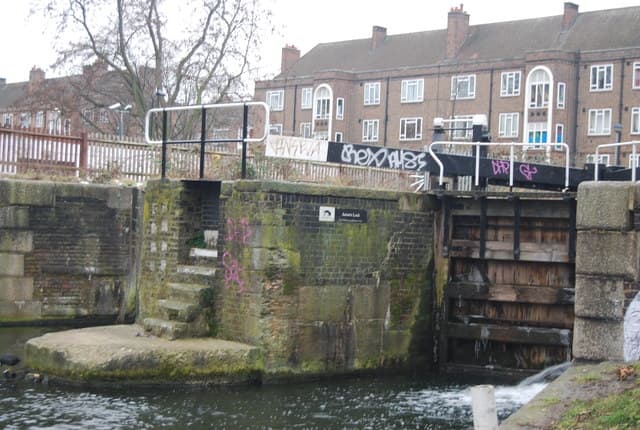
You've arrived at a lock. This is Acton's Lock, number seven of twelve on the Regent's Canal, and it's been here since the canal opened in eighteen twenty. Stand on the bridge over the lock gates and look down. See how the water level changes? That's what locks do -- they're staircases for boats.
The Regent's Canal drops eighty-six feet over its eight-and-three-quarter-mile run from Paddington Basin in the west to the Thames at Limehouse in the east. Twelve locks manage that descent, and each one is a small feat of Georgian engineering. Water floods in through paddle gates, the boat rises or falls, the far gates open, and the boat continues on its way. It's the same system that was designed two hundred years ago, and it still works.
Read more...Show less
This lock is named after the Acton family of Ipswich, who owned land on both sides of the canal here. They developed an estate called the Suffolk Estate on their land -- and the name still echoes in the streets around you, a reminder that this part of Hackney was once countryside owned by a family from East Anglia.
Now, here's a story that will make you appreciate this canal a little more. In the nineteen sixties, the Greater London Council had plans to fill in a stretch of the Regent's Canal and turn it into a motorway. The canal had been losing commercial traffic for years -- the harsh winter of nineteen sixty-two to sixty-three froze the water so hard that no cargo moved for weeks, and when the thaw came, most of the freight switched to road and never came back. By the mid-sixties, the canal looked like a relic. Filling it in for a new road seemed like common sense.
A group of campaigners called the Regent's Canal Group fought back. In nineteen sixty-seven, they published a report called "Regent's Canal -- A Policy for its Future," arguing that the canal should be preserved as a green corridor, a peaceful path away from the traffic. They championed what you're experiencing right now -- a quiet, beautiful route through the city. And they won. The motorway plan was dropped. The towpaths were opened to the public. The canal survived.
Every step you take along this towpath is a step that almost wasn't possible. Someone fought for this.
Keep walking east. On your right, you'll notice a park opening up beyond the canal. That park is sitting on top of a ghost.
Haggerston Gasworks
The green space you're looking at on your right is Haggerston Park. And underneath it -- under the grass and the football pitches and the kids' playground -- are the remains of the Haggerston Gasworks, a site that lit up this part of London for the better part of a century.
The Independent Gas Company built their works here in eighteen twenty-five, right on the canal bank. The location was no accident. Coal arrived by barge, directly from the docks at Limehouse. The barges would pull into a small inlet basin -- a dedicated arm of the canal that reached right into the heart of the works -- and coal-heavers would carry the fuel on their backs to the retort house. The coal was burned in enormous retorts to produce gas, which was stored in huge gasometers and then piped out to light the streets and homes of East London.
Read more...Show less
Imagine this stretch of canal in the eighteen fifties. The air thick with coal dust. Barges queuing to unload. The gasometers rising and falling like giant metal lungs. The heat from the retort house so intense you could feel it from the towpath. That was the reality of this spot for decades.
The works changed hands over the years, eventually operating under the Imperial Gas Light and Coke Company by the eighteen eighties. The gasholders on this site weren't finally decommissioned until twenty twelve -- meaning gas infrastructure stood here for nearly two hundred years.
In the early nineteen eighties, a group of local residents decided to reclaim the site. They spent years clearing the ground, dredging out the old basin, and building a community club hut. Haggerston Park opened in nineteen eighty-three.
Now here's the ghostly part. If you look at the layout of the park, you can still read the old gasworks in its bones. The lowered flower beds and sunken areas trace the outline of the old coal barge basin. Some of the original boundary walls are still standing. The park is literally built on top of its industrial past, and if you know what to look for, you can see right through the grass to the eighteen twenties beneath.
Continue along the towpath. You're nearly there. Up ahead, head up the steps at Cat and Mutton Bridge. That's our next stop.
Broadway Market
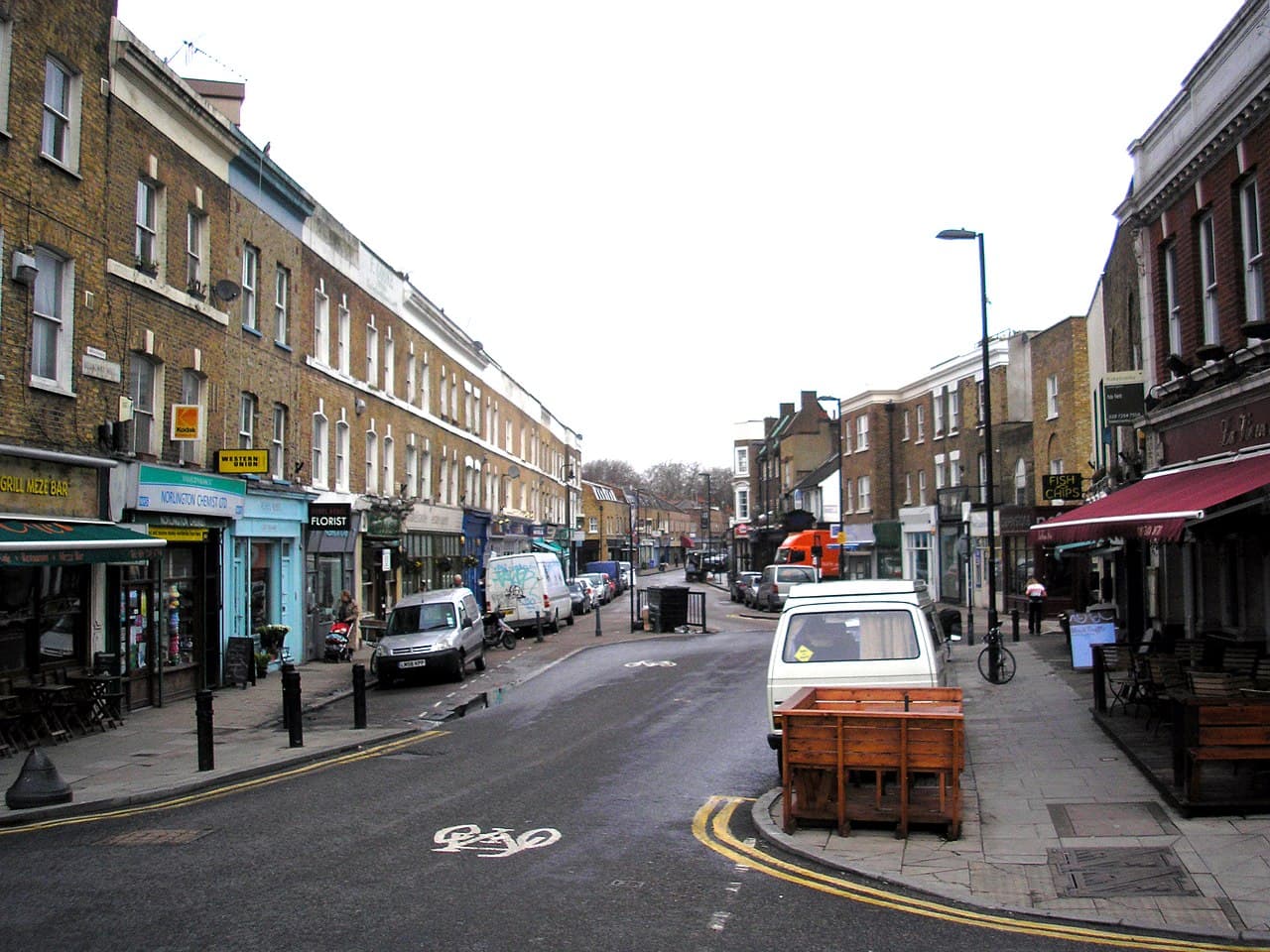
Head up the steps from Cat and Mutton Bridge and you're on Broadway Market. If you're here on a Saturday, you already know -- the street is packed, the air smells incredible, and there are about fifteen different people selling really excellent coffee.
But first, the bridge you just came up from. Cat and Mutton Bridge. What a name. There are two competing explanations for where it comes from. One says "cat" was a nickname for the coal barges that passed under this bridge on the canal -- the same coal barges that powered the gasworks we walked past earlier. Cat and mutton: coal and meat, the two things that kept East London running. The other explanation says it was originally "Cattle and Shoulder of Mutton," named for the drovers who herded livestock past here on their way to Smithfield Market. Either way, it's a name that smells like old London.
Read more...Show less
Broadway Market has been a trading street since the eighteen nineties, when fruit and veg sellers lined up with painted barrows and East London housewives came out to haggle. Through the first half of the twentieth century, this was one of the most thriving markets in the area. But by the nineteen seventies, supermarkets were killing it. The market shrank. Traders left. And then the Greater London Council proposed something drastic -- demolishing the whole street to build a motorway feeder road to the Blackwall Tunnel.
Two shopkeepers formed the Broadway Market Action Group, held a carnival, dragged in MPs and press, and fought the demolition plans until they were dropped. But the market itself kept declining through the eighties and nineties. Attempts at a flower market and a farmers' market both failed.
Then, in two thousand and four, the Broadway Market Residents and Traders Association got permission to run their own non-profit Saturday market. The road was officially closed for trading in May of that year, and within three weeks, forty-nine stallholders had signed up. It took off instantly. Today there are over a hundred and fifty stalls every Saturday -- sourdough, Vietnamese bao buns, proper pies, Ethiopian stews, and did I mention the coffee?
The pub you'll see at number seventy-six is the Cat and Mutton, and it's been pouring drinks on this spot since seventeen twenty-nine. Nearly three hundred years. When it opened, George the Second was on the throne, and this area was semi-rural farmland with sheep being walked to market.
Now walk east along Broadway Market toward the park at the end of the street. That's London Fields -- our final stop.
London Fields
Welcome to London Fields, and welcome to the end of your walk.
This park has been common land since at least twelve seventy-five -- that's over seven hundred and fifty years. It was first recorded by name in fifteen forty, and for centuries it served as a droving route. Livestock was herded across these fields on the way to Smithfield Market, and local commoners had ancient Lammas rights -- meaning from the first of August to the twenty-fifth of March each year, anyone in Hackney could graze their cattle here for free.
Read more...Show less
By the late eighteen hundreds, development was creeping in from all sides, and there was a real fight to keep this land open. Local activists won that fight, and the fields were preserved as public green space. Stand here for a moment and appreciate that -- in one of the most densely built parts of London, seven hundred years of open ground, held by the people.
Now, if you're feeling brave -- or possibly insane -- look for the lido. London Fields Lido is a fifty-metre heated outdoor pool right here in the park. It originally opened in nineteen thirty-two, and for decades it was a beloved local institution. Then in nineteen eighty-eight, Hackney Council closed it due to funding cuts. The pool sat there, empty and deteriorating, for eighteen years.
But the community wasn't having it. An eighteen-year campaign -- petitions, fundraisers, protests -- finally paid off. The lido reopened in October two thousand and six after a two-and-a-half-million-pound refurbishment. The water is heated to twenty-five degrees year-round, which means you can swim outdoors here in January. Whether that's wonderful or insane depends entirely on your tolerance for cold air on wet skin.
And that's our walk. You started at a giant steel Hitchcock head in the courtyard of his old film studio. You've walked past narrowboat communities, through the ghost of a gasworks, past singing sharks and children's mosaics, along a towpath that almost became a motorway. You've covered two hundred years of London history on a path that for most of those two hundred years, you wouldn't have been allowed to walk on.
The canal is still here. The coal barges are gone, replaced by kayaks and paddle boards. The gasworks are parks. The film studio is flats. But the water keeps moving, east to west, the same direction it's been flowing since eighteen twenty. And the towpath is yours now. Thanks for walking with me.
If you're hungry, Broadway Market has you covered. If you want a pint, the Cat and Mutton is right there. You've earned it.
Free
GPS-guided walking tour
No account needed. Walk at your own pace.
Free
9 stops · 2.5 km