14 stops
GPS-guided
37 min
Duration
Free
No tickets
About this tour
A guided tour of St. Paul's Cathedral in UK with 14 stops. Highlights include St. Paul’s Cathedral, The Nave, and The Dome.
14 stops on this tour
St. Paul’s Cathedral
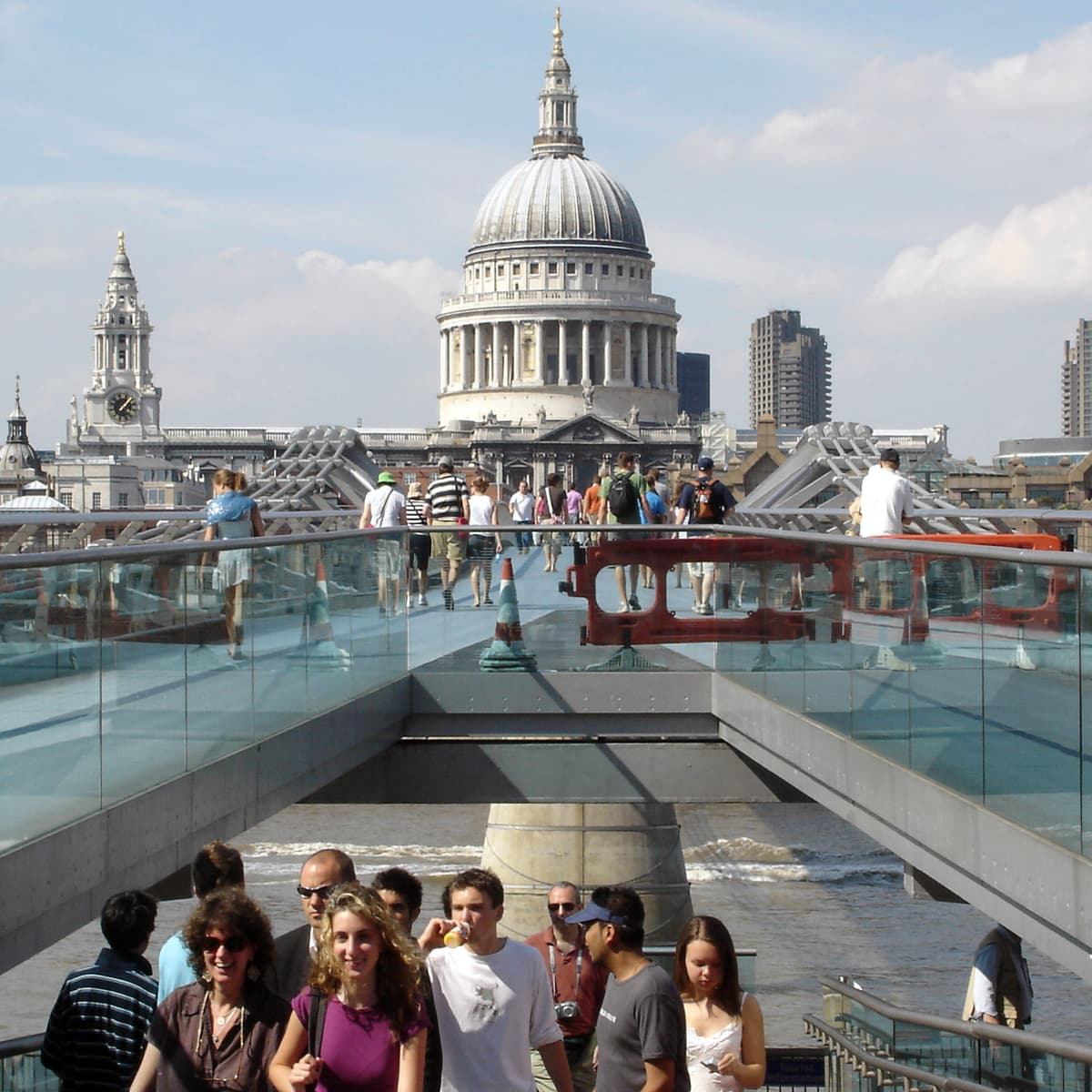
St. Paul's Cathedral No sooner was Sir Christopher Wren selected to refurbish old St. Paul's Cathedral than the Great Fire of 1666 incinerated it. Within a week, Wren had a plan for a whole new building, a spacious church topped by a magnificent dome.
Wren's St. Paul's Cathedral now stands as a towering symbol of London's strength and resilience. Hi, I'm Rick Steves. Thanks for joining me on a guided walk through England's National Church.
Read more...Show less
There's been a church on this spot since the year 604. It was the symbol of London's rise from the Great Fire of 1666 and of the city's survival of the Blitz in 1940. Today, it's a center of the Anglican faith, a living war memorial, and the final resting place of many great Londoners. Allow about 45 minutes to see the church, plus another hour to climb the dome for expansive views as we visit the spiritual heart of the city.
The City of London To help us along the way, I've invited a good friend and virtual travel buddy. Welcome, Lisa. Hi, Rick. Lisa will give us helpful directions and sightseeing tips throughout the tour.
And my first tip is to be sure you get our tour updates. Just press the icon at the lower right of your device. You'll find any updates and helpful instructions unique to this tour. Things like closures, opening hours, and reservation requirements.
There's also tips on how to use this audio tour and even the full printed script. Yes. So pause for just a moment right now to review our updates and special tips. It's okay. We'll wait. When you're ready, let's head for St. Paul's Cathedral.
Tour Begins: Exterior
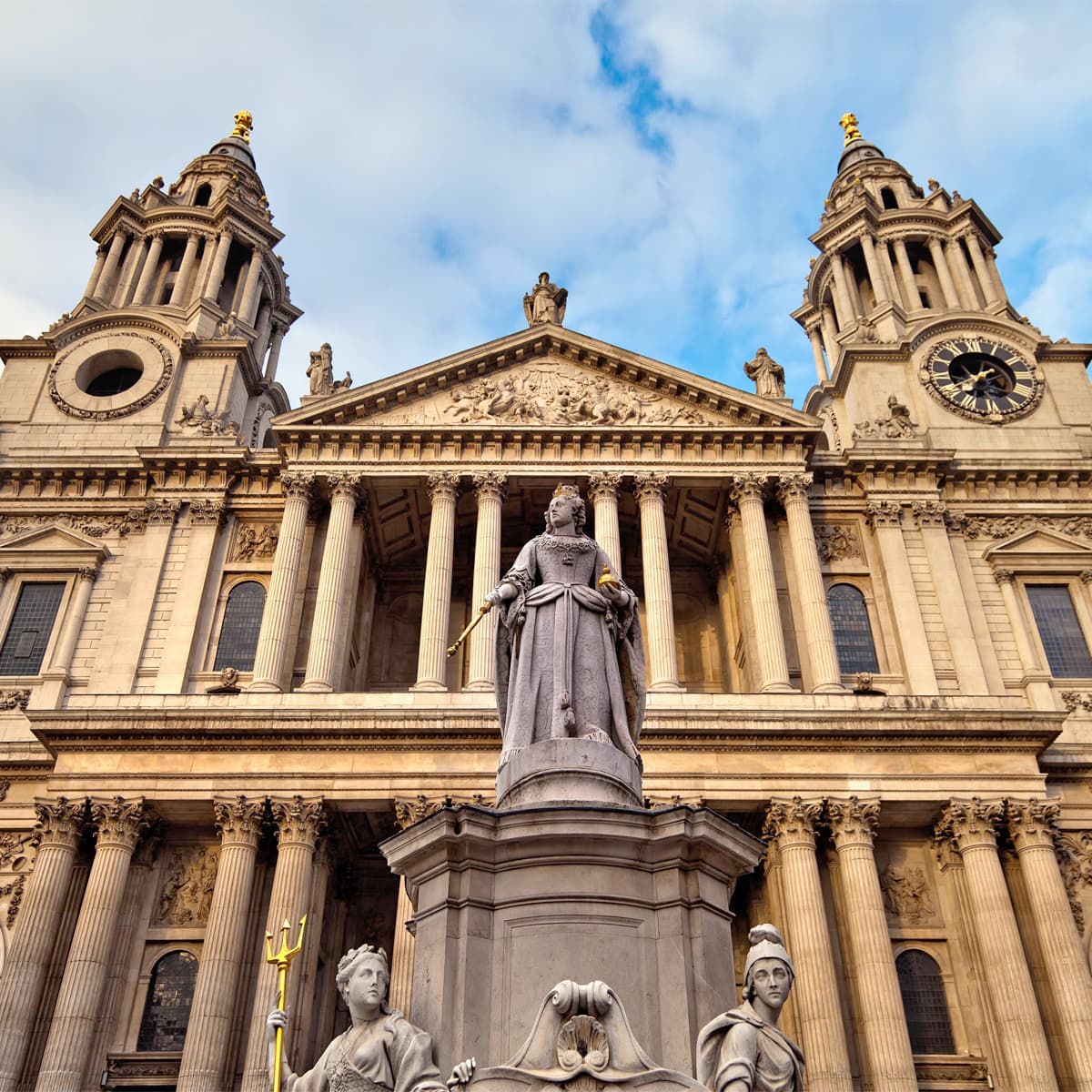
The tour begins. The exterior. St. Paul's Cathedral is located in the heart of London.
St. Paul's Cathedral is located in the heart of London. The city. The one square mile area that was London's city center for 2,000 years and now is the neighborhood of finance and skyscrapers.
Read more...Show less
The closest tube stop is St. Paul's. You can't miss the church with its distinctive dome. Stand in front and take in the dome.
You may need to walk a ways away from the church in order to get a decent view of the church. The entire dome. Once you find your spot, admire the dome, the church, and the façade decorated with columns, towers, and statues. Even now, as skyscrapers encroach, the 365-foot-high dome of St.
Paul's rises majestically above the rooftops of the neighborhood. The dome is set on classical columns, capped with a lantern, topped by a six-foot ball, and finished with a cross. The style is Baroque, and the façade is bookended by two typical Baroque towers. As the first Anglican cathedral built in London after the Reformation, St.
Paul's reflects the grandeur of Catholic St. Peter's in Rome, but filtered through clear-eyed Protestant reason. Viewing the church's façade, zero in on the triangular-shaped pediment between the towers. A statue of St.
Paul stands on top, and the pediment relief tells the story of St. Paul's conversion. A blinding flash topples Saul from his horse and leaves him sightless. When his sight is restored, he became a Christian and changed his name to Paul.
This was the pivotal moment in the life of the man who established Christianity as a world religion through his travels, writing, and evangelizing, and who was adopted as London's patron saint. While the church is dedicated to Paul, the biggest statue, the one at street level in front of the church, is of Queen Anne. With her crown, scepter, and orb, she ruled when Wren's rebuilt church was finished, symbolizing London's rise from the Great Fire. Remarkably, this church, built between 1675 and 1710, is the first great church to be completed in the lifetime of its architect.
Enter the church, buy your ticket, and step into the nave. That will take a while, so pause the audio guide. Restart it once you get inside with a view down the nave. The nave.
The Nave
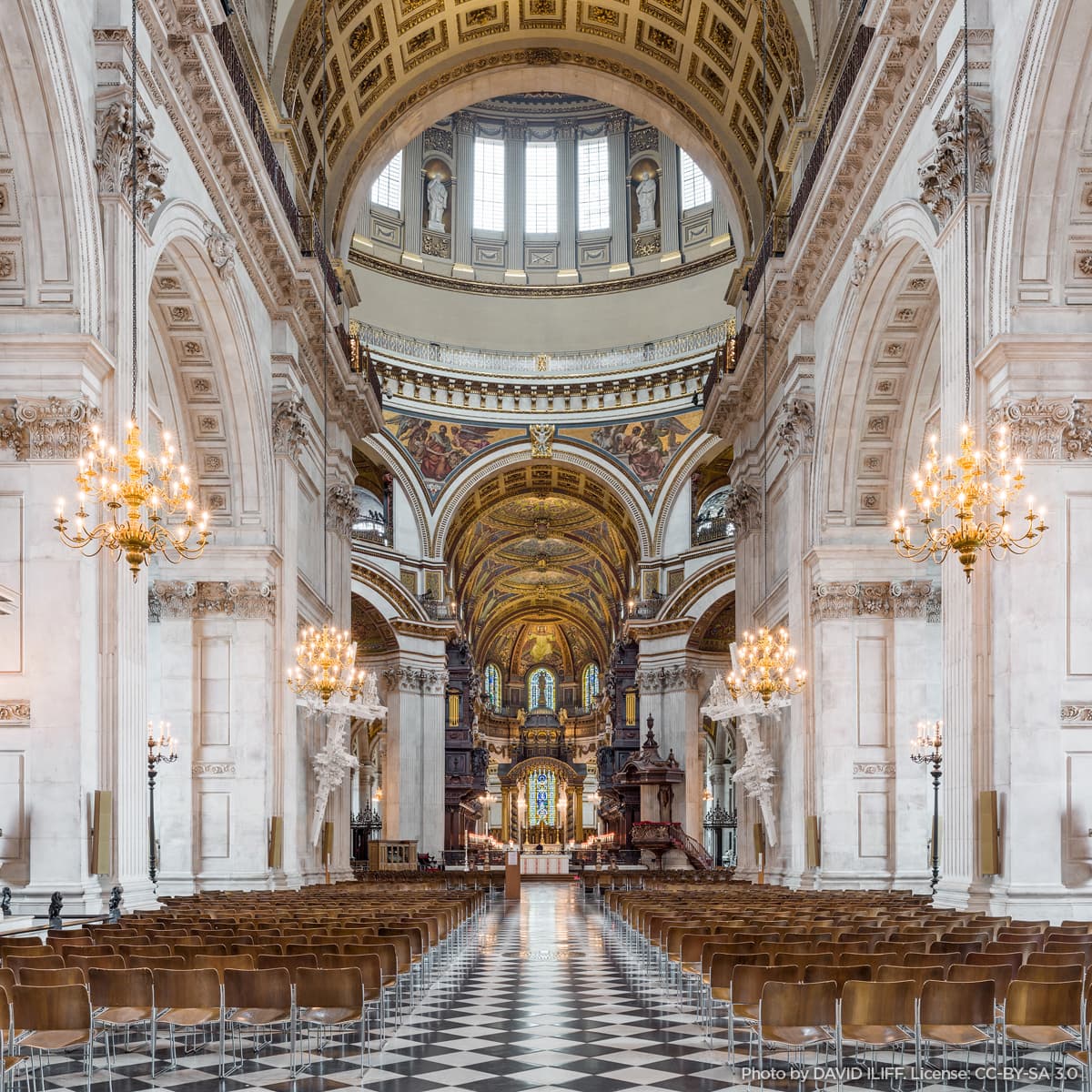
Once inside the church, find a spot at the very back of the nave and take in the scene. Look down the nave, through the choir stalls to the stained glass at the far end. This big church feels big. At 515 feet long and 250 feet wide, it's Europe's fourth largest after St.
Peter's in Rome and the cathedrals of Seville, and Milan. The spaciousness is accentuated by the relative lack of decoration. The simple cream-colored ceiling and the clear glass in the windows light everything evenly. Wren wanted this, a simple, open church with nothing overstated.
Read more...Show less
Unfortunately, only this entrance area keeps his original vision. The rest was encrusted with Victorian ornamentation from the 19th century. Look down the nave, to the far end, and you can see where the heavy decorations were added. Now, turn your attention to some sites near where you're standing.
First, find a plaque on the floor. It's near the back wall. This plaque honors the guards who worked so valiantly to save the church from Nazi bombs during World War II. More on that story later.
Now, approach the church's big wooden central doorway. Direct your gaze three feet to the right of the main door. On the wall to the right, at about eye level, there's a dirty panel of stone. This was left to remind visitors how dark the entire church was before undergoing a huge cleaning for the church's 300th anniversary, celebrated back in 2008.
Now, take a few steps up the nave, turn around, and glance up. The organ trumpets seem to say, come to the Evensong and hear us play. The Evensong services, generally Monday through Saturday at 5 p.m., are a great way to experience this church doing what it was designed for, facilitating worship. Start strolling toward the altar.
Throughout our tour of St. Paul's, we'll be passing by many statues and monuments dedicated to the nation's greatest war heroes. On the left is the towering black-and-white Wellington Monument. It's so tall that even Wellington's horse has to duck to avoid bumping its head.
Arthur Wellesley, the Duke of Wellington, was the general who defeated Napoleon at Waterloo in 1815. Having saved England from French aggression, Wellington went on to become prime minister and came to symbolize that British stiff upper lip in the face of adversity. When he died in 1852, he was honored here in an elaborate funeral that packed the church with 13,000 fans. St.
Paul's has become so central to England's soul that many national heroes are buried here. It's the place London congregates for national funerals, weddings, and historic events. Continue up the nave, the same nave Prince Charles and Lady Diana walked on their 1981 wedding day. Imagine how they felt making the hike to the altar with the whole world watching.
And more recently, their son Prince William strolled up this same aisle, but for a different reason. He and Duchess Kate come here on military holidays to commemorate Britain's troops. You'll soon reach the center of the church, underneath the impressive dome. If there's a chair, take a seat and gaze up into the dome. The Dome
The Dome
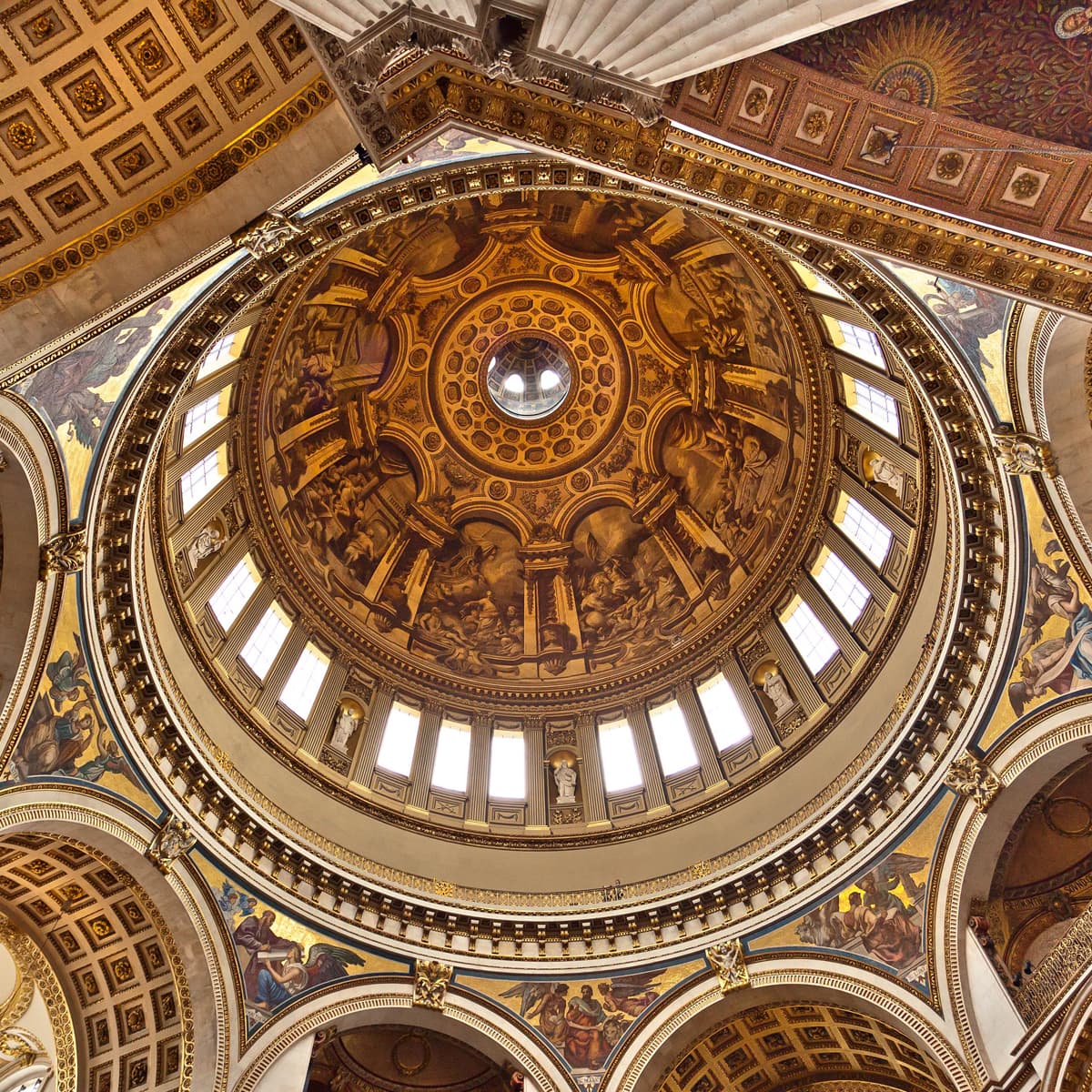
The Dome The Dome The Dome The Dome The Dome painted with scenes from the life of St. Paul is only the innermost of three domes nesting one on top of the other. Look up through the opening in the middle of the dome to see the light-filled lantern of the second dome. Finally, the whole thing is covered on the outside by a third and final dome.
That's the shell of lead-covered wood that you see from the street. Wren's ingenious three-in-one design was psychological as well as functional. He wanted a relatively low, shallow inner dome so worshipers wouldn't feel so small. Ringing the base of the dome, you'll see tourists walking around in the Whispering Gallery.
Read more...Show less
We'll visit that later. Make your way to the exact center of the church, directly underneath the dome. There you'll find a round memorial plaque. On the floor, directly beneath the dome, is a brass grate, part of a 19th-century attempt to heat the church.
Written around the rim of the grate is Christopher Wren, his name, and his epitaph in Latin. Christopher Wren, who lived from 1632 to 1723, was the right man at the right time to rebuild St. Paul's after the Great Fire of 1666. The 31-year-old astronomy professor had never built a major building in his life.
But when he got the commission for St. Paul's, his reputation for brilliance and his unique ability to work with others carried him through. The church has the clean lines, and geometric simplicity of the age of Newton, when reason was holy, and God set the planet spinning in perfect geometrical motion. For more than 40 years, Wren worked on this site, overseeing every detail of St.
Paul's and its 65,000-ton dome. At age 75, he got to look up and see his son place the cross on top of the dome, completing his masterpiece. There's no grand tomb in St. Paul's to celebrate the architect.
This brass grate is all there is. The epitaph in Latin says, Lectur si monumentum requiris circumspece. Reader, if you seek his monument, look around you. From underneath the dome, look toward the far end of the church toward the altar, which is topped with a golden canopy.
The area in between the dome and the altar, flanked with wooden stalls, is called the choir. We'll be visiting the altar area later, but for now, stay put underneath the dome while Rick talks about the various parts of the church.
Choir, Altar, Anglican Communion
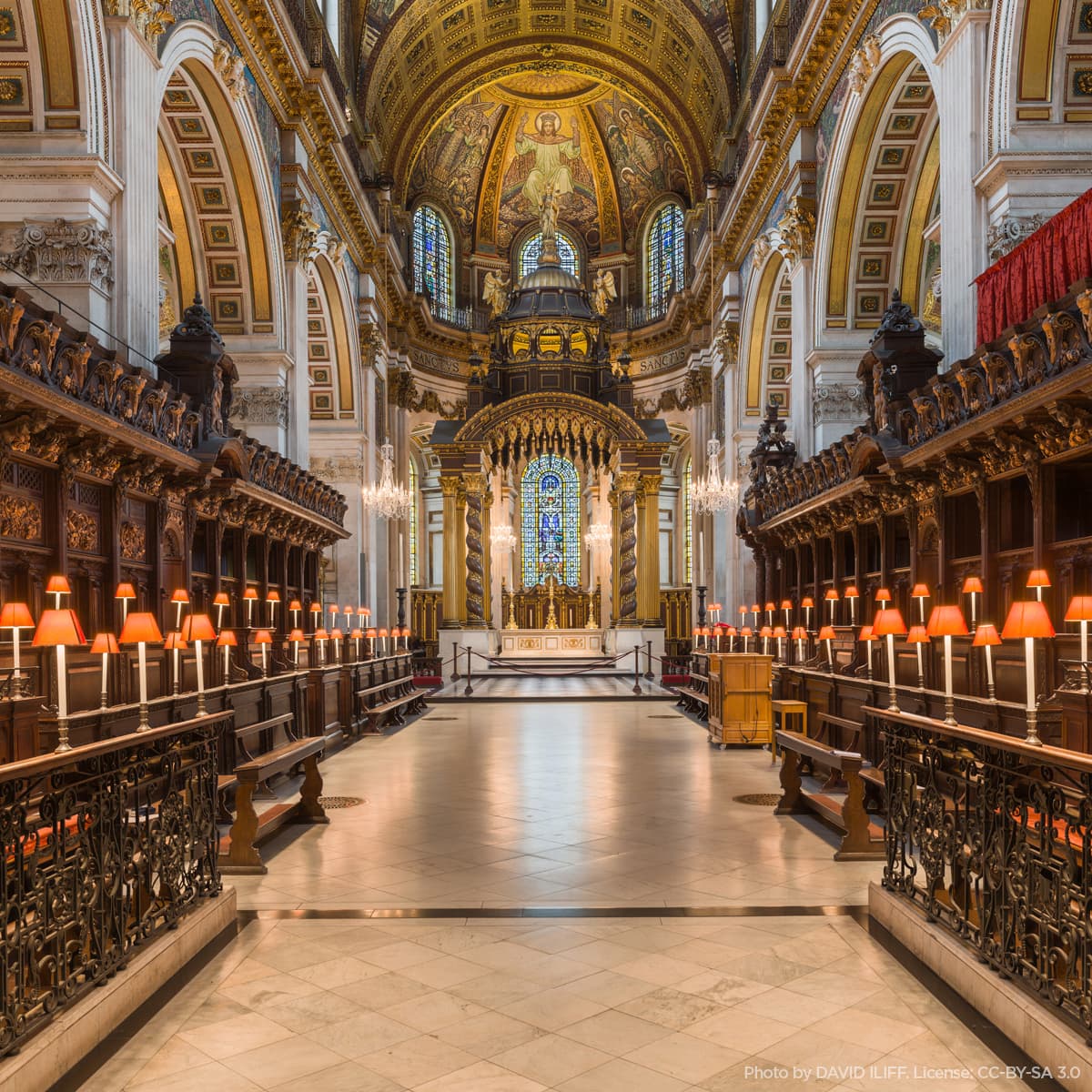
The choir, the altar, and the Anglican communion. English churches are different from many others in Europe in that they often have a central area called the choir or chancel. The wooden stalls along the sides are where religious VIPs sit during services. The ceiling above the choir in St.
Paul's is a riot of glass mosaic. It depicts God. There he is at the far end above the altar and his creation. Angels in eight separate spheres hold up creatures of the earth, seas, and sky.
Read more...Show less
The mosaics were added long after Wren in the 19th century. Queen Victoria complained that the earlier ceiling was dreary and undevotional. The dean wisely took note and had it spiffed up with this brilliant mosaic work, Textbook Victorian. At the far end of the choir stands the main altar, the marble slab with crucifix and candlesticks topped with a huge canopy of corkscrew columns.
The canopy looks ancient but dates only from 1958 when it was rebuilt after being heavily damaged in 1940 by the bombs of Hitler's Luftwaffe. More on that later. Since the year 604, St. Paul's has been a cathedral.
That means it's the home of the local bishop. Find the bishop's chair in the choir. It's the one nearest the altar on the south or right side. It's marked with a carved bishop's hat hanging over it.
For nearly a thousand years, the bishop that presided here was Roman Catholic, but in the 16th century, Henry VIII broke with the pope. England became largely Protestant, and St. Paul's became part of the Church of England. The iconography of St.
Paul's reflects the Church of England or Anglican faith. From here, beneath the dome, feel free to stroll around and admire the religious decoration, the paintings of saints, the statues, the stained glass. Today, St. Paul's Cathedral is the symbolic, though not official, nucleus of the world's 70 million Anglicans.
The Anglican Communion is a loose association of churches with common beliefs that includes the Church of England and the Episcopal Church in the United States. Forged in the fires of Europe's Reformation, Anglicans see themselves as a middle way between Catholics and Protestants. They retain much of the pomp and ceremony of traditional Catholic worship, but with Protestant elements, such as married priests and female priests. They also take a less hierarchical, more consensus-oriented approach to decision-making.
The Church of England the largest single group within the Anglican Communion is still the official religion of the state. It's headed by the Archbishop of Canterbury, who presides in Canterbury but lives here in London. In 1982, Pope John Paul II and the Archbishop of Canterbury met face-to-face, signaling a new ecumenical spirit. Our next site, a much-loved painting called The Light of the World, is usually displayed in the North Transit.
If you have trouble locating it, any docent can help direct you to The Light of the World. So head for the North Transit. That's the arm of the church to your left as you face the altar. Once in the North Transit, look to the right, where you'll soon see a big painting of Christ in a golden wood altarpiece. Get closer and find a viewing spot where the light hits it just right. The Light of the World
The Light of the World
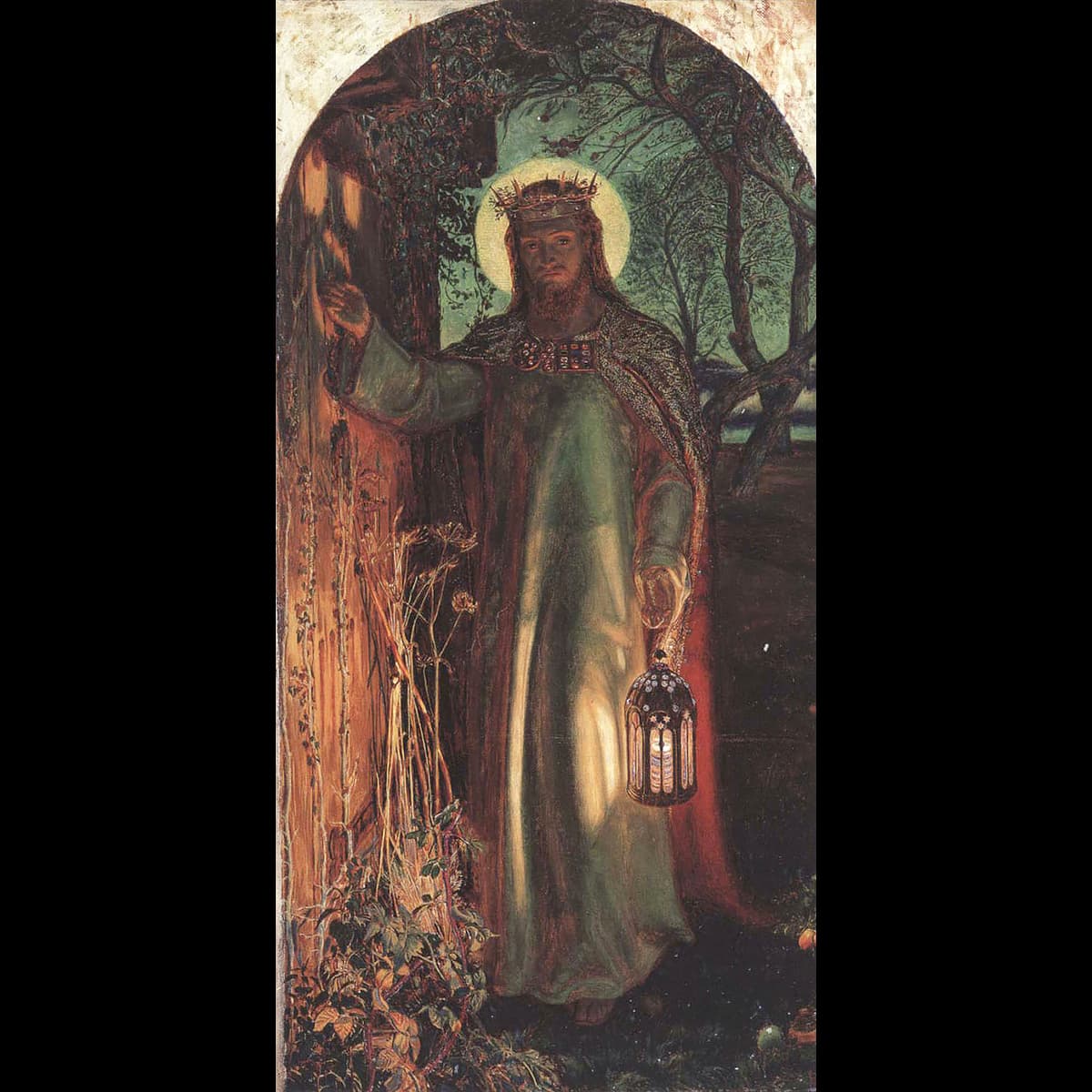
by William Holman Hunt In the dark of night comes Jesus with a lantern, halo, jeweled cape, and crown of thorns. He approaches an out-of-the-way home in the woods, knocks on the door, and listens for an invitation to come in. A Bible passage on the picture frame says, Behold, I stand at the door and knock. That's from Revelation 3, verse 20.
William Holman Hunt painted this when he, in his 20s, was in a personal spiritual crisis. Caught in the dark night of doubt, he heard this Bible verse knocking in his head. He opened his soul to Christ, his life changed forever, and he tried to capture the experience in paint. As a member of the Pre-Raphaelite School of Painting, he adored medievalism.
Read more...Show less
But he also used symbolism that the average Brit on the street could understand. The door is the closed mind, the weeds the neglected soul. The darkness is malaise, and Christ carries the lantern of spiritual enlightenment. In 1854, Hunt debuted The Light of the World.
It wasn't this version, but a smaller one now at Oxford. The critics savaged it. They called it syrupy, simplistic, and too Catholic. But the masses lapped it up, it became the most famous painting in Victorian England, a pop icon that inspired sermons, poems, hymns, and countless Christ-at-the-door paintings in churches and homes.
Hunt's image of Christ as a humble hippie was stamped forever on the minds of generations of school kids. It became so popular that late in life, Hunt was asked to do this larger version specifically for St. Paul's. Then, in his 70s and nearly blind, he needed an assistant to complete it.
By the way, the Guardian newspaper recently published a list of Britain's ten worst paintings. They honored The Light of the World as number seven, comparing it to a plastic crucifix. Our next stop is near the altar, that is, at the far end of the church. So backtrack to the dome, then head for the altar.
Our next few sites are associated with World War II and how it impacted the church during that difficult time. Remember, London was bombed heavily by the war, by Nazi warplanes. Excuse me, Rick, but when you reach the dome, turn left. Head for the altar by walking along the left side of the choir.
First came the so-called Battle of Britain as the British fended off Hitler's attempts to invade the island. Then came what's called the Blitz, a series of devastating air raids. These served no strategic purpose, just Hitler punishing the Brits for their defiance. Londoners took refuge in tube stations, deep beneath the earth, which served as bomb shelters.
And that ties in with our next site. As you walk toward the main altar, along the left side of the choir, you'll find a modern statue. It shows an egg-shaped mother cradling a blob-shaped baby. Statue of Mother and Child
Statue of Mother and Child
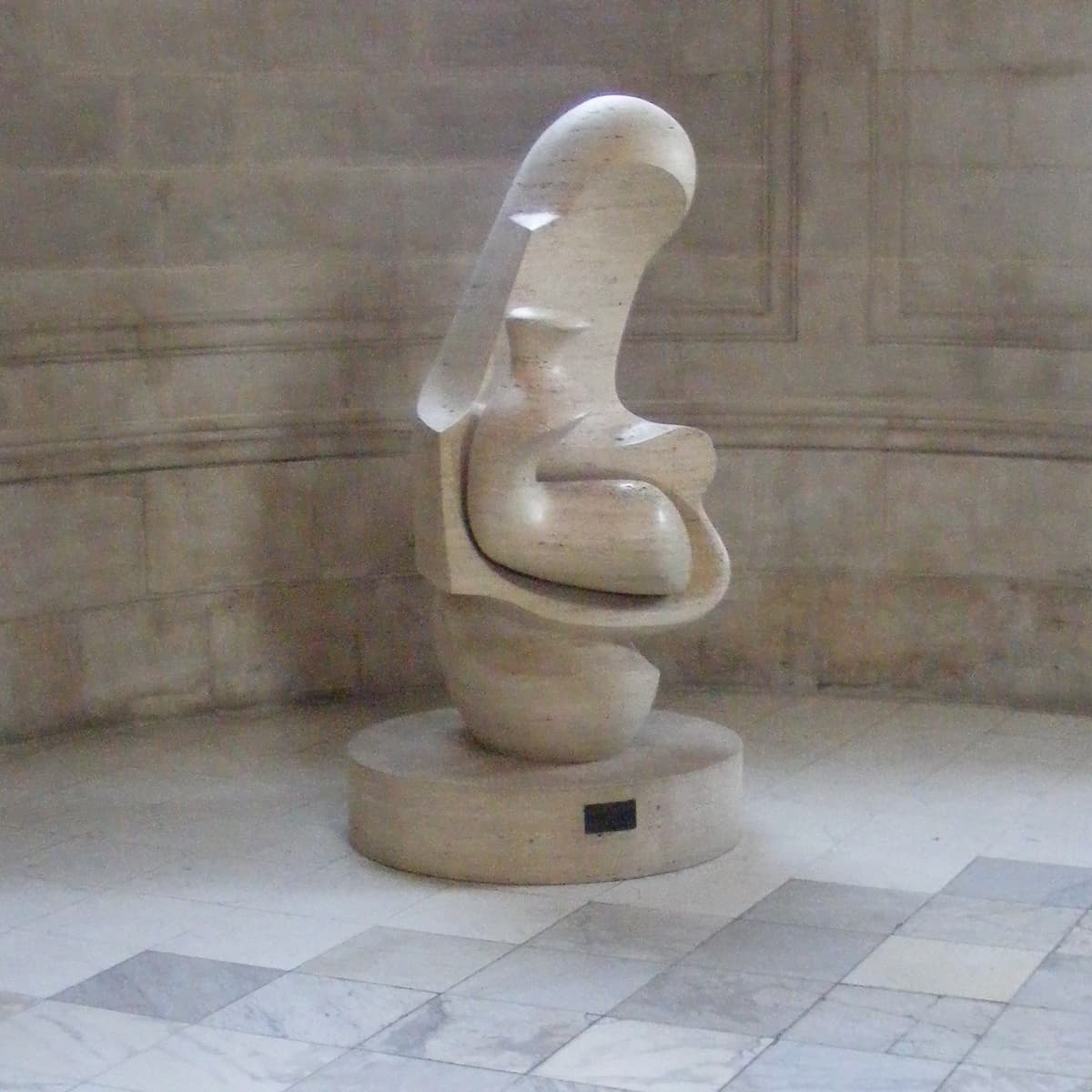
by Henry Moore. With this statue, Britain's greatest modern sculptor, Henry Moore, rendered a traditional subject in an abstract, minimalist way. This statue of Mary holding baby Jesus in her lap was inspired by the sight of British moms nursing babies in World War II bomb shelters. Moore intended the viewer to touch and interact with the art.
Go ahead. It's okay. This statue is a reminder of the fact that this statue is a reminder of the fact that St. Paul's is the place of remembrance for the many victims of Britain's wars.
Read more...Show less
The church took on special significance in World War II when it survived the massive bombing raids of the Blitz and the Battle of Britain. There's no better place to appreciate that than the area behind the main altar dubbed the American Memorial Chapel. Continue to the altar at the far end of the church. The area behind it has three bright and modern stained glass windows. The American Memorial Chapel.
American Memorial Chapel
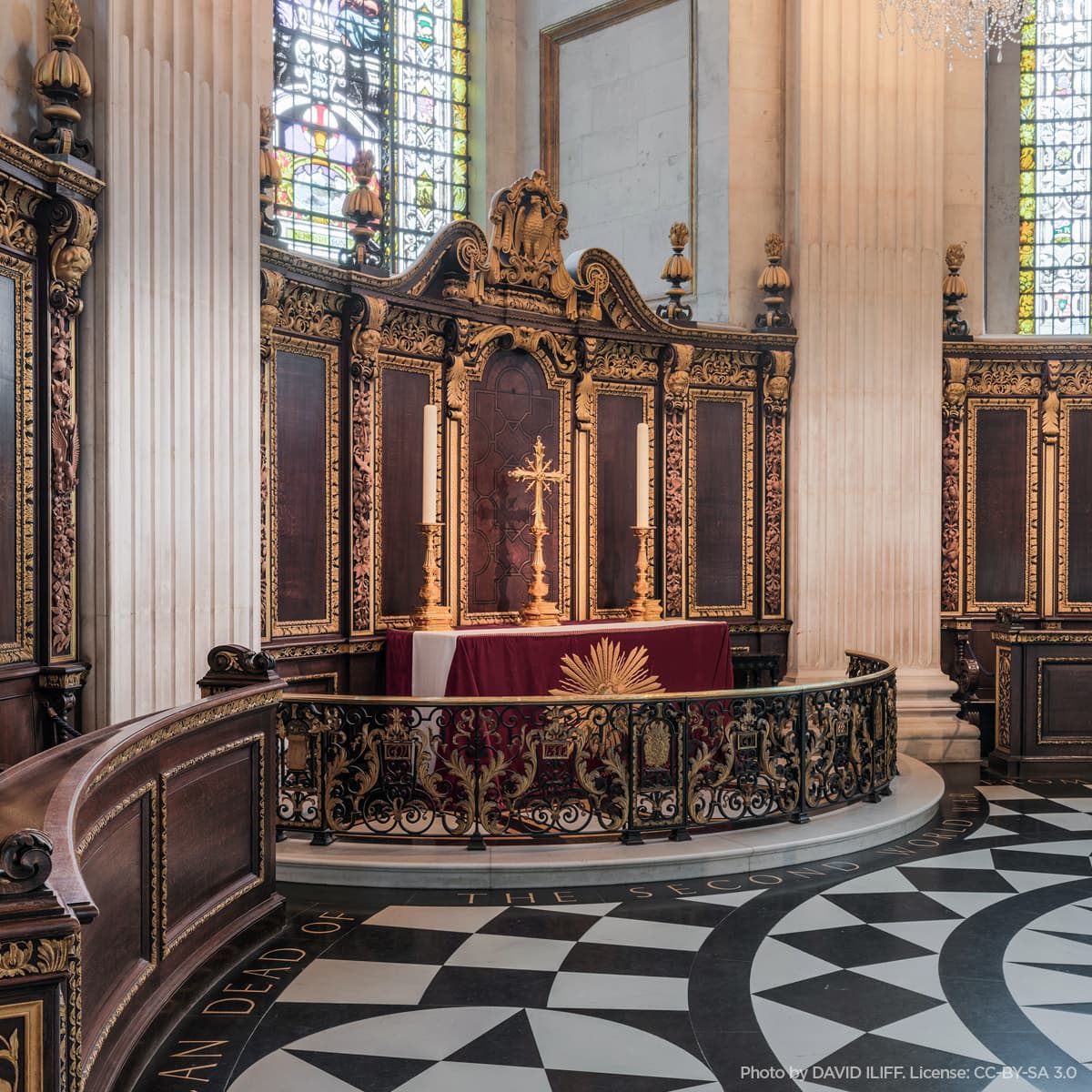
As you admire the beautiful stained glass windows, realize that, though they look medieval, they're actually modern. This chapel had to be rebuilt after the war, and this holy spot is dedicated to the heroes of World War II. Let's pick up the story. In 1940 and 1941, Nazi planes firebombed a helpless London.
The church took two direct hits. One bomb collapsed to the north transept. The other fell right here, crumbling the altar, shattering the stained glass, and leaving this area in ruins. But while the surrounding neighborhood was absolutely flattened, St.
Read more...Show less
Paul's survived surprisingly intact, giving hope to the citizens. On December 29, 1940, 28 bombs fell on the church. Some swear the bombs bounced right off Wren's Dome, almost miraculously. Others credit the heroic work of local firefighters, who stood guard with hoses at the ready.
When St. Paul's was repaired after the war, this special spot near the altar was set aside to honor the Americans who sacrificed their lives to save Britain in World War II. Britain is forever grateful to the Yanks and remembers them religiously with the roll of honor. You'll find it right behind the altar.
This 500-page book under glass lists the names of 28,000 U.S. service men and women based in Britain who gave their lives during the war. When the three stained-glass windows were rebuilt after the war, they were fitted with some unusual iconography. American.
Spot the American eagle. You'll find it in the center window of the three. Look close. In the center window, first find the figure of Christ.
The eagle is to the left of Christ. Got it? Now find George Washington. He's in the right window of the three.
Look way up near the top of that right window. In the upper right-hand corner, there he is, America's founding father. By George, I think I've got it. In fact, scattered throughout the windows are the symbols of all 50 states.
You can find those on your own. But for now, turn your attention away from the windows and down to the carved wood paneling beneath the windows. Focus on the farthest right part of the paneling. There among the carvings are birds and foliage native to the U.S.
Now, get real close, real close in the far right. Look through the carved leaves to where you can see the trunk of that tree. Now, look below the bird. You'll see that the trunk is actually a U.S.
rocket ship circa 1958 shooting up to the stars. The British artist honored one of America's greatest triumphs. Now, step back and soak in the solemn atmosphere of this entire chapel. As you look at the windows, examine the roll of honor, and admire the view of the mosaic ceiling and nave, think about what London went through during the war.
In the early days of World War II, the powerful Nazi army quickly overcame and overran all of continental Europe. Britain hunkered down, waiting to be invaded. Hitler launched a series of air raids on civilian London itself, known as the Blitz. All through the fall, winter, and spring of 1940 and 41, including 57 consecutive nights, the Luftwaffe pummeled a defenseless London.
The bombs killed 20,000 and leveled half the city, mostly from St. Paul's eastward. Residents took refuge deep in the tube stations. From his Whitehall bunker, Prime Minister Winston Churchill made radio broadcasts, exhorting his people to give it their all.
We shall fight on the beaches, he vowed. We shall fight in the fields, and we shall fight in the streets. We shall never surrender. Britain fought back, and when the United States entered the fight, the pendulum shifted.
Churchill would say that even if the British Empire lasted a thousand years, Britons would look back and say, this was their finest hour. After the war, St. Paul's was the place where Britain did look back. In 1965, they gathered here for Churchill's state funeral in a bittersweet remembrance of their nation's finest hour.
Continue around the altar and head back toward the entrance. Now we'll see memorials to other great Brits, some of them warriors, and some warriors of the spirit, like the man, honored just ahead. On the left wall of the aisle is a statue, a white statue standing in a black niche of a man wrapped in a burial shroud.
John Donne
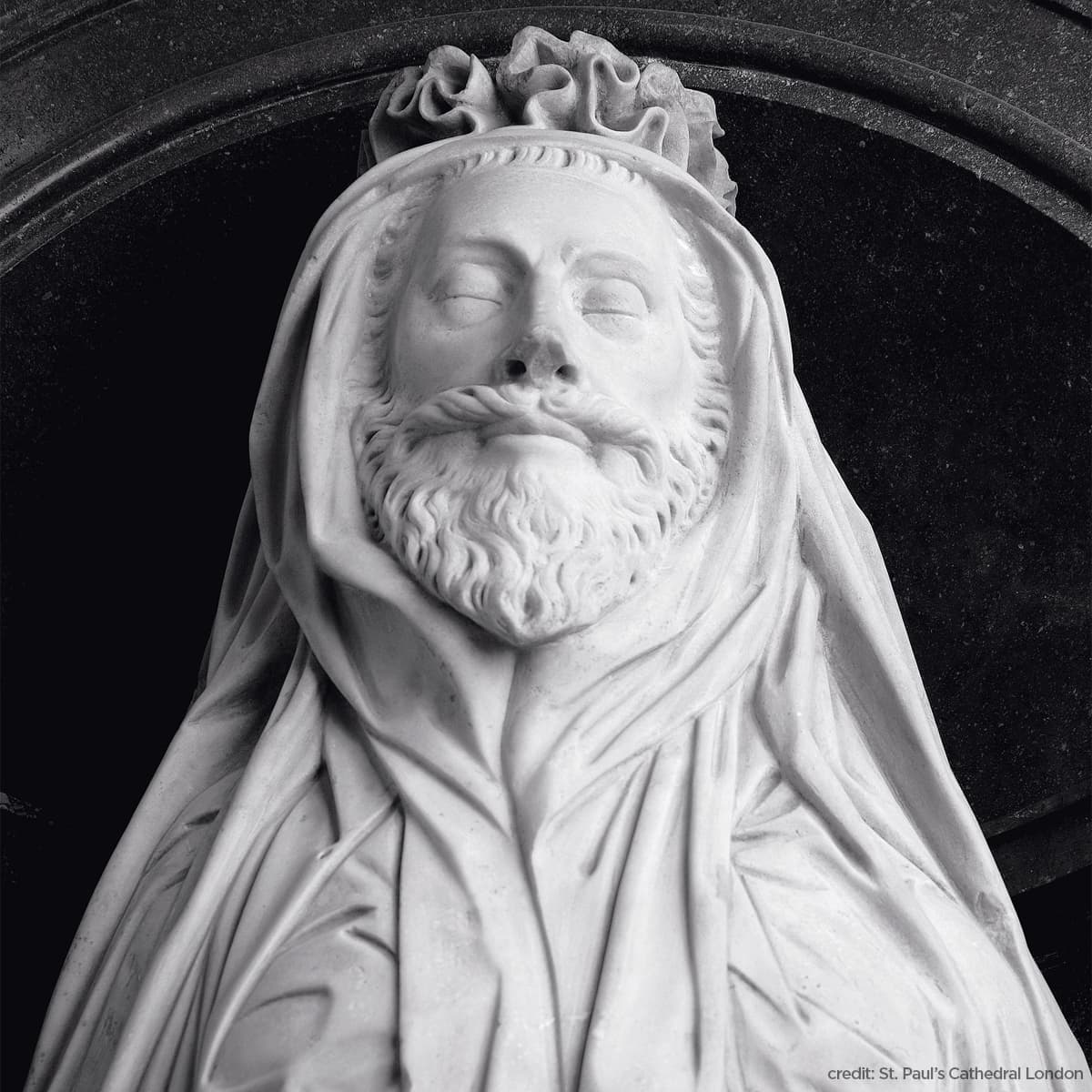
John Donne. This statue of the great poet is one of the oldest things in the church, having survived the Great Fire of 1666. John Donne, who lived from 1560, 1773 to 1631, served as the dean or director of St. Paul's.
He gained a reputation as a passionate preacher. For his service, he was honored with this statue showing Donne in his burial shroud. Imagine hearing Preacher Donne delivering a funeral sermon here with the huge church bell tolling in the background. No man is an island, he wrote.
Read more...Show less
Any man's death diminishes me because I am involved in mankind. Therefore, never wonder for whom the bell tolls, it tolls for thee. And also for dozens of people who lie buried beneath your feet in the crypt where you'll end your tour. But for now, continue on.
Keep walking down the aisle back toward the dome. When you reach the dome, veer left into the south transept. Once there, find the large white statue of Lord Nelson on the right. He's standing atop a round pedestal with a big lion at his feet.
Nelson Monument, Cornwallis Monument
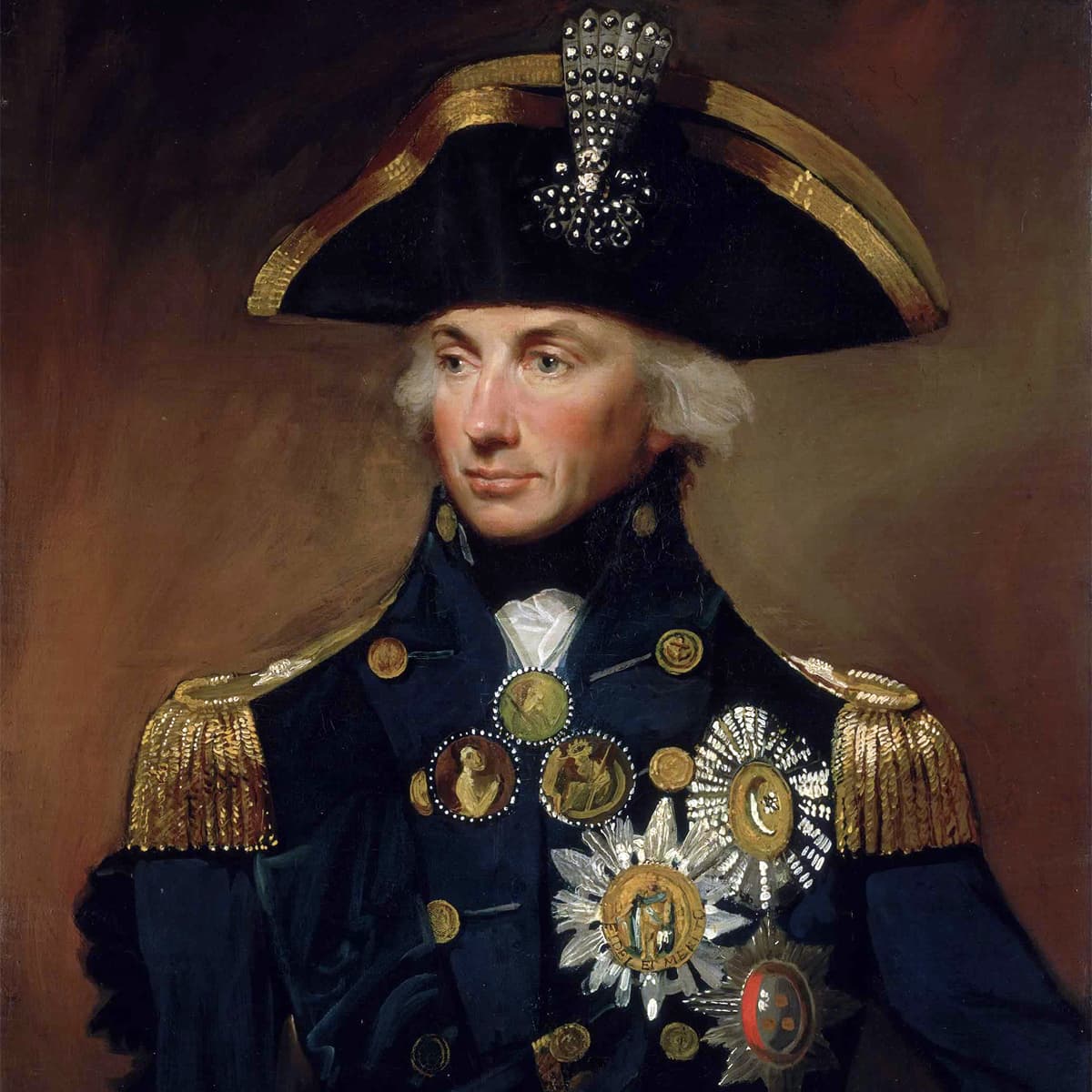
Nelson Monument and Cornwallis Monument Admiral Horatio Nelson leans on an anchor, his coat draped discreetly over the arm he lost in battle. In October 1805, England trembled in fear as Napoleon, bent on world conquest, prepared to invade from across the Channel. Meanwhile, hundreds of miles away, off the coast of Spain, the daring Lord Nelson was about to save the day. Nelson sailed the HMS Victory into the Battle of Trafalgar against the French and Spanish navies.
His motto? England expects that every man shall do his duty. Nelson demolished the French fleet and with it sank Napoleon's hopes for a naval invasion of Britain. Unfortunately, Nelson took a sniper's bullet in the spine and died.
Read more...Show less
As he died, he gasped, Thank God I've done my duty. The lion at Nelson's feet groans sadly, and two little boys gaze up, one at Nelson and one at Wren's dome. We'll soon visit Nelson's actual tomb, which lies directly beneath the dome downstairs in the crypt. Opposite Nelson is a monument to another great military man, Charles Cornwallis.
He's honored here for his service as Governor General of Bengal in India. Yanks know him better as the general who lost the American War. That's what Britons call the American Revolutionary War. In 1780, Cornwallis surrendered to General George Washington at Yorktown in Virginia.
This effectively ended the Revolutionary War. At this point in the tour, we'll climb the dome, which is included in your entry ticket. By the way, it's quite a hike to the top of the dome and not everyone will have the time or the energy to do it. So if you're not sure whether or not to climb, listen to the next track as we explain what's involved in getting to the top and what you'll see when you get there.
If you choose not to climb the dome, skip ahead to the crypt located in the basement. For now, it's on to the dome.
Climbing the Dome
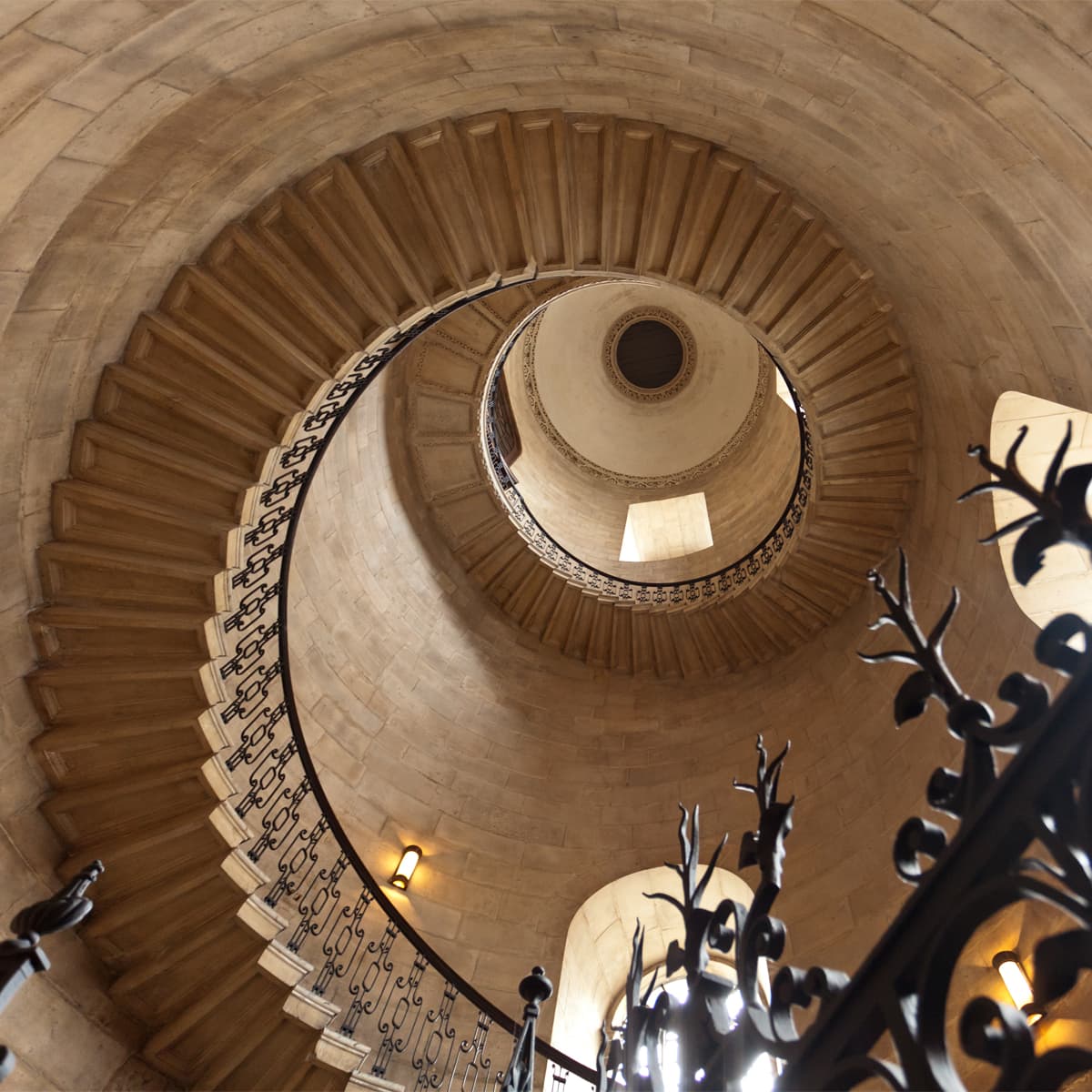
Climbing the Dome To ascend the dome, there are no elevators and it's 530 feet high. 30 steps to the top. Allow an hour to go up and down. There are three levels called galleries and you can choose to only go up as far as the first or second galleries.
Each level or gallery offers something different. First, you get to the Whispering Gallery, 259 steps up, with views of the church interior. The next two levels take you much higher and outside for great views of London's skyline. The climb gets steeper, narrower, and more comfortable.
Read more...Show less
and more claustrophobic as you go higher. Be warned, it's a one-way system, so once you start up to the next gallery, you can't come back down until you reach that next level. Let's start the climb. Or, if you've decided not to climb the dome, skip ahead to the final part of our tour, the crypt.
Dome climbers, put on your crampons and rope up. Find the entrance. It's located within the church. The entrance varies from year to year, so check the free visitor's map for the current location.
When you find the entrance, start climbing. At this point, you might want to pause the audio guide and restart it when you reach the first level, the Whispering Gallery. We'll see you there. The Whispering Gallery
Whispering Gallery
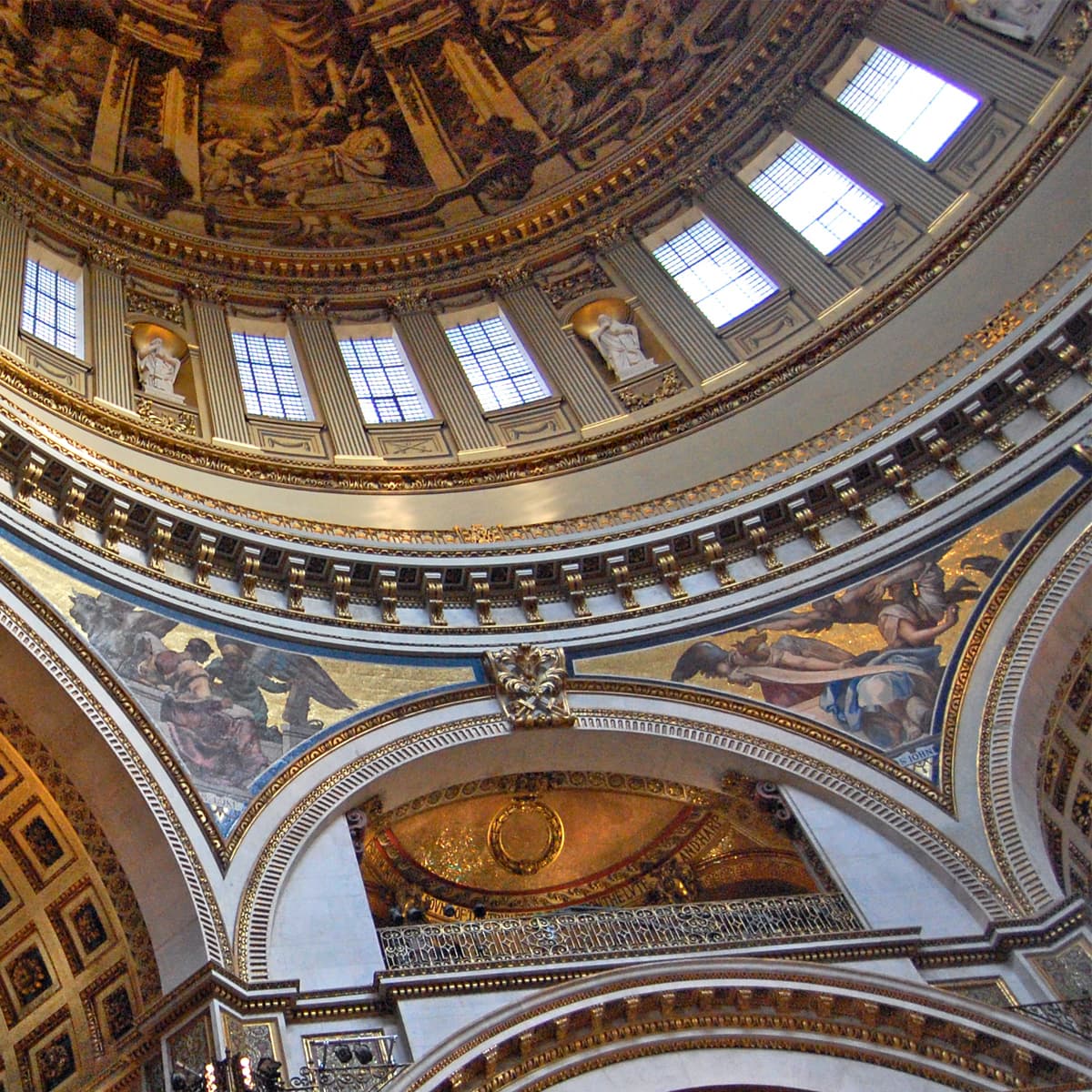
This level at the base of the dome is so-called because you can whisper sweet nothings into the wall and your partner or anyone else standing on the other side of the dome can hear you. Exactly how it works is debated. Most likely, the sound does not travel up and over the dome to the diametrically opposite side as it would if the dome was a perfect sphere. Rather, the sound travels around the curved wall horizontally.
This means that you don't have to stand up in any particular spot to enjoy the effect. For best results, try whispering, not talking, with your mouth close to the wall while your partner stands 20 or 30 yards away with his or her ear to the wall. Or just stand back and observe the many visitors engaged in an 18th century version of Can You Hear Me Now? Besides whispering, the gallery offers close-up views of Wren's massive dome and views of the tiny people way down below.
Read more...Show less
Relax here in the Whispering Gallery while I give you a preview of the next two galleries. After a long set of stairs, you reach the Stone Gallery with views of London. If you're exhausted, claustrophobic, or wary of heights, that middle level might be high enough since the top level is a much longer climb and has very little standing room for tourists. From the Stone Gallery, you climb a long, tight metal staircase up and up to the very top of the cupola, the Golden Gallery.
Here's a fun hint. Just before the final dozen stairs to the top, take a break. There'll be a tiny window at your feet that allows you to peek directly down 350 feet to the church floor. All right, let's continue the climb.
I'll see you at the top. Pause the audio guide and restart it when you have a good view of London. That will be either at the Stone Gallery or, for those summiting, from the Golden Gallery at the top of the dome. The Golden Gallery,
Golden Gallery, View of London
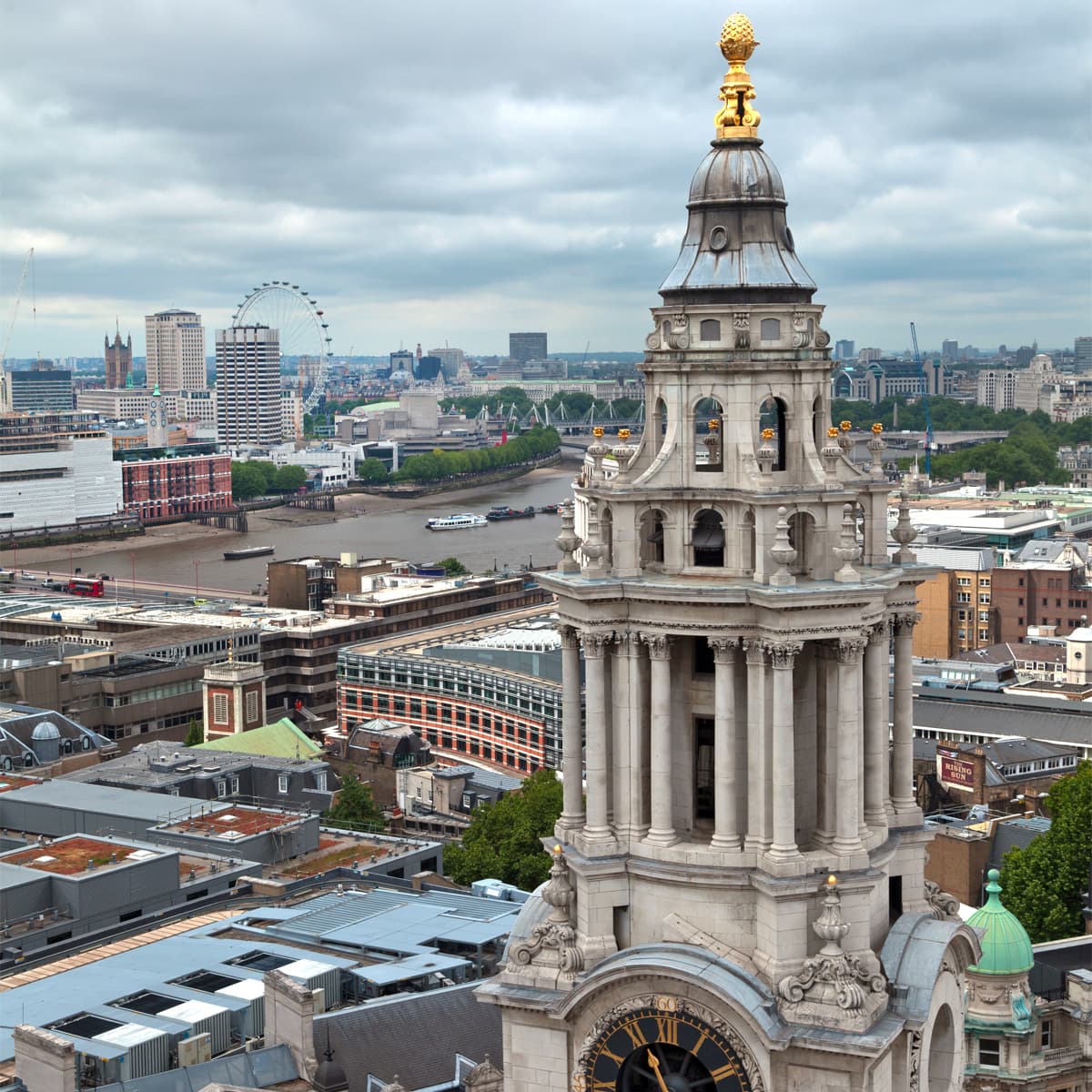
or top of the dome, view of London. Once at the top, you emerge to stunning, unobstructed views of the city. Start by looking west, where you see the London Eye Ferris Wheel and Big Ben. Realize that in Shakespeare's day, that area was a separate city called Westminster, while St.
Paul's, marked the heart of London proper. Next, look south. Make your way around the crowded cupola to where you can look across the River Thames. There you'll see the rectangular smokestack of the Tate Modern Art Gallery, with Shakespeare's round Globe Theatre nestled nearby.
Read more...Show less
The Thames starts its journey about 200 miles west of here and spills out into the sea about 20 miles to the east. Now, continue around to the east side of the cupola. Find the black-topped skyscraper named Tower 42, standing 600 feet tall. Nearby is the bullet-shaped building called 30 St.
Mary Axe. It's nicknamed the Gherkin, or Pickle. Just to the right of that is the building nicknamed the Cheese Grater, and further right is the Walkie Talkie. Looking further into the distance is the teeming, fast-growing expanse of London's East End and the Docklands, the cluster of skyscrapers in the distance marks Canary Wharf, London's new Manhattan.
Just north of that is the area developed for the 2012 Olympic Games with a stadium, swimming pool, and Olympic Village. Demographers speculate that the rapidly-growing East End may eventually replace the West End and the city as the center of London. So, as you look to the east, you're also gazing into London's future. The final stop on our tour is the Crypt, located in the basement of the church.
Descend the dome to church level and follow signs directing you downstairs to the Crypt. Now, pause the audio guide and restart it at the next track. When you reach the Crypt. The Crypt
The Crypt
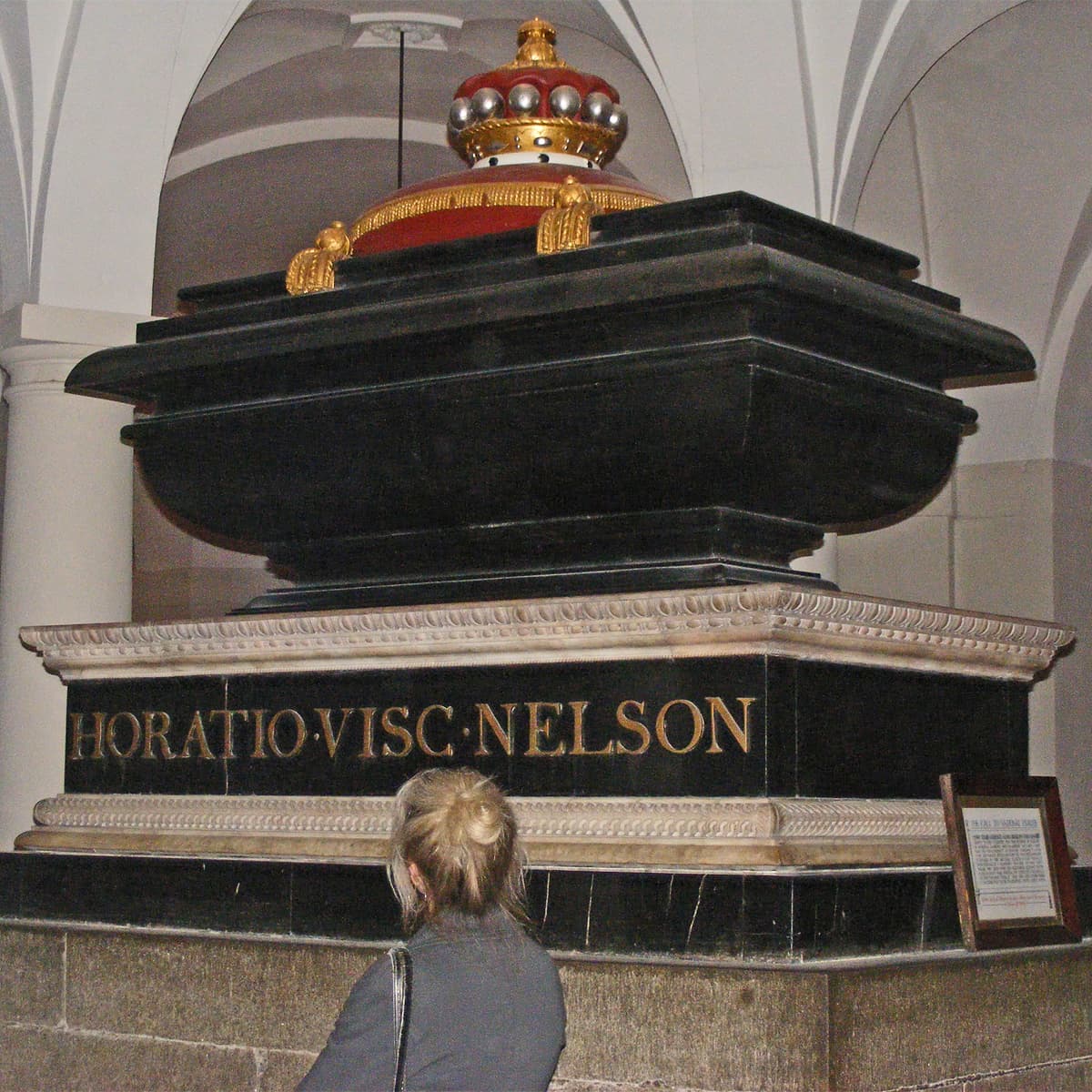
Whether you've climbed the dome or not, by now you should be downstairs in the church basement called the Crypt. Start by finding the tomb of Lord Nelson. There may be signs directing you to his tomb. There are many famous people buried in the Crypt.
The most honored place is granted to Lord Nelson. He's directly below the dome. His tomb is a big black coffin on a pedestal topped with a red crown. His tomb is a big black coffin It stands in a round alcove.
Read more...Show less
The tomb is labeled Horatio Viscount Nelson. It remembers the man who wore down Napoleon at Trafalgar. Now, look around and find another large tomb nearby, a big black stone coffin. Stroll up to the coffin.
This is the tomb of the Duke of Wellington. If Nelson wore Napoleon down at sea, Wellington finished him off at Waterloo. Keep going past Wellington as you walk up the central axis of the Crypt. Continue straight, passing through a chapel area.
As you walk, ponder the fact that St. Paul's has held elaborate funerals for three men who helped save Britain from grave danger, Nelson, Wellington, and Churchill. The bodies of all three were paraded to St. Paul's in the same funeral wagon.
When you reach the far end of the chapel, turn right. Then keep going until you run directly into our final stop, the grave of Christopher Wren. Wren's grave is not obvious since there's no statue and it's barely marked. So, when you reach the wall of the crypt, first, look for a large block of stone.
It's belly-high in the niche. This is a hunk of rough Portland stone left over from the church's construction. Look closely on the block on the left end. There you'll find scratched into the rock Wren's distinctive brand that he used to mark his stones, a triangle.
Now, find Wren's gravestone. It's next to the big block. Wren's grave marker is nothing but a simple black slab. Read the inscription.
Here lieth Christopher Wren, the builder of this cathedral. St. Paul's contains graves and memorials of many famous Brits. They're all located on your free visitor's map.
Most of these graves are far more elaborate than the grave of Christopher Wren, the man who built St. Paul's three centuries ago. But remember, if you seek his monument, look around you. We hope you've enjoyed your walk through St.
Paul's. Thanks to Jean Openshaw, the co-author of this tour. If you're up for more London sightseeing, we have audio guides for the city, the British Museum, the Westminster Walk, and the British Library. Remember, this tour was excerpted from the Rick Steves London Guidebook, co-authored with Jean Openshaw.
For more details on eating, sleeping, and sightseeing in London, refer to this year's edition of that guidebook. For more free audio tours and podcasts, and for information about our TV shows, bus tours, and travel gear, visit our website at ricksteves.com. This tour was produced by Cedar House Audio Productions. Thanks! And thank God I've done my duty. Bye for now. .
Free
GPS-guided walking tour
No account needed. Walk at your own pace.
Free
14 stops ·