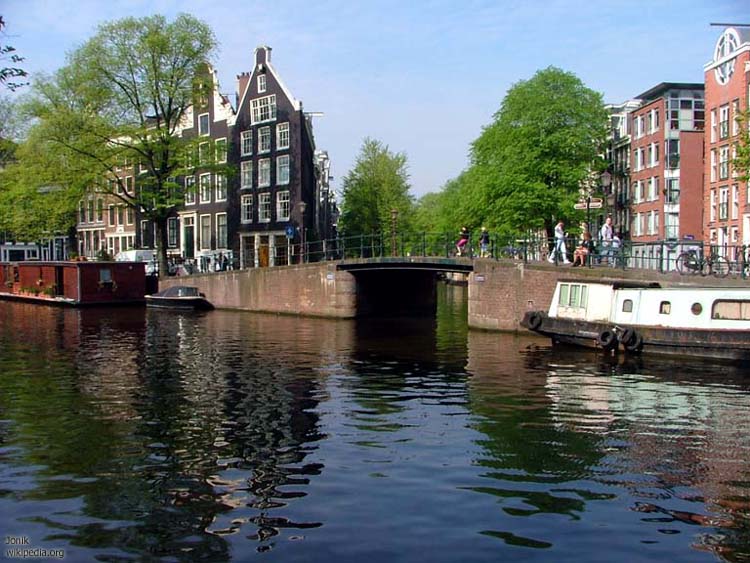
The Jordaan was never supposed to be charming. When construction began in 1612, this was cheap housing for the working class and the waves of refugees — French Huguenots, Spanish Jews, English dissenters — flooding into Amsterdam for its famous religious tolerance. The streets were narrow, the houses were tiny, and by 1900 roughly 80,000 people were crammed into what is now one of the most expensive neighborhoods in the Netherlands. The city council nearly demolished the whole district in the 1970s to build modern apartment blocks. Residents rioted in protest, and the Jordaan survived.
What saved it, ultimately, was its bones. The hidden courtyards called hofjes — there are still 19 of them — were built by wealthy citizens as charitable housing for elderly women. The oldest is the Sint Andrieshofje on Egelantiersgracht. You push through an unmarked door in a canal-house wall and suddenly you're standing in a silent garden surrounded by 17th-century almshouses. These pockets of calm have existed for four hundred years, hidden in plain sight.
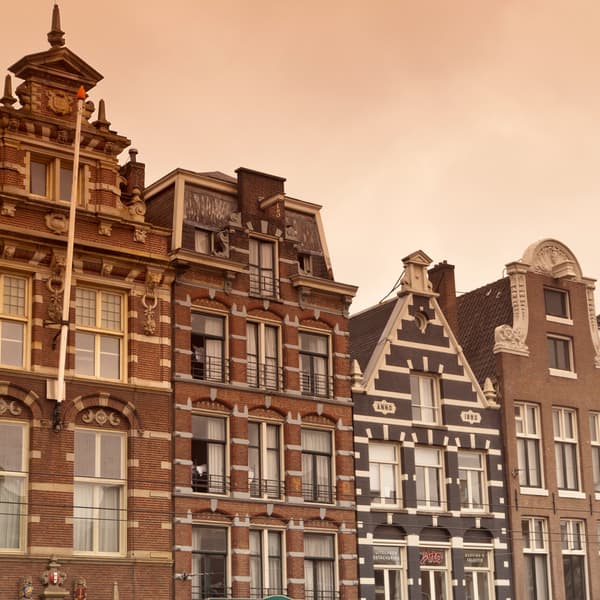
Look for the stone tablets on house facades throughout the Jordaan. Before street numbers existed, buildings were identified by carved signs showing the owner's trade — a pig for a butcher, a loaf for a baker. Hundreds of these gevelstenen survive, turning every walk into a treasure hunt.
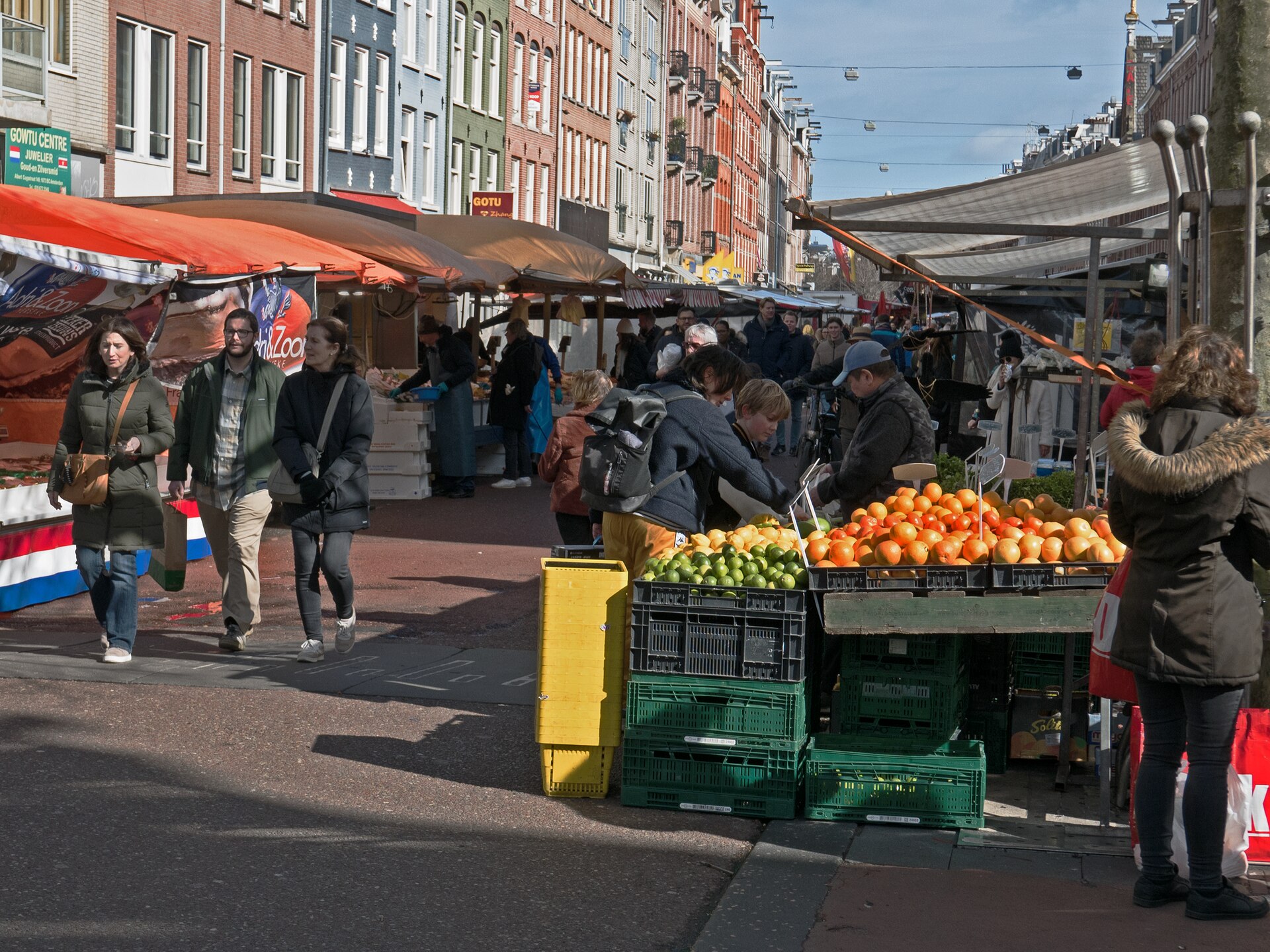
Today the Jordaan is galleries, vintage shops, brown cafes, and Saturday morning markets. Artists, students, and young professionals moved in during the 1980s and 1990s as the old working-class families moved out. The neighborhood gentrified completely, but somehow kept its soul — that rebellious, slightly scrappy energy that made people fight to save it in the first place.
Verified Facts
Construction of the Jordaan began in 1612 as working-class housing called Het Nieuwe Werck (The New Work)
Around 1900 the population was estimated at roughly 80,000 people in the small district
There are still 19 hofjes (hidden courtyards) in the Jordaan, the oldest being the Sint Andrieshofje on Egelantiersgracht
In the 1970s, the city council planned to demolish large parts of the Jordaan but reversed course after strong public resistance
Get walking directions
Jordaan, Amsterdam, Netherlands