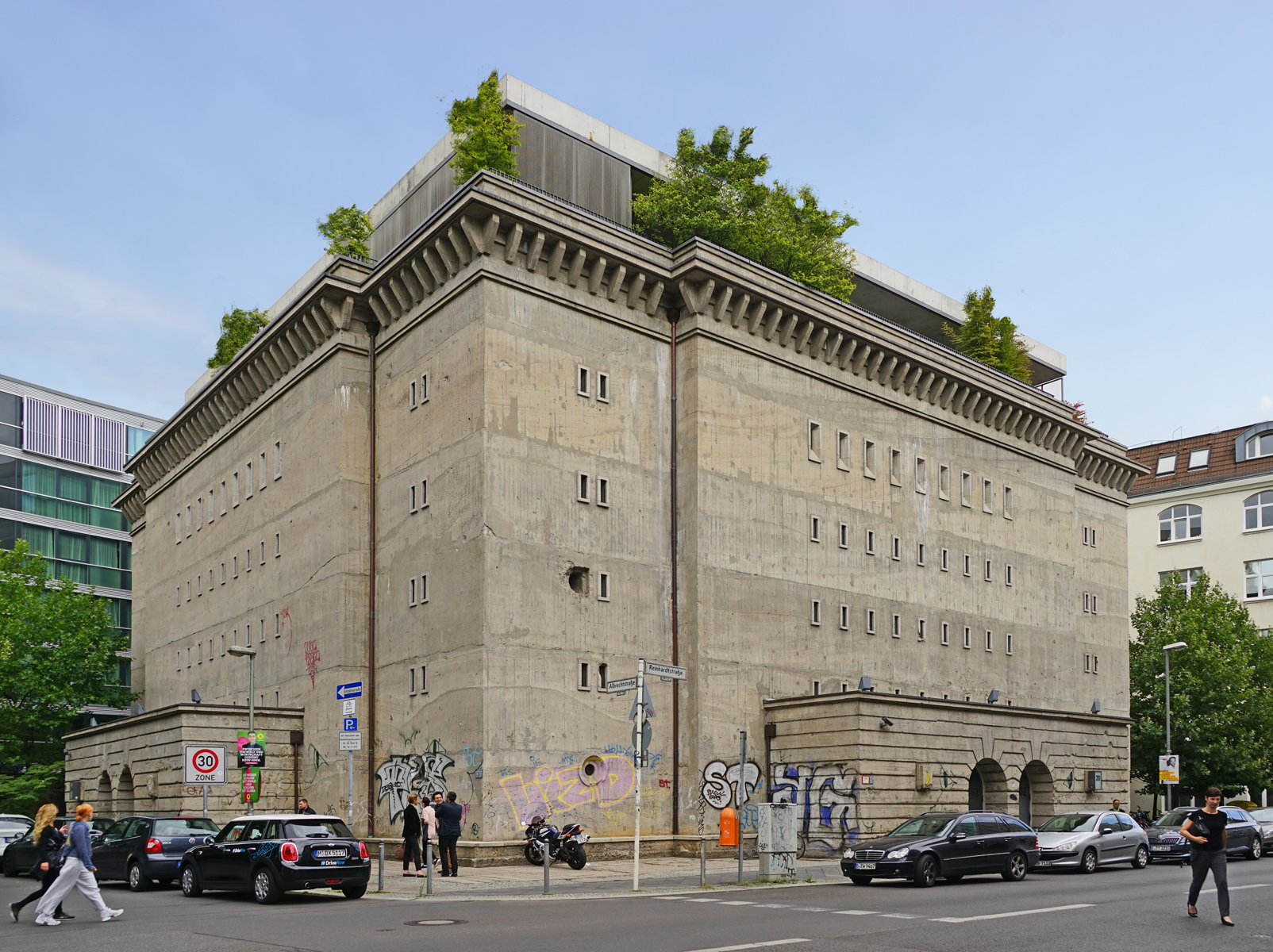
A Second World War air-raid bunker with a penthouse on the roof, filled with some of the best contemporary art in Europe. It's the most Berlin building imaginable.
The bunker was built in 1942 to shelter up to 3,000 people during Allied bombing raids. After the war, the Soviets used it as a prisoner of war camp. In the GDR era, it became a textile warehouse, then a storage facility for tropical fruit. After reunification, it was briefly and famously an illegal techno club — the concrete walls and absence of neighbours made it perfect for underground parties. There are still traces of the club era if you know where to look.
In 2003, advertising executive and art collector Christian Boros bought the bunker and spent four years converting it into a private gallery, keeping the raw concrete walls and adding just enough infrastructure to display art. The collection focuses on contemporary works from the 1990s onward — Olafur Eliasson, Ai Weiwei, Wolfgang Tillmans, Alicja Kwade. The rooftop penthouse, where Boros and his family live, was designed by Jens Casper and is visible from the street as a glass-and-steel box perched incongruously on top of a concrete fortress.
Visits are by guided tour only, booked weeks in advance. The tours are excellent — guides discuss both the art and the building's layered history.
Verified Facts
The bunker was built in 1942 as an air-raid shelter with capacity for approximately 3,000 people
After reunification, the bunker was used as an illegal techno club before being converted to a gallery
Christian Boros purchased the bunker in 2003 and spent four years converting it
Visits are by guided tour only and must be booked well in advance
Get walking directions
20 Reinhardtstraße, City Centre, Berlin, 10117, Germany