This museum contains things that shouldn't logically be inside a building. The Ishtar Gate of Babylon — the actual gate, reconstructed from original glazed bricks, fifteen metres tall, covered in reliefs of dragons and bulls in brilliant blue and gold. The Market Gate of Miletus — a two-story Roman gate from Turkey, reassembled stone by stone. A full-size facade of an Umayyad caliph's palace from eighth-century Jordan. These aren't models or reproductions. They're the real structures, excavated, shipped to Berlin, and rebuilt indoors.
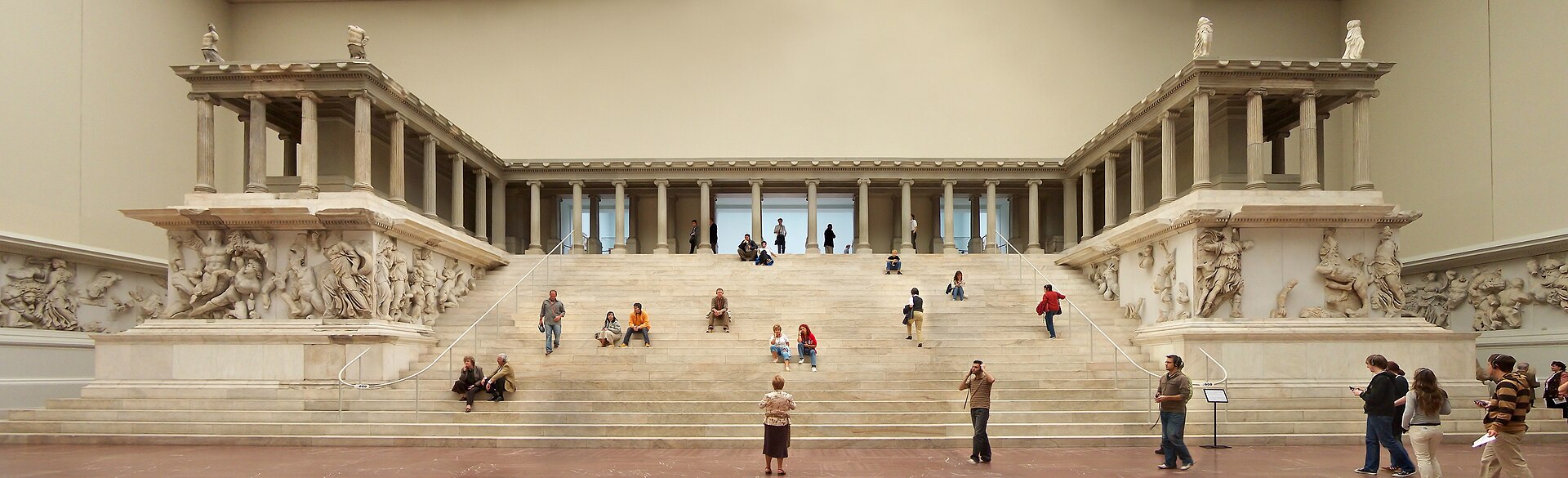
The Pergamon Altar — the museum's namesake — is a monumental Greek altar from the second century BC, originally from the ancient city of Pergamon in modern Turkey. Its frieze depicts the battle between the gods and giants in high-relief sculpture that's among the finest surviving from antiquity. The altar hall has been closed for renovation since 2014, but a panoramic exhibition by Yadegar Asisi gives visitors a sense of its scale.
German archaeologists excavated these sites in the nineteenth and early twentieth centuries, and Turkey has repeatedly requested their return. It's one of the most significant cultural repatriation debates in the world.
The museum was built specifically to house these oversized finds — architect Alfred Messel designed it with halls tall enough for reconstructed ancient architecture, which is why the building itself is massive.
Verified Facts
The Ishtar Gate of Babylon in the museum was reconstructed from original glazed bricks and stands approximately 15 metres tall
The Pergamon Altar dates from the second century BC and was excavated from the ancient city of Pergamon in modern Turkey
The Pergamon Altar hall has been closed for renovation since 2014
Turkey has repeatedly requested the return of the Pergamon Altar and other excavated artifacts
Get walking directions
Bodestraße 1-3, 10178 Berlin