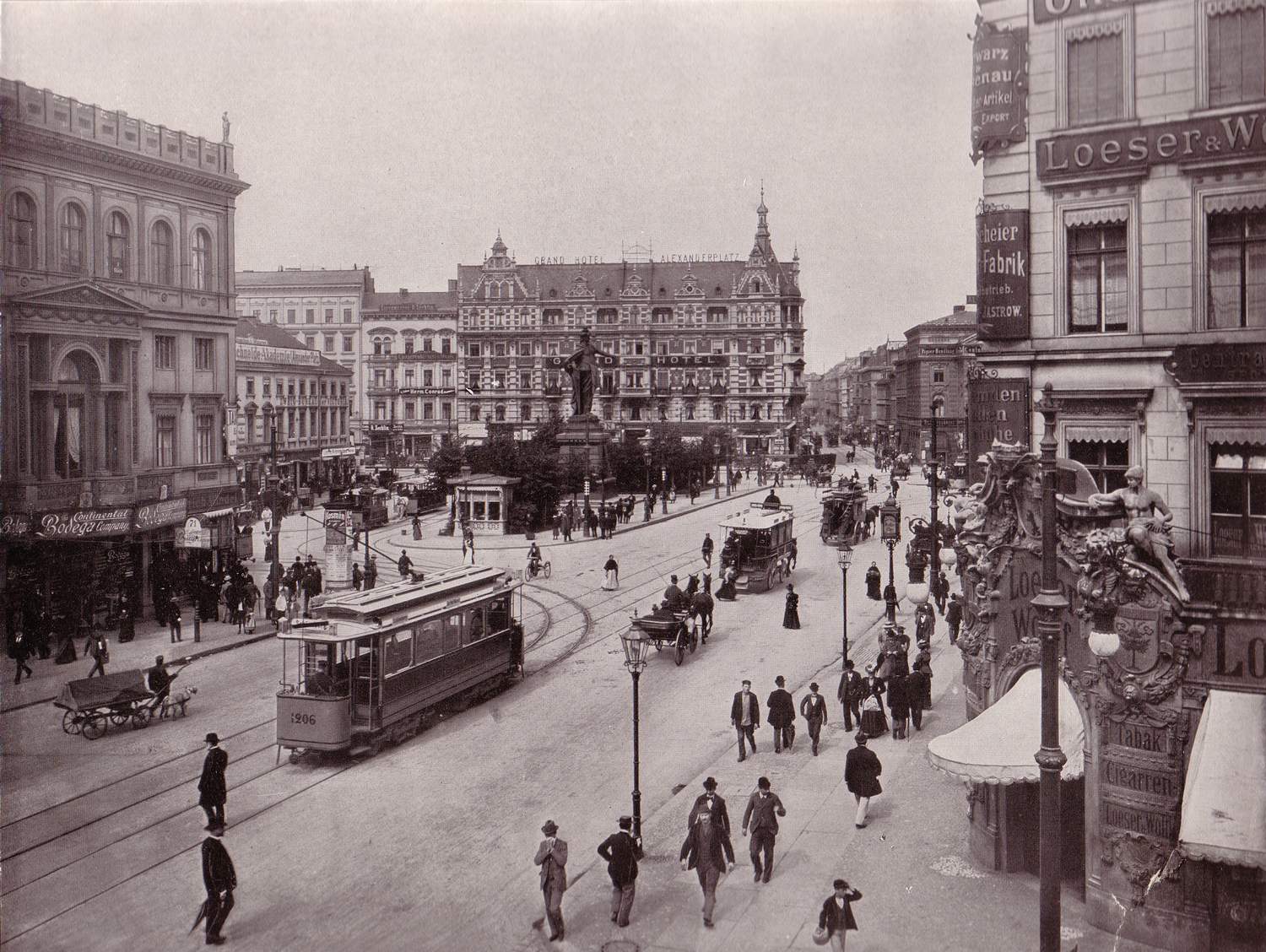
In the 1920s, this was the busiest intersection in Europe — the Times Square of Berlin, with the continent's first traffic light installed here in 1924. By 1945, it was rubble. During the Cold War, it was an empty wasteland bisected by the Wall. After reunification, it became the largest construction site in Europe. The transformation from wasteland to skyscraper canyon happened in about a decade.
The Sony Center, with its tent-like roof designed by Helmut Jahn, is the most visually striking piece. The roof is made of glass and fabric panels supported by steel cables, and at night it's illuminated in shifting colours. Inside the complex, fragments of the old Hotel Esplanade's breakfast room — a building that was too historically significant to demolish — were moved 75 metres on air cushions to be incorporated into the new development. Moving a room intact on air cushions. That's Berlin.
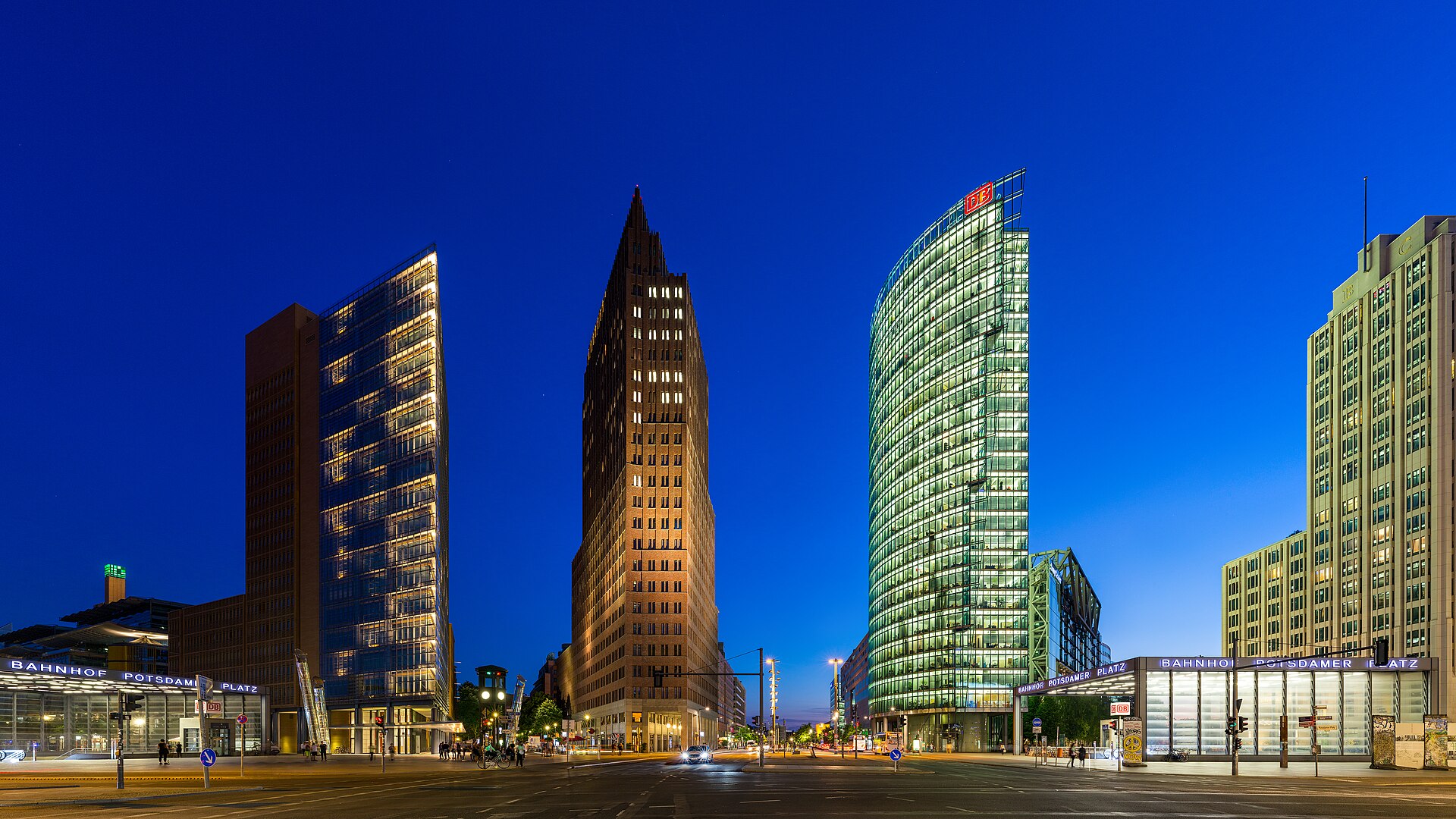
Renzo Piano designed the Daimler Quarter on the south side. The Deutsche Bahn headquarters and several high-rises fill the rest. Critics call it soulless corporate architecture. Defenders point out that building anything at all on this cursed piece of land — bombed, cleared, walled off, and left empty for forty years — is itself a statement.
Beneath the square runs the Potsdamer Platz train station, serving both S-Bahn and regional trains. Fragments of the original 1924 traffic light replica stand at the corner — a five-sided tower with manually operated semaphore arms.
Verified Facts
Europe's first traffic light was installed at Potsdamer Platz in 1924
The Hotel Esplanade's breakfast room was moved 75 metres on air cushions to be preserved in the Sony Center development
In the 1920s, Potsdamer Platz was considered the busiest intersection in Europe
The Sony Center's roof was designed by Helmut Jahn
Get walking directions
Potsdamer Platz, 10785 Berlin