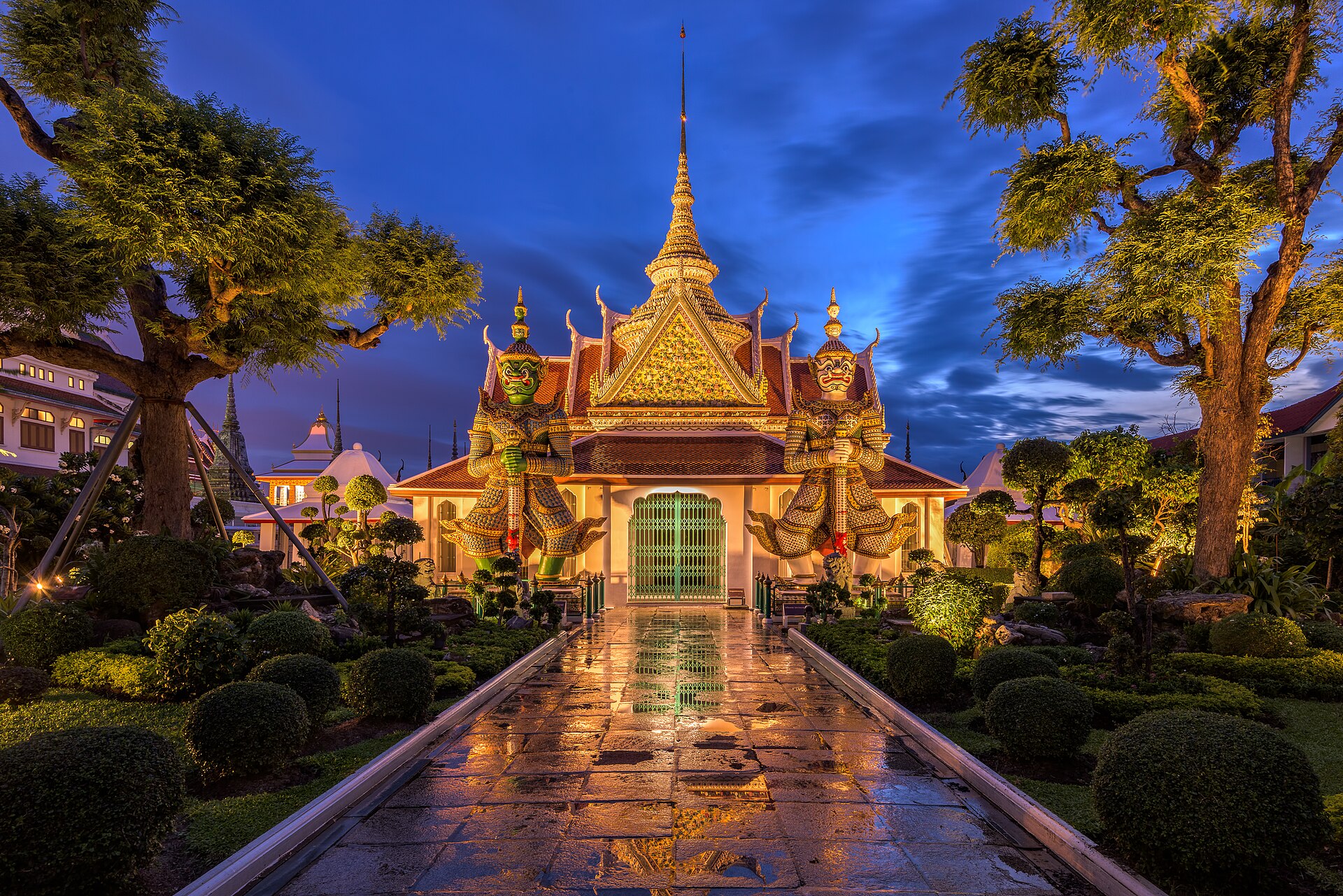
Wat Arun looks like something a giant built out of broken china — and that's basically what happened. The Temple of Dawn is covered in thousands of fragments of Chinese porcelain that were originally ballast in trading ships. When the ceramics arrived in Bangkok with nothing else to do, someone had the inspired idea of smashing them up and pressing them into wet plaster. The result is a 70-metre spire that sparkles differently depending on the time of day.
Despite the name, Wat Arun is actually best seen at sunset, not dawn. Cross the river from the Grand Palace side on the little ferry (4 baht, about 10 cents) and watch the central prang turn from white to gold to silhouette as the sun drops behind you. The climb up the steep stairs to the first terrace is genuinely vertigo-inducing — the steps were designed for a time when buildings were meant to intimidate, not to comply with safety regulations.
The temple dates to the Ayutthaya period, but King Taksin made it his royal chapel in 1768 after he sailed past it at dawn while liberating the capital from Burmese occupation. He took the sunrise as an omen. The Emerald Buddha was housed here briefly before moving across the river to the Grand Palace — and Wat Arun has been playing second fiddle ever since, which is ironic given it's on the 10-baht coin.
Verified Facts
Wat Arun is decorated with fragments of Chinese porcelain from trading ships
The central prang is approximately 70 metres tall
King Taksin made the temple his royal chapel in 1768
Wat Arun appears on the Thai 10-baht coin
Get walking directions
158 Thanon Wang Doem, Wat Arun, Bangkok Yai, Bangkok