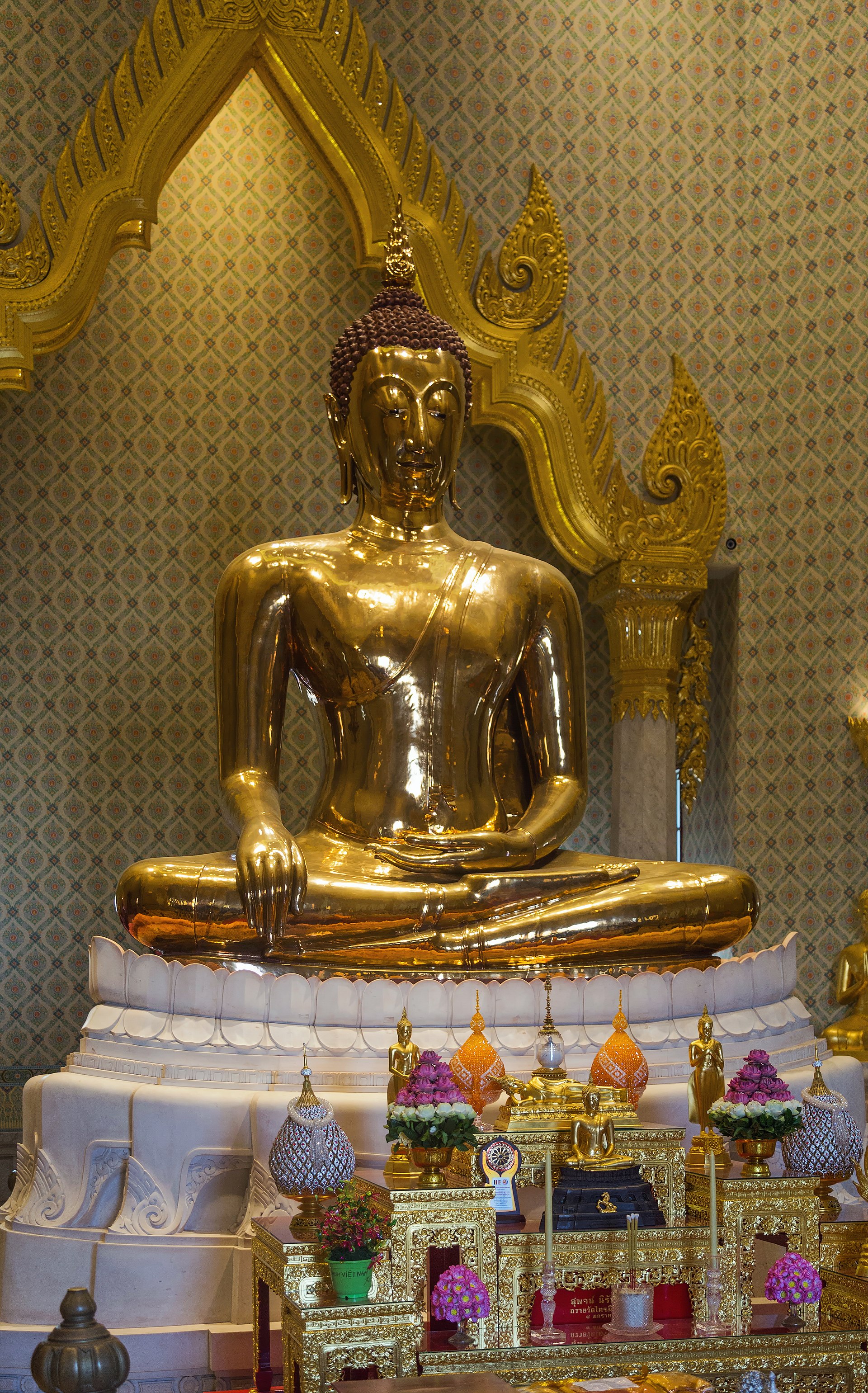
Wat Traimit houses a secret that stayed hidden for over 200 years. The temple's Buddha image — five and a half tonnes of solid gold, the largest of its kind in the world — spent centuries disguised under a thick layer of plaster, looking like any other unremarkable statue in any other unremarkable temple.
The discovery happened by accident in 1955. Workers were moving the plaster Buddha to a new building when the crane cable snapped and the statue crashed to the ground. A piece of plaster chipped off, revealing a glint of gold underneath. When they stripped the rest away, they found a 3-metre-tall, 700-year-old solid gold Buddha worth an estimated $250 million. The current theory is that the gold was concealed during the Ayutthaya period to protect it from Burmese invaders — and then everyone who knew about the disguise died, taking the secret with them for two centuries.
The temple has built an excellent exhibition on the lower floors that tells the full detective story — how the plaster was applied in layers, how the gold was tested, how nobody can quite believe that a quarter-billion-dollar object sat in a dusty temple for 200 years without anyone noticing. The Buddha itself sits on the top floor in a gleaming white and gold room that's almost too bright to look at. Come in the morning when the tour groups haven't arrived yet and you might get the room to yourself.
Verified Facts
The Golden Buddha weighs approximately 5.5 tonnes of solid gold
The gold was discovered accidentally in 1955 when the plaster cracked during a move
The statue is estimated to be worth over $250 million
The gold was likely concealed to protect it from Burmese invaders during the Ayutthaya period
Get walking directions
661 Charoen Krung Road, Talat Noi, Samphanthawong, Bangkok