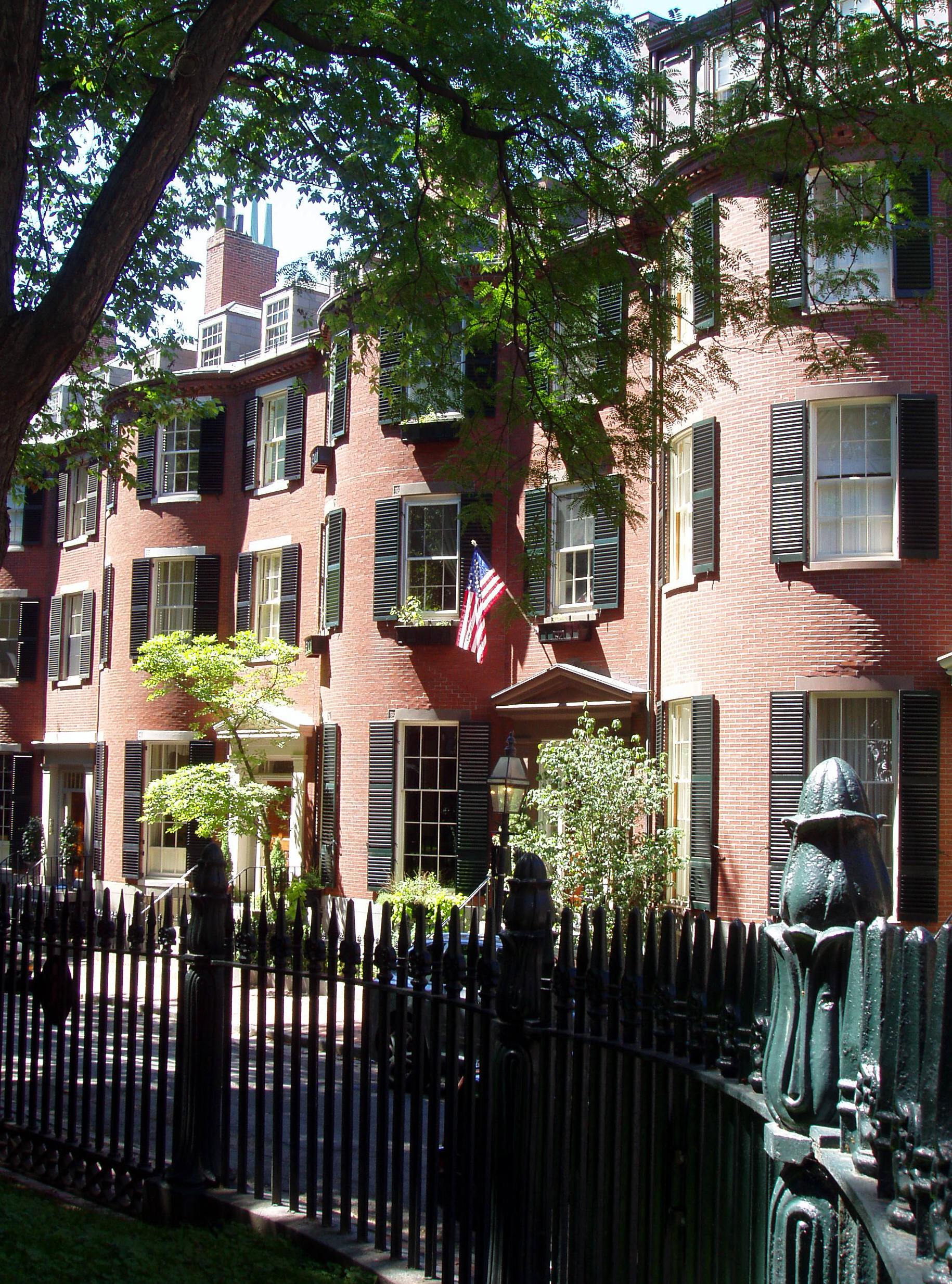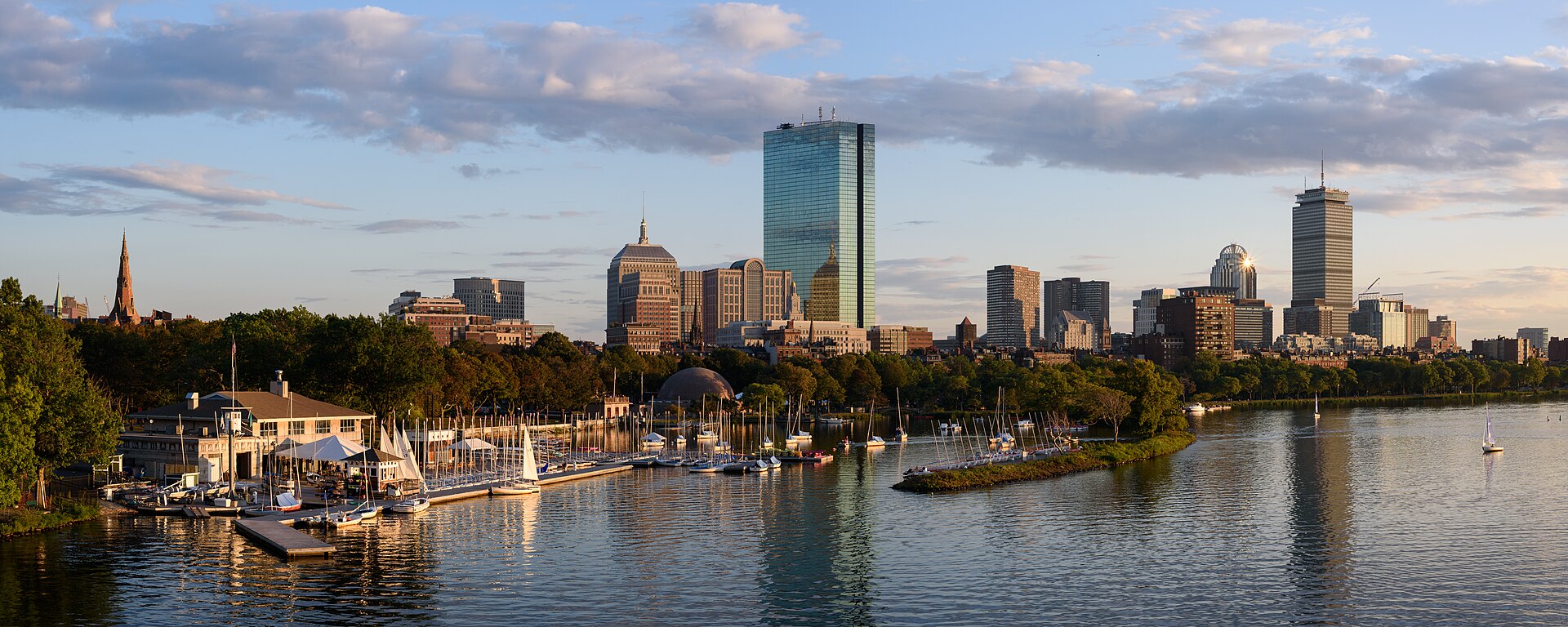
Back Bay is Boston's most architecturally cohesive neighbourhood — a grid of Victorian brownstone rowhouses built on filled land in the second half of the 19th century, with wide avenues, tree-lined sidewalks, and Newbury Street running through its centre as the city's premier shopping and dining strip. The neighbourhood didn't exist before the 1850s — it was literally the back bay of the Charles River, a tidal flat that smelled terrible at low tide — and the filling project that created it took 30 years and required 600 train cars of gravel per day from the suburbs.
The result is the most Parisian neighbourhood in America. The grid layout, unusual in organic, cow-path-driven Boston, was deliberately designed to rival European boulevards, and Commonwealth Avenue — with its central promenade of mature elms, brownstone mansions, and bronze statues of historical figures — is the centrepiece. The cross-streets are arranged alphabetically (Arlington, Berkeley, Clarendon, Dartmouth, Exeter, Fairfield, Gloucester, Hereford), which makes navigation simple and the naming convention slightly obsessive.
Newbury Street, running parallel to Commonwealth Ave, transitions from luxury boutiques at the Arlington Street end to tattoo parlours and streetwear shops at the Massachusetts Avenue end, with restaurants, galleries, and sidewalk cafes throughout. Copley Square — anchored by Trinity Church, the Boston Public Library, and the Hancock Tower — is the neighbourhood's public living room and one of the finest urban squares in America.
Verified Facts
Back Bay was filled in from the 1850s through the 1880s, creating land from tidal flats
The cross-streets are arranged in alphabetical order
Commonwealth Avenue features a central tree-lined promenade
The filling project required approximately 600 train cars of gravel per day
Get walking directions
Boston, United States