In the 13th century, an extraordinary social experiment emerged in the cities of Flanders. Women who wanted to live a religious life but did not want to take permanent vows — or who were widowed, or simply wanted independence from marriage — formed communities called beguinages. They were not nuns. They could own property, leave the community, and even marry. They answered to no bishop and followed no monastic rule. In an era when women's options were marriage, the convent, or destitution, the beguines carved out a fourth path.
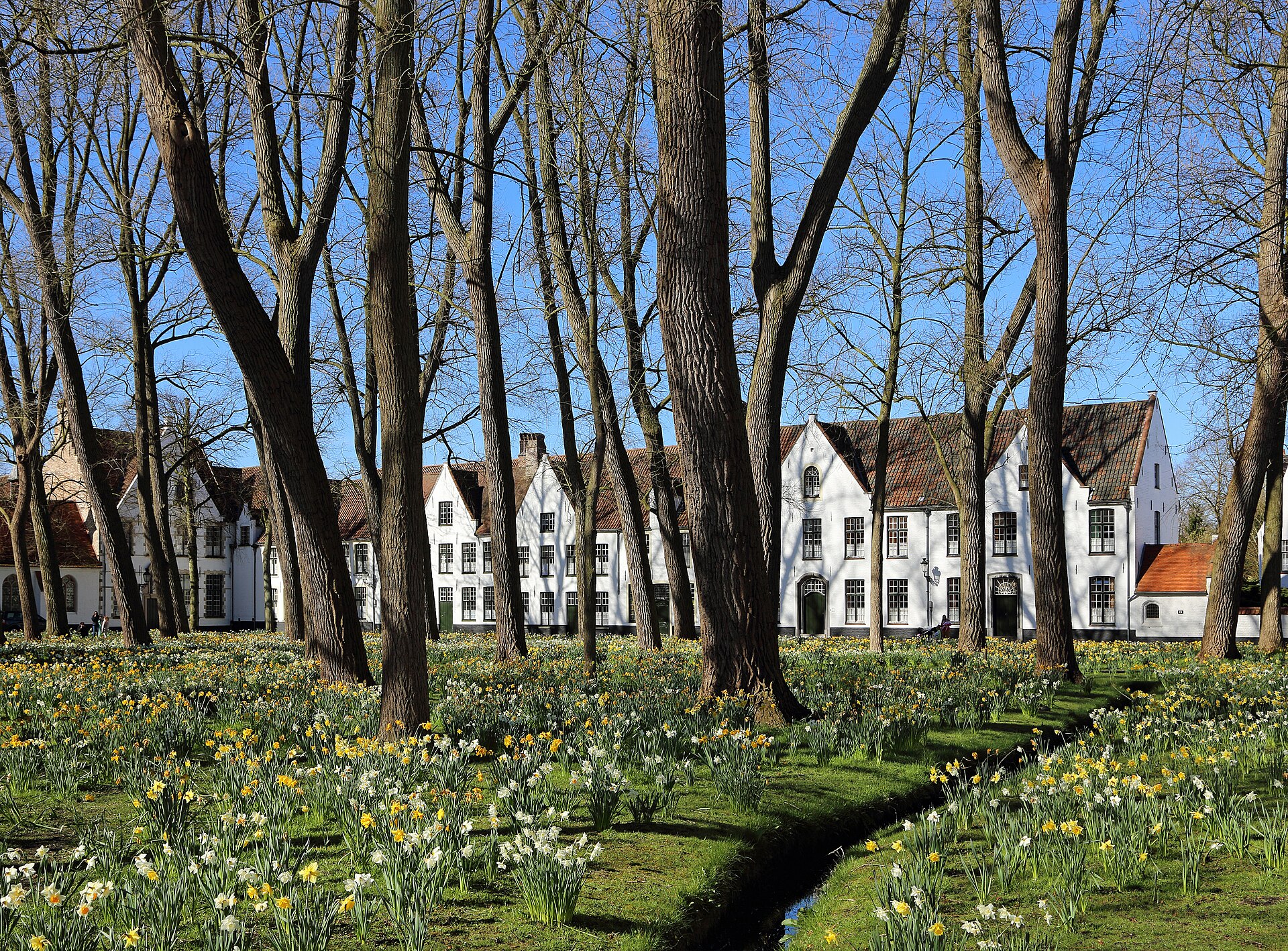
The Princely Beguinage Ten Wijngaarde in Bruges was founded in 1245 by Margaretha of Constantinople, Countess of Flanders. Its white-painted houses encircle a tranquil courtyard garden shaded by tall poplars and daffodils that bloom spectacularly each spring. In the 13th century, the beguines enjoyed the protection of Countess Joan of Constantinople, and by 1299, even the French King Philip the Fair had taken the beguinage under his jurisdiction — a sign of its wealth and political importance.
The last beguine in Bruges died in 1927, and since then the houses have been occupied by Benedictine nuns who maintain the grounds with a quiet devotion that the original beguines would have recognised. The small beguine house museum in one of the cottages shows how a 17th-century beguine lived — a simple room with a bed, a prayer stool, and a lace-making pillow, because Bruges' beguines were famous lace makers.
In 1998, the Bruges Begijnhof was inscribed as a UNESCO World Heritage Site along with twelve other Flemish beguinages. Walk through the entrance gate, cross the small stone bridge over the canal, and the noise of the city disappears. The grass is so perfectly maintained that there are signs asking visitors not to walk on it. Most people obey.
Verified Facts
Founded in 1245 by Margaretha of Constantinople, Countess of Flanders
The last beguine in Bruges died in 1927; the houses are now occupied by Benedictine nuns
Inscribed as a UNESCO World Heritage Site in 1998 along with 12 other Flemish beguinages
Beguines were not nuns — they could own property, leave the community, and marry
Get walking directions
28 Begijnhof, Begijnhofbuurt, Bruges, 8000, Belgium