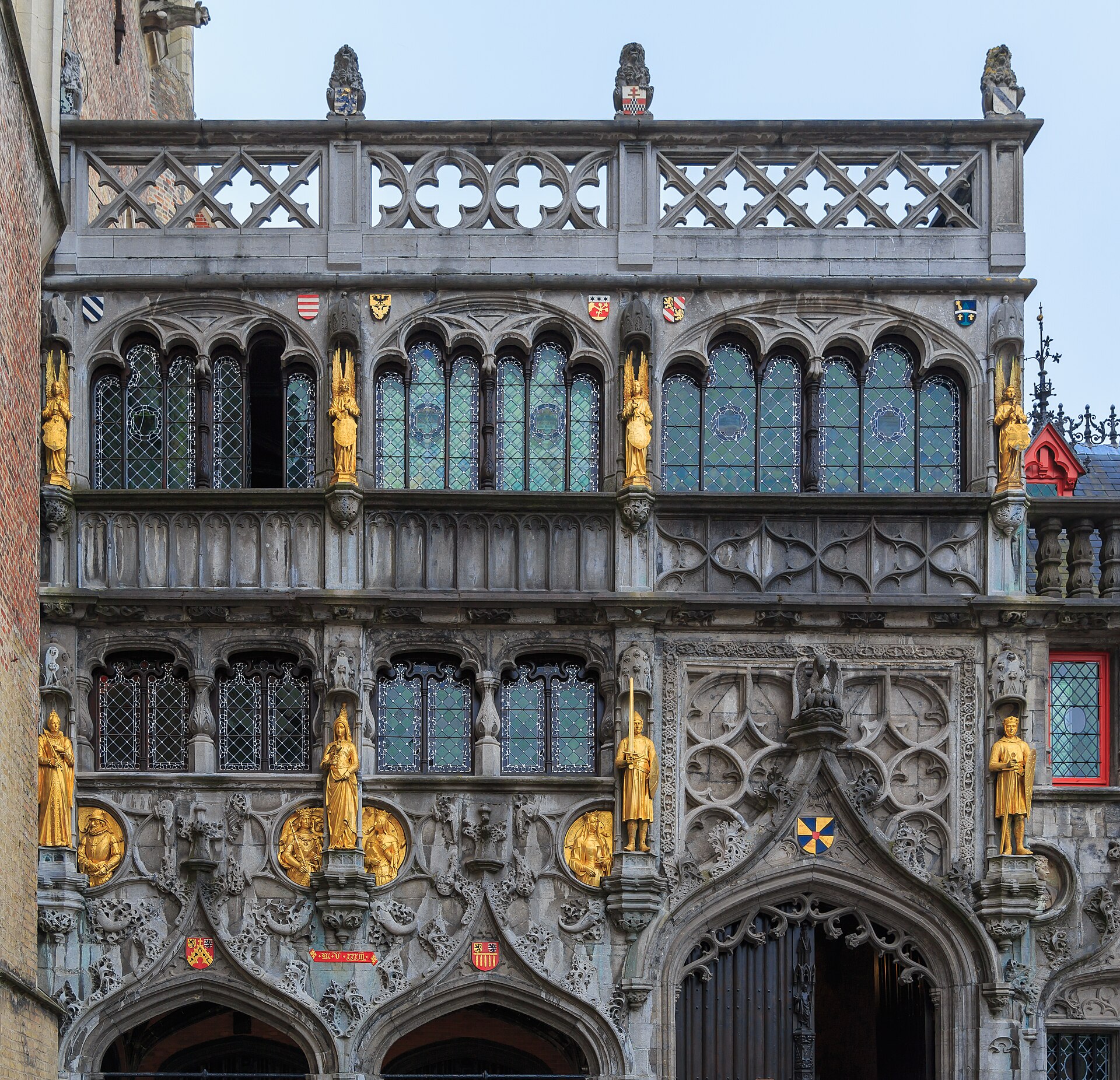
This building is two churches stacked on top of each other, and between them they span almost every architectural style from the Romanesque to the neo-Gothic. The lower chapel, dedicated to Saint Basil the Great, was built between 1134 and 1157 as the chapel of the Count of Flanders. It is a dark, heavy Romanesque space that has remained virtually unchanged for nearly nine hundred years — one of the best-preserved Romanesque interiors in the Low Countries. Upstairs, the upper chapel is a riot of colour and 19th-century neo-Gothic decoration, rebuilt after French Revolutionary troops gutted it in the 1790s.
The basilica's fame rests on a single object: a phial said to contain a cloth stained with the blood of Jesus Christ. According to tradition, it was brought to Bruges by Thierry of Alsace, Count of Flanders, after the Second Crusade in 1150. Most historians now believe the relic more likely arrived after the sack of Constantinople in 1204, when Crusaders looted the Byzantine capital of virtually every holy relic they could carry. Either way, the phial has been venerated in Bruges for over eight centuries, and the city takes it seriously.
Every year on Ascension Day, the relic is carried through the streets of Bruges in a solemn procession with approximately 1,700 participants and 35,000 spectators. The Procession of the Holy Blood has been held annually since at least 1304 and was recognised by UNESCO as Intangible Cultural Heritage in 2009. The rest of the year, the relic is shown to the public every Friday, and daily in the two weeks before Ascension Day.
The basilica was promoted to minor basilica status in 1923. The phial itself is a small glass cylinder adorned with gold and enclosed at each end by coronets decorated with tiny angels. Whether you believe the blood is genuine or not, the devotion surrounding it is undeniable.
Verified Facts
The lower chapel was built 1134-1157 and is one of the best-preserved Romanesque interiors in the Low Countries
The relic is traditionally said to have been brought by Thierry of Alsace after the Second Crusade in 1150
The annual Procession of the Holy Blood has been held since at least 1304 and was recognised by UNESCO in 2009
The basilica was promoted to minor basilica status in 1923
Get walking directions
13 Holyblood Burg, Burg, Bruges, 8000, Belgium