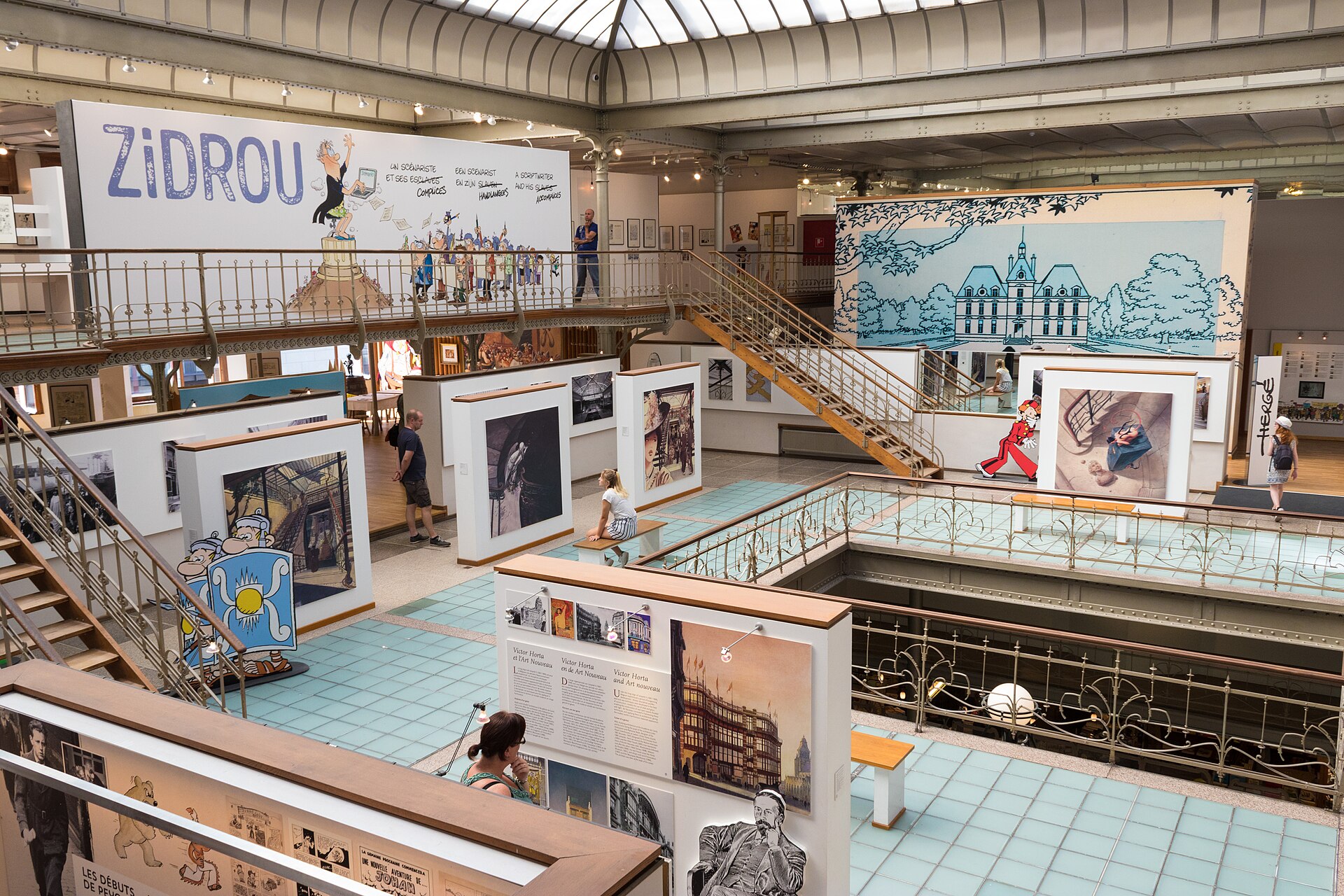
The Belgian Comic Strip Center is housed in a gorgeous Victor Horta-designed Art Nouveau department store and celebrates Belgium's most unexpected cultural export — the comic strip, which Belgians call the 'ninth art' and treat with a seriousness that surprises visitors who think of comics as children's entertainment. Tintin, the Smurfs, Lucky Luke, and Spirou were all created by Belgian artists, and the museum traces the history of the medium from its European origins to the present with the kind of scholarly rigour usually reserved for fine art.
Victor Horta's 1906 Waucquez Department Store — with its iron-and-glass atrium, sinuous ironwork, and the natural light that Art Nouveau architects treated as a building material — is itself worth the visit. The building was rescued from demolition in the 1980s and restored specifically to house the comic strip museum, and the combination of Horta's architecture with the colourful, expressive art of the Belgian comic tradition creates a museum where the container and the content enhance each other.
The Tintin section is the centrepiece for most visitors — Hergé's clear-line drawings, original plates, and the reconstruction of his studio give insight into the creative process behind the world's most widely translated comic series. But the museum's scope extends well beyond Tintin to cover the full range of Franco-Belgian comics (bande dessinée), including contemporary graphic novels, animation, and the genre's influence on film and design. Brussels has over 50 comic strip murals painted on building facades across the city, and the museum provides a map for a self-guided mural tour.
Verified Facts
The museum is housed in a Victor Horta-designed building from 1906
Tintin, the Smurfs, and Lucky Luke are Belgian comic creations
Brussels has over 50 comic strip murals on building facades
Belgians refer to comics as the 'ninth art'
Get walking directions
20 Rue des Sables, Pentagone, Brussels, 1000, Belgium