Walking Tours in Brussels
30 Landmarks in Brussels
Atomium
Place de l'Atomium 1, 1020 Brussels
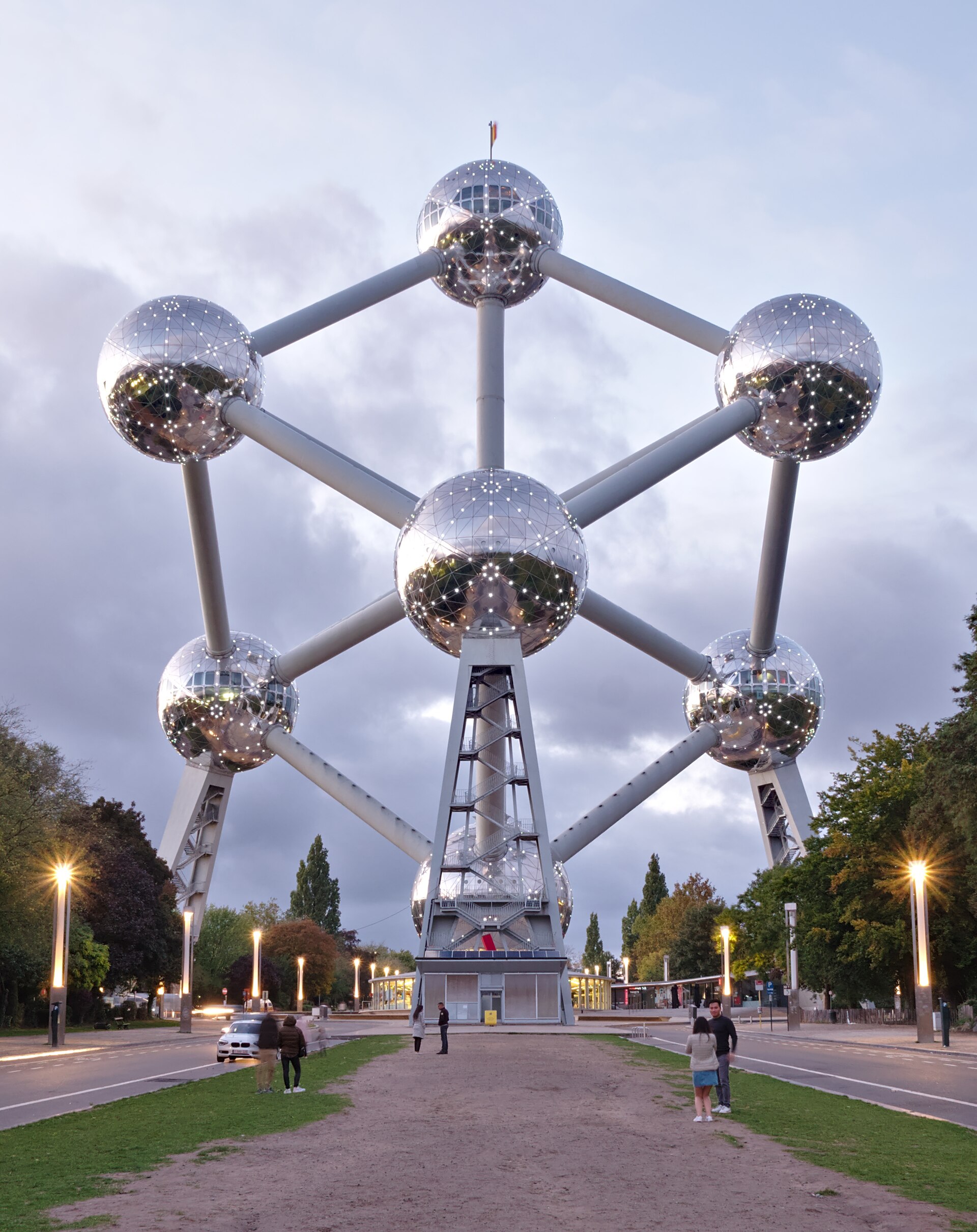
The Atomium is a 102-metre-tall model of an iron crystal magnified 165 billion times — built as the centrepiece of the 1958 World Expo and intended to be temporary, but so beloved by Brusselaars that demolishing it became politically impossible. The nine interconnected spheres, connected by tubes containing escalators and staircases, represent the atoms of a body-centred cubic iron crystal, and the entire structure is clad in stainless steel that reflects the Belgian sky in a way that makes the building look different every hour. The top sphere contains a panoramic restaurant with views across Brussels and the surrounding Brabant countryside — on a clear day, you can see the towers of Antwerp to the north. The connecting tubes house exhibition spaces and a corridor with light installations that feel like walking through a science fiction film set. The lowest sphere hosts temporary exhibitions and the ticketing area. The overall experience — riding escalators through tubes between enormous silver balls suspended 50 metres in the air — is unlike anything else in any city. The Atomium sits in the Heysel/Laeken district, adjacent to the Mini-Europe park and the Royal Domain of Laeken (the Belgian royal family's residence). The surrounding parkland provides excellent vantage points for photographing the structure, and the reflection of the spheres in the surrounding pools at sunset is one of Brussels' most photogenic moments. The Atomium was designed by André Waterkeyn and renovated extensively in 2006, replacing the original aluminium cladding with stainless steel.
Belgian Chocolate Village
1 Avenue Nekkersgat, Kalevoet-Moensberg, Uccle, 1180, Belgium
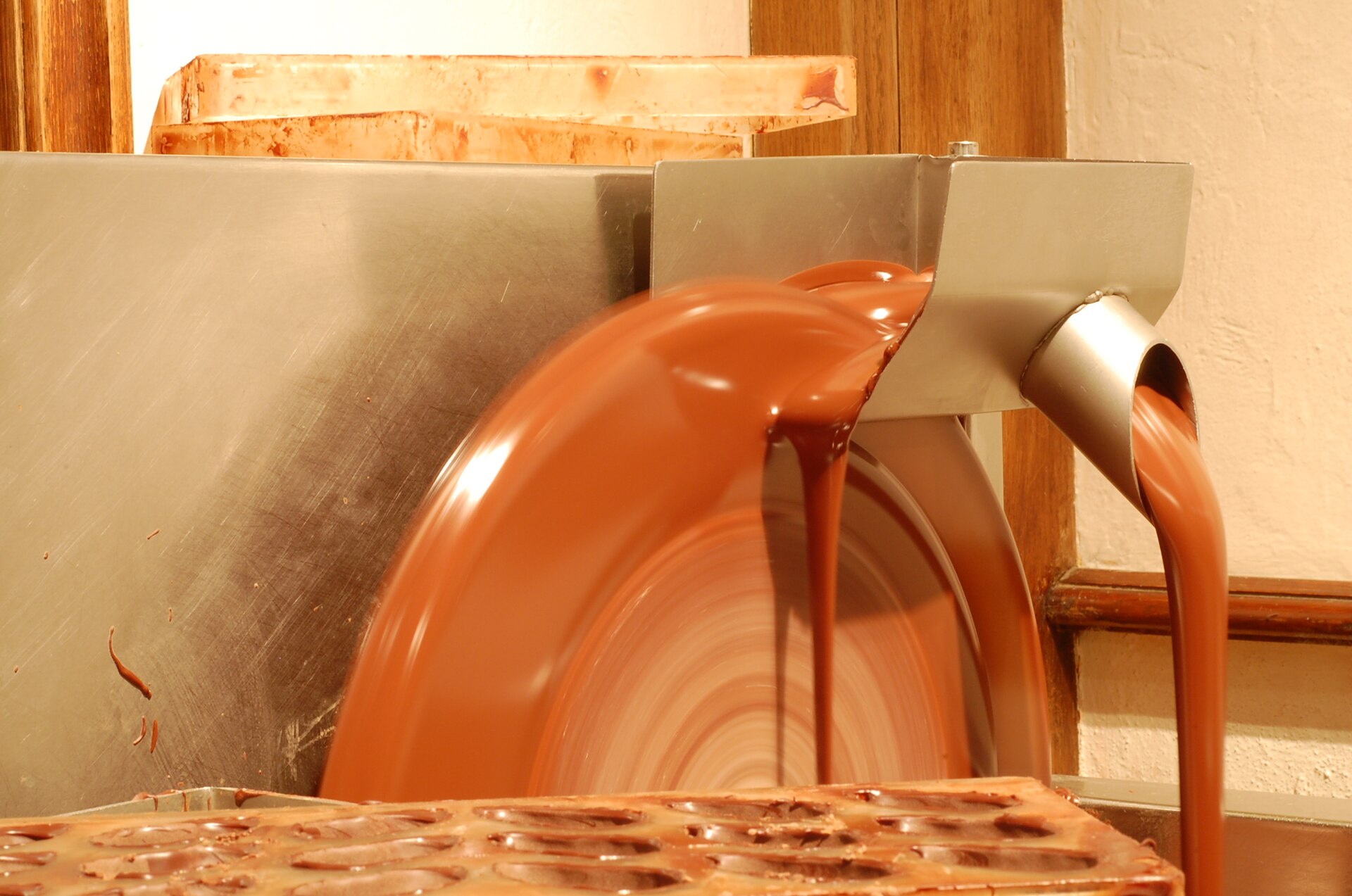
The Belgian Chocolate Village is a museum and chocolate factory in an Art Deco former chocolate factory in Koekelberg that traces the history of chocolate from Mesoamerican cacao cultivation through Belgian chocolatiers' transformation of the raw material into the pralines, truffles, and chocolate bars that have made Belgium the world's chocolate capital. The museum includes a working chocolate-making demonstration where you watch pralines being produced and taste the result.
Belgian Comic Strip Center
20 Rue des Sables, Pentagone, Brussels, 1000, Belgium
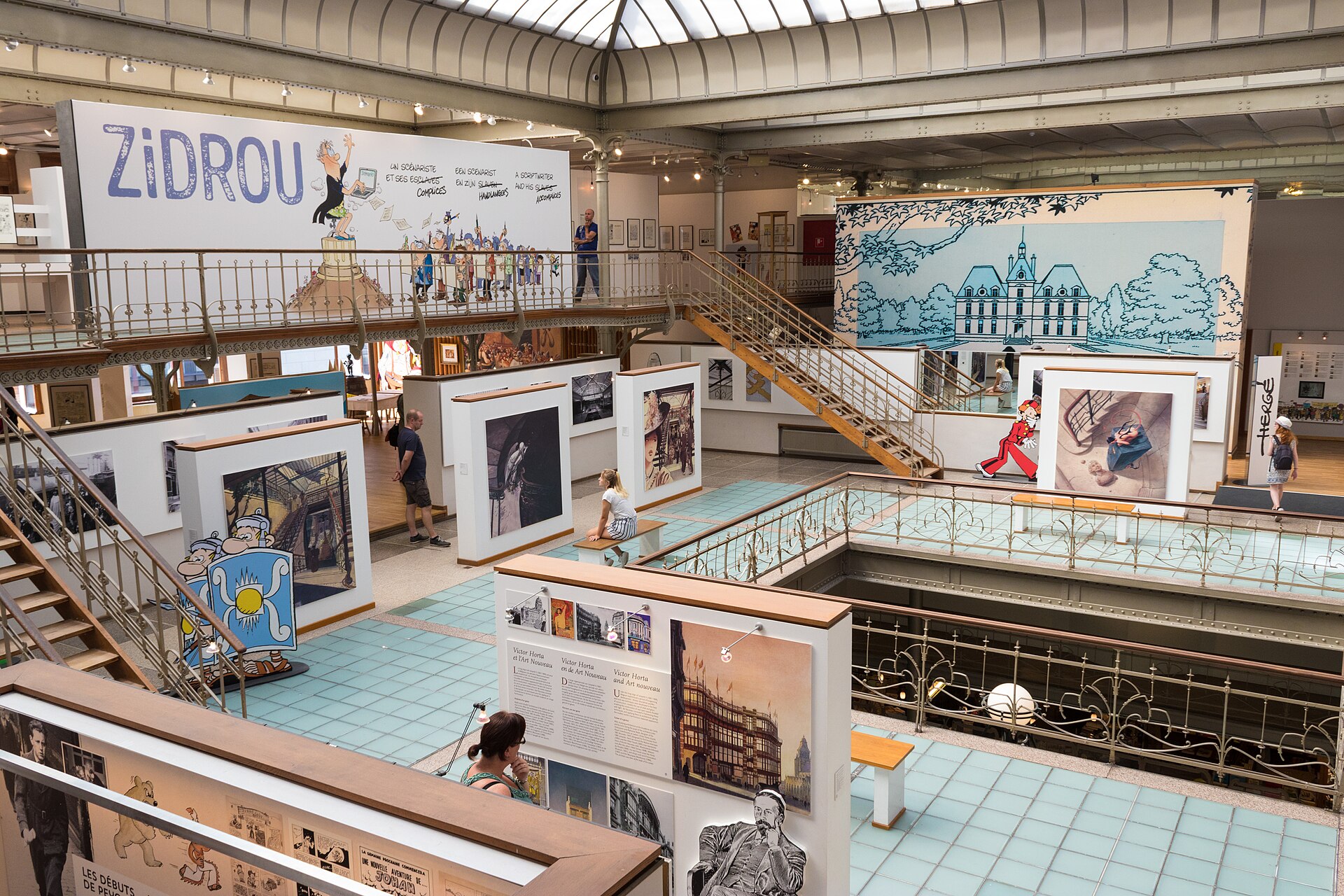
The Belgian Comic Strip Center is housed in a gorgeous Victor Horta-designed Art Nouveau department store and celebrates Belgium's most unexpected cultural export — the comic strip, which Belgians call the 'ninth art' and treat with a seriousness that surprises visitors who think of comics as children's entertainment. Tintin, the Smurfs, Lucky Luke, and Spirou were all created by Belgian artists, and the museum traces the history of the medium from its European origins to the present with the kind of scholarly rigour usually reserved for fine art. Victor Horta's 1906 Waucquez Department Store — with its iron-and-glass atrium, sinuous ironwork, and the natural light that Art Nouveau architects treated as a building material — is itself worth the visit. The building was rescued from demolition in the 1980s and restored specifically to house the comic strip museum, and the combination of Horta's architecture with the colourful, expressive art of the Belgian comic tradition creates a museum where the container and the content enhance each other. The Tintin section is the centrepiece for most visitors — Hergé's clear-line drawings, original plates, and the reconstruction of his studio give insight into the creative process behind the world's most widely translated comic series. But the museum's scope extends well beyond Tintin to cover the full range of Franco-Belgian comics (bande dessinée), including contemporary graphic novels, animation, and the genre's influence on film and design. Brussels has over 50 comic strip murals painted on building facades across the city, and the museum provides a map for a self-guided mural tour.
Bois de la Cambre
Louise, Brussels, Belgium
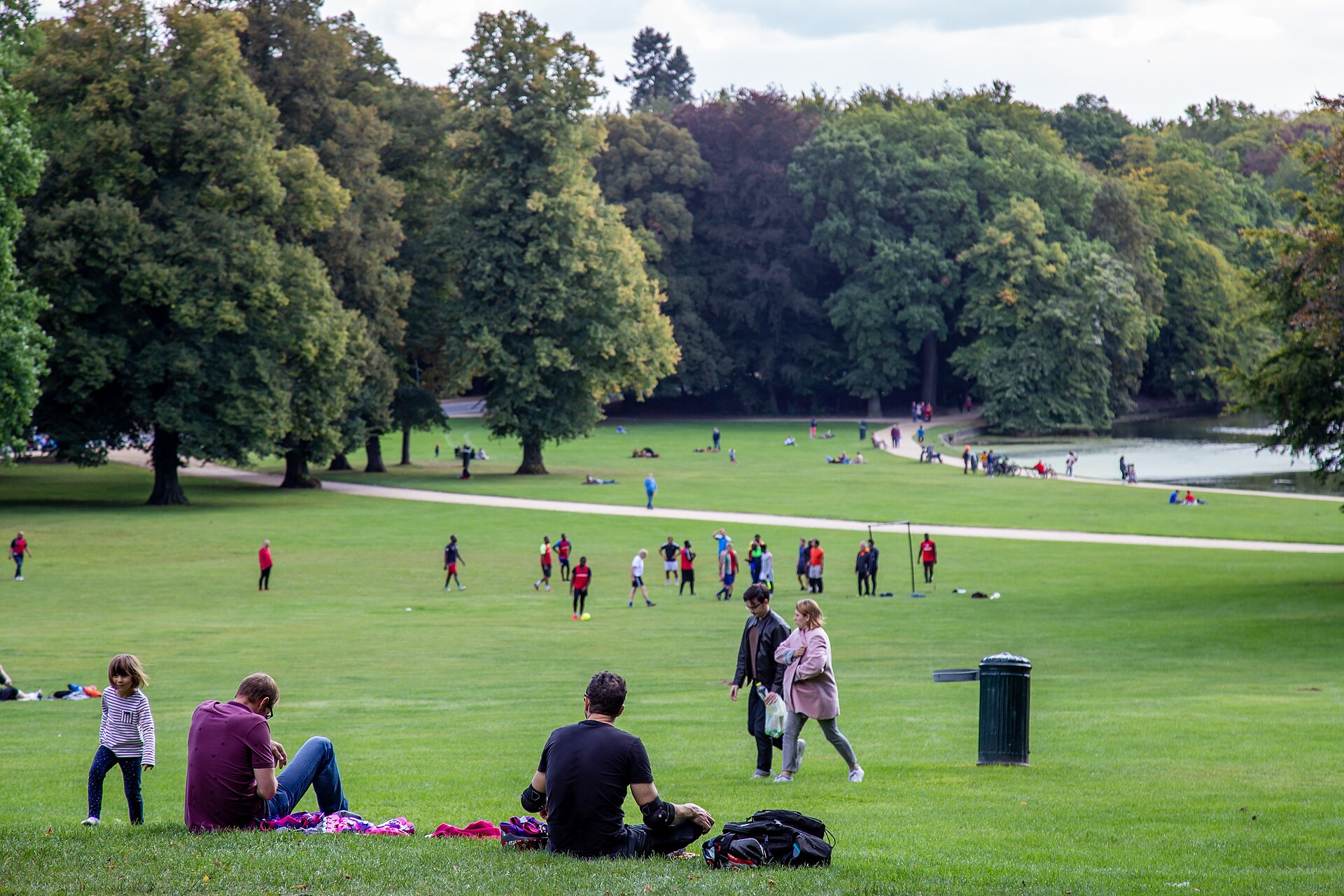
The Bois de la Cambre is Brussels' largest park — a 124-hectare English landscape garden at the southern end of Avenue Louise that provides the green space that the dense, built-up city centre desperately needs. The park was designed by Edouard Keilig in the 1860s and includes a lake with an island (accessible by a small ferry), meadows, mature trees, and the kind of winding paths that were designed to make you forget you're in a city. The park connects directly to the Forêt de Soignes — one of the largest remaining beech forests in Europe, which extends 44 square kilometres south of Brussels and contains trees old enough to have been standing when the city was founded. The transition from urban park to genuine forest happens gradually, and a walk that begins in the Bois de la Cambre can extend for hours into the Soignes without ever returning to a road. The beech cathedral — a section of the forest where the trees grow so tall and straight that their canopy resembles the vaulted ceiling of a Gothic church — is the most photogenic section and is accessible by a marked trail from the park. On weekends, the park fills with Brussels' outdoor culture — joggers, cyclists, families with picnic blankets, and the informal football and frisbee games that occupy every available lawn. The Chalet Robinson, a restaurant on the island in the lake, is reachable by a small boat and provides a dining experience that feels improbably rural for a location 4 kilometres from the Grand-Place.
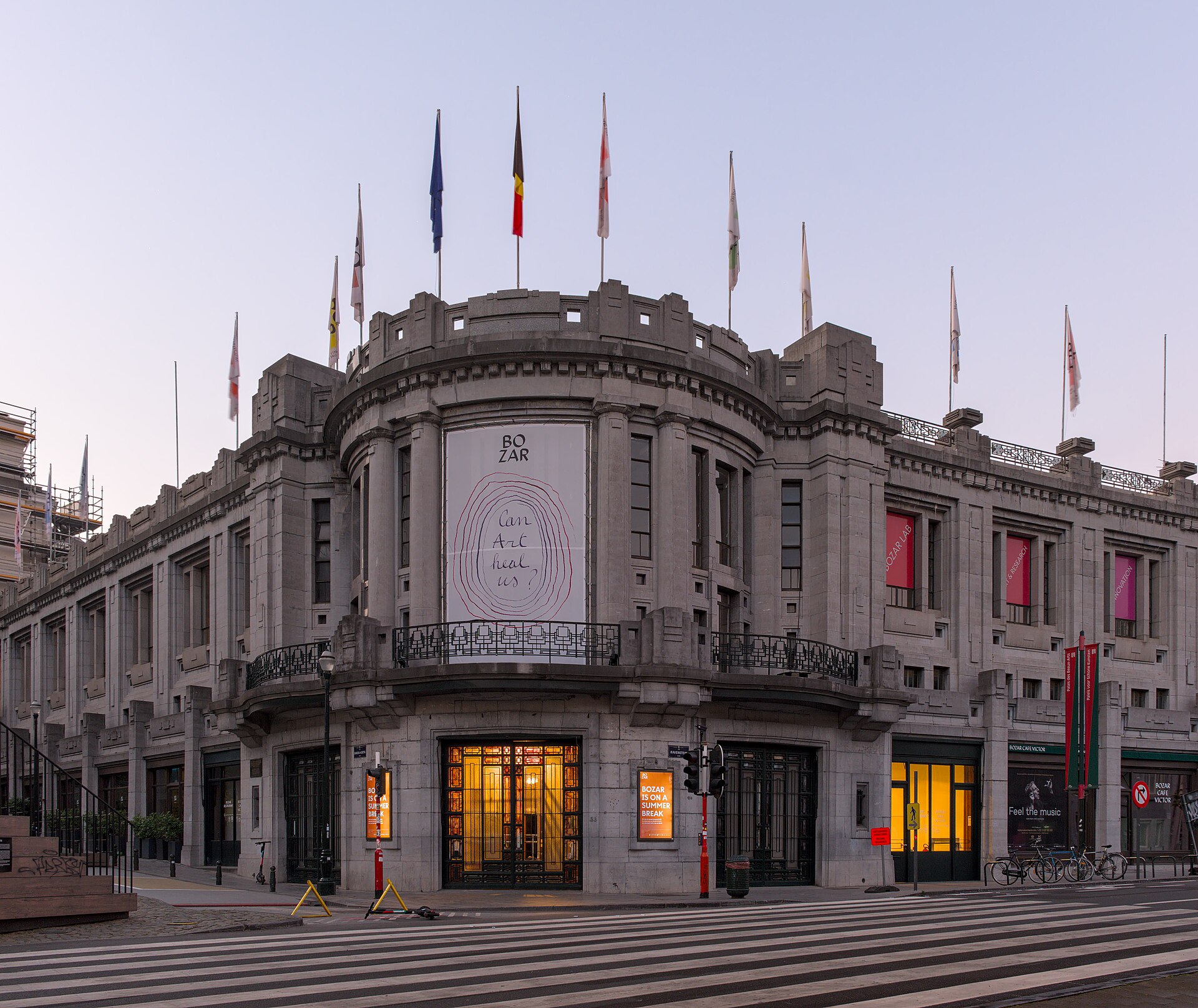
Bozar (Centre for Fine Arts)
Rue Ravenstein 23, 1000 Brussels
Bozar is Brussels' premier arts centre — a Victor Horta-designed Art Deco complex on Mont des Arts that hosts exhibitions, concerts, cinema, and theatre in interconnected spaces that represent Horta's most ambitious and least-known building. The exterior, with its clean horizontal lines and monumental simplicity, is a departure from Horta's more famous Art Nouveau work, and the interior — a labyrinth of halls, corridors, and staircases connecting different performance and exhibition spaces — is one of the most complex cultural buildings in Europe. The Henry Le Boeuf concert hall, the largest space in the complex, has acoustics that rival any concert hall in Europe and hosts the Belgian National Orchestra, the annual Queen Elisabeth Competition (one of the world's most prestigious classical music competitions), and touring orchestras and soloists. The exhibition halls host major temporary shows — Bozar's programme includes visual art, architecture, design, and cross-disciplinary projects that draw on the centre's unique ability to combine visual and performing arts in a single venue. Horta designed Bozar in the 1920s as a Gesamtkunstwerk — a total work of art that would house all forms of artistic expression under one roof. The building's complexity (it occupies an entire city block and connects to several neighbouring buildings through passages and underground corridors) reflects this ambition, and getting lost in its corridors — which happens regularly, even to staff — is part of the experience. The Bozar café, in a modernist space overlooking the Mont des Arts garden, is one of the best post-exhibition gathering places in the city.
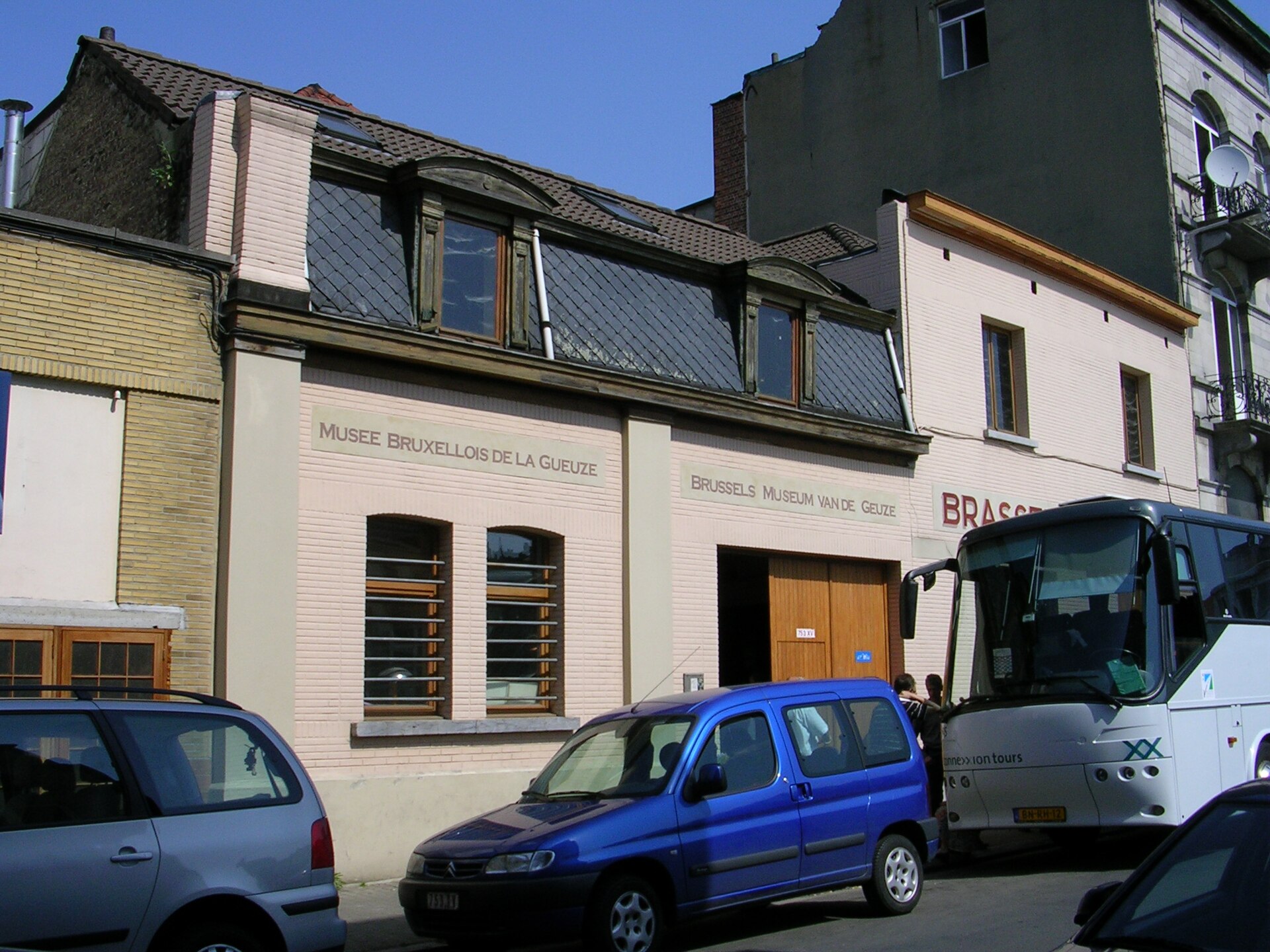
Cantillon Brewery
56 Rue Gheude, Anderlecht, 1070, Belgium
Cantillon is the last traditional lambic brewery in Brussels — a family operation that has been brewing spontaneously fermented beer in the same building since 1900, using methods unchanged since the Middle Ages. Lambic beer is fermented not by adding yeast but by exposing the hot wort to the wild yeasts and bacteria floating in the air of the Senne Valley, which means the brewing can only happen in winter (October to April, when the temperature is right for the wild microorganisms), and the beer ages in wooden barrels for one to three years before being blended or bottled. The self-guided tour of the brewery (included in the modest admission price, which also covers tastings) is one of the best brewery experiences in the world — not because of fancy visitor-centre production values (there are none) but because the brewery is a working museum of pre-industrial brewing. The copper kettles, the wooden coolship (where hot wort is exposed to open air overnight), the barrel rooms where beer ages for years, and the cobwebbed rafters that harbour the specific microorganisms responsible for Cantillon's flavour are all part of a continuous process that hasn't fundamentally changed in over a century. The tasting at the end includes gueuze (a blend of young and old lambics, effervescent and bracingly sour), kriek (lambic fermented with sour cherries), and seasonal fruit lambics that bear no resemblance to the sweetened 'fruit beers' sold in tourist shops. Cantillon's beer is an acquired taste — intensely sour, complex, and funky — but once acquired, it redefines what beer can be.
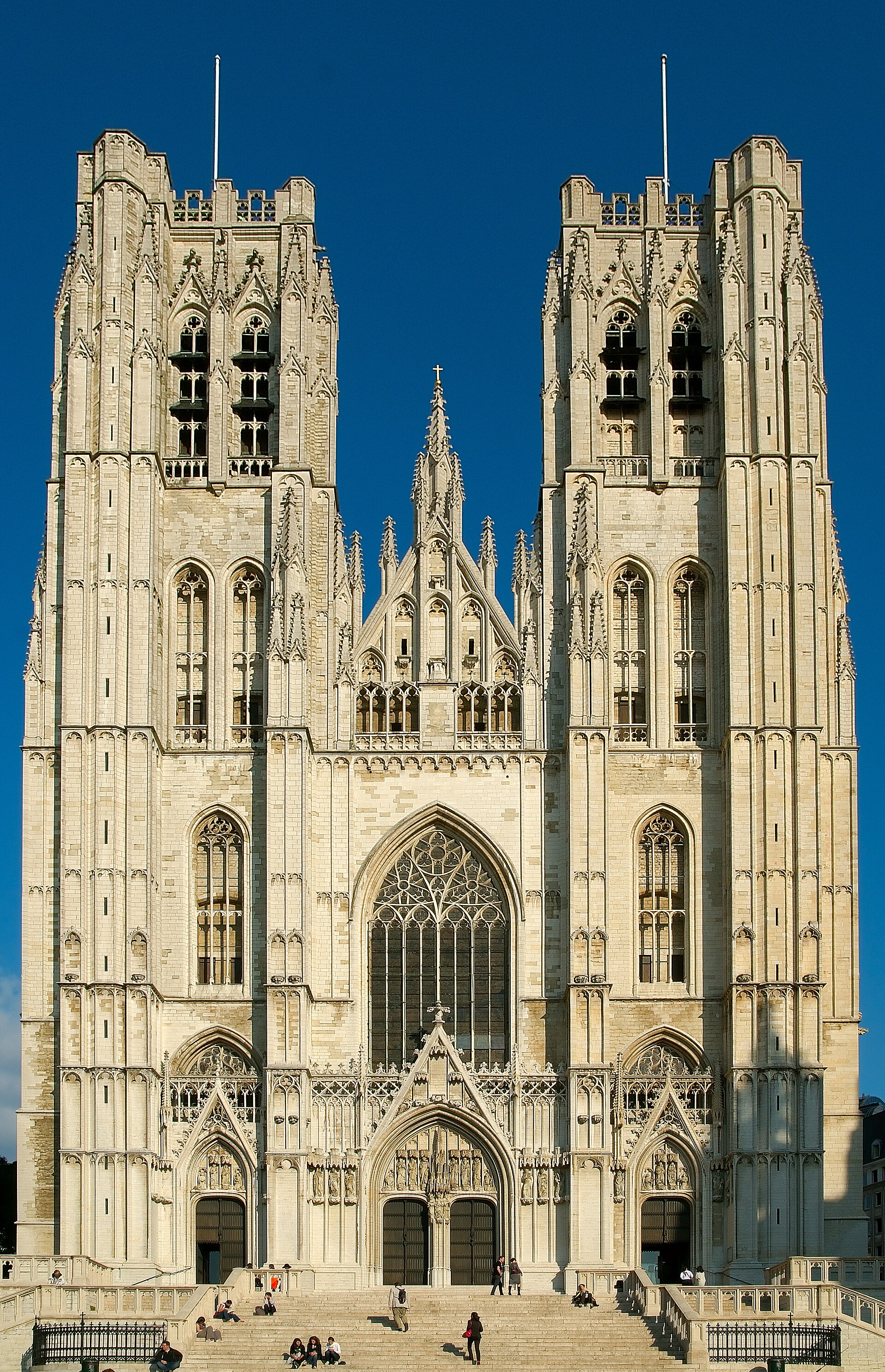
Cathédrale des Saints-Michel-et-Gudule
Place Sainte-Gudule, 1000 Brussels
Brussels' cathedral is a Gothic masterpiece that took 300 years to build (1226-1519) and sits on the hill between the upper and lower town like a stone mediator between the royal quarter above and the commercial city below. The twin towers — 64 metres each, deliberately left without spires — give the facade a fortress-like solidity that is more Northern European than the lacy Gothic of France. The interior is remarkable for its stained glass — the 16th-century windows in the transept, designed by Bernard van Orley, depict Habsburg rulers and their consorts in vivid colour and extraordinary detail. The Chapel of the Holy Sacrament houses a controversial relic — the 'Miracle of the Sacrament,' relating to a medieval anti-Semitic legend about desecrated communion wafers — which the church now contextualises with explanatory panels addressing the legend's harmful origins. The 11th-century Romanesque crypt, discovered during excavations in 1999, reveals the foundations of an earlier church and is accessible via a staircase in the nave. The cathedral is free to enter and less visited than Notre-Dame Basilica in Old Montreal or its Parisian namesake, which means you can often sit in the nave and experience the proportions and light of a major Gothic cathedral without crowds. The organ concerts, held regularly, fill the stone interior with sound that demonstrates why Gothic architects designed their vaults as much for acoustics as for structure.
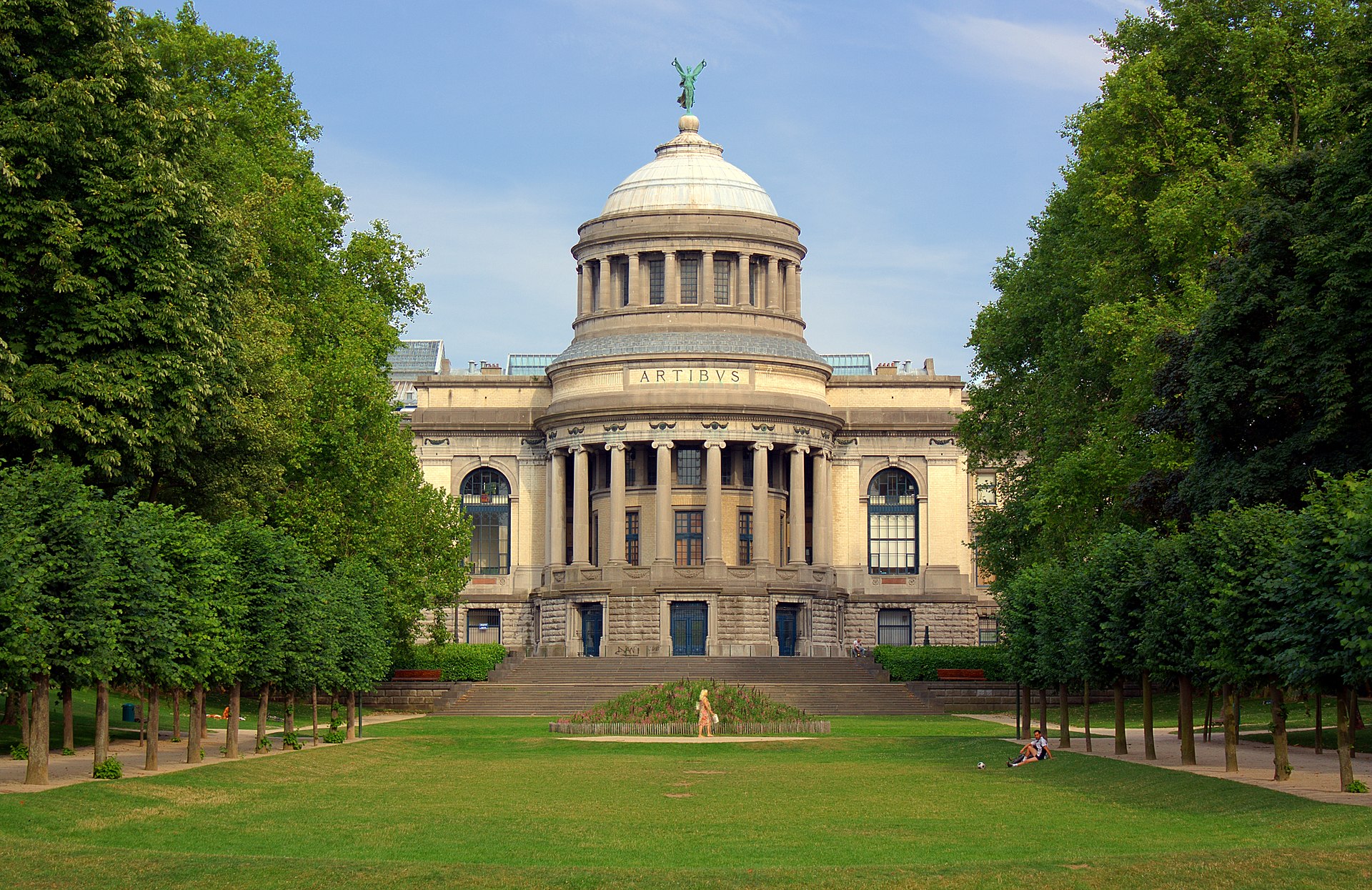
Cinquantenaire Park & Museums
Quartier Nord-Est, Brussels, Belgium
The Cinquantenaire is Brussels' triumphal park — a vast green space anchored by a monumental triple arch built in 1905 to celebrate Belgium's 50th anniversary of independence. The arch, with its bronze quadriga (four-horse chariot) on top, is Brussels' answer to the Arc de Triomphe, and the two wings flanking it house three museums that together contain one of the most important collections of art, history, and automobiles in Europe. The Art & History Museum (Musée Art & Histoire) is one of the largest museums in the world — a labyrinthine collection spanning Egyptian antiquities, Greek and Roman sculpture, medieval tapestries, Art Nouveau decorative arts, and non-European art from the Americas, Asia, and Oceania. The collection is so large and varied that you could visit a dozen times and see different things each time. The Autoworld museum, in the opposite wing, houses over 250 vintage cars, including the collection of Belgian automobiles that traces the country's surprisingly important role in early automotive history. The park itself is popular with joggers, picnickers, and the office workers from the nearby EU institutions (the European Quarter borders the park to the east). The arch provides the framing view — standing beneath it and looking west across the park toward the city centre, or east toward the European Parliament, captures the two identities of modern Brussels: the national capital and the European capital, coexisting uneasily in the same city.
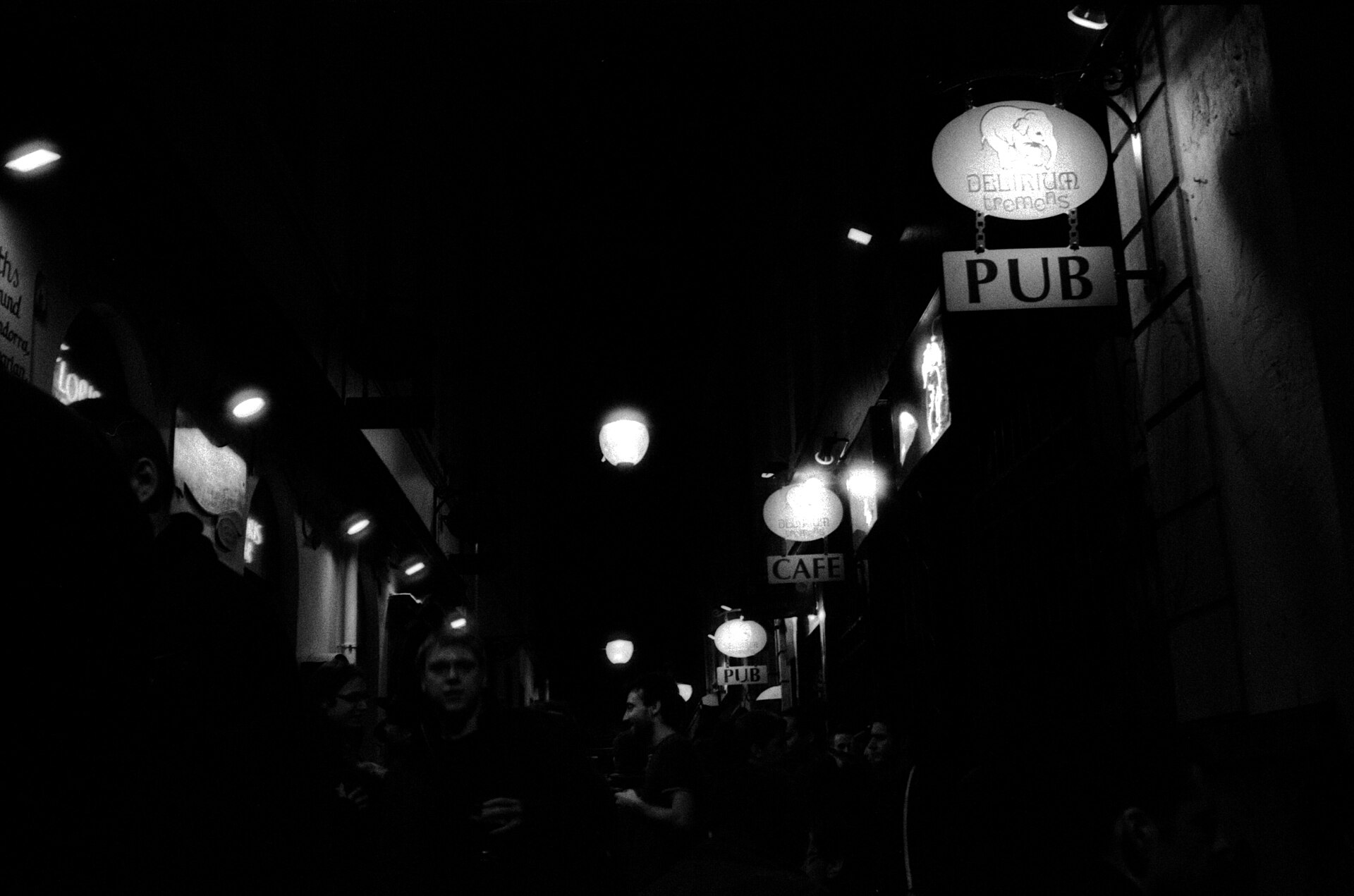
Delirium Café & Beer Culture
Impasse de la Fidélité 4A, 1000 Brussels
Delirium Café holds the Guinness World Record for the most beers available in a single bar — over 2,000 different beers from around the world, with a particular emphasis on Belgian varieties, which means this narrow bar in a medieval alley off the Grand-Place is simultaneously a tourist attraction, a pilgrimage site for beer lovers, and a functional introduction to one of the world's great brewing traditions. Belgian beer culture is a UNESCO Intangible Cultural Heritage, and the variety is staggering: Trappist ales brewed by monks in monasteries, lambic beers fermented spontaneously by wild yeasts in the Senne Valley, strong abbey doubles and triples, fruit beers, white beers, and the kriek (cherry lambic) that is Belgium's most distinctive contribution to the world of fermented beverages. Delirium's menu — a book-sized document organised by style, country, and alcohol content — is overwhelming, but the bartenders are knowledgeable and patient with beginners. The alley where Delirium sits — Impasse de la Fidélité — has become a beer district unto itself, with the Delirium complex expanding to include a tequila bar, an absinthe bar, and a taphouse. The atmosphere is loud, international, and enthusiastic in the way that only a bar serving 2,000 beers can be. For a more refined Belgian beer experience, the traditional brown cafés (bruine kroegen) scattered through the city centre — À La Mort Subite, Poechenellekelder, Le Cirio — offer smaller selections in atmospheric settings that have been serving beer since before Delirium was born.
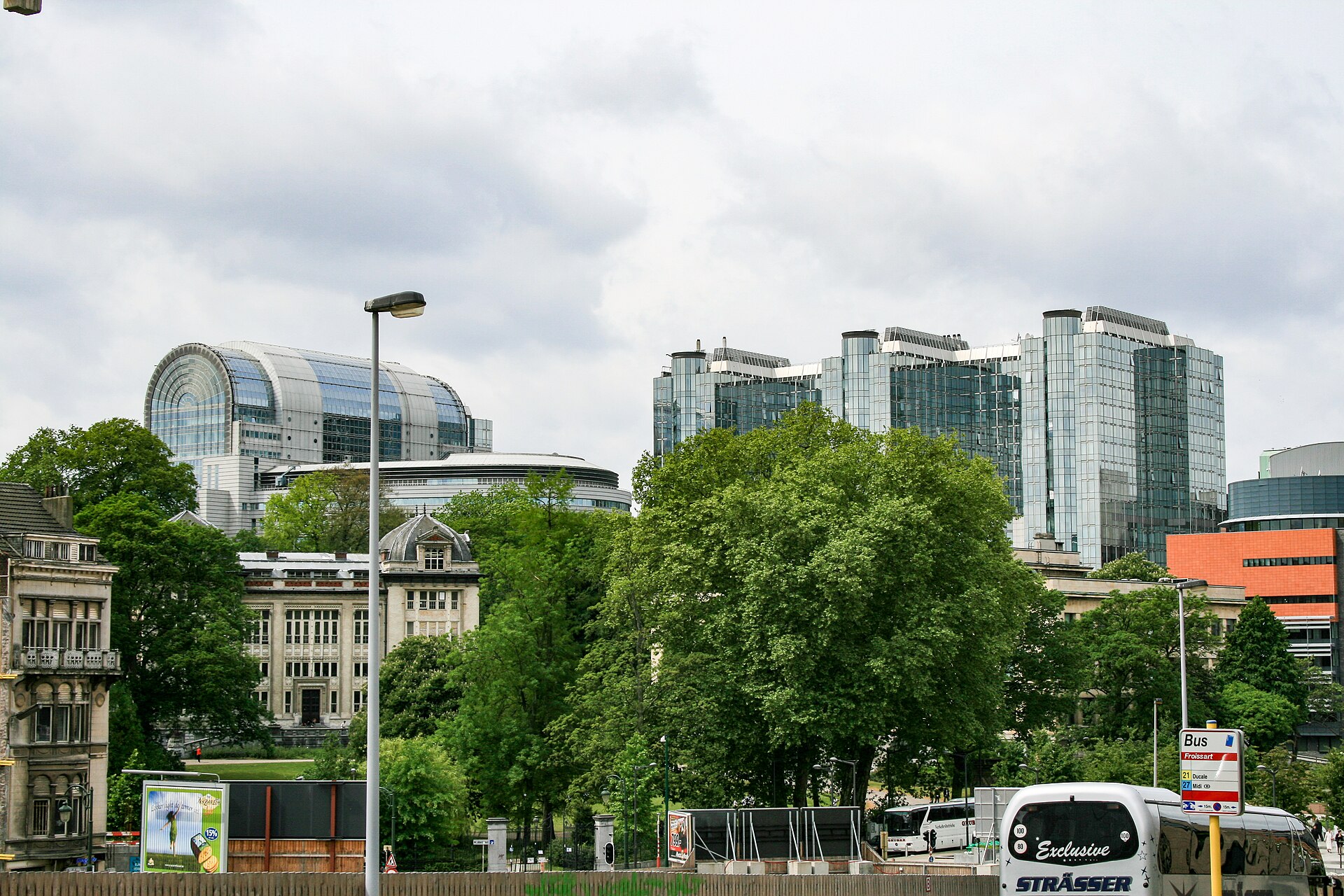
European Quarter
Rue de la Loi, Quartier Nord-Est, Brussels, 1040, Belgium
The European Quarter is where the European Union lives — a district of glass-and-steel institutional buildings east of the city centre that houses the European Commission, the European Council, the European Parliament, and the bureaucratic machinery that governs 450 million people. The quarter is architecturally divisive (the buildings range from corporate-bland to genuinely interesting), but the experience of walking through the administrative capital of Europe is unique and provides context for understanding how the EU actually works. The Parlamentarium, the European Parliament's visitor centre, is free and unexpectedly engaging — an interactive exhibition that explains the EU's history, institutions, and decision-making processes through multimedia displays, a 360-degree cinema, and role-playing exercises where you negotiate legislation with virtual MEPs. The European Council building (Europa), with its distinctive egg-shaped structure enclosed in a lantern of recycled window frames from all 27 member states, is the most architecturally significant building in the quarter. The quarter sits on and around Rue de la Loi, a boulevard that connects the Cinquantenaire park to the city centre, and the contrast between the monumental institutional architecture and the surrounding residential streets of Ixelles and Etterbeek is quintessentially Brussels — a city that has always been slightly embarrassed by its own importance. The Parc Léopold, a small green space below the Parliament, contains the Museum of Natural Sciences (home to the world's largest collection of Iguanodon dinosaur skeletons, found in a Belgian coal mine in 1878).
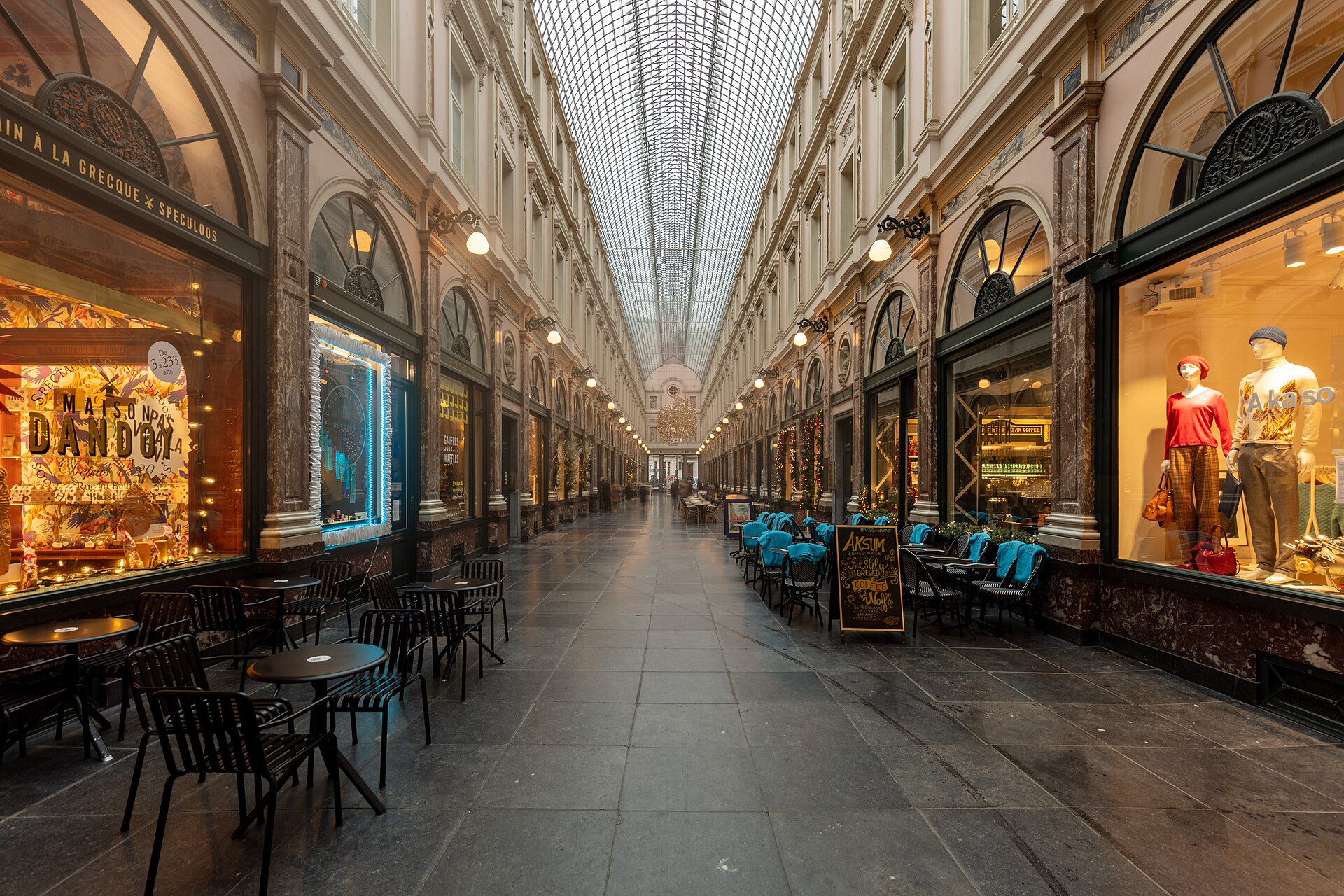
Galeries Royales Saint-Hubert
Galerie du Roi, Pentagone, Brussels, 1000, Belgium
The Galeries Royales Saint-Hubert is Europe's oldest covered shopping arcade — a 213-metre glass-roofed passage opened in 1847 that runs from Rue du Marché-aux-Herbes to Rue de l'Écuyer through three interconnected galleries (Galerie du Roi, Galerie de la Reine, and Galerie des Princes). The arcade predates Milan's Galleria Vittorio Emanuele II by 20 years and established the template for the covered shopping galleries that became a feature of European cities in the 19th century. The architecture is Italian Renaissance Revival — a glass barrel vault supported by pilasters and arches, with upper floors of apartments and offices above the ground-floor shops. The light that filters through the glass roof creates a quality of illumination that makes the arcade feel like an outdoor street even when it's raining (which, in Brussels, is frequently). The shops include luxury chocolatiers (Neuhaus, which invented the praline in 1912, has a shop here), the Théâtre Royal du Parc, a cinema, bookshops, and the kind of upscale boutiques that justify a covered arcade's existence. The arcade's real function is as a pedestrian shortcut between the Grand-Place area and the Cathédrale des Saints-Michel-et-Gudule — a route that takes you through one of Europe's most elegant commercial spaces in about two minutes. The chocolate shops alone (Neuhaus, Mary, Pierre Marcolini have presences here or nearby) justify a detour, and buying a box of pralines in the arcade where the praline was invented is a historical-culinary experience that Brussels does better than any other city.
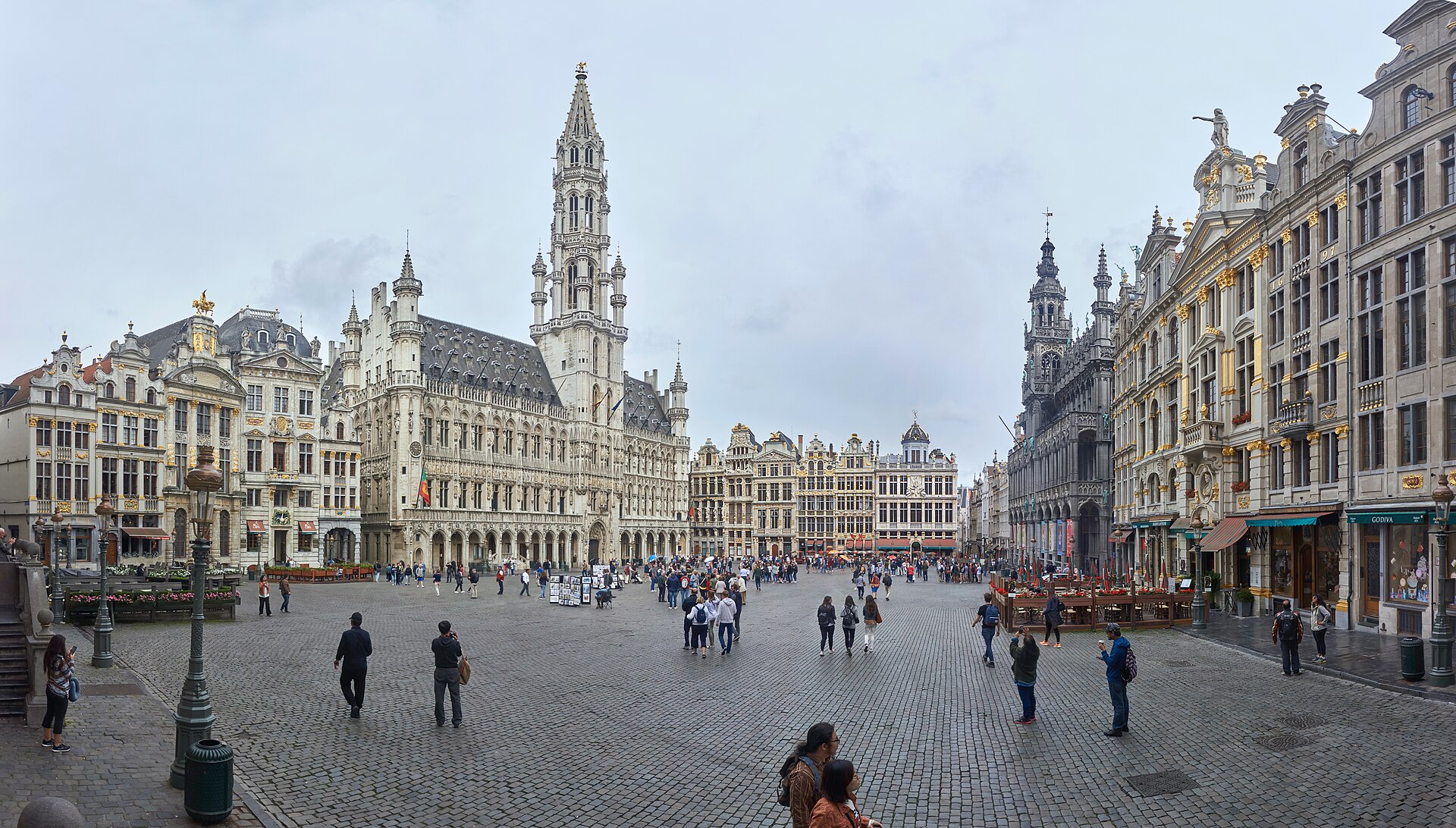
Grand-Place
Grand-Place, 1000 Brussels
The Grand-Place is the most beautiful square in Europe — Victor Hugo called it so, UNESCO agrees, and standing in the centre of this enclosed rectangle of gilded Baroque guild houses, with the Gothic town hall's 96-metre spire rising above and the entire ensemble lit gold by the evening sun, it's hard to argue with either of them. The square has been the heart of Brussels since the medieval period, serving as marketplace, execution ground, political stage, and the daily gathering place for a city that has always preferred its public life outdoors. The guild houses that line the square — each named, each decorated with gilded statuary, each trying to outdo its neighbours in ornamental excess — were rebuilt after a French bombardment destroyed the square in 1695. The guilds (bakers, brewers, tailors, boatmen) reconstructed their headquarters in a competitive Baroque that turned commercial rivalry into architectural art. The Maison du Roi (King's House, which never housed a king) faces the town hall and now contains the Museum of the City of Brussels, whose most popular exhibit is the hundreds of miniature costumes made for the Manneken Pis. Every two years in August, the Grand-Place is carpeted with a million begonias arranged in a geometric pattern that covers the entire square — a tradition since 1971 that draws half a million visitors over a single weekend. The biennial flower carpet is arguably the most Instagram-worthy event in Belgium, and the fact that it uses begonias (Belgium is one of the world's largest begonia exporters) turns a decorative tradition into an advertisement for national horticulture.
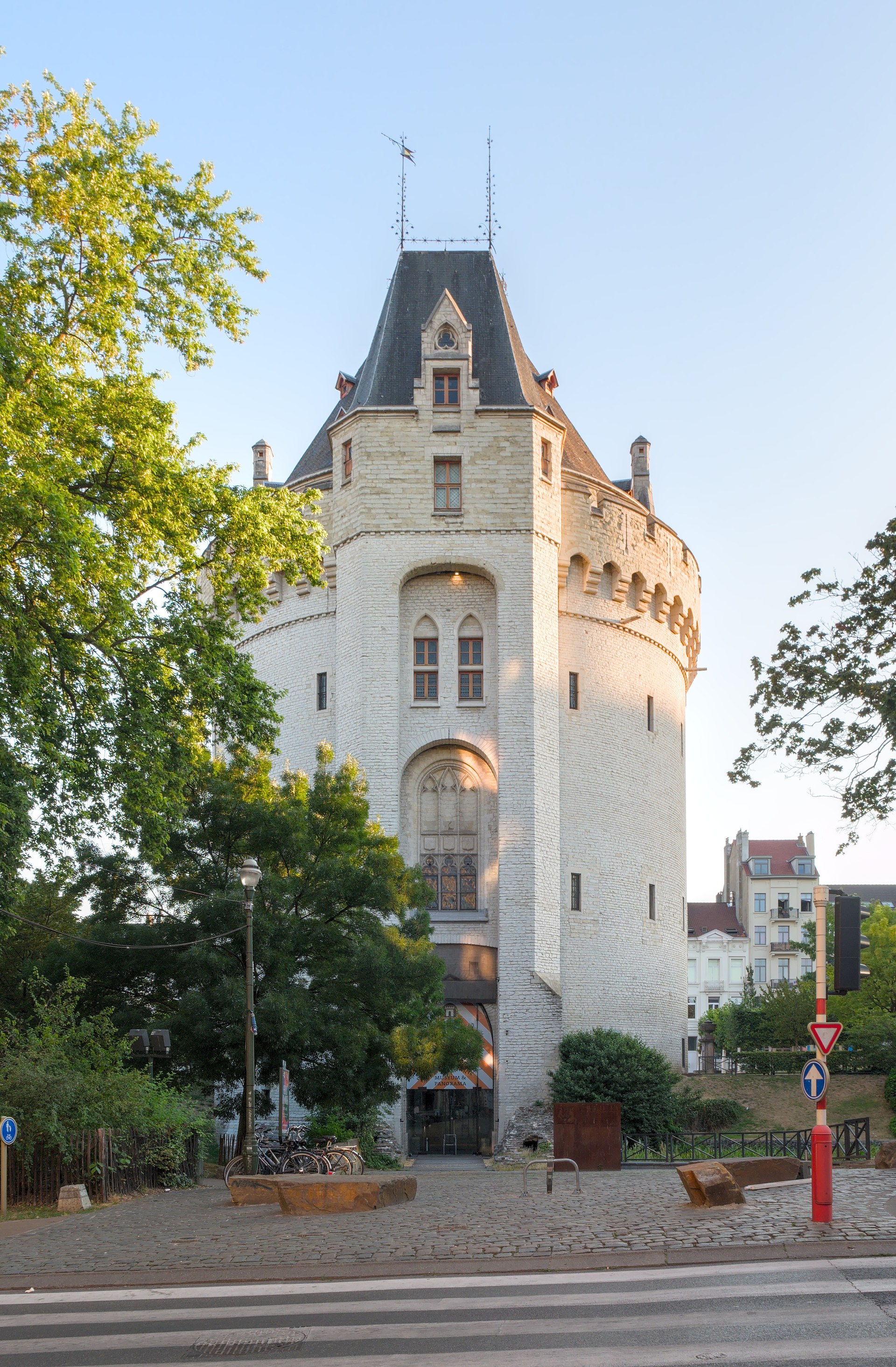
Halle Gate (Porte de Hal)
150 Boulevard du Midi, Pentagone, Brussels, 1000, Belgium
The Halle Gate is the only surviving gate of Brussels' 14th-century city wall — a massive stone tower at the edge of the Marolles that once marked the southern entrance to the walled city and now houses a small museum of medieval Brussels inside its spiral staircases and vaulted chambers. The gate survived because it served various practical purposes after the walls were demolished — prison, warehouse, customs post — while the rest of the medieval fortifications were torn down to make way for the ring boulevards. The museum inside traces Brussels' medieval history through armour, weapons, and models of the walled city as it appeared before the 19th-century demolitions that created the modern street grid. The view from the rooftop battlements — looking north into the Marolles and the city centre beyond — provides a perspective on how the medieval city related to its surroundings. The tower's stone interior, with its narrow windows and spiral staircase, gives a visceral sense of the defensive architecture that protected cities before gunpowder made walls obsolete. The Halle Gate sits at the junction of the Marolles and Saint-Gilles neighbourhoods, and its medieval bulk next to the art deco Horta Museum a few blocks south creates one of Brussels' most striking architectural contrasts — 600 years of building history visible within a 10-minute walk.
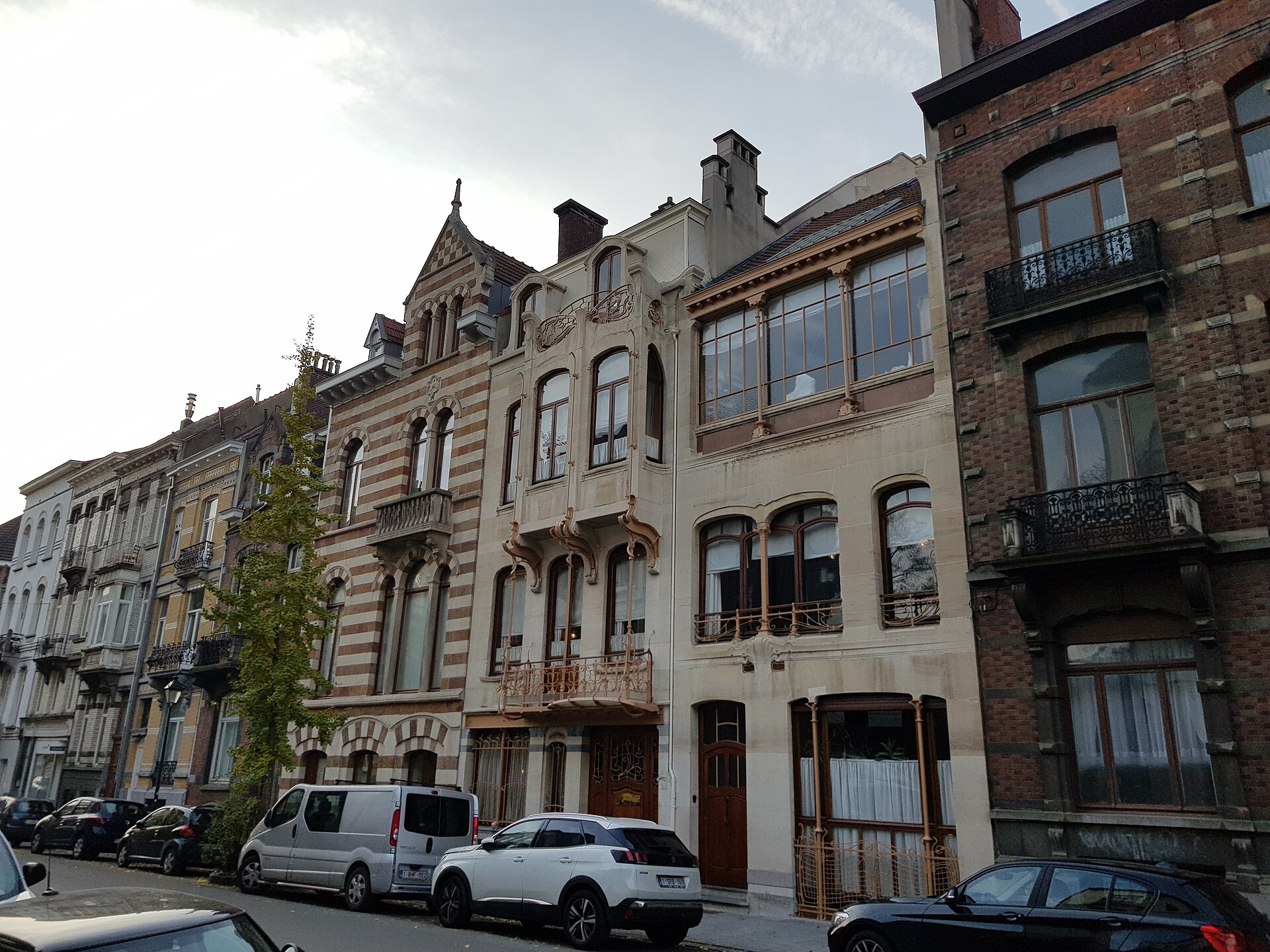
Horta Museum
25 Rue Américaine, Chatelain, Saint-Gilles, 1060, Belgium
The Horta Museum is the personal residence and studio of Victor Horta — the architect who invented Art Nouveau in Brussels in the 1890s and whose buildings transformed the way the world thought about interior space, natural light, and the relationship between structure and decoration. The house, built between 1898 and 1901, is the most complete surviving example of Art Nouveau domestic architecture, and every detail — from the door handles to the staircase to the stained glass skylight — was designed by Horta as part of a total work of art. The staircase is the building's masterpiece — a spiralling iron-and-wood structure that rises through the house's centre, lit by a skylight that sends natural light cascading down through the building. Horta treated the staircase as the spine of the house, and the ironwork — sinuous, organic curves that evoke plant stems and tendrils — demonstrates the Art Nouveau principle that structure and ornament should be inseparable. Every railing, every column, every light fixture in the house follows the same organic logic. The museum is small (it's a house, not a gallery) and limits visitor numbers, which means the experience is intimate rather than overwhelming. The ground-floor studio, where Horta worked, contains original furniture and architectural drawings. The dining room, with its custom-designed tableware and light fixtures, shows how completely Horta controlled the domestic environment. Brussels has four Horta buildings inscribed as UNESCO World Heritage Sites, and the Horta Museum is the one that makes the others make sense — once you understand how Horta thought about interior space, you'll see Art Nouveau differently everywhere.
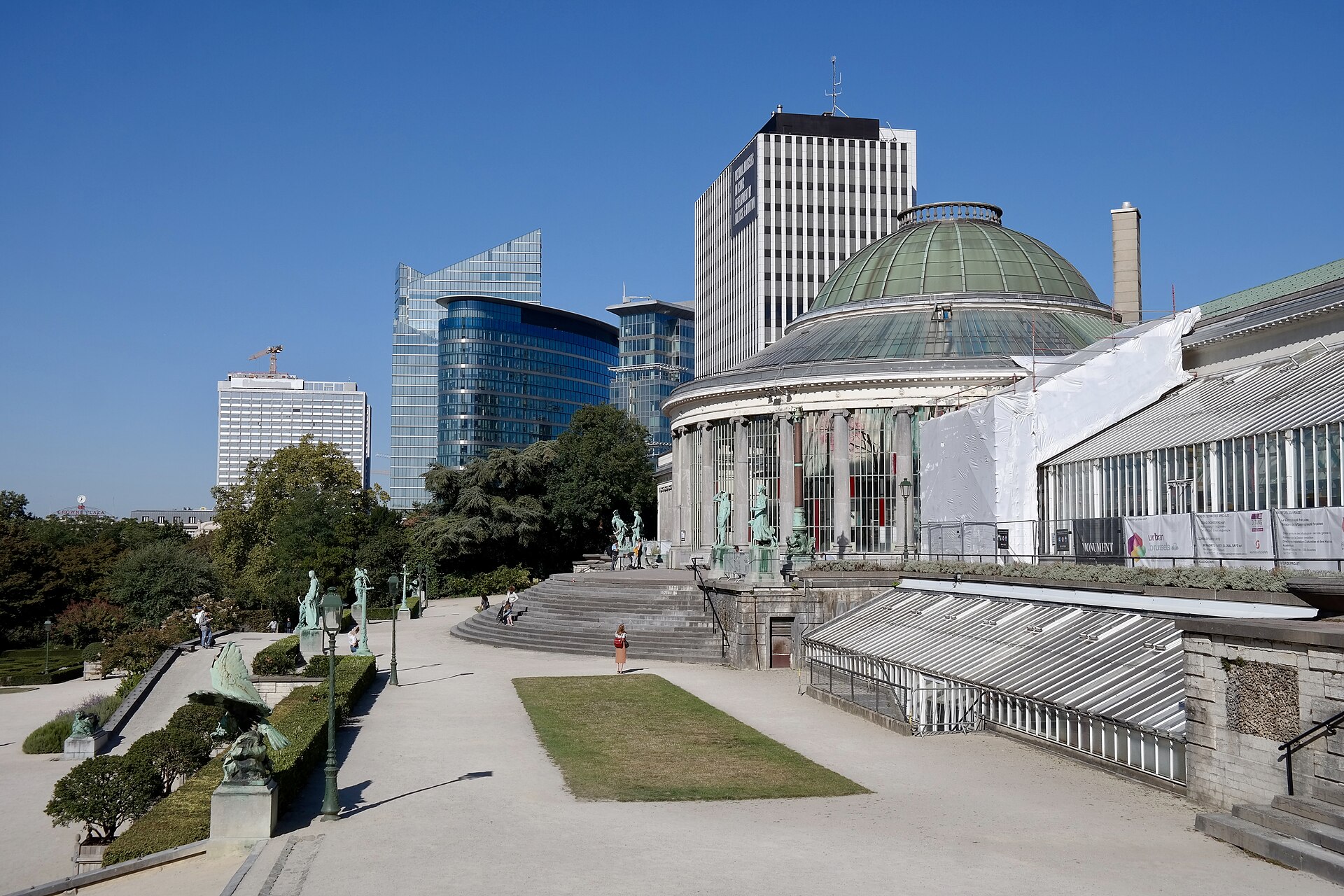
Jardin Botanique
236 Rue Royale, Saint-Josse-ten-Noode, 1210, Belgium
The Jardin Botanique is a small neoclassical garden on the hill above the Botanique metro station that served as Brussels' botanical garden from 1826 until the living collection was moved to Meise in the 1930s. What remains is a beautiful formal garden of geometric paths, fountains, and mature trees surrounding the Orangerie — a glass-and-iron greenhouse that was converted in 1984 into Le Botanique, one of Brussels' most important concert and exhibition venues. Le Botanique is where Brussels' music scene lives — the three performance halls (the Orangerie, the Rotonde, and the Museum) host indie, electronic, world music, and French chanson in spaces that combine 19th-century architecture with contemporary sound systems. The Nuits Botanique festival every May fills all three venues and the garden with 10 days of concerts that draw music fans from across Belgium and northern France. The cultural centre also hosts art exhibitions, and the combination of live music, visual art, and garden setting makes it one of the most atmospheric cultural venues in the city. The garden itself is a pleasant urban retreat — smaller and less formal than the Bois de la Cambre but more accessible, sitting right on the inner ring road at the edge of Saint-Josse, Brussels' most densely populated and multicultural commune. The mix of languages you hear in the garden — French, Dutch, Arabic, Turkish, Polish — reflects the neighbourhood's status as one of the most diverse square kilometres in Europe.
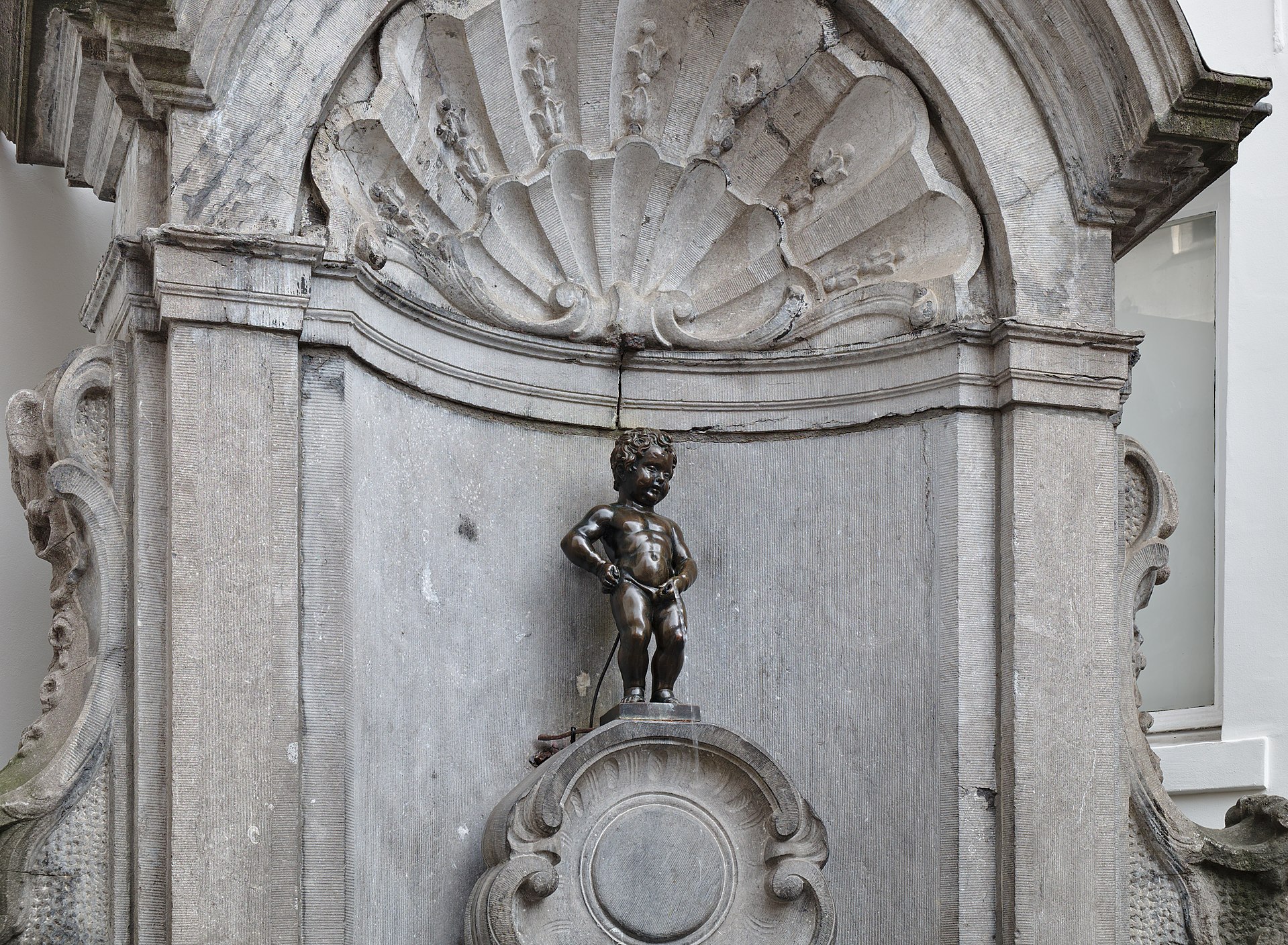
Manneken Pis
Rue de l'Étuve 46, 1000 Brussels
Manneken Pis is a 61-centimetre bronze statue of a small boy urinating into a fountain — and it is the most famous landmark in Belgium, which tells you something about Belgian humour, Belgian expectations, and the remarkable power of a good story to turn a tiny sculpture into a national symbol. The statue is much smaller than visitors expect (the universal reaction is 'that's it?'), and that gap between reputation and reality has become part of the experience. The current statue dates to 1619, replacing an earlier version that may have existed since the 14th century. The legends about its origin are numerous and contradictory — a boy who saved the city by urinating on a fire threatening to explode a gunpowder stash, a duke's son who urinated from a tree during a battle, a lost boy found by his father in this position. None of the stories are verifiable, which hasn't prevented them from being repeated for centuries. The statue's most distinctive tradition is its wardrobe — Manneken Pis has been receiving costumes since 1698, when a governor of the Austrian Netherlands dressed him in a suit. The collection now numbers over 1,000 outfits, donated by governments, organisations, and individuals from around the world, and the statue is dressed in a different costume several times a week according to a published schedule. The GardeRobe MannekenPis museum nearby displays a selection of the costumes. Two companion statues — Jeanneke Pis (a squatting girl) and Zinneke Pis (a urinating dog) — complete a trio that exists nowhere else in the world.
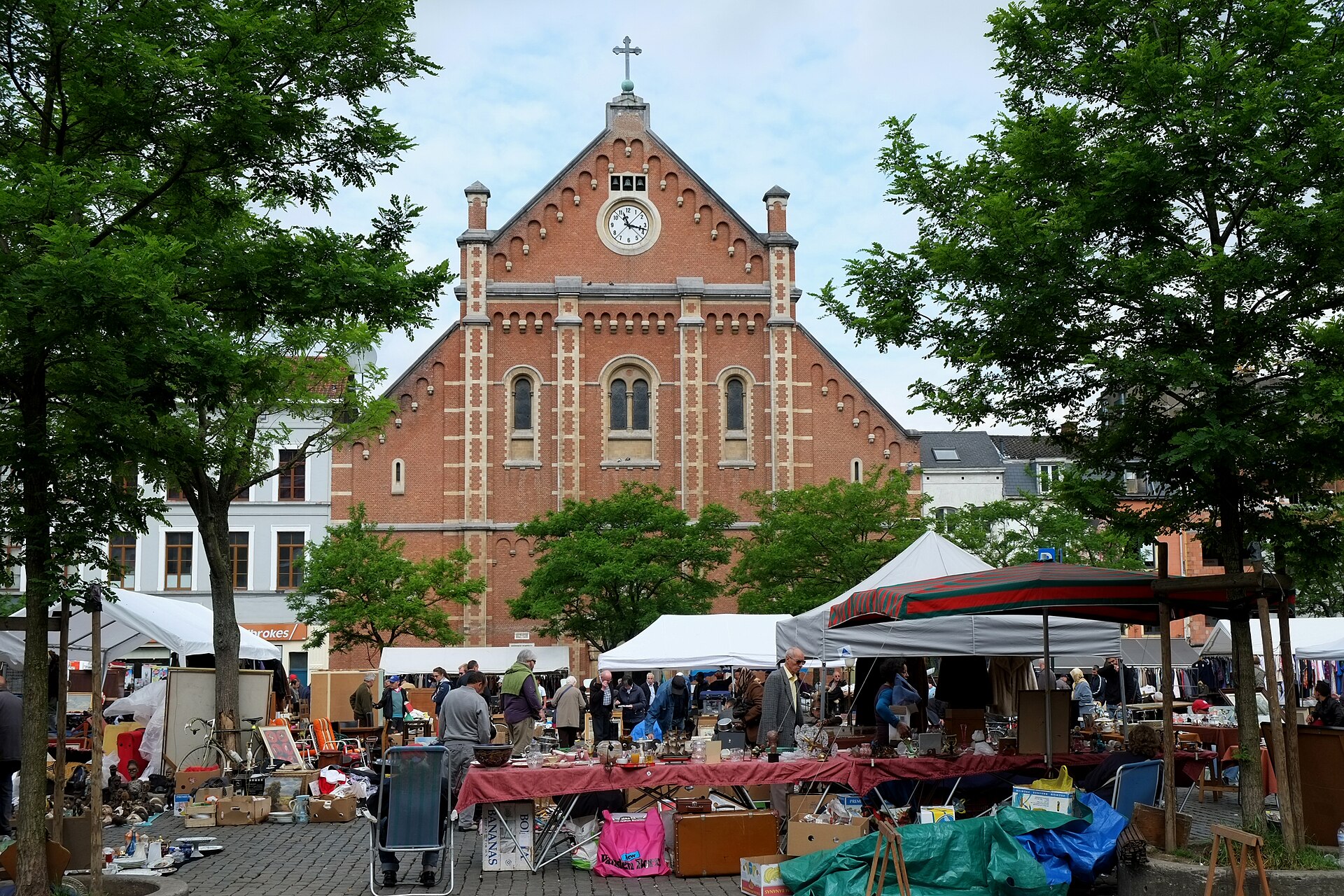
Marolles & Place du Jeu de Balle
Place du Jeu de Balle, Pentagone, Brussels, 1000, Belgium
The Marolles is Brussels' most authentic working-class neighbourhood — a hilly district below the Palais de Justice whose daily flea market, multicultural street life, and defiant independence from the polished tourist zones make it the most characterful quarter in a city that sometimes feels too tidy for its own good. Place du Jeu de Balle hosts Brussels' oldest flea market — a daily affair (biggest on Sundays) where vendors spread antiques, vintage clothing, old books, African art, and miscellaneous junk across the cobblestones in a display that rewards early risers and patient browsers. The neighbourhood's character comes from its history as the city's poorest quarter — home to immigrant communities, artisans, and the working poor who spoke Brusseleer (the local dialect that mixes French, Dutch, and Spanish) and resisted the urban renewal projects that demolished much of old Brussels in the 20th century. The construction of the Palais de Justice in the 1860s — which required demolishing part of the Marolles — remains a sore point, and the word 'architect' (architecte) became an insult in the neighbourhood's vocabulary. The food scene is unpretentious and excellent. Friteries (chip shops) serving double-fried Belgian frites in paper cones are a Marolles institution. The neighbourhood's North African and Central African communities have added couscous restaurants, Congolese grills, and Middle Eastern groceries that give the area a culinary diversity that the Grand-Place's waffle-and-chocolate tourist circuit can't match.
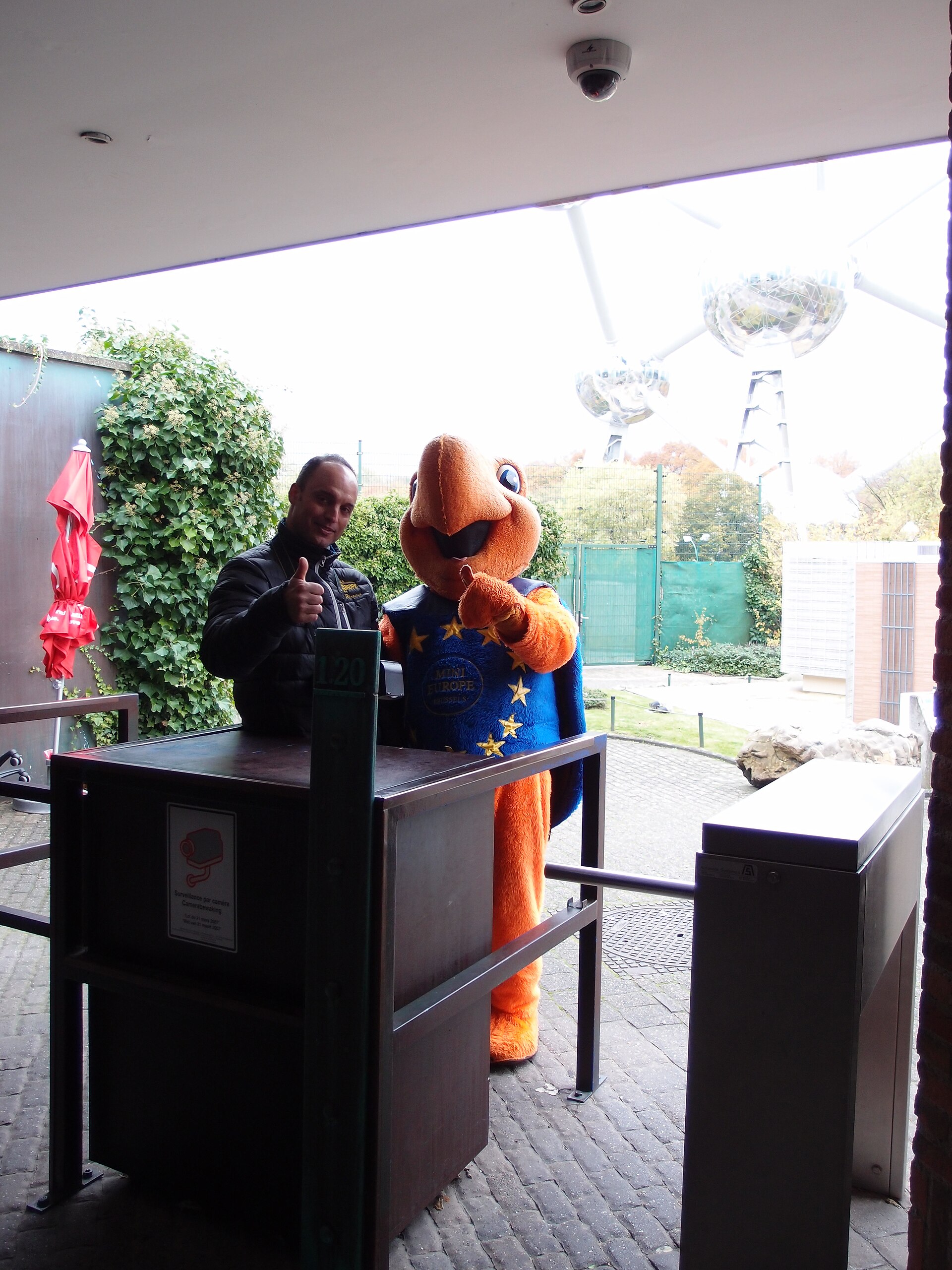
Mini-Europe
Laeken, Brussels, Belgium
Mini-Europe is a miniature park displaying 1:25 scale reproductions of approximately 350 buildings and monuments from across the European Union — a quirky, endearing attraction next to the Atomium that manages to be simultaneously educational, slightly absurd, and genuinely charming. The Eiffel Tower at 13 metres, Big Ben at 4 metres, the Acropolis, the Leaning Tower of Pisa, and the Grand-Place itself are all rendered in meticulous miniature, complete with tiny trains, working fountains, and the occasional erupting Vesuvius. The park was created in 1989 and has been updated as the EU has expanded — new member states get new monuments, and Brexit led to the removal of some British buildings in a miniature geopolitical drama that generated disproportionate media coverage. The attention to detail is impressive: the buildings are constructed from authentic materials where possible, the landscapes are planted with real miniature trees and flowers, and the interactive elements (launching Ariane rockets, controlling the Channel Tunnel train) are popular with children who don't care about architectural accuracy. Mini-Europe sits in Bruparck, adjacent to the Atomium, and the combination of the two — a futuristic 1958 vision of the atom alongside a miniature 1989 vision of Europe — captures something about Brussels' dual identity as both a national capital and the administrative centre of a continental project. The park is best visited with children or with the kind of adult enthusiasm for miniatures that requires no justification.
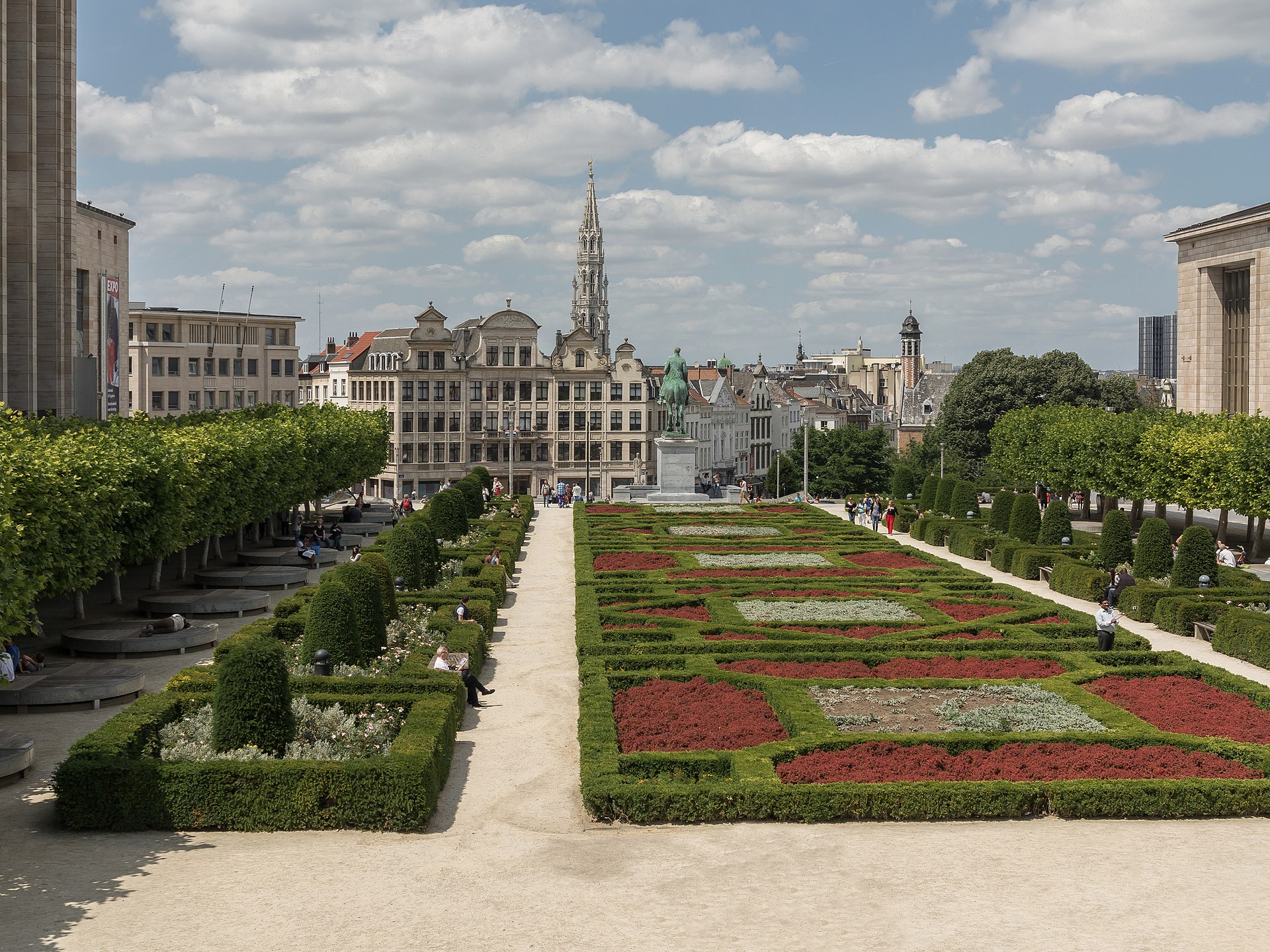
Mont des Arts
Mont des Arts, 1000 Brussels
Mont des Arts is the terraced garden that connects Brussels' upper and lower towns — a formal slope of clipped hedges, fountains, and a clock tower that provides the best view of the city's most famous silhouette: the Town Hall spire rising above the Grand-Place rooftops, with the towers of the cathedral beyond. The garden sits between the Royal Library, the Musical Instruments Museum, the Bozar arts centre, and the Royal Museums, making it the cultural crossroads of the city. The garden was created in the 1950s on the site of a demolished neighbourhood (Brussels has a complicated relationship with demolition — much of the historic city was destroyed for modernisation projects in the 20th century, a phenomenon locals call 'Brusselisation'). The current design — geometric, Art Deco-influenced, with a central fountain and symmetrical planting — provides a formal counterpoint to the organic medieval streetscape visible from its terraces. The view from the top of Mont des Arts at sunset — the Grand-Place spire backlit, the lower town rooftops glowing amber, the garden's fountains catching the last light — is the single best free view in Brussels. The Musical Instruments Museum (MIM), housed in the Old England Building (a spectacular Art Nouveau department store), sits at the garden's edge and contains over 8,000 instruments, with a rooftop café that offers the same view with coffee. The garden is open 24 hours and is at its best in the early morning or at sunset, when the light on the Town Hall spire is most dramatic.
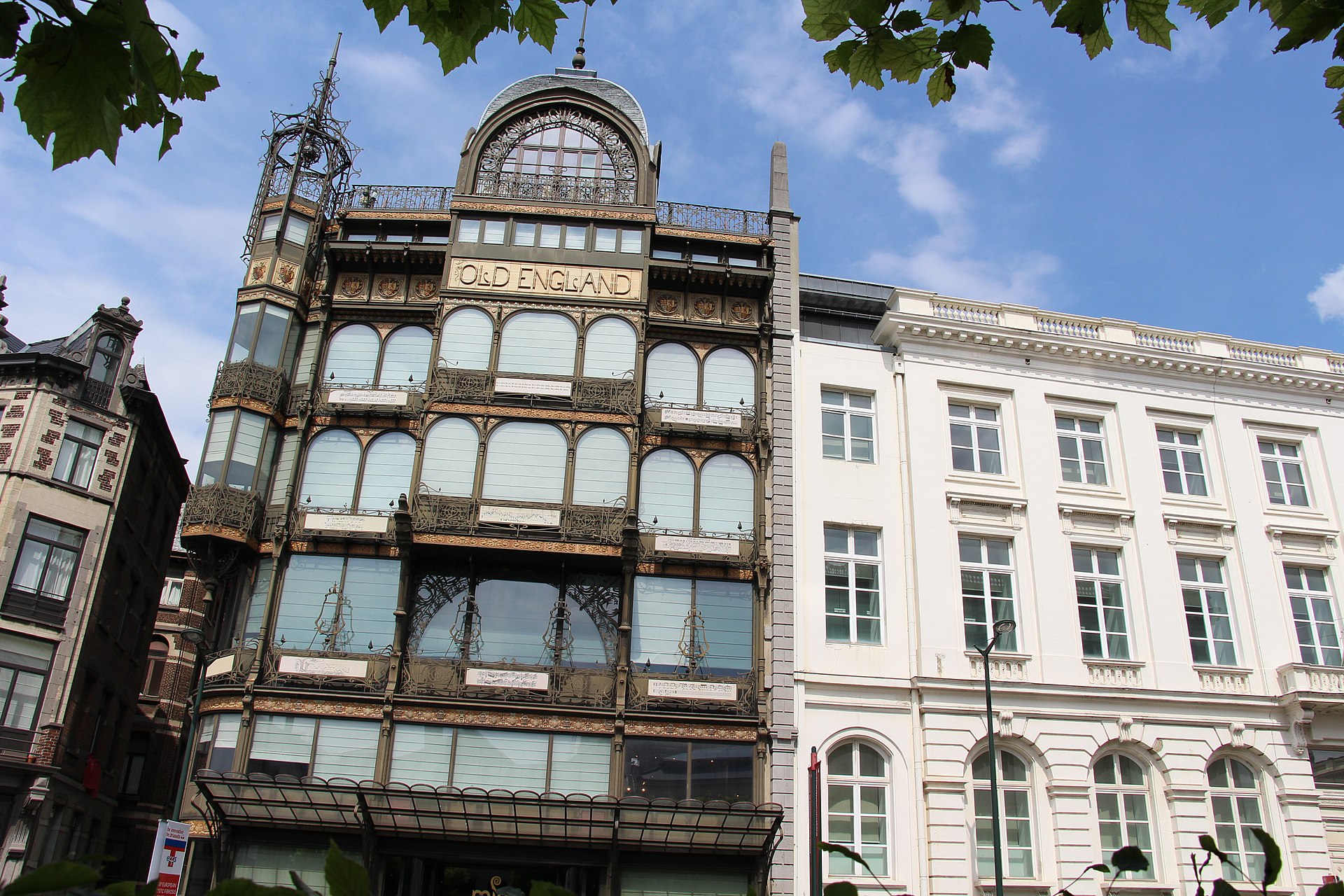
Musée des Instruments de Musique (MIM)
2 Rue Montagne de la Cour, Pentagone, Brussels, 1000, Belgium
The Musical Instruments Museum occupies the Old England Building — a 1899 Art Nouveau department store by Paul Saintenoy that is one of the most beautiful buildings in Brussels, with a facade of glass and iron that soars five storeys above Mont des Arts in sinuous curves that make steel look organic. The building would be worth visiting if it were empty; the fact that it contains over 8,000 musical instruments from the 15th century to the present makes it one of the most rewarding museum experiences in the city. The collection spans everything from medieval lutes and Baroque harpsichords to Indonesian gamelans, African drums, and the electronic instruments of the 20th century. Each visitor receives headphones that activate automatically as you approach different instruments, playing recordings that let you hear what a 16th-century viol or a Javanese metallophone actually sounds like. The system transforms the museum from a visual experience into an acoustic one — you walk through rooms hearing the music of five centuries and five continents, which is the only way a musical instrument collection makes sense. The rooftop café-restaurant, accessed via a glass elevator, provides one of the best views in Brussels — a panorama across the city rooftops from the Grand-Place to the Atomium, with the Mont des Arts garden directly below. The café is accessible without museum admission, making it a destination in its own right and one of the city's best-kept viewpoint secrets.
Musée Magritte
Rue de la Régence 3, 1000 Brussels
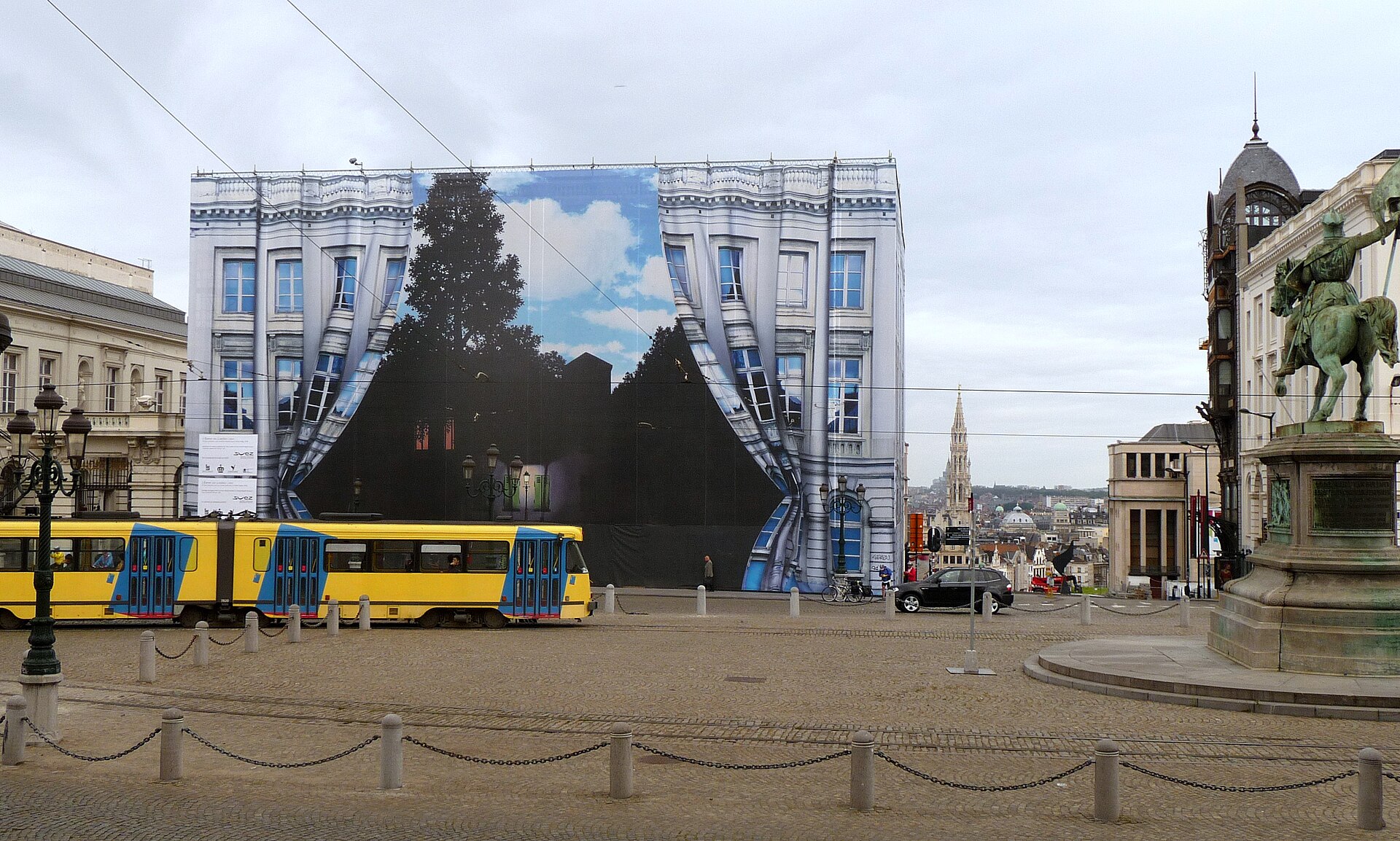
The Magritte Museum houses the world's largest collection of works by René Magritte — over 200 paintings, drawings, sculptures, and objects by Belgium's most famous artist, displayed chronologically across five floors of a neoclassical building on Place Royale. The museum is part of the Royal Museums of Fine Arts complex but has its own entrance and identity, and the experience of seeing Magritte's development from early experiments through mature surrealism to late-career stylistic adventures is more coherent here than in any other museum. Magritte spent most of his life in Brussels — working from an ordinary suburban house in Jette, wearing a bowler hat, walking his dog, and producing paintings that upended the relationship between images and reality with the quiet precision of an accountant filing tax returns. The museum captures this tension between the mundane life and the extraordinary art: the biographical sections show a man of conventional habits, while the paintings on the surrounding walls — clouds floating through rooms, men raining from skies, pipes that are not pipes — demonstrate a mind that treated reality as a set of suggestions rather than rules. 'The Empire of Lights' series — paintings showing a daylit sky above a nighttime street, impossibly combining two times of day in a single image — is the museum's most affecting work. The paintings are larger in person than reproductions suggest, and the uncanny quality of the light — technically impossible but emotionally correct — is something that photographs can't convey. The museum shop sells Magritte-themed bowler hats, which is exactly the kind of commercial surrealism that Magritte would have both deplored and secretly enjoyed.
Palais de Justice
Place Poelaert 1, 1000 Brussels
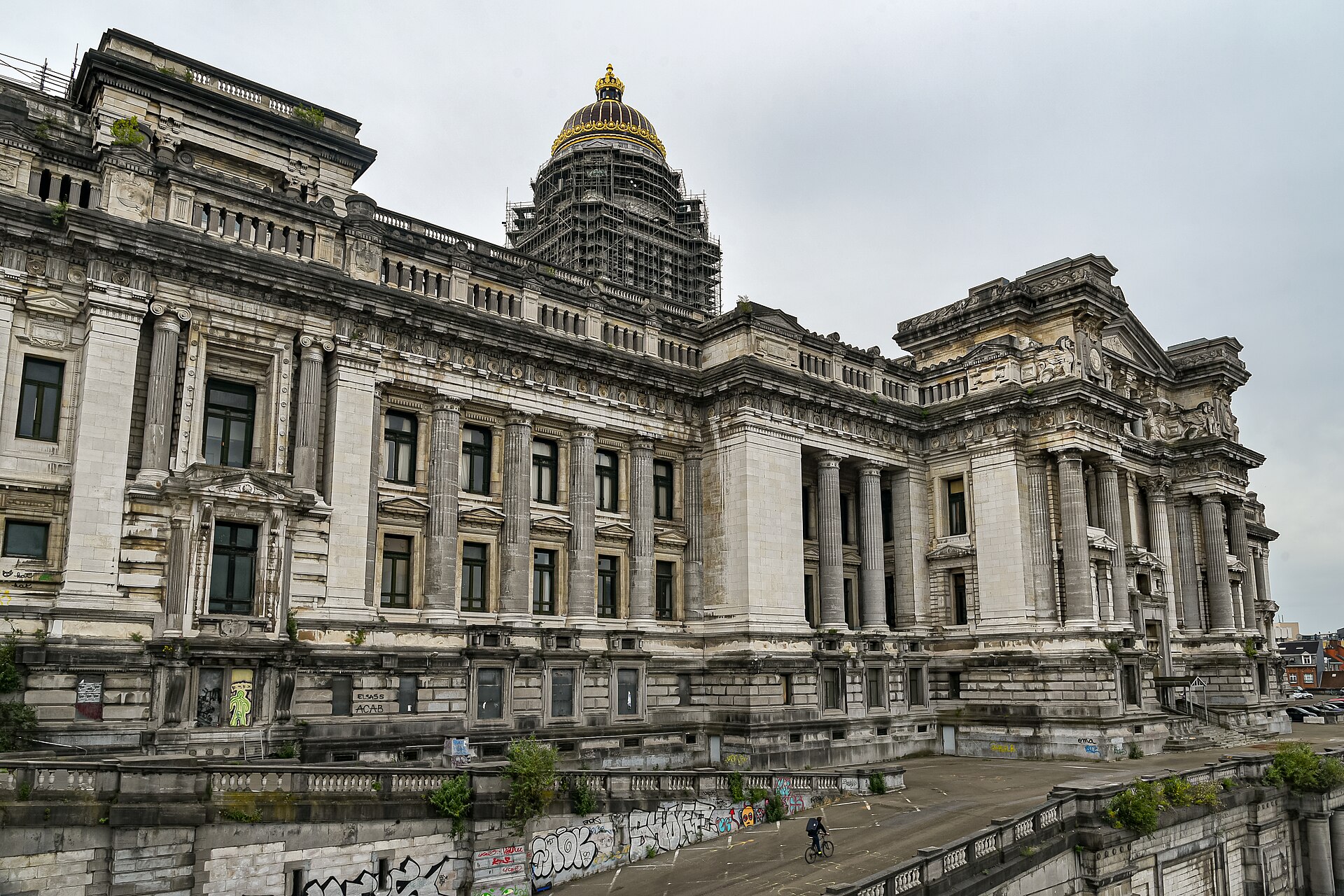
The Palais de Justice is the largest courthouse in the world — a colossal Greco-Roman-Egyptian-Assyrian pile that covers 26,000 square metres (larger than St. Peter's Basilica), rises 104 metres from its foundations, and sits on the Poelaert plateau overlooking the Marolles neighbourhood like a government building from a dystopian film. The architect, Joseph Poelaert, designed it to overwhelm, and in this he succeeded — the building has been intimidating Brusselaars and visitors since its completion in 1883. The scale is genuinely disorienting. The main hall, where you enter through bronze doors several storeys tall, is a covered atrium of such vertical ambition that the floor-to-ceiling height exceeds that of most churches. The corridors stretch in every direction, and getting lost is virtually guaranteed. The building was controversial from conception — its construction required demolishing a section of the Marolles neighbourhood, and the displaced residents' anger toward the architect gave Brussels the insult 'schieven architek' (crooked architect). The terrace in front of the Palais, Place Poelaert, provides one of the best panoramic views of Brussels — looking north across the Marolles rooftops to the Grand-Place spires and beyond. A glass elevator connects the terrace to the Marolles neighbourhood 30 metres below, providing a quick shortcut and a dramatic change in altitude. The courthouse is still a functioning judicial building, and the interior is open to the public during court hours — walking through its vast halls, passing lawyers in robes and litigants looking anxious, is one of Brussels' most surreal experiences.
Parc Léopold & Natural Sciences Museum
29 Rue Vautier, Quartier Nord-Est, Brussels, 1000, Belgium
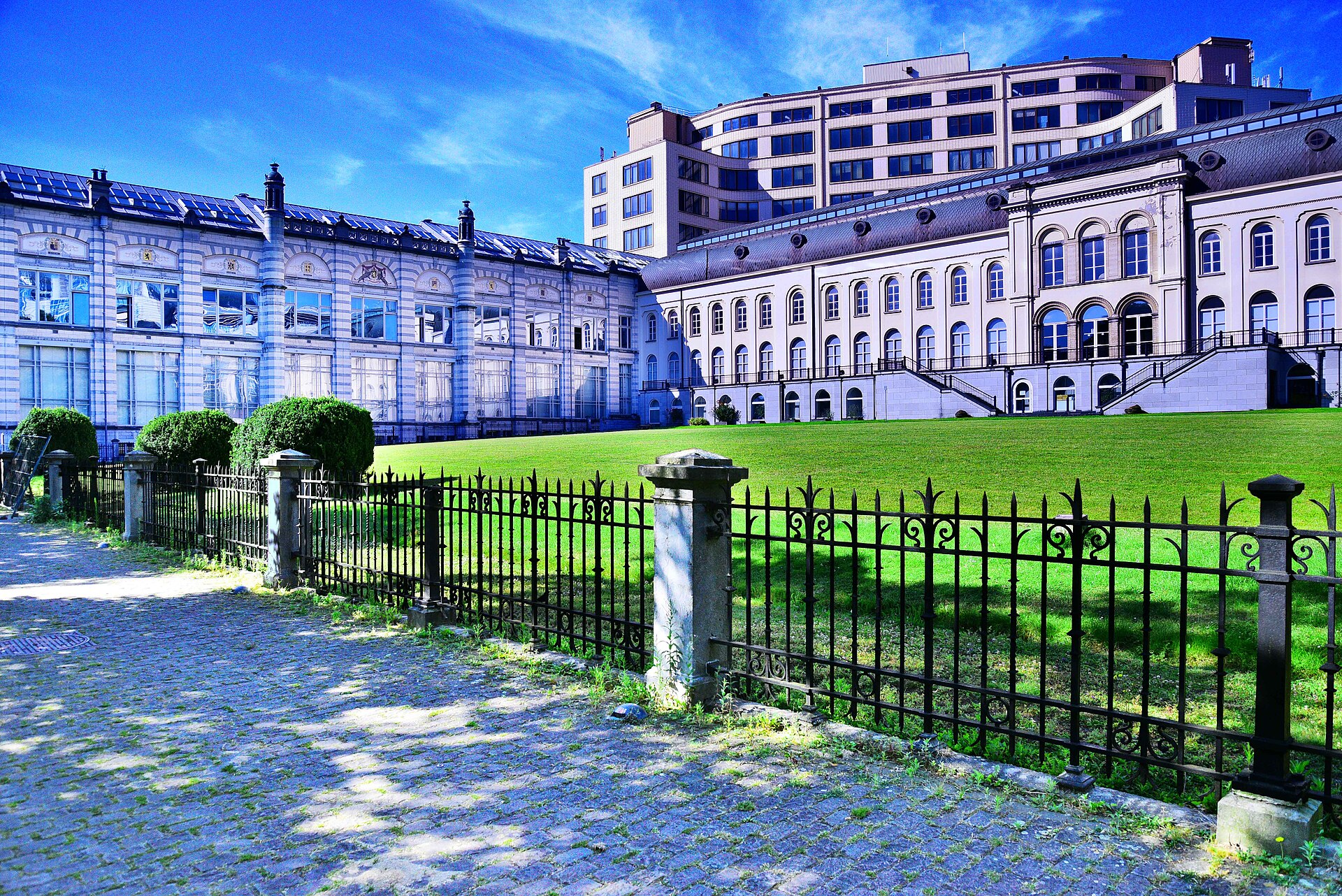
Parc Léopold is a small, steep green space tucked behind the European Parliament that houses one of Brussels' best-kept museum secrets — the Museum of Natural Sciences, home to the largest collection of Iguanodon dinosaur skeletons in the world, discovered in a Belgian coal mine in 1878. The museum is one of Europe's most important natural history collections, and the dinosaur gallery — displaying over 30 Iguanodon specimens in a dramatic glass-walled hall — is the most impressive dinosaur display outside the Natural History Museums of London and New York. The Iguanodons were found by coal miners in Bernissart, a village in southern Belgium, at a depth of 322 metres — 29 nearly complete skeletons preserved in a ravine that had been flooded 125 million years ago. The discovery was one of the most significant paleontological finds of the 19th century, and the Belgian government's decision to excavate and display the entire herd (rather than selling individual specimens) created a national treasure that remains the museum's centrepiece. The park itself, originally a private zoo, is one of Brussels' most pleasant small green spaces — a hilly garden with a pond, mature trees, and benches positioned for views of both the museum and the glass towers of the European institutions that loom above. The irony of dinosaurs displayed in the shadow of the European Parliament — two very different forms of political dominance separated by 125 million years — is the kind of visual joke that Brussels produces accidentally but consistently.
Place du Grand Sablon Antiques Market
Place du Grand Sablon, Pentagone, Brussels, 1000, Belgium
The Grand Sablon hosts Brussels' premier antiques market every weekend — over 100 dealers setting up on the cobblestoned square from Saturday morning through Sunday afternoon, selling furniture, silverware, vintage prints, ceramics, and the decorative objects that Belgium's long history of trade and craftsmanship has accumulated. The market draws collectors from across Europe and provides the most atmospheric outdoor shopping experience in the city, framed by the Gothic church of Notre-Dame du Sablon and the surrounding chocolate shops.
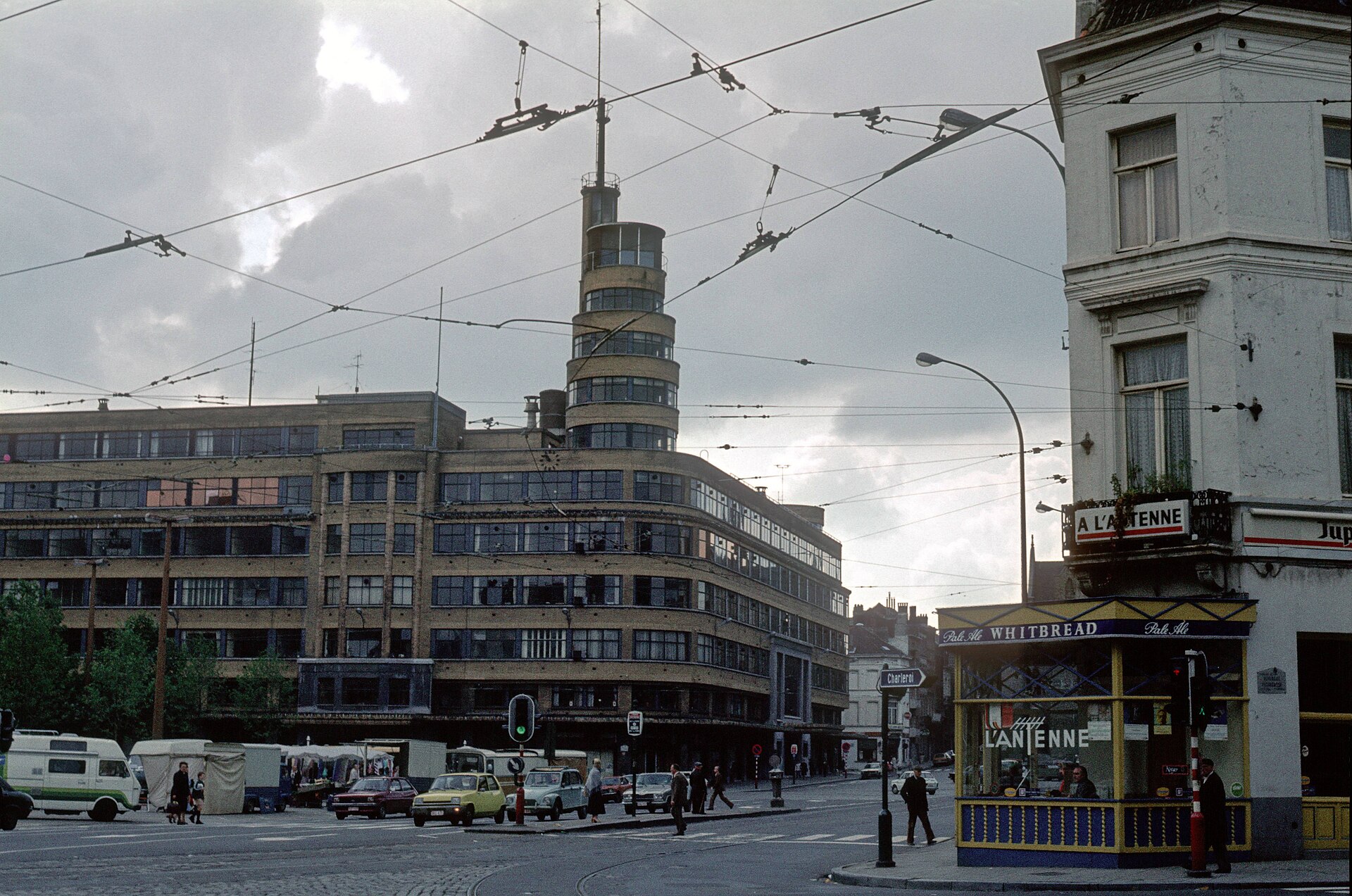
Place Flagey & Ixelles
Ixelles, Belgium
Place Flagey is the heart of Ixelles — a neighbourhood south of the city centre that is Brussels' most diverse and liveable quarter, home to the Congolese community, university students, EU officials, and the young professionals who have made its restaurants, bars, and weekend market one of the best neighbourhood experiences in the city. The square is anchored by the Flagey Building — a 1930s Art Deco former radio broadcasting house that was converted into a concert hall and cultural centre in 2002. The building's clean horizontal lines and porthole windows are a landmark of Belgian Art Deco, and the concert programme (classical, jazz, world music) is one of the most adventurous in Brussels. The Saturday morning market on the square is excellent — Belgian cheeses, North African spices, fresh fish, African food stalls, and the organic produce that the neighbourhood's food-conscious residents demand. Ixelles stretches from Place Flagey south to the Bois de la Cambre, Brussels' largest park, and the streets between are lined with the kind of independent restaurants, vintage shops, and small galleries that make a neighbourhood walkable in the best sense. The Matongé quarter — Brussels' Congolese neighbourhood, centred on Galerie d'Ixelles — has some of the best African food in Europe, and the Etangs d'Ixelles (Ixelles ponds) provide a waterside promenade that is popular with joggers and Sunday strollers. Ixelles is where Brusselaars actually live, which makes it more interesting than where they go to be tourists.
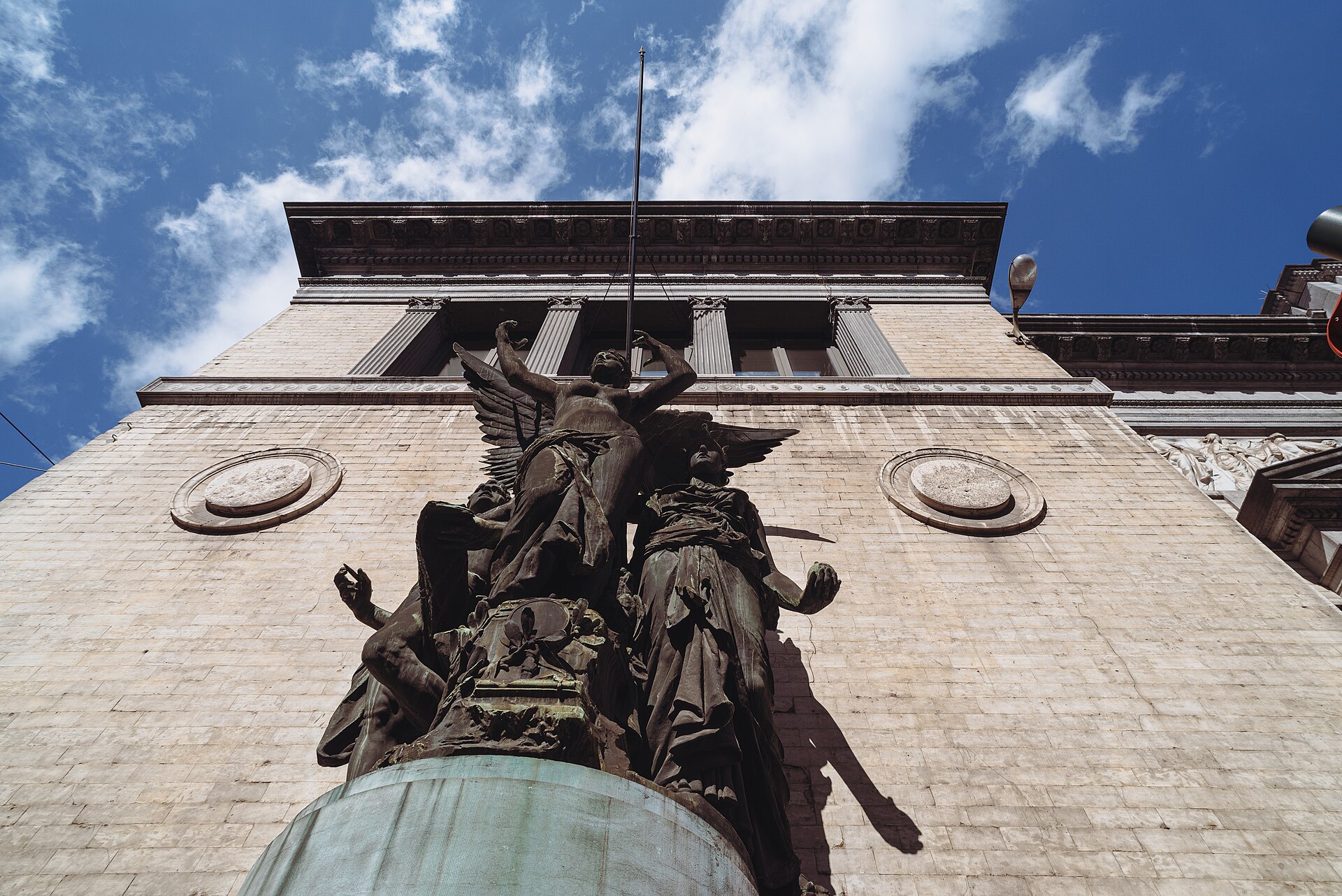
Royal Museums of Fine Arts
Rue de la Régence 3, 1000 Brussels
The Royal Museums of Fine Arts is Belgium's national art collection — a complex of six museums sharing interconnected buildings near the Royal Palace that together hold over 20,000 works spanning six centuries, from the Flemish Primitives through Bruegel and Rubens to Magritte and contemporary Belgian art. The Old Masters Museum and the Magritte Museum are the essential visits, and together they justify Brussels' claim to be one of the most important art cities in Europe. The Old Masters collection is one of the finest in the world for Flemish painting. Bruegel the Elder's 'The Fall of the Rebel Angels' and 'Census at Bethlehem,' Rubens' 'The Ascent to Calvary,' and works by Van der Weyden, Memling, and Bosch represent the golden age of Flemish art in a gallery setting that — unlike the Louvre or the National Gallery — is rarely crowded enough to prevent close looking. The ability to stand inches from a Bruegel without a crowd is a luxury that few European museums still offer. The Magritte Museum, occupying a neoclassical building adjacent to the Old Masters gallery, houses the world's largest collection of works by René Magritte — over 200 paintings, sculptures, and works on paper by the Belgian surrealist whose bowler-hatted men, floating rocks, and pipe-that-is-not-a-pipe have become some of the most recognisable images in modern art. The museum's chronological arrangement traces Magritte's development from early Impressionist-influenced works to the mature surrealism that made him famous, and the experience of seeing dozens of Magrittes in sequence is genuinely disorienting — which is exactly what Magritte intended.
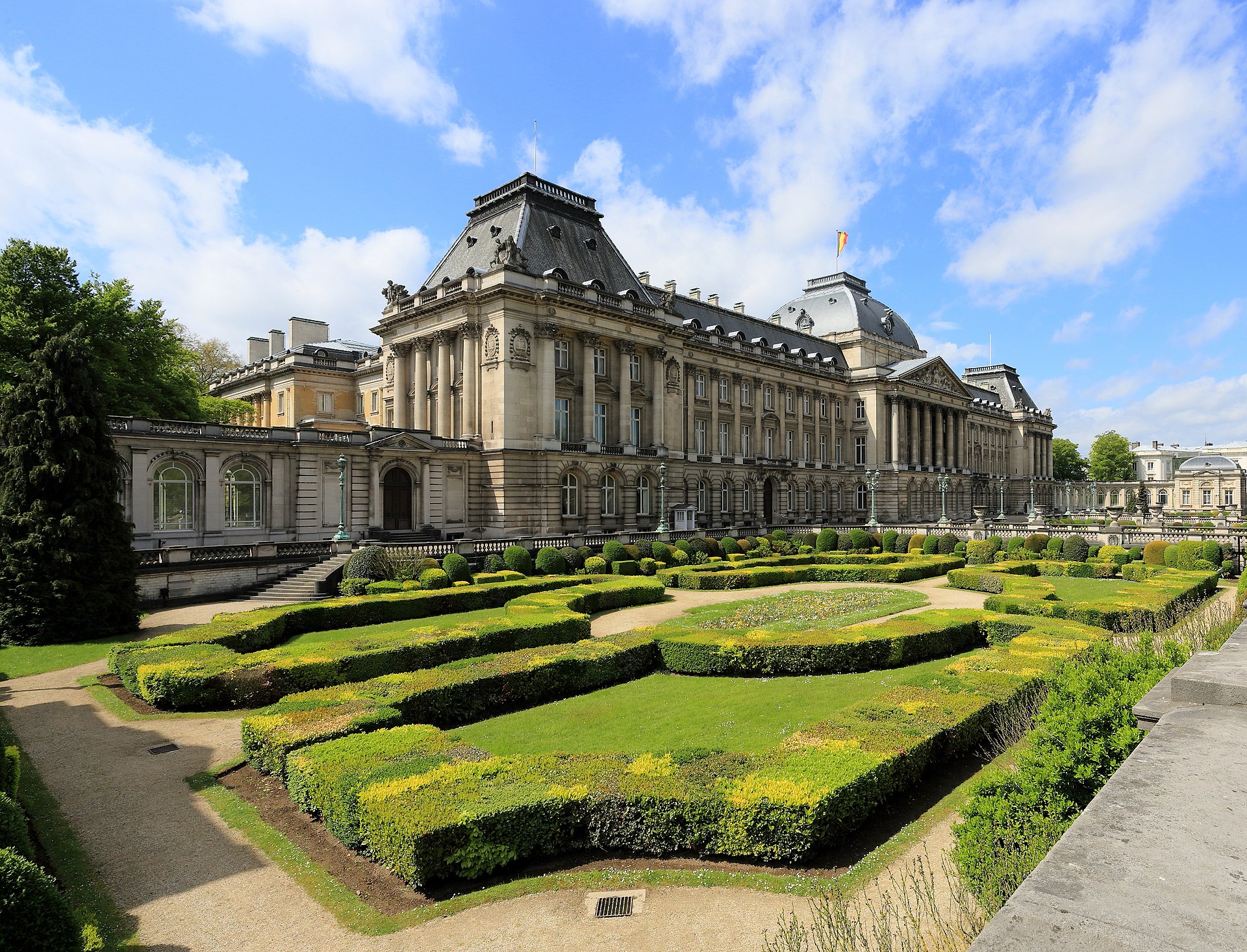
Royal Palace of Brussels
Rue Brederode 16, 1000 Brussels
The Royal Palace of Brussels is the Belgian monarch's official palace — a neoclassical building on the Place des Palais that is larger than Buckingham Palace (a fact Belgians enjoy mentioning) and is open to the public every summer from late July through early September, giving visitors access to the state rooms, the throne room, and the Mirror Room, whose ceiling was covered in 2002 with the iridescent wing cases of 1.6 million Thai jewel beetles by artist Jan Fabre. The beetle ceiling is the palace's most talked-about feature — a shimmering green canopy of insect exoskeletons that catches the light and creates patterns that shift as you move beneath them. It's either a masterpiece of contemporary art or deeply unsettling, and most visitors experience both reactions simultaneously. Fabre's installation, titled 'Heaven of Delight,' was commissioned by the royal family and is now a permanent feature of the palace. The palace's facade, rebuilt in the Louis XVI style in 1904, faces the Parc de Bruxelles — a formal French garden that separates the palace from the Belgian Parliament building, creating a visual axis of power that mirrors the relationship between monarchy and democracy in the Belgian constitutional system. The Belgian royal family does not actually live in the palace (they reside at the Royal Domain of Laeken in northern Brussels), but the building serves as the official workplace and ceremonial centre of the monarchy. The summer opening is free, and the combination of state rooms, contemporary art, and the chance to walk through a palace that outscales Buckingham makes it one of Brussels' best seasonal attractions.
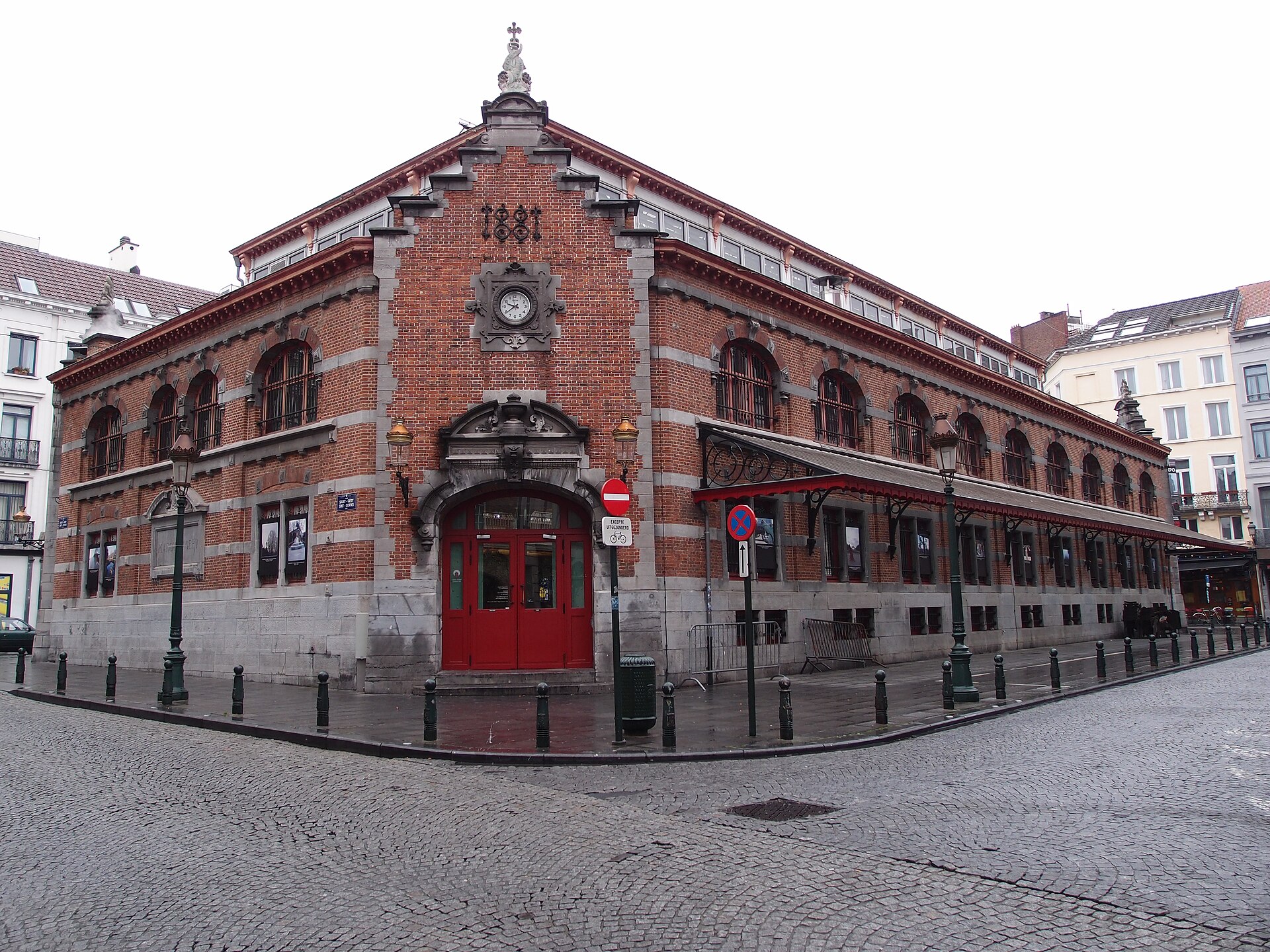
Rue Antoine Dansaert & Saint-Géry
Rue Antoine Dansaert, Pentagone, Brussels, 1000, Belgium
Rue Dansaert is Brussels' fashion and design street — a corridor of Belgian designer boutiques, concept stores, and the kind of independent retail that survives in a city where rents are still low enough to support creativity. The street runs from the Bourse (the neoclassical stock exchange) west toward the canal, and the surrounding blocks — collectively known as the Dansaert quarter — have become Brussels' most design-conscious neighbourhood. The Belgian fashion designers who emerged in the 1980s and 90s — the 'Antwerp Six' and their successors — have retail presences here, and the mix of established names and emerging designers gives the street a creative energy that the luxury-brand corridors of other European capitals can't match. Stijl, the multi-brand concept store, is the neighbourhood's anchor, stocking Belgian and international designers in a converted warehouse that sets the aesthetic standard. Halles Saint-Géry, a 19th-century covered market at the quarter's heart, has been converted into a cultural centre and exhibition space with a ground-floor bar that is one of the best places in Brussels for a weekend afternoon beer. The surrounding streets contain the highest concentration of cocktail bars and natural wine bars in the city, and the Saturday brunch culture that has colonised the neighbourhood means the terraces fill from 10am. The area bridges the tourist zone around the Grand-Place and the increasingly hip canal district, making it a natural walking route between old Brussels and new.
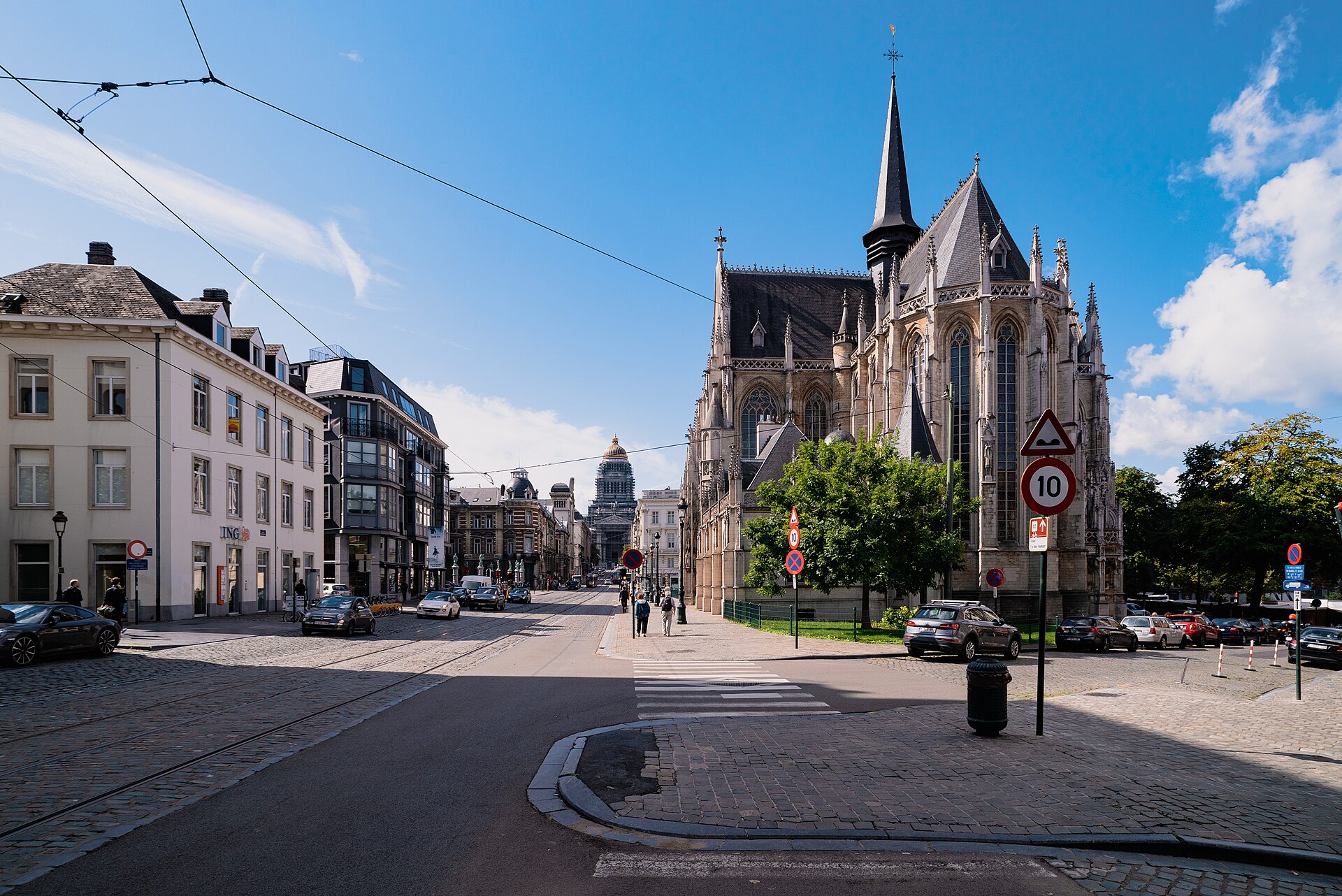
Sablon
Place du Grand Sablon, Pentagone, Brussels, 1000, Belgium
The Sablon is Brussels' antiques and chocolate quarter — a pair of connected squares (Grand Sablon and Petit Sablon) in the upper town that house the city's finest chocolatiers, its most prestigious antique dealers, and a weekend antiques market that draws collectors from across Europe. The neighbourhood sits between the Royal Museums and the Palais de Justice, and its cobblestone streets, 15th-century church, and upscale restaurants make it the most elegant quarter in the city. The chocolate on the Grand Sablon is world-class. Pierre Marcolini (possibly the best chocolatier in Belgium, which makes him possibly the best in the world), Wittamer (supplying the royal family since 1910), and Patrick Roger (the French sculptor-chocolatier) all have shops on the square. The Belgian chocolate tradition — centred on the praline, which uses a shell of tempered chocolate around a soft filling — reaches its peak here, and a tasting tour of the Sablon's chocolate shops is one of Brussels' most enjoyable and calorie-dense activities. The Petit Sablon, a smaller garden square connected to the Grand Sablon, is surrounded by a wrought-iron fence with 48 bronze statuettes representing Brussels' medieval guilds — each figure holding the tools of their trade — and a central statue group celebrating the Counts Egmont and Horn, who were beheaded in the Grand-Place in 1568 for opposing Spanish rule. The Church of Notre-Dame du Sablon, a 15th-century Gothic structure with extraordinary stained glass, anchors the square and hosts free organ concerts that fill the nave with sound.
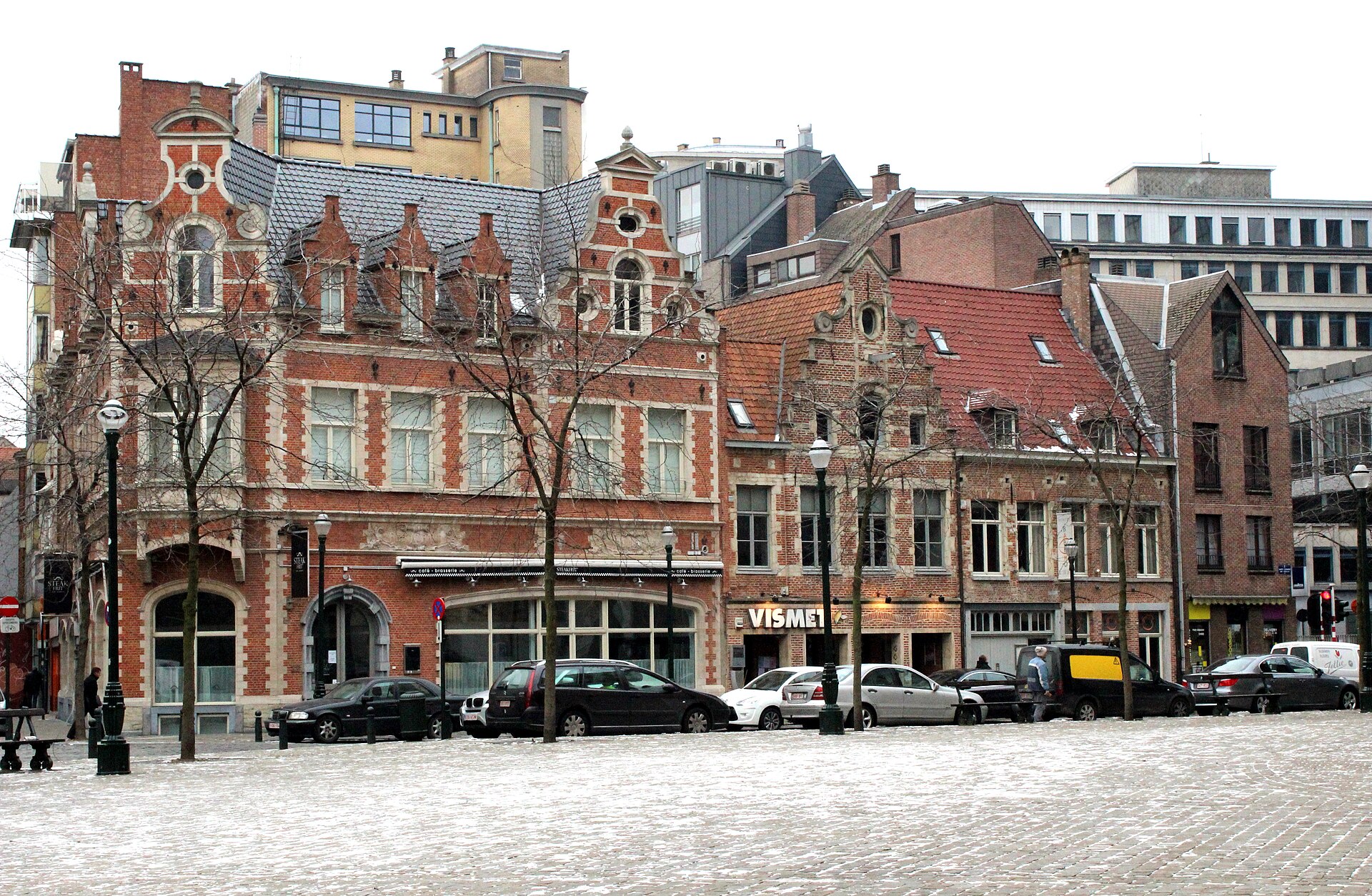
Sainte-Catherine & Fish Market
Place Sainte-Catherine, Pentagone, Brussels, 1000, Belgium
Place Sainte-Catherine is Brussels' seafood quarter — a long rectangular square that was originally a dock on the now-covered Senne River, where fishing boats unloaded their North Sea catch for the city's markets. The dock is long gone (buried under the square in the 19th century), but the seafood tradition survives in the restaurants that line both sides and serve some of the best fish and shellfish in a landlocked city that somehow eats like a port town. The seafood stands on the square — particularly the legendary Noordzee/Mer du Nord, a standing-room-only fish bar where you eat raw oysters, shrimp croquettes, and fried calamari from paper plates while standing on the sidewalk — are Brussels at its most democratically delicious. The restaurant prices around Sainte-Catherine are higher than the city average, but the quality of the seafood — much of it arriving daily from the Belgian coast and Dutch auctions — justifies the premium. The square is anchored by the Sainte-Catherine Church (a 19th-century replacement of a medieval church) and bordered by the Tour Noire (Black Tower), a rare surviving fragment of Brussels' 13th-century city wall that looks utterly incongruous next to the surrounding modern buildings. The neighbourhood surrounding the square — narrow streets of Art Nouveau and Art Deco buildings, Belgian pubs, and the increasingly trendy Dansaert quarter — is the most walkable and liveable part of central Brussels, and an evening of seafood, beer, and canal-side wandering is one of the city's great pleasures.