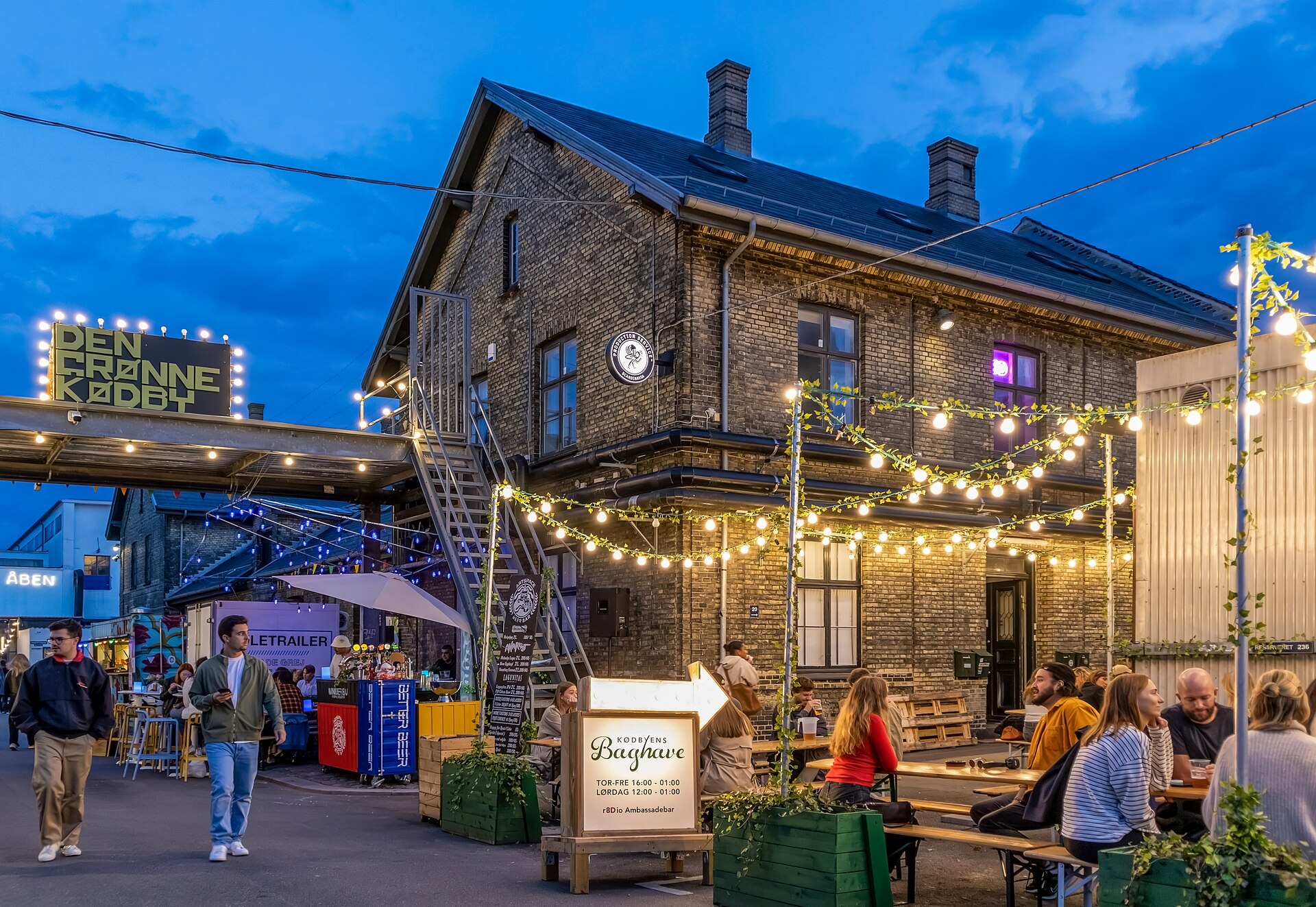
Copenhagen's Meatpacking District is one of the few gentrification stories in Europe where the butchers are still around. Kødbyen was established in 1879 because animals were being slaughtered in public streets, which raised rather serious concerns about hygiene, and the city decided to centralise the entire meat industry near the railway lines in Vesterbro. The oldest section, Den brune Kødby (the brown meatpacking district), dates from 1883 and sits closest to Central Station. The larger white section, Den hvide Kødby, was built in 1934 — a 400-by-600-metre enclave of white modernist structures that still looks striking today.
The transformation began in the early 2000s when the global financial crisis and rising rents drove many butcheries out of the city centre. The Copenhagen municipality began leasing empty warehouse spaces to restaurants, galleries, and creative businesses, and a neighbourhood that had smelled exclusively of raw meat for over a century suddenly also smelled of craft cocktails and contemporary art. Unlike New York's Meatpacking District, which it was modelled after, Copenhagen's version kept some actual meatpacking operations running alongside the bars and restaurants. The contrast is surreal: you can eat a Michelin-quality meal next door to a working slaughterhouse.
In 2007, the white and brown sections were listed as national industrial heritage sites, which ensured the buildings would be preserved even as their function changed. The nightlife scene is now one of Copenhagen's most concentrated: Jolene, Mesteren og Lærlingen, and Bakken sit right next to each other, and Bakken's legendary Thursday night DJ sessions draw crowds that would make a nightclub promoter weep with joy.
By day, Kødbyen is galleries and restaurants. By night, it is bars and music. And at all hours, it is a working example of what happens when a city decides to preserve its industrial architecture instead of demolishing it. The meat meets the martinis, and somehow it works.
Verified Facts
Established in 1879 to centralise meat production; the oldest section dates from 1883
The white section (Den hvide Kødby) was built in 1934 as a 400x600 metre modernist enclave
The white and brown sections were listed as national industrial heritage sites in 2007
Unlike its New York namesake, Copenhagen's Meatpacking District still has active butcheries alongside bars and restaurants
Get walking directions
Flæsketorvet, Copenhagen, København V, 1711, Denmark