Castle of Good Hope
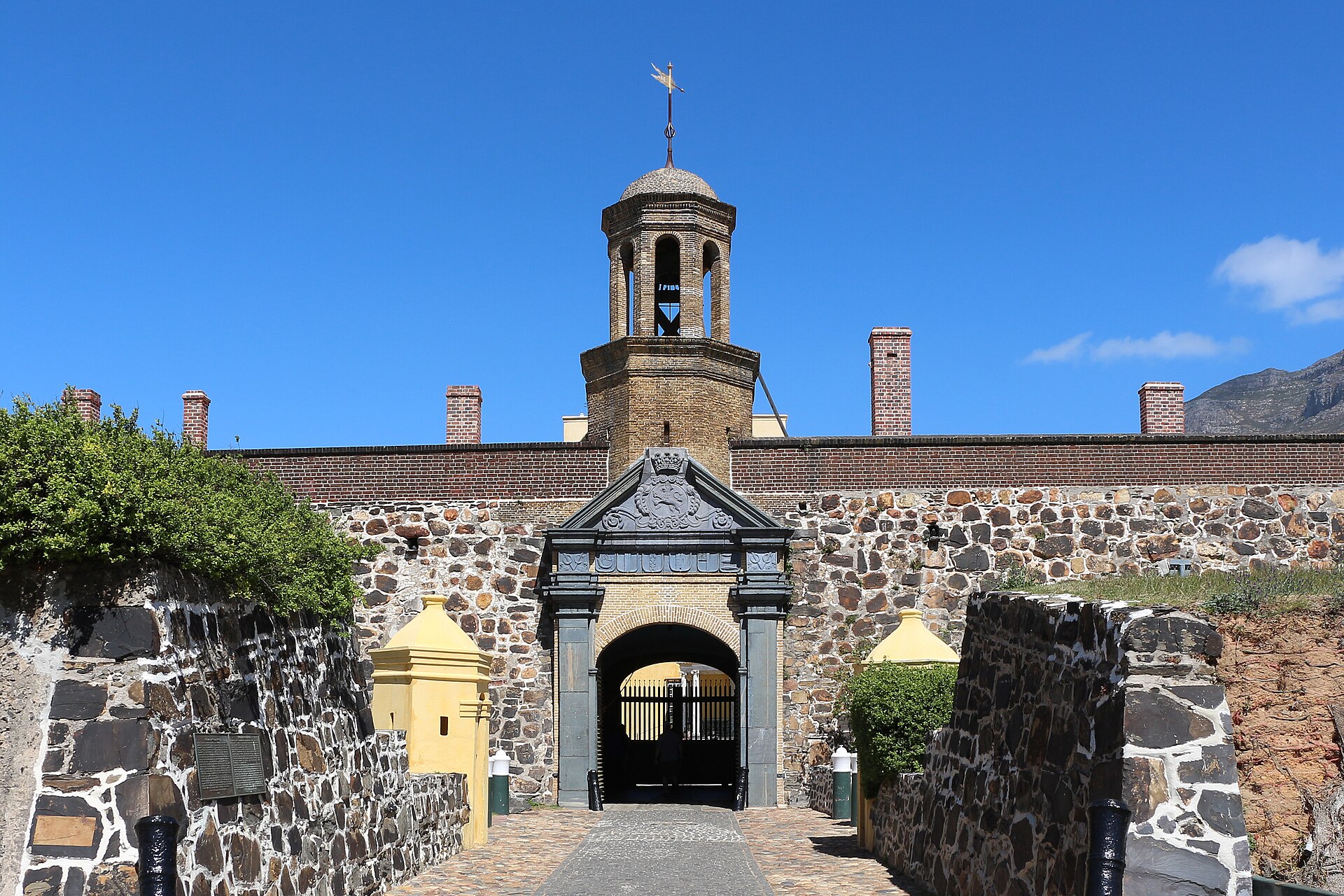
The Castle of Good Hope is the oldest surviving colonial building in South Africa — a pentagonal Dutch East India Company fortress completed in 1679 that served as the military and administrative headquarters of the Cape Colony for over two centuries. The castle, with its five bastions (each named after titles of the Prince of Orange), its moat, and its ceremonial entrance (the Kat Balcony, a Rococo gateway that is the finest piece of Dutch colonial architecture at the Cape), is a remarkably intact example of a 17th-century VOC fortress.
The interior contains the William Fehr Collection (an important collection of South African historical art, including paintings, furniture, and decorative objects from the Dutch and British colonial periods), a military museum, and the restored governor's quarters that show how the Dutch and later British administrators lived. The Dolphin Pool, a restored water feature in the inner courtyard, and the officers' quarters provide a sense of the domestic life of the fortress.
The castle sits in the middle of modern Cape Town — surrounded by the CBD, the Grand Parade (a former military exercise ground now used as a parking lot and occasional market), and the railway station. The contrast between the low, massive stone fortress and the surrounding modern buildings dramatises Cape Town's historical compression — the oldest European building in Southern Africa sits within walking distance of contemporary glass towers, and the 340 years between them can be crossed in five minutes on foot.
Verified Facts
The Castle of Good Hope was completed in 1679
It is the oldest surviving colonial building in South Africa
The five bastions are named after titles of the Prince of Orange
The William Fehr Collection is housed inside the castle
Get walking directions
Darling Street, Cape Town City Centre, Cape Town, 8001, South Africa