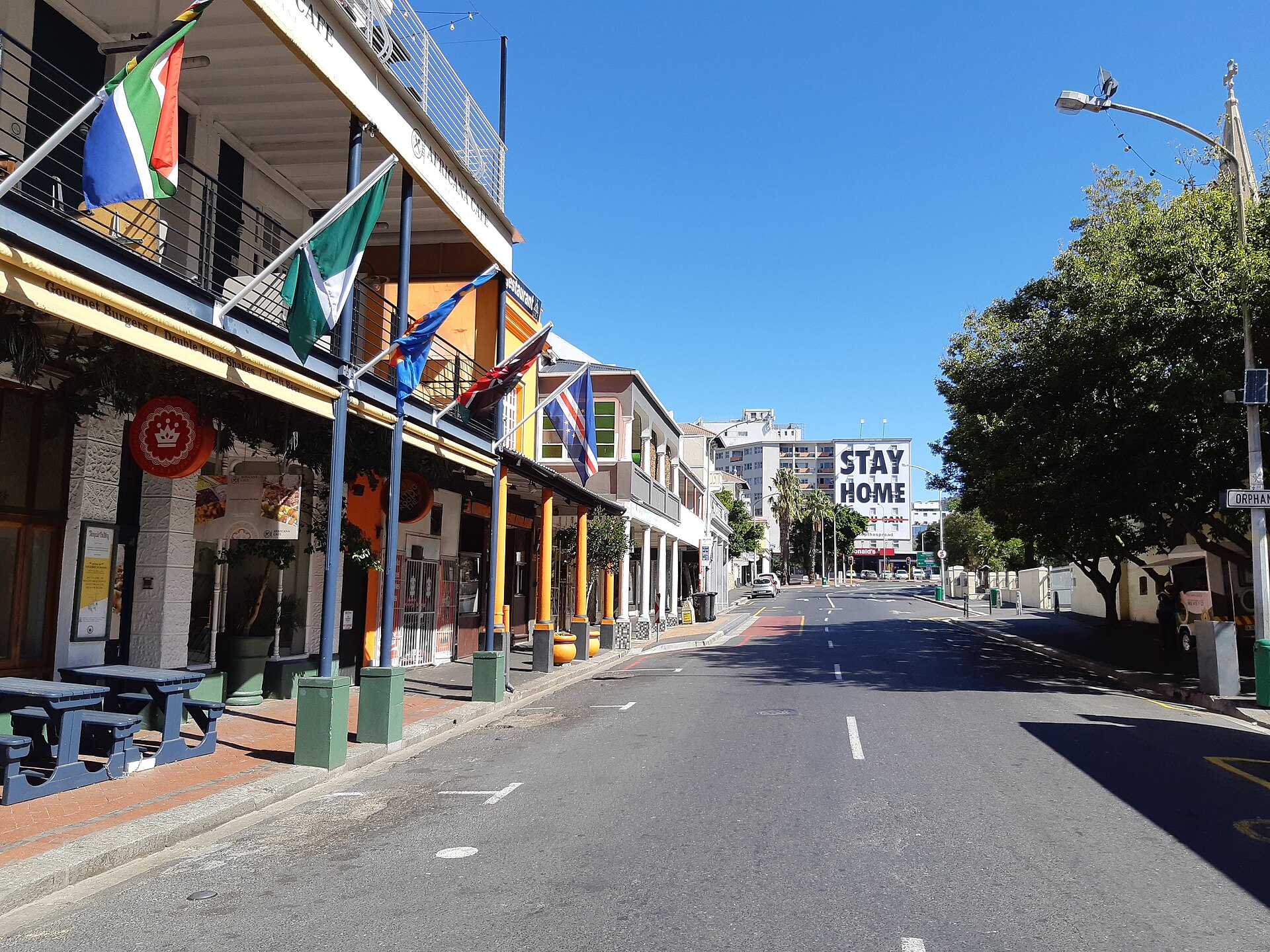
Long Street is Cape Town's most famous thoroughfare — a kilometre-long strip of Victorian buildings with ornate cast-iron balconies that houses bars, backpacker hostels, vintage shops, and the nightlife that has made this street the default meeting point for Cape Town's after-dark scene since the 1990s. The architecture is Cape Town at its most decorative — wrought-iron lacework on building facades, pastel-painted Victorian shopfronts, and the kind of ornamental excess that the rest of the city's architecture rarely permits.
The street's character shifts as you walk its length — from the formal, commercial end near Parliament at the south to the increasingly bohemian and nocturnal stretch toward Signal Hill at the north. The bookshops (Clarke's Bookshop, specialising in Africana, is an institution), the vintage clothing shops, and the cafés that spill onto the pavement create a daytime street life that is walkable and varied. At night, the bars and clubs take over, and the scene — loud, diverse, and operating on a schedule that extends well past midnight — is the most energetic in the city.
Long Street's Victorian buildings are some of the best-preserved in the city centre, and the cast-iron balconies — imported from Britain in the 19th century and assembled on site — give the street a character that is simultaneously colonial and uniquely Cape Townian. The Pan African Market, in a converted Victorian building on Long Street, sells art, crafts, and textiles from across the continent and provides the most concentrated African shopping experience in the city centre.
Verified Facts
Long Street features Victorian buildings with ornate cast-iron balconies
Clarke's Bookshop specialises in Africana
The cast-iron balcony work was imported from Britain in the 19th century
The Pan African Market sells art and crafts from across the continent
Get walking directions
Long Street, Cape Town City Centre, Cape Town, 8001, South Africa