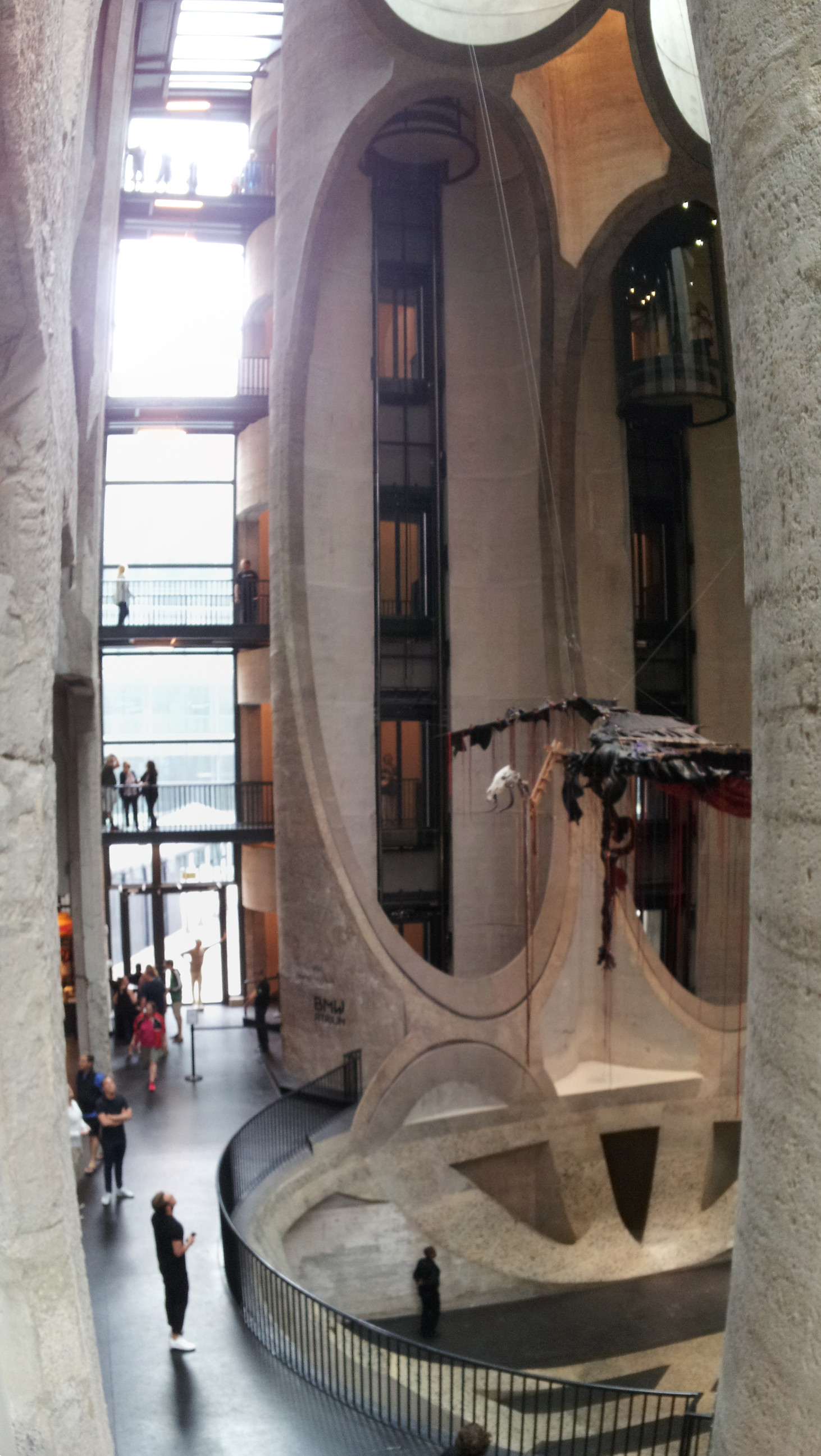
The Zeitz Museum of Contemporary Art Africa is the largest museum of contemporary African art in the world — housed in a converted grain silo at the V&A Waterfront that architect Thomas Heatherwick carved into a cathedral of tubes, voids, and soaring concrete surfaces. The building, completed in 2017, is one of the most extraordinary adaptive-reuse projects of the 21st century: Heatherwick took the silo's 42 concrete tubes (each 33 metres tall and 5.5 metres in diameter) and carved organic forms out of the solid concrete between them, creating gallery spaces that are simultaneously industrial and organic.
The atrium — a central void carved from the silo tubes, rising the full height of the building — is the most dramatic interior space in Cape Town. The concrete surfaces, marked by the circular imprints of the original grain tubes, catch the light from the glass roof above and create a texture that is unique to this building. The galleries spiralling up from the atrium house a collection of contemporary art from across the African continent that is positioned as a counterpoint to the Western-dominated global art market.
The museum's establishment was controversial — funded by Jochen Zeitz (former Puma CEO) and located in one of Cape Town's most expensive areas, the museum has been criticised for importing a European institutional model rather than developing an African one. But the quality of the art, the ambition of the exhibitions, and the sheer power of the building itself make Zeitz MOCAA a cultural landmark that transcends the debate about its origins.
Verified Facts
Zeitz MOCAA opened in 2017 in a converted grain silo
Thomas Heatherwick designed the conversion
The silo contained 42 concrete tubes, each 33 metres tall
It is the largest museum of contemporary African art in the world
Get walking directions
Waterfront Road, Tyger Valley, Bellville, 7530, South Africa