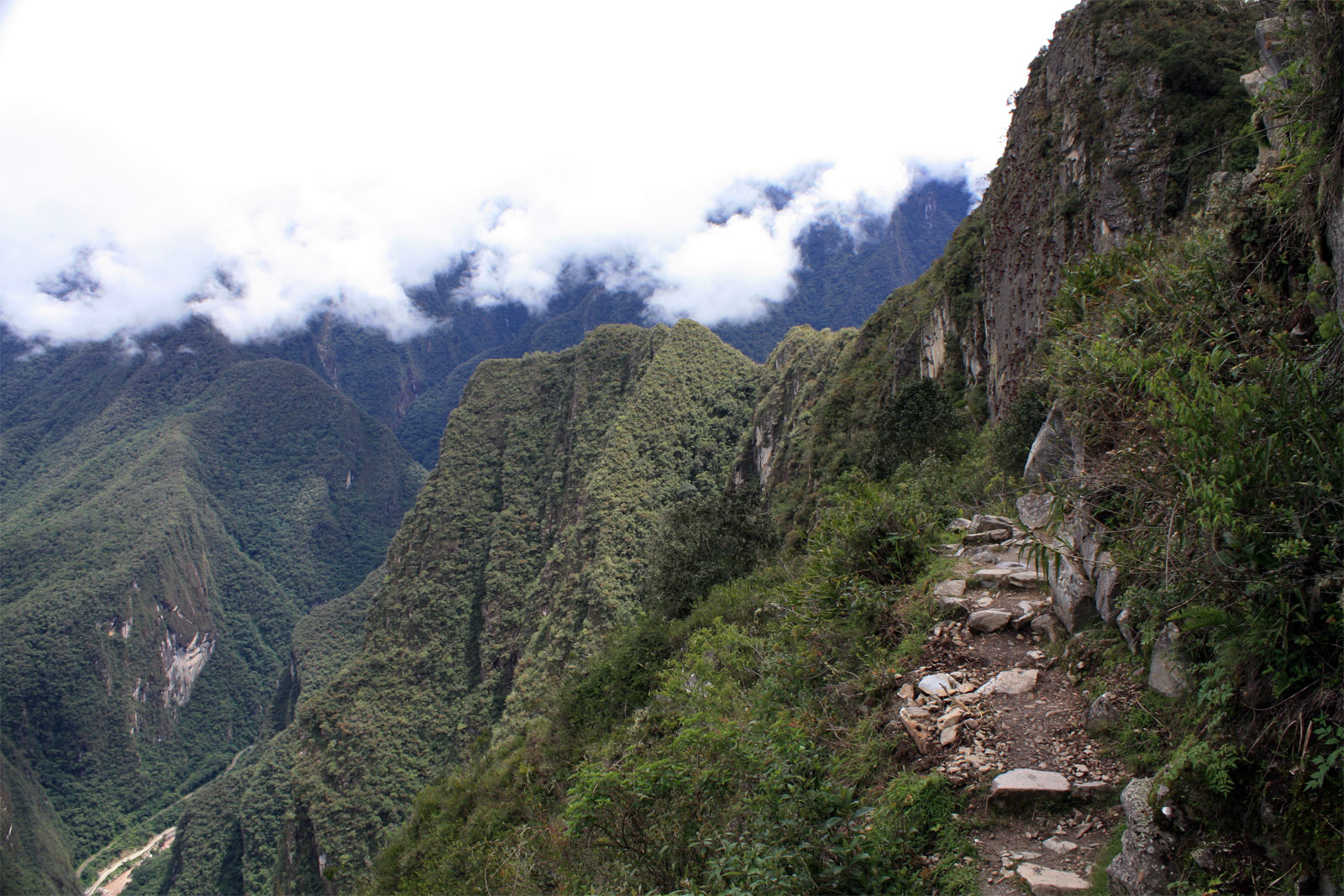
The Inca Trail is the most famous trek in South America — a four-day, 43-kilometre hike along the original Inca road system from the Sacred Valley to Machu Picchu that passes through cloud forest, alpine tundra, Inca ruins, and the Sun Gate (Inti Punku), where the classic first view of Machu Picchu has made hikers weep since Hiram Bingham's porters first cleared the path in 1911.
The trail follows a section of the qhapaq ñan — the Inca road network that connected the empire's 40,000 kilometres of territory from Colombia to Chile — and passes through three significant Inca sites (Runkurakay, Sayacmarca, and Wiñay Wayna) before the climactic approach to Machu Picchu through the Sun Gate. The highest point is Dead Woman's Pass (Warmihuañusca, 4,215 metres), and the altitude, combined with the physical demands of the trail, makes this a challenging trek that requires fitness and acclimatisation.
Permits are required and limited to 500 people per day (including porters and guides), and the trail sells out months in advance during peak season (May-September). The trek must be done with a licensed guide and organised tour, and the experience — camping in mountain meadows, walking through cloud forest, and arriving at Machu Picchu on foot through the same gate the Inca used — is qualitatively different from arriving by train and bus.
Verified Facts
The classic Inca Trail is 43 kilometres over four days
Dead Woman's Pass reaches 4,215 metres
Daily permits are limited to 500 people including porters
The qhapaq ñan was the Inca road network spanning 40,000 kilometres
Get walking directions
Inca Trail, Peru