Walking Tours in Cusco
30 Landmarks in Cusco
Calle Loreto (Inca Walls)
Loreto, Cusco, Peru
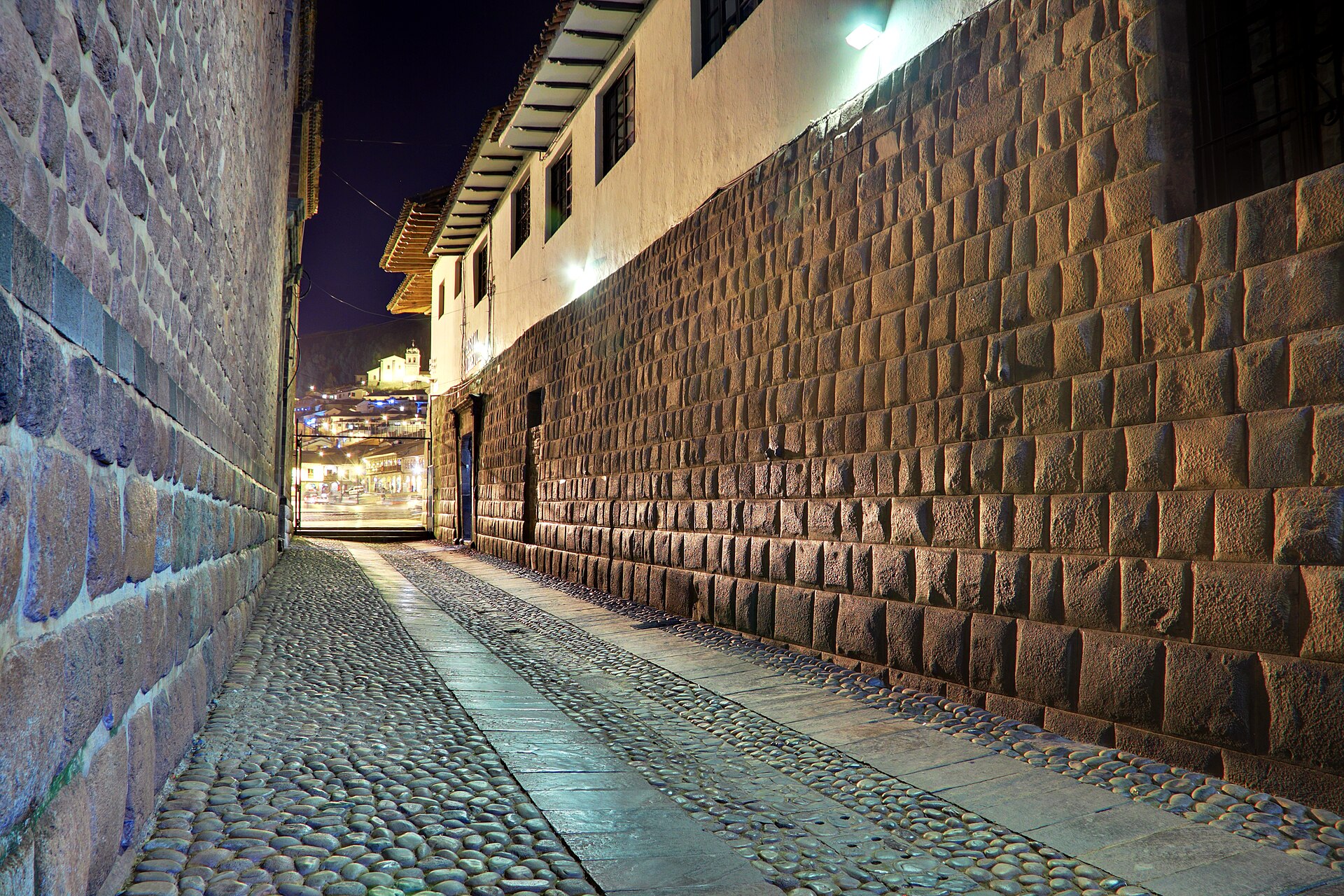
Calle Loreto is the best-preserved Inca street in Cusco — a narrow lane running from the Plaza de Armas southeast toward Qorikancha, flanked on both sides by perfectly fitted Inca stone walls that have been standing since the 15th century. The wall on the left (as you walk from the plaza) was part of the Acllahuasi (House of the Chosen Women, the Inca institution where selected women wove textiles and brewed chicha for the emperor). The wall on the right was part of the palace of Inca Roca. The Inca masonry on Calle Loreto demonstrates the different construction grades the Inca used — the finest, most precisely fitted stonework (used for temples and palaces) is visible here, with each stone individually shaped to fit its neighbours in a mortarless joint that has survived 500 years of earthquakes. The contrast between the Inca foundations (which lean very slightly inward for earthquake resistance) and the colonial buildings above (which sit plumb) is visible along the entire length of the street. The walk from the Plaza de Armas to Qorikancha via Calle Loreto takes about five minutes and provides the most compressed encounter with Cusco's dual architecture — Inca below, Spanish above, both surviving because the Inca understood stone and the Spanish understood how to build on top of it.
Centro de Textiles Tradicionales del Cusco
Avenida El Sol, Cusco, Peru
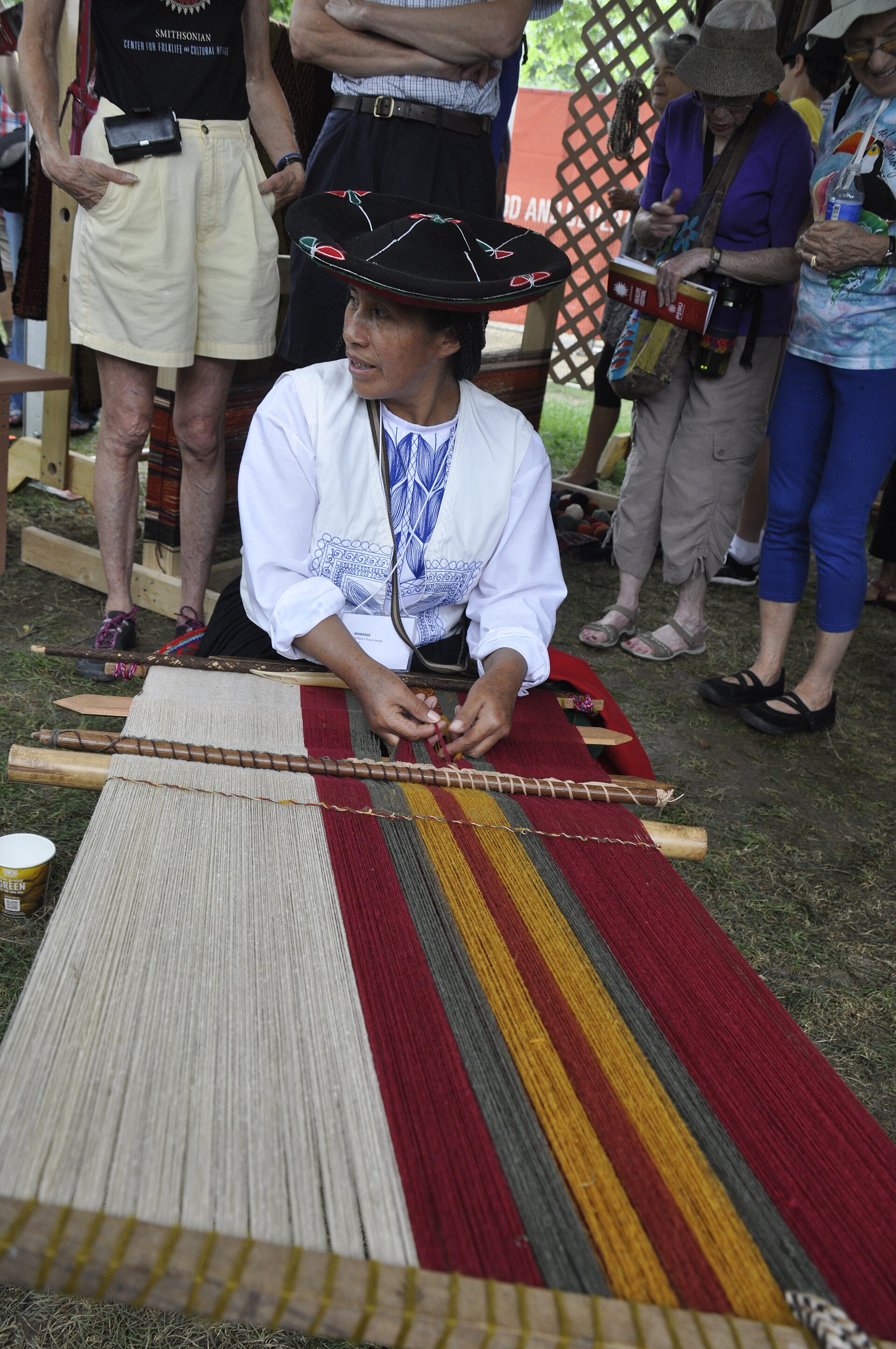
The Centre for Traditional Textiles of Cusco is a non-profit organisation and museum that preserves and promotes the weaving traditions of Cusco's Quechua communities — a space where you can watch weavers demonstrate traditional techniques, learn about the symbolism encoded in Andean textile patterns, and buy directly from the communities whose livelihoods depend on maintaining these skills. The centre works with 10 communities surrounding Cusco, each with distinct weaving traditions, natural dye recipes, and pattern vocabularies. The textiles on display are not the mass-produced alpaca goods sold in tourist shops but genuine handwoven pieces that take weeks or months to complete — the difference in quality, complexity, and the time invested is immediately visible. Andean textiles are information systems as much as decorative objects — the patterns encode community identity, social status, agricultural calendar information, and cosmological narratives that weavers learn from childhood. The centre's educational exhibits explain these codes, and the experience of understanding what the patterns mean transforms a beautiful textile into a readable text.
Chinchero Textile Market & Ruins
Chinchero, Sacred Valley, Cusco Region
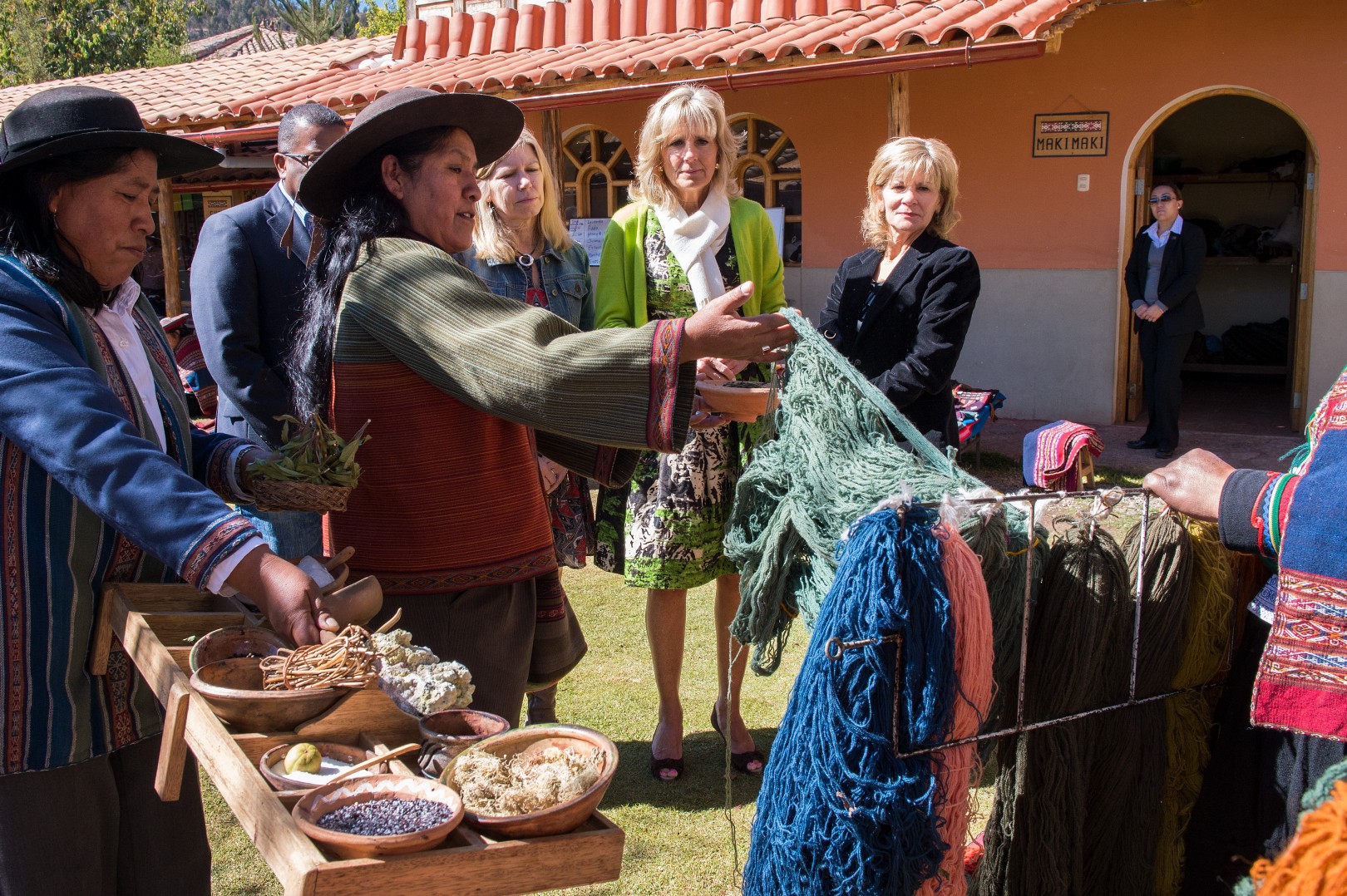
Chinchero is a highland village 30 kilometres from Cusco at 3,762 metres that combines Inca ruins, a colonial church, and the most authentic traditional textile market in the Sacred Valley. The village sits on terraced Inca ruins that served as the country estate of Inca Topa Yupanqui, and the colonial church (built on the Inca foundations, following the pattern established throughout the region) contains some of the finest Andean Baroque murals in Peru. The textile cooperatives in Chinchero are the village's main draw — Quechua women demonstrate the entire weaving process from raw alpaca wool through natural dyeing (using cochineal, plants, and minerals to produce vivid reds, yellows, greens, and purples) to the backstrap loom weaving that produces the intricate patterns encoding Andean cosmology. The textiles sold here are genuinely handmade (unlike much of what's sold in Cusco's tourist shops), and buying directly from the weavers ensures the income reaches the community.
Cusco Cathedral
Avenida Arcopata, Cusco, Peru
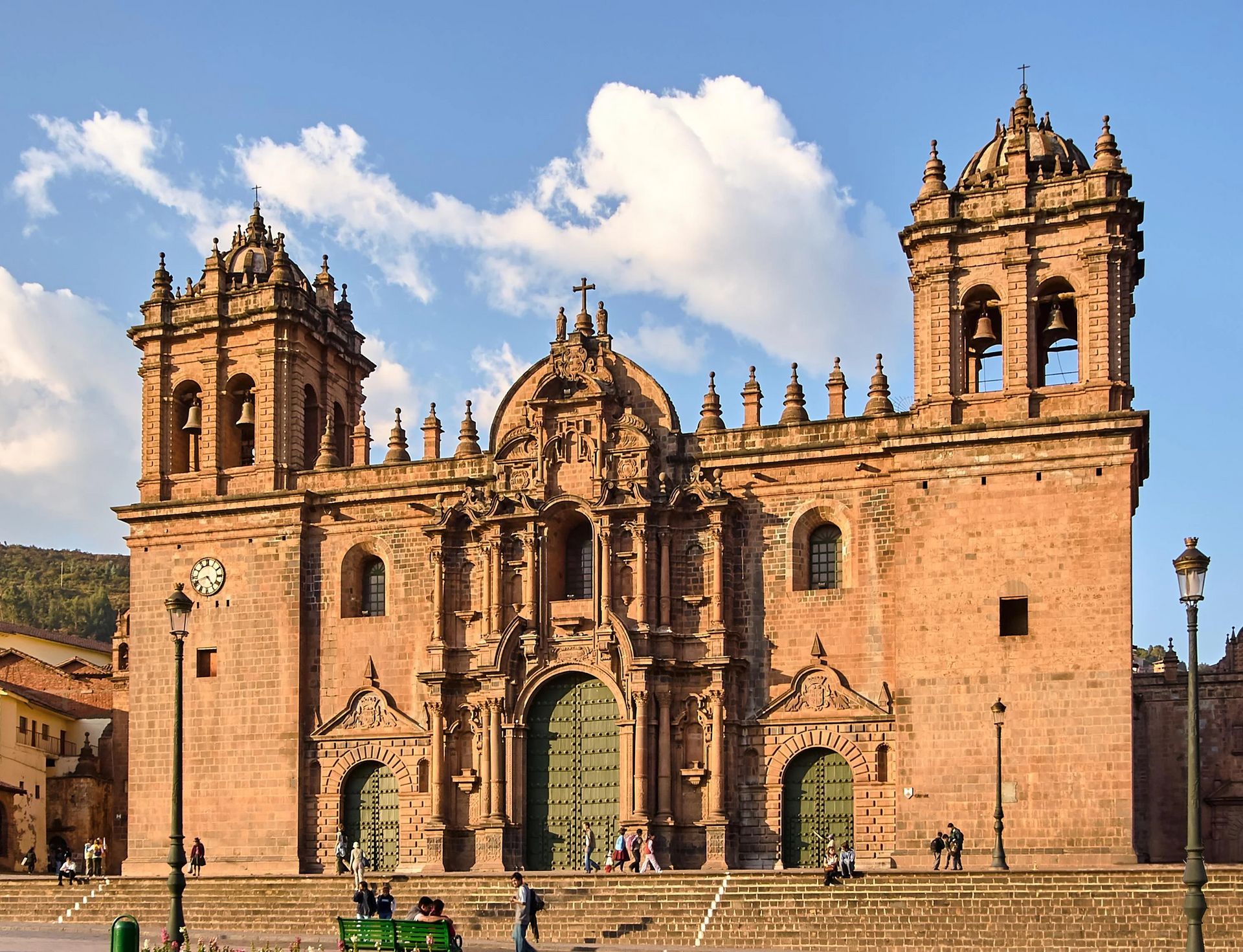
The Cathedral of Cusco is the most important colonial church in Peru — a massive Renaissance and Baroque structure built between 1559 and 1654 using stones quarried from Sacsayhuamán (the Spanish literally disassembled the Inca fortress to build their cathedral), and filled with over 400 paintings from the Cusco School, the artistic movement that produced the most distinctive religious art in the Americas. The cathedral's collection of Cusco School paintings is its greatest treasure — a corpus of work by indigenous and mestizo artists who adapted European religious iconography to Andean sensibilities, producing Madonnas in triangular skirts that resemble mountains, Last Suppers where Christ eats cuy (guinea pig) instead of lamb, and angels carrying muskets instead of swords. The most famous painting — Marcos Zapata's 'Last Supper' showing cuy on the table — hangs near the entrance and is the most photographed artwork in Peru. The cathedral's construction on Inca foundations means the building incorporates both the Spanish architectural tradition (barrel vaults, Baroque retables, cedar choir stalls) and the Inca engineering that makes those traditions possible (the foundations are Inca stonework, more stable than anything the Spanish could build). The result is a building that embodies the colonial relationship in stone — Spanish ambition supported by Inca labour and skill.
Cusco Food Culture
Various locations, Cusco
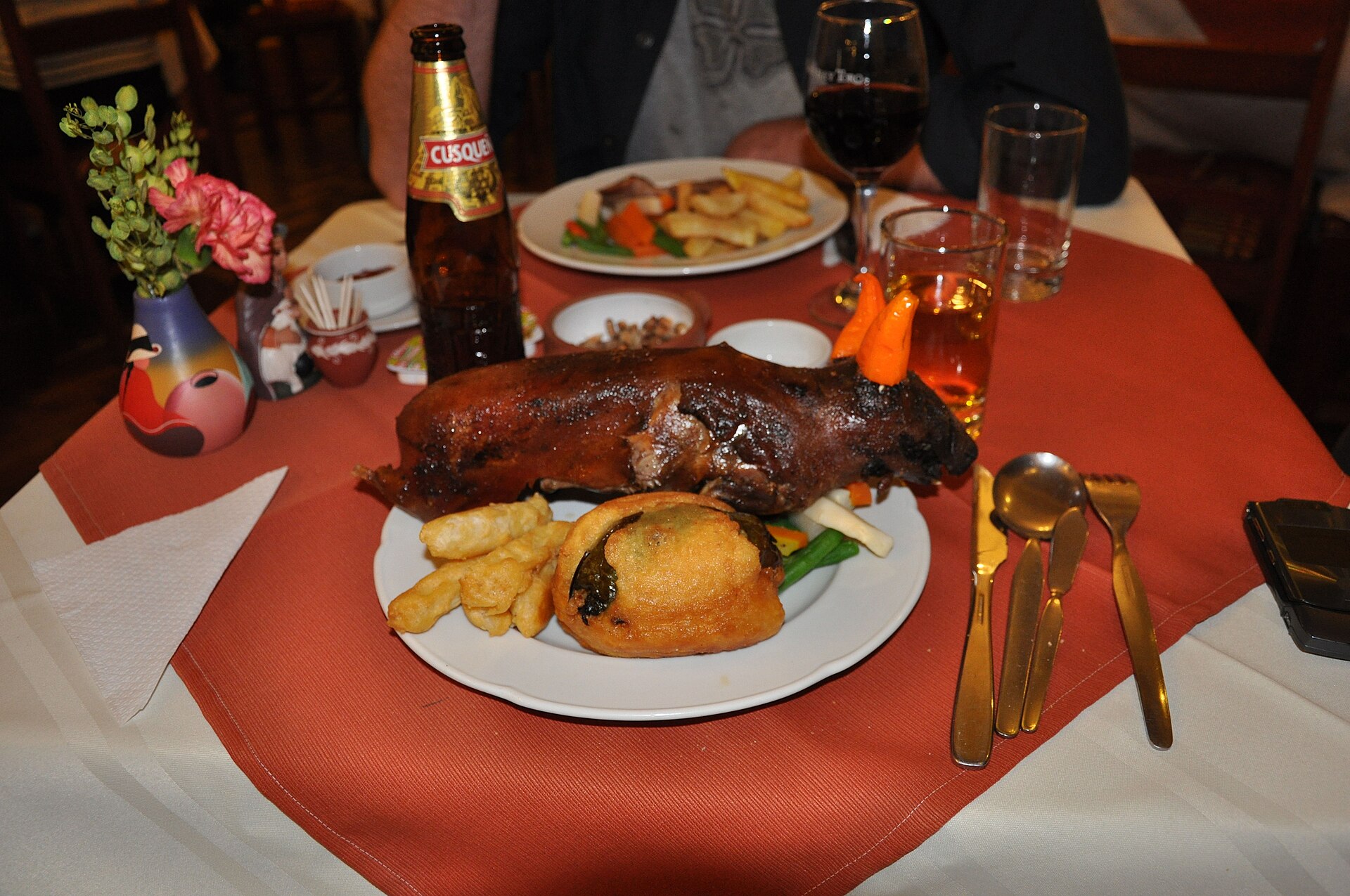
Cusco's food culture is one of the most distinctive in the Americas — a highland cuisine built on ingredients that have been cultivated in the Andes for thousands of years and that are only now being discovered by the international food world. Peru has over 3,000 varieties of potato (many cultivated in the highlands around Cusco), hundreds of varieties of corn, and the quinoa, kiwicha, and other Andean grains that the Inca cultivated as staples and that the rest of the world has adopted as superfoods. Cuy (roasted guinea pig) is the essential Cusco dish — a whole animal roasted on a spit until the skin is crispy and the meat is tender, served with potatoes and ají (chilli sauce). Cuy has been the primary protein source in the Andes for over 5,000 years, and eating it in Cusco — where it's sold in markets, served in restaurants, and roasted by street vendors — provides a connection to a food tradition that predates the Inca. The flavour is comparable to rabbit, and the cultural resistance that Western visitors sometimes feel is entirely a product of unfamiliarity. The new Peruvian cuisine movement has reached Cusco — restaurants like Chicha (by Gastón Acurio, Peru's most famous chef) and MAP Café serve sophisticated interpretations of highland ingredients, while the picanterías (traditional restaurants) serve the comfort food — rocoto relleno (stuffed hot peppers), chiriuchu (a cold plate of meats, cheese, and seaweed served during Corpus Christi), and the soups that sustain life at 3,400 metres.
Cusco School of Art & Baroque Churches
Various churches, Historic Centre, Cusco
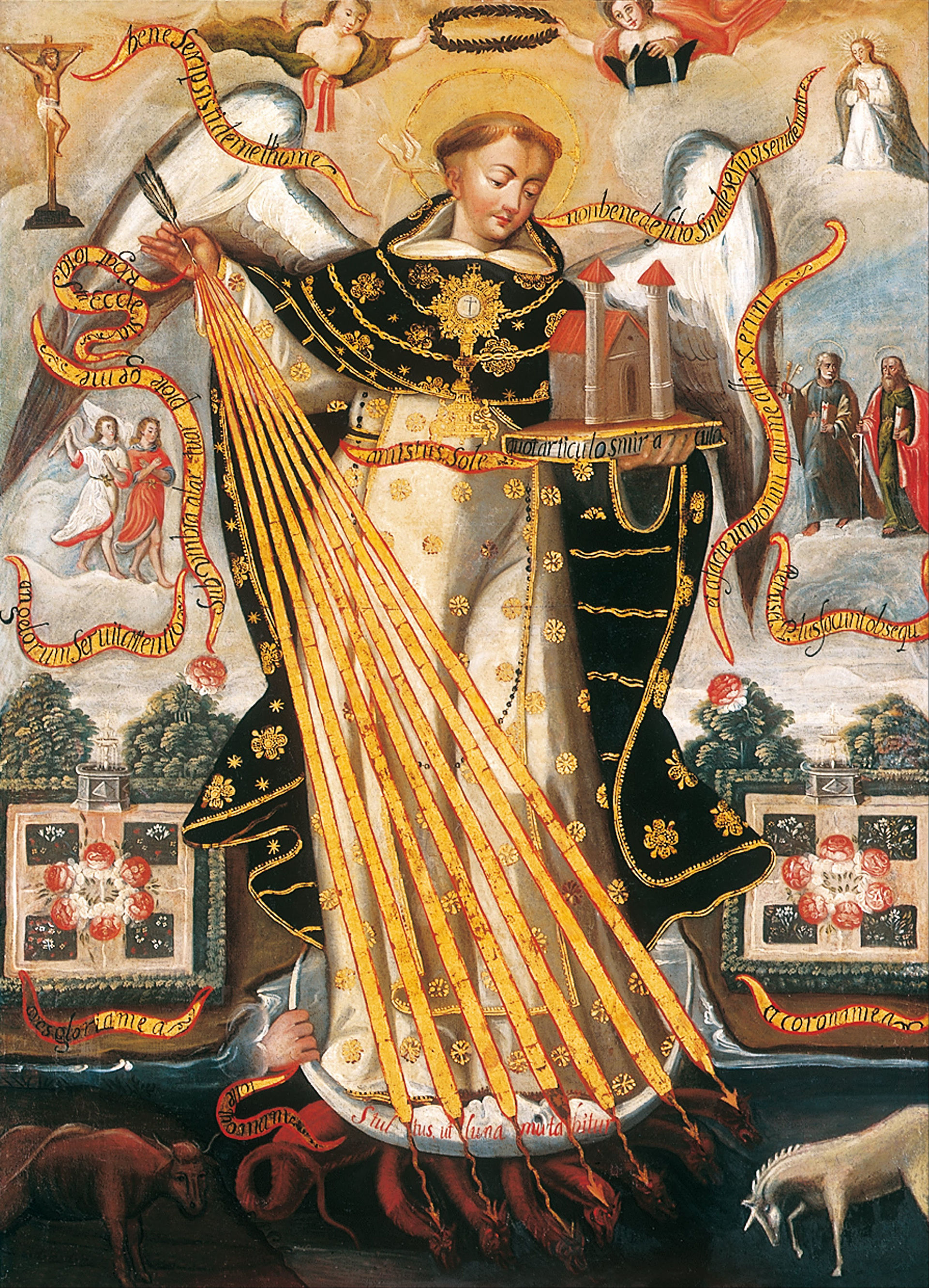
The Cusco School (Escuela Cusqueña) was the most important artistic movement in colonial South America — a style of painting that developed in Cusco from the 16th to 18th centuries when indigenous and mestizo artists adapted European religious imagery to Andean sensibilities, creating a visual language that is neither purely European nor purely indigenous but a fusion that exists nowhere else. The paintings are found in virtually every church in Cusco — the archangels wearing European armour but carrying Andean weapons, the Virgins of the Mountain (where the Virgin Mary's triangular skirt becomes a mountain), and the Last Suppers where cuy replaces lamb — and the cumulative effect of seeing dozens of these paintings in their original church settings creates an understanding of colonial-era cultural negotiation that no museum can provide. The best churches for Cusco School art (beyond the Cathedral and Compañía already covered) include San Pedro, La Merced, San Cristóbal, and the chapel of the Hospital de los Naturales — each containing paintings that demonstrate different aspects of the School's development. The Baroque church interiors — gilded retables, carved cedar choir stalls, and the elaborate decoration that the Spanish colonial church lavished on its Andean outposts — provide the architectural framework that the paintings were designed to inhabit.
Humantay Lake Trek
Soraypampa, Mollepata District, Cusco Region
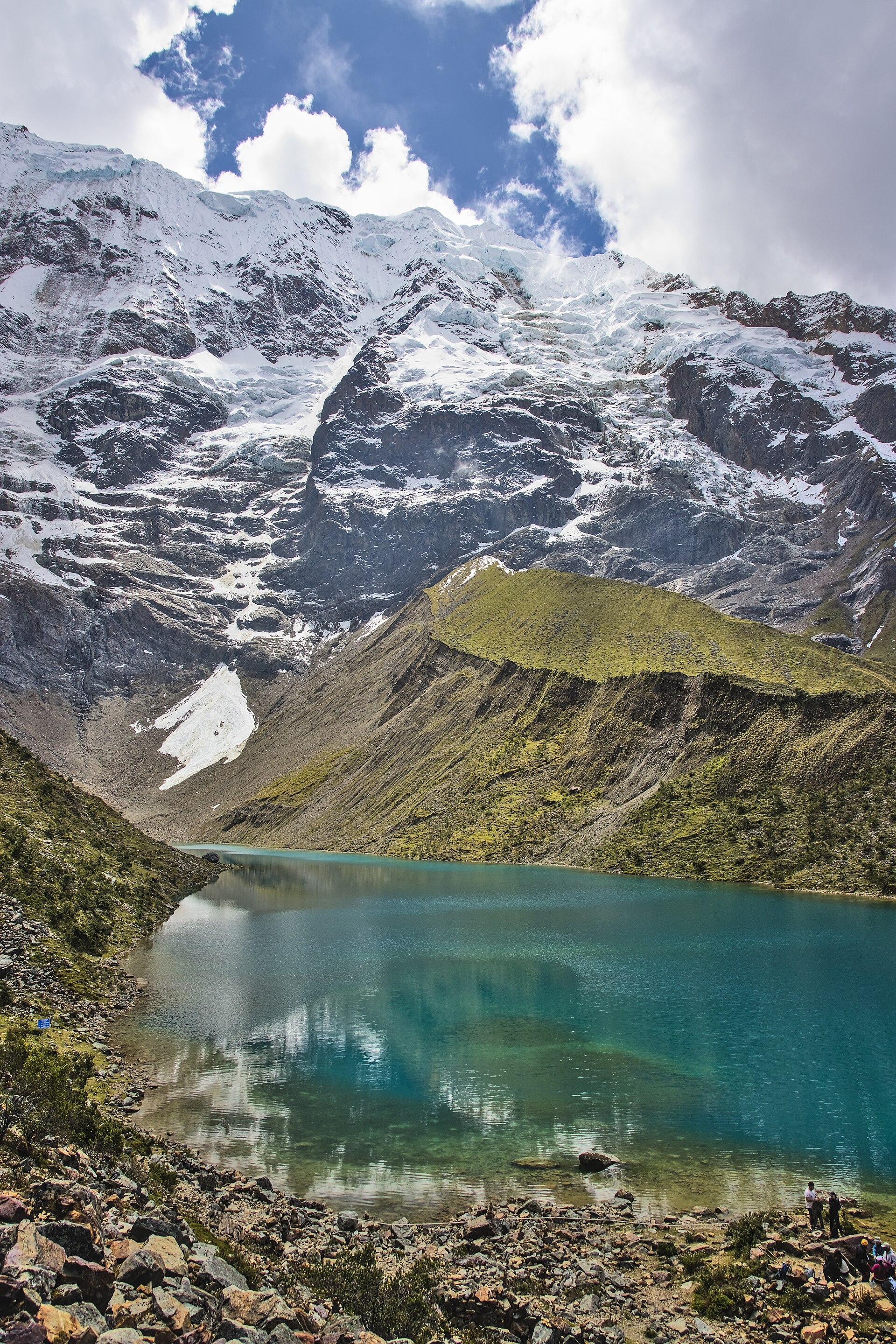
Humantay Lake is a turquoise glacial lake at 4,200 metres in the Vilcabamba range — a day-trek destination that has become one of the most popular excursions from Cusco for its extraordinarily coloured water (a milky turquoise from glacial sediment) set against the snow-capped peak of Mount Humantay (5,473m). The trek begins at Soraypampa (about 4 hours' drive from Cusco) and climbs 200 metres in about 90 minutes to the lake. The lake's colour changes with the light — turquoise in the morning, deeper blue at midday, and grey-green under clouds — and the backdrop of the glaciated mountain provides the kind of landscape that makes the Andes feel like a different planet. The hike is moderate but the altitude is challenging for visitors not fully acclimatised, and the standard advice (as with all Cusco high-altitude activities) is to spend at least 2-3 days acclimatising in Cusco before attempting it. The trek is offered by virtually every tour agency in Cusco as a day trip and provides one of the most accessible high-altitude lake experiences in the Andes. The drive through the Apurímac valley, the Quechua farming communities along the route, and the changing landscape as you climb from valley floor to glacial zone provide as much to see as the lake itself.
Iglesia de la Compañía de Jesús
Avenida Arcopata, Cusco, Peru
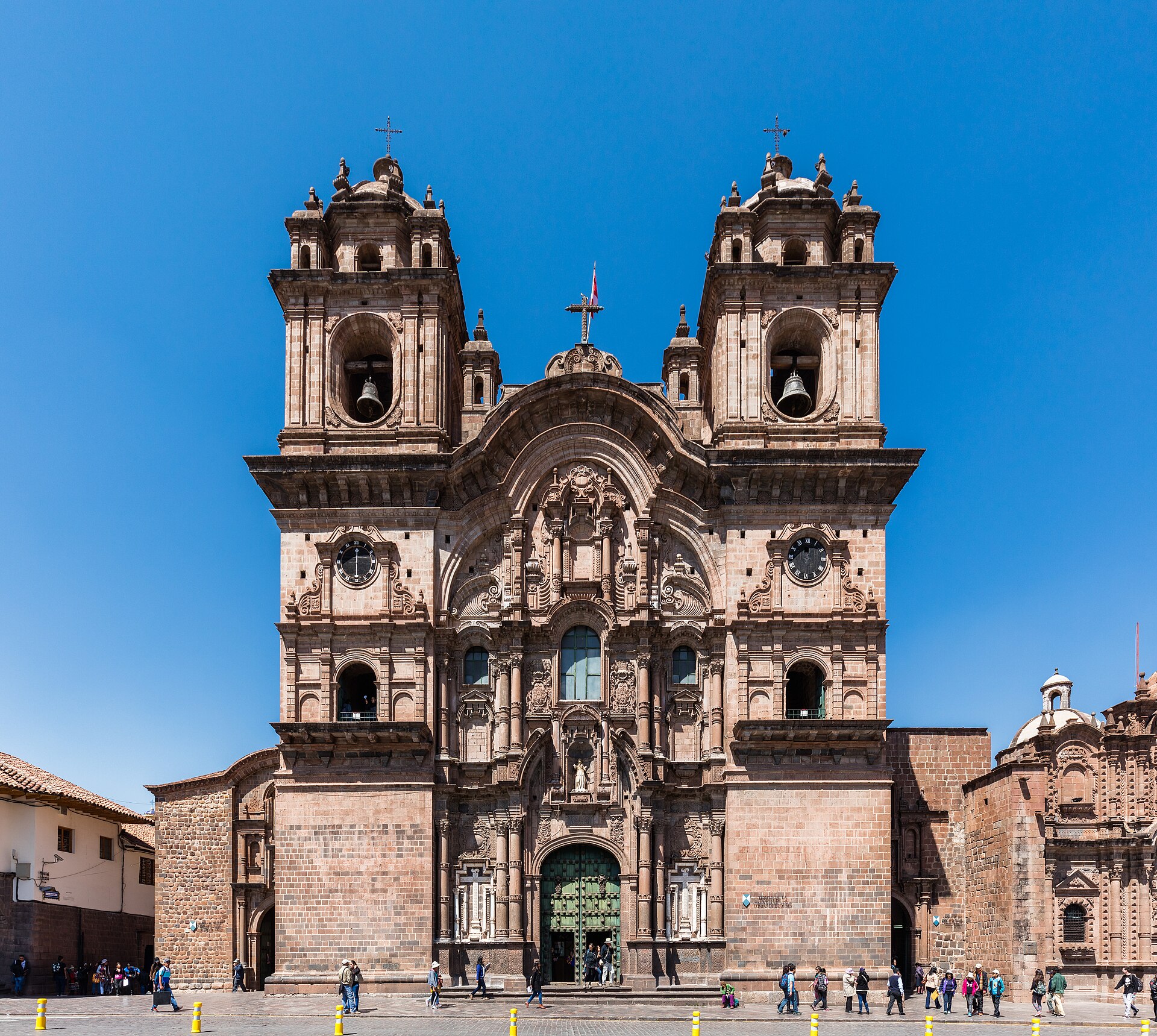
The Church of the Company of Jesus is the most elaborately decorated church in Cusco — a Jesuit church built on the foundations of the Inca Palace of Huayna Capac between 1571 and 1668 whose Baroque facade is so extravagant that the bishop of Cusco complained to the Pope that it outshone his own cathedral (the Pope agreed and ordered the Jesuits to tone it down; they didn't). The facade is a masterpiece of colonial Baroque — a two-storey composition of twisted columns (Solomonic columns, the signature element of Spanish Baroque), carved saints, angels, and the IHS monogram of the Jesuits, all executed in the pinkish andesite stone that gives Cusco's colonial architecture its distinctive warmth. The interior is equally elaborate, with a gilded cedar retable that climbs the full height of the apse and paintings from the Cusco School that line the nave. The church was built on the site where Huayna Capac (the Inca emperor whose death from a disease introduced by the Spanish triggered the civil war that weakened the empire before the conquest) held his court, and the Inca stonework is visible in the foundations. The church's position on the Plaza de Armas, directly facing the cathedral, creates an architectural dialogue between episcopal and Jesuit ambition that is one of the defining features of Cusco's colonial landscape.
Inca Trail to Machu Picchu
Inca Trail, Peru
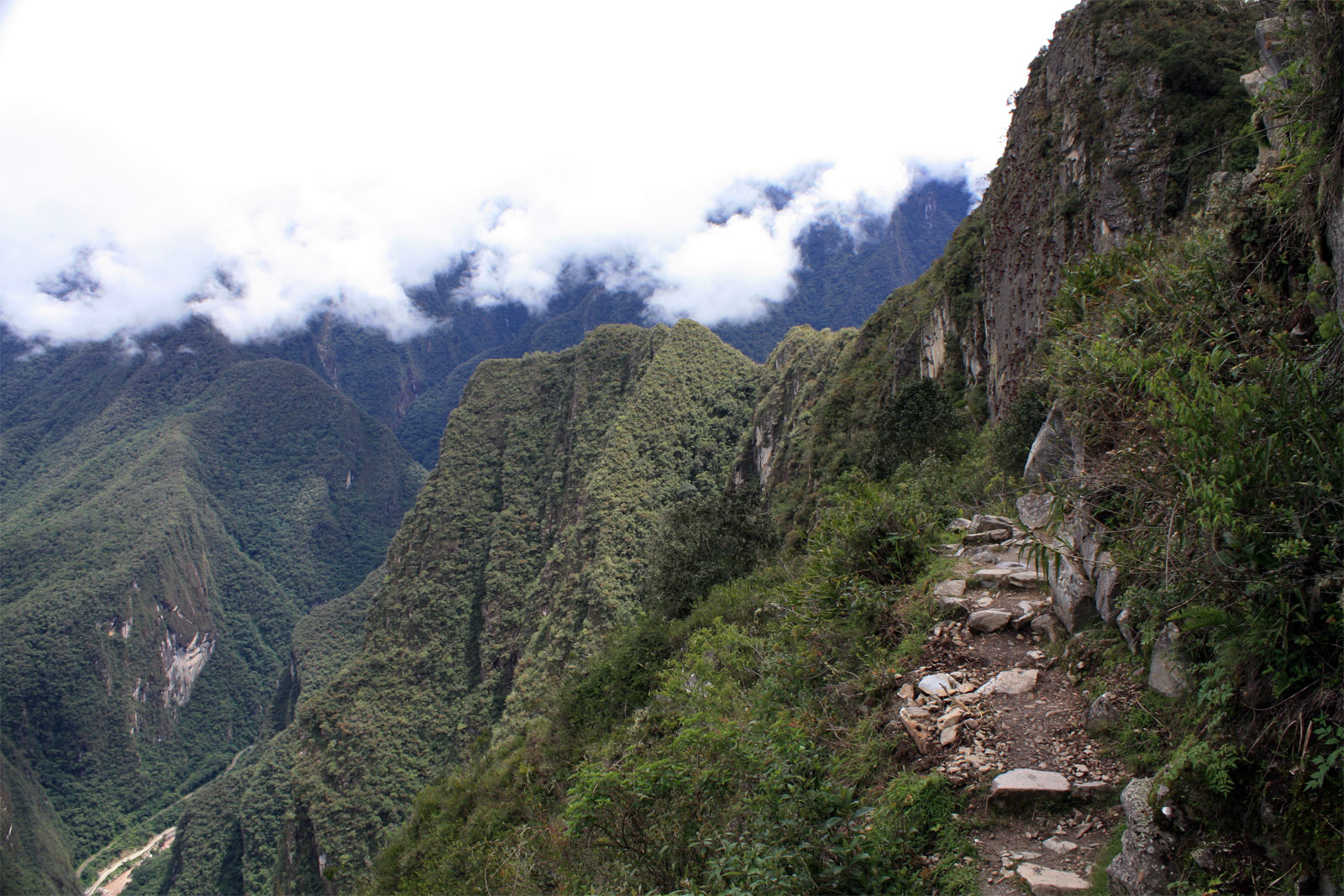
The Inca Trail is the most famous trek in South America — a four-day, 43-kilometre hike along the original Inca road system from the Sacred Valley to Machu Picchu that passes through cloud forest, alpine tundra, Inca ruins, and the Sun Gate (Inti Punku), where the classic first view of Machu Picchu has made hikers weep since Hiram Bingham's porters first cleared the path in 1911. The trail follows a section of the qhapaq ñan — the Inca road network that connected the empire's 40,000 kilometres of territory from Colombia to Chile — and passes through three significant Inca sites (Runkurakay, Sayacmarca, and Wiñay Wayna) before the climactic approach to Machu Picchu through the Sun Gate. The highest point is Dead Woman's Pass (Warmihuañusca, 4,215 metres), and the altitude, combined with the physical demands of the trail, makes this a challenging trek that requires fitness and acclimatisation. Permits are required and limited to 500 people per day (including porters and guides), and the trail sells out months in advance during peak season (May-September). The trek must be done with a licensed guide and organised tour, and the experience — camping in mountain meadows, walking through cloud forest, and arriving at Machu Picchu on foot through the same gate the Inca used — is qualitatively different from arriving by train and bus.
Machu Picchu (Day Trip)
Machu Picchu, Urubamba Province, Cusco Region
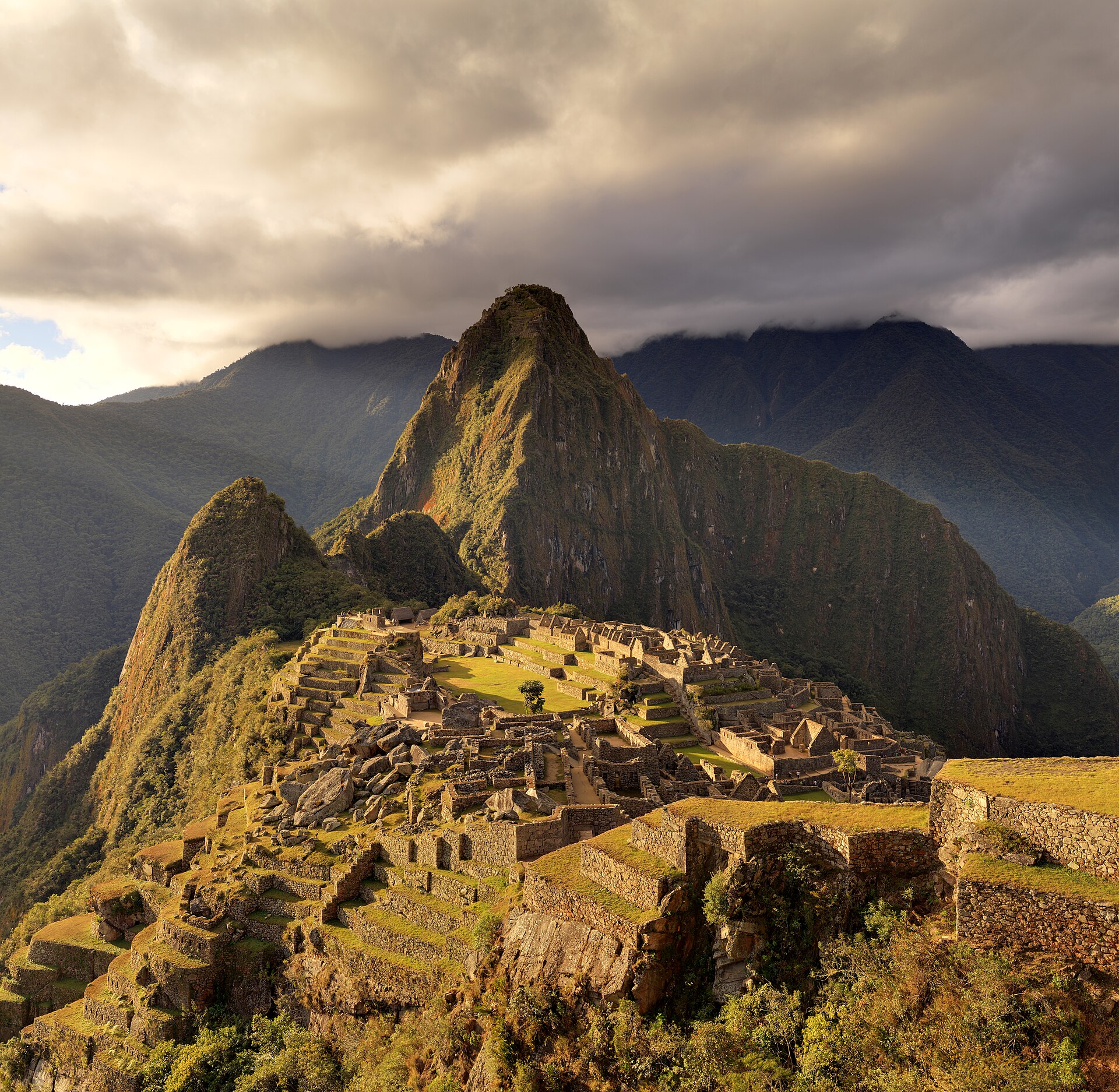
Machu Picchu is the most famous archaeological site in the Americas and one of the New Seven Wonders of the World — a 15th-century Inca citadel built on a mountain ridge 2,430 metres above sea level, abandoned before the Spanish conquest and hidden by cloud forest until the American historian Hiram Bingham brought it to international attention in 1911 (though local Quechua farmers had known about it all along). The citadel is divided into an agricultural zone (terraces that cling to the mountain at impossible angles) and an urban zone (temples, palaces, plazas, and the Intihuatana stone — a ritual sun dial that is the spiritual centre of the site). The precision of the stonework, the sophistication of the water management system, and the sheer ambition of building a city on a knife-edge ridge between two mountains demonstrate Inca engineering at its peak. Reaching Machu Picchu from Cusco involves a train to Aguas Calientes (the town at the base of the mountain) followed by a bus to the citadel entrance — or, for the more adventurous, the four-day Inca Trail hike that approaches the site through the Sun Gate with the classic reveal of the citadel spread out below. Daily visitor numbers are capped (currently about 4,500 per day), and tickets must be purchased in advance. The site requires a full day from Cusco, and the pre-dawn start (to catch the earliest train) is justified by the experience of watching the clouds lift from the citadel as the morning sun hits the stone.
Moray & Maras Salt Mines
Espaderos, Cusco, Peru
Moray and Maras are two of the most visually extraordinary Inca sites in the Sacred Valley — Moray is a series of concentric circular terraces carved into a natural depression that functioned as an agricultural laboratory (each terrace level has a slightly different microclimate, allowing the Inca to test crop varieties at different temperatures), and Maras is an ancient salt-mining operation of over 5,000 terraced salt pans cascading down a mountainside, fed by a natural saline spring. The Maras salt pans have been in continuous operation since before the Inca — the spring that feeds them produces naturally saline water, and the terraced pools (owned by individual families from the local community) evaporate the water to produce salt that is sold locally and increasingly exported as a gourmet product. The visual impact — thousands of white salt pans terracing down a red mountainside — is extraordinary, and the site provides one of the most photogenic landscapes in the Andes. Moray's circular terraces create a temperature difference of about 15°C between the top and bottom, which gave the Inca the ability to simulate different altitude zones and test which crops could survive in different conditions — an agricultural research station that demonstrates a sophistication of scientific thinking that contradicts the common assumption that pre-Columbian civilisations lacked systematic inquiry. The combination of Moray and Maras (about 7km apart by road) is a standard half-day trip from Cusco or the Sacred Valley.
Museo de Arte Precolombino (MAP)
Plaza de las Nazarenas 231, Cusco
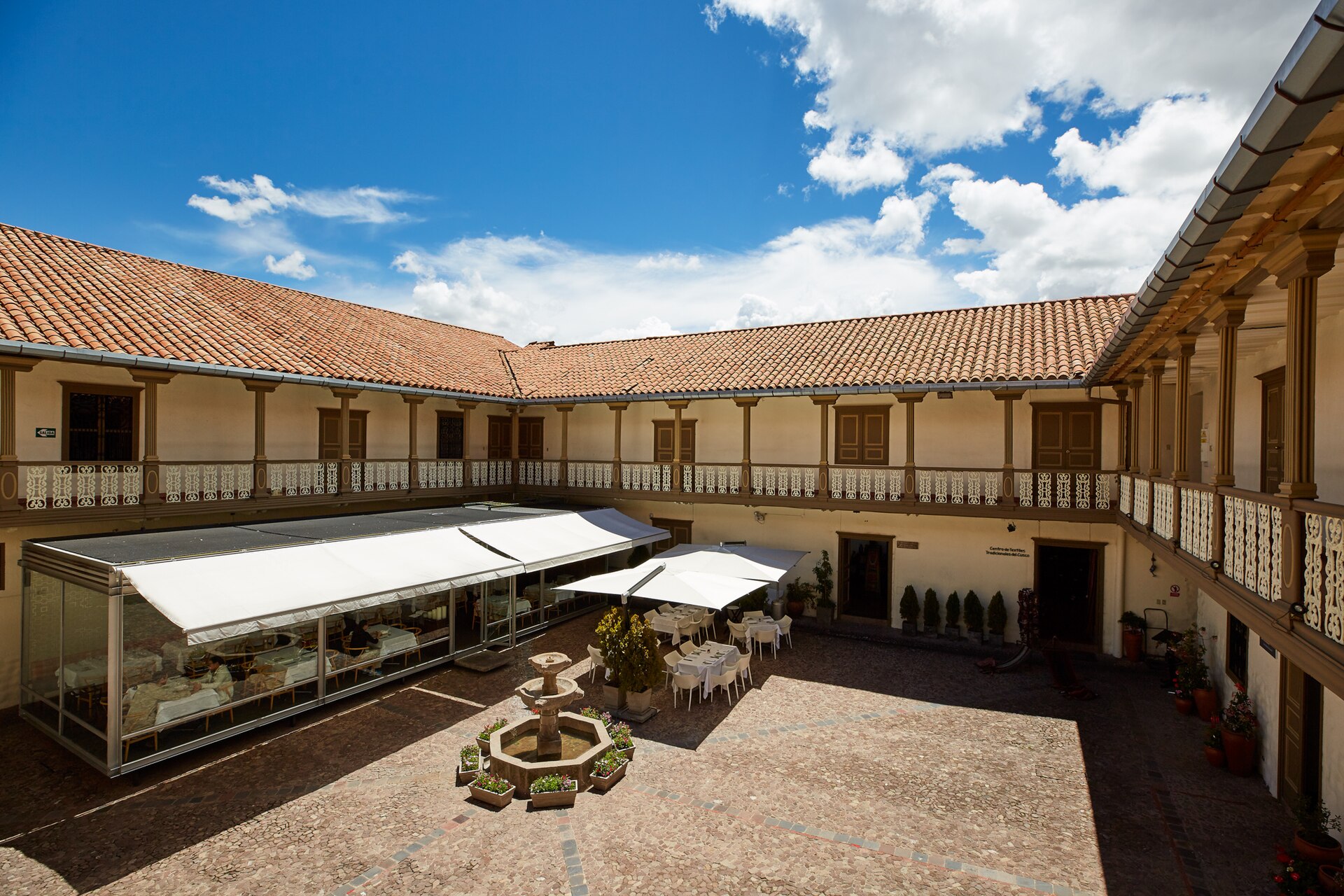
The Museo de Arte Precolombino is the finest pre-Columbian art museum in Peru — a curated collection of 450 masterworks selected by Fernando de Szyszlo from the Museo Larco in Lima, displayed in a 15th-century Inca ceremonial building that was later converted into the colonial Casa Cabrera. The museum treats pre-Columbian objects as art rather than archaeology — the ceramics, gold work, textiles, and wood carvings are displayed in elegantly lit galleries with the reverence that European museums reserve for Old Masters. The collection spans 3,000 years of Andean civilisation — Moche portrait vessels (ceramic faces so individualised they function as portraits), Nazca polychrome pottery, Chimú gold work, and the Inca stonework and metalwork that represents the final flowering of pre-Columbian Andean art. The MAP Café in the museum's courtyard is one of the best restaurants in Cusco.
Museo Inka
Calle Prolongación Pera, Cusco, Peru
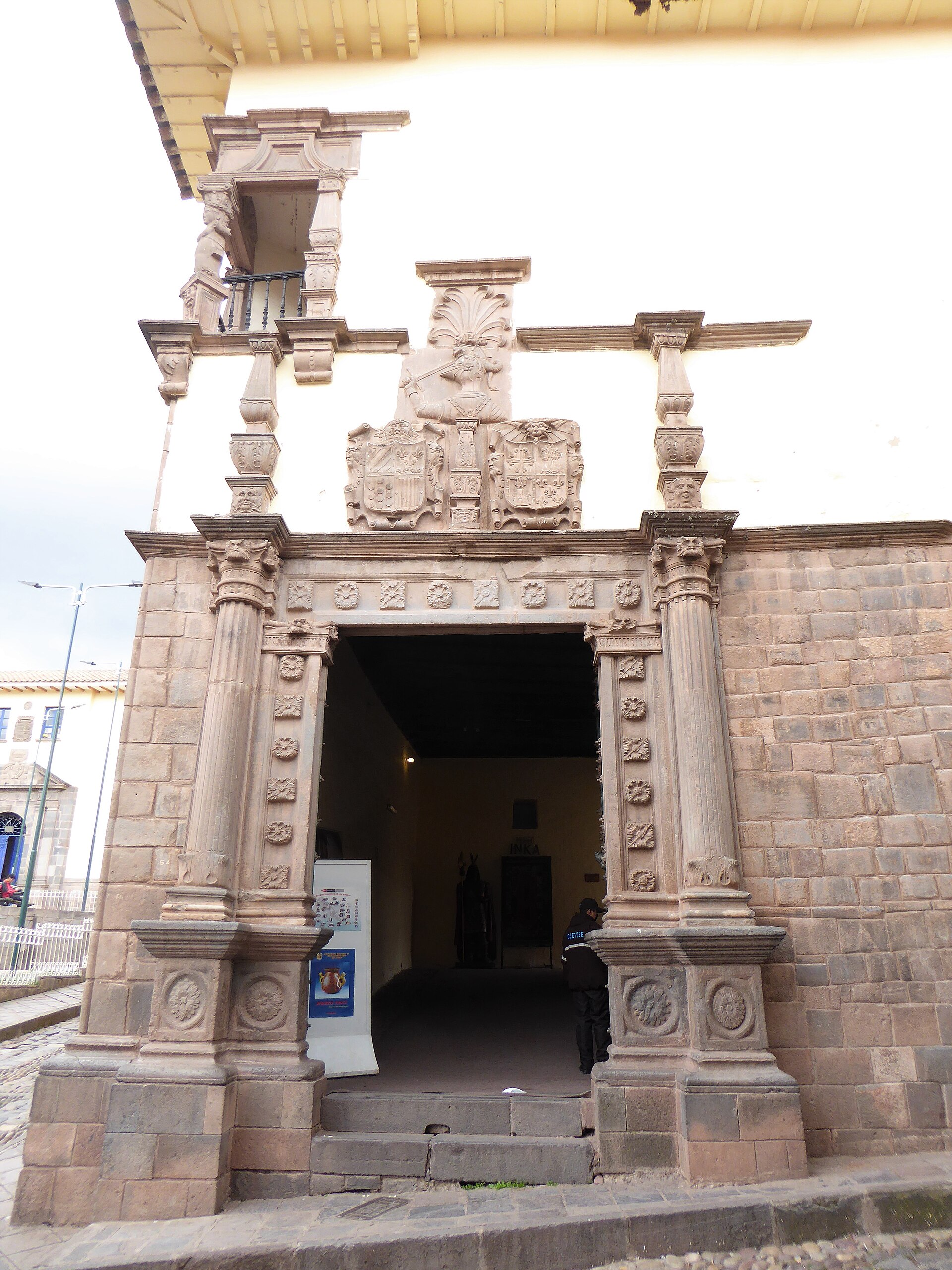
The Museo Inka is Cusco's most important museum of pre-Columbian art — housed in the colonial Admiral's Palace (a 17th-century mansion with a portal decorated with mythological figures), the museum displays the most comprehensive collection of Inca artifacts in Cusco, including ceramics, textiles, gold and silver objects, mummies, and the quipus (knotted string recording devices) that were the Inca's primary means of record-keeping. The textile collection is the museum's strength — the Inca and pre-Inca weavings on display demonstrate a sophistication of colour, pattern, and technique that rivals any textile tradition in the world. The quipus — knotted strings of different colours and lengths that encoded numerical, administrative, and possibly narrative information — remain only partially decoded, and seeing them in person provides an encounter with an information technology that the Spanish destroyed but could not fully understand. The museum's courtyard is used by Quechua weavers who demonstrate traditional weaving techniques and sell their work directly — a living connection between the archaeological collection inside and the indigenous communities who maintain the textile traditions outside. The building itself, with its colonial architecture built on Inca foundations (a recurring Cusco theme), provides architectural context for the collections it houses.
Pikillacta (Pre-Inca Wari Ruins)
Pikillacta, Lucre District, Cusco Region
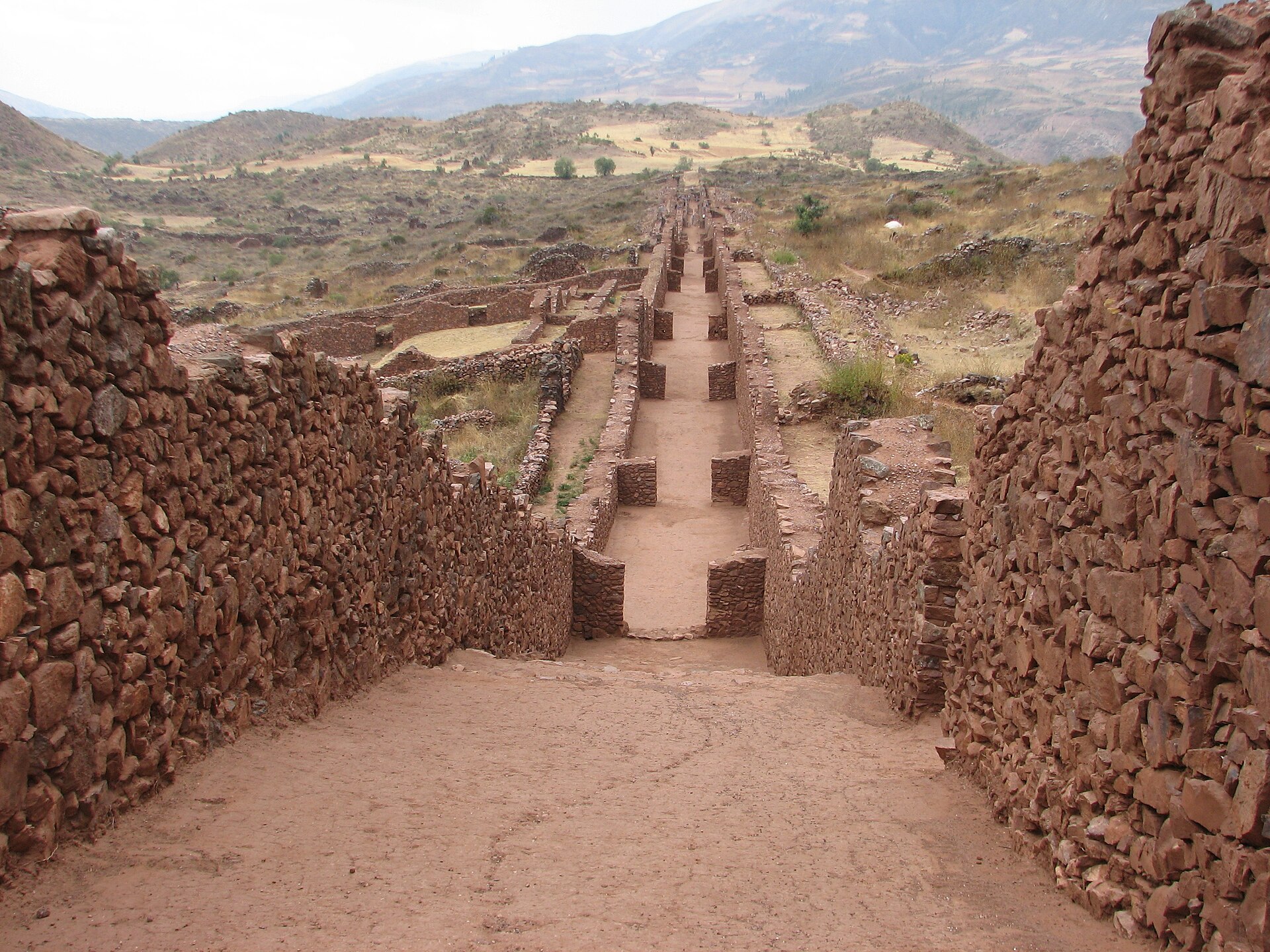
Pikillacta is the largest pre-Inca archaeological site in the Cusco region — a Wari Empire administrative centre built between 600 and 1000 AD that predates the Inca by several centuries and demonstrates that the Cusco valley was a centre of civilisation long before Manco Cápac founded the Inca dynasty. The site covers 47 hectares and contains over 700 buildings arranged in a grid pattern that shows a level of urban planning comparable to Roman colonial cities. The Wari Empire, which controlled much of Peru from its capital near Ayacucho, built Pikillacta as a provincial centre to administer the Cusco valley — the massive perimeter walls (up to 12 metres high), the storage buildings, and the residential compounds suggest a settlement designed for both military control and economic administration. The site's grid layout and standardised building plans are distinctive Wari characteristics that contrast with the organic, terrain-following approach of later Inca architecture. Pikillacta is 30 kilometres south of Cusco on the road to Puno and is included on some Boleto Turístico itineraries. The site is rarely visited by tourists (who focus on Inca sites), which means you can often explore the ruins alone — walking through the 700-building complex with only the wind and the Andean light for company.
Pisac Ruins & Market
Pisac, Sacred Valley, Cusco Region
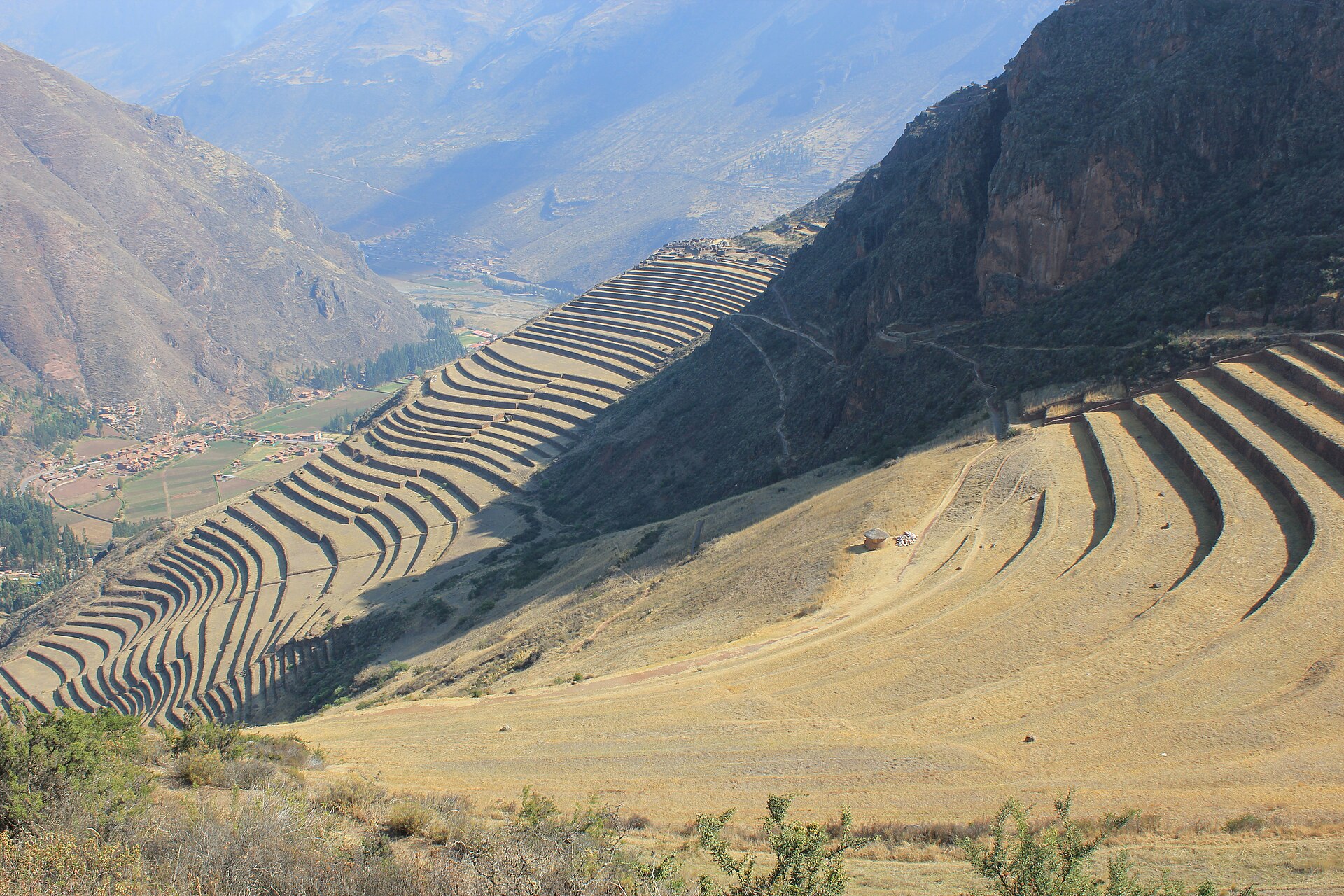
Pisac is a Sacred Valley town that combines some of the most dramatic Inca ruins in Peru with the most popular traditional market in the Cusco region. The ruins, climbing the mountainside above the town, include a sun temple, military terraces, residential quarters, and the cliff-side cemetery where thousands of Inca burial niches are carved into the rock face — a vertical city of the dead that is as impressive as any Inca construction. The market in the town below operates daily but is largest on Tuesdays, Thursdays, and Sundays, when Quechua communities from the surrounding villages arrive to sell textiles, ceramics, jewellery, and the agricultural products of the Sacred Valley. The market is more authentic than Cusco's tourist shops — the vendors include both artisans selling directly and merchants, and the prices are generally lower. The local bread (enormous, round loaves baked in wood-fired ovens) and the chicha morada (a sweet drink made from purple corn) are market traditions. The combination of ruins above and market below makes Pisac one of the most satisfying half-day trips from Cusco — the ruins provide the archaeological experience, the market provides the cultural one, and the Sacred Valley setting (the Urubamba River, the terraced hillsides, the snow peaks on the horizon) provides the landscape that makes everything else look better.
Pisco Sour & Cusco Bar Culture
Plateros, Peru
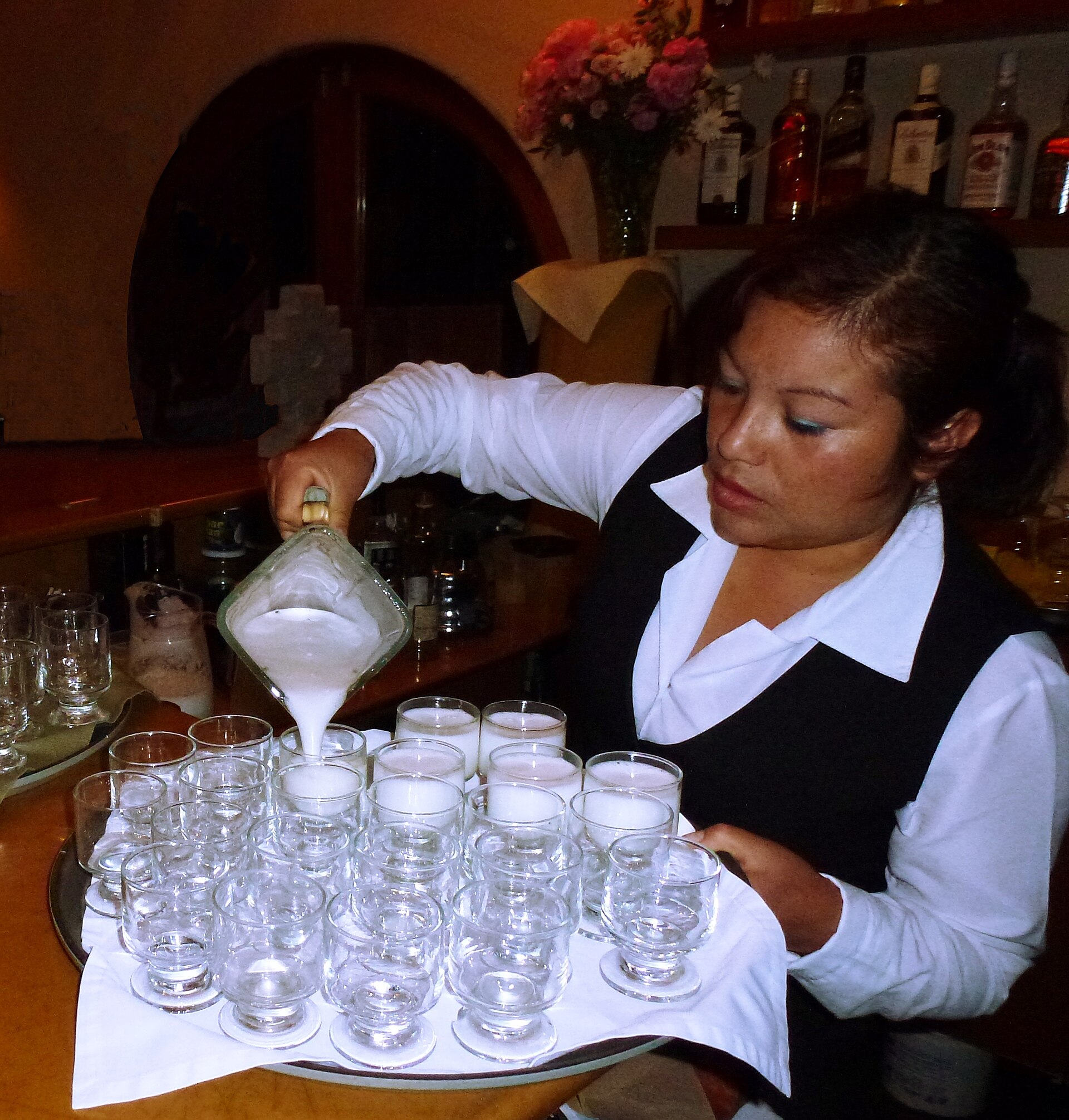
The pisco sour is Peru's national cocktail — a frothy, citrus-sharp drink made from pisco (a grape brandy distilled in Peru and Chile), lime juice, simple syrup, egg white, and Angostura bitters that is the essential accompaniment to every evening in Cusco. The debate over whether pisco originated in Peru or Chile is one of South America's most passionate arguments (Peru claims the name, the history, and the superior product; Chile disagrees on all three points). Cusco's bar scene centres on the Plaza de Armas and the streets radiating from it — the balcony bars overlooking the square (Limo, Morena) serve pisco sours with the cathedral view, while the craft cocktail bars in the side streets (Museo del Pisco, República del Pisco) offer pisco tastings and cocktails that go beyond the classic sour. The chicha de jora (fermented corn beer, the traditional Andean drink that predates the Inca) is available at chicherías — simple bars, often recognisable by a red flag or balloon hanging outside — and provides the most authentic drinking experience. The altitude affects alcohol tolerance — at 3,400 metres, the reduced oxygen means alcohol hits harder and faster than at sea level, which is worth knowing before ordering the second pisco sour.
Plaza de Armas
Plaza de Armas, Cusco
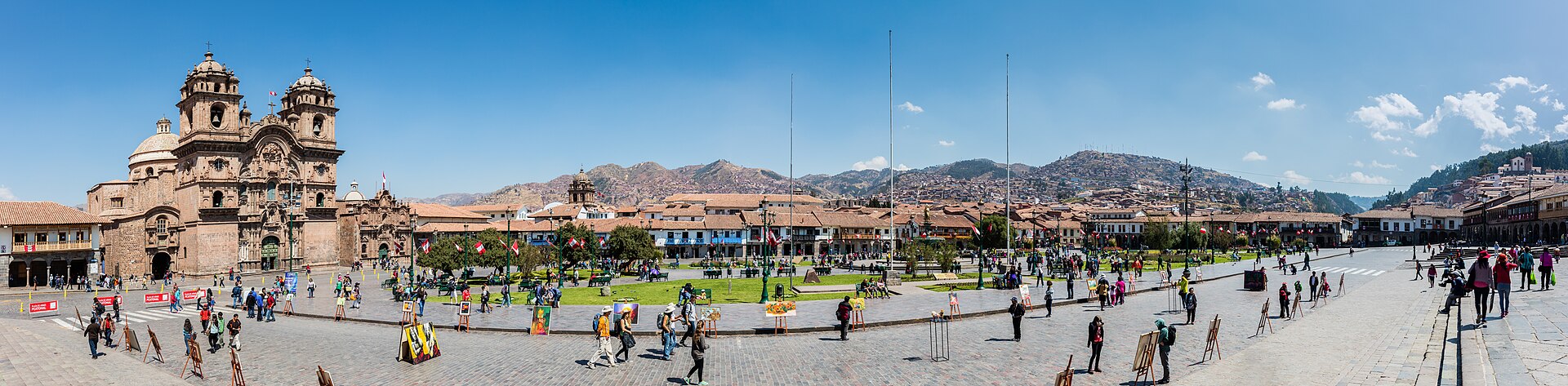
The Plaza de Armas is the heart of Cusco and one of the most historically layered public squares in the Americas — the site of the Inca Huacaypata (the great ceremonial plaza of the Inca Empire), rebuilt by the Spanish as the centre of colonial Cusco, and now a UNESCO World Heritage space surrounded by colonial arcades, Baroque churches, and the restaurants and shops that serve the city's modern tourism economy. Every stone in the square has been placed at least twice — first by the Inca, then by the Spanish who built their city on top. The Cathedral of Cusco and the Iglesia de la Compañía de Jesús (Church of the Society of Jesus) face each other across the square, and the competition between them — the cathedral asserting episcopal authority, the Jesuits asserting their own — produced two of the finest Baroque churches in South America. The arcaded colonial buildings lining the square's perimeter house restaurants with balcony seating that provides the best people-watching vantage in the city. The square is the gathering point for every major event in Cusco — Inti Raymi (the June solstice festival recreating the Inca sun ceremony), Corpus Christi, political demonstrations, and the daily social ritual of the paseo (evening stroll). The altitude (3,400 metres) makes the light sharper and the sky bluer than at sea level, and the view from the square — colonial buildings against the mountain backdrop — is the defining image of highland Peru.
Plaza de las Nazarenas & Surrounding Streets
Plaza de las Nazarenas, Cusco
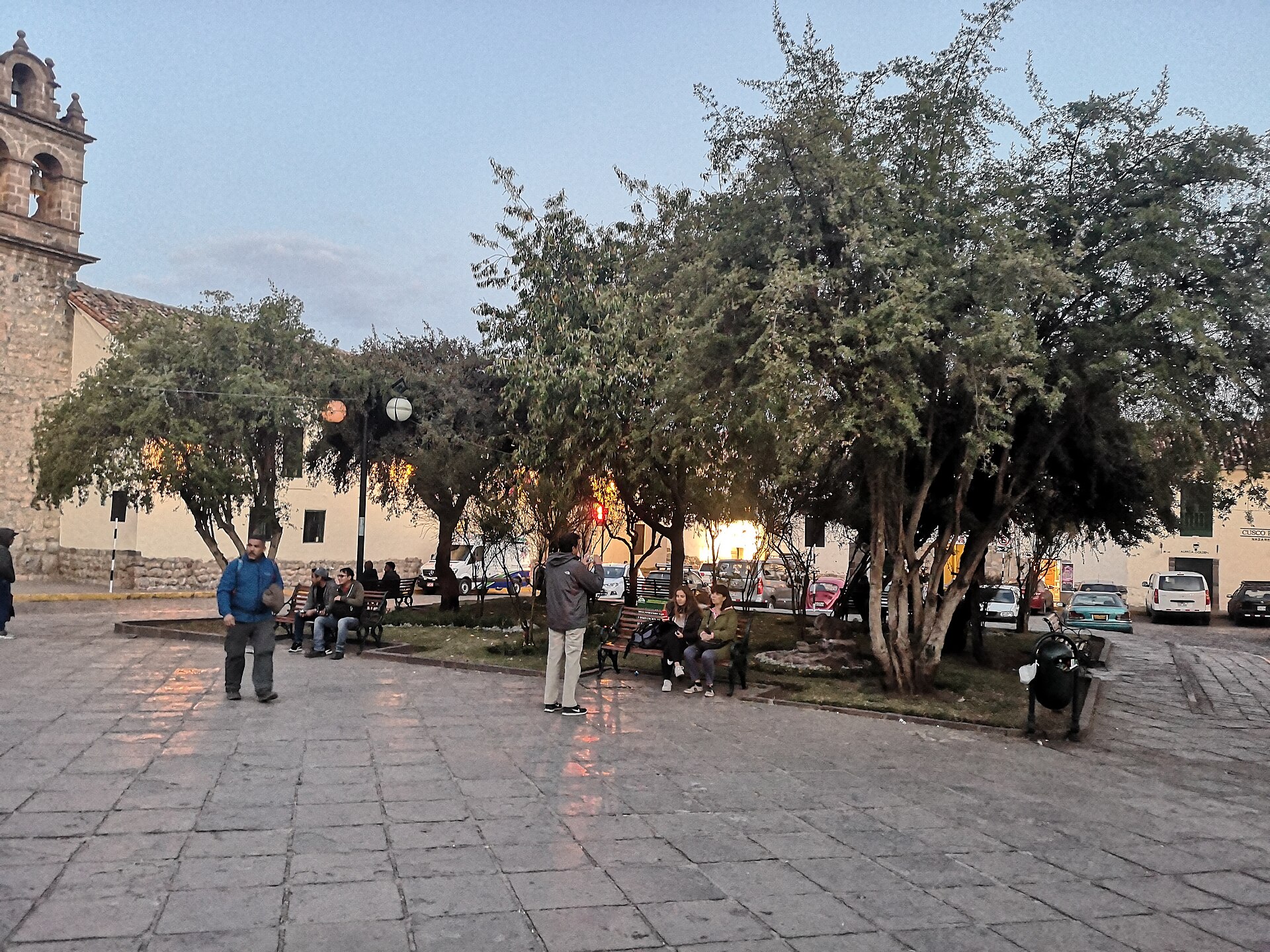
Plaza de las Nazarenas is Cusco's most elegant small square — a quiet, cobblestoned plaza one block from the Plaza de Armas that is surrounded by the finest colonial mansions in the city, now converted into boutique hotels, restaurants, and the Museo de Arte Precolombino. The square's atmosphere — calm, refined, and removed from the tourist traffic of the main plaza — makes it the place where Cusco's beauty is most concentrated and least commercialised. The colonial buildings around the plaza sit on Inca foundations (as everywhere in central Cusco), and the mashup of perfectly fitted Inca stonework supporting elaborately carved colonial portals is visible at every turn. The Belmond Palacio Nazarenas hotel occupies a former convent whose cloistered courtyard and colonial architecture have been converted into one of the most atmospheric luxury hotels in South America. The streets radiating from the plaza — Calle Pumacurco, Calle Siete Culebras, and the alleys climbing toward San Blas — contain small galleries, artisan shops, and the restaurants (including the MAP Café, in the pre-Columbian art museum courtyard) that cater to visitors seeking Cusco's cultural depth rather than its tourist surface.
Puca Pucara
Carretera Cusco-Pisac, km 7, Cusco
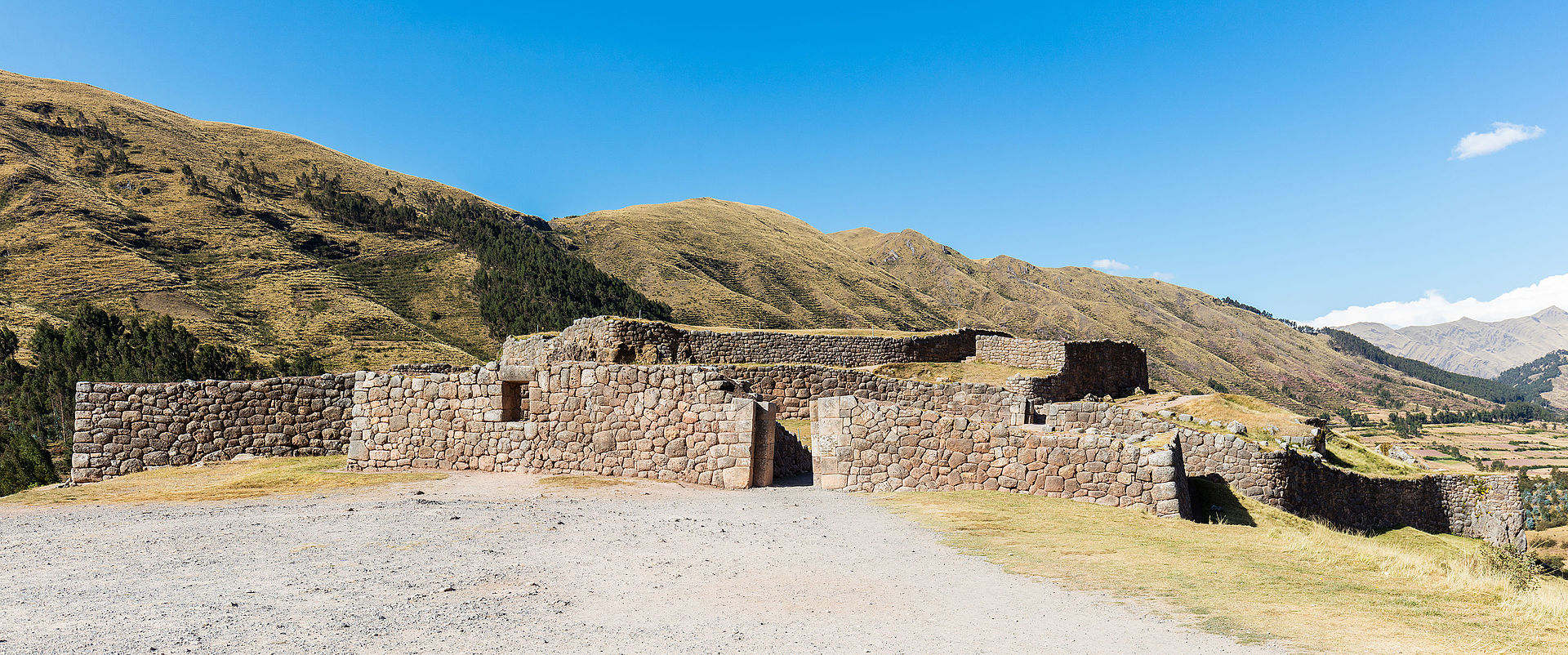
Puca Pucara ('Red Fortress' in Quechua, from the colour its limestone takes at sunset) is a small Inca ruin 7 kilometres northeast of Cusco on the road to Pisac — probably a military post and tambo (relay station) that guarded the approach to Cusco from the north and served as accommodation for travellers and officials moving between the capital and the Sacred Valley. The site sits just across the road from Tambomachay and is usually visited as part of the same circuit, which also includes Sacsayhuamán and Q'enqo.\n\nThe ruins are relatively modest — a few terraces, storerooms, and the remains of walls that allow you to make out the plan of a small defensive complex — but the position provides excellent views south over Cusco and north into the valley towards Pisac. The site is included in the Boleto Turístico (Cusco Tourist Ticket), making it an inexpensive add-on to a visit to Tambomachay or Sacsayhuamán.
Q'enqo
Q'enqo, Cusco
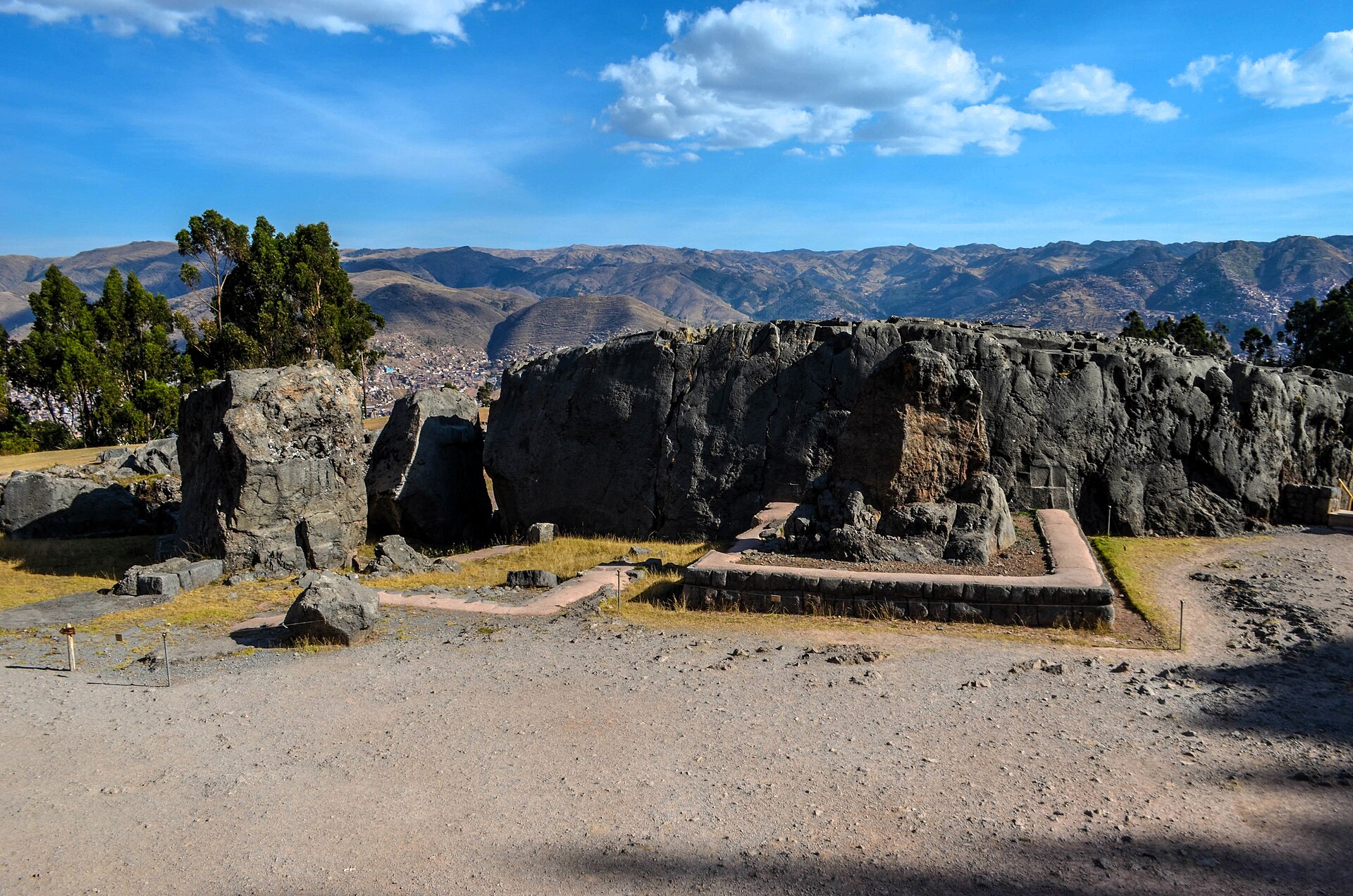
Q'enqo is an Inca ceremonial site carved from a massive limestone outcrop on the road between Cusco and Sacsayhuamán — a sacred rock whose surface is covered with carved channels (the name means 'zigzag' in Quechua, referring to the zigzag channel carved into the rock's surface), niches, steps, and the altar-like platforms that suggest it was used for astronomical observations and ritual ceremonies. The site's most remarkable feature is the cave beneath the outcrop — a natural chamber with carved stone seats, niches, and a stone table that was likely used for the preparation of mummies or the performance of rituals related to death and the underworld. The Inca's relationship with stone was fundamentally different from European traditions — they saw living rock as sacred (huaca), and sites like Q'enqo represent the Inca practice of carving sacred sites into the landscape rather than building over it. Q'enqo is a 20-minute walk from Sacsayhuamán and is included on the Boleto Turístico. The site is smaller and less monumental than Sacsayhuamán but provides a more intimate encounter with Inca religious practice — the carved surfaces feel like they were shaped by hands rather than armies.
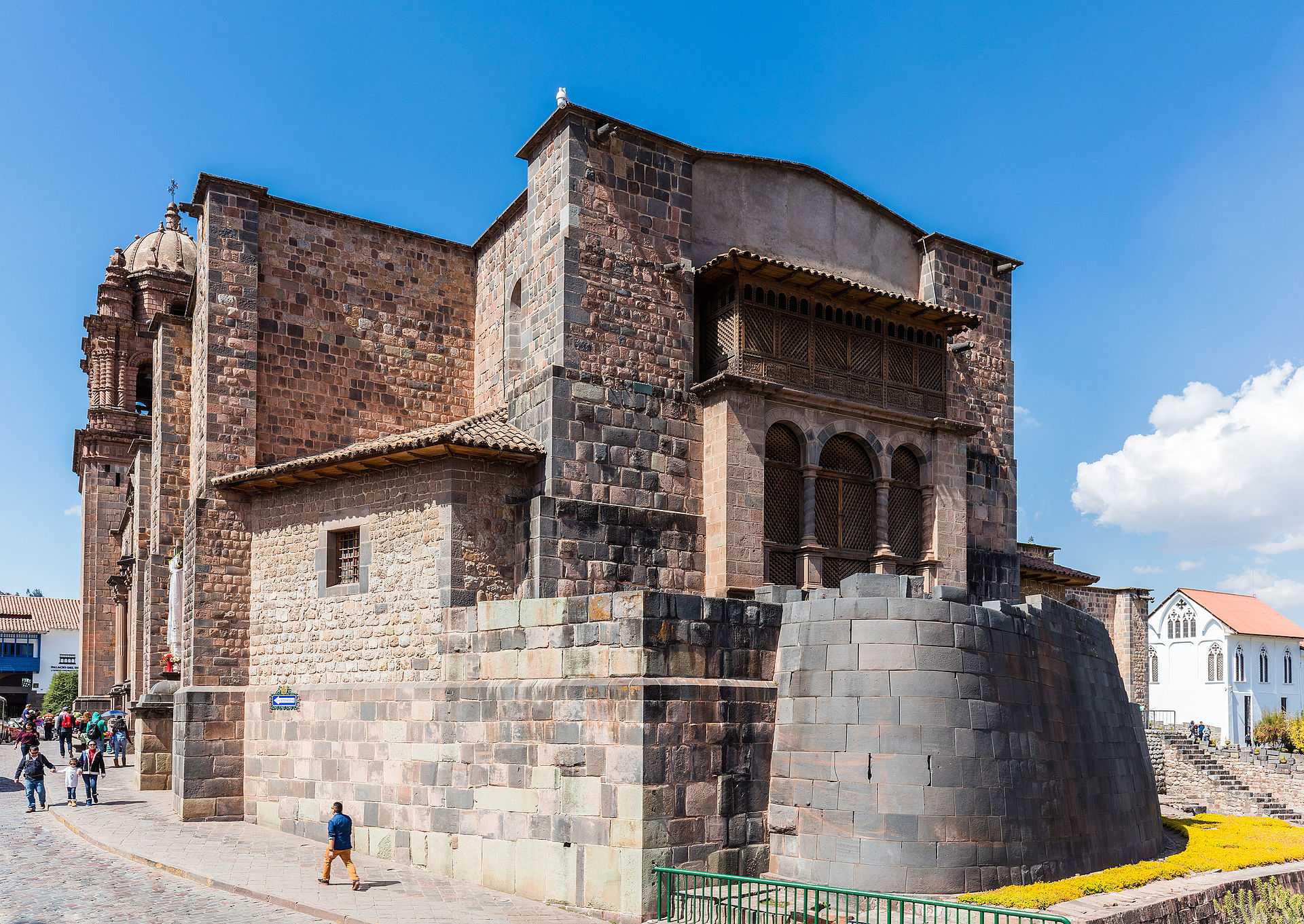
Qorikancha (Temple of the Sun)
Plazoleta Intipampa, Cusco
Qorikancha was the most sacred temple in the Inca Empire — the Temple of the Sun, whose walls were reportedly covered in sheets of gold and whose gardens contained golden replicas of corn, llamas, and flowers. The Spanish built the Convent of Santo Domingo directly on top of the Inca foundations in the 16th century, and the resulting structure — a Baroque church sitting on perfectly fitted Inca stonework — is the most powerful visual symbol of the conquest's cultural superimposition. The Inca stonework visible beneath the convent is among the finest anywhere — the curved retaining wall along Avenida del Sol, with its precisely fitted andesite blocks, has survived multiple earthquakes that destroyed the Spanish construction above (the convent has been rebuilt twice; the Inca walls have never needed repair). The niches, trapezoidal doorways, and the astronomical alignments built into the temple's design demonstrate the Inca's sophisticated understanding of engineering and celestial observation. The convent's museum contains artifacts from both the Inca and colonial periods, and the courtyard — where the Inca original's open-air ceremonial space has been enclosed by colonial cloisters — provides the most compressed encounter with Cusco's layered history. Standing in the courtyard, you see Inca stonework below, colonial architecture above, and the living religious practice of a Dominican convent continuing in a space that was sacred before Christianity arrived in the Americas.
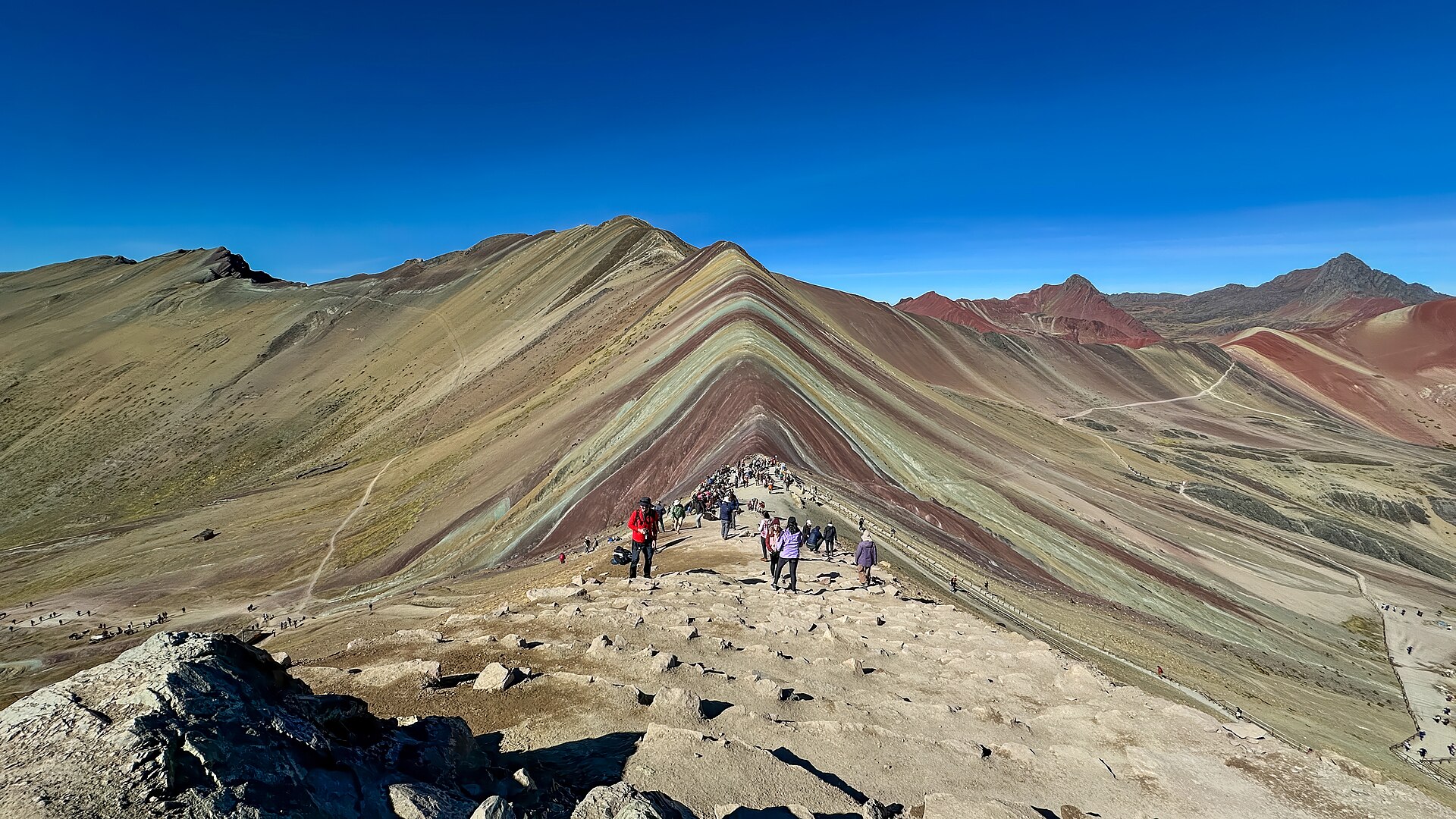
Rainbow Mountain (Vinicunca)
Vinicunca, Cusipata District, Cusco Region
Rainbow Mountain (Vinicunca or Montaña de Siete Colores) is a geological wonder 100 kilometres southeast of Cusco — a mountain whose exposed sedimentary layers create stripes of red, yellow, green, turquoise, and lavender across its slopes, producing one of the most visually extraordinary landscapes in the Andes. The mountain was covered by glacial ice until recent decades, and the retreat of the glacier (a visible consequence of climate change) has revealed the coloured mineral deposits that were hidden for millennia. The hike to Rainbow Mountain is challenging — not because of the distance (about 5 kilometres each way) but because of the altitude (the trailhead is at 4,600 metres and the summit reaches 5,200 metres). At this elevation, every step is an effort, and acute mountain sickness is a genuine risk for visitors who haven't acclimatised. The standard advice is to spend at least 2-3 days in Cusco (3,400m) before attempting the hike. The colours are caused by different mineral deposits in the sedimentary layers — iron oxide (red), iron sulphide (yellow), chlorite (green), and other minerals creating the stripes that make the mountain look like a geological abstract painting. The mountain has become one of Peru's most-visited natural attractions since going viral on social media in the mid-2010s, and the trail can be crowded during peak season (May-October). The day trip from Cusco takes 10-12 hours including the 3-hour drive each way.
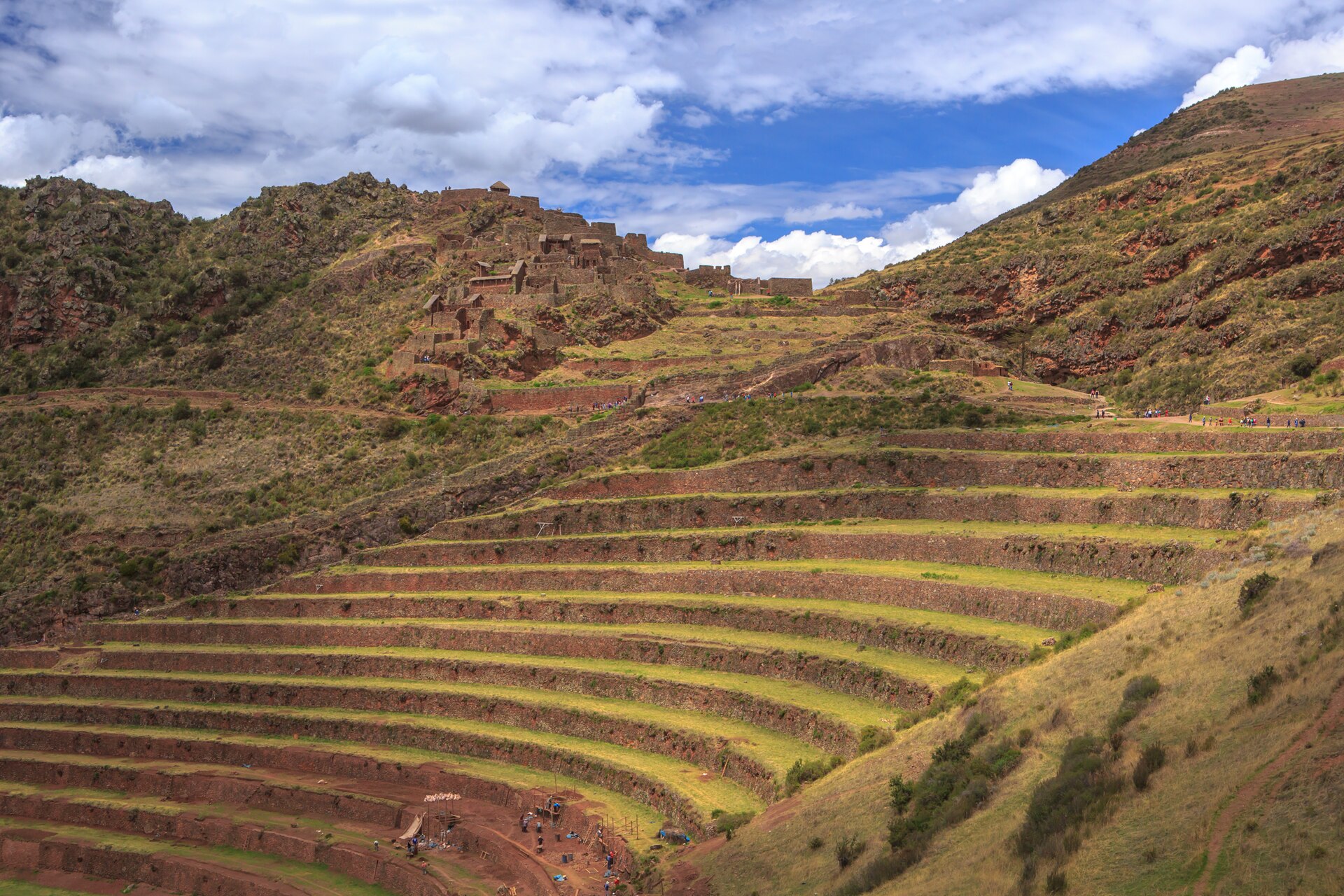
Sacred Valley (Ollantaytambo & Pisac)
Ollantaytambo, Sacred Valley, Cusco Region
The Sacred Valley of the Incas (Valle Sagrado) is the Urubamba River valley northwest of Cusco — a fertile corridor between the highlands and the jungle that was the agricultural heartland of the Inca Empire and now contains the most accessible concentration of Inca ruins outside Machu Picchu. Ollantaytambo (a massive temple-fortress with a still-inhabited Inca town at its base) and Pisac (terraced ruins above a bustling market town) are the valley's two anchor sites. Ollantaytambo is the best-preserved Inca town in Peru — the grid of stone streets, canals, and residential compounds at the base of the fortress is still occupied and still uses the original Inca layout, making it the only place in Peru where you can walk through a functioning town that is essentially unchanged from the 15th century. The fortress above, with its massive terraces and the unfinished Temple of the Sun (whose six monolithic pink granite slabs, transported from a quarry across the valley, represent the Inca building tradition at its most ambitious), provides the valley's most dramatic archaeological experience. Pisac's terraced hillside ruins are less monumental but equally impressive — the agricultural terraces, the sun temple, and the cliff-side cemetery (where thousands of Inca burial niches are carved into the rock face) cover a mountainside that demonstrates how the Inca adapted their engineering to terrain. The Pisac market in the town below (daily, largest on Sundays and Tuesdays) is the best place in the valley to buy textiles and crafts directly from Quechua communities.
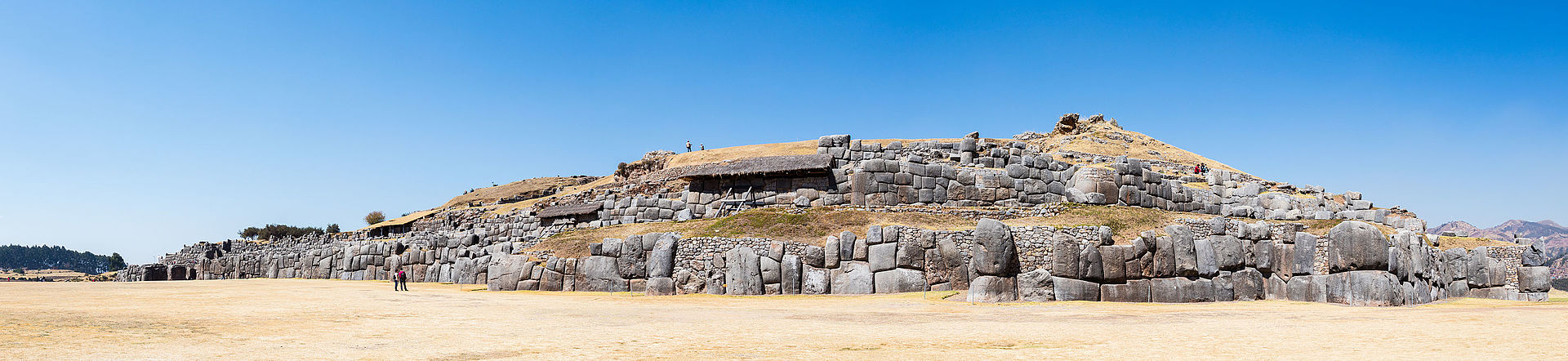
Sacsayhuamán
Sacsayhuamán, Cusco
Sacsayhuamán is the most impressive Inca fortress in existence — a massive stone complex on the hillside above Cusco whose zigzag walls of precisely fitted megalithic blocks (some weighing over 100 tonnes) have defied explanation since the Spanish arrived and found them already ancient. The largest stones are over 8 metres tall and are fitted together without mortar so precisely that a knife blade cannot be inserted between them — a construction technique that modern engineering cannot fully replicate. The fortress was the site of the last major Inca military resistance against the Spanish — the 1536 siege led by Manco Inca, in which thousands of Inca warriors attacked the Spanish garrison from the fortress walls in a battle that nearly succeeded in driving the conquistadors from Cusco. The battle was one of the bloodiest of the conquest, and the bodies of the dead are said to have attracted so many condors that Cusco's coat of arms still features the bird. The site provides the best panoramic view of Cusco — looking down across the red-tiled roofs of the colonial city to the valley below, with the snow-capped Andes visible on clear days. The Inti Raymi festival is performed here every June 24, recreating the Inca sun ceremony with hundreds of performers in traditional costume in a spectacle that draws thousands of visitors. The walk from the Plaza de Armas to Sacsayhuamán (about 30 minutes uphill) is the city's most popular hike, though the altitude makes the climb challenging for newly arrived visitors.
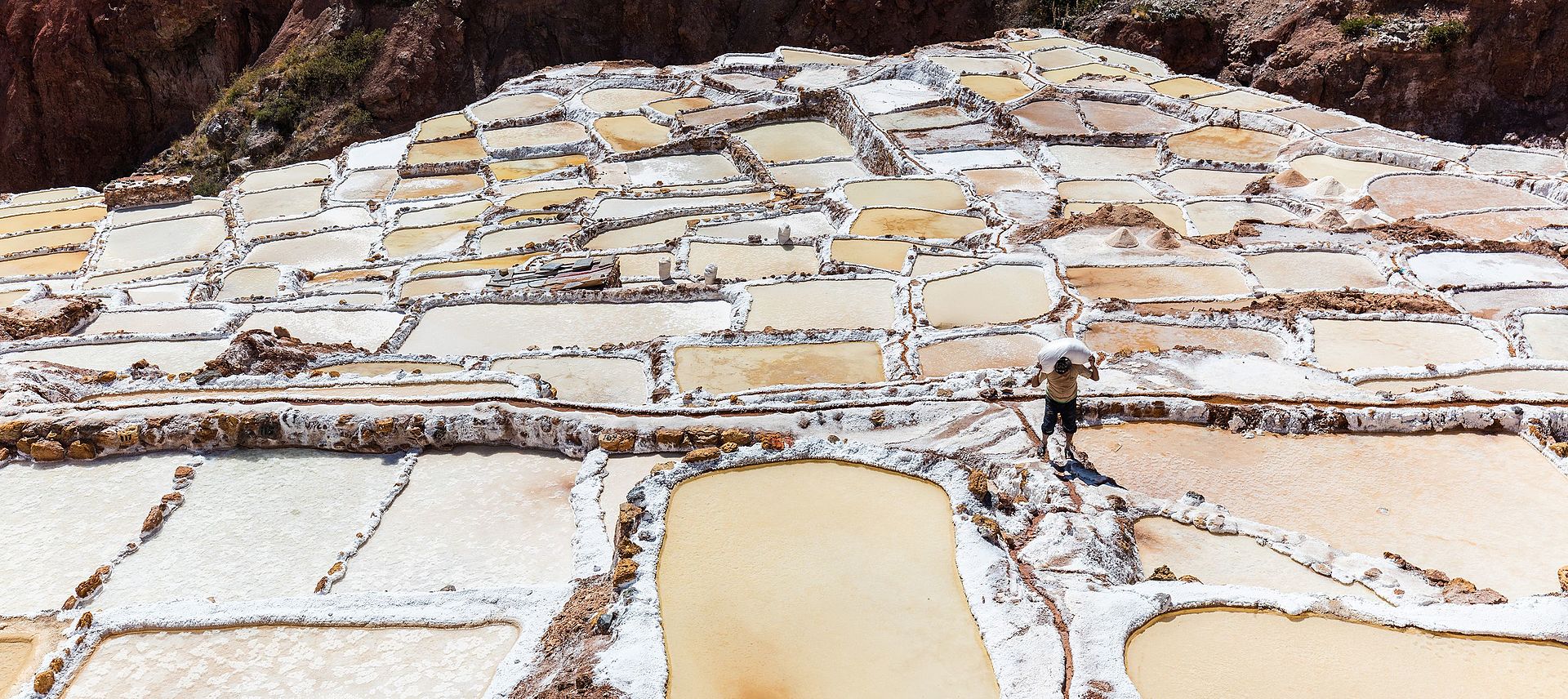
Salineras de Maras (Salt Mines)
Espaderos, Cusco, Peru
The Salineras de Maras deserve their own entry beyond the combined Moray & Maras listing — they are one of the most visually stunning landscapes in Peru. Over 5,000 salt pans cascade down the mountainside in a terraced formation that catches the light differently at every hour, creating a mosaic of white, pink, and brown that is the most photogenic non-archaeological site in the Sacred Valley. The salt pans have been worked by the local community since before the Inca, and ownership of individual pans passes through families across generations. A natural saline spring at the top of the mountain feeds water into a network of channels that distribute it to the terraced pools, where evaporation in the highland sun concentrates the salt for harvesting. The traditional harvest method (flooding the pans, allowing evaporation, scraping the crystallised salt) is unchanged in centuries. Maras salt has become a gourmet product — sold as 'pink salt from Maras' in specialty food shops in Lima and internationally, commanding prices that make the community's traditional product economically viable in the modern market. The site charges a small entrance fee and is best visited in the dry season (May-October) when the salt crystals are most visible and the pans are at their most photogenic.
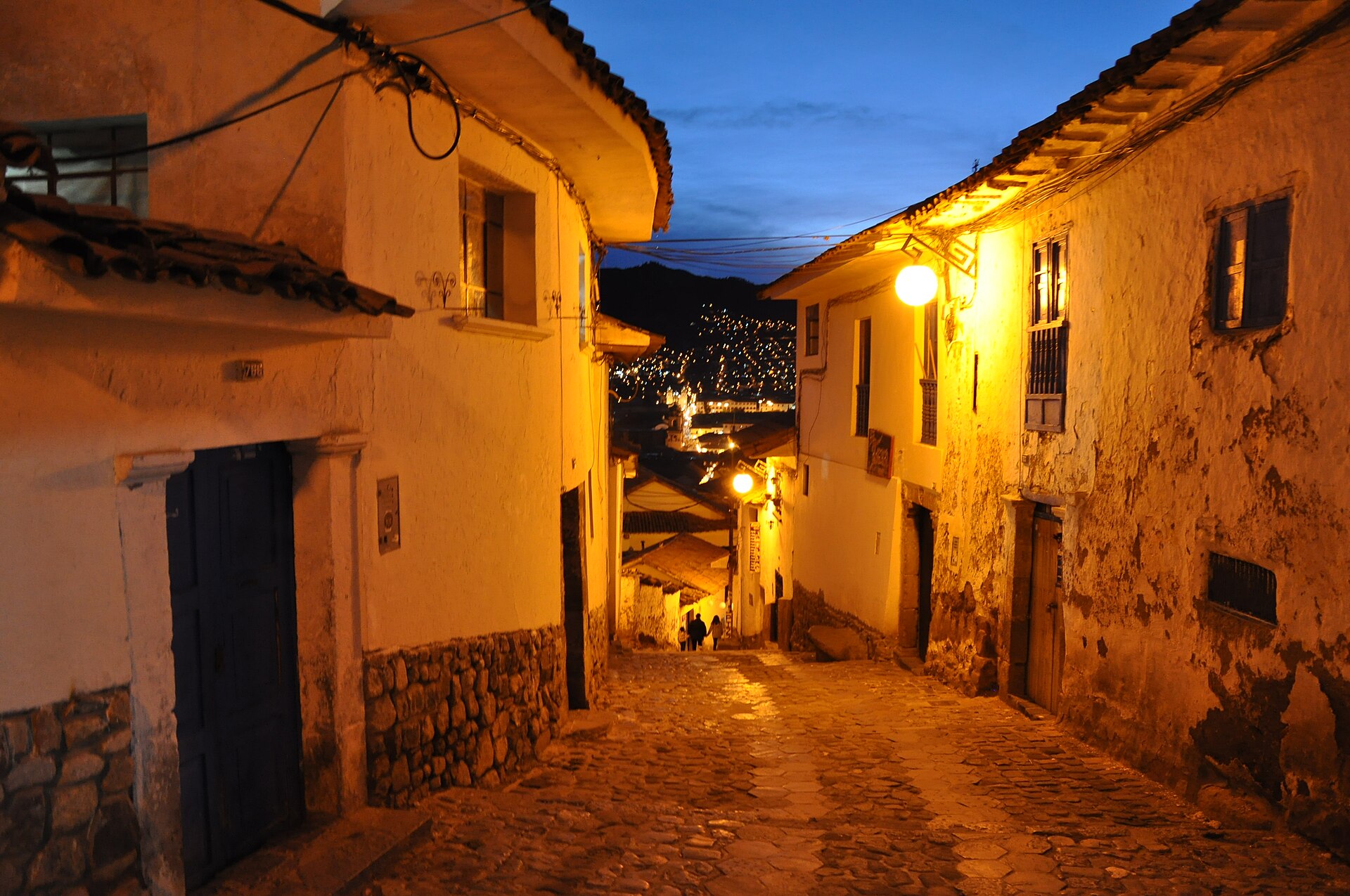
San Blas Neighbourhood
San Blas, Cusco
San Blas is Cusco's artisan quarter — a steep hillside neighbourhood of narrow cobblestone streets, whitewashed houses with blue doors, and the studios of the ceramic artists, painters, woodcarvers, and weavers who have made this district the creative heart of the city since the colonial period. The neighbourhood climbs from the Plaza de Armas up toward Sacsayhuamán, and the increasing altitude (and the corresponding increasing breathlessness) is rewarded by views across the rooftops to the mountains. The Iglesia de San Blas contains the most famous pulpit in Peru — a single piece of carved cedar depicting an extraordinary scene of cherubs, vines, and faces that is attributed to an unknown indigenous carver and is considered a masterpiece of colonial Andean art. The pulpit's style — combining European Baroque forms with indigenous sensibility — is characteristic of the Cusco School of art, which produced a distinctive fusion of Spanish and Andean visual traditions. The San Blas streets contain small galleries and workshops where artists work in view of visitors — the Mendivil family (famous for their elongated-neck religious figures), the Merida family (woodcarving), and the Olave family (ceramic) have been working in San Blas for generations. The Saturday craft market on the small plaza is the most authentic artisan market in Cusco, and the cafés that have opened in the restored colonial houses provide the most atmospheric coffee-drinking in the city.
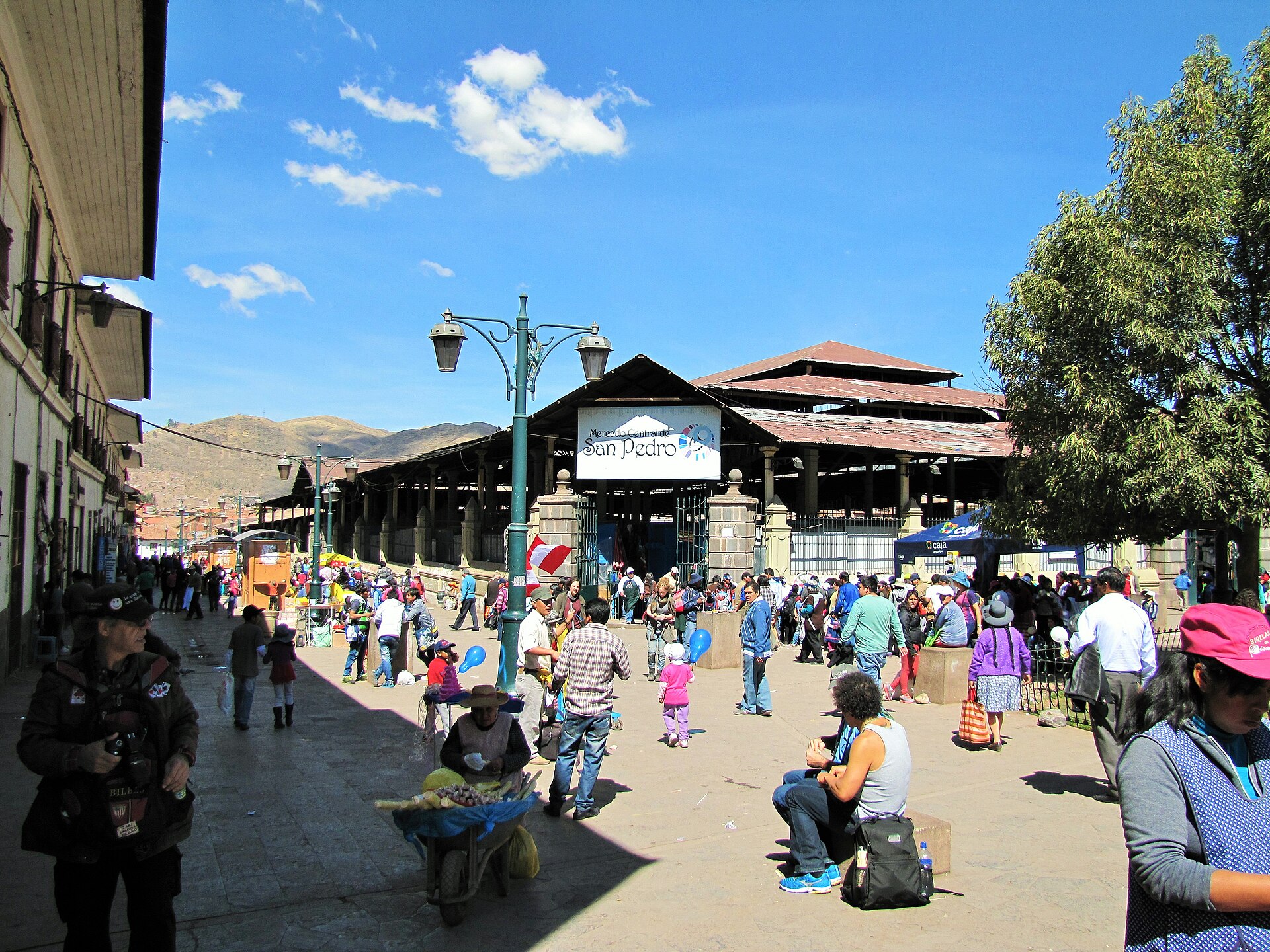
San Pedro Market
Túpac Amaru, Cusco, 0801, Peru
San Pedro Market is Cusco's central market — a two-storey covered hall near the train station where vendors sell the produce, meat, juices, and prepared food that feeds the city's population and provides the most immersive food experience available in the Peruvian highlands. The market has been operating since 1925 (in its current iron-framed building, designed by Gustave Eiffel's firm) and functions as both a wholesale market for the surrounding restaurants and a daily social gathering place. The juice ladies (señoras de jugos) are the market's most popular attraction — a row of vendors operating industrial blenders who produce fresh fruit juices from the extraordinary variety of Peruvian fruits: lucuma, chirimoya, maracuyá (passion fruit), aguaymanto (golden berry), and the tropical fruits that arrive from the Amazon lowlands. The prepared food section serves lechón (roast pork), cuy (guinea pig, the traditional highland protein), and the soups (caldo de gallina, sopa de morón) that sustain Cusco's working population. The market's upper level houses the artisan and textile vendors, selling alpaca wool products, woven textiles, and the crafts that the surrounding Quechua communities produce. The quality is mixed (mass-produced tourist goods alongside genuine handwork), but the prices are lower than the tourist shops in the Plaza de Armas area, and the market provides the context — seeing the materials, watching the vendors interact with local buyers — that tourist shops deliberately remove.
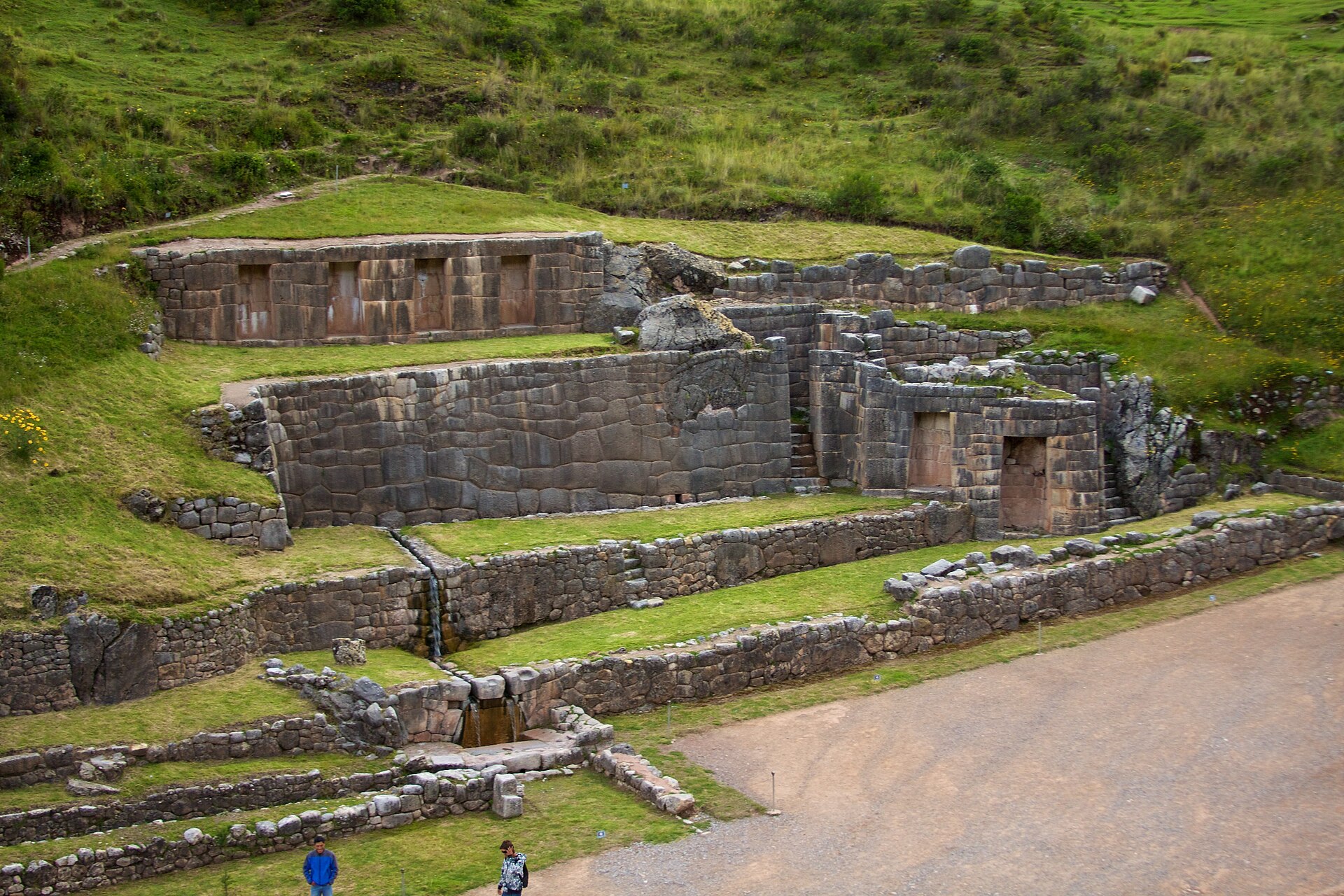
Tambomachay & Inca Water Temple
Tambomachay, Cusco
Tambomachay is an Inca ceremonial site of flowing water — a series of stone channels, aqueducts, and cascading fountains carved into the hillside above Cusco that demonstrate the Inca's reverence for water and their mastery of hydraulic engineering. The site, located about 8 kilometres from the city along the road to Pisac, is believed to have been a place of ritual bathing and water worship — water being one of the three sacred elements (along with the sun and the earth) in Inca cosmology. The water system at Tambomachay is still functioning — natural springs are channelled through stone aqueducts into a series of fountains and baths that cascade down the terraced hillside with a precision that maintains constant flow despite seasonal variations in the water table. The engineering — creating a permanent, regulated water flow using only stone, gravity, and knowledge of the local hydrology — is as impressive as the massive stonework of Sacsayhuamán, though at a more intimate scale. Tambomachay is the last of the four Inca sites along the road from Cusco to the Sacred Valley (Sacsayhuamán, Q'enqo, Puka Pukara, and Tambomachay), and visiting all four in sequence provides a morning's worth of Inca architecture that covers military (Sacsayhuamán), ceremonial (Q'enqo), administrative (Puka Pukara), and hydraulic (Tambomachay) engineering. The Boleto Turístico (tourist ticket) covers all four sites plus others in the Sacred Valley.
Tipon (Inca Water Gardens)
Tipon, Quispicanchi Province, Cusco Region
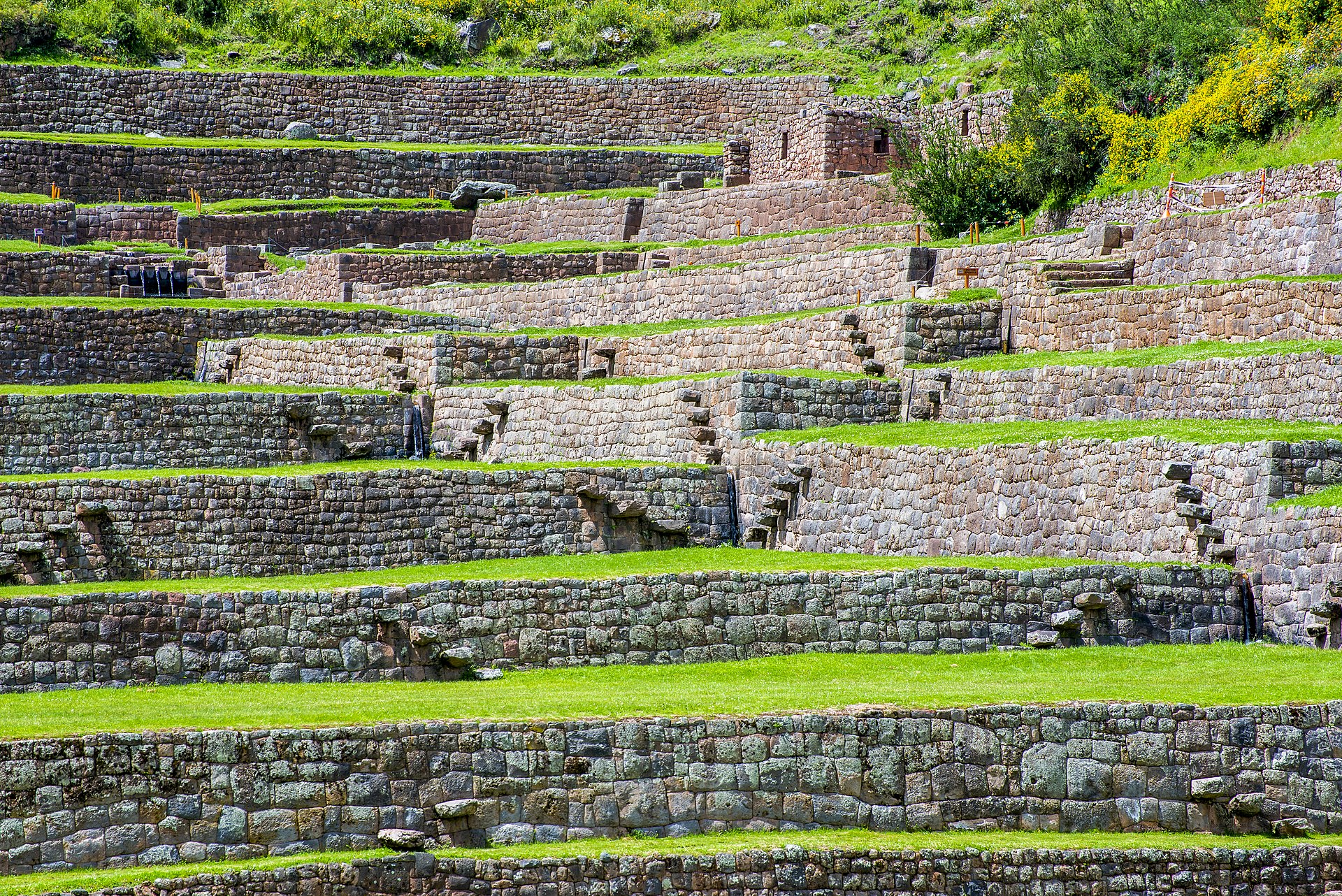
Tipon is the most impressive example of Inca hydraulic engineering in the Cusco region — a system of terraces, channels, fountains, and aqueducts 23 kilometres southeast of Cusco where water is moved, divided, and directed with a precision that modern hydraulic engineers study and admire. The site, believed to have been a royal garden or agricultural research station, demonstrates the Inca's ability to manipulate water flow using only gravity, stone, and an understanding of hydrology that was far ahead of contemporary European knowledge. The terraces at Tipon are irrigated by a system of channels that divide a single water source into multiple streams, each flowing at a controlled rate to irrigate different terrace levels. The precision of the channels — some carved to tolerances of millimetres — and the fountains that cascade between terrace levels create a landscape where engineering becomes art. The site is rarely crowded (most tourists go to Sacsayhuamán and the Sacred Valley) and provides one of the most peaceful archaeological experiences near Cusco. The drive to Tipon passes through the small town of Saylla, famous for its chicharronería restaurants serving fried pork (chicharrón) — a traditional roadside stop that is itself a culinary experience worth the detour.
Twelve-Angle Stone (Hatunrumiyoc)
Calle Hatunrumiyoc, Cusco
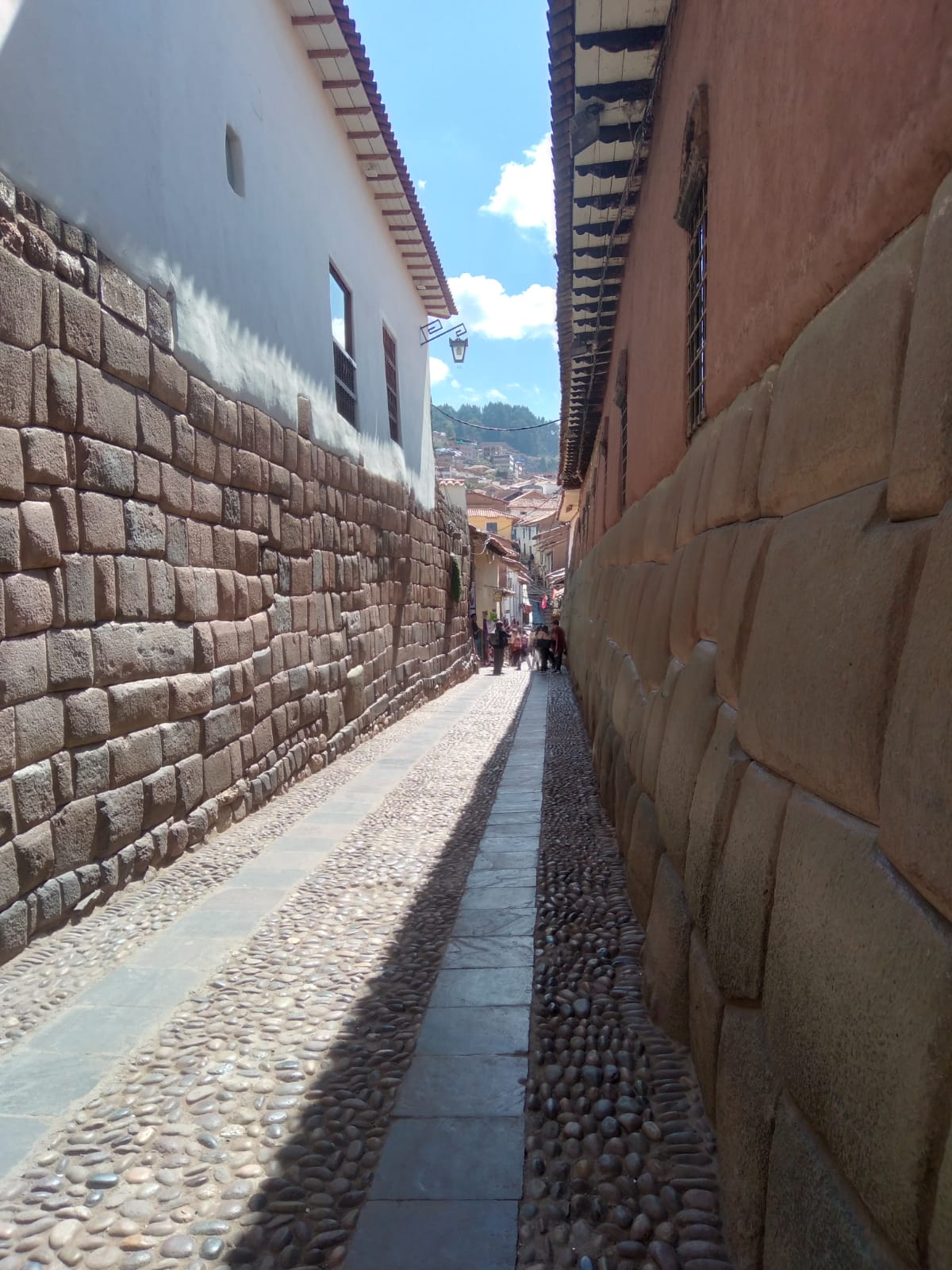
The Twelve-Angle Stone is the most famous individual stone in Inca architecture — a precisely cut andesite block fitted into a wall on Calle Hatunrumiyoc that has twelve angles and edges, each fitting perfectly against the neighbouring stones without mortar. The stone, which forms part of the wall of the former palace of Inca Roca (now the Archbishop's Museum), demonstrates the Inca masonry technique at its most complex — polygonal stones of irregular shapes fitted together like a three-dimensional jigsaw puzzle. The street itself — Hatunrumiyoc, meaning 'great stone' in Quechua — is one of the best-preserved Inca streets in Cusco, with walls on both sides composed of the precisely fitted stonework that survived every earthquake the Spanish buildings above them did not. The wall containing the Twelve-Angle Stone is part of a longer stretch of Inca masonry that shows how the builders achieved earthquake resistance by using stones of different sizes that interlock under stress rather than separating. The stone has become a tourism icon — vendors sell miniature replicas, and the constant stream of visitors photographing it (it's free, visible from the street, and guarded by a bored policeman who prevents touching) has made it Cusco's equivalent of the Mona Lisa: small, famous, and the subject of more photographs than its size would suggest. But the engineering it represents — fitting 12 angles to meet 12 corresponding surfaces with sub-millimetre precision — genuinely deserves the attention.