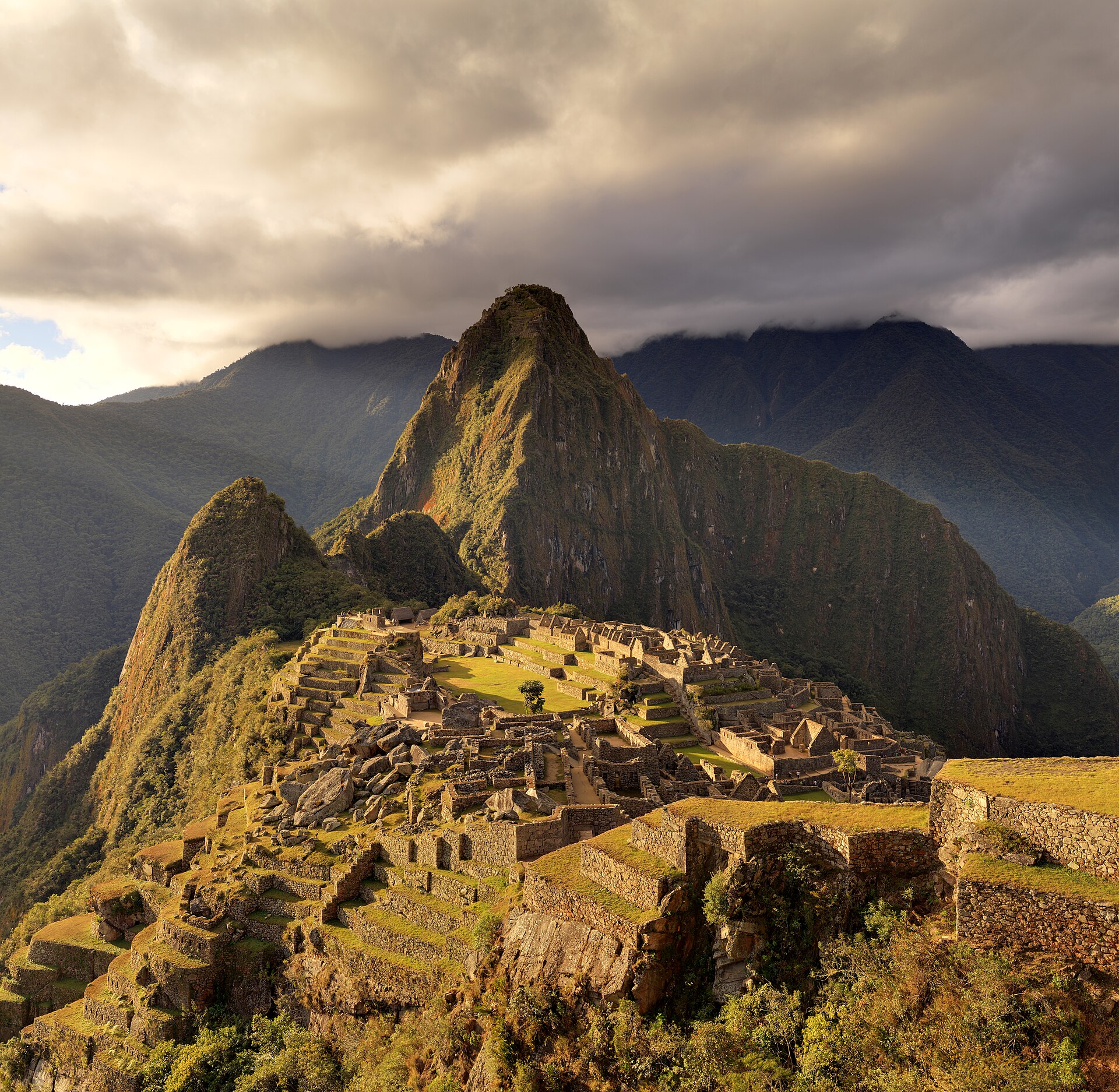
Machu Picchu is the most famous archaeological site in the Americas and one of the New Seven Wonders of the World — a 15th-century Inca citadel built on a mountain ridge 2,430 metres above sea level, abandoned before the Spanish conquest and hidden by cloud forest until the American historian Hiram Bingham brought it to international attention in 1911 (though local Quechua farmers had known about it all along).
The citadel is divided into an agricultural zone (terraces that cling to the mountain at impossible angles) and an urban zone (temples, palaces, plazas, and the Intihuatana stone — a ritual sun dial that is the spiritual centre of the site). The precision of the stonework, the sophistication of the water management system, and the sheer ambition of building a city on a knife-edge ridge between two mountains demonstrate Inca engineering at its peak.
Reaching Machu Picchu from Cusco involves a train to Aguas Calientes (the town at the base of the mountain) followed by a bus to the citadel entrance — or, for the more adventurous, the four-day Inca Trail hike that approaches the site through the Sun Gate with the classic reveal of the citadel spread out below. Daily visitor numbers are capped (currently about 4,500 per day), and tickets must be purchased in advance. The site requires a full day from Cusco, and the pre-dawn start (to catch the earliest train) is justified by the experience of watching the clouds lift from the citadel as the morning sun hits the stone.
Verified Facts
Machu Picchu sits at 2,430 metres above sea level
Hiram Bingham brought international attention to the site in 1911
Machu Picchu is one of the New Seven Wonders of the World
Daily visitor numbers are capped at approximately 4,500
Get walking directions
Machu Picchu, Urubamba Province, Cusco Region