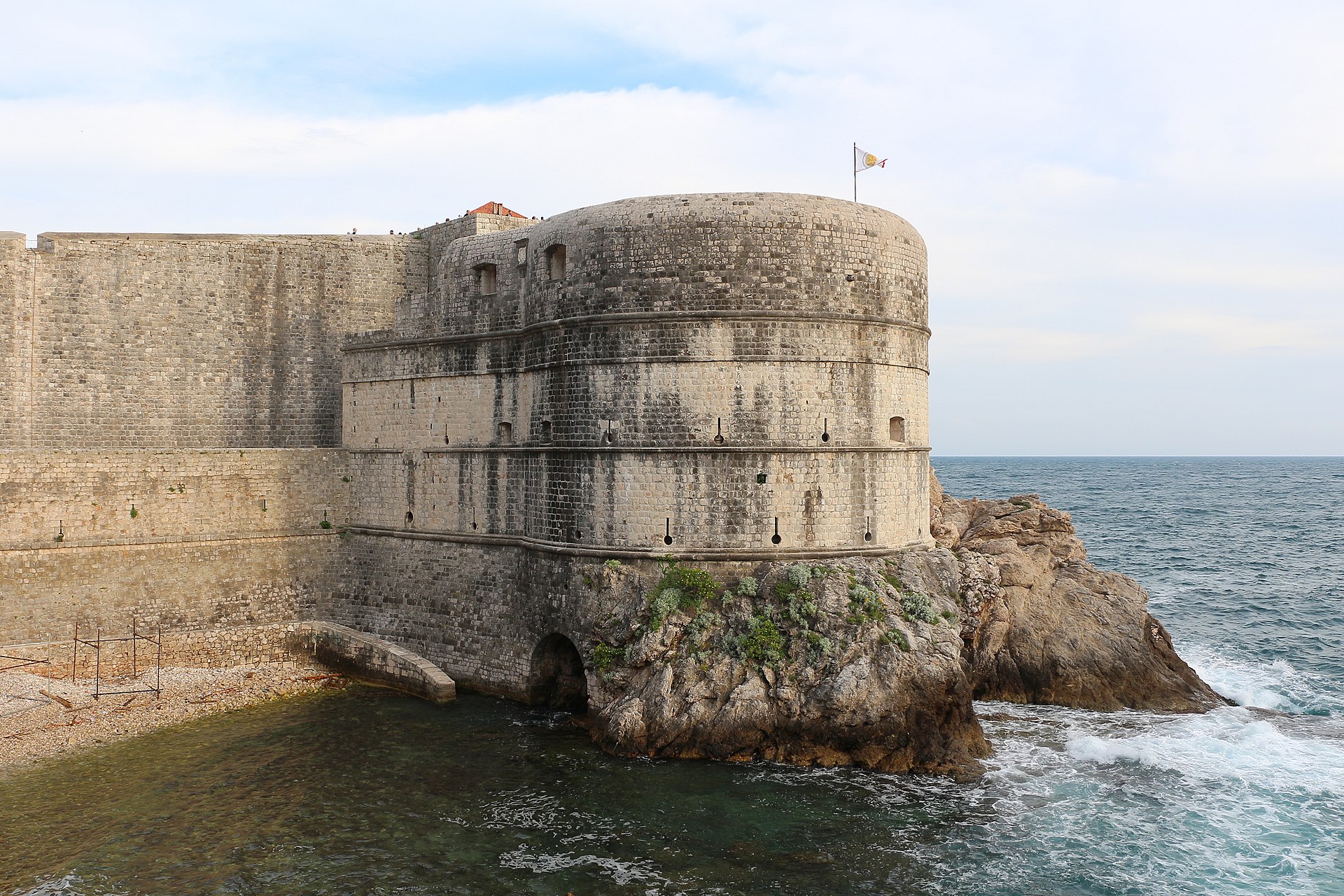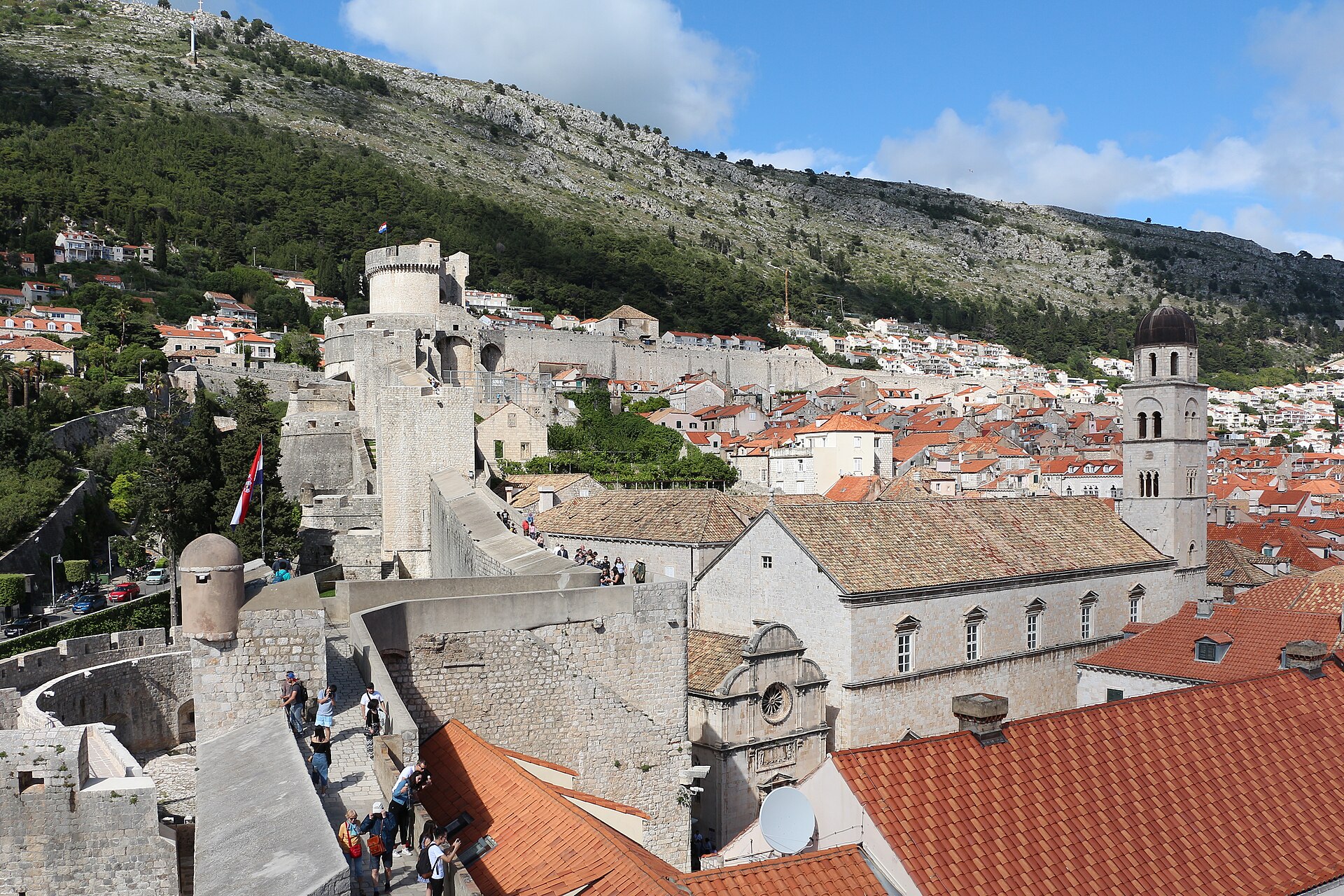
These walls have absorbed cannonballs, earthquake tremors, and the footsteps of roughly two million tourists a year — and they haven't budged an inch. Running an uninterrupted 1,940 metres around Dubrovnik's Old Town, reaching heights of 25 metres and a thickness of up to six metres on the land side, they are among the finest fortification systems ever built in the Mediterranean. The Republic of Ragusa spent centuries perfecting them, and after Constantinople fell to the Ottomans in 1453, they brought in Michelozzo di Bartolomeo from Florence to make them even stronger.
What makes these walls remarkable isn't just their size — it's the paranoia embedded in the design. The land-facing walls are four to six metres thick, but the sea-facing walls are a slender 1.5 to 3 metres. The thinnest walls face inward, toward the city itself: the fortress walls on the city side are barely 60 centimetres thick, so that if any garrison commander ever tried to turn the guns on the Republic, the Senate could blast through in minutes. Dubrovnik trusted nobody, not even its own soldiers.
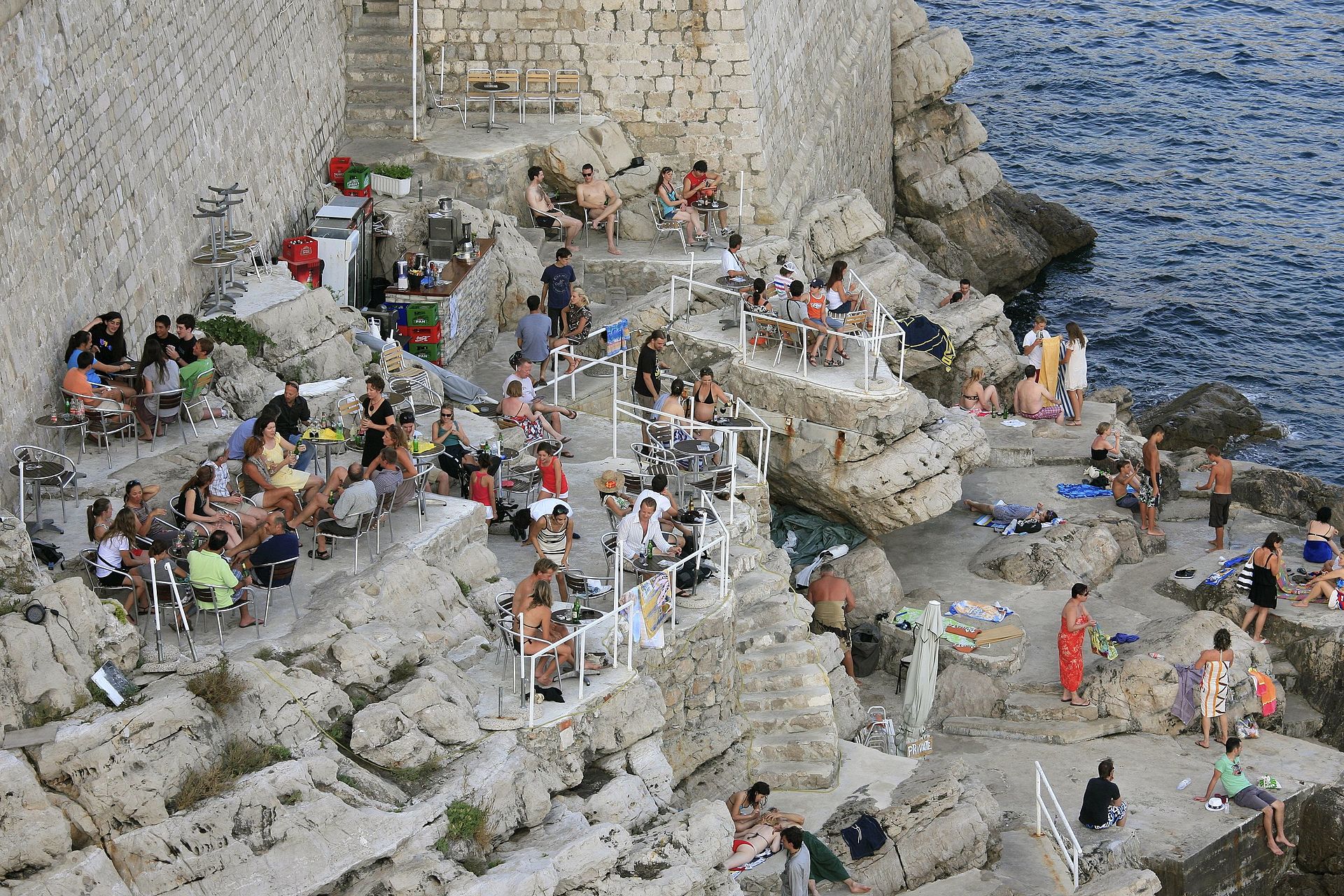
The current form dates mostly from the 13th to 17th centuries, a period locals call the Golden Age of the Republic. Four mighty fortresses anchor the corners: Minčeta to the north, Revelin to the east, Bokar to the west, and the St. John tower guarding the harbour. Walk the full circuit and you'll pass over gates, through towers, and along stretches where the Adriatic crashes against the rocks directly below your feet.
During the 1991 siege, Serbian and Montenegrin forces shelled the Old Town for months. Over 500 buildings were hit. The walls held. They have held against everything thrown at them for seven hundred years, and they remain the single best reason to visit Dubrovnik — not for the history lesson, but for the two-hour walk that delivers some of the most extraordinary views in Europe.
Verified Facts
The walls run 1,940 metres in length and reach a maximum height of 25 metres
The land-side walls are 4-6 metres thick while the sea-side walls are 1.5-3 metres thick
Florentine architect Michelozzo di Bartolomeo was invited to strengthen the walls after the fall of Constantinople in 1453
Over 500 buildings inside the walls were hit during the 1991 siege of Dubrovnik
Get walking directions
Ispod mira, Grad, Dubrovnik, 20000, Croatia