
Walking Tours in Dubrovnik
30 Landmarks in Dubrovnik
Bokar Fortress
City Walls, 20000 Dubrovnik
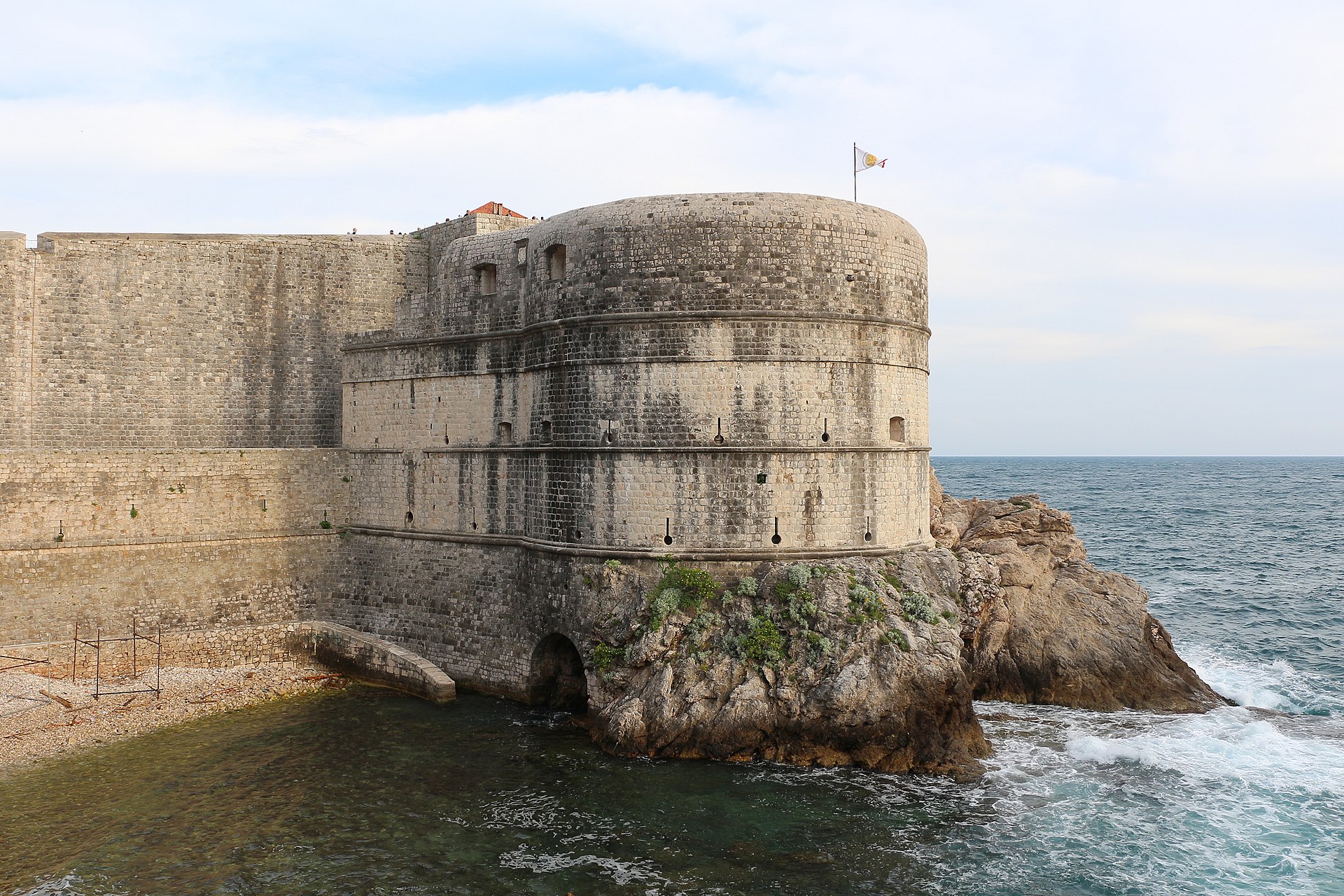
Bokar Fortress is often called the oldest casemate fortress in Europe, and while architectural historians will argue about that claim until the end of time, the building's credentials are impressive. Designed by Michelozzo di Bartolomeo of Florence and built between 1461 and 1570, it guards the western land approach to Dubrovnik and the Pile Gate with a stout cylindrical profile that rises directly from the rocky coastline. What makes Bokar architecturally significant is its design for artillery warfare. Unlike older towers built for archers and boiling oil, Bokar was purpose-built for cannons. Its rounded walls were designed to deflect cannonballs rather than absorb them — a critical innovation in an era when gunpowder was changing the rules of siege warfare. The thick walls feature embrasures (gun ports) positioned to provide overlapping fields of fire with Fort Lovrijenac across the inlet, creating a deadly crossfire zone that made any naval approach from the west essentially suicidal. The fortress connects seamlessly to the city wall circuit, and you walk directly through it during the walls walk. From its seaward terrace, the views across to Fort Lovrijenac and the open Adriatic are stunning — particularly in the late afternoon when the light hits the fortress walls at an angle that turns the stone gold. Below, waves crash against the rocks with a rhythm that has been the soundtrack to this spot for centuries. During the Dubrovnik Summer Festival, Bokar's terrace serves as a performance space, its natural acoustics and dramatic setting lending weight to whatever is being staged. It's one of those places where the line between fortress and theatre has been erased entirely — a cannon platform turned concert venue, which is perhaps the most Dubrovnik thing imaginable.
Buža Bars
9 Crijevićeva, Grad, Dubrovnik, 20000, Croatia
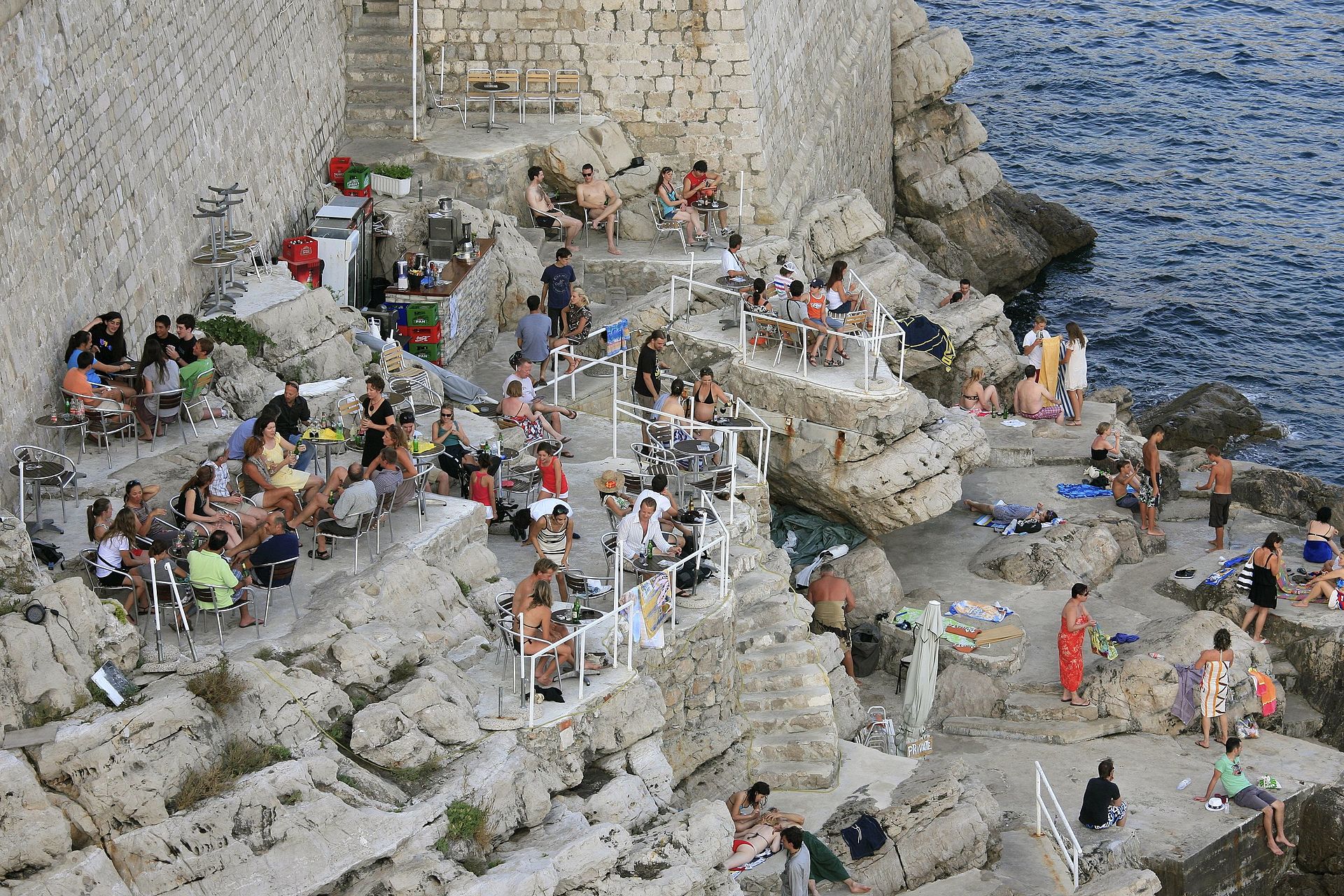
The name says it all: buža means "hole in the wall" in Croatian, and that's precisely what you walk through to get here. There is no sign, no bouncer, no hostess stand — just a gap in the ancient city wall on the southern side of the Old Town with a handwritten arrow that says "Cold Drinks with the Most Beautiful View." Through the gap, stone steps descend to a series of rocky platforms perched on the cliffs above the Adriatic, where someone has placed a bar, some plastic chairs, and nothing else. It is gloriously ramshackle. There are actually two Buža bars. Buža I (also called Café Buža) sits on the rocks below the Jesuit Church, while Buža II (Bard Mala Buža) is slightly further east, accessed through another hole in the wall near a coffee shop. Both offer the same premise: cheap drinks, no frills, and an unobstructed view of the sea and Lokrum Island that makes every rooftop bar in the world seem like it's trying too hard. The cliffs drop roughly 8 to 10 metres into the deep blue water below, and cliff jumping is a rite of passage for both locals and visitors. The water is crystal clear and deep enough to be safe, though nobody has posted any official safety certification. This is not that kind of bar. The platforms were originally used as a lookout point during times of conflict — the same spot where soldiers once watched for Ottoman ships is now where tourists nurse overpriced beers in the sun. Buža is best at sunset, when the light turns the city walls behind you golden and the sea in front of you deepens to indigo. There is no music, no table service on the lower platforms, and no pretension whatsoever. Just a hole in a medieval wall, some rocks, and one of the best views you will ever drink a beer in front of.
Cable Car & Mount Srđ
Ulica Petra Krešimira IV, Ploče iza Grada, Dubrovnik, 20000, Croatia
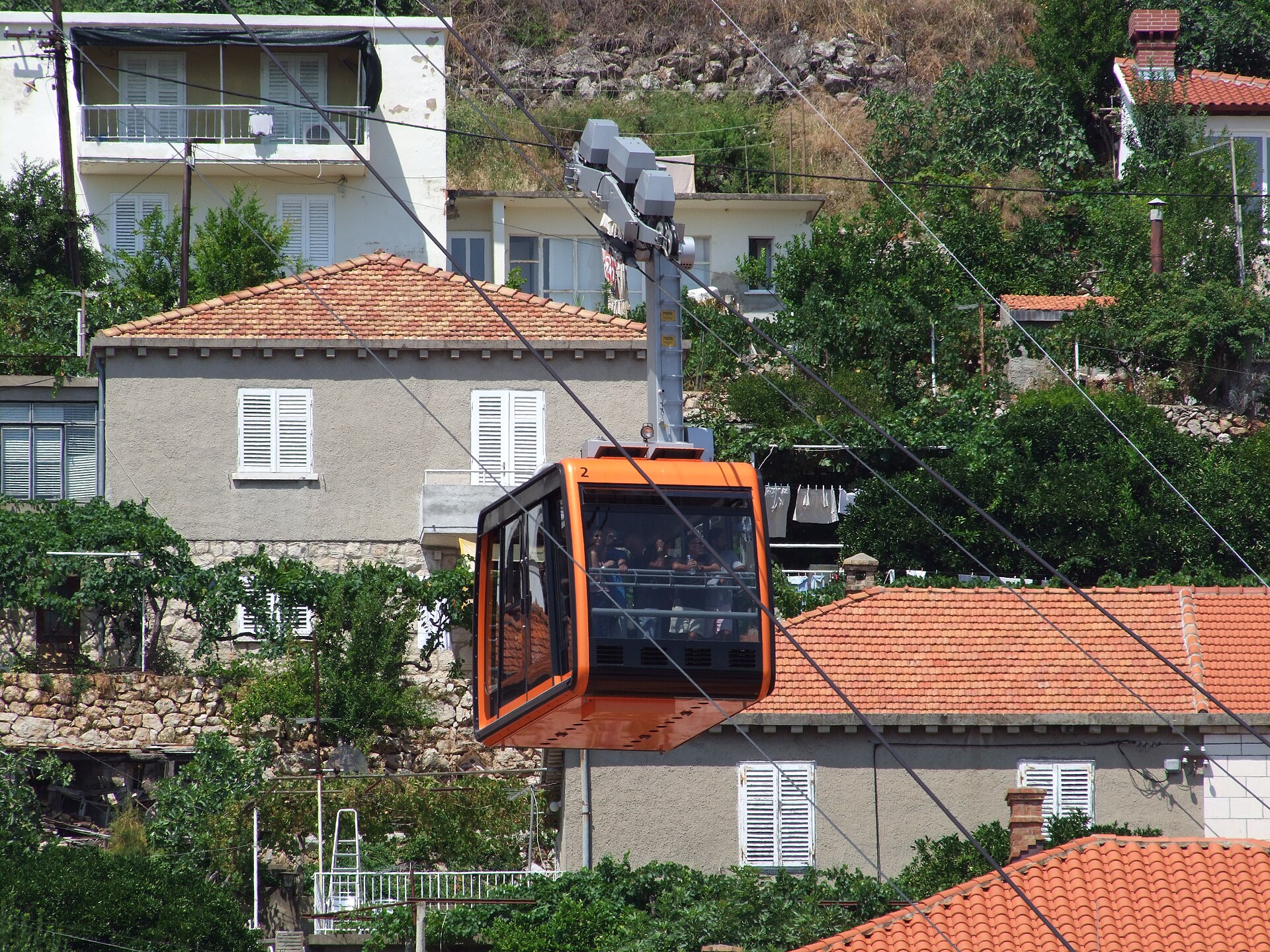
The original cable car was installed in 1969 — the first and only cable car station on the entire Adriatic coast. For twenty-two years it ferried passengers 778 metres up Mount Srđ in a gentle three-and-a-half-minute ride. Then, in December 1991, Serbian and Montenegrin forces shelling Dubrovnik destroyed it completely. The cable car was gone. The mountain became a battlefield. It took nearly two decades and five million euros to rebuild. The new cable car reopened in 2010 with modern cabins holding 32 passengers each, and on a clear day the views stretch up to 60 kilometres — far enough to see the coast of Italy. Below you, the terracotta rooftops of the Old Town spread out in an orange grid against the blue Adriatic, and it becomes immediately obvious why UNESCO put this place on the World Heritage list. At the summit sits Fort Imperial, built by Napoleon between 1806 and 1812 after the French ended the Republic of Ragusa. Napoleon, who had an eye for strategic hilltops, finished construction on August 15, 1812 — which happened to be his own birthday. The fort saw its most intense action not during the Napoleonic era but during the 1991 siege, when Croatian defenders held Mount Srđ against vastly superior Yugoslav forces in a battle that helped save the city below. Fort Imperial now houses the Museum of the Homeland War, a sobering collection of photographs, equipment, and personal items from the 1991-1995 conflict. The juxtaposition is striking: you ride up in a tourist gondola, step out to one of the most beautiful views in Europe, then walk into a museum about the war that almost destroyed it all.
Church of St. Blaise
Luža, Grad, Dubrovnik, 20000, Croatia
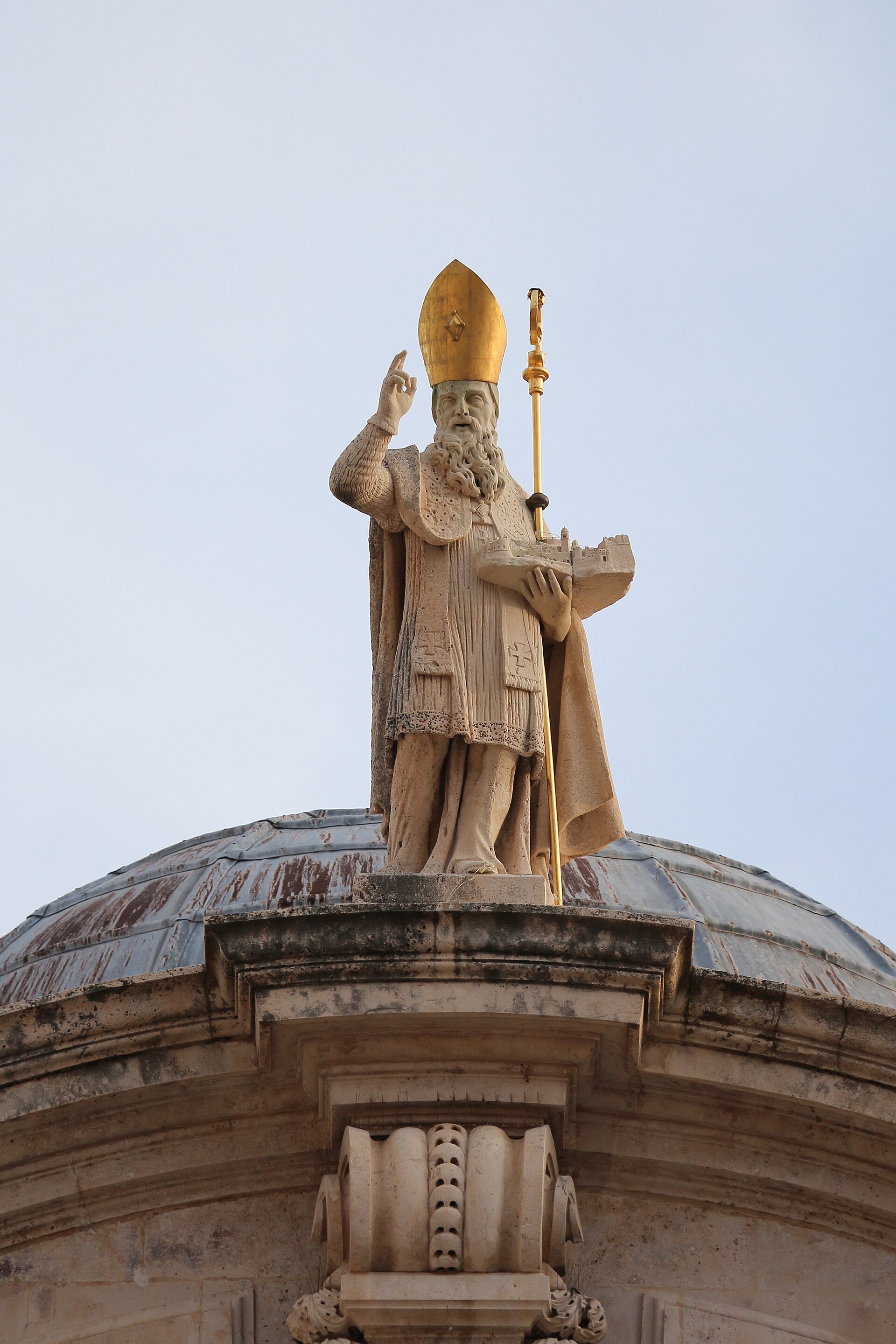
Dubrovnik's devotion to its patron saint borders on the obsessive. St. Blaise is on the gates, the walls, the fountains, the flag, and the manhole covers. And this church, sitting at the heart of Luža Square, is the ultimate expression of that devotion — a Baroque masterpiece built specifically to honour a 4th-century Armenian bishop who, by some accounts, has been protecting the city since 971 AD. The current church was built between 1706 and 1714 after a fire destroyed the original Romanesque structure that had stood here since the 14th century. In a delicious irony, the Republic hired Venetian architect Marino Gropelli to design the replacement — despite the fact that Dubrovnik and Venice had been bitter rivals for centuries. Apparently, aesthetic standards trumped political grudges. The result is a refined Baroque church modelled partly on the Church of San Maurizio in Venice, with a wide staircase, an elegant facade, and a balanced interior flooded with light. The most important object inside is a 15th-century gilt silver statue of St. Blaise on the main altar. The saint holds a scale model of Dubrovnik in his left hand, and this model is historically significant because it shows the city before the 1667 earthquake — the only surviving three-dimensional record of what medieval Dubrovnik actually looked like. Scholars have used this tiny model to reconstruct buildings that were lost centuries ago. Every February 3rd, the Feast of St. Blaise transforms the city. The relics are brought out from the Cathedral, processions fill the streets, and the entire city effectively shuts down for celebration. The tradition has been maintained since at least the 10th century and was inscribed on UNESCO's Intangible Cultural Heritage list in 2009.
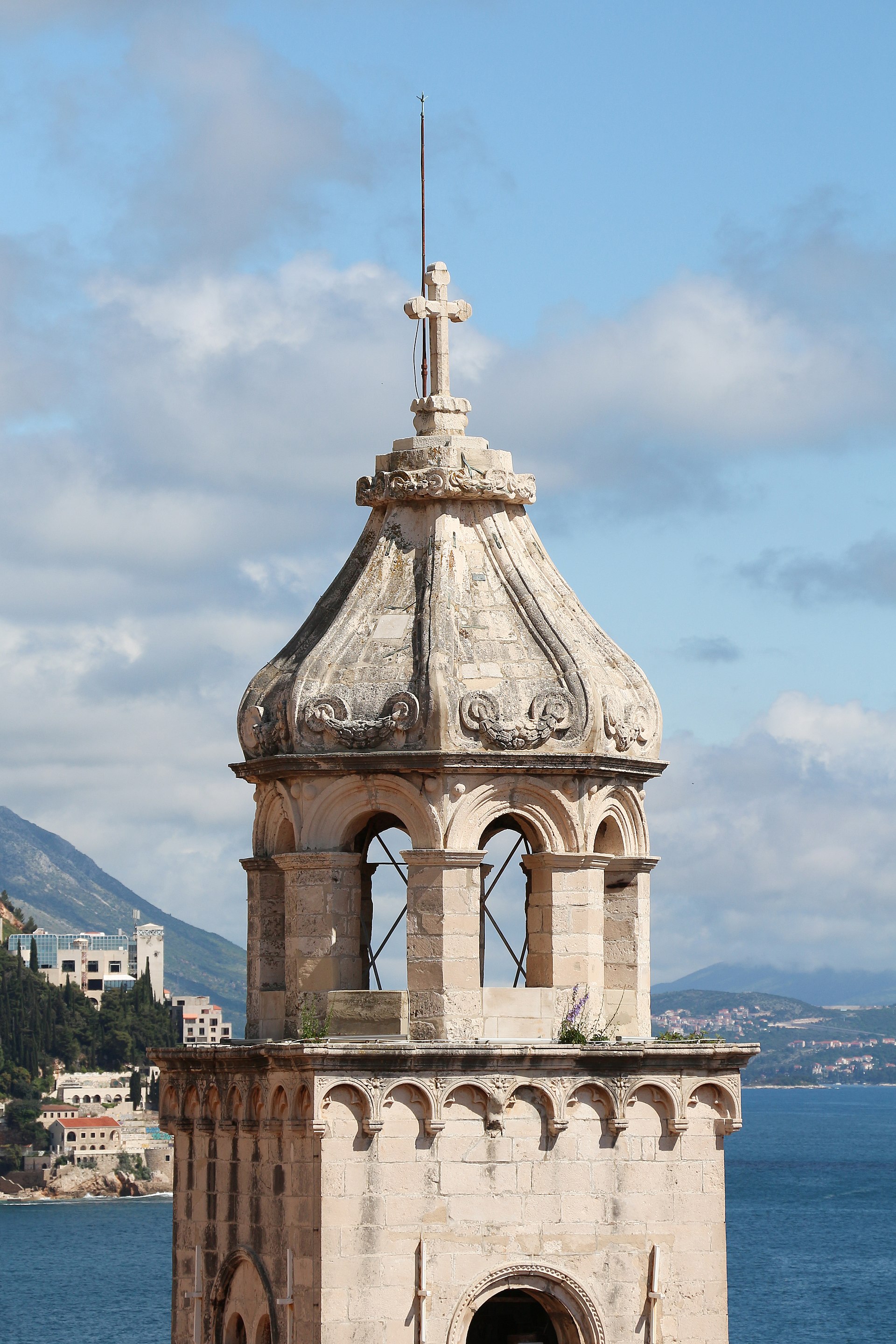
Dominican Monastery
4 Svetoga Dominika, Grad, Dubrovnik, 20000, Croatia
The Republic of Ragusa didn't just tolerate its monasteries — it weaponised them. When the Dominicans began building their monastery in 1225, the government insisted it be constructed against the northeastern city wall. Not beside it. Against it. The monastery was literally designed to strengthen the fortifications, its massive stone walls doubling as defensive architecture. Monks and soldiers, prayer and paranoia — Ragusa blurred the lines constantly. The Gothic cloister, designed by Florentine architect Maso di Bartolomeo and built between 1456 and 1483, is one of the finest in the Adriatic. Triple arches frame a Mediterranean garden with a 14th-century well at its centre — a well that would prove its worth five centuries later. During the 1991 siege, when shelling knocked out the city's water supply, residents drew water from this medieval well for several hours each morning. It reportedly provided water to roughly half the besieged population. A piece of 14th-century infrastructure saving lives in a 20th-century war. The monastery museum holds one of Croatia's most important art collections, including works by Nikola Božidarević, Lovro Dobričević, and a painting attributed to Titian. The collection spans from the 15th to 20th centuries and sits in rooms that feel more like a private gallery than a museum. The 15th-century polyptych by Božidarević, showing the Annunciation, is considered a masterpiece of the Dubrovnik school of painting. The bell tower, begun in the 16th century and completed in the 18th, is one of the tallest structures in the Old Town. The monastery also held one of the most important philosophy and theology centres in the region from 1390 until the 20th century. Underneath the academic prestige and the beautiful cloister, though, this place was always what the Republic intended it to be: a fortress disguised as a house of God.
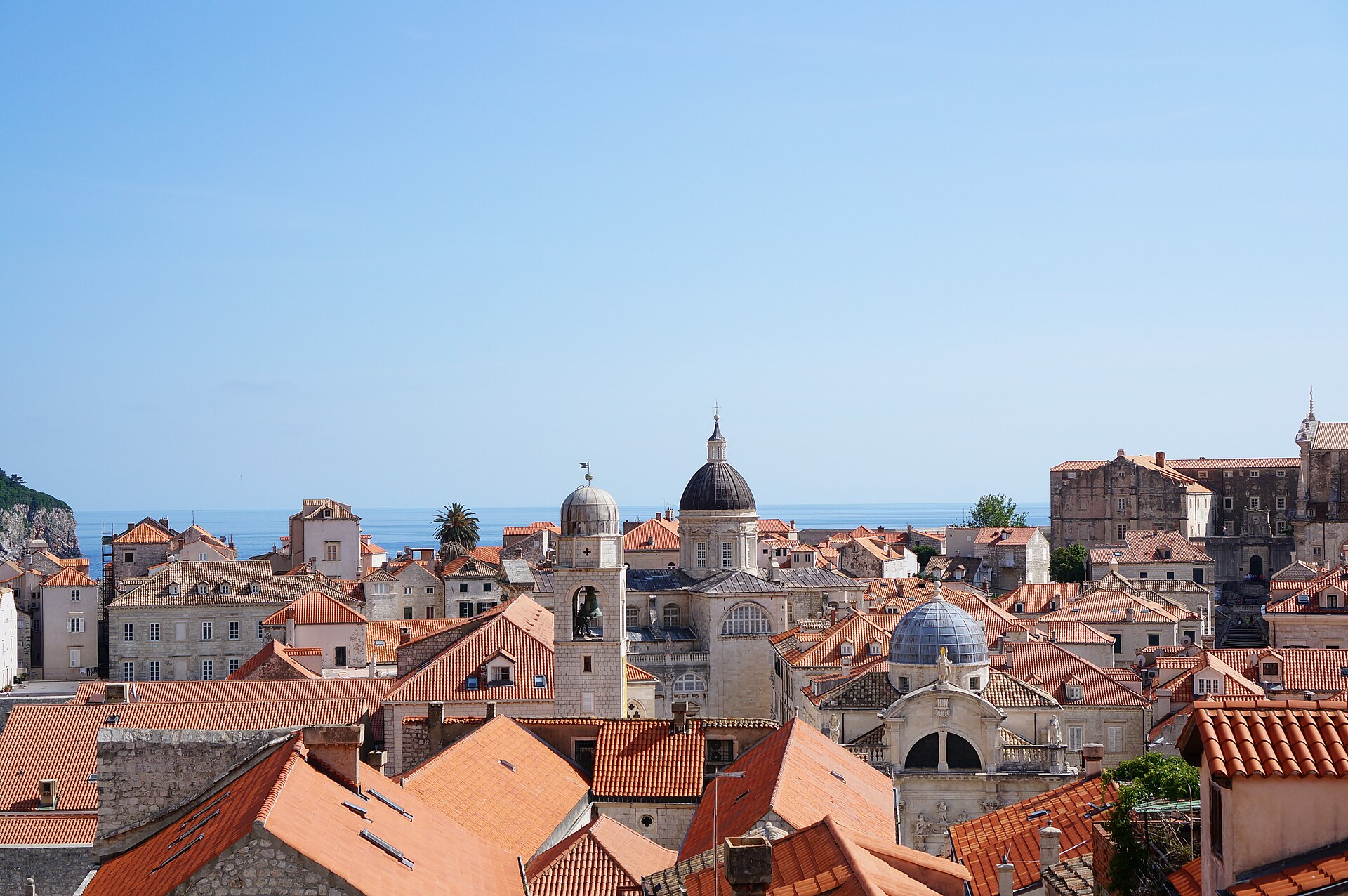
Dubrovnik Cathedral
Kneza Damjana Jude, Grad, Dubrovnik, 20000, Croatia
According to local legend, this cathedral exists because Richard the Lionheart nearly drowned. In 1192, returning from the Third Crusade, the English king was supposedly shipwrecked near the island of Lokrum and washed ashore. Grateful for his survival, he reportedly contributed funds for the construction of a Romanesque cathedral on this site. Historians debate the details, but Dubrovnik has never let the truth get in the way of a good origin story. The Romanesque cathedral, along with several predecessors dating back to the 7th century, was completely destroyed in the devastating earthquake of 1667. The Republic's Senate commissioned Italian architect Andrea Bufalini of Urbino to design a replacement, and construction of the current Baroque cathedral ran from 1673 to 1713. The result is an imposing structure with a wide nave and a dome that dominates the skyline when viewed from the city walls. The real draw is the Treasury, which holds 182 reliquaries spanning from the 11th to the 18th centuries. The collection includes the gold-plated arm, leg, and skull of St. Blaise, Dubrovnik's patron saint. The reliquaries are shaped like the body parts they contain — arm-shaped for arm bones, leg-shaped for leg bones, skull-shaped for skulls — which is either reverential or macabre depending on your perspective. The Treasury also claims to hold fragments of Jesus's swaddling clothes and a piece of the True Cross, though verification on those is somewhat difficult. The Titian painting above the main altar, depicting the Assumption of the Virgin, anchors the interior. On feast days dedicated to St. Blaise (February 3rd), the relics are paraded through the streets in a festival that has been celebrated since at least the 10th century and is now on UNESCO's Intangible Cultural Heritage list.
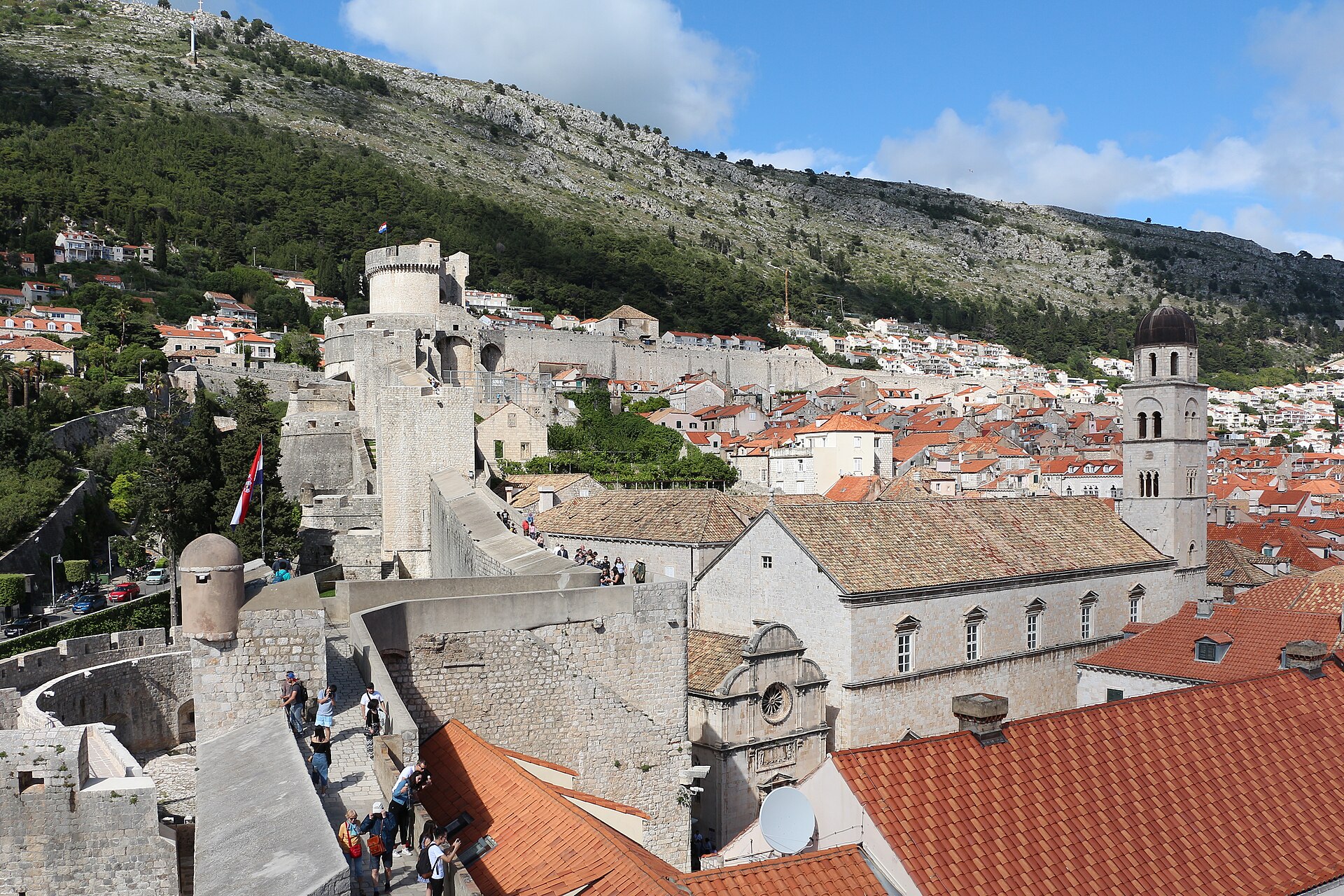
Dubrovnik City Walls
Ispod mira, Grad, Dubrovnik, 20000, Croatia
These walls have absorbed cannonballs, earthquake tremors, and the footsteps of roughly two million tourists a year — and they haven't budged an inch. Running an uninterrupted 1,940 metres around Dubrovnik's Old Town, reaching heights of 25 metres and a thickness of up to six metres on the land side, they are among the finest fortification systems ever built in the Mediterranean. The Republic of Ragusa spent centuries perfecting them, and after Constantinople fell to the Ottomans in 1453, they brought in Michelozzo di Bartolomeo from Florence to make them even stronger. What makes these walls remarkable isn't just their size — it's the paranoia embedded in the design. The land-facing walls are four to six metres thick, but the sea-facing walls are a slender 1.5 to 3 metres. The thinnest walls face inward, toward the city itself: the fortress walls on the city side are barely 60 centimetres thick, so that if any garrison commander ever tried to turn the guns on the Republic, the Senate could blast through in minutes. Dubrovnik trusted nobody, not even its own soldiers. The current form dates mostly from the 13th to 17th centuries, a period locals call the Golden Age of the Republic. Four mighty fortresses anchor the corners: Minčeta to the north, Revelin to the east, Bokar to the west, and the St. John tower guarding the harbour. Walk the full circuit and you'll pass over gates, through towers, and along stretches where the Adriatic crashes against the rocks directly below your feet. During the 1991 siege, Serbian and Montenegrin forces shelled the Old Town for months. Over 500 buildings were hit. The walls held. They have held against everything thrown at them for seven hundred years, and they remain the single best reason to visit Dubrovnik — not for the history lesson, but for the two-hour walk that delivers some of the most extraordinary views in Europe.
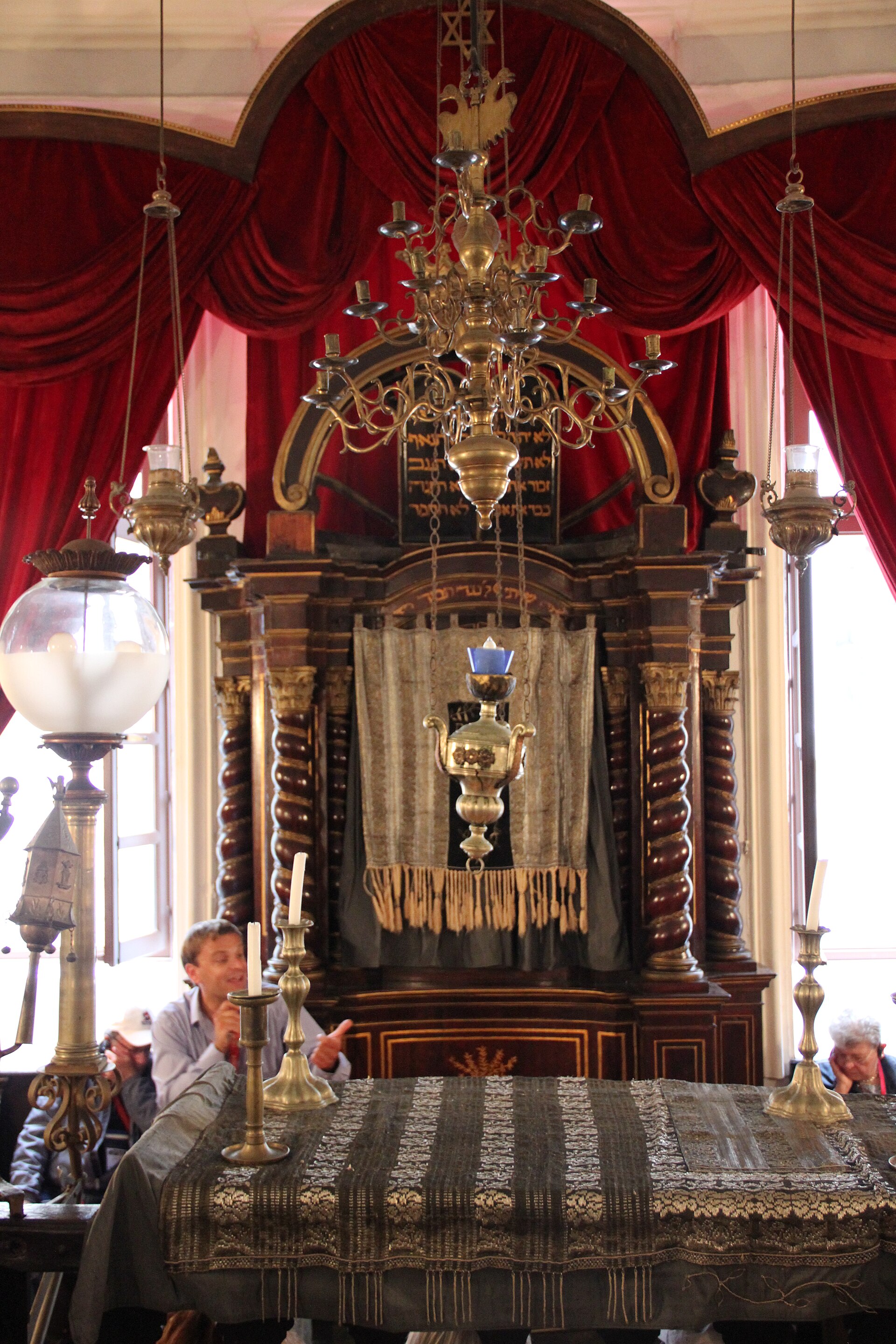
Dubrovnik Synagogue
5 Od Greba Žudioskih, Pile-Kono, Dubrovnik, 20000, Croatia
On a narrow lane called Žudioska — literally "Jewish Street" — sits the second-oldest active synagogue in Europe, established in 1352. It is tiny, intimate, and easy to miss entirely, which is rather the point. The Jewish community of Ragusa lived in what was essentially a self-contained ghetto — not a walled-off zone as in Venice, but a designated area centred on this single street. The Republic of Ragusa had a complicated relationship with its Jewish population. On one hand, Jewish merchants were valued for their international trade networks, their language skills, and their financial expertise. On the other, they were subject to restrictions: they could only live on Žudioska, they had to wear identifying markers, and they were excluded from full citizenship. The Republic was tolerant by medieval standards — far more so than Spain, which expelled its Jews entirely in 1492 — but tolerance and equality are not the same thing. The synagogue interior is on the second floor, up a narrow staircase. It is small enough that the entire congregation could fit in a large living room, which gives it an intimacy that grand European synagogues cannot match. The collection includes Torahs and menorahs dating back centuries, alongside documents that trace the community's history through the Republic era, the Napoleonic period, and the 20th century. During World War II, the Italian occupation authorities initially protected Dubrovnik's Jews, but after the German takeover in 1943, most of the community was deported. Of roughly 250 Jewish residents, fewer than 50 survived the Holocaust. The synagogue contains a memorial to those who were lost. It has been in continuous use since 1352, through plague, earthquake, empire, and genocide — a remarkable act of persistence in a very small room.
Ethnographic Museum (Rupe Granary)
3 Od Rupa, Grad, Dubrovnik, 20000, Croatia
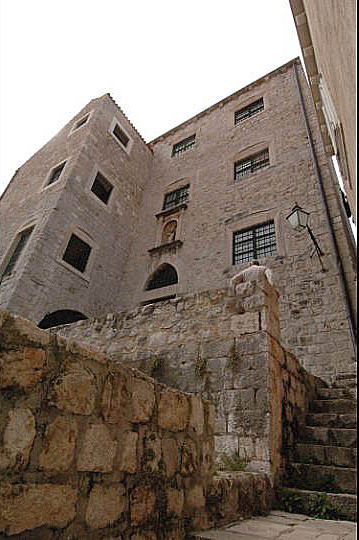
Beneath one of the largest buildings in the Old Town sit fifteen enormous holes carved into bedrock, each one a grain silo designed to keep the Republic of Ragusa from starving. Built in 1590 as a public granary, Rupe — which means "holes" in Croatian — was the Republic's insurance policy against famine, siege, and supply disruption. The silos could hold enough grain to feed the entire city for extended periods, and the dry, cool bedrock kept it from spoiling. The engineering is deceptively clever. Each silo is carved directly into the rock beneath the building, bell-shaped to maximise volume while maintaining structural integrity. The interior walls were sealed with a mixture that kept moisture out and grain in. Temperature control was natural: the rock maintained a constant cool temperature year-round, functioning essentially as a medieval climate-controlled warehouse. In an era before refrigeration or plastic packaging, this was cutting-edge food storage. The building above is now the Ethnographic Museum, housing over 6,500 objects related to the folk heritage of the Dubrovnik region. The collection covers everyday life in the Republic and surrounding areas — textiles, tools, clothing, ceramics, and household objects that tell the story of how ordinary people lived while the merchants and diplomats were busy running an empire. It is the kind of museum that gets overlooked in favour of grander institutions, which means you often have it nearly to yourself. The real star is the building itself. Standing on the upper floor and looking down through the grated openings into the cavernous silos below gives you a visceral sense of the Republic's survival instinct. This was not a city that trusted the sea to deliver. They carved holes in rock and filled them with grain, because Ragusa trusted nothing it couldn't control.
Fort Lovrijenac
29 Od tabakarije, Pile-Kono, Dubrovnik, 20000, Croatia
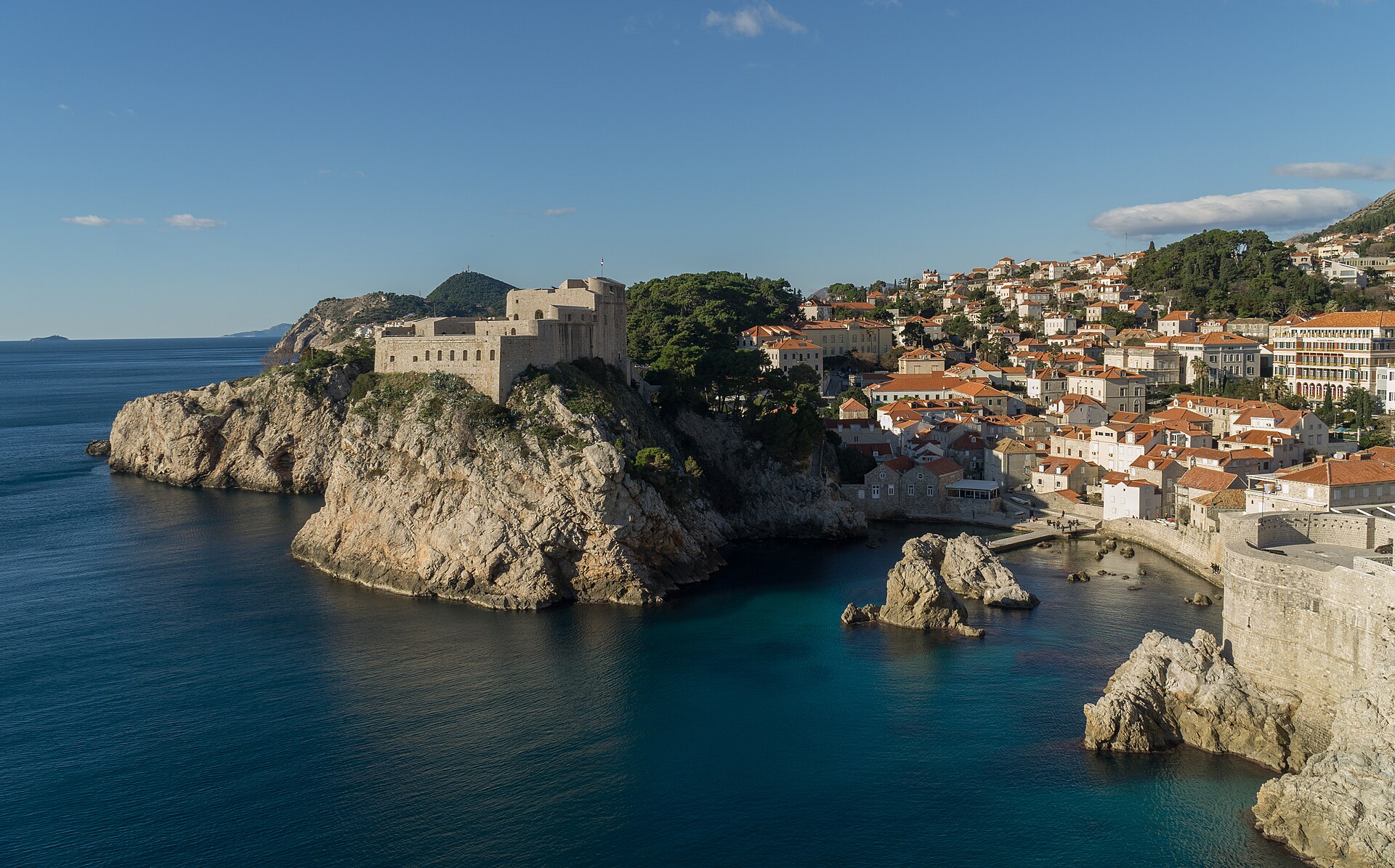
This fortress exists because of pure spite. In the early 11th century, the Venetians — Dubrovnik's eternal commercial rivals — sent a fleet to build a fort on this exact rocky outcrop, 37 metres above the sea, just outside the western walls. If Venice had succeeded, they would have held a gun to Dubrovnik's head forever. The citizens of Ragusa found out, raced to the site, and built the entire fortress in just three months, before the Venetian ships could arrive. It is perhaps the most aggressively petty act of construction in European history. Above the entrance door, carved in stone, is the inscription that has become Dubrovnik's unofficial motto: "Non bene pro toto libertas venditur auro" — Freedom is not to be sold for all the gold in the world. The Republic wasn't just making a philosophical statement. They meant it literally, and they backed it up with walls up to 12 metres thick on the sides facing outward — north, west, and southwest. But the wall facing the city? Barely 60 centimetres thick. The same logic as the city walls: if the fort commander ever turned traitor, the Republic's cannons could punch through it in seconds. Fort Lovrijenac has a triangular shape with three terraces, each designed for a different calibre of cannon. The garrison commander was appointed for one month only — just like the Rector — and was forbidden from sleeping inside the fort for two nights running. Ragusa trusted its architecture more than its people. Game of Thrones fans know this as the Red Keep, where some of King's Landing's most dramatic scenes were filmed. But long before Hollywood arrived, the fortress parapets had already served as one of Europe's most dramatic theatre stages — Shakespeare's Hamlet has been performed here during the Dubrovnik Summer Festival since 1952.
Franciscan Monastery & Old Pharmacy
Placa 2, 20000 Dubrovnik
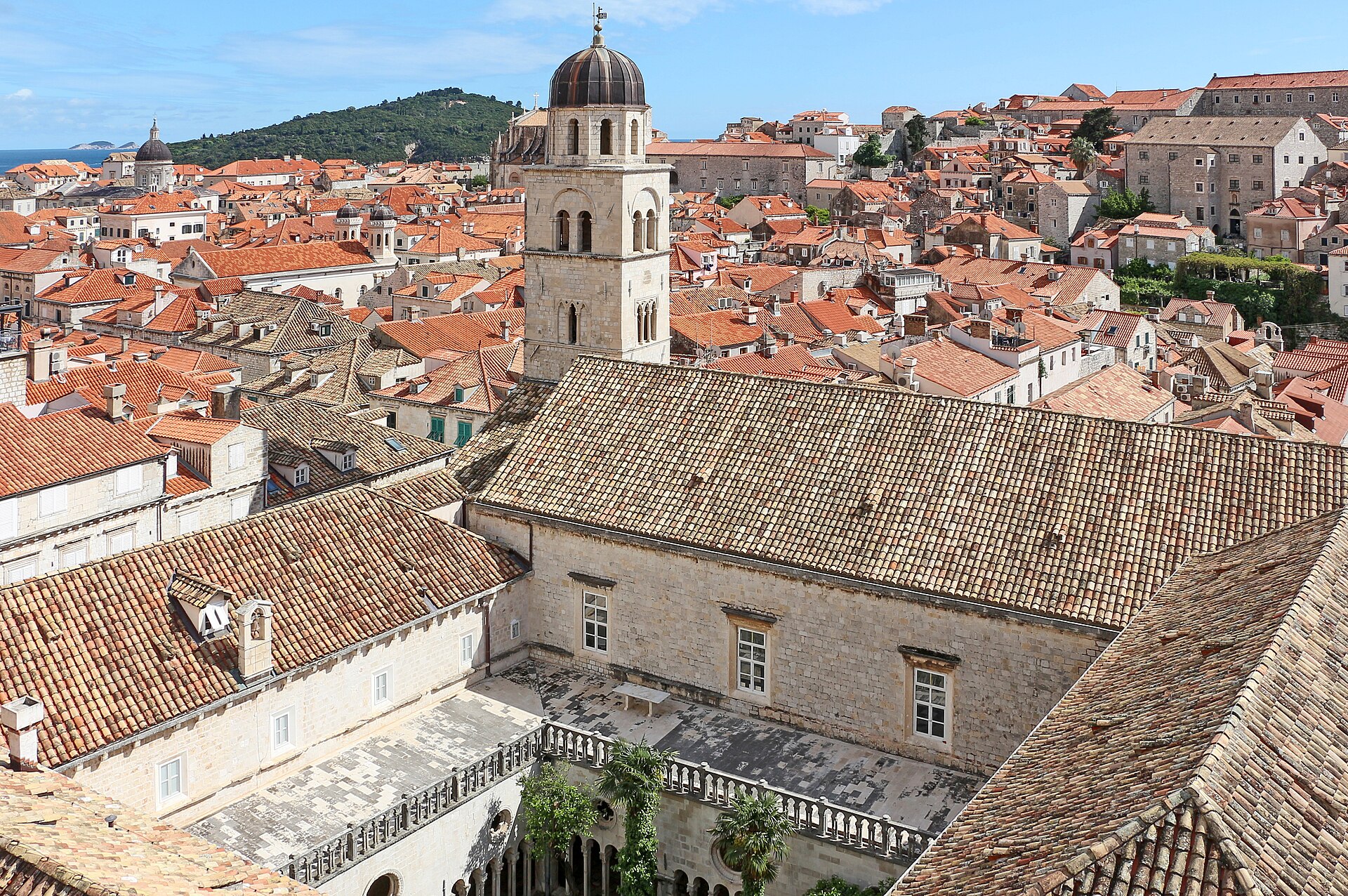
Tucked inside this 14th-century monastery complex is a pharmacy that has been dispensing medicine without interruption since 1317. That makes it the third-oldest pharmacy in Europe and, by some measures, the oldest still functioning one on the continent. For over seven hundred years, through earthquakes, plagues, sieges, and the collapse of the Republic itself, someone has been standing behind the counter here selling remedies. The pharmacy was originally established to serve the Franciscan friars, using herbs grown in the monastery's own garden. By the 15th century it had opened to the public, and its preparations — made from recipes developed over centuries — became famous across the Republic. Some of those original recipes are still used today. You can buy rose cream and lavender preparations made according to formulas that predate the printing press. The monastery's Romanesque cloister, built in 1360 by master craftsman Mihoje Brajkov of Bar, is one of the most photographed spots in Dubrovnik. Slender double columns with uniquely carved capitals surround a garden with a 15th-century fountain. Each capital is different — human heads, animals, mythical creatures — and scholars have debated their meaning for centuries. The original Romanesque church was destroyed in the 1667 earthquake; what you see now is a Baroque replacement, though the south portal from the original church survived and remains one of the finest pieces of Romanesque sculpture in Croatia. The Old Pharmacy Museum, accessible through the cloister, displays pharmaceutical equipment from centuries past: mortars, grinders, scales, ceramic jars, and handwritten recipe books. The monastery library holds over 30,000 volumes, including priceless medieval manuscripts and incunabula. All of this survived the 1667 earthquake because the cloister, pharmacy, and library were among the very few structures that didn't collapse.
Gradac Park
Od tabakarije, Pile-Kono, Dubrovnik, 20000, Croatia
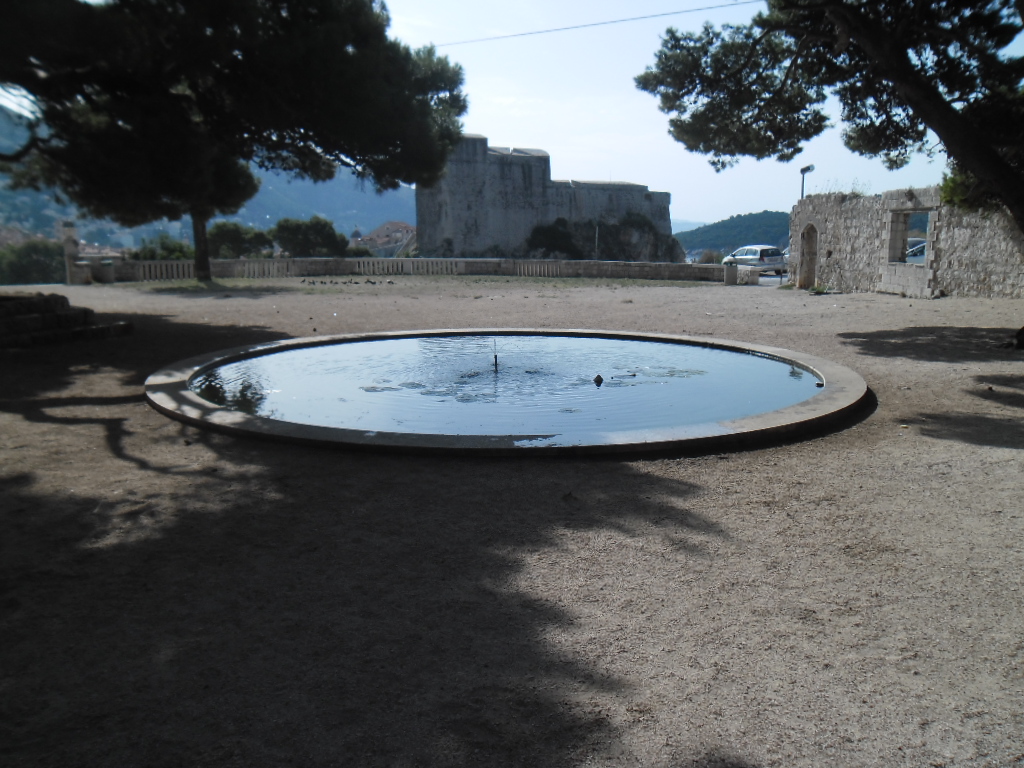
If you want to know where Dubrovnik's residents go to escape the tourists, this is it. Gradac Park sits just west of the Pile Gate on a wooded hillside above the sea, and it is the kind of place that never appears on the top-ten lists because it has nothing to sell. No entrance fee, no gift shop, no audio guide. Just shaded paths through Mediterranean pines and cypress trees, benches overlooking the Adriatic, and views of Fort Lovrijenac that rival anything you'd see from the city walls — for free. The park was established in the late 19th century on land that had been used as gardens for centuries before that. Mature Aleppo pines provide dense shade even in the height of summer, when the Old Town below is an oven of reflected heat and packed bodies. Locals come here to walk dogs, read, have picnics, and generally pretend that a million tourists aren't swarming their city half a kilometre away. It is blissfully quiet. The western edge of the park offers what many consider the definitive view of Fort Lovrijenac — the fortress framed by pine branches with the sea crashing against the rocks below. In the early morning or late afternoon, the light is extraordinary. During the Dubrovnik Summer Festival, an open-air cinema screens films among the trees, which is about as atmospheric as outdoor cinema gets. There's also a small beach at the base of the park — rocky, not sandy, in the Croatian way — that is far less crowded than Banje Beach on the other side of the Old Town. The water is clean, deep, and clear. Gradac is not glamorous. It is not Instagrammable in the way the walls or Buža are. It is just a very good park, and sometimes that's exactly what you need.
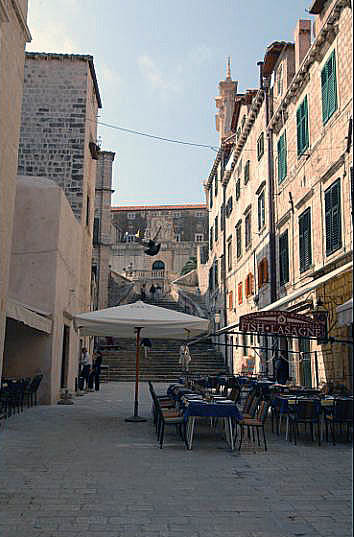
Jesuit Stairs & St. Ignatius Church
7 Poljana Ruđera Boškovića, Grad, Dubrovnik, 20000, Croatia
These stairs are famous for two things: being modelled on the Spanish Steps in Rome, and being the exact spot where Cersei Lannister was stripped naked and paraded through King's Landing in the most expensive Game of Thrones scene ever filmed in Dubrovnik. The production had to pay every business in the area — every bar, shop, and café — a full day's revenue to shut down for filming. The cost of public humiliation, it turns out, is staggering even in fiction. The Jesuit Staircase was designed by Roman architect Pietro Passalacqua and completed in 1738, making it the most prominent example of Baroque urban planning on the Croatian Adriatic coast. The broad, elegant steps sweep up from Gundulićeva Poljana (the morning market square) to the imposing facade of the Church of St. Ignatius, creating a dramatic ceremonial approach that was meant to echo the grandeur of Rome. The comparison to the Spanish Steps is not coincidental — Passalacqua knew them well. The Church of St. Ignatius itself was designed by Andrea Pozzo, the celebrated Jesuit architect and painter, who worked on it from 1699 to 1703. Modelled on Il Gesù in Rome — the mother church of the Jesuits — it is the largest Baroque church in Dubrovnik. Inside, the ceiling frescoes depicting scenes from the life of St. Ignatius of Loyola are among the finest Baroque paintings in the region. The adjoining Collegium Ragusinum, the Jesuit college established in 1658, was a major centre of education until the Jesuit order was suppressed in 1773. At the base of the stairs, the Gundulićeva Poljana hosts Dubrovnik's daily open-air market, where vendors sell local produce, lavender sachets, and bottles of homemade liqueurs. The juxtaposition of a grand Baroque staircase rising above tables of cheap souvenirs is perfectly Dubrovnik.
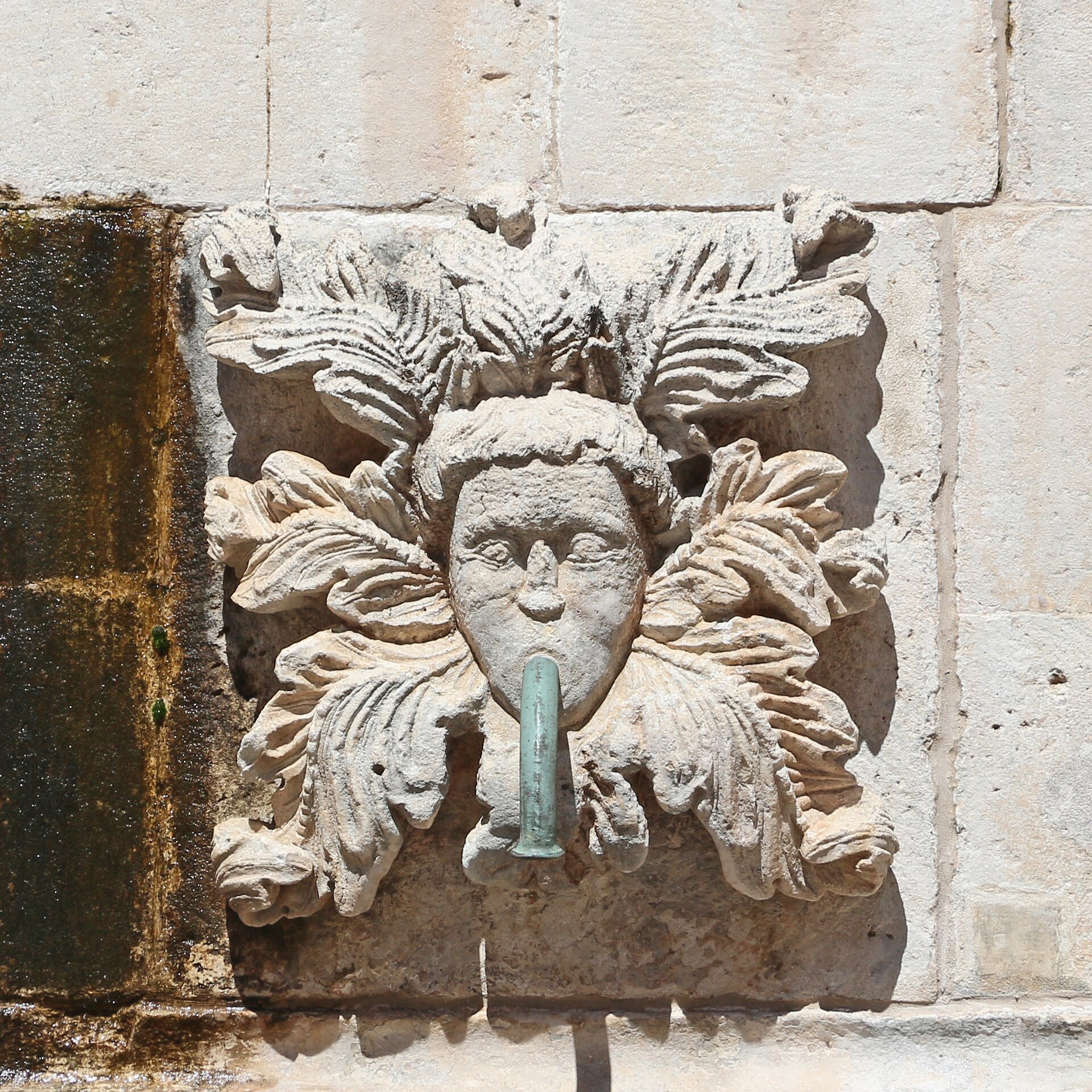
Large Onofrio Fountain
Poljana Paska Miličevića, Grad, Dubrovnik, 20000, Croatia
This sixteen-sided polygon of stone and water, sitting just inside the Pile Gate, is the terminus of an engineering project so ambitious it still functions nearly six centuries later. In 1436, the Republic hired Neapolitan engineer Onofrio della Cava to build an aqueduct that would bring fresh water from the Šumet spring — over 12 kilometres away — into the heart of the city. The fountain, completed in 1438, was the grand finale: a large domed structure with 16 carved masks, each spouting water from the mouths, where arriving travellers could wash before entering the city. The original fountain was considerably more ornate. Onofrio had adorned it with elaborate sculptural decoration, but the 1667 earthquake destroyed most of the ornamentation, leaving the austere polygonal form you see today. Only the 16 carved face masks survived intact, and they continue to pour water that is still fed by the same medieval aqueduct. The water is drinkable, and locals will tell you it's the best water in the city — cold, clean, and free, which in a place where a bottle of water costs five euros is a meaningful detail. The fountain's design was influenced by both Italian Renaissance engineering and Islamic waterworks — Onofrio had studied hydraulic systems across the Mediterranean. The aqueduct itself was a remarkable feat: it maintained a consistent gradient across hilly terrain for over 12 kilometres, using nothing but gravity to deliver water. No pumps, no engines, just careful mathematics and stone channels. Today the fountain is the meeting point of the Old Town, the spot where every walking tour begins and every lost tourist eventually gravitates. Its steps are permanently occupied by people sitting, eating, and people-watching. Onofrio built it as infrastructure. Dubrovnik turned it into a living room.
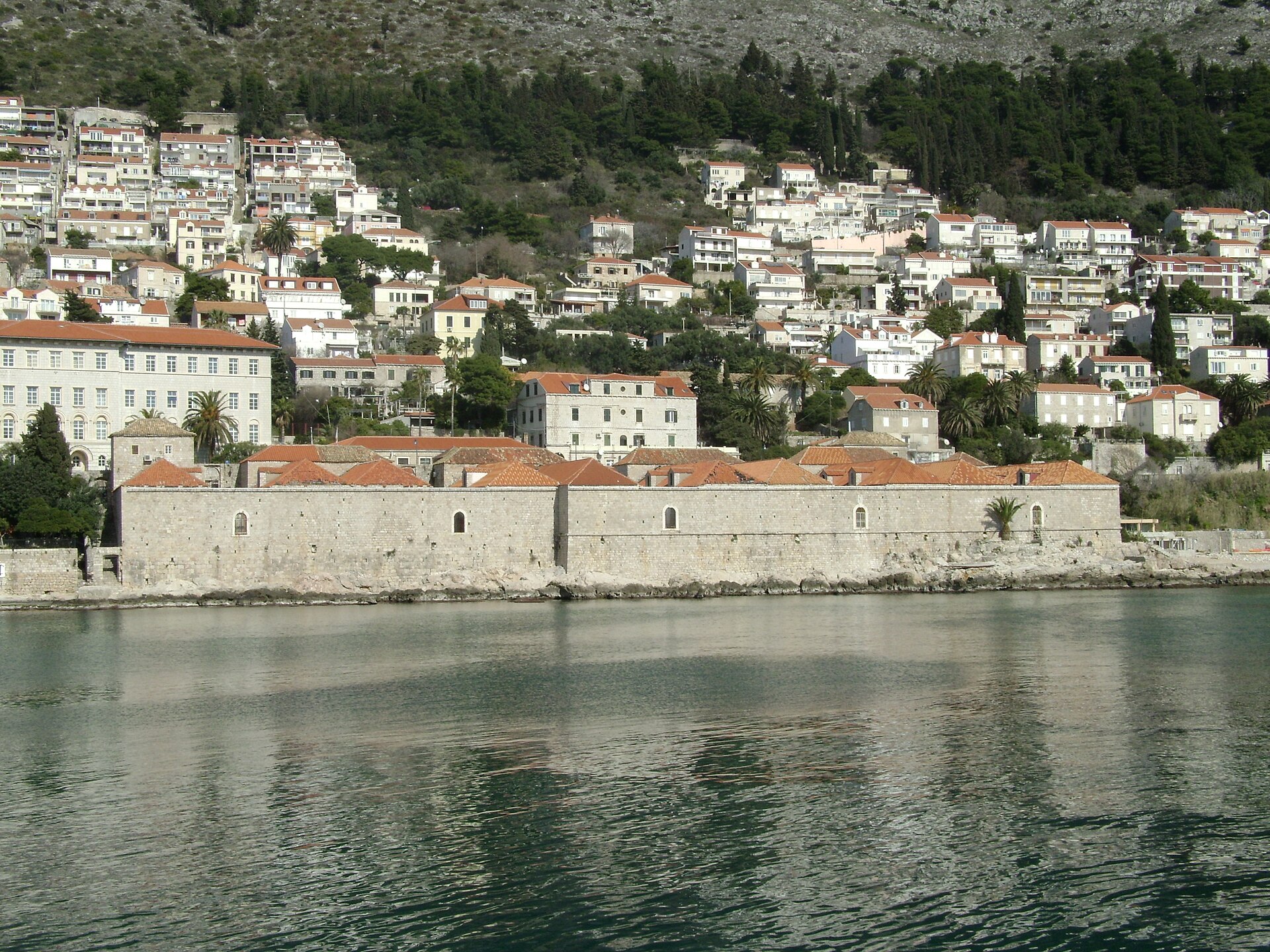
Lazareti
8 Ulica Frana Supila, Ploče iza Grada, Dubrovnik, 20000, Croatia
In 1377, while the rest of Europe was still blaming plague on bad smells and divine punishment, the Republic of Ragusa did something revolutionary: it invented quarantine. The Major Council decreed that all travellers and goods arriving from plague-affected areas must be isolated for 30 days before entering the city — a period later extended to 40 days, which is where the word "quarantine" comes from (quaranta giorni, forty days in Italian). It was one of the most important public health innovations in human history, and Dubrovnik did it first. The Lazareti complex — built between 1627 and 1647, though the quarantine system itself predates the buildings by 250 years — is a row of ten multi-storey buildings connected by five interior courtyards, all surrounded by high walls. The name comes from the Biblical Lazarus, whom Jesus raised from the dead, though the connection between resurrection and plague containment requires some creative theology. Located just outside the Ploče Gate, the complex was positioned to intercept caravans arriving from Ottoman territories and ships docking at the nearby port. Merchants, sailors, and their goods were held here under observation. The system was remarkably thorough: separate buildings for people and goods, separate courtyards to prevent cross-contamination, and a staff of guards and doctors who monitored everything. It worked. While plague ravaged other Mediterranean cities, Ragusa kept its death toll comparatively low. After centuries of disuse, the complex was extensively restored and reopened in 2019 as a cultural centre. Today it hosts art exhibitions, concerts, and performances by the Linđo folklore ensemble. The buildings that once confined plague-suspect traders now host DJ sets and gallery openings. The Republic would probably approve of the adaptation — they were always pragmatists.
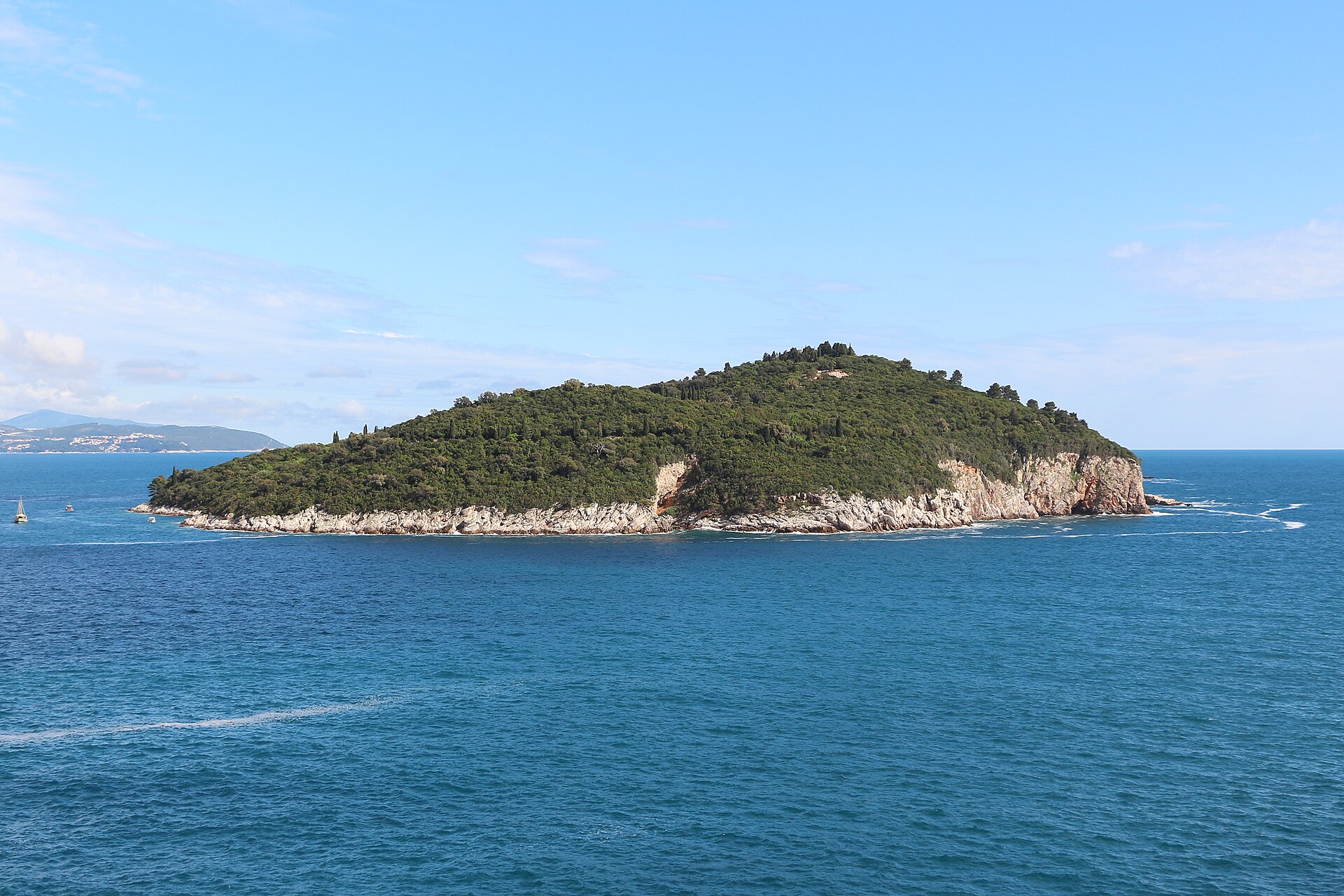
Lokrum Island
Lokrum, Ploče iza Grada, Dubrovnik, 20000, Croatia
This island is cursed. Or at least, that's what the Benedictine monks ensured when they were forcibly expelled in 1798. According to local legend, on their final night the monks donned their hooded robes, lit candles, and walked a slow circle around the entire island, dripping wax onto the ground while chanting: "Whosoever claims Lokrum for his own personal pleasure shall be damned." Every subsequent private owner of the island reportedly met misfortune. The Habsburgs bought it, and their empire collapsed. A local nobleman who tried to develop it went bankrupt. Coincidence, probably. But nobody in Dubrovnik seems willing to test the theory. The island sits just 600 metres off the Old Port and has been inhabited since at least 1023, when grateful citizens built a Benedictine monastery after a fire threatened to consume the city. The monastery complex still stands, though it was later converted into a summer residence by Archduke Maximilian of Habsburg — the same Maximilian who would become Emperor of Mexico and be executed by firing squad in 1867. The curse keeps receipts. Today Lokrum is a nature reserve, car-free and hotel-free, covered in dense Mediterranean forest, Aleppo pines, and exotic botanical gardens planted with specimens from around the world. There's a small saltwater lake called the Dead Sea where swimmers float in unusually warm, calm water. Peacocks roam the island freely, outnumbering the human visitors on quiet days. Game of Thrones fans will recognise the monastery grounds as Qarth, where several key Daenerys scenes were filmed. The show's Iron Throne sits in the monastery for photo opportunities. It is deeply weird to see a prop from a fantasy show about dragons in a real 11th-century monastery on a cursed island. But that is Lokrum in a nutshell: strange, beautiful, and genuinely unlike anywhere else.
Minčeta Tower
City Walls, 20000 Dubrovnik
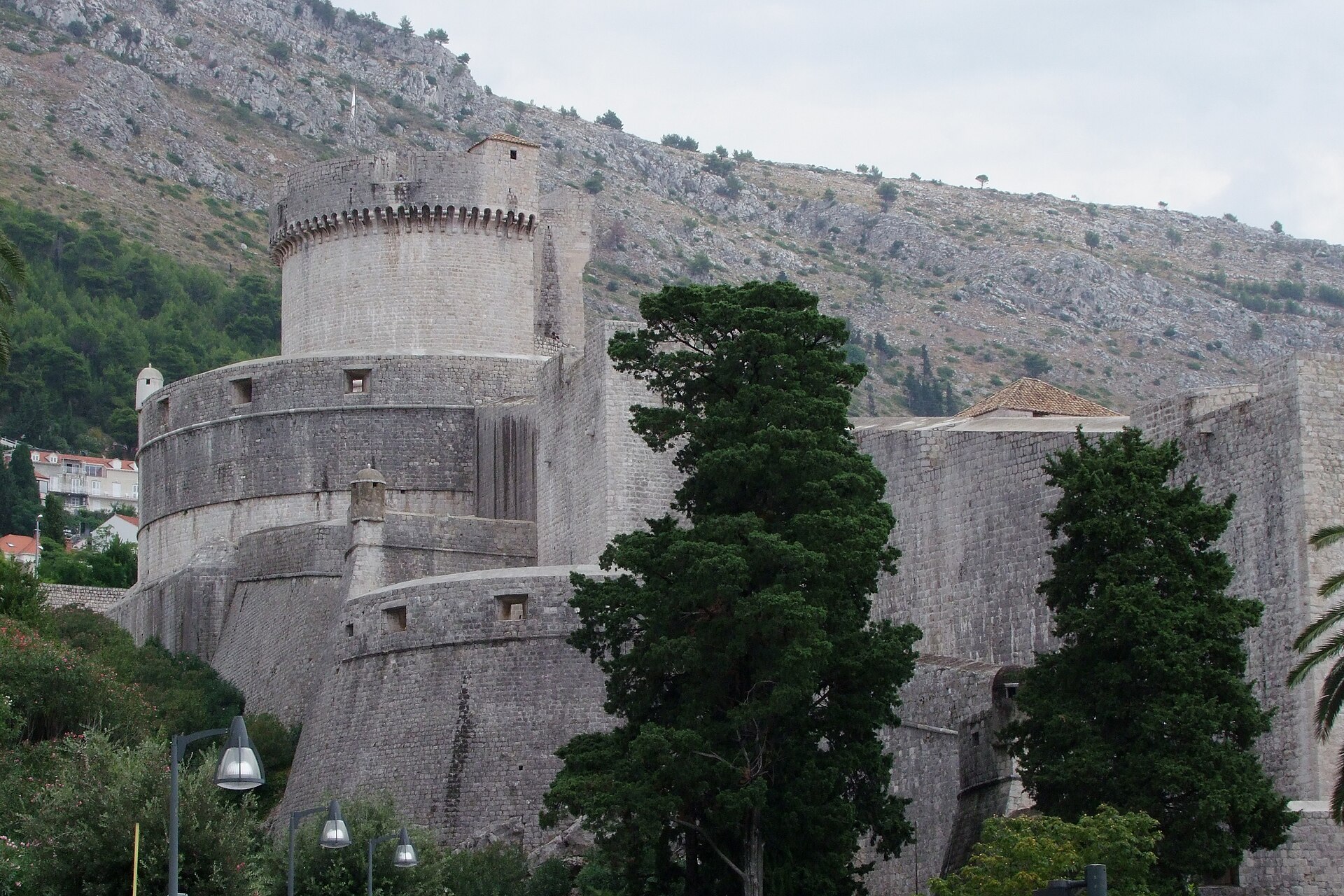
This is the crown of Dubrovnik's defences — literally and figuratively. Minčeta Tower sits at the highest point of the city walls, its massive circular form visible from almost everywhere in the Old Town. It is the most recognisable silhouette in Dubrovnik after the rooftops themselves, and it was deliberately designed to intimidate anyone approaching from the north. Construction began in 1319 with a square tower designed by local architect Nicifor Ranjina. But after the fall of Constantinople in 1453 sent shockwaves through every Mediterranean city-state, the Republic decided the original wasn't nearly menacing enough. They brought in Juraj Dalmatinac, Croatia's most celebrated Renaissance architect, who wrapped the square tower in a massive circular shell with walls so thick they absorbed cannonballs like punches to a heavyweight boxer. After Dalmatinac's death, Michelozzo di Bartolomeo — the same Florentine architect working on the rest of the walls — completed the crown-shaped top with its distinctive Gothic crenellations. The result is a tower that looks like a stone crown placed on the city's head. From the top, the views are extraordinary: the entire Old Town spreads below like a scale model, with the Adriatic beyond and the mountains of the Dalmatian coast stretching into the distance. It is the highest walkable point on the walls and the spot where most visitors stop longest, for obvious reasons. Game of Thrones fans will recognise Minčeta as the exterior of the House of the Undying, where Daenerys searches for her stolen dragons in Season 2. The tower's brooding medieval presence required almost no set dressing — it already looked like a place where sorcerers might live.
Museum of the Homeland War
Pile-Kono, Dubrovnik, Croatia
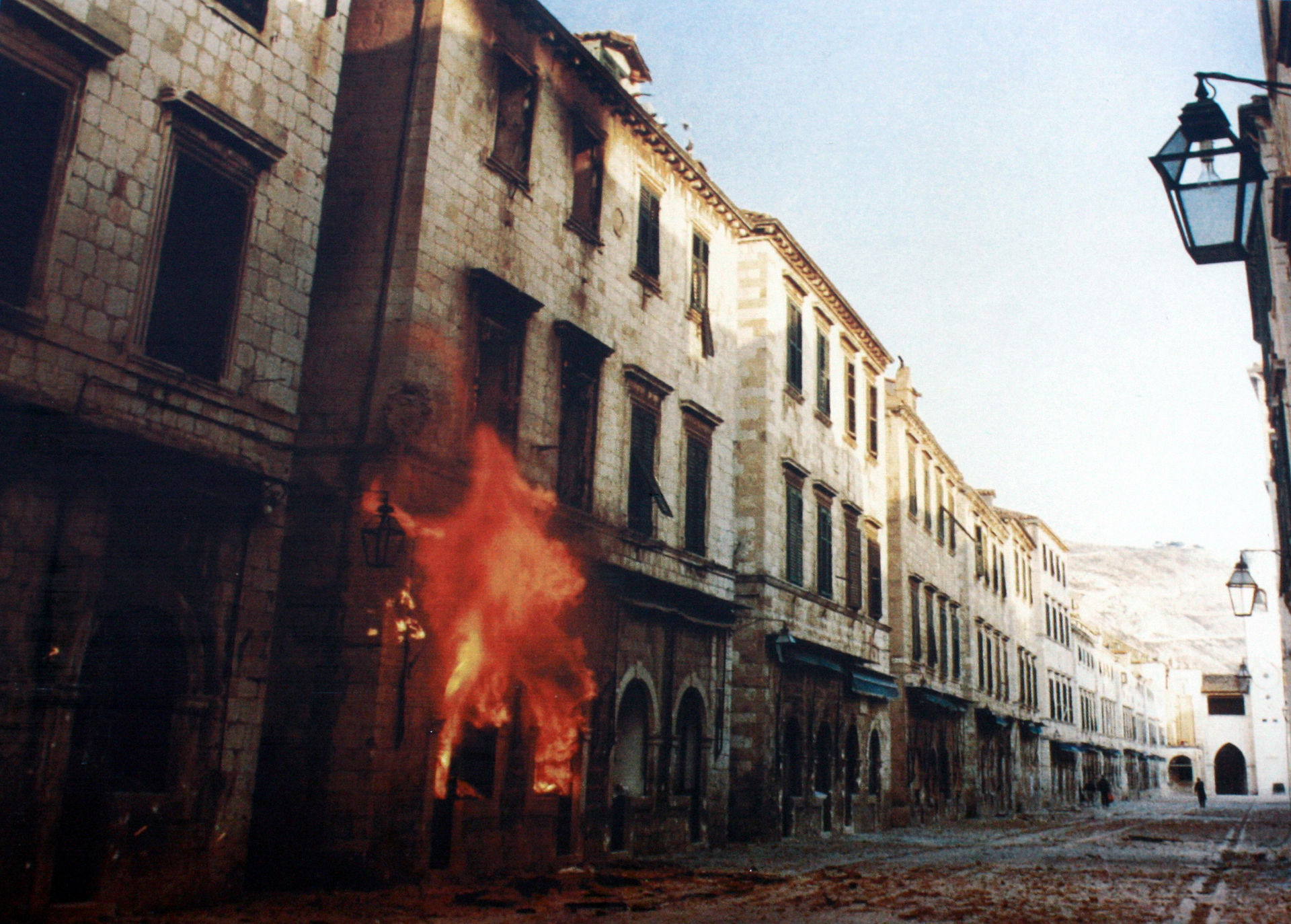
Fort Imperial sits at the summit of Mount Srđ like a stone crown, and inside its thick Napoleonic walls is a museum that forces you to reconcile the beauty below with the violence that nearly destroyed it. The Museum of the Homeland War tells the story of the 1991-1995 conflict through around 900 exhibits: photographs, personal belongings, weapons, military equipment, and multimedia presentations that document how a medieval tourist city became a war zone. The siege of Dubrovnik began on October 1, 1991, when Yugoslav People's Army (JNA) forces, supported by Serbian and Montenegrin paramilitaries, surrounded the city and began shelling. Mount Srđ, where this museum now sits, was the key defensive position. A small group of Croatian soldiers — many of them locals with no military experience — held the mountain against vastly superior forces. Had Srđ fallen, the city below would have been indefensible. The museum displays are unflinching. Photographs of the shelling show rockets hitting the Old Town, rooftops on fire, civilians sheltering in basements. Personal items from defenders — letters, ID cards, cigarette cases — personalise the statistics. Over 80 civilians were killed and hundreds wounded. More than two-thirds of the buildings in the Old Town sustained damage. The international community watched, expressed concern, and largely did nothing for months. Walking through the museum and then stepping outside to the viewing terrace is a jarring experience. The panorama is one of the most beautiful in Europe — red rooftops, blue sea, green islands stretching to the horizon. It looks exactly like a postcard. Thirty years ago, this same view showed a city on fire. The museum ensures you see both versions.
Old Port
Kneza Damjana Jude, Grad, Dubrovnik, 20000, Croatia
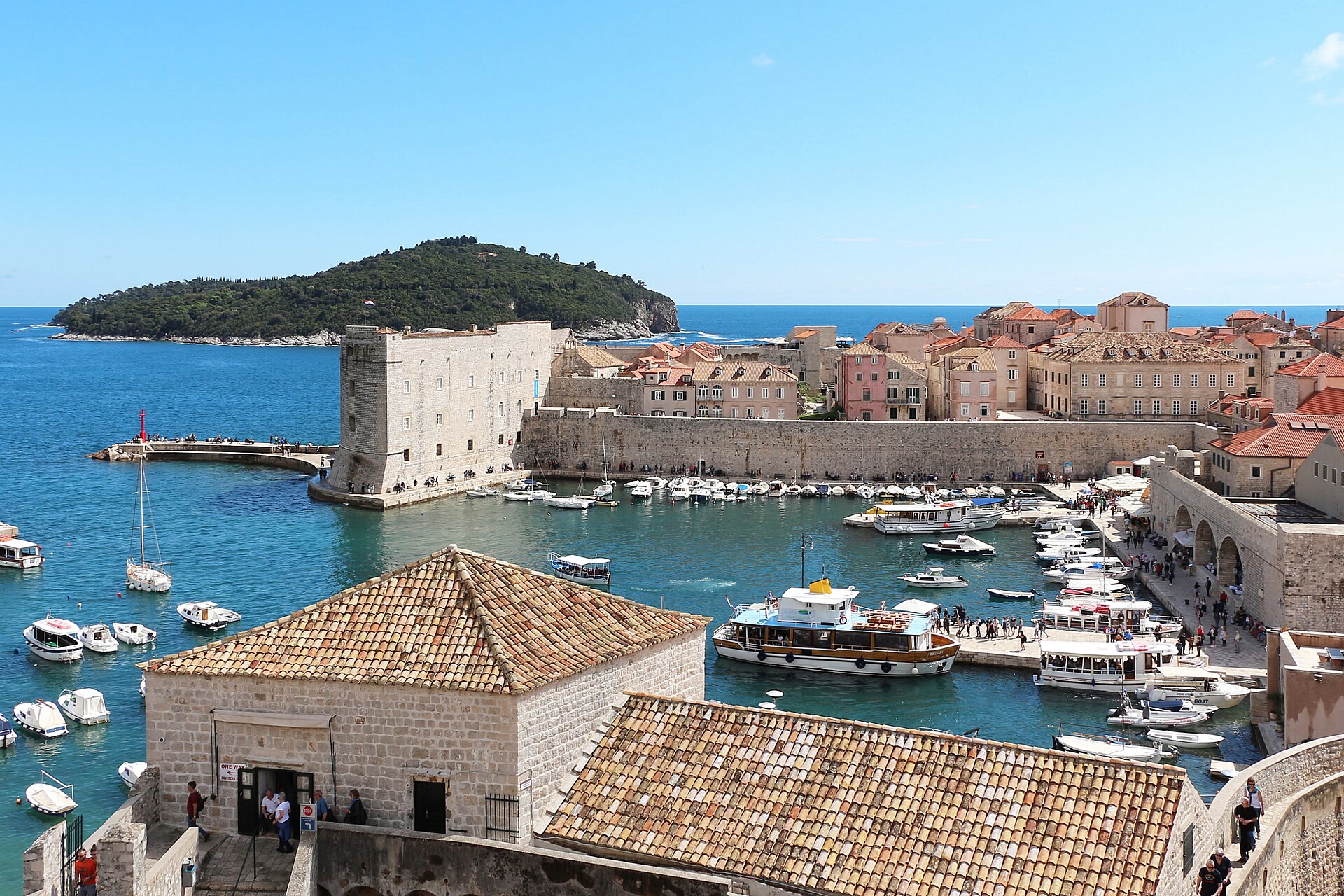
This harbour once held a fleet that rivalled Venice. At its peak in the 16th century, the Republic of Ragusa operated around 180 merchant ships, making it one of the largest maritime powers in the Mediterranean. The Old Port — sheltered by the massive St. John Fortress and the Revelin breakwater — was where the Republic's wealth literally sailed in and out: silk from the East, salt from Ston, wool from England, spices from everywhere. The port is defined by the enormous St. John Fortress (Sveti Ivan), which curves around the eastern harbour wall. Built in stages from the 14th to 16th century, the fortress now houses the Maritime Museum on its upper floors and the Dubrovnik Aquarium in its ground-level vaults. The Maritime Museum tells the story of how a tiny city-state with no natural resources beyond a good harbour and clever diplomats became a genuine naval power. At one point, Ragusa had consulates in over 80 cities. The Porporela breakwater extends from the fortress into the sea, and walking to its tip gives you one of the best free views in the city — Fort Lovrijenac to the west, Lokrum Island straight ahead, and the city walls rising behind you. Locals come here at sunset. Tourists come during the day. Both groups are making the right call. Today the port is home to small fishing boats, water taxis to Lokrum, and the tourist boats that ferry day-trippers to the Elaphiti Islands. The contrast between its current sleepy character and its former commercial power is striking. What was once the engine room of a Mediterranean trading empire is now a place where you buy ice cream and watch kayakers paddle past.
Old Town Basketball Court
Ul. za Rokom, 20000 Dubrovnik
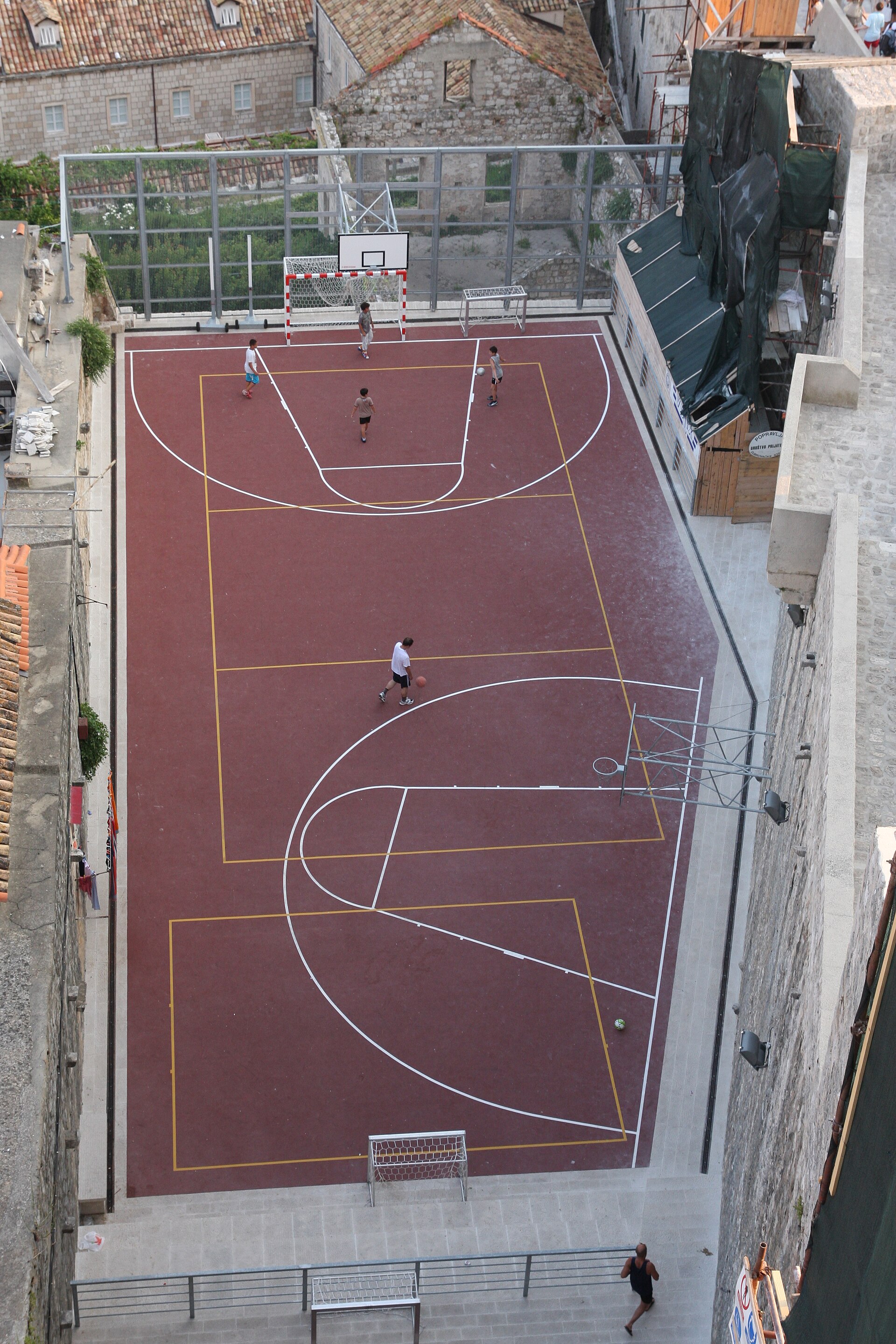
In the far northwest corner of Dubrovnik's Old Town, wedged between medieval stone buildings and the inner face of the city walls, sits a full-size basketball court that has been voted one of the best-designed courts in the world. Not the most expected, not the most unusual — the best designed. It is exactly as absurd as it sounds: a regulation court with painted lines and metal hoops, surrounded by 600-year-old walls, with the Minčeta Tower looming directly above like a referee from another century. The court sits on a flat terrace that was probably used for storage or military assembly for most of its history. At some point — nobody seems to know exactly when — someone put up two hoops and the neighbourhood kids claimed it. Croatia is a basketball-obsessed nation (they've won Olympic medals and produced NBA players from a country of four million people), and this court is where local Old Town kids grow up shooting hoops in what might be the most atmospheric playground on earth. There are no spectator stands, no scoreboard, and no changing rooms. The "walls" of the court are literal medieval walls. If you overthrow a layup on the north side, the ball bounces off stone that was placed there in the 14th century. The surface is standard concrete, slightly uneven in places, and the hoops are regulation height but look tiny against the fortress architecture surrounding them. Finding it requires navigating the steep residential streets in the northwestern corner of the Old Town, away from the tourist routes. Follow the sound of a bouncing ball. It is one of those details that makes Dubrovnik feel like an actual city rather than a museum — proof that people live here, play here, and have figured out how to make a medieval fortress work for pickup games.
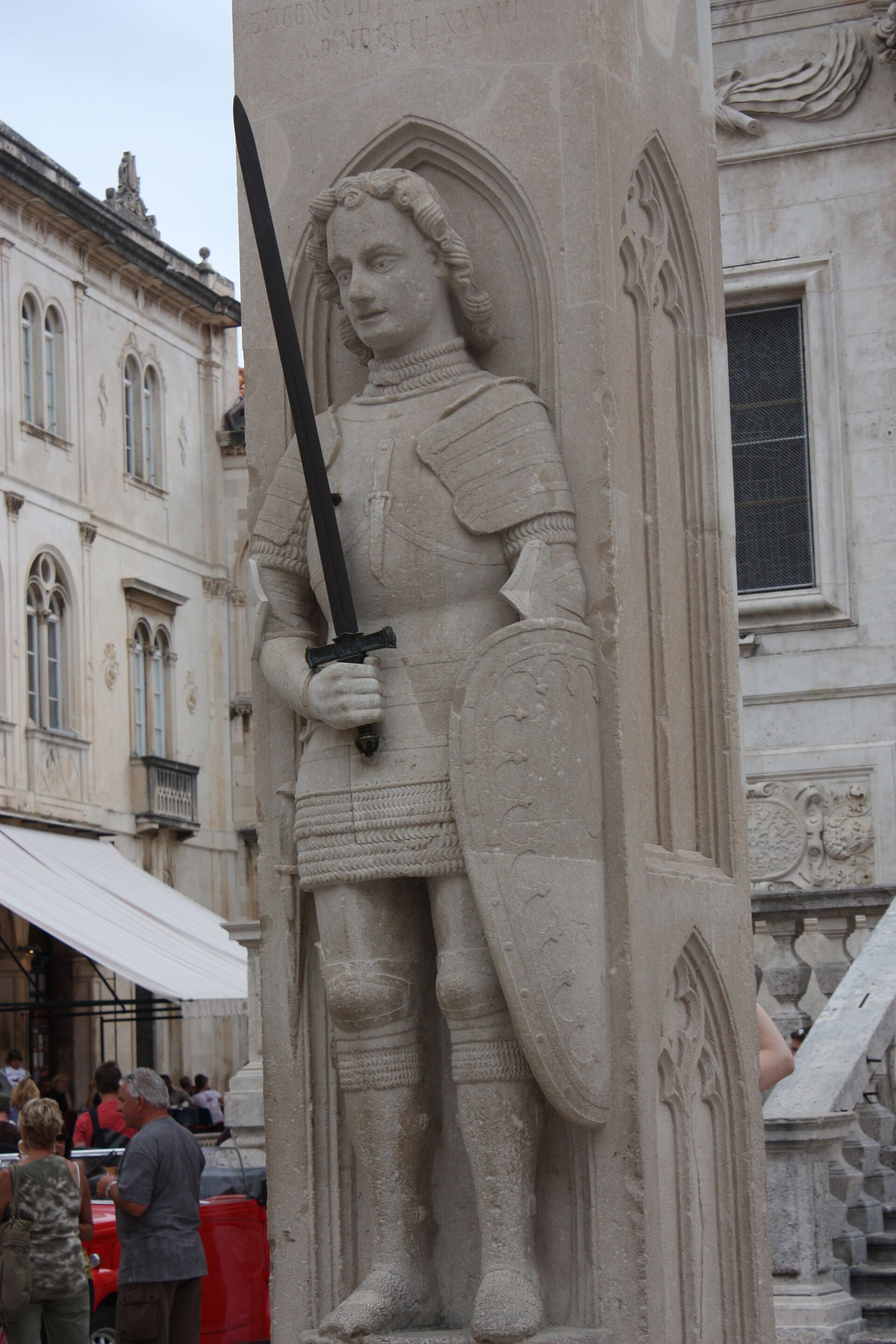
Orlando's Column
Luža Square, 20000 Dubrovnik
Standing in Luža Square since 1418, this stone column features a carved knight whose forearm literally defined how business was done in the Republic of Ragusa. The forearm of the Orlando statue — exactly 51.2 centimetres long — was the official unit of measurement for trade in the Republic, known as the Ragusan cubit or lakat. Every piece of cloth sold, every length of rope measured, was calibrated against a stone arm on a column in the town square. It is both absurd and practical. Orlando — known as Roland in most of Europe — was a Frankish knight from Charlemagne's court. According to Dubrovnik's version of the legend, he helped defend the city against an Arab siege in the 8th century, though historians consider this almost entirely fictional. The Republic didn't care about historical accuracy; they cared about symbols, and Orlando represented freedom, independence, and military courage — precisely the values they wanted carved in stone at the centre of their city. The column served as the spot where public decrees were read aloud, where the Republic's flag was raised, and where punishment was sometimes carried out. It was the civic heart of the Republic, the place where law, commerce, and ceremony intersected. During the Dubrovnik Summer Festival, the Libertas flag is still ceremonially raised here at the opening celebration. Today Orlando stands slightly weathered, his sword held upright, gazing toward the harbour. Tourists photograph him constantly without knowing why he's there. He is easy to walk past, just another medieval statue in a city full of them. But for centuries, this stone figure was as important to Dubrovnik as any building — the physical embodiment of a republic that measured its freedom in the length of a carved arm.
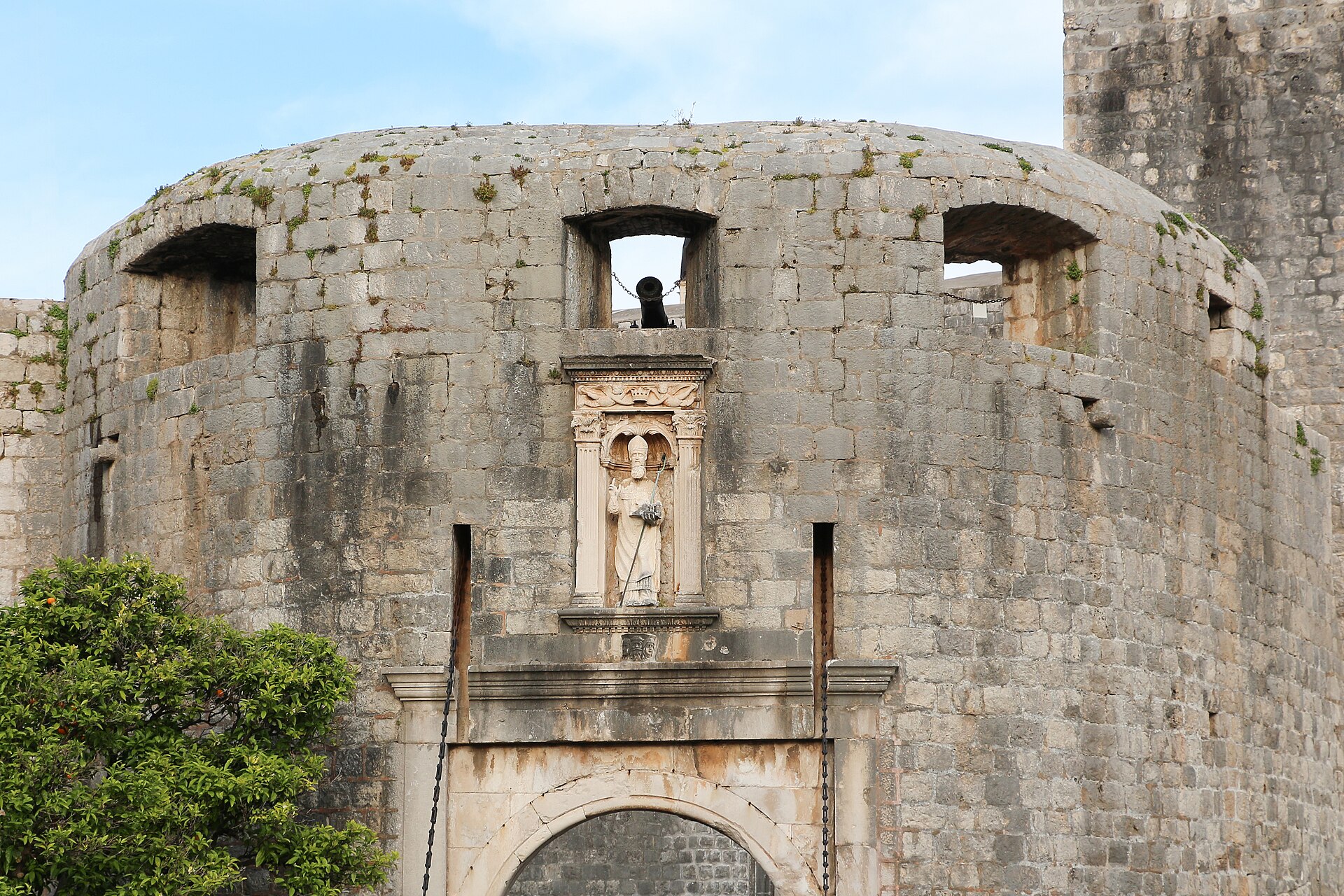
Pile Gate
Ul. Vrata od Pila, 20000 Dubrovnik
Every day for centuries, the keys to this gate were ceremonially handed to the Rector at sunset and returned at dawn. It was not a symbolic gesture — the gates were physically locked every single night, and anyone caught outside after closing was sleeping in the open. The Republic of Ragusa took its security with a seriousness that bordered on obsession, and the Pile Gate was the main western entrance to that obsession. Built in 1460, the gate is actually two gates: an outer Renaissance gate with a semicircular arch and an inner Gothic gate set deeper into the walls. Between them, a drawbridge once spanned a dry moat — it was pulled up every evening using a mechanical winch. Above the outer arch stands a statue of St. Blaise, Dubrovnik's patron saint, holding a model of the city. You'll see St. Blaise everywhere in Dubrovnik — on gates, churches, fountains, and even manhole covers. He is to Dubrovnik what the Eiffel Tower is to Paris: inescapable. Step through the gate and you're immediately on Stradun, the city's gleaming limestone main street. To your right is the Large Onofrio Fountain, where medieval travellers would wash their hands and feet before entering the city — a hygiene measure that was progressive for the 15th century. To your left rises the Franciscan Monastery with Europe's third-oldest pharmacy. The gate area is now the most congested point in the Old Town, particularly when cruise ships dock and disgorge thousands of passengers simultaneously. The city has introduced crowd-counting sensors and visitor caps to manage the flow. Seven centuries ago, the gate was designed to control who entered. Today, the challenge is exactly the same.
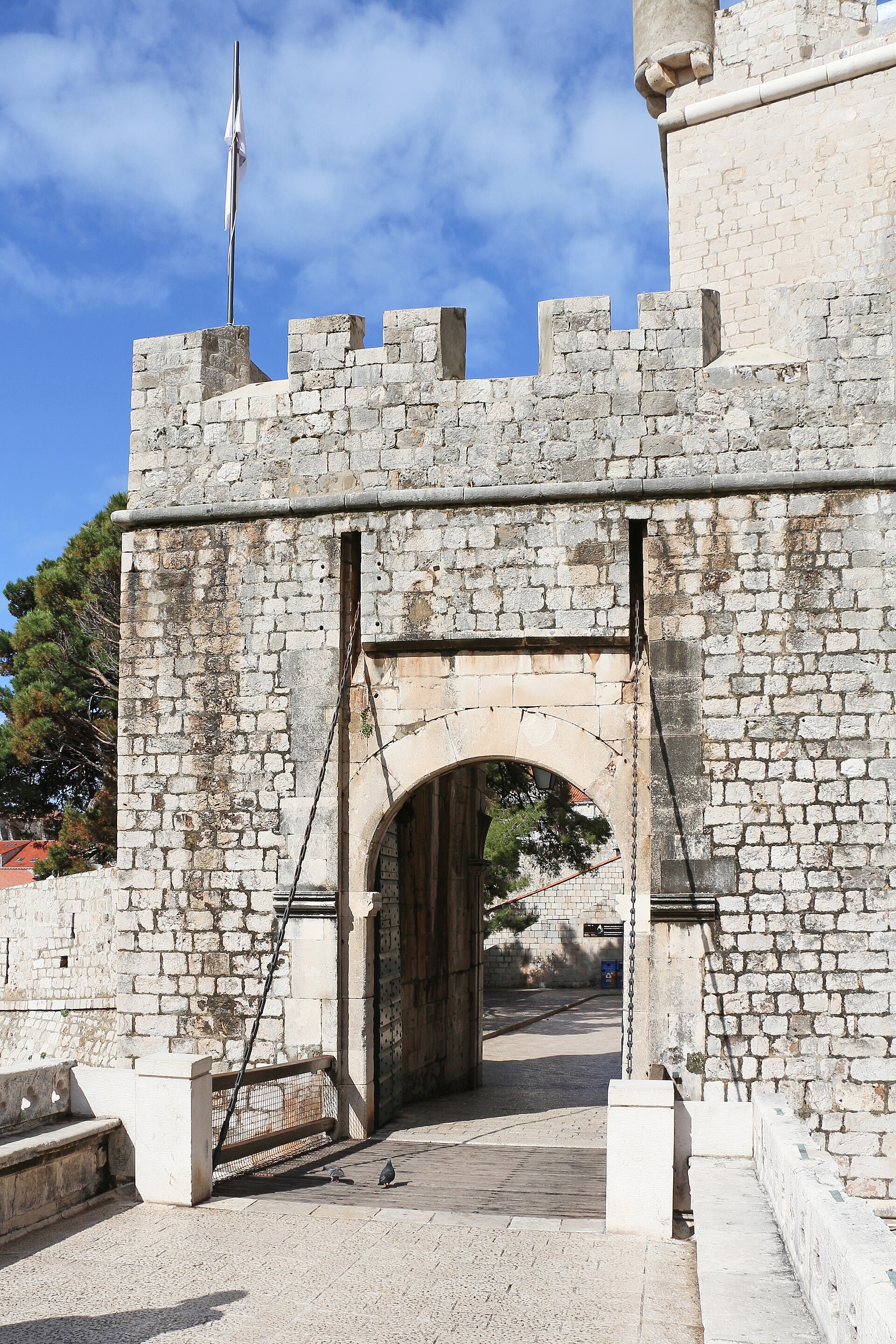
Ploče Gate
Ul. Vrata od Ploča, 20000 Dubrovnik
If Pile Gate is Dubrovnik's front door, Ploče Gate is the side entrance — and the Republic fortified it even more heavily. The eastern gate is protected by the massive Revelin Fortress, connected by a stone bridge over a dry moat, and approached through a series of defensive layers that would have made any attacking army reconsider its life choices. Every traveller arriving overland from the east — from Ottoman territory — entered the city through this gate, which is why it was built to be impenetrable. The gate dates from the 14th century and, like Pile Gate, uses a double-gate system: an outer gate with a semicircular arch and an inner gate set into the walls. Between them, a drawbridge could be raised at night. Above the inner gate, a statue of St. Blaise watches over arrivals with the same patient expression he wears at every other entrance to the city. What makes Ploče Gate significant is its relationship to the Lazareti quarantine complex just outside. Travellers arriving from areas with suspected plague would be diverted to the Lazareti before they could pass through the gate — a medieval border control system that combined public health with national security. The Republic didn't distinguish between protecting itself from invasion and protecting itself from disease; both were existential threats, and both were managed with the same methodical paranoia. Today Ploče Gate is the quieter alternative entrance to the Old Town, preferred by visitors staying in the hotels east of the walls. The approach is less dramatic than Pile Gate but offers better views of the Revelin Fortress and the harbour. Just beyond the gate, Banje Beach spreads along the coast — Dubrovnik's most popular beach, with views back toward the city walls.
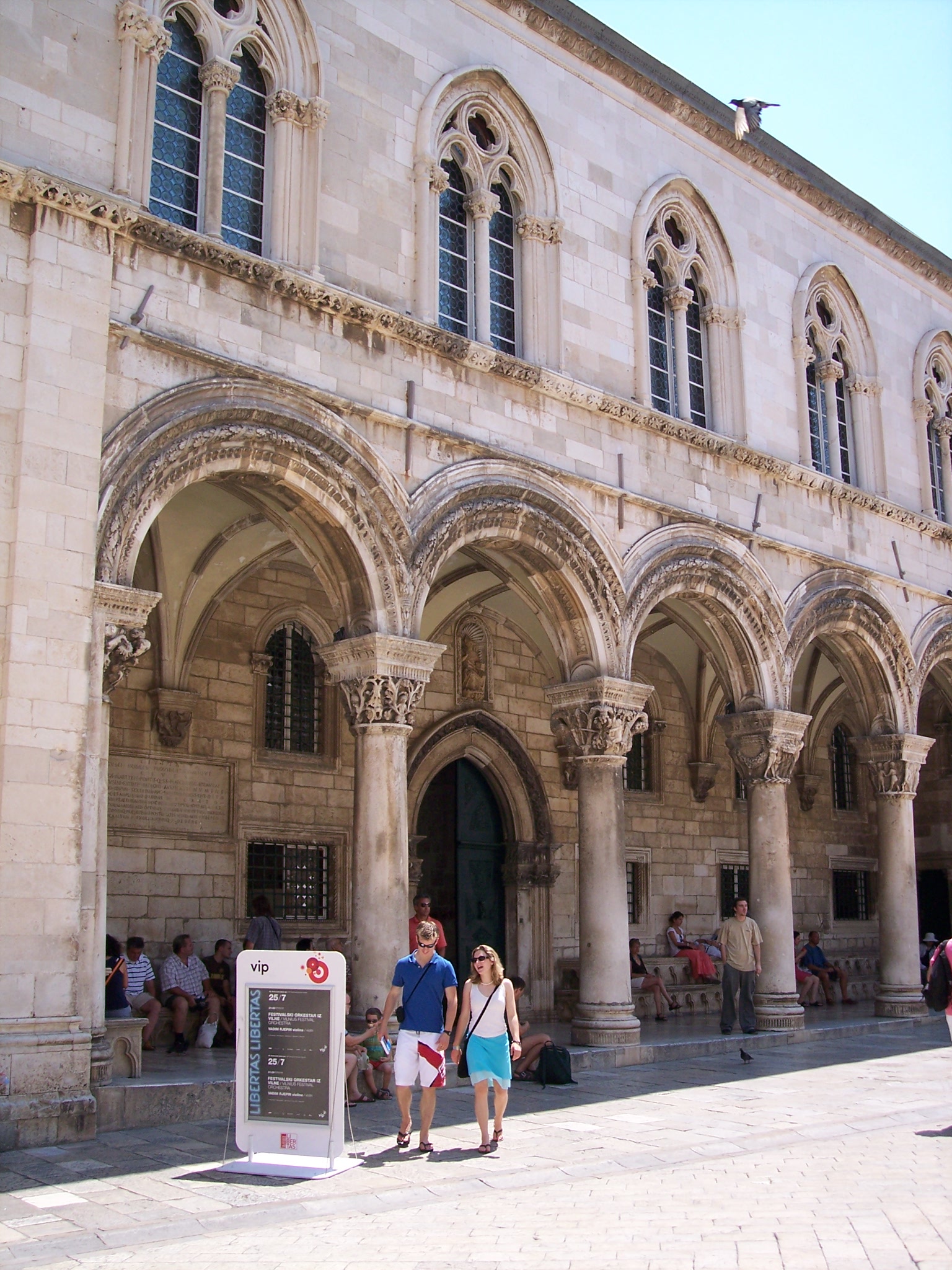
Rector's Palace
Ul. Pred Dvorom 3, 20000 Dubrovnik
The Republic of Ragusa was so paranoid about tyranny that it only let its head of state serve for one month at a time. One month. And during that month, the Rector was essentially a prisoner in his own palace — forbidden from leaving the building or seeing his family unless on official business. This was not a reward; it was a controlled form of house arrest with a nice title. The palace itself is a gorgeous collision of Gothic and Renaissance architecture, rebuilt after a gunpowder explosion in 1435 gutted the medieval original. Onofrio della Cava — the same engineer who built the famous fountain — worked on the reconstruction, and later Michelozzo di Bartolomeo and Juraj Dalmatinac added Renaissance and Gothic elements. Above the entrance, a carved inscription reads: "Forget private affairs, attend to public ones." The Republic was not subtle about its priorities. Inside, you can see the Rector's private chambers, the courtroom, the prison cells in the basement, and the armoury. The atrium, with its elegant arcade of columns, now hosts the opening ceremony of the Dubrovnik Summer Festival each year. The bust of Miho Pracat in the atrium is notable for being the only monument the Republic ever erected to a private citizen — Pracat was a merchant and shipowner who left his entire fortune to the state. In a republic that collectively distrusted individual ambition, that was the one gesture they could respect. The palace now houses the Cultural History Museum, where you can see furniture, costumes, and paintings from the Republic era. But the building itself is the real exhibit — a monument to a political system that valued the state above any single person, to the point of locking its leader in a gilded cage.
Revelin Fortress
Ul. Svetog Dominika, 20000 Dubrovnik
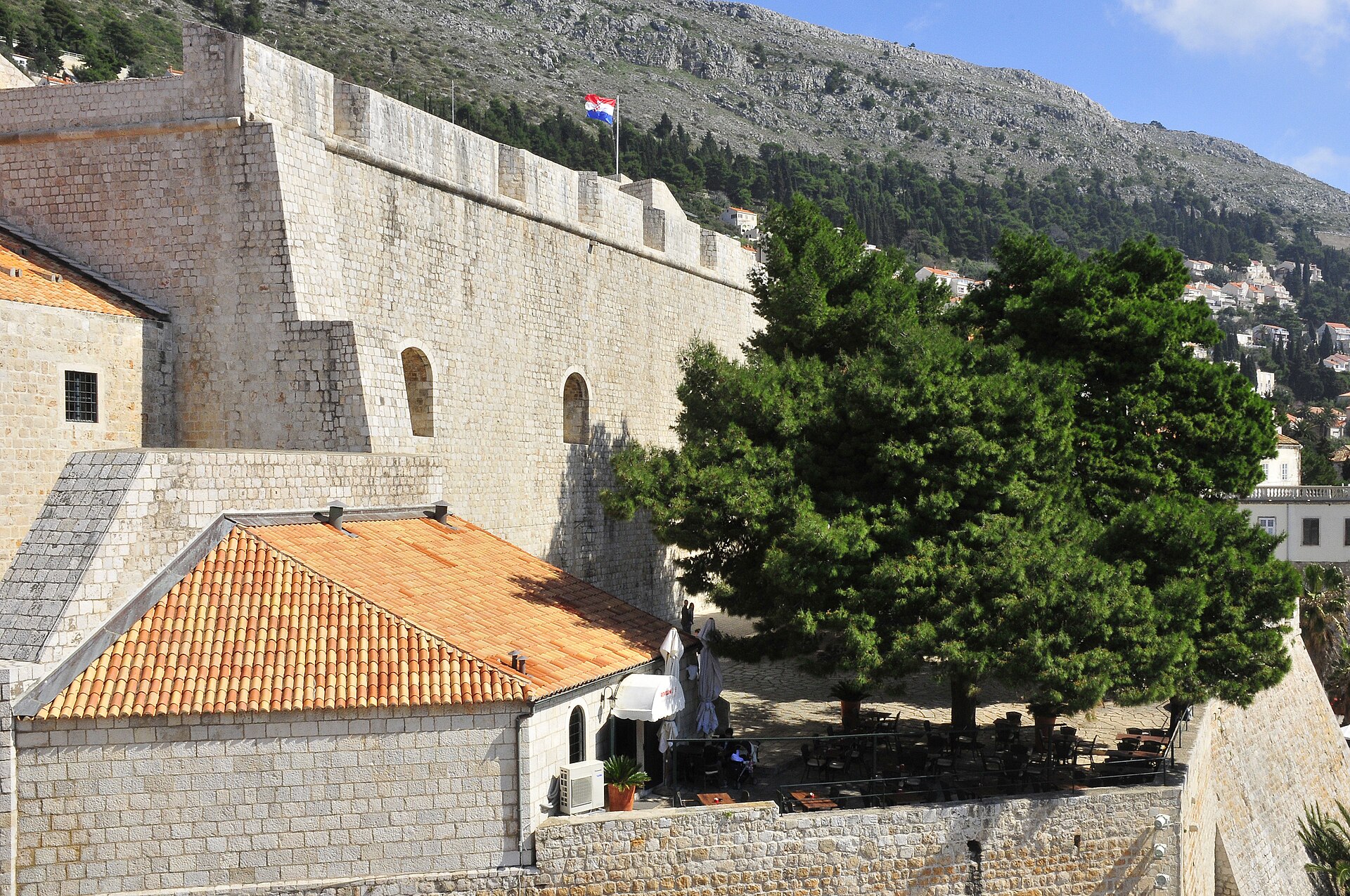
The Republic of Ragusa built this fortress for one reason: they were terrified of the Venetians. In 1462, with Venice threatening from the sea and the Ottomans pressing from the land, the Senate ordered the construction of a detached fortress east of the Ploče Gate to protect the most vulnerable approach to the city. The name itself gives away the function — revelin comes from the Italian rivelino, a military term for a defensive structure built opposite a gate. The fortress took nearly a century to complete in its final form, with major works continuing into the 16th century. During construction, it was considered so important that the Senate decreed all other building projects in the city must stop until Revelin was finished. Every available mason, labourer, and cart was redirected to the project. The Republic understood that an unfinished fortress was the same as no fortress at all. After the catastrophic earthquake of 1667, the Republic used Revelin's vaulted interior as an emergency storehouse for the city's most valuable treasures, including the archives and the treasury of the Cathedral. The fortress had survived the quake virtually undamaged — proof that Michelozzo's engineering had been worth the investment. While palaces, churches, and homes crumbled around it, Revelin stood firm, protecting the Republic's most irreplaceable assets. Today the fortress has one of the more unusual second acts in European military architecture: its cavernous interior now hosts Culture Club Revelin, one of the most popular nightclubs in Croatia. The venue hosts international DJs and events beneath the same stone vaults that once stored gunpowder and gold. Dancing under a 16th-century fortress ceiling is, admittedly, a more enjoyable use of the space.
Sponza Palace
Stradun 2, 20000 Dubrovnik
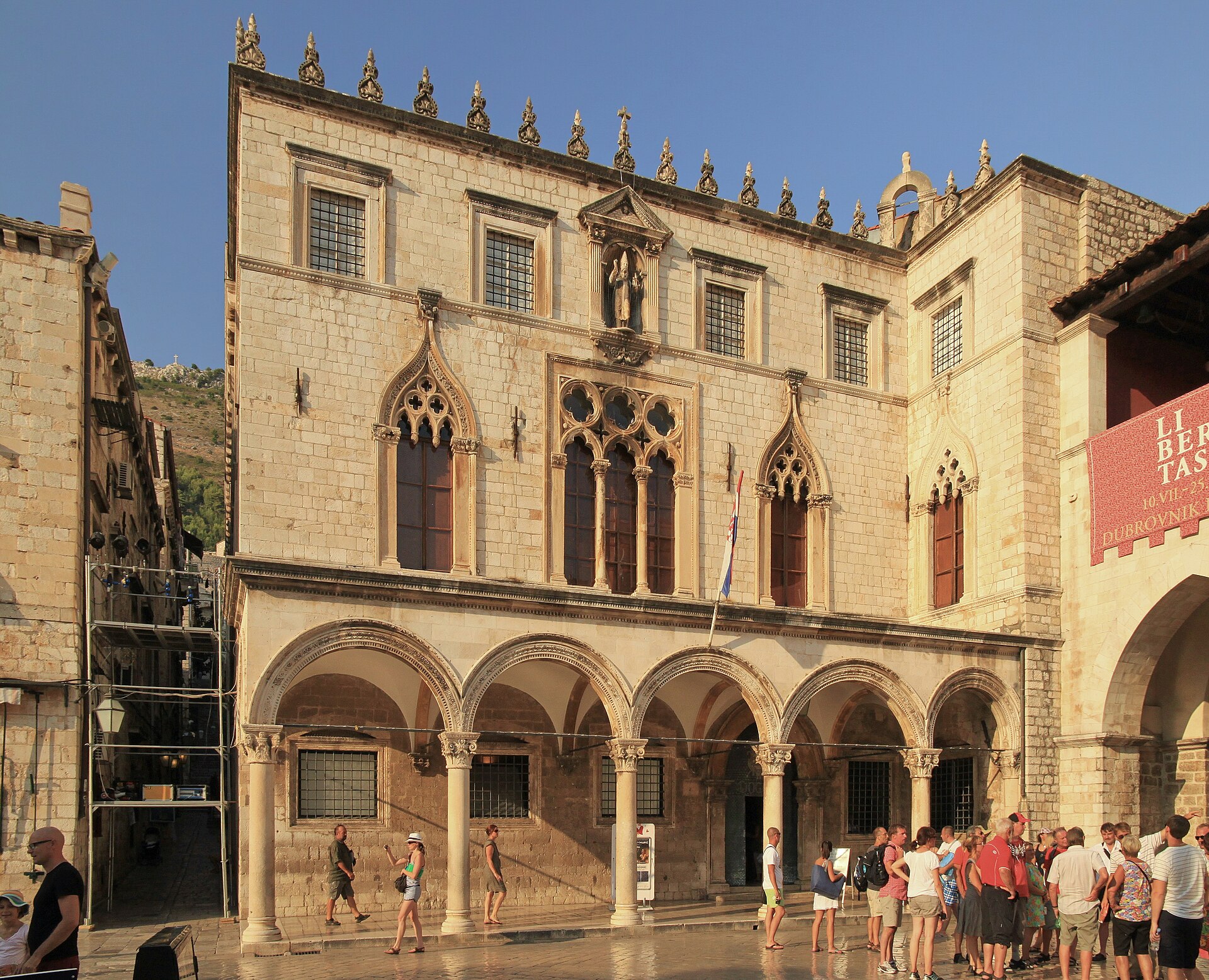
Every single transaction that passed through the Republic of Ragusa — every bale of silk, every sack of salt, every crate of spices from the Orient — was weighed, measured, taxed, and recorded inside this building. The Sponza Palace was the Republic's customs house and mint, and it was where Ragusa's wealth was literally counted. Built between 1516 and 1521 by local masters Paskoje Miličević and the Andrijić brothers, it blends Gothic windows on the first floor with a Renaissance loggia on the ground floor — a stylistic mashup that somehow works beautifully. The building's most remarkable achievement is simply surviving. When the catastrophic earthquake of 1667 levelled most of Dubrovnik, the Sponza Palace stood firm. It is one of the very few original structures still standing in the Old Town, making it an architectural time capsule from the Republic's golden age. The Latin inscription on the courtyard wall reads: "We are forbidden to cheat and use false measures. When I weigh goods, God weighs me." The Republic took fraud very seriously. Today the palace houses the Dubrovnik State Archives, which contain over 100,000 documents spanning seven centuries of Republic history. This is one of the most complete medieval archives in Europe — diplomatic correspondence, trade records, court proceedings, ship logs. Scholars come from around the world to study them. The ground floor also serves as a Memorial Room for the defenders of Dubrovnik who died during the 1991-1995 war, their photographs lining the walls in quiet rows. Step into the courtyard during summer and you might catch a concert or exhibition during the Dubrovnik Summer Festival. The acoustics are surprisingly good for a building designed to weigh fish.
St. John Fortress & Maritime Museum
Ul. Kneza Damjana Jude 12, 20000 Dubrovnik
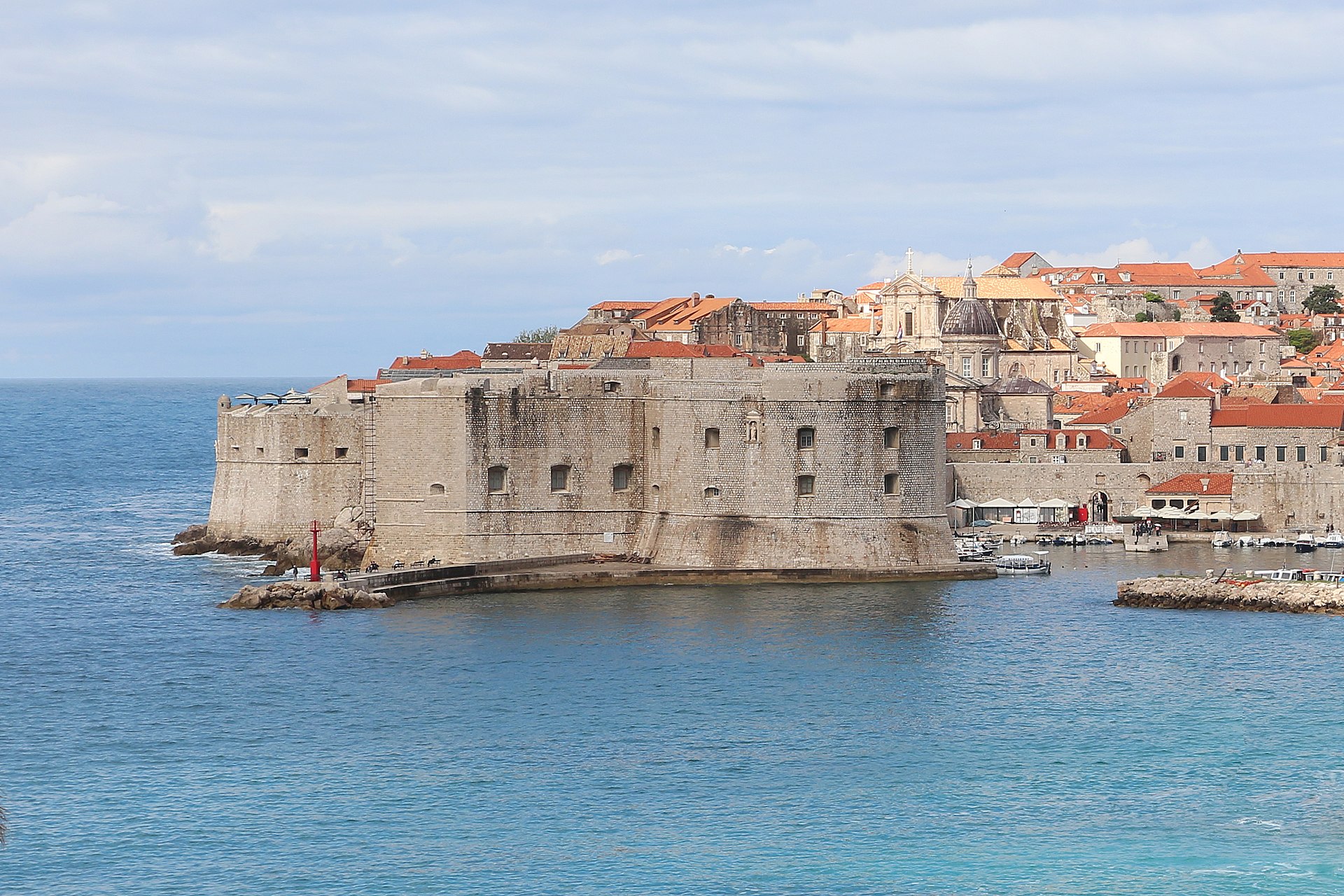
This massive curved fortress anchors the southeastern corner of the Old Town, its thick walls forming the eastern breakwater of the Old Port. Built in stages from the 14th to the 16th century, St. John Fortress (Sveti Ivan) was designed with a single purpose: to make the harbour impregnable. Any ship entering the port had to pass under its cannon positions, and a heavy chain could be stretched across the harbour mouth to block entry entirely. The upper floors now house the Maritime Museum, which tells the remarkable story of how a city of fewer than 40,000 people at its peak became one of the Mediterranean's great naval powers. By the 16th century, the Republic of Ragusa had one of the largest merchant fleets in Europe — roughly 180 ships — and its flag was recognised in every major port from London to Constantinople. The museum displays ship models, navigational instruments, charts, and paintings that document this unlikely maritime empire. One of the most fascinating exhibits covers the Republic's trade network. Ragusa maintained consulates in over 80 cities, had trade agreements with the Ottoman Empire (a rarity for a Christian state), and its ships carried goods between East and West with a sophistication that rivalled Venice. The Republic's diplomacy was as formidable as its navy: they paid tribute to the Ottomans while trading with the Pope, played every side, and survived for centuries. In the ground-level vaults, the Dubrovnik Aquarium occupies the fortress's former storage rooms. Fish swim in stone pools that once held gunpowder and cannonballs. The aquarium is small but atmospheric — there is something genuinely eerie about watching seahorses drift through tanks built into a fortress wall.
Stradun
Stradun, 20000 Dubrovnik
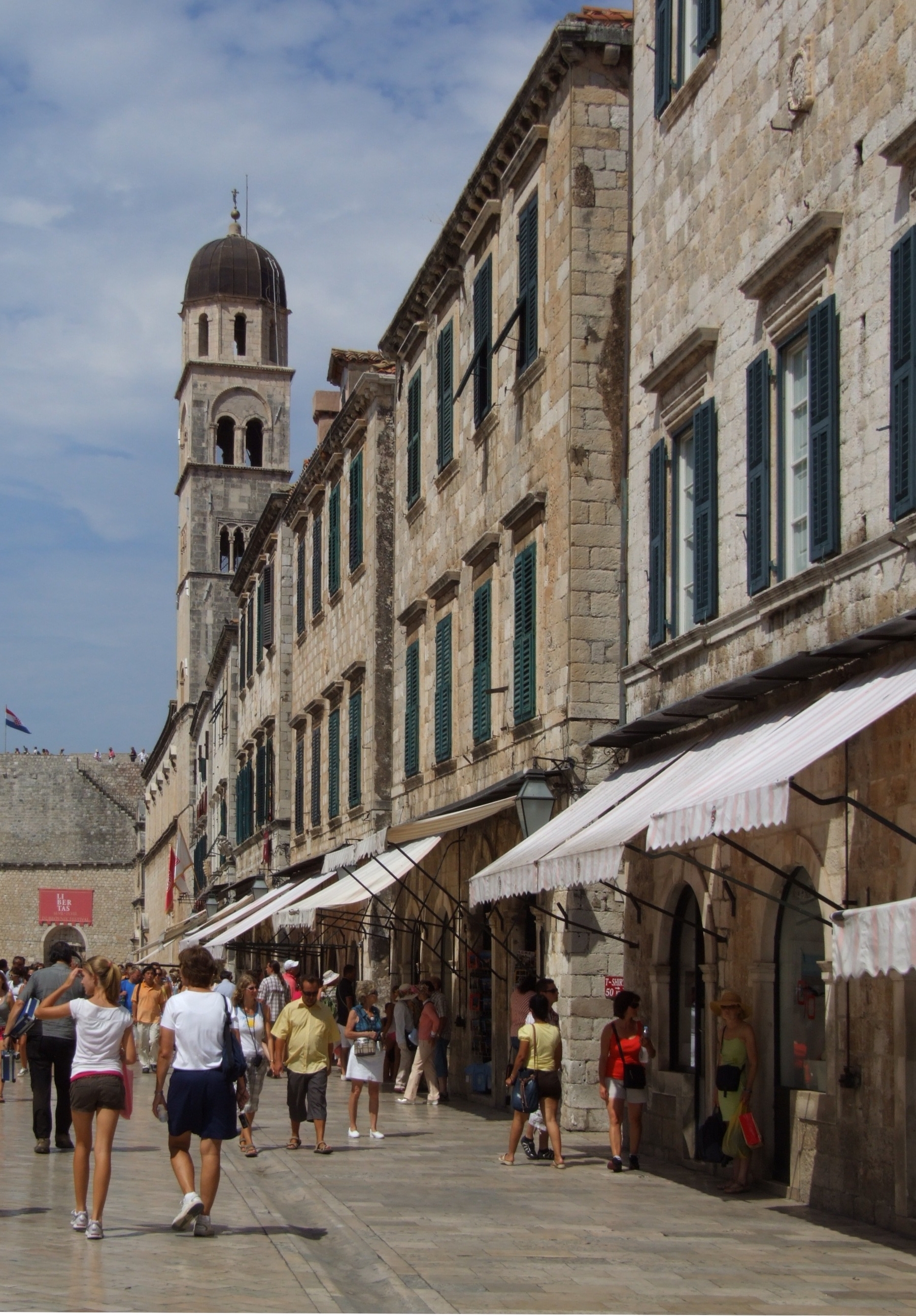
The main street of Dubrovnik's Old Town was once a shallow sea channel. That's not a metaphor — until roughly the 11th century, a marshy stretch of water separated the original island settlement of Ragusa from the Slavic community on the mainland. When they filled it in, they created the 300-metre limestone boulevard that would become the heart of one of the wealthiest city-states in the Mediterranean. Stradun — also called Placa — runs in a perfect straight line from Pile Gate in the west to Luža Square in the east. After the catastrophic earthquake of 1667 destroyed nearly everything, the Republic rebuilt the street with uniform Baroque facades on both sides: ground-floor shops with a doorway and a window, identical arched openings, all the same height. It's one of the earliest examples of coordinated urban planning in Europe, centuries before Haussmann did the same thing in Paris. The limestone beneath your feet has been polished to a mirror shine by millions of footsteps over centuries. After rain, it gleams like ice. Every morning, delivery workers haul goods through the narrow side alleys because vehicles are banned. Every evening, the korzo begins — the Mediterranean tradition of the slow evening stroll, where locals dress up and parade the length of the street, stopping to gossip, flirt, and drink coffee that costs twice what it should. At the western end stands the Large Onofrio Fountain, built in 1438 as the terminus of a 12-kilometre aqueduct that brought fresh water from the Šumet spring. At the eastern end, Orlando's Column marks the spot where public decrees were once read aloud. Between them, Stradun holds the entire social life of the city — it always has, and it probably always will.
Trsteno Arboretum
Potok 20, 20233 Trsteno
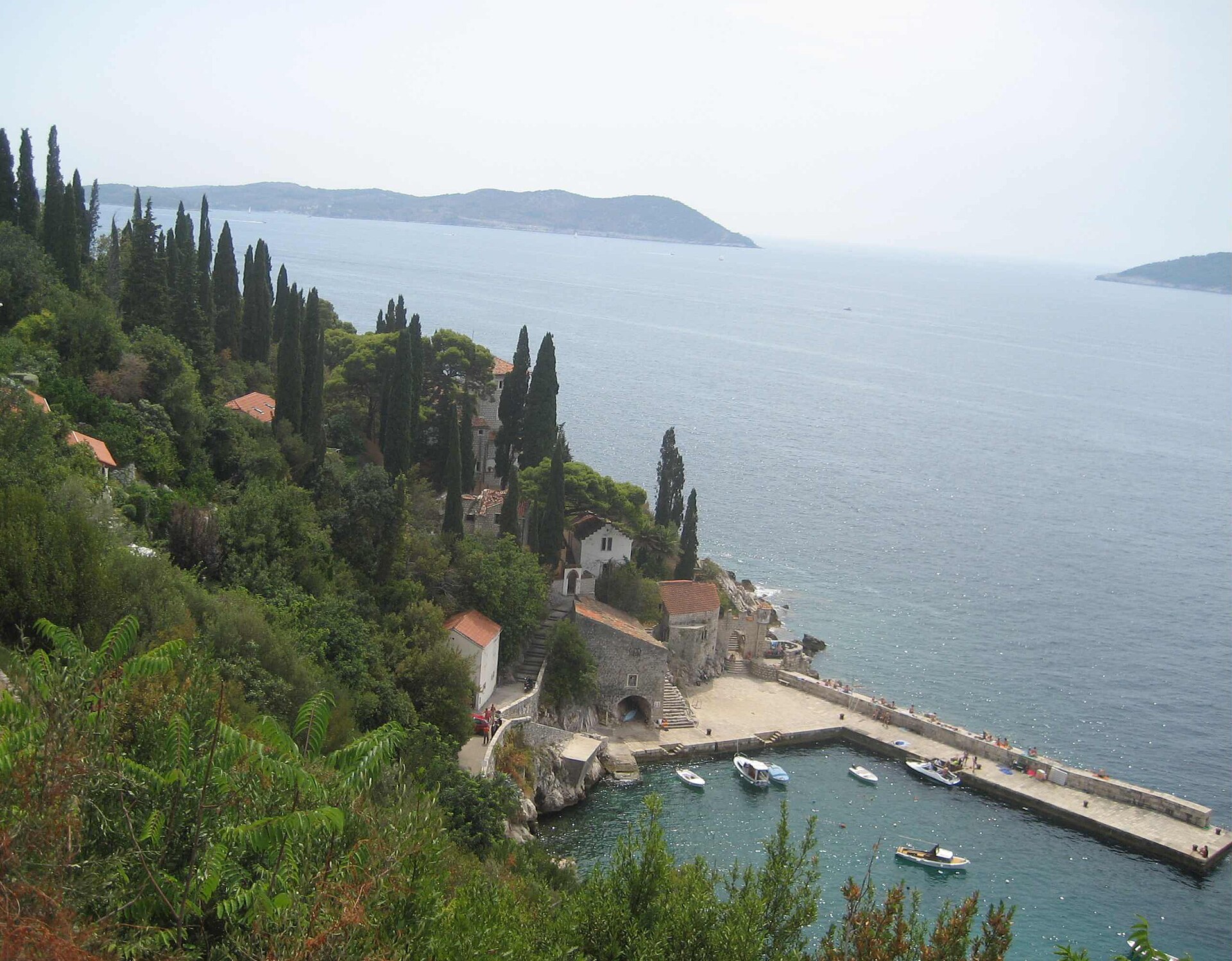
Twenty kilometres northwest of Dubrovnik, two Oriental plane trees stand guard at the entrance to the oldest arboretum in the world. They are over 500 years old, roughly 50 metres tall, and among the largest of their kind in Europe. Around 450 years ago, Captain Florio Jakob Antunov brought five saplings from the Bosphorus and planted them near a water spring. Three died. Two survived and grew into living monuments that have been nominated for European Tree of the Year. The arboretum itself dates to the late 15th century, when the noble Gučetić-Gozze family established it as part of their Renaissance summer estate. By 1492, they had already built a 15-metre aqueduct to irrigate the gardens — a date that makes this garden contemporaneous with Columbus reaching the Americas. Over the following centuries, Dubrovnik's seafarers brought back seeds and specimens from every port they visited, creating a collection of over 300 exotic plant species from across the globe: eucalyptus, palms, flowering cactuses, Japanese camphor trees, and everything in between. The Renaissance garden layout — geometric paths, fountains, a Neptune statue — has been maintained for over five centuries, making it one of the oldest continuously tended gardens in the world. The star feature is the baroque fountain with a Neptune and nymph sculpture, surrounded by a loggia that overlooks the sea. Game of Thrones used the arboretum as the gardens of King's Landing, particularly for scenes involving the Tyrell family. Olenna Tyrell's scheming happened here. The arboretum was badly damaged during the 1991 war when shelling caused fires that destroyed parts of the historic garden. Restoration has been ongoing since, and the garden has largely recovered. Getting here requires a car or bus (the number 12 from Dubrovnik), but it's worth the trip — a living piece of Renaissance horticultural ambition that predates almost every botanical garden in Europe.

War Photo Limited
Antuninska ul. 6, 20000 Dubrovnik
In a city where tourism has polished every surface to a marketable shine, this gallery exists to make you deeply uncomfortable — and that's the point. War Photo Limited is a conflict photojournalism gallery tucked down a narrow side street off Stradun, and it makes no attempt to romanticise anything. Founded by New Zealand photojournalist Wade Goddard, it shows war exactly as it is: raw, human, and devastating. The permanent exhibition focuses on the conflicts in the former Yugoslavia, but rotating exhibitions cover wars from around the world — Syria, Iraq, Afghanistan, and beyond. The photographs are displayed in darkened rooms without decoration, allowing the images to speak for themselves. Many visitors, particularly those who came to Dubrovnik for the beaches and the Game of Thrones locations, are visibly shaken by what they see. That reaction is not accidental. The gallery's location in Dubrovnik is significant. This city was besieged for months in 1991 and 1992, shelled by forces that targeted civilians and cultural heritage. Over 80 civilians died and more than 500 buildings were damaged. The scars are mostly repaired now — the new roof tiles are a slightly different shade of orange from the originals, which is how you can tell which buildings were hit — but the memory is very much alive. War Photo Limited ensures it stays that way. The gallery is seasonal, typically open from May to October. It's not a large space, but it doesn't need to be. Two floors of carefully curated images can change the way you think about what you're seeing when you walk back outside into the sunlit streets. Dubrovnik is a place that was nearly destroyed within living memory. This gallery is the antidote to forgetting.