These roofless Gothic arches, open to the sky and the Edinburgh rain, are what remains of one of Scotland's most important medieval monasteries. David I founded Holyrood Abbey in 1128 for Augustinian canons, inspired — according to legend — by a miraculous encounter with a stag. While hunting below Salisbury Crags, David was thrown from his horse and nearly killed by the stag's antlers. As he grasped at the antlers to protect himself, a glowing cross appeared between them, and the stag fled. In gratitude, David founded a "monastery of the Holy Rood" — rood being the Scots word for cross.
The abbey became one of Scotland's great royal stages. James II, III, and IV were married here. James V and Charles I were crowned within these walls. The Scottish Parliament met here on multiple occasions between 1256 and 1410. But the abbey's strategic importance also made it a target: English troops sacked and burned it in 1544 during the "Rough Wooing," returned to devastate it again in 1547, and by 1570 the transepts and choir lay in ruins. Only the nave was repaired and kept in use.
The final indignity came in 1687 when James VII evicted the Protestant congregation to restore the nave as a Catholic chapel for his revived Order of the Thistle. Within a year, a mob ransacked the chapel and James was forced into exile. The nave has been a ruin ever since, its vault collapsing in 1768 during a storm. What survives — the east processional doorway from David I's original building, the thirteenth-century Gothic nave with its delicate tracery — is hauntingly beautiful.
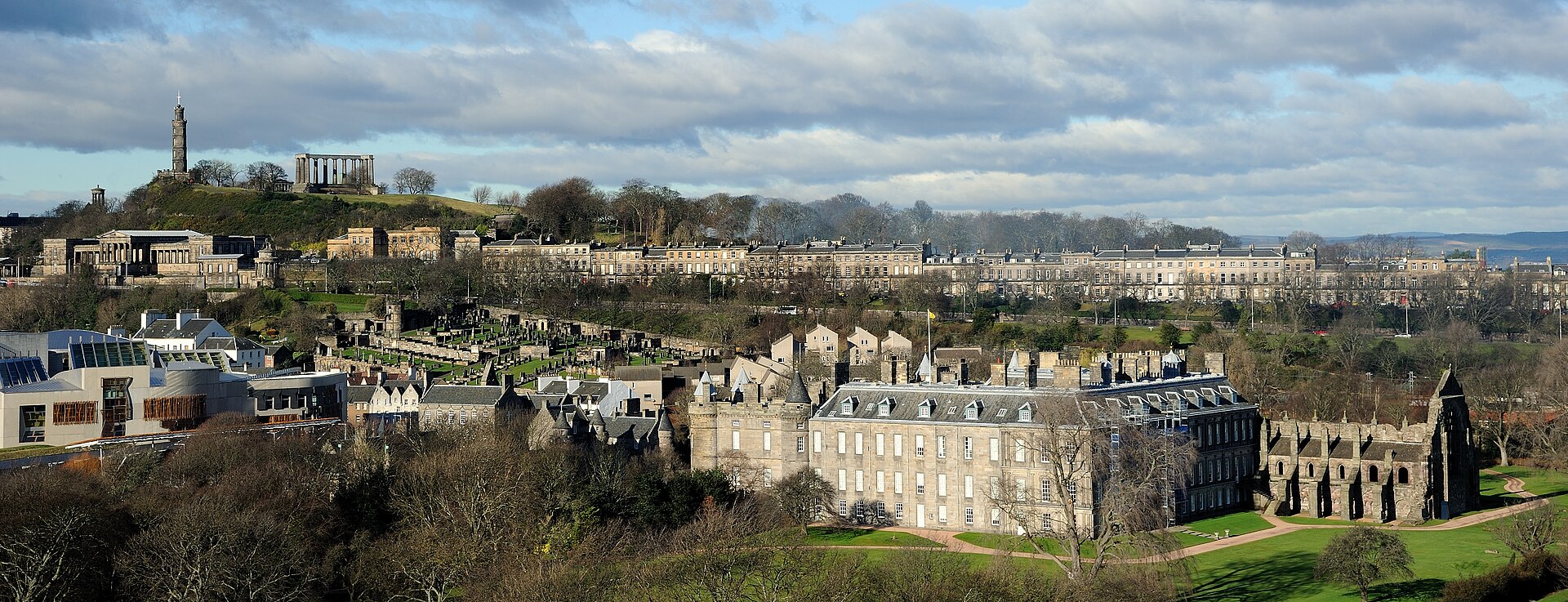
The abbey ruins are accessed through the Palace of Holyroodhouse and are included in the palace ticket. Standing in the rootless nave with the sky above and the worn tombstones underfoot, it's easy to forget you're in a capital city.
Verified Facts
Founded by David I in 1128 as an Augustinian monastery, according to legend after a miraculous stag encounter
James II, III, and IV married here, and James V and Charles I were crowned here
English troops sacked the abbey in 1544 and 1547; the nave roof collapsed in a storm in 1768
The east processional doorway is the only surviving element of David I's original 12th-century building
Get walking directions
Canongate, The Royal Mile, Edinburgh, EH8, United Kingdom