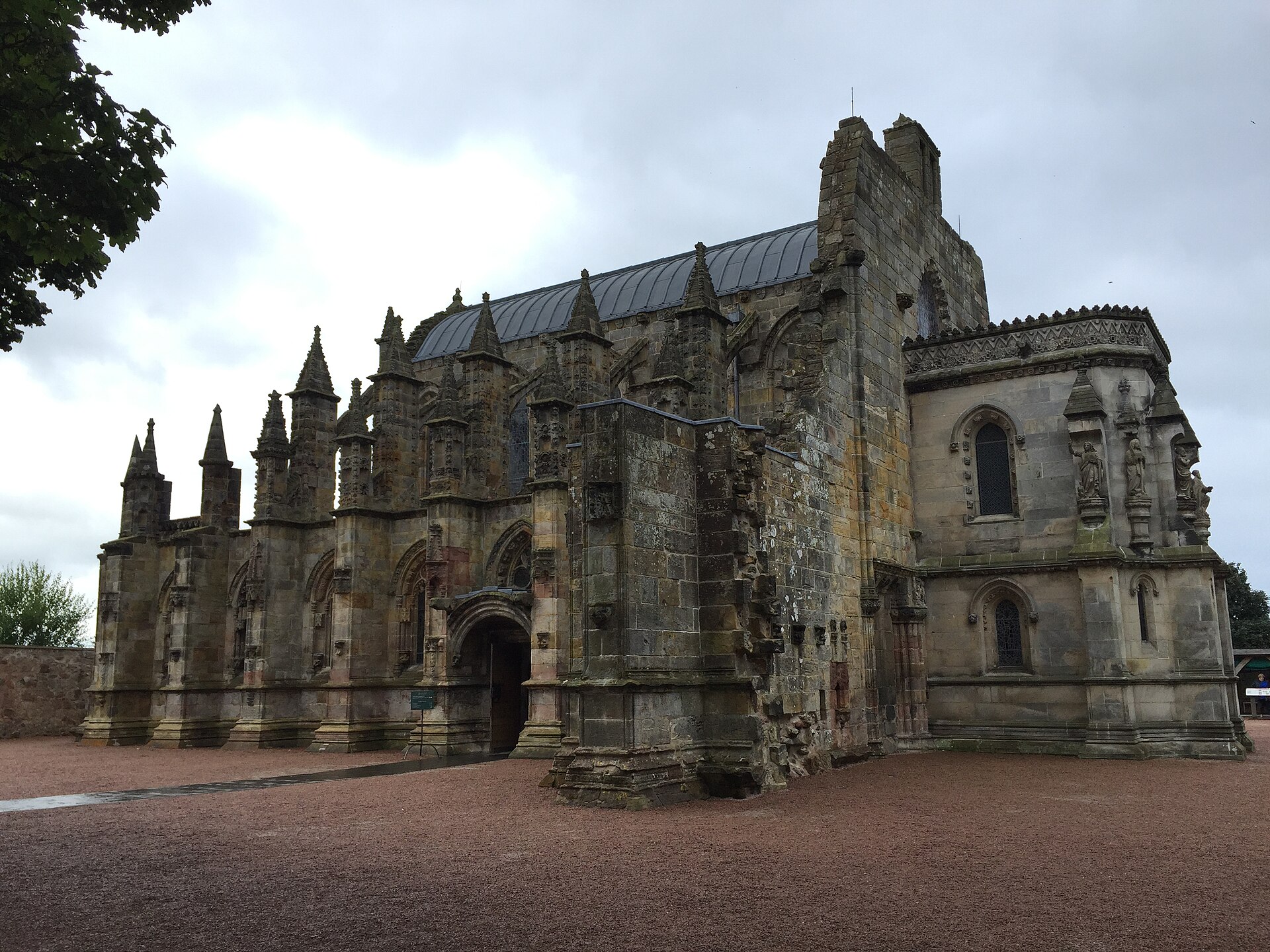
Dan Brown made this chapel world-famous in 'The Da Vinci Code,' but the real Rosslyn is stranger than any conspiracy theory. Built by William Sinclair, 1st Earl of Caithness, with a groundbreaking ceremony in 1456, every surface of this small Gothic chapel is encrusted with carvings so dense and bizarre that scholars have spent centuries arguing about what they mean. Over a hundred Green Man faces — pagan fertility symbols — peer out from the stonework, the highest concentration in any medieval European chapel. That's an odd thing to find in a Christian church, and nobody has satisfactorily explained it.
The Apprentice Pillar is the chapel's most famous single feature, and it comes with a murder story. According to legend, the master mason travelled to Rome for inspiration, leaving his apprentice behind. The apprentice, in a burst of youthful ambition, carved the pillar himself — a spiralling masterpiece of intertwined dragons and flowing vines. When the master returned and saw work that far surpassed his own abilities, he was consumed by jealousy and killed the apprentice with a mallet. As punishment, the master's face was carved into the opposite corner, condemned to stare at his apprentice's pillar for eternity. Whether the story is true or a later embellishment is unknown, but the carved heads are there.
The chapel also features carvings that appear to depict sweetcorn and aloe vera — plants native to the Americas, supposedly carved decades before Columbus sailed in 1492. If authentic, they suggest the Sinclairs may have had contact with the New World before Columbus, a claim that feeds into theories about the Knights Templar and pre-Columbian voyages. Mainstream historians are sceptical.
Rosslyn sits seven miles south of Edinburgh's city centre, in the village of Roslin. The chapel was never completed — the current building is only the choir of what was intended to be a much larger cruciform church. The barrel-vaulted roof was added in the 1860s after decades of exposure to the elements.
Verified Facts
Founded by William Sinclair, 1st Earl of Caithness, with a groundbreaking ceremony in 1456
Contains over 100 Green Man carvings, the highest concentration in any medieval European chapel
The chapel is only the choir section of what was planned as a much larger cruciform church
Featured prominently in Dan Brown's 'The Da Vinci Code' (2003) and its 2006 film adaptation
Get walking directions
Chapel Loan, Midlothian West, Roslin, EH25, United Kingdom