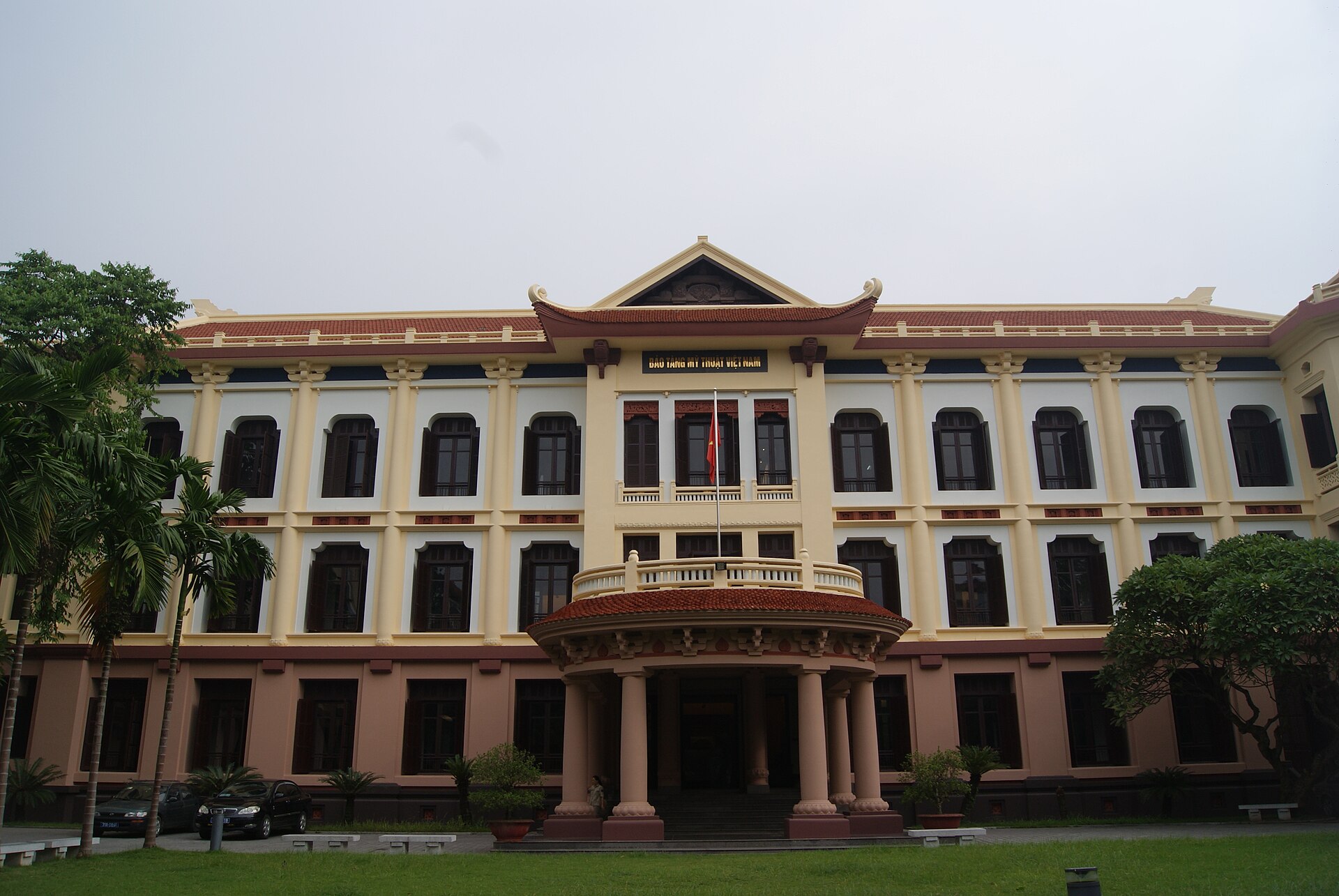
The Vietnam Fine Arts Museum is the national art collection — housed in a French colonial building near the Temple of Literature that displays Vietnamese art from the prehistoric period through Buddhist sculpture, Nguyen dynasty court art, French-influenced modernism, and the wartime and post-war periods that produced some of the most distinctive art in Southeast Asia.
The collection's strength is its range — Đông Sơn bronze drums from 2,000 years ago sit alongside 11th-century Buddhist stone carvings, Cham Hindu sculpture, Nguyen dynasty lacquerware, and the oil paintings of the Indochina School (Vietnamese artists trained at the French-founded École des Beaux-Arts de l'Indochine in the 1920s-30s who created a fusion of Vietnamese subject matter and European technique). The lacquer paintings — a medium unique to Vietnamese art, using layers of natural lacquer to create surfaces of extraordinary depth and luminosity — are the collection's most distinctive works.
The wartime art section, showing paintings and sculptures created during the American War, provides an alternative perspective to the military museums — artists documenting not battles but daily life, landscape, and the persistence of beauty during decades of conflict. The building itself, a converted colonial-era school, adds a further layer of Franco-Vietnamese cultural dialogue. The museum is modestly priced, rarely crowded, and provides the art-historical context that the historical museums and street culture of Hanoi can't independently convey.
Verified Facts
The museum is housed in a French colonial building
The collection spans from prehistoric Đông Sơn bronzes to contemporary art
Vietnamese lacquer painting is a unique art form using layers of natural lacquer
The École des Beaux-Arts de l'Indochine was founded by the French
Get walking directions
66 Nguyen Thai Hoc, Dien Bien, Hanoi, Vietnam