The Imperial Citadel of Thăng Long is a UNESCO World Heritage Site that preserves the remains of 1,300 years of continuous political power in Hanoi — from the 7th-century Chinese Tang dynasty fortress through the Vietnamese Lý, Trần, and Lê dynasties to the French colonial period and the Vietnam War, when the D67 underground bunker beneath the citadel served as the command centre for North Vietnam's military operations.
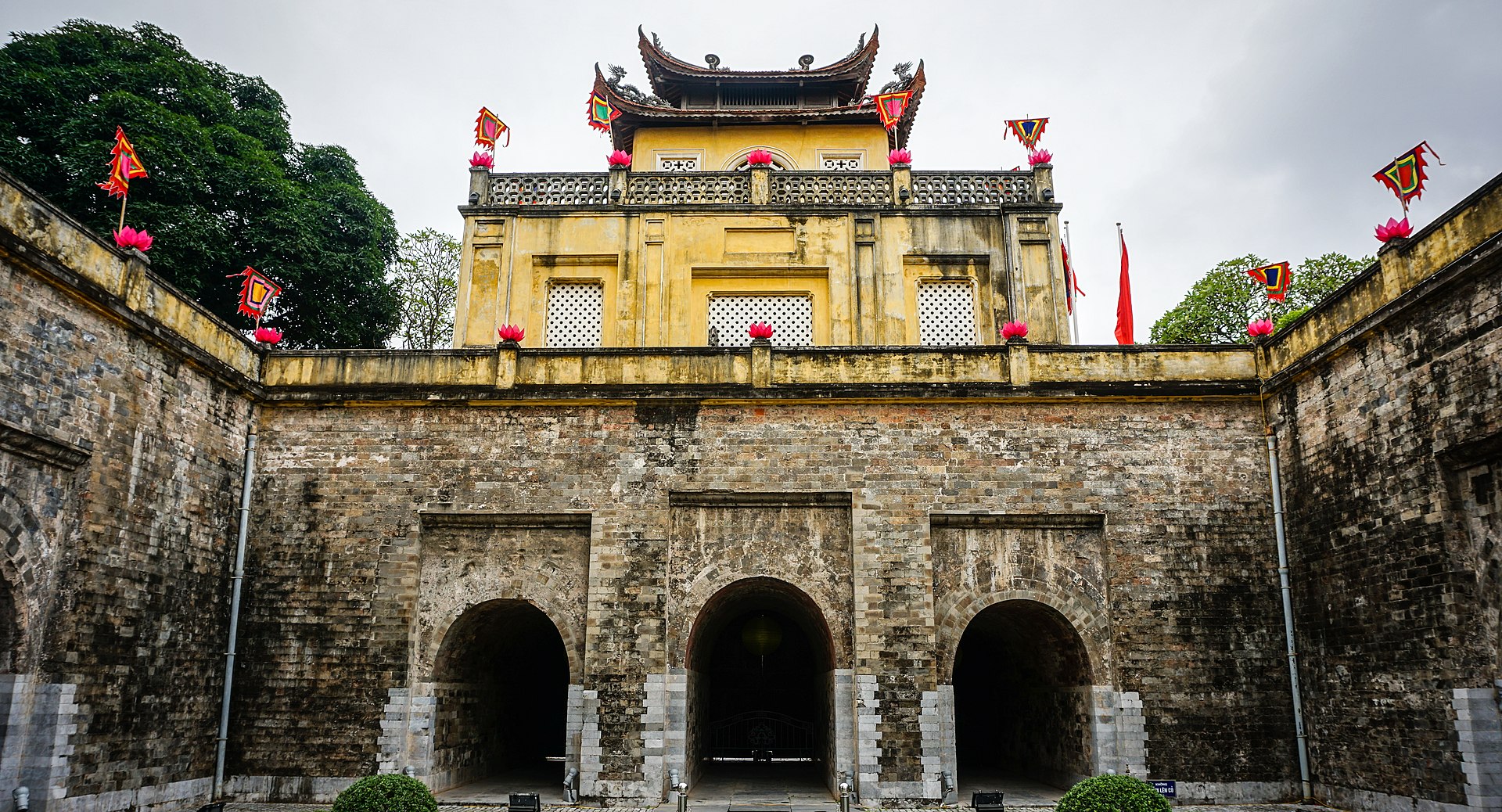
The excavations that began in 2002 (when construction work uncovered archaeological remains) have revealed layers of foundations, ceramics, coins, and architectural elements from every period of Hanoi's history, making the citadel one of the most important archaeological sites in Southeast Asia. The Đoan Môn (Main Gate), a massive stone gateway from the 15th century, and the Flag Tower (Cột Cờ), built during the Nguyễn dynasty in 1812 and now the symbol of Hanoi's military history, are the most visible surviving structures.
The D67 bunker, built in 1967 as a bomb-proof command centre during the American air war, is one of the most fascinating parts of the site — a network of underground rooms where General Võ Nguyên Giáp and the North Vietnamese military leadership directed operations during the heaviest bombing campaigns in history. The bunker's spartan furnishing — desks, telephones, maps, and the camp beds where generals slept between planning sessions — provides a physical connection to decisions that shaped the 20th century.
Verified Facts
The citadel is a UNESCO World Heritage Site
The site preserves approximately 1,300 years of political history
The D67 bunker was built in 1967 as a military command centre
The Flag Tower (Cột Cờ) was built in 1812
Get walking directions
19C Hoang Dieu, Dien Bien, Hanoi, Vietnam