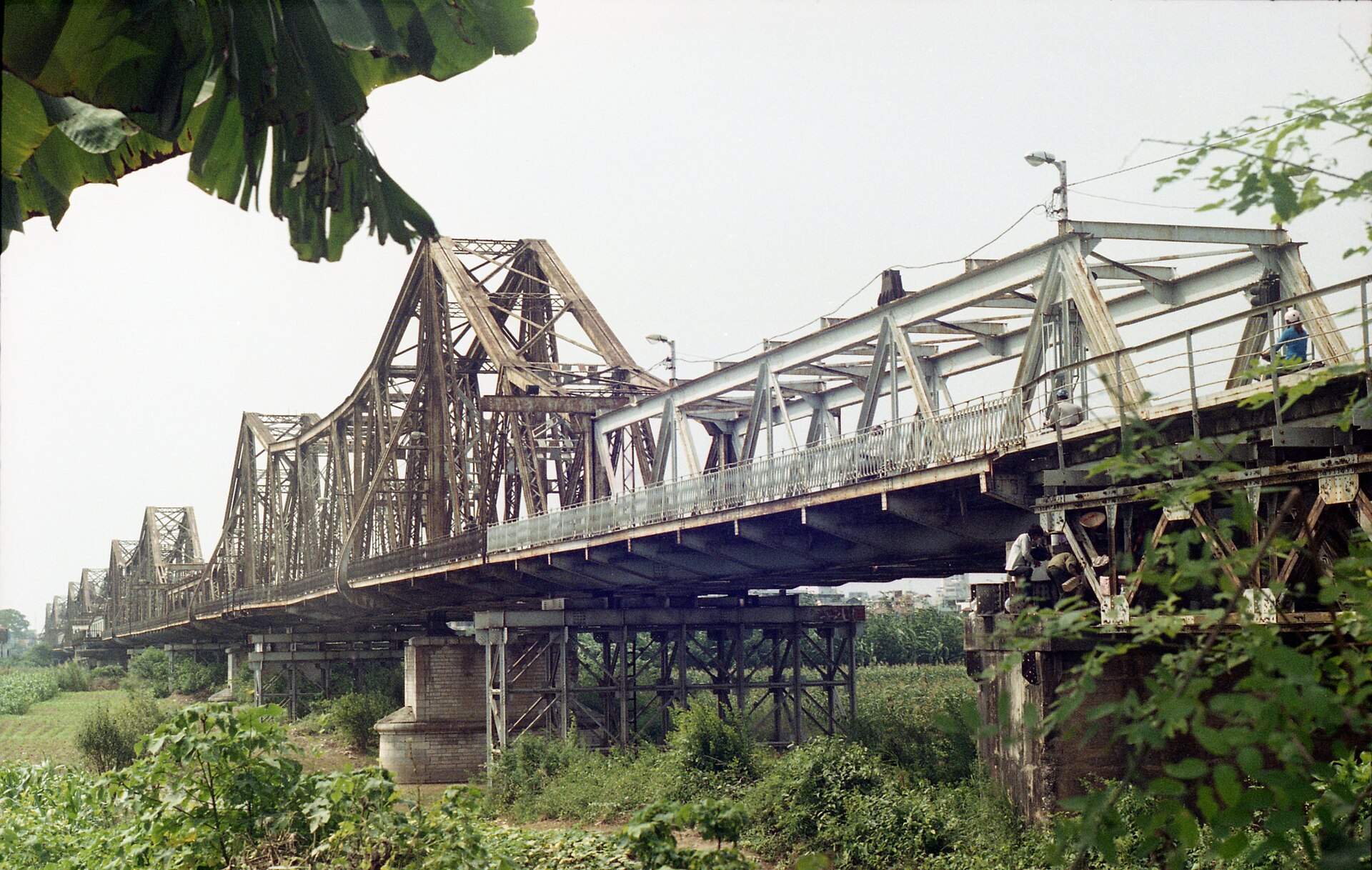
Long Biên Bridge is the most historically significant structure in Hanoi — a 1.7-kilometre steel cantilever bridge across the Red River designed by the same firm (Daydé & Pillé) that built the Eiffel Tower and completed in 1903 as the first steel bridge in Indochina. The bridge was a strategic target during the American bombing of North Vietnam, and the damage it sustained — repaired repeatedly by Vietnamese engineers during the war — is still visible in the patched sections and mismatched steel that give the bridge its scarred, resilient appearance.
The bridge carries a single railway track flanked by motorbike and bicycle lanes, and crossing it on foot or motorbike provides views of the Red River, the Old Quarter's waterfront, and the banana plantations and market gardens on the alluvial islands in the river below. The morning market on the bridge's lower deck — where vendors sell produce directly from the river islands — is one of Hanoi's most photogenic and least touristed food experiences.
Long Biên's survival through the American War (the Vietnamese name for what Americans call the Vietnam War) has made it a symbol of Vietnamese resilience — the bridge was bombed repeatedly between 1967 and 1972, was repaired each time, and continued carrying supplies to the front despite being one of the most heavily targeted pieces of infrastructure in the conflict. The French colonial engineering, the American bomb damage, and the Vietnamese repairs are all visible in the bridge's structure, creating a physical record of 120 years of Vietnamese history in steel.
Verified Facts
Long Biên Bridge was completed in 1903, designed by Daydé & Pillé
The bridge is 1.7 kilometres long
The bridge was repeatedly bombed during the Vietnam War (1967-1972)
Daydé & Pillé also worked on the Eiffel Tower
Get walking directions
Long Bien Bridge, Phuc Tan, Hanoi, Vietnam